
HVAC Installer Duties: Complete Guide to Daily Responsibilities, Required Skills, Certifications, and Career Growth
Learn essential HVAC installer duties including equipment setup, ductwork, refrigerant handling, code compliance, and career growth in this complete guide. 🗨️

Understanding hvac installer duties is essential for anyone considering a career in the heating, ventilation, and air conditioning industry. HVAC installers set up new climate control systems in residential, commercial, and industrial buildings. Their work goes far beyond placing equipment in a mechanical room. From reading blueprints and calculating load requirements to brazing copper refrigerant lines and testing system performance, these skilled technicians ensure every component operates safely and efficiently from the very first day of operation.
Demand for qualified HVAC installers continues to grow across the United States, driven by new construction projects, energy efficiency mandates, and the ongoing transition to modern low-GWP refrigerants. The Bureau of Labor Statistics projects employment growth of approximately six percent through 2032, outpacing many other skilled trades. For individuals who enjoy hands-on mechanical work and solving complex technical problems, exploring hvac installer duties reveals a career path offering strong earning potential and impressive long-term stability in virtually every region.
A typical workday begins well before any equipment gets mounted on the job site. Installers review architectural drawings and mechanical plans to understand how ductwork, piping, and electrical connections integrate with the building structure. They coordinate with general contractors, electricians, and plumbers to align their work with the overall construction timeline. This planning phase is critically important because mistakes at this stage lead to costly rework, building code violations, and scheduling delays that negatively affect every other trade on the project.
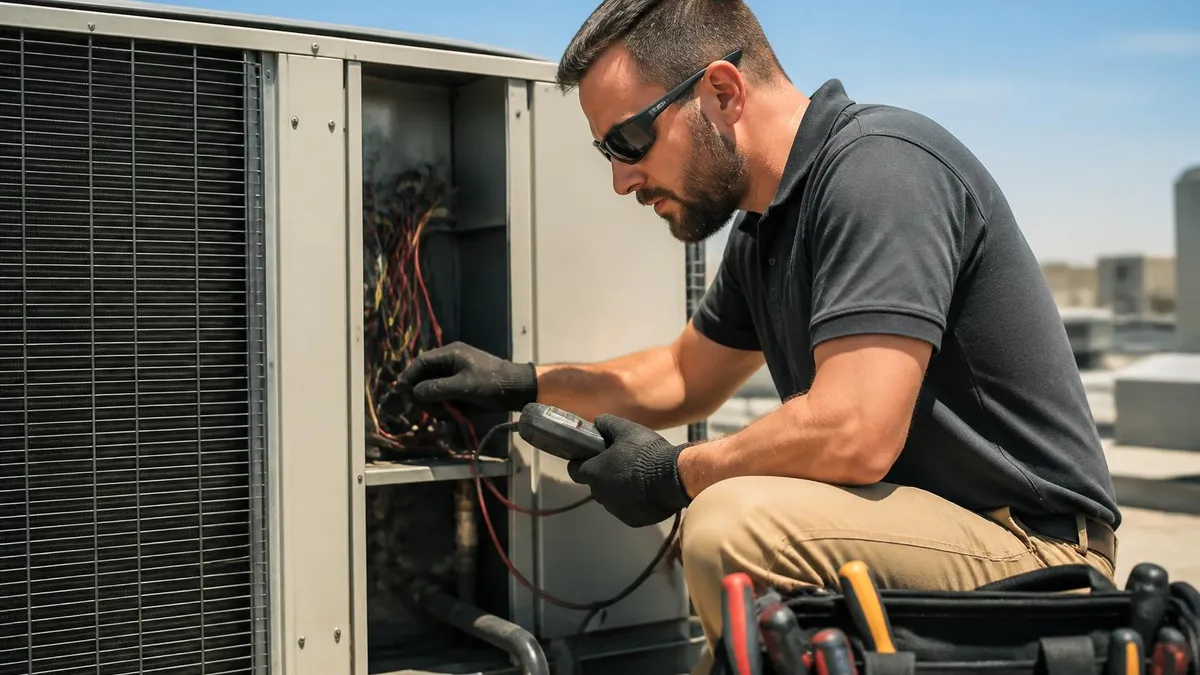
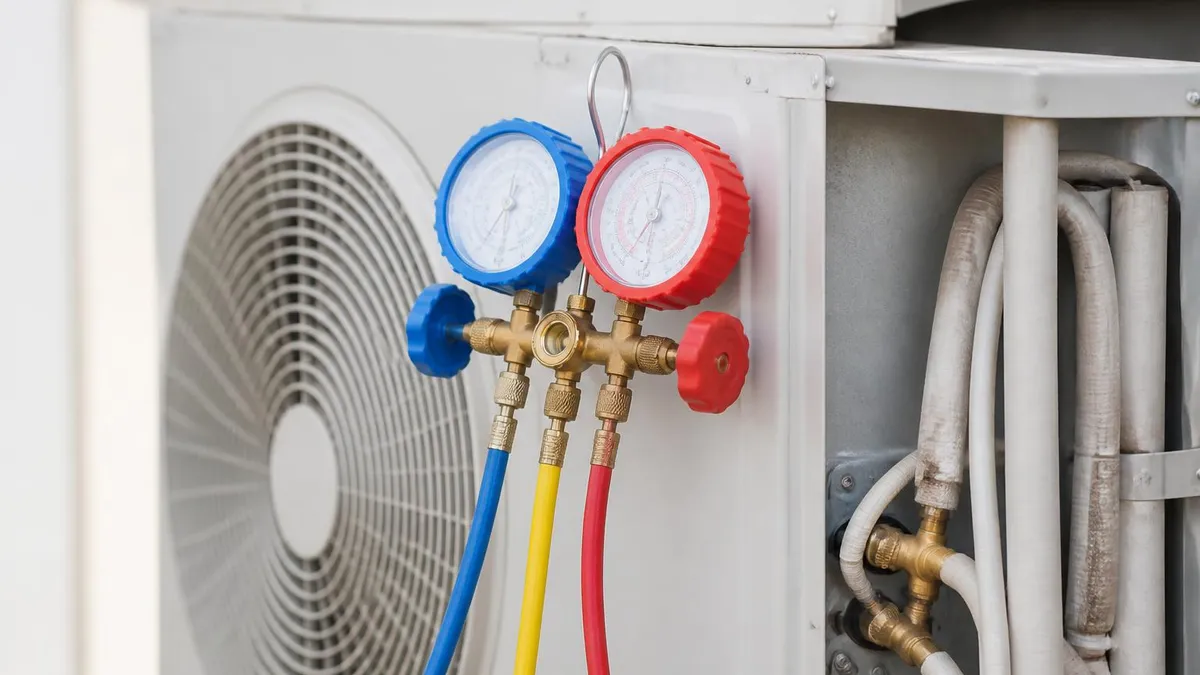
Once on site, HVAC installers handle a wide range of physically demanding tasks throughout the workday. They cut and shape sheet metal for custom ductwork, solder and braze copper refrigerant lines, mount indoor and outdoor units, and wire thermostats and control boards. Each task requires specialized tools and extensive training. Installers routinely use manifold gauge sets, vacuum pumps, electronic leak detectors, and digital multimeters to verify every connection meets manufacturer specifications and local code requirements before proceeding to the next phase.
Safety remains a constant and nonnegotiable priority throughout every installation project regardless of size. Installers frequently work on ladders, rooftops, and in confined crawl spaces where fall and heat exposure risks are significant. They handle high-voltage electrical connections and pressurized refrigerant systems that can cause serious injury if mismanaged. Compliance with OSHA regulations and local building codes is a core professional responsibility that protects installers, coworkers, and the building occupants who will depend on the finished system for years to come.
Beyond physical installation, modern HVAC installers must possess strong customer service and communication skills. Residential installers interact directly with homeowners, explaining system operation and demonstrating thermostat programming. Commercial installers collaborate with facility managers and building engineers to commission rooftop units and variable refrigerant flow systems. The ability to communicate clearly about system capabilities, maintenance schedules, and warranty coverage builds lasting trust and generates valuable repeat business for the installing contractor throughout the local market.
HVAC Installer Careers by the Numbers
Core HVAC Installer Responsibilities
Position and secure air handlers, condensing units, furnaces, and rooftop systems on approved pads or platforms. Verify structural support and vibration isolation before making refrigerant, electrical, or drainage connections to the equipment.
Measure, cut, and form sheet metal or fiberglass duct sections to match engineered airflow designs. Connect trunk lines and branch runs using approved fittings, then seal every joint with mastic or UL-listed tape to prevent air leakage.
Braze copper refrigerant lines, install filter driers and expansion valves, evacuate the system to below 500 microns, and charge with correct refrigerant type and weight. Document all quantities for EPA compliance and warranty records.
Wire low-voltage thermostat circuits, connect line-voltage power to condensing units, install disconnect switches, and verify voltage and amperage readings. Program smart thermostats and zone control boards according to system design specifications.
Perform startup procedures including static pressure measurements, temperature differential checks, airflow verification, and superheat and subcooling calculations. Complete documentation for building inspections and manufacturer warranty registration before system turnover.
The technical knowledge required to perform hvac installer duties effectively extends well beyond basic mechanical aptitude. Installers must understand thermodynamics, psychrometrics, and fluid dynamics that govern how heating and cooling systems operate in real-world conditions. When sizing equipment, they apply Manual J load calculations to determine how many BTUs of heating and cooling capacity a building needs. Undersizing leads to inadequate comfort and constant strain, while oversizing causes short cycling, excess humidity, and premature compressor failure that shortens equipment lifespan dramatically.
Refrigerant handling represents one of the most heavily regulated aspects of HVAC installation work. Under Section 608 of the Clean Air Act, anyone purchasing or handling regulated refrigerants must hold EPA certification at the appropriate level. Installers typically need Universal certification covering small appliances, high-pressure systems, and low-pressure equipment. They must properly evacuate systems to below 500 microns, charge precisely to manufacturer specifications, and document every pound of refrigerant added or recovered during installation. Violations carry fines exceeding ten thousand dollars per occurrence.
Electrical work is another critical competency for HVAC installers in any setting. While they do not handle main service panel installations, they wire low-voltage control circuits, connect line voltage to condensing units, and install safety disconnect switches. Understanding schematic diagrams and ladder logic is essential for resolving wiring issues during installation. Many states require installers to hold a limited electrical license or complete specific coursework in electrical safety before they can make these connections independently on residential or commercial projects.
Ductwork installation demands precision that directly impacts system efficiency and occupant comfort. Poorly designed or improperly sealed duct systems waste twenty to thirty percent of conditioned air before it reaches the living space. Installers measure and fabricate rectangular and round duct sections, connect them with appropriate fittings and transitions, and seal every joint with mastic sealant or approved metal tape. They install volume dampers, supply registers, and return grilles according to airflow requirements documented in the system design to ensure balanced distribution throughout the building.
Commercial installation projects introduce additional complexity beyond typical residential work. Large commercial systems may include rooftop units weighing several thousand pounds, chilled water piping networks, cooling towers, and building automation controls. Installers on commercial projects must understand how to rig and crane heavy equipment into position safely while coordinating with other trades. Familiarity with variable air volume systems, economizer controls, and energy recovery ventilators is expected because these are standard features in modern commercial building HVAC designs across virtually all climate zones.
Code compliance is woven into every phase of the installation process from initial planning to final commissioning. Installers must know the International Mechanical Code, International Fuel Gas Code, local amendments, and manufacturer installation instructions. Before a system can be commissioned, it must pass inspection by a building official who verifies refrigerant line sizes, electrical connections, combustion air provisions, and flue gas venting meet current standards. Continuous learning through manufacturer training and continuing education keeps installers current as codes are revised on three-year cycles.
HVAC Practice Test Questions
Prepare for the HVAC - Heating Ventilation and Air Conditioning exam with our free practice test modules. Each quiz covers key topics to help you pass on your first try.
HVAC Air Conditioning
HVAC Exam Questions covering Air Conditioning. Master HVAC Test concepts for certification prep.
HVAC Code Compliance
Free HVAC Practice Test featuring Code Compliance. Improve your HVAC Exam score with mock test prep.
HVAC Electrical Controls
HVAC Test Prep for Electrical Controls. Practice HVAC Quiz questions and boost your score.
HVAC Energy Efficiency
HVAC Questions and Answers on Energy Efficiency. Free HVAC practice for exam readiness.
HVAC Heating Systems
HVAC Mock Test covering Heating Systems. Online HVAC Test practice with instant feedback.
HVAC Load Calculations
Free HVAC Quiz on HVAC Load Calculations. HVAC Exam prep questions with detailed explanations.
HVAC Tools and Equipment
HVAC Practice Questions for HVAC Tools and Equipment. Build confidence for your HVAC certification exam.
HVAC Refrigeration
HVAC Test Online for Refrigeration. Free practice with instant results and feedback.
HVAC Safety Practices
HVAC Study Material on Safety Practices. Prepare effectively with real exam-style questions.
HVAC System Design
Free HVAC Test covering System Design. Practice and track your HVAC exam readiness.
HVAC Thermodynamics
HVAC Exam Questions covering Thermodynamics. Master HVAC Test concepts for certification prep.
HVAC Installation Settings Compared
Residential HVAC installers focus on split-system air conditioners, heat pumps, furnaces, and packaged units for single-family homes and small multifamily buildings. A typical residential installation begins with removing old equipment and preparing the site for new unit placement. Installers verify existing ductwork compatibility with the new system's airflow requirements and make modifications where necessary. Homeowners expect clean workmanship, minimal disruption to daily routines, and thorough explanation of their new system's operation, maintenance needs, and warranty terms before the crew leaves the property.
Load calculations are especially important in residential settings because oversized equipment is a common and costly mistake. Residential HVAC installers use Manual J calculations and Manual S equipment selection procedures to match system capacity to the home's actual heating and cooling loads accurately. They follow Manual D for duct design to ensure balanced airflow reaches every room. Proper sizing improves comfort, reduces monthly energy bills, and extends equipment lifespan significantly compared to installations where guesswork and rules of thumb replace sound engineering analysis and careful measurement.
Advantages and Challenges of HVAC Installation Work
- +Strong job security with steady demand across residential and commercial sectors year-round
- +Competitive wages with significant overtime earning potential during peak cooling and heating seasons
- +No four-year college degree required when entering through apprenticeship training programs
- +Daily variety in work locations and project types keeps the job mentally engaging
- +Clear advancement paths to foreman, project manager, contractor, or business owner roles
- +Tangible satisfaction from completing installations that provide comfort to families and businesses
- −Physically demanding work involving heavy lifting, awkward positions, and repetitive motions daily
- −Regular exposure to extreme temperatures on rooftops, in attics, and inside crawl spaces
- −Risk of injury from electrical shock, refrigerant burns, chemical exposure, and falls from heights
- −Irregular hours including weekend work and emergency calls during peak summer and winter seasons
- −Extensive certification and licensing requirements that vary significantly between states
- −Substantial personal tool investment required that grows throughout your entire career
Pros and Cons at a Glance
| Pros | Cons |
|---|---|
| Strong job security with steady demand across residential and commercial sectors year-round | Physically demanding work involving heavy lifting, awkward positions, and repetitive motions daily |
| Competitive wages with significant overtime earning potential during peak cooling and heating seasons | Regular exposure to extreme temperatures on rooftops, in attics, and inside crawl spaces |
| No four-year college degree required when entering through apprenticeship training programs | Risk of injury from electrical shock, refrigerant burns, chemical exposure, and falls from heights |
| Daily variety in work locations and project types keeps the job mentally engaging | Irregular hours including weekend work and emergency calls during peak summer and winter seasons |
| Clear advancement paths to foreman, project manager, contractor, or business owner roles | Extensive certification and licensing requirements that vary significantly between states |
| Tangible satisfaction from completing installations that provide comfort to families and businesses | Substantial personal tool investment required that grows throughout your entire career |
Daily HVAC Installer Duties Checklist
- ✓Review blueprints and installation specifications before starting any work on site
- ✓Verify all required permits and inspection approvals are current for the project
- ✓Inspect personal tools and safety equipment for proper working condition each morning
- ✓Confirm equipment model numbers and serial numbers match the project specifications exactly
- ✓Complete or verify Manual J load calculations before selecting and installing equipment
- ✓Test all electrical connections with a digital multimeter before energizing any circuits
- ✓Evacuate refrigerant lines to below 500 microns before introducing any system charge
- ✓Seal all duct joints thoroughly with approved mastic sealant or UL-listed metal tape
- ✓Document refrigerant type, charge amount, and superheat readings on the equipment service tag
- ✓Perform final system commissioning and record all operating data for warranty registration
Heat Pump Installation Skills Are in Critical Demand
The Inflation Reduction Act allocated over $8.8 billion in home energy rebates, with heat pump installations eligible for federal tax credits up to $2,000 per system. HVAC installers who develop heat pump expertise now position themselves to capture a disproportionate share of this rapidly expanding market. Contractors report difficulty finding installers qualified in cold-climate heat pump systems, creating premium wage opportunities for those with documented training and manufacturer certifications in this growing specialty area.
Career advancement opportunities for HVAC installers are remarkably diverse and extend well beyond simply accumulating more years of field experience. Many installers specialize in particular equipment types or building sectors, becoming recognized experts in commercial refrigeration, geothermal heat pump systems, or clean room environmental controls. Others pursue leadership positions as installation foremen, project managers, or operations supervisors overseeing multiple crews and projects simultaneously. The path chosen typically depends on personal interests, available local opportunities, and willingness to pursue additional education and certifications.
Becoming a licensed HVAC contractor represents one of the most financially rewarding advancement paths available to experienced installers. Licensing requirements vary by state but generally include documented field experience, passage of a trade examination, proof of insurance, and sometimes business management coursework. Licensed contractors operate their own installation companies, bid on projects independently, and hire employees. While entrepreneurship carries financial risk, successful HVAC contracting businesses regularly generate annual revenues exceeding one million dollars even in moderately sized metropolitan and suburban markets across the country.
The transition from installation work to sales engineering or technical sales is another increasingly popular career trajectory. Experienced installers possess deep product knowledge and field credibility that customers and engineers genuinely trust. Manufacturers, distributors, and large mechanical contractors actively recruit former installers for technical sales positions combining relationship building with system design assistance. These roles typically offer base salaries plus commission structures that can significantly exceed field installer compensation while dramatically reducing the physical demands and injury risks that come with daily hands-on installation work.
Building automation and controls specialization has emerged as one of the fastest-growing advancement opportunities available to HVAC installers today. Modern commercial buildings rely on sophisticated direct digital control systems managing heating, cooling, ventilation, and lighting from centralized platforms. Installers who develop expertise in programming building automation controllers, configuring network communications, and commissioning integrated systems command premium wages. This specialization requires additional training in computer networking, control logic programming, and system integration methodologies that extend well beyond traditional mechanical skills.
Teaching and training roles provide another meaningful career path for experienced installers who enjoy mentoring others. Community colleges, technical schools, and union apprenticeship programs continuously need qualified instructors with real-world installation experience. Some manufacturers employ field trainers who travel to contractor locations teaching proper techniques for new product lines. Teaching positions offer competitive salaries, excellent benefits, regular working hours, and the deep personal satisfaction of helping the next generation of HVAC professionals develop their craft and build successful careers.
Government and institutional employment offers HVAC installers exceptional stability, generous benefits, and predictable schedules. Federal facilities, military bases, public school districts, university campuses, and hospital systems maintain in-house HVAC teams handling installation and maintenance. These positions often include pension plans, comprehensive health insurance, generous paid time off, and advancement into facilities management leadership. While base wages may be slightly lower than private sector roles, total compensation packages frequently exceed what comparable private employers can offer when all benefits are calculated together.

Federal law prohibits anyone from purchasing or handling regulated refrigerants without valid EPA Section 608 certification. Violations can result in fines up to $44,539 per day per violation under current enforcement guidelines. Ensure your certification is obtained before performing any installation work involving refrigerant systems, and keep your credentials current and accessible on every job site for inspector verification.
The educational pathway to becoming a qualified HVAC installer begins with a solid foundation in mathematics, physics, and basic mechanical concepts. Most aspiring installers complete either a formal HVAC training program at a community college or technical school, or they enter a registered apprenticeship program sponsored by a contractor or trade union. Certificate and associate degree programs typically last one to two years covering refrigeration theory, electrical circuits, blueprint reading, safety practices, and hands-on equipment installation techniques in well-equipped laboratory settings designed to simulate real job conditions.
Registered apprenticeship programs remain the gold standard for HVAC installer training and typically span four to five years of combined classroom instruction and paid on-the-job learning. Apprentices work alongside experienced journeyman installers, gradually taking on more complex tasks as their skills develop. The structured progression from helper to apprentice to journeyman ensures competency across all aspects of the trade before working independently. Programs offered through the United Association or local HVAC contractor associations provide particularly comprehensive training with strong employer connections that help graduates find quality employment.
EPA Section 608 certification is the single most important credential every HVAC installer must obtain before handling any regulated refrigerant. This federal requirement applies universally regardless of state or local regulations and demonstrates understanding of proper refrigerant recovery, recycling, and reclamation procedures. The certification exam covers refrigerant properties, environmental regulations, safety practices, and equipment-specific handling protocols. Most training programs include EPA preparation in their curriculum, and passing the exam is a prerequisite for employment at virtually every reputable HVAC installation company nationwide.
NATE certification from North American Technician Excellence represents the industry's most widely recognized voluntary credential for HVAC professionals. NATE offers specialty certifications in air conditioning installation, heat pump installation, gas furnace installation, and air distribution that validate competency in specific equipment categories. While not legally required, NATE certification provides significant competitive advantage in the job market. Many contractors offer pay premiums of one to three dollars per hour for NATE-certified installers, and some utility rebate programs require NATE-certified technicians to perform qualifying installations.
State and local licensing requirements vary considerably across the country and can significantly impact career mobility for HVAC installers. Some states require individual licenses obtained by passing written examinations covering trade knowledge and applicable codes. Others regulate at the contractor level only, meaning installers work under a licensed contractor's supervision without personal licensure. Researching requirements in your state and any states where you might relocate is essential for proper career planning and avoiding potential legal issues that could interrupt employment or limit advancement opportunities.
Continuing education keeps HVAC installers current with evolving technology, updated codes, and new safety regulations throughout their careers. Most states issuing individual licenses require specified continuing education hours each renewal cycle, typically eight to twenty-four hours over two years. Manufacturer-specific training on new equipment constitutes important ongoing professional development as well. Many manufacturers offer factory certification programs training installers on proper procedures for their specific products while providing priority technical support access that helps resolve field issues quickly and maintains customer satisfaction levels.
Developing strong organizational habits is one of the most practical steps any HVAC installer can take to improve daily performance and long-term career satisfaction. Keeping a well-stocked and neatly organized tool bag saves significant time on every project. Experienced installers maintain detailed checklists of essential tools and materials reviewed each morning before leaving the shop. This simple practice prevents frustrating return trips for forgotten items and demonstrates professional reliability to supervisors, coworkers, and customers who notice and appreciate consistent attention to detail on every job.
Physical fitness and health management deserve serious attention from anyone performing HVAC installation work regularly. The job demands frequent heavy lifting, extended periods in awkward positions, and exposure to temperature extremes ranging from freezing attics in winter to sweltering rooftops in summer. Experienced installers protect their bodies by using proper lifting techniques, wearing appropriate personal protective equipment, staying well hydrated, and stretching before physically demanding tasks. Investing in quality knee pads and supportive work boots prevents chronic joint problems that commonly affect workers who neglect these straightforward but important precautions.
Building strong relationships with supply house representatives, equipment distributors, and manufacturer technical support teams provides practical advantages many newer installers overlook. These contacts expedite parts orders, provide installation guidance for unfamiliar equipment, and alert you to upcoming product changes or training opportunities before they become widely known. Taking time to learn names of counter staff at regular supply houses and treating them with genuine courtesy pays dividends throughout an entire career in ways that are difficult to quantify but consistently valuable for solving problems quickly on the job site.
Documentation habits separate truly professional HVAC installers from those who simply complete mechanical tasks and move on. Recording serial numbers, model numbers, refrigerant charge amounts, measured airflow readings, and commissioning data creates valuable reference material protecting both installer and customer. When warranty questions arise or performance issues develop months after installation, accurate records enable faster diagnosis and demonstrate the original work was performed correctly. Many successful installers photograph completed installations and key connection points as additional evidence of workmanship quality.
Mentorship plays a critically important role in accelerating professional development at every career stage. Newer installers should actively seek guidance from experienced journeymen who share practical techniques, troubleshooting approaches, and career wisdom that cannot be learned from textbooks alone. Experienced installers who mentor younger workers strengthen the entire trade while developing leadership skills preparing them for supervisory positions. The strongest installation teams consistently feature active mentoring relationships where knowledge flows freely between senior and junior technicians on every project throughout the season.
Staying informed about industry trends positions HVAC installers for continued success as the trade evolves. Heat pump adoption is accelerating across the United States driven by electrification policies, improved cold-climate performance, and federal tax credits from the Inflation Reduction Act. Installers developing expertise in heat pump systems, ductless mini-splits, and hybrid heating configurations will find themselves in extremely high demand over the coming decade. Understanding smart thermostat integration, indoor air quality equipment, and home energy management systems adds value that customers increasingly expect from professional installers.
Sample HVAC Practice Questions
Try these questions from our free HVAC practice tests. The correct answer and an explanation follow each question.
Per the International Mechanical Code, what is the minimum slope required for a horizontal condensate drain line?
- A. 1/8 inch per foot
- B. 1/4 inch per foot
- C. 1/2 inch per foot
- D. 1 inch per foot
Answer: B. 1/4 inch per foot
The IMC requires condensate drain lines to slope a minimum of 1/8 inch per foot toward the point of discharge, though 1/4 inch per foot is commonly specified and preferred.
What is the minimum AFUE required for a gas furnace to qualify as high-efficiency in the US?
- A. 80%
- B. 90%
- C. 95%
- D. 78%
Answer: B. 90%
Gas furnaces with an AFUE of 90% or higher are considered high-efficiency (condensing) furnaces, while standard efficiency is around 80% AFUE.
Under NFPA 54 (National Fuel Gas Code), what is the minimum pipe thread engagement required for a 1/2-inch gas pipe connection?
- A. 2 threads
- B. 3 threads
- C. 5 threads
- D. 7 threads
Answer: C. 5 threads
NFPA 54 requires a minimum of 5 threads of engagement for a 1/2-inch pipe to ensure a leak-free gas connection.
What SEER rating is required for new central air conditioners sold in the southeastern United States as of 2023?
- A. 13 SEER
- B. 14 SEER
- C. 15 SEER (SEER2)
- D. 16 SEER
Answer: C. 15 SEER (SEER2)
As of January 1, 2023, new AC systems sold in the Southeast and Southwest U.S. must meet a minimum of 15 SEER (or the updated SEER2 equivalent).
HVAC Questions and Answers
HVAC Sales: The Complete Guide to Selling Heating and Cooling Systems, Building Customer Trust, and Closing More Deals
HVAC Technicians Near Me: The Complete Homeowner's Guide to Finding, Vetting, and Hiring Local Heating and Cooling Pros
HVAC Air Duct Sealing: The Complete Homeowner and Contractor Guide to Sealing Ductwork for Efficiency, Comfort, and Indoor Air Quality

HVAC Replacement Services: Complete Guide to System Replacement, Costs, and What to Expect
HVAC Solutions: The Complete Guide to Heating, Cooling, and Indoor Air Quality Systems for Homes and Buildings
About the Author

NATE Certified HVAC Technician & Licensing Exam Trainer
Universal Technical InstituteMike Johnson is a NATE-certified HVAC technician and EPA 608 universal-certified refrigerant handler with a Bachelor of Science in HVAC/R Technology. He has 19 years of commercial and residential HVAC installation and service experience and specializes in preparing technicians for NATE certification, EPA 608, A2L refrigerant safety, and state HVAC contractor licensing examinations.