
HVAC Sales: The Complete Guide to Selling Heating and Cooling Systems, Building Customer Trust, and Closing More Deals
Master HVAC sales with proven techniques for closing deals, pricing systems, handling objections, and building lasting customer relationships in 2026 October. ⏳
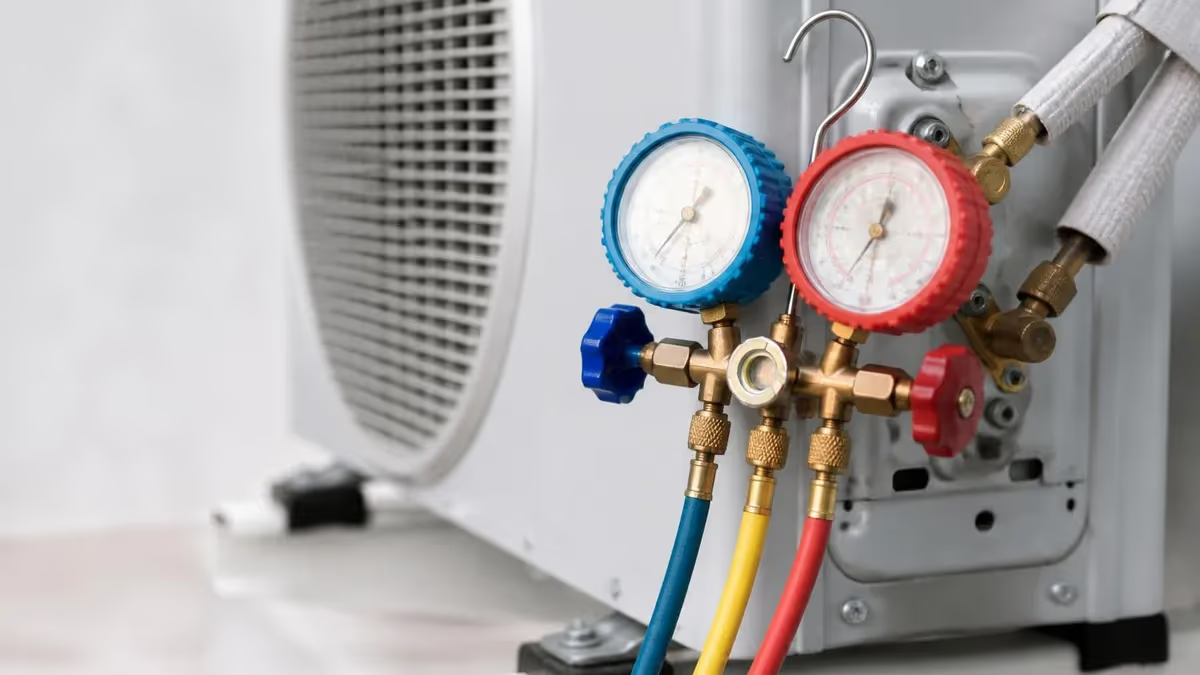
The world of hvac sales sits at a unique intersection of technical knowledge, consultative selling, and emotional intelligence. Unlike retail transactions where customers walk in already convinced they need a product, HVAC professionals must guide homeowners through one of the largest discretionary purchases they will ever make. A residential system replacement typically runs between $7,000 and $15,000, while commercial projects can stretch into six figures. Understanding how to translate technical specifications into tangible comfort, savings, and peace of mind is the foundation of every successful sale.
What separates top HVAC salespeople from average performers is rarely product knowledge alone. It is the ability to listen, diagnose actual customer pain points, and present solutions in language that resonates with a non-technical buyer. The best closers in the industry routinely earn $150,000 to $250,000 annually, and the difference between them and someone earning $60,000 often comes down to process discipline, follow-up consistency, and the ability to build genuine rapport in the first ten minutes of a home visit.
The HVAC industry generated approximately $136 billion in revenue across the United States in 2024, with replacement and retrofit work driving nearly 65% of residential sales. Aging housing stock, tightening efficiency regulations, and growing consumer interest in heat pumps and indoor air quality solutions are creating sustained demand. Salespeople who position themselves as trusted advisors rather than transactional vendors are capturing disproportionate market share, especially as utility rebates and federal tax credits make higher-efficiency equipment more accessible than ever.
This guide walks through the complete HVAC sales process from initial lead intake through post-installation referral generation. We will cover pricing strategy, objection handling, financing presentation, and the consultative techniques that turn a single sale into a lifetime customer. Whether you are a new comfort advisor learning the ropes, a seasoned technician transitioning into sales, or a contractor trying to systematize your team's approach, the principles here apply across markets, climates, and price points.
You will also learn how to navigate the technical knowledge boundary — knowing enough to be credible without overwhelming the customer with jargon. Strong salespeople understand SEER2 ratings, refrigerant transitions, load calculations, and ductwork dynamics well enough to answer questions confidently, but they translate every technical detail into a benefit the homeowner actually cares about. A 17 SEER2 system is not a feature; lower monthly bills and a quieter living room are.
Most importantly, this guide emphasizes ethical selling. Pressure tactics and high-pressure one-call closes still exist, but the long-term winners in HVAC are companies and individuals who prioritize fit over force. When you sell the hvac fcu to the right home at a fair price, you create referrals, reviews, and repeat business that compound for years. The training resources from hvac contractors reinforce this consultative mindset throughout the customer lifecycle.
By the end of this article, you will have a framework for diagnosing customer needs, presenting tiered options, overcoming the most common objections, and closing more deals without resorting to manipulation. We will also cover the metrics every sales manager should track, the technology stack that supports modern HVAC selling, and the certifications that boost credibility in front of skeptical homeowners.
HVAC Sales by the Numbers
The HVAC Sales Process Step-by-Step
Lead Intake and Qualification
In-Home Discovery
Load Calculation and System Design
Presenting Tiered Options
Financing and Close
Installation Handoff and Follow-Up
Qualifying leads is where most HVAC sales careers are made or broken. A salesperson running six appointments per day with poorly qualified leads will close fewer deals and earn less money than a peer running three appointments with thoroughly vetted prospects. The qualification process starts the moment a homeowner calls your office or submits a web form. Call center scripts should capture system age, the nature of the problem, who lives in the home, and whether both decision-makers will be present for the appointment.
The single most important qualifier is the presence of all decision-makers. A spouse who was not part of the consultation will almost always say no by default when the present spouse calls them to discuss a five-figure purchase. Top closing companies have a strict policy: if both decision-makers are not home, the appointment is rescheduled. This single rule can lift closing rates by 15 to 20 percentage points and dramatically reduces the time wasted on second visits.
Discovery in the home is fundamentally about uncovering pain. Hot spots in upstairs bedrooms, dust accumulation despite frequent cleaning, allergies that flare up in spring, energy bills that doubled over five years — these are the real reasons people buy. The technical solution comes second. Skilled comfort advisors ask open-ended questions like "Walk me through what a typical August afternoon feels like upstairs" instead of leading questions like "Is your upstairs hot?" The first version invites a story; the second invites a yes-or-no.
Inspect the existing system thoroughly. Note the manufacturer, model number, refrigerant type, ductwork condition, return air sizing, and any visible code issues. Take photos. This serves two purposes: it gives you ammunition during the presentation, and it positions you as a professional who actually knows what they are doing. Customers who watch you work for 30 minutes before you talk price are far more likely to trust your recommendations than someone who walks straight to the laptop.
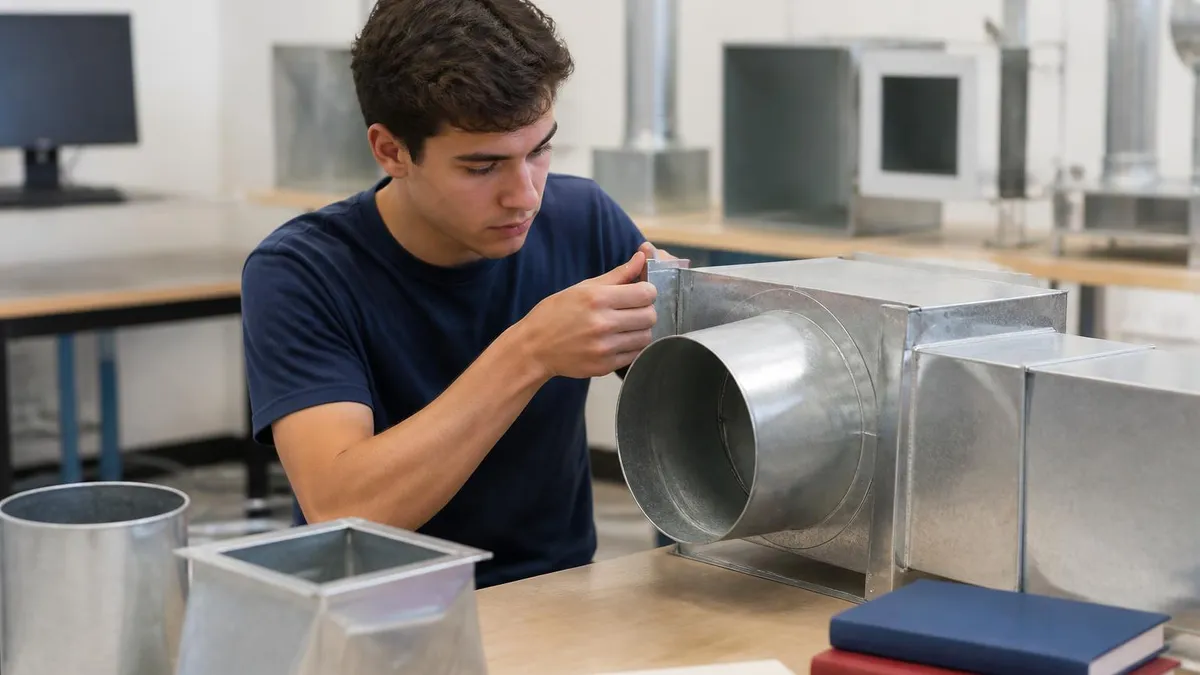
A proper load calculation is non-negotiable for replacement work. Rule-of-thumb sizing based on square footage is the leading cause of comfort complaints and warranty callbacks. The few minutes saved by skipping Manual J or a software-based load calc will cost hours in follow-up service and damage your reputation. When you tell a customer that the previous installer oversized their system by 30%, you immediately differentiate yourself from competitors who quote off the back of a business card. The detailed methodology behind proper duct sizing is covered in this HVAC Duct Calculator resource.
Budget conversations should happen during discovery, not at the close. Asking "What budget did you have in mind for this project?" early in the visit gives you valuable information without committing the customer to anything. If their stated budget is far below realistic pricing, you have time to recalibrate expectations with education about current equipment costs, labor rates, and the impact of refrigerant transitions on the industry. A surprise at the end of the visit is always worse than an honest conversation at the beginning.
Finally, document everything. A clean discovery sheet that captures the customer's exact words, their concerns, and the technical findings will be your most powerful selling tool when you present options. Reading their own words back to them — "You told me earlier that the upstairs is unbearable from June through September and you've tried two service companies that couldn't fix it" — creates an emotional anchor that no product brochure can match.
HVAC Practice Test Questions
Prepare for the HVAC - Heating Ventilation and Air Conditioning exam with our free practice test modules. Each quiz covers key topics to help you pass on your first try.
HVAC Air Conditioning
HVAC Exam Questions covering Air Conditioning. Master HVAC Test concepts for certification prep.
HVAC Code Compliance
Free HVAC Practice Test featuring Code Compliance. Improve your HVAC Exam score with mock test prep.
HVAC Electrical Controls
HVAC Test Prep for Electrical Controls. Practice HVAC Quiz questions and boost your score.
HVAC Energy Efficiency
HVAC Questions and Answers on Energy Efficiency. Free HVAC practice for exam readiness.
HVAC Heating Systems
HVAC Mock Test covering Heating Systems. Online HVAC Test practice with instant feedback.
HVAC Load Calculations
Free HVAC Quiz on HVAC Load Calculations. HVAC Exam prep questions with detailed explanations.
HVAC Tools and Equipment
HVAC Practice Questions for HVAC Tools and Equipment. Build confidence for your HVAC certification exam.
HVAC Refrigeration
HVAC Test Online for Refrigeration. Free practice with instant results and feedback.
HVAC Safety Practices
HVAC Study Material on Safety Practices. Prepare effectively with real exam-style questions.
HVAC System Design
Free HVAC Test covering System Design. Practice and track your HVAC exam readiness.
HVAC Thermodynamics
HVAC Exam Questions covering Thermodynamics. Master HVAC Test concepts for certification prep.
Pricing, Financing, and Presenting Options
The good-better-best framework is the backbone of modern HVAC sales. Present three distinct options with clear feature and benefit differences: a baseline 14.3 SEER2 system meeting minimum efficiency standards, a mid-tier 16 SEER2 two-stage system, and a premium 18+ SEER2 variable-speed inverter system. Each tier should solve the customer's stated problems but with increasing levels of comfort, efficiency, and warranty coverage.
Anchoring matters enormously. Always present the premium option first. Research consistently shows that customers shown the highest price first perceive subsequent options as more affordable. This is not manipulation — it is honest framing. Most customers will land on the middle tier, but they will land there feeling like they made a smart, value-driven choice rather than settling for the cheapest option in a discount-driven sale.
Is a Career in HVAC Sales Right for You?
- +Top earners regularly clear $150,000 to $250,000 annually with no degree required
- +Recession-resistant industry — heating and cooling are non-negotiable for most households
- +Performance-based pay rewards effort and skill rather than tenure or politics
- +Daily variety with new homes, customers, and technical challenges
- +Strong demand for skilled sellers across all US markets and climate zones
- +Clear career path into sales management, ownership, or manufacturer rep roles
- −Income volatility during slow seasons, especially shoulder months (April, October)
- −Evenings and Saturdays required to accommodate working homeowner schedules
- −Steep technical learning curve — must master equipment, codes, and load calculations
- −Emotional toll of rejection and price objections, especially early in career
- −Physical demands of crawling into attics, basements, and crawl spaces during discovery
- −High-pressure metrics culture at some companies that can lead to burnout
Pros and Cons at a Glance
| Pros | Cons |
|---|---|
| Recession-resistant industry — heating and cooling are non-negotiable for most households | Income volatility during slow seasons, especially shoulder months (April, October) |
| Performance-based pay rewards effort and skill rather than tenure or politics | Evenings and Saturdays required to accommodate working homeowner schedules |
| Daily variety with new homes, customers, and technical challenges | Steep technical learning curve — must master equipment, codes, and load calculations |
| Strong demand for skilled sellers across all US markets and climate zones | Emotional toll of rejection and price objections, especially early in career |
| Clear career path into sales management, ownership, or manufacturer rep roles | Physical demands of crawling into attics, basements, and crawl spaces during discovery |
Pre-Appointment HVAC Sales Checklist
- ✓Confirm both decision-makers will be present for the entire appointment
- ✓Review prior service history, system age, and any open warranty information
- ✓Pre-qualify the lead for financing using a soft credit check tool
- ✓Pack measuring tools, flashlight, manometer, and load calculation software
- ✓Bring printed proposals, financing applications, and rebate paperwork
- ✓Charge tablet or laptop and verify proposal software is updated
- ✓Research the neighborhood for comparable installations and pricing benchmarks
- ✓Confirm current utility rebates and federal tax credit eligibility for the area
- ✓Prepare three tiered system options with installed pricing ready before arrival
- ✓Set a clear close-by time goal and follow up within 24 hours if no decision
Listen 80% of the Time, Talk 20%
The single biggest predictor of closing success is the talk-to-listen ratio during the first 30 minutes of the appointment. Top performers ask questions and let customers do most of the talking. The customer reveals their motivations, budget, and decision criteria when given space — and that information is the foundation of a winning proposal.
Handling objections is where average HVAC salespeople collapse and elite performers shine. Every objection falls into one of five categories: price, timing, trust, need, or authority. Recognizing which category an objection belongs to determines your response. "I need to think about it" is rarely about thinking — it is usually a trust issue or a hidden objection the customer is uncomfortable raising. Your job is to surface the real concern, not to overcome a smokescreen.
The most common objection is price, and it is also the most misunderstood. When a customer says "that's too expensive," they almost never mean the absolute number is unreachable. They mean they do not yet see enough value to justify the investment. The correct response is never to drop price immediately. Instead, redirect to value: "Help me understand what feels too expensive about it — is it the monthly payment, the total investment, or are you comparing it to a number you had in mind?" The clarifying question buys you time and often reveals the real issue.
Timing objections like "we want to wait until spring" require empathy and education. Acknowledge their preference, then introduce the cost of waiting. Equipment prices have climbed 8 to 12% annually due to refrigerant transitions, labor shortages, and material costs. Federal tax credits have expiration windows. Their current system may fail catastrophically at the worst possible moment. None of this is fear-based selling when it is true — it is honest information that helps the customer make a better-informed decision.
Trust objections are subtle but devastating. They sound like "I want to get a couple more quotes" or "my brother-in-law is in the business." These signal that you have not yet established enough credibility for the customer to commit. The solution is rarely more talking. Instead, show them your work. Walk them through the load calculation, share manufacturer documentation, present customer reviews from their neighborhood, and offer to put them in touch with recent installations. Transparency builds trust faster than persuasion ever can.
Need objections — "the old system still works" — require careful handling. Avoid disparaging the existing equipment unless safety is genuinely at risk. Instead, frame the conversation around future risk and current opportunity. The 15-year-old system may work today but is running at 60% of its original efficiency, costing $400 to $800 more annually in energy bills than a modern system would. Add the inevitable repair costs and the math often justifies replacement on pure ROI.
Authority objections like "I need to talk to my spouse" should never happen if you qualified the lead properly. When they do happen anyway, schedule a callback meeting with both decision-makers rather than leaving a proposal and hoping for the best. Proposals left behind without a follow-up appointment close at less than 15% — proposals presented to both decision-makers in person close at 50% or higher. The economics demand persistence.
Finally, embrace the natural pause after asking for the sale. Inexperienced salespeople fill silence with discounts and concessions. Experienced closers ask the closing question — "Which option works best for your family?" — and then say nothing. The next person to speak controls the negotiation. Customers will often talk themselves into a decision if you give them the space to think out loud.

Aggressive one-call closing pressure tactics — "this price is only good today," manufactured urgency, refusing to leave without a signature — generate short-term sales but destroy long-term reputation. Online reviews, BBB complaints, and word-of-mouth damage compound for years. Modern consumers research extensively and detect manipulation immediately. Sell ethically or watch your career erode.
Building a long-term career in HVAC sales requires more than closing the next deal. The top earners in this industry have built systems around themselves — referral networks, repeat customer pipelines, and personal brands that generate inbound demand. A first-year comfort advisor running cold leads might close 30% of appointments. A ten-year veteran with a referral-driven pipeline regularly closes 60% or higher because every appointment starts with implicit trust.
Continuous education is non-negotiable. The HVAC industry is undergoing the largest technological transition in 30 years. The 2025 refrigerant transition from R-410A to A2L refrigerants like R-454B and R-32 has changed equipment design, installation requirements, and pricing structures. Heat pump technology has matured to the point where cold-climate models now operate efficiently at temperatures below zero. Salespeople who understand these shifts and can explain them clearly to homeowners have an enormous competitive advantage.
Manufacturer certifications matter for credibility. Carrier, Trane, Lennox, Daikin, and Mitsubishi all offer dealer-level sales certifications that signal expertise to customers. Combine these with NATE (North American Technician Excellence) certification on the technical side and you have credentials that justify premium pricing. A certified comfort advisor presenting a Trane diamond dealer certification has dramatically more pricing power than an uncertified competitor pitching the same equipment.
Technology adoption separates modern sales pros from legacy operators. CRM systems like ServiceTitan, FieldEdge, and Housecall Pro track every customer interaction, automate follow-up, and surface upsell opportunities at the right moments. Proposal software like Sera Systems and Coolfront generate professional-looking quotes in minutes rather than hours. Smart salespeople invest in these tools personally if their company will not — the productivity gains are massive.
Referral generation is the highest-use activity in HVAC sales. A satisfied customer with a fresh installation is 9x more likely to refer than the same customer a year later. Build a 30-60-90 day follow-up cadence: a thank-you call 48 hours after install, a maintenance reminder at 30 days, a review request at 60 days, and a referral request at 90 days. Companies that systematize this process see 25 to 35% of new business come from referrals alone. Local market expertise like that demonstrated by HVAC Repair Philadelphia providers also strengthens referral patterns.
Income diversification stabilizes career earnings. Top HVAC salespeople often layer service agreement sales, indoor air quality add-ons, water heater replacements, and ductwork modifications onto core system sales. A $12,000 system sale with an additional $800 IAQ package, $400 service agreement, and $1,200 zoning add-on dramatically improves both customer outcomes and personal commission. The right add-ons solve real problems — they are not arbitrary upsells.
Finally, protect your reputation fiercely. The HVAC sales community in any given market is small. Customers talk, contractors talk, and online reviews persist forever. A single deceptive practice can poison years of relationship building. The salespeople who build 20-year careers in this industry are universally known as straight shooters who deliver on their promises and stand behind their work even when it hurts in the short term.
Practical execution day-to-day separates concept from results. Block your calendar in 2-hour appointment windows with 30-minute travel buffers. Cramming six appointments into a single day sounds productive but produces rushed presentations and lost deals. Three focused, well-prepared appointments will outperform five rushed ones every time. Schedule appointments in geographic clusters to maximize selling time and minimize windshield time between homes.
Develop a personal pre-appointment ritual. Top performers review the lead notes, mentally rehearse their opening, visualize a successful close, and arrive 5 minutes early to compose themselves before knocking. This is not superstition — it is professional preparation that puts you in the right mental state to perform. Walking into a $15,000 sales conversation cold, distracted, or rushed almost guarantees a suboptimal outcome.
Master the first 90 seconds at the front door. Greet by name, shake hands firmly, compliment something specific about the home (landscaping, decor, neighborhood), and ask permission to come inside. Remove your shoes or put on booties without being asked. These micro-behaviors signal respect and dramatically improve the customer's openness to your presentation. First impressions are formed within seconds and are nearly impossible to reverse.
Track your numbers obsessively. Every salesperson should know their appointments per week, close rate, average ticket, gross profit per sale, and add-on attach rate. These five metrics tell you exactly where to focus improvement. If your close rate is strong but average ticket is low, you need to work on premium option presentation. If close rate is weak, focus on discovery and rapport. Data-driven self-coaching beats generic sales training every time.
Build relationships with installation teams. The technicians installing your sales are your most valuable internal allies. They will catch quote errors before they become customer disputes, alert you to upsell opportunities they notice in homes, and deliver experiences that generate referrals. Bring coffee on install day, recognize their work publicly, and treat them as partners rather than service providers. The teams that respect their salespeople deliver the cleanest installations.
Invest in your personal presentation. Customers are evaluating you constantly — your vehicle, your uniform, your nails, your breath, your tablet, your handshake. Maintain a clean, professional appearance that matches the premium nature of the product you sell. A $250,000-per-year comfort advisor looks the part, drives a clean vehicle, and carries themselves with the quiet confidence that comes from competence. Customers buy from people they perceive as successful and credible.
Finally, take care of your mental and physical health. HVAC sales is a marathon, not a sprint. Burnout is real and common. Sleep seven to eight hours nightly, exercise regularly, eat lunch instead of skipping it, and take real days off without checking your phone. The salespeople who sustain top performance for decades treat their bodies and minds as the income-generating assets they truly are. A great year means nothing if you cannot repeat it for the next ten.
Sample HVAC Practice Questions
Try these questions from our free HVAC practice tests. The correct answer and an explanation follow each question.
In a multi-zone mini-split heat pump system, what happens if one indoor unit calls for heating while another calls for cooling simultaneously?
- A. The system defaults to cooling mode for all zones
- B. On a standard multi-split, the system serves the majority mode; on a heat-recovery multi-split (VRF), both can be served simultaneously
- C. The system shuts down to prevent conflicting operations
- D. The reversing valve oscillates rapidly to alternate between modes
Answer: B. On a standard multi-split, the system serves the majority mode; on a heat-recovery multi-split (VRF), both can be served simultaneously
Standard multi-split systems cannot simultaneously heat and cool, but heat-recovery VRF systems can transfer heat from zones needing cooling to zones needing heating at the same time.
What is 'fault detection and diagnostics' (FDD) in commercial HVAC systems?
- A. A manual inspection protocol performed by service technicians quarterly
- B. Automated software algorithms that continuously analyze sensor data from HVAC equipment to identify faults, degraded performance, and equipment failures before they cause major problems
- C. The process of diagnosing refrigerant leaks using electronic leak detectors
- D. A building code requirement for documenting HVAC failures and repairs
Answer: B. Automated software algorithms that continuously analyze sensor data from HVAC equipment to identify faults, degraded performance, and equipment failures before they cause major problems
FDD systems use continuous monitoring of temperature, pressure, flow, and power data from HVAC equipment, comparing actual performance to expected performance models to automatically identify faults and alert operators.
Which of the following is an 'internal gain' source that adds to the cooling load in a building?
- A. Exterior wall conduction
- B. Occupants, lighting, and appliances
- C. Outdoor air infiltration only
- D. Ground-floor slab conduction
Answer: B. Occupants, lighting, and appliances
Internal gains from people, lights, and equipment add sensible and latent heat directly to the conditioned space, increasing the required cooling capacity.
In a Manual J calculation, what is the term for the maximum heat gain a building experiences, which determines the required cooling capacity?
- A. Design heating load
- B. Peak cooling load
- C. Infiltration load
- D. Ventilation load
Answer: B. Peak cooling load
The peak cooling load (design cooling load) represents the maximum rate of heat gain at the design outdoor conditions and governs the selection of cooling equipment.
HVAC Questions and Answers

HVAC Duct Supplies: The Complete Buyer's Guide to Ductwork Components, Sizing, and Installation Materials

HVAC Duct Calculator: The Complete Guide to Sizing Ductwork for Airflow, Static Pressure, and System Efficiency
Certified HVAC Contractors: How to Find, Vet, and Hire the Right Professional for Your Home or Business

HVAC Repair Philadelphia: The Complete Homeowner's Guide to Finding, Hiring, and Working With Local Heating and Cooling Pros
Best HVAC Repair in Bandon, OR: Local Services Near Me Guide
About the Author

NATE Certified HVAC Technician & Licensing Exam Trainer
Universal Technical InstituteMike Johnson is a NATE-certified HVAC technician and EPA 608 universal-certified refrigerant handler with a Bachelor of Science in HVAC/R Technology. He has 19 years of commercial and residential HVAC installation and service experience and specializes in preparing technicians for NATE certification, EPA 608, A2L refrigerant safety, and state HVAC contractor licensing examinations.