
HVAC Field Service Software: The Complete Guide for Modern HVAC Businesses
HVAC field service software explained: features, top platforms, costs, and how to choose the right tool for your heating and cooling business. ❓

HVAC field service software has become one of the most important operational investments a heating and cooling company can make in 2026. Whether you run a two-technician residential outfit or a regional commercial operation with dozens of crews, the right platform dramatically reduces paperwork, speeds up invoicing, and helps dispatchers route technicians more efficiently. Companies that adopt dedicated hvac field service software typically report cutting administrative time by 30 to 50 percent within the first few months of deployment.
At its core, HVAC field service software is a digital operations platform that connects the office to the field in real time. When a customer calls for a broken air handler, the dispatcher enters the job, assigns a technician, and sends a notification — all in seconds. The technician receives job details, equipment history, and turn-by-turn routing on a mobile app. After the repair, they capture the customer's signature, generate an invoice, and collect payment without ever driving back to the office. That end-to-end workflow is the foundation every good platform is built on.
The HVAC industry faces unique operational pressures that general-purpose project management tools cannot address. Seasonal demand spikes mean that in July, your dispatcher might be juggling 80 service calls while managing preventive maintenance contracts and equipment installs simultaneously. Service agreements need to be tracked, renewed, and billed automatically. Refrigerant usage must be logged to satisfy EPA 608 compliance requirements. Parts inventory sitting in a dozen service vans must be monitored so technicians are never caught without a capacitor or contactor on a 95-degree afternoon.
Choosing the wrong software — or using no software at all — creates hidden costs that compound quickly. A missed maintenance visit because no one flagged an expiring contract could mean losing a $2,400-per-year customer. An invoice sent three weeks late costs cash flow. A technician dispatched across town when a closer technician sat idle wastes fuel and customer time. HVAC-specific software is designed to eliminate each of these failure points through automation, real-time visibility, and structured workflows.
The market for HVAC field service software has matured considerably. Platforms like ServiceTitan, Jobber, FieldEdge, Housecall Pro, and Service Fusion each target slightly different segments of the industry. ServiceTitan dominates among larger, growth-oriented companies willing to invest in a comprehensive solution with robust reporting. Jobber appeals to smaller contractors who want simplicity and a lower price point. FieldEdge and Service Fusion occupy a strong middle ground with deep HVAC-specific features. Understanding these differences is critical before committing to a multi-year contract.
Beyond the operational benefits, field service software increasingly integrates with marketing tools, customer relationship management systems, and financing platforms. When a technician identifies an aging furnace during a tune-up, the best software lets them present a replacement quote, offer same-day financing approval, and schedule the install — all from a tablet. This kind of point-of-sale capability transforms technicians from repair-only personnel into revenue generators, which is why companies that fully leverage their platforms often see significant revenue growth in the first year.
This guide covers everything HVAC business owners and operations managers need to know about field service software: the core features to evaluate, how leading platforms compare, realistic pricing expectations, implementation pitfalls, and a practical checklist for selecting and deploying the right tool for your specific business size and service mix.
HVAC Field Service Software by the Numbers
Core Features Every HVAC Field Service Platform Must Have
Drag-and-drop dispatch boards with real-time technician GPS tracking, skill-based job assignment, and automated customer notifications when a tech is on the way. Reduces missed appointments and cuts average drive time per call.
Offline-capable iOS and Android apps that give technicians job details, equipment history, parts lists, and digital forms. Technicians can complete work orders, capture photos, and collect signatures without paper or phone calls to the office.
On-site invoice generation with automatic pricing from a built-in price book. Integrated payment processing via credit card, ACH, or financing. Same-day invoicing reduces outstanding receivables and improves cash flow across seasonal demand swings.
Automated tracking of preventive maintenance contracts with renewal reminders, scheduled visit creation, and recurring billing. Protects recurring revenue by eliminating the manual effort of monitoring contract expirations across hundreds of customers.
Real-time visibility into parts stocked across warehouse and technician vans. Automated purchase order generation when stock falls below minimum thresholds. Prevents lost revenue from jobs delayed because a technician lacks the right part.
Comparing HVAC field service platforms requires looking beyond the feature checklist on a vendor's marketing page. The platforms that work best for HVAC contractors are built specifically around the workflows, compliance requirements, and business models unique to the heating and cooling trade. A platform designed primarily for plumbers or electricians will often lack critical HVAC features like refrigerant tracking, equipment unit-level service history, or IAQ product sales integration. Before evaluating demos, define which features your business cannot operate without, then use that list as a filter.
ServiceTitan is the most widely discussed HVAC software, and for large residential service companies processing more than $3 million in annual revenue, it often justifies its premium price. The platform's reporting suite is genuinely best-in-class, offering technician performance scorecards, campaign-level marketing ROI tracking, and revenue-per-call metrics that help owners identify underperformers quickly. ServiceTitan's Pricebook Connect feature integrates with major distributor pricing feeds, which saves hours of manual price book maintenance each week. The platform also has a robust customer portal and financing integrations with GreenSky and Service Finance Company.
Jobber targets the smaller end of the market — typically one to fifteen technicians — with a cleaner interface and simpler onboarding. For an HVAC company just moving off paper invoices or basic spreadsheets, Jobber provides immediate value without overwhelming staff during the transition. The platform handles scheduling, invoicing, customer communication, and basic reporting at a price point starting around $49 per month. It lacks some of the deeper HVAC-specific features like refrigerant logging and advanced flat-rate pricing, but for a small residential contractor focused on getting organized, it is a practical starting point.
FieldEdge has deep roots in the HVAC and plumbing industries and offers a strong middle-ground option for companies with five to thirty technicians. Its equipment tracking functionality is particularly strong — technicians can pull up every unit at a customer's property, view full service history, and attach photos and documents to individual equipment records. This capability pays dividends when a commercial customer asks for documentation of all maintenance performed on their rooftop units over the last three years. FieldEdge also integrates directly with QuickBooks in both directions, which many accounting teams prefer over platforms that require manual exports.
Housecall Pro has grown aggressively and now serves thousands of HVAC contractors, particularly in the residential market. Its consumer-facing features are among the best in the industry — automated review requests, real-time technician tracking shared with customers, and a self-service booking widget that installs on your website in minutes. For companies prioritizing customer experience and online reputation, Housecall Pro's marketing automation tools can deliver measurable results without requiring a separate CRM or email marketing platform.
Service Fusion offers one of the most flexible pricing structures in the market, with a flat monthly fee rather than per-technician pricing. For companies with larger field teams, this can represent significant savings compared to platforms that charge $50 to $100 per technician per month. The trade-off is that Service Fusion's mobile app experience is less polished than competitors, and its reporting capabilities, while functional, require more manual setup to generate the insights a growth-focused owner needs on a daily basis.
When evaluating any platform, request a 30-day trial with your actual data loaded — not the vendor's demo environment. Import your real customer list, build your actual price book, and run your dispatchers and technicians through a simulated work week. Platforms that look impressive in a polished demo sometimes reveal usability problems when a technician tries to complete a work order in a cramped mechanical room on a phone with grimy work gloves. Real-world testing before signing a contract is non-negotiable.
Migration from one platform to another is painful and expensive, so treat your initial selection with the same seriousness you would give to hiring a key operations manager. The platforms are sticky — once your customer history, equipment records, and agreement billing are inside a system, extracting and migrating that data typically costs $5,000 to $20,000 in professional services fees and involves weeks of downtime risk. Choose carefully the first time, with a clear-eyed assessment of where your business will be in three to five years, not just where it is today.
HVAC Field Service Software: Pricing, ROI, and Total Cost of Ownership
HVAC field service software pricing ranges from $49 per month for entry-level platforms like Jobber to $600 or more per month for enterprise solutions like ServiceTitan with multiple add-on modules. Most platforms in the mid-market charge between $100 and $300 per month for a base package covering scheduling, dispatch, invoicing, and the mobile technician app. Per-technician pricing models typically add $25 to $75 per active user, which means a ten-technician team might pay $400 to $1,000 per month in total software costs before optional integrations.
Beyond the base subscription, HVAC contractors should budget for one-time implementation fees that commonly run $500 to $5,000 depending on data migration complexity and training requirements. Payment processing fees, typically 2.5 to 3.5 percent per card transaction, add another layer of cost that many buyers overlook in initial comparisons. When evaluating two platforms at similar subscription prices, the one with lower processing fees can easily save $3,000 to $8,000 per year for a company processing $500,000 in annual card volume.

HVAC Field Service Software: Advantages and Limitations
- +Eliminates paper invoices and manual data entry, saving 10–20 admin hours per week for most operations
- +Real-time GPS dispatch visibility reduces average drive time per call and improves on-time arrival rates
- +Automated service agreement reminders and billing protect recurring revenue from slipping through the cracks
- +Mobile work orders give technicians full customer and equipment history in the field, reducing call-backs
- +Integrated payment processing allows technicians to collect payment on-site, accelerating cash flow significantly
- +Sales presentation tools with good-better-best pricing and financing options increase average ticket values by 15–25%
- −Enterprise platforms like ServiceTitan require substantial upfront investment and multi-year contracts that can exceed $15,000 annually
- −Onboarding and data migration can take four to eight weeks and temporarily reduce field team productivity
- −Technicians uncomfortable with smartphones may resist adoption, requiring additional training investment
- −Per-technician pricing models become expensive as headcount grows, cutting into the ROI at larger team sizes
- −Software reliability depends on mobile data connectivity — rural service areas with weak signal can disrupt field workflows
- −Switching costs are very high once customer history and equipment records are embedded in one platform
HVAC Field Service Software Deployment Checklist
- ✓Audit your current workflows and document every manual step before selecting a platform
- ✓Define must-have features versus nice-to-have features in writing before watching any vendor demos
- ✓Request a 30-day pilot with your actual customer data, not the vendor's sample environment
- ✓Negotiate data export rights and contract exit provisions before signing any multi-year agreement
- ✓Assign an internal implementation champion who owns training, adoption tracking, and issue escalation
- ✓Build your price book in the new platform before go-live, including flat-rate labor and common parts
- ✓Train dispatchers first, then technicians, then office staff to ensure field workflows are stable before back-office cutover
- ✓Run parallel systems for two to four weeks — keep your old process as a fallback until the new platform is proven
- ✓Set measurable adoption KPIs: percentage of work orders completed digitally, time from job complete to invoice sent
- ✓Schedule a 90-day post-go-live review with your vendor to address configuration gaps and underutilized features
The Average Ticket Metric Is Your Biggest ROI Lever
Most HVAC contractors focus on dispatch efficiency when evaluating field service software, but the largest financial return usually comes from sales tools. Platforms with built-in good-better-best pricing presentations consistently drive 15 to 25 percent higher average ticket values — meaning every call your technicians run generates more revenue without adding a single truck or employee. Prioritize platforms that make presenting upgrade options easy and natural for your technicians in the field.
Integrating HVAC field service software with your existing business systems is where many contractors underestimate complexity. The most common integration need is accounting — specifically connecting field service transactions to QuickBooks, Xero, or Sage in real time. Nearly every major platform offers QuickBooks Online integration, but the depth varies significantly. Some integrations sync invoices and payments bidirectionally, while others only push completed invoices one way. Before selecting a platform, sit down with your bookkeeper or accountant and map exactly which data fields need to flow, in which direction, and how frequently.
Customer relationship management integration is increasingly important for HVAC companies that invest in marketing. Platforms like ServiceTitan and Housecall Pro have built-in CRM functionality that tracks call source, campaign attribution, and customer lifetime value. For companies using external CRM tools like HubSpot or Salesforce, native integrations are rare — most require middleware like Zapier to bridge the gap. Before building Zapier automations, verify that both systems expose the specific data fields you need through their APIs, because discovering a missing field after going live is a painful and expensive surprise.
Marketing automation integration allows HVAC companies to trigger targeted campaigns based on field service data. When a technician notes during a spring tune-up that a condenser is approaching end of life, software with marketing integration can automatically enroll that customer in a replacement campaign sequence. Similarly, customers whose maintenance agreements expire in 60 days can be automatically added to a renewal email sequence without any manual office action. These trigger-based marketing capabilities, when properly configured, generate measurable recurring revenue from what would otherwise be missed opportunities.
Supplier and distributor integrations are underutilized by most HVAC contractors but represent real operational value. Several platforms integrate directly with major HVAC distributors like Wesco, Johnstone, or Ferguson, allowing technicians to check live part availability and pricing from the field and create purchase orders directly from a work order.
For a technician who discovers they need a specific blower motor to complete a job, being able to confirm the part is in stock at the local branch and reserve it without calling the office saves an hour and often means completing the repair the same day instead of scheduling a return visit.
Payment processing integrations have evolved well beyond basic credit card acceptance. Modern HVAC field service platforms integrate with consumer financing programs that allow customers to apply for and receive approval on a $6,000 system replacement in minutes. HVAC companies that offer point-of-sale financing close a significantly higher percentage of system replacement proposals — industry data suggests approval rates increase ticket closure by 20 to 35 percent on high-ticket equipment sales. Ensure your chosen platform integrates with at least two financing partners so you can present options and have a backup when one lender's approval rates are low.
GPS and fleet management integration adds a layer of operational visibility that standalone field service platforms do not provide on their own. Platforms that connect to dedicated fleet GPS systems like Samsara or Verizon Connect can surface driver behavior data — harsh braking, excessive idling, speeding — alongside dispatch information. For companies managing more than ten vehicles, this combined view helps operations managers reduce fuel costs and insurance risk simultaneously. Some field service platforms are beginning to build lightweight GPS tracking natively into their mobile apps, which is worth evaluating if your fleet management needs are modest.
Finally, home warranty company integrations are valuable for HVAC contractors who do significant home warranty work. Companies like American Home Shield and First American Home Warranty have partner portals that can be integrated with leading field service platforms to auto-populate job details, submit completion reports, and receive payment authorization without manual data re-entry. For contractors doing 50 or more warranty calls per month, eliminating double data entry across systems can save five to ten hours of administrative time weekly and reduce billing errors that delay payment.
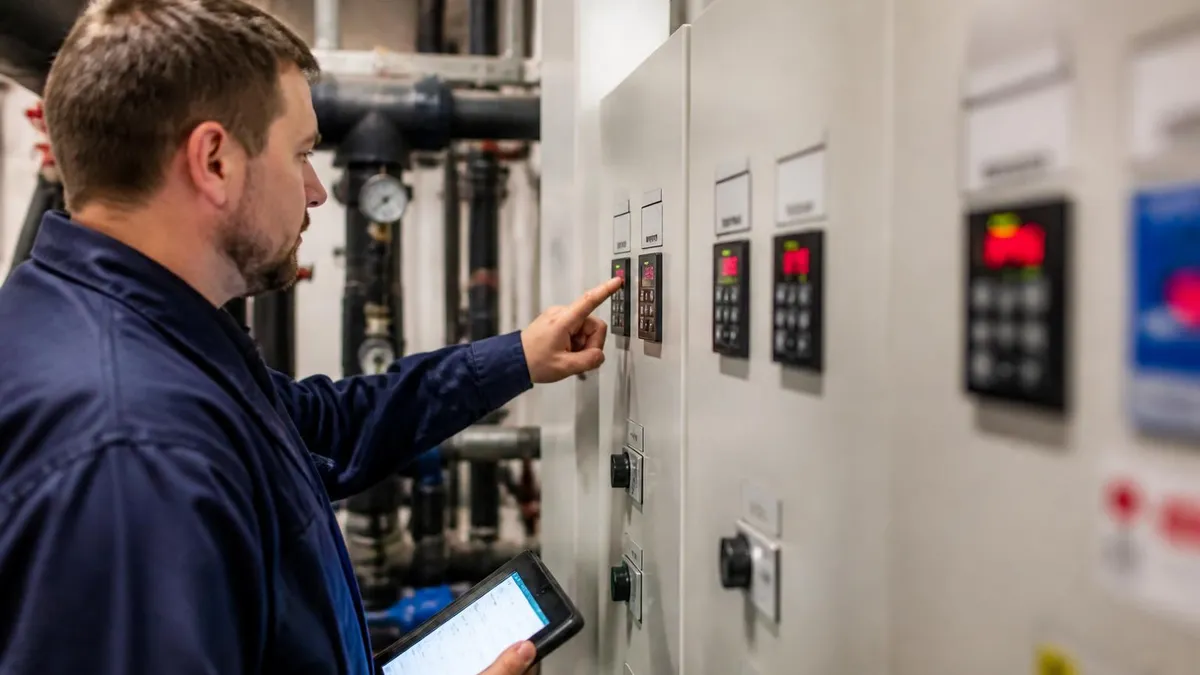
Many enterprise HVAC software contracts include clauses that make exporting your customer and equipment data difficult or expensive if you leave the platform. Before signing any agreement longer than 12 months, demand written confirmation that you can export all records — customer contacts, equipment histories, service records, and invoices — in a standard machine-readable format at any time during your subscription. Verbal assurances from a sales representative are not sufficient. This protection is particularly important for companies with more than 1,000 customer records, where re-entering data on a new platform would take weeks.
Choosing the right HVAC field service software for your specific business size is more important than selecting the platform with the most features. A 120-technician commercial HVAC company and a three-person residential service company have fundamentally different operational needs, and the software that serves one well may actively frustrate the other. Start with an honest assessment of your current revenue, technician count, service mix, and growth plans for the next three years, then match those parameters to the platform tiers designed for companies at your stage.
For solo operators and companies with fewer than five technicians, simplicity and mobile-first design should be the primary selection criteria. At this scale, you likely need scheduling, basic invoicing, and customer communication features — not enterprise reporting dashboards or complex inventory management systems. Jobber, Housecall Pro, and Workiz all serve this segment well. The goal at this stage is eliminating paper and getting paid faster; avoid platforms that will require more setup time than they save in the first year.
Companies with five to twenty technicians are in the most competitive part of the market, with strong options at multiple price points. At this scale, service agreement management becomes a meaningful revenue protection need, and the dispatch board needs to handle genuine complexity — multiple skill sets, equipment types, and geographic zones. FieldEdge, Service Fusion, and the mid-tier Jobber plan all address this range effectively. Budget realistically for implementation, including two to four weeks of reduced productivity during the transition, and build that cost into your ROI calculation before committing.
For companies with twenty or more technicians, the investment in a platform like ServiceTitan often becomes economically justified because the reporting and management tools at that scale generate decisions worth far more than the software cost. At 25-plus technicians, your dispatch complexity, revenue volume, and management information needs cross a threshold where basic platforms create more problems than they solve. The ability to track technician performance, identify underperforming revenue categories, and manage complex service agreement portfolios requires the kind of robust data infrastructure that only enterprise-tier platforms provide reliably.
Commercial-focused HVAC contractors have a distinct set of requirements that not all platforms serve equally. Commercial work often involves multi-site customers, preventive maintenance contracts with detailed service documentation requirements, and invoicing with purchase order numbers that must match customer billing systems. Some platforms handle commercial workflows well — FieldEdge and ServiceTitan both have strong commercial capabilities — while others are primarily optimized for residential service and struggle with the documentation and billing complexity of commercial accounts. If commercial work represents more than 30 percent of your revenue, test commercial-specific workflows explicitly during your trial period.
Geographic expansion plans should influence your platform selection even if you are currently a single-location operation. If you plan to open a second location or acquisition in the next two to three years, ensure your chosen platform supports multi-location management with appropriate data separation, location-level reporting, and the ability to share a customer database across locations.
Discovering that your platform does not support multi-location operations after you sign a lease for your second office is an expensive and avoidable mistake. Platform scalability should be part of every initial evaluation conversation with vendors, not an afterthought raised during a contract renewal negotiation.
Finally, consider the vendor's financial stability and long-term product roadmap. The HVAC software market has seen significant consolidation, with private equity firms acquiring several mid-market platforms in recent years. Acquisitions sometimes lead to price increases, feature neglect, or outright platform discontinuation. Before committing to any platform, research the vendor's ownership structure, funding history, and customer retention track record. Platforms that have maintained consistent product investment and customer satisfaction scores over five or more years are meaningfully lower risk than newer entrants or recently acquired products with uncertain product roadmaps.
Successfully implementing HVAC field service software requires as much attention to change management as it does to technical configuration. The most common reason software implementations fail is not a technology problem — it is adoption. Technicians who have used paper invoices for fifteen years often resist switching to a mobile app, and if company leadership does not enforce consistent use from day one, the investment delivers only a fraction of its potential value. Establish clear expectations before go-live: paper work orders are not an option after the cutover date, and technician performance reviews will include a digital adoption metric.
Training should be structured and role-specific, not generic. A dispatcher's training on the software looks completely different from a technician's training or an office manager's training. Generic group training sessions that try to cover everything for everyone typically result in nobody learning anything deeply enough to use it confidently. Invest in role-based training modules — many vendors provide these, and third-party HVAC software trainers are available for platforms like ServiceTitan if you want hands-on coaching. Pair new users with internal power users for their first two weeks so they have immediate answers to workflow questions without slowing operations.
Price book setup is one of the most time-consuming but highest-value implementation tasks. A well-built price book with flat-rate pricing for common HVAC repairs eliminates the need for technicians to calculate labor time on-site, ensures consistent pricing across all technicians, and makes it easy to present good-better-best options to customers.
Building a comprehensive price book from scratch takes 20 to 60 hours depending on your service offering breadth, but once built, it directly increases average ticket values and reduces time spent per invoice. Consider hiring a pricing consultant familiar with HVAC flat-rate models if your team lacks the bandwidth to build it internally.
Customer communication automation is one of the fastest ways to generate a visible ROI in the first 90 days after go-live. Configure automated appointment confirmation texts, on-the-way notifications with technician name and photo, and post-service follow-up messages that request Google reviews. For most HVAC contractors, Google reviews are their most important digital marketing asset, and automating the review request process can triple the monthly review volume within weeks. Customers who receive professional, timely communication throughout the service experience are also significantly less likely to dispute invoices or request callbacks, which reduces administrative burden further.
Reporting configuration should be prioritized immediately after go-live, not treated as something to get to later. Identify the five to seven metrics your leadership team needs to see weekly — revenue per call, service agreement renewal rate, technician utilization, average response time, and dispatch-to-invoice cycle time are strong starting points — and build those dashboards before the first full week of live operations. Managers who cannot see key performance indicators in near real-time tend to default to gut-feel decisions, losing the data-driven management capability that justifies much of the software investment.
Mobile app performance varies dramatically across different devices and operating system versions, so standardize the hardware your technicians use. Many HVAC companies that struggle with field app performance discover the issue is a mix of old Android phones running outdated OS versions that the app vendor no longer fully supports.
Establish a device policy — company-issued phones or a supported model list with minimum OS requirements — and enforce it before go-live. The cost of replacing five aging smartphones is trivial compared to the operational disruption of technicians unable to complete work orders in the field because the app crashes repeatedly.
Set a 90-day review milestone with your vendor after go-live. At that point, you will have real operational data to identify which features are being used, which workflows have friction, and which promised capabilities are not delivering expected results. Many platform features are powerful but require specific configuration to work as intended, and a 90-day review with a vendor implementation specialist often surfaces settings adjustments that unlock significant additional value. Treat your software vendor as a long-term operational partner, not a one-time purchase, and hold them accountable for your success with regular structured reviews throughout the contract term.
HVAC Questions and Answers

Ameristar HVAC: Complete Guide to Units, Reliability, Costs, and Buyer Considerations
Residential HVAC: Systems, Selection, and Maintenance Basics

HVAC Industry Trends 2026: The Complete Guide to Heat Pumps, Refrigerant Changes, Smart Controls, and Workforce Shifts Reshaping Heating and Cooling
HVAC Advertising: The Complete Playbook for Generating Leads, Booking Calls, and Growing Your Heating and Cooling Business
HVAC License: State Requirements, EPA 608 and Career Path Guide
About the Author

NATE Certified HVAC Technician & Licensing Exam Trainer
Universal Technical InstituteMike Johnson is a NATE-certified HVAC technician and EPA 608 universal-certified refrigerant handler with a Bachelor of Science in HVAC/R Technology. He has 19 years of commercial and residential HVAC installation and service experience and specializes in preparing technicians for NATE certification, EPA 608, A2L refrigerant safety, and state HVAC contractor licensing examinations.