
Black Owned HVAC Companies: How to Find, Support, and Grow Minority-Owned Heating and Cooling Businesses
💯 Discover how to find black owned HVAC companies, support minority contractors, and grow as a Black entrepreneur in heating and cooling services.

Finding a black owned HVAC company in your area is increasingly important to homeowners, businesses, and municipalities that want their dollars to support diverse, community-rooted contractors. The heating and air conditioning trade is one of the largest skilled-labor sectors in the United States, yet Black-owned firms represent only a small fraction of licensed HVAC businesses nationwide. That gap creates both a challenge and an opportunity: a challenge for aspiring minority entrepreneurs entering a capital-intensive industry, and an opportunity for consumers who want their service decisions to reflect their values around economic equity and community investment.
The HVAC industry generates over $130 billion in annual revenue, and the U.S. Bureau of Labor Statistics projects roughly 42,500 job openings each year for heating, ventilation, and air conditioning technicians through 2032. Despite these numbers, fewer than 4% of HVAC business owners identify as Black, according to industry surveys cited by the Air Conditioning Contractors of America. The reasons are structural: limited access to startup capital, fewer multigenerational trade networks, and historical barriers to apprenticeships and union membership that took decades to dismantle.
This guide is built for two audiences. The first is the homeowner or facility manager searching for a qualified Black-owned heating and cooling contractor in their service area. The second is the technician, journeyman, or aspiring entrepreneur exploring how to launch and scale a minority-owned HVAC business. Both groups benefit from the same information: how the industry is structured, what credentials to look for, where capital and certifications live, and how to evaluate quality of service in a trade where mistakes are expensive and safety stakes are high.
We will walk through directories and verification tools that help you locate Black-owned contractors, the certifications that signal genuine technical competence, the financial and licensing requirements behind every legitimate HVAC business, and the marketing strategies that help minority-owned firms compete with national chains. You will also see how the broader business ecosystem — supplier diversity programs, government set-asides, and nonprofit accelerators — actively supports growth for Black entrepreneurs in the trades.
If you are already exploring careers in this field, the path from helper to licensed contractor is well-defined, even if it is rarely easy. Programs run by community colleges, the NAACP, the National Association of Minority Contractors, and the Urban League regularly fund tuition, tools, and exam prep for Black students entering HVAC training. For homeowners working with certified HVAC contractors, knowing the certification and insurance baseline protects you from unlicensed work and voided manufacturer warranties.
Quality matters as much as representation. A great Black-owned HVAC firm is, first, a great HVAC firm — properly licensed, EPA 608 certified, insured, NATE qualified, and backed by verifiable customer reviews. The goal of this guide is to give you the tools to identify those companies, vet them with confidence, and understand the wider business landscape that shapes who gets to thrive in heating and cooling services.
By the end, you will know which directories to trust, which questions to ask before signing a quote, which warning signs indicate a fly-by-night operation, and which resources can help a Black HVAC entrepreneur secure financing, win commercial contracts, and build the kind of multigenerational business that compounds wealth in communities that have historically been excluded from the trades.
Black-Owned HVAC Businesses by the Numbers
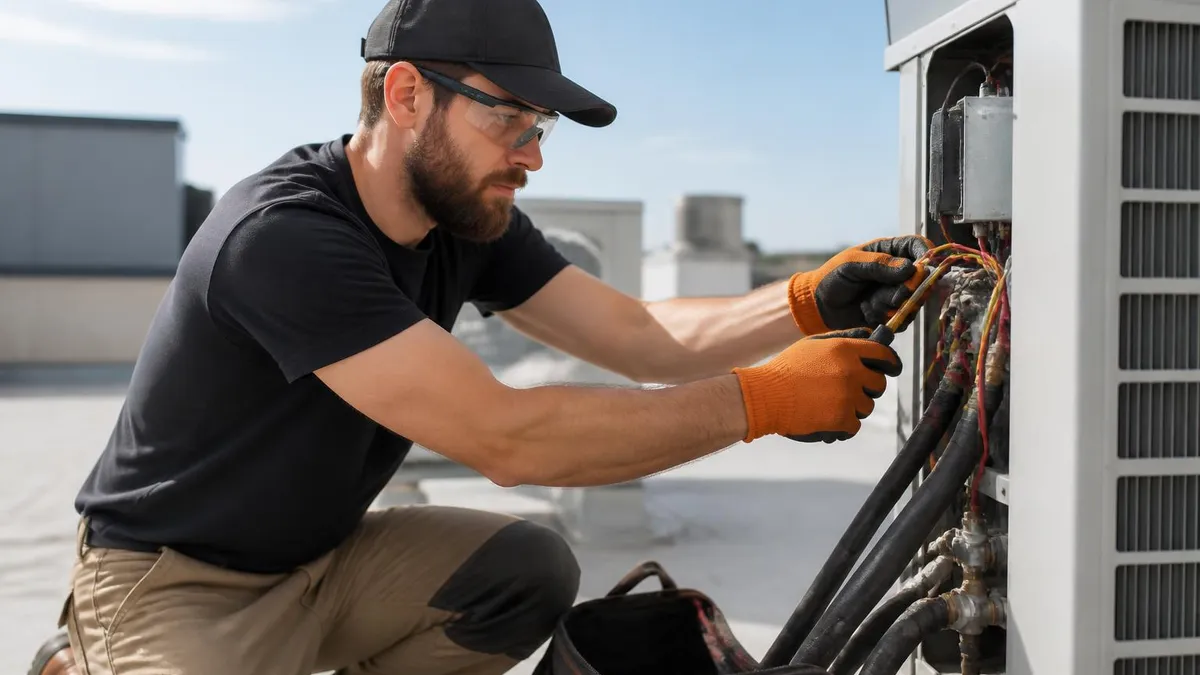
Business Structure and Licensing Requirements
Most HVAC businesses register as an LLC for liability protection and tax flexibility. Filing fees range from $50 to $500 depending on the state, plus annual reporting costs.
Forty-three states require an HVAC contractor license. Requirements typically include two to five years of journeyman experience, a passed trade exam, and proof of insurance.
Federally required to handle refrigerants. Universal certification covers all appliance types and is the baseline credential every HVAC business owner should maintain.
Minimum $1 million per occurrence is standard, with workers' compensation required in nearly every state. Bonding requirements vary from $5,000 to $50,000.
Minority Business Enterprise certification through NMSDC unlocks supplier diversity contracts with Fortune 500 firms, hospitals, school districts, and federal agencies.
Finding a black owned HVAC company starts with knowing where minority-owned contractors actually list themselves. The most reliable national directories are the National Minority Supplier Development Council (NMSDC), the U.S. Black Chambers business directory, and Official Black Wall Street. Each of these platforms verifies ownership before listing, so you avoid the marketing-only listings that pad less rigorous platforms. Local options include city supplier diversity registries, which many municipalities publish online to help residents find certified Minority Business Enterprises operating in their region.
Search engines are useful but require care. Generic queries like "black owned hvac near me" often surface aggregator sites that scrape data without verification. To filter for legitimacy, cross-reference any result against state contractor license boards. Every state publishes a free lookup tool where you can verify a license number, see disciplinary history, and confirm insurance is active. If a contractor cannot provide a license number on first request, treat that as a red flag regardless of how the business presents itself.
Social platforms have become powerful discovery tools for minority-owned trades. Instagram, TikTok, and Nextdoor host active communities of Black HVAC technicians documenting installs, sharing maintenance tips, and posting customer testimonials. Many of the most successful Black-owned contractors built their early customer base through video walkthroughs of duct cleanings, condenser replacements, and hvac emergency repair mc leans. These videos double as marketing and credential — you can literally watch the technician work before booking.
Word of mouth still drives most HVAC hiring decisions. Faith communities, alumni networks of historically Black colleges and universities, and local chapters of the National Association of Minority Contractors regularly maintain informal lists of trusted Black-owned trades businesses. If you live in a metro with an active Black chamber of commerce, that chamber's member directory is almost always the highest-signal starting point.
For larger commercial or institutional buyers, supplier diversity portals are the standard. Procurement teams at universities, hospital systems, and Fortune 500 companies are often required to spend a percentage of their budget with certified minority-owned vendors. These portals — Coupa, SAP Ariba, and proprietary systems — list NMSDC-certified HVAC firms by service area and capacity. Homeowners cannot access these directly, but they reflect the broader infrastructure that helps Black-owned HVAC companies grow beyond residential work.
Once you locate two or three candidates, the vetting process mirrors what you would do for any contractor. Confirm the license, request proof of insurance, ask about EPA 608 and NATE certifications, and request three references for jobs similar in scope to yours. Reading recent reviews on Google Business Profile and the Better Business Bureau gives you patterns over time, not just isolated impressions, and helps you distinguish a one-off complaint from a recurring service problem.
Finally, do not treat "black owned" as a substitute for vetting. The point of supporting minority-owned businesses is to direct dollars to qualified professionals who were historically excluded from the trade — not to lower your standards. The best Black-owned HVAC companies welcome scrutiny because they have built their reputations precisely on meeting and exceeding the same technical standards that govern every licensed contractor. For broader credential context, the same vetting principles apply across all local HVAC repair services.
HVAC Practice Test Questions
Prepare for the HVAC - Heating Ventilation and Air Conditioning exam with our free practice test modules. Each quiz covers key topics to help you pass on your first try.
HVAC Air Conditioning
HVAC Exam Questions covering Air Conditioning. Master HVAC Test concepts for certification prep.
HVAC Code Compliance
Free HVAC Practice Test featuring Code Compliance. Improve your HVAC Exam score with mock test prep.
HVAC Electrical Controls
HVAC Test Prep for Electrical Controls. Practice HVAC Quiz questions and boost your score.
HVAC Energy Efficiency
HVAC Questions and Answers on Energy Efficiency. Free HVAC practice for exam readiness.
HVAC Heating Systems
HVAC Mock Test covering Heating Systems. Online HVAC Test practice with instant feedback.
HVAC Load Calculations
Free HVAC Quiz on HVAC Load Calculations. HVAC Exam prep questions with detailed explanations.
HVAC Tools and Equipment
HVAC Practice Questions for HVAC Tools and Equipment. Build confidence for your HVAC certification exam.
HVAC Refrigeration
HVAC Test Online for Refrigeration. Free practice with instant results and feedback.
HVAC Safety Practices
HVAC Study Material on Safety Practices. Prepare effectively with real exam-style questions.
HVAC System Design
Free HVAC Test covering System Design. Practice and track your HVAC exam readiness.
HVAC Thermodynamics
HVAC Exam Questions covering Thermodynamics. Master HVAC Test concepts for certification prep.
Certifications Every Black Owned HVAC Business Should Hold
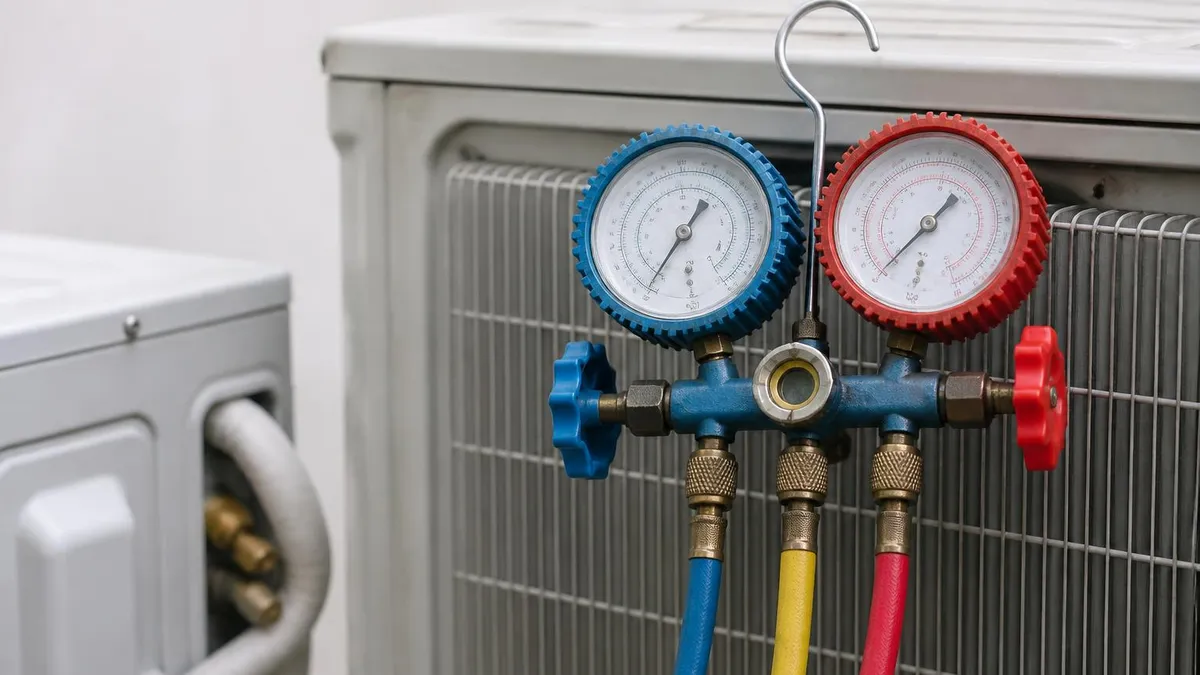
EPA Section 608 certification is required by federal law for any technician who handles refrigerants. The certification has four levels — Type I for small appliances, Type II for high-pressure systems, Type III for low-pressure systems, and Universal, which covers all three. There is no expiration, but technicians caught violating refrigerant-handling rules face fines up to $44,539 per violation.
For Black-owned HVAC businesses, holding Universal certification across the entire technician roster is the operational baseline. Without it, the firm cannot legally service residential AC units, commercial chillers, or refrigeration systems. The exam costs roughly $20 to $150 depending on the proctor, and study materials are widely available through community college programs, ESCO Institute, and the Refrigeration Service Engineers Society.
Hiring a Black-Owned HVAC Contractor: What to Weigh
- +Direct economic impact in historically underinvested communities
- +Strong personal accountability — many operate as owner-technician hybrids
- +Often more flexible scheduling and transparent pricing
- +Builds long-term relationships across multigenerational service needs
- +Supports supplier diversity goals for businesses and institutions
- +Frequently certified through rigorous NMSDC and state MBE programs
- −Smaller crews can mean longer wait times during peak season
- −Fewer 24/7 emergency dispatch options than national chains
- −Limited geographic coverage in rural service areas
- −May have smaller marketing budgets, making them harder to find online
- −Equipment financing programs may differ from large dealer networks
- −Inventory of niche commercial parts may take longer to source
Pros and Cons at a Glance
| Pros | Cons |
|---|---|
| Direct economic impact in historically underinvested communities | Smaller crews can mean longer wait times during peak season |
| Strong personal accountability — many operate as owner-technician hybrids | Limited geographic coverage in rural service areas |
| Often more flexible scheduling and transparent pricing | May have smaller marketing budgets, making them harder to find online |
| Builds long-term relationships across multigenerational service needs | Equipment financing programs may differ from large dealer networks |
| Supports supplier diversity goals for businesses and institutions | Inventory of niche commercial parts may take longer to source |
Vetting Checklist for Hiring a Black Owned HVAC Contractor
- ✓Verify state contractor license number against the official state board lookup tool
- ✓Confirm EPA Section 608 Universal certification for all technicians on staff
- ✓Request a current Certificate of Insurance listing general liability and workers' compensation
- ✓Ask whether technicians hold active NATE certification in installation or service
- ✓Check MBE or NMSDC certification status if supplier diversity matters to you
- ✓Read at least 20 recent Google Business Profile reviews for service patterns
- ✓Request three references for jobs comparable in size and complexity
- ✓Confirm the company provides written, itemized estimates before any work begins
- ✓Verify manufacturer authorization for the brand of equipment you plan to install
- ✓Ask about labor warranty length — one year minimum, five years is excellent
Always confirm licensing before booking — even with referrals you trust.
An unlicensed install can void your equipment warranty, your homeowner's insurance claim, and your future resale paperwork. Every legitimate HVAC contractor — Black-owned or otherwise — will hand you their license number, COI, and EPA card without hesitation. Treat reluctance as a deal-breaker.
Launching a Black-owned HVAC business in the United States is one of the most accessible paths to small-business ownership in the skilled trades, but it requires careful planning. The first decision is legal structure. Most new HVAC firms register as a single-member LLC, which separates personal assets from business liabilities and offers pass-through taxation. Filing fees vary by state — California charges $70 plus an $800 annual franchise tax, while states like Wyoming and Texas keep formation costs under $300 with no recurring franchise burden.
Capital requirements are the next hurdle. A bare-bones HVAC startup with one service truck, basic tools, refrigerant recovery equipment, and initial insurance typically requires $30,000 to $75,000 in working capital. Sources include the SBA 7(a) loan program, which guarantees up to 85% of loans under $150,000, and the SBA 8(a) Business Development Program, which is specifically designed to help socially and economically disadvantaged business owners win federal contracts. Black HVAC entrepreneurs also tap into community development financial institutions like Hope Credit Union and Carver Federal Savings Bank, both of which specialize in trades financing.
Grant capital exists and is underutilized. The NMSDC Business Consortium Fund, the Comcast RISE program, the Fearless Fund (when active), and various local Black chamber of commerce small-business grants regularly distribute capital between $5,000 and $50,000 to certified minority-owned trades businesses. The applications are competitive but not impossibly so, and the funds do not need to be repaid. Pairing grant capital with a small SBA loan is a common pattern for launching debt-managed operations.
Licensing is the gatekeeper to legal operation. States like Florida, Texas, and California require a registered or certified mechanical contractor license, which in turn requires two to five years of documented journeyman experience, a passing score on the trade exam, and proof of insurance and bonding. Some states allow a "qualifier" arrangement, where a licensed individual sponsors a business while the owner gains experience — a common pathway for entrepreneurs whose technical background is strong but whose paperwork trail is incomplete.
Insurance is non-negotiable. Standard policies include general liability with minimum $1 million per occurrence, commercial auto for any branded vehicles, workers' compensation for every W-2 employee, and a contractor's bond ranging from $5,000 to $50,000. Annual premiums for a one-truck operation typically run $3,500 to $8,000, with workers' comp costs varying widely by state experience modifier. Many minority business accelerators help with insurance procurement through group plans that lower premiums.
Equipment financing deserves its own strategy. Manufacturers like Carrier, Trane, Lennox, and Daikin run dealer programs that include consumer financing, co-op marketing dollars, and rebate structures. Becoming a factory-authorized dealer requires meeting volume and training thresholds, but the use is significant — extended warranties, brand credibility, and access to commercial bid opportunities that independent contractors cannot match.
Finally, the business model itself matters. Residential service, residential installation, light commercial, and full commercial work are four distinct lanes with very different margins, cash conversion cycles, and capital requirements. Most successful Black-owned HVAC firms start with residential service — it has the lowest capital intensity, the fastest revenue cycle, and the most direct route to customer referrals — and then expand into installation and commercial work as the team and balance sheet grow.
State contractor exams have failure rates above 50% in many jurisdictions, and the most common reason is poor preparation on local mechanical and energy code questions. Plan for six to twelve weeks of focused study, especially for code-heavy states like California, Florida, and New York. Investing in a prep course pays back the first time you pass on the initial attempt.
Once a Black-owned HVAC business is licensed, insured, and operational, the next challenge is sustainable growth. The single most reliable growth driver is local SEO. A well-optimized Google Business Profile — with accurate categories, weekly photo updates, consistent review responses, and current service-area boundaries — outperforms paid advertising for most residential HVAC firms. Within twelve months of disciplined GBP management, many new contractors generate the majority of their leads organically from "near me" searches.
Reviews are the second growth engine. The average homeowner reads between 9 and 12 reviews before booking an HVAC service, according to BrightLocal's annual local consumer survey. Successful Black-owned firms build review-request workflows directly into their service process: a text message goes out within an hour of job completion, asking the customer to share their experience on Google. Replying to every review — positive or negative — within 48 hours signals attentiveness that algorithms and human readers both reward.
Commercial contracts compound revenue. Property management companies, school districts, municipal facilities, and healthcare systems typically issue annual or multi-year HVAC service agreements. Winning these contracts requires MBE certification, demonstrated capacity, and a track record of comparable work. Many minority-owned firms break into this segment through subcontractor relationships with larger general contractors before competing for prime contracts directly.
Partnerships with utility energy-efficiency programs are an underrated channel. Most U.S. utilities offer rebates for high-efficiency HVAC installations, and the contractors enrolled in those programs receive direct customer referrals. Becoming a participating contractor requires training and reporting, but the lead flow is consistent and the work commands premium pricing. Programs vary by state, with utilities like ConEd, Duke Energy, and PG&E running some of the largest HVAC rebate channels.
Community partnerships strengthen long-term retention. Black-owned HVAC firms that sponsor youth sports leagues, faith-community events, or HBCU career fairs build the kind of brand equity that national chains struggle to replicate. These partnerships also feed the talent pipeline: the next generation of technicians often comes from kids who saw the company truck at their middle-school career day. Workforce development grants from organizations like the Urban League can subsidize apprenticeship programs that turn community goodwill into a sustainable hiring engine.
Technology adoption separates scaling firms from stagnant ones. Field service management software — ServiceTitan, Housecall Pro, Jobber, FieldEdge — pays for itself within months by reducing dispatch errors, automating invoicing, and surfacing margin data per job. The best Black-owned HVAC operators run their books with the same rigor as their installs, and that financial discipline is what attracts equipment financing, vehicle leases, and eventually acquisition offers from regional consolidators.
Looking ahead, the heat-pump transition and federal Inflation Reduction Act incentives represent a generational opportunity. Homeowners can claim up to $2,000 in tax credits for qualifying heat-pump installations, and additional state-level rebates push total savings above $8,000 in many regions. Contractors who get ahead of the IRA training curve — particularly Black-owned firms positioned in growing metros — will capture disproportionate share. To get started in the field or refer technicians into the pipeline, browse HVAC technician jobs near me for current openings and training pathways.
Practical advice for both consumers and aspiring entrepreneurs is the difference between good intentions and good outcomes. If you are a homeowner, plan your HVAC contractor search before you need an emergency repair. Identify two or three qualified Black-owned firms in your area during the spring or fall shoulder season, schedule a maintenance visit, and use that low-stakes interaction to evaluate communication, punctuality, and pricing transparency. By the time a 95-degree weekend forces an emergency call, you already have a trusted contractor on speed dial.
For technicians considering the leap to ownership, take advantage of free and low-cost training before quitting your day job. Local community colleges, the Plumbing-Heating-Cooling Contractors Association, and the SBA Small Business Development Center network all offer business courses tailored to trades professionals. Many of these programs are free for veterans, low-income applicants, and members of historically underrepresented groups. Completing them before launching saves expensive mistakes in your first eighteen months.
Capital strategy matters more than capital amount. A $40,000 SBA microloan deployed against a clear customer-acquisition plan often outperforms a $150,000 loan deployed without one. Map your first year of expected revenue, your customer acquisition cost per service call, and your average ticket size. Most viable HVAC startups break even within six to nine months when service-call pricing is set correctly and dispatch density is managed efficiently — usually three to five jobs per technician per day.
Mentorship accelerates everything. Programs like SCORE pair new business owners with retired executives at no cost, and many Black HVAC entrepreneurs benefit from connecting with established minority contractors through the National Association of Minority Contractors. A weekly mentorship call covering pricing, hiring, and operational issues is among the highest-return investments a new contractor can make, and it costs nothing beyond commitment.
Insurance, taxes, and bookkeeping should be set up before the first invoice. Hire a CPA familiar with construction-industry taxation in your state, set up a separate business checking account immediately, and use payroll software like Gusto or ADP to handle workers' compensation and W-2 obligations. Sloppy financial setup is the most common reason promising HVAC startups fail in year two, even when the technical work and customer reviews are strong.
For consumers comparing quotes, never choose on price alone. A bid that is 30% below the others usually reflects shortcuts on equipment quality, install labor, or warranty terms. Ask each contractor to itemize equipment model numbers, labor warranty length, refrigerant type, and post-install commissioning steps. The right Black-owned HVAC firm will welcome this comparison because the work product holds up to scrutiny, and the educational sales conversation is itself a form of customer service.
Above all, treat the relationship as long-term. A great HVAC contractor is someone you call every spring and fall for maintenance, every five to twelve years for a major component replacement, and once or twice a decade for a full system upgrade. Building that recurring relationship with a Black-owned firm channels real economic equity into the trade, while giving you the operational reliability of a contractor who knows your equipment, your home, and your priorities better with each visit.
HVAC Questions and Answers
HVAC Technician Jobs Near Me: How to Find, Land, and Grow in Local HVAC Careers
CFM HVAC Basics: How Airflow, Sizing, and System Performance Work Together
Certified HVAC Contractors: How to Find, Vet, and Hire the Right Professional for Your Home or Business
Best HVAC Repair in Bandon, OR: Local Services Near Me Guide
HVAC Installations: The Complete Guide to Planning, Pricing, and Getting It Right the First Time
About the Author

NATE Certified HVAC Technician & Licensing Exam Trainer
Universal Technical InstituteMike Johnson is a NATE-certified HVAC technician and EPA 608 universal-certified refrigerant handler with a Bachelor of Science in HVAC/R Technology. He has 19 years of commercial and residential HVAC installation and service experience and specializes in preparing technicians for NATE certification, EPA 608, A2L refrigerant safety, and state HVAC contractor licensing examinations.