
HVAC Advertising: The Complete Playbook for Generating Leads, Booking Calls, and Growing Your Heating and Cooling Business
📝 HVAC advertising guide covering Google Ads, LSAs, SEO, direct mail, and social. Real budgets, cost-per-lead benchmarks, and proven channel strategies.
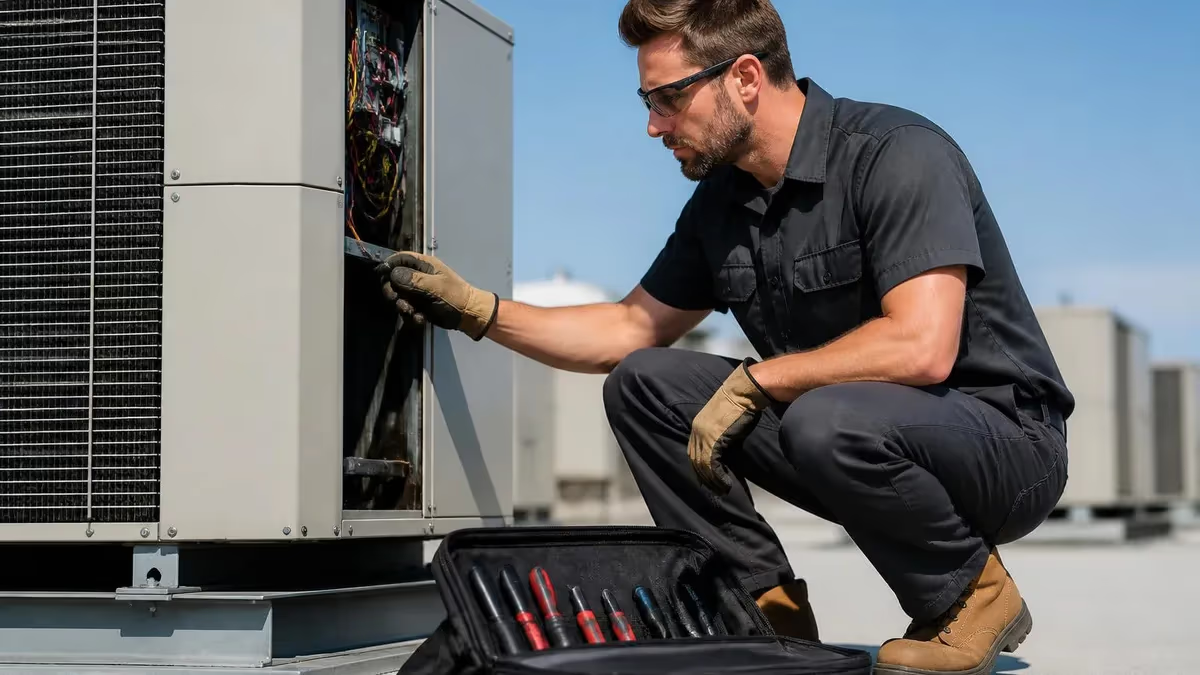
HVAC advertising is the single biggest lever most heating and cooling contractors have to grow revenue, smooth out seasonal demand, and fill technician routes during shoulder months. Whether you run a two-truck operation in a small town or a 40-truck shop in a metro market, the way you spend your marketing dollars determines whether your phones ring in July when temperatures spike or sit silent during a mild April. A well-built advertising strategy combines paid search, local services ads, organic SEO, direct mail, and community outreach into a measurable system.
The HVAC industry is unique because demand is weather-driven, emotional, and urgent. Homeowners do not shop for a new furnace the way they shop for shoes. They call when something breaks, when their energy bill triples, or when a neighbor recommends a contractor. Smart advertising captures attention before that moment of pain and stays top-of-mind through repetition, reviews, and brand familiarity. Every channel you choose should reinforce that goal of being the first name a homeowner thinks of in a crisis.
Most contractors underestimate how competitive the search landscape has become. In a city of 200,000 people, you may have 50 to 100 active HVAC companies bidding on the same keywords, mailing the same neighborhoods, and chasing the same five-star reviews. Cost-per-click on terms like emergency AC repair routinely exceeds $30 in summer, and Local Services Ads can cost $80 to $250 per booked lead. Without tracking, you bleed money. With tracking and tight creative, advertising becomes the most predictable growth engine in the business.
This guide walks through every major HVAC advertising channel, what each one costs, who it works best for, and how to build a multi-channel mix that pays for itself within 90 days. We cover Google Ads strategy, Local Services Ads optimization, SEO foundations, social media for trust building, direct mail templates that still pull, and the metrics that separate profitable campaigns from money pits. You will also learn how to coordinate seasonal pushes with technician hiring, because growth without staff just creates angry customers.
Before spending a dollar, audit your foundation. Your website needs a click-to-call button above the fold, a financing badge, real photos of your team, and reviews from your local seo for hvac. Your Google Business Profile needs weekly posts, fresh photos, and answered Q&A. If a homeowner clicks an ad and lands on a slow site with stock photos, no conversion happens. Many shops should redirect three months of ad budget into website and brand work before scaling paid traffic. If your team is still being assembled, browse HVAC Technician Jobs Near Me for hiring frameworks.
Throughout this playbook we balance tactics with strategy. You will see specific bid suggestions, sample ad copy, mail piece dimensions, and budget allocations, but we also pull back to discuss positioning, niching, and the long-term brand equity that lets you charge premium prices. By the end you should be able to write a 12-month advertising plan with monthly spend by channel, expected leads, target cost per acquisition, and a clear path to a 4x return on ad spend.
One last note before we dive in. Advertising amplifies whatever already exists. If your dispatch is sloppy, your technicians are rude, or your pricing is uncompetitive, more ads will not save you. They will accelerate the negative reviews that destroy future advertising performance. Treat the operational side of your business as a prerequisite to any media spend, and revisit ad strategy each quarter as you learn what your true close rate and lifetime customer value really are.
HVAC Advertising by the Numbers
Channel Mix and Budget Framework
Pay-per-lead format at the top of search results with the Google Guaranteed badge. Best for emergency and repair leads, lowest barrier to entry, and ideal for shops with 25+ five-star reviews. Allocate 25-35% of ad budget here for most metros.
Pay-per-click campaigns targeting high-intent keywords like furnace repair near me or AC installation cost. Requires landing pages, negative keyword lists, and weekly bid management. Plan 25-35% of budget with strong conversion tracking and call recording in place.
Long-term investment in service-area pages, blog articles, schema markup, and review velocity. Cheapest leads once mature but takes six to twelve months. Allocate 15-20% of budget toward SEO retainer, content writing, and citation cleanup.
Targeted postcards to homes with aging equipment or matching neighbor profiles. Still produces 0.5-2% response rates in suburban markets when combined with strong offers and route-based timing. Allocate 10-20% for seasonal pushes around tune-up season.
Facebook, Instagram, YouTube pre-roll, and connected TV build familiarity so paid search converts better. Lower direct attribution but essential for brand recall in competitive markets. Reserve 10-15% for retargeting, awareness, and review generation campaigns.
Google Ads and Local Services Ads are the workhorses of HVAC advertising because they capture homeowners at the exact moment of need. When a homeowner types furnace not heating into Google at 9pm on a Tuesday, you have roughly five minutes to be visible, credible, and one tap away from a phone call. Both platforms compete for that window, and the contractors who master them tend to build the most predictable lead flow across the calendar year, including the soft months between peak heating and cooling seasons.
Local Services Ads, often called LSAs, are pay-per-lead rather than pay-per-click. Google pre-qualifies your business, runs a background check on owners, verifies licensing and insurance, and awards the Google Guaranteed badge that lets you appear above traditional search ads. You set a weekly budget, pick service categories, define your service area, and pay only when a homeowner calls or messages through the ad. Lead costs range from $80 in smaller markets to over $250 in dense metros like Phoenix or Atlanta during summer.
The LSA algorithm rewards three signals: review count and rating, response time, and dispute rate. Shops that answer the phone within 30 seconds, maintain a 4.7-star average across 100+ reviews, and dispute irrelevant leads consistently get cheaper, higher-volume lead flow. Train CSRs to ask every paying customer for a review the same day. Buy a missed-call tracker. Dispute every spam call, telemarketer, and out-of-area inquiry within 24 hours. Those three habits cut your effective cost per booked job by 30 to 40 percent.
Traditional Google Search Ads still matter because LSA inventory is capped. Once you saturate LSA, the next dollar goes into keyword campaigns. Build separate campaigns for hvac emergency repair mc lean, hvac rtu 3d cad york, indoor air quality, and commercial. Each has a different intent, ad copy, and landing page. Emergency repair searchers want to call now. Installation searchers want financing options, energy savings, and reviews. Treat them as different audiences with separate budgets and conversion goals.
Bidding strategy depends on your data volume. Shops generating under 30 conversions per month should run manual CPC with tight bid caps and aggressive negative keyword lists. Shops with 50-plus monthly conversions can shift to target CPA or maximize conversions bidding, letting Google optimize toward your best-performing call types. Always feed offline conversion data back into Google. A booked job is worth ten times a phone call, and the algorithm needs to know that to bid intelligently in the future.
Landing pages matter as much as ad copy. A homeowner clicking an emergency AC repair ad should land on a page with a giant phone number, a one-line value proposition, three trust signals (years in business, review count, financing), and a same-day service guarantee. Cut the navigation bar. Cut the carousel. Pre-fill ZIP code from the ad and route the form to dispatch in real time. Pages that load in under two seconds on mobile and have a sticky call button convert at 12 to 18 percent versus 3 to 5 percent for generic home pages.
Finally, coordinate paid search with your service rotation. Pushing ads when no truck can take the call wastes money and creates negative reviews. Use Google Ads ad schedules to throttle spend by hour and by day of week based on technician availability. Many shops should pause emergency ads on Sundays unless they staff a Sunday crew. Smart scheduling alone often improves return on ad spend by 20 percent without changing creative. For broader context on choosing the right contractor partner from a homeowner perspective, see Certified HVAC Contractors.
HVAC Practice Test Questions
Prepare for the HVAC - Heating Ventilation and Air Conditioning exam with our free practice test modules. Each quiz covers key topics to help you pass on your first try.
HVAC Air Conditioning
HVAC Exam Questions covering Air Conditioning. Master HVAC Test concepts for certification prep.
HVAC Code Compliance
Free HVAC Practice Test featuring Code Compliance. Improve your HVAC Exam score with mock test prep.
HVAC Electrical Controls
HVAC Test Prep for Electrical Controls. Practice HVAC Quiz questions and boost your score.
HVAC Energy Efficiency
HVAC Questions and Answers on Energy Efficiency. Free HVAC practice for exam readiness.
HVAC Heating Systems
HVAC Mock Test covering Heating Systems. Online HVAC Test practice with instant feedback.
HVAC Load Calculations
Free HVAC Quiz on HVAC Load Calculations. HVAC Exam prep questions with detailed explanations.
HVAC Tools and Equipment
HVAC Practice Questions for HVAC Tools and Equipment. Build confidence for your HVAC certification exam.
HVAC Refrigeration
HVAC Test Online for Refrigeration. Free practice with instant results and feedback.
HVAC Safety Practices
HVAC Study Material on Safety Practices. Prepare effectively with real exam-style questions.
HVAC System Design
Free HVAC Test covering System Design. Practice and track your HVAC exam readiness.
HVAC Thermodynamics
HVAC Exam Questions covering Thermodynamics. Master HVAC Test concepts for certification prep.
SEO, Social, and Direct Mail Tactics for HVAC Advertising
Local SEO is the lowest cost-per-lead channel once it matures, but it takes six to twelve months of steady work before payoffs compound. Start with a complete Google Business Profile that includes your service categories, service area, hours, photos updated monthly, and at least one weekly post. Add Q&A entries you write yourself, answer real homeowner concerns, and respond to every review within 24 hours regardless of sentiment to signal active management.
On your website, build dedicated pages for each city or ZIP code you serve, each major service like AC repair or furnace installation, and each brand you carry. Use LocalBusiness and Service schema markup, embed maps, list neighborhood landmarks, and showcase real job photos. Build citations across Yelp, Angi, Nextdoor, BBB, and HomeAdvisor with identical name, address, and phone. Aim to publish two blog posts a month answering homeowner questions like why is my AC freezing up.

Paid Advertising vs. Organic Marketing for HVAC
- +Paid ads deliver leads within hours of campaign launch
- +Budgets scale up or down with seasonal demand
- +Detailed conversion tracking shows exact cost per booked job
- +LSAs use Google trust signal with Google Guaranteed badge
- +Audience targeting reaches only homeowners in your service area
- +A/B testing reveals which offers and messages convert best
- +Easy to pause underperforming campaigns mid-month
- −Click costs continue rising 10-15% per year in most metros
- −Ad fatigue requires constant creative refresh and new offers
- −Competitors can outbid you on peak emergency keywords
- −Algorithm changes can disrupt performance overnight
- −Click fraud and spam leads inflate apparent cost per acquisition
- −Once spending stops, lead flow stops the same day
- −Requires dedicated tracking, dispatch, and review processes
Pros and Cons at a Glance
| Pros | Cons |
|---|---|
| Paid ads deliver leads within hours of campaign launch | Ad fatigue requires constant creative refresh and new offers |
| Budgets scale up or down with seasonal demand | Competitors can outbid you on peak emergency keywords |
| Detailed conversion tracking shows exact cost per booked job | Algorithm changes can disrupt performance overnight |
| LSAs use Google trust signal with Google Guaranteed badge | Click fraud and spam leads inflate apparent cost per acquisition |
| Audience targeting reaches only homeowners in your service area | Once spending stops, lead flow stops the same day |
| A/B testing reveals which offers and messages convert best | Requires dedicated tracking, dispatch, and review processes |
HVAC Advertising Tracking and Conversion Checklist
- ✓Install Google Analytics 4 and Google Tag Manager on every page
- ✓Set up call tracking with CallRail or similar to attribute every phone lead
- ✓Add Google Ads conversion tracking for calls, form fills, and chat starts
- ✓Enable enhanced conversions and import offline conversions for booked jobs
- ✓Build separate landing pages for each major service and ad campaign
- ✓Add click-to-call sticky buttons on mobile pages above the fold
- ✓Display Google rating, review count, and Google Guaranteed badge prominently
- ✓Implement live chat or chatbot for after-hours lead capture
- ✓Set up automated review request texts after every completed job
- ✓Train CSRs to answer every call within three rings using a scripted greeting
- ✓Track cost per lead and cost per booked job weekly by channel and campaign
- ✓Audit and dispute LSA leads daily to lower effective cost per acquisition
Connect Every Lead to a Booked Job, Not Just a Phone Call
Most HVAC shops measure advertising by phone calls or form fills, but a call is not a customer. Two campaigns can generate the same call volume while one books 60% of leads and the other books 20%. Feed booked job data, revenue, and lifetime value back into Google Ads and LSAs every week. Within 90 days, your algorithms learn to favor the campaigns that produce real revenue, often doubling effective return on ad spend without any budget changes.
Seasonal campaign planning is where most HVAC advertising programs win or lose the year. Demand is anything but linear. A typical contractor sees 70 percent of revenue concentrated in roughly five months: June through August for cooling and December through February for heating. The shoulder seasons of March, April, October, and November are when smart advertising creates new demand through maintenance promotions, indoor air quality campaigns, and pre-season tune-up pushes that fill technician schedules during otherwise slow weeks.
Build a 12-month marketing calendar in January and revisit it quarterly. Each month should have a primary offer, a secondary upsell, a target lead volume, a budget by channel, and an internal goal for review generation. February might push furnace replacements with financing while April pivots to AC tune-ups and June ramps to emergency repair. The calendar is not a wish list. It is a commitment tied to your dispatch capacity, technician headcount, and parts inventory so marketing never outpaces operations.
Pre-season campaigns deliver the highest return because competition is lowest and homeowners are still rational. A 79 dollar AC tune-up promoted in April books at 25 to 35 percent of inquiries, generates 200 to 400 dollar average tickets through upsells, and surfaces dozens of replacement opportunities for the summer pipeline. Compare that to August when an emergency repair lead costs three times more and converts at only 50 to 60 percent because every shop in town is competing for the same hot, frustrated homeowner.
Weather-triggered ad spend separates pros from amateurs. Use weather APIs or simple temperature thresholds to automatically increase Google Ads budgets when forecasts hit 95 degrees or drop below 25. Pause ads on mild days when demand is low and no one is searching urgently. Many platforms now allow weather-based bid adjustments natively, but even a basic spreadsheet rule and a Monday morning budget review captures most of the upside. The goal is showing up biggest when demand spikes and conserving budget when phones would ring anyway.
Bundle offers outperform single offers across every season. Instead of 99 dollar service call fee waived, try service call plus diagnostic plus first pound of refrigerant for 199 dollars. Instead of free estimate on new system, try free estimate plus free duct inspection plus 1500 dollar instant rebate. Bundles raise perceived value, justify slightly higher prices, and shift the conversation from price comparison to value comparison. Test three to five bundle structures each year and keep the two that produce the best blended margin.
Maintenance plan promotion is the most underutilized seasonal play in HVAC advertising. Each maintenance plan member generates two scheduled visits per year, 30 to 50 percent higher repair conversion when something breaks, and lifetime value roughly double a non-member. Advertise plans aggressively in March, April, September, and October when homeowners think about HVAC but are not yet in crisis. A 19 dollar per month plan presented well closes at 40 to 60 percent on tune-up calls, compounding into recurring revenue that smooths cash flow year-round.
Finally, plan your January reset. Run a comprehensive review of the prior year by January 15. Pull cost per booked job by channel, gross margin by job type, technician utilization, average ticket, and review velocity. Identify the bottom 20 percent of campaigns and zero them out. Reallocate that budget to the top 20 percent and to one new experimental channel like connected TV or YouTube. This annual prune keeps your portfolio healthy and prevents legacy campaigns from quietly draining budget for years.
The fastest way to destroy a profitable HVAC advertising program is to scale lead volume past your team's capacity. Missed calls, two-day wait times, and stressed technicians generate one-star reviews that crater your LSA ranking and Google Business Profile for 12 to 18 months. Always confirm dispatch, technician schedules, and parts availability before increasing budgets, especially during peak season when one bad week of execution can undo a year of advertising gains.
Scaling an HVAC advertising program past a million dollars in annual spend requires a different skill set than launching one. At smaller budgets you optimize tactics. At scale you optimize the brand itself. A recognizable, trusted brand lowers cost per acquisition across every channel because homeowners click the name they already know, choose the truck they have seen in the neighborhood, and call the company a friend mentioned at a barbecue last weekend. Brand work compounds in ways tactical ads never can.
Invest in consistent visual identity across trucks, uniforms, yard signs, magnets, invoices, and digital assets. The cheapest brand impressions are wrapped trucks driving your service area five days a week. A single wrapped van produces 30,000 to 70,000 visual impressions per day at a one-time cost of 3,000 to 6,000 dollars. Yard signs left at every install convert neighbors at three to five percent over the next year. These low-cost, high-frequency touches build the familiarity that turns paid clicks into booked calls.
Reputation management deserves its own line item in the marketing budget. Shops with 500 plus Google reviews and a 4.8 star average pay 30 to 50 percent less per lead than competitors with 50 reviews and a 4.4 average. Build a system that asks every paying customer for a review by text within two hours of job completion. Respond to every review within 48 hours. Address negative reviews publicly and professionally. Train CSRs and techs that review velocity is everyone's job, not just marketing's.
Niche positioning unlocks premium pricing. Contractors who specialize visibly in mini-splits, high-end Trane and Mitsubishi installations, geothermal, or commercial light commercial command 15 to 30 percent price premiums versus generalists. Niches are also easier to advertise because keyword competition is lower, content topics are sharper, and homeowners self-select into your funnel. Pick one to two niches per year and dominate them in your service area before expanding. For installation positioning ideas see hvac installation leeds.
Measure return on ad spend at the portfolio level, not the campaign level. A campaign that loses money on first-touch metrics may be hugely profitable when you account for repeat customers, referrals, and maintenance plan renewals. Build a simple customer lifetime value model that estimates total margin from each customer over five years. Plug that number into your acceptable cost per acquisition. Many shops cap CPA at 200 dollars when actual lifetime margin justifies 600 to 800 dollars per new customer.
Hire or contract specialists once spend exceeds 25,000 dollars per month. A junior in-house marketer or a vetted HVAC-specific agency pays for itself in efficiency. Generic agencies struggle because HVAC has seasonality, dispatch constraints, and brand voice that take years to learn. Look for partners with case studies in HVAC, transparent reporting, and willingness to share account access. Avoid agencies that lock you into long contracts or refuse to give you ownership of your Google Ads, LSA, and analytics accounts.
Finally, plan your exit even if you have no intention of selling. Acquirers and private equity rollups pay premiums for shops with predictable lead flow, documented marketing systems, low owner dependence, and a brand that survives without the founder. Every advertising investment you make should strengthen those four assets. The shop that can hand its marketing playbook to a new owner on day one is worth two to three times the shop where everything lives in the owner's head and the relationships with vendors.
Putting this playbook into practice starts with a single 90-day sprint, not a complete overhaul. Pick one channel where you currently have the most use. For most shops that means Local Services Ads because the time to results is short, the lead intent is high, and the budget can be tuned weekly. Commit to a 90-day learning budget you can afford to lose, set clear weekly checkpoints, and resist the urge to expand to new channels until you have proof of profitability in your first one.
In week one, audit your foundation. Update your Google Business Profile with fresh photos, accurate categories, current hours, weekly posts, and detailed services. Verify your website loads in under three seconds on mobile, has a click-to-call button above the fold, displays your review count, and shows financing options. Set up CallRail or a similar call tracking platform with dynamic number insertion so every channel gets its own attributable phone number. These tasks feel boring but they double the return of every dollar you spend afterward.
In weeks two through four, launch your first paid campaign with tight controls. Start LSA with a conservative weekly budget, a focused service category list, and a service area no larger than 30 minutes from your shop. Train your CSRs on the new lead flow, set expectations on response times, and build the daily habit of disputing irrelevant leads. Use the first month to learn your true cost per booked job, average ticket from LSA leads, and which time slots produce the best conversion rates.
In month two, layer in a tightly scoped Google Search campaign. Pick three to five high-intent keywords like furnace repair near me, AC repair plus your city, and your brand name. Build dedicated landing pages, write three ad variations per ad group, and add a strong negative keyword list that filters out job seekers, DIY searches, and competitor brand names. Watch search terms reports weekly. Add new negatives and pause underperforming ads ruthlessly. Most shops can cut wasted spend by 30 percent in the first 60 days through pruning alone.
In month three, add one organic asset and one offline channel. Publish two SEO-focused blog posts targeting questions your CSRs hear constantly, like why is my furnace short cycling. Mail a postcard campaign to homes within a quarter mile of your last 20 installs with a strong seasonal offer. Both moves are inexpensive, compound over time, and reduce dependence on paid channels. By day 90 you should have a clear picture of cost per lead, cost per job, and which channels deserve more investment.
Document everything you learn in a living marketing playbook. Capture which ad copy converts, which offers pull, which landing pages win, and which time blocks book best. This document becomes the most valuable asset in your business because it lets you onboard new staff, evaluate agencies, and hand off operations without losing institutional knowledge. Update it monthly. Review it quarterly with your leadership team. Treat it as seriously as your service manuals and pricing books.
Above all, stay patient and disciplined. HVAC advertising rewards contractors who pick a sound strategy and execute it consistently for years. The shops dominating their markets in 2026 started those campaigns in 2023 and stuck with them through algorithm changes, weather swings, and competitor noise. Your most powerful advantage is not a clever ad or a secret keyword. It is the willingness to measure, refine, and reinvest week after week while less disciplined competitors chase shiny objects and burn through ad budgets without ever learning what works.
Sample HVAC Practice Questions
Try these questions from our free HVAC practice tests. The correct answer and an explanation follow each question.
In a multi-zone mini-split heat pump system, what happens if one indoor unit calls for heating while another calls for cooling simultaneously?
- A. The system defaults to cooling mode for all zones
- B. On a standard multi-split, the system serves the majority mode; on a heat-recovery multi-split (VRF), both can be served simultaneously
- C. The system shuts down to prevent conflicting operations
- D. The reversing valve oscillates rapidly to alternate between modes
Answer: B. On a standard multi-split, the system serves the majority mode; on a heat-recovery multi-split (VRF), both can be served simultaneously
Standard multi-split systems cannot simultaneously heat and cool, but heat-recovery VRF systems can transfer heat from zones needing cooling to zones needing heating at the same time.
In radiant floor heating, why is water temperature limited to 85-120°F?
- A. PEX tubing cannot handle higher temperatures
- B. Floor surface temperatures above ~80°F are uncomfortable for occupants
- C. Higher temperatures would cause the concrete to crack
- D. The pump cannot handle higher temperatures
Answer: B. Floor surface temperatures above ~80°F are uncomfortable for occupants
Floor surface temperatures above approximately 80-85°F are uncomfortable for standing occupants, so supply water temperature is limited to maintain comfortable floor temperatures.
What does the 'leaving air temperature' (LAT) of a cooling coil determine in system design?
- A. The required refrigerant condensing temperature
- B. The supply air temperature delivered to the space after the coil
- C. The outdoor air wet-bulb temperature entering the unit
- D. The minimum duct insulation R-value needed
Answer: B. The supply air temperature delivered to the space after the coil
The LAT is the temperature of air exiting the cooling coil, which becomes the supply air temperature delivered to conditioned spaces to offset the sensible cooling load.
After startup in the spring, a split system produces adequate cooling but has a musty odor. What is the most appropriate corrective action?
- A. Add refrigerant to improve coil temperature
- B. Clean evaporator coil and condensate drain with appropriate cleaner and biocide
- C. Replace the air filter
- D. Check for refrigerant leaks
Answer: B. Clean evaporator coil and condensate drain with appropriate cleaner and biocide
Musty odors from HVAC systems are caused by mold and bacterial growth on the wet evaporator coil and in the condensate drain, requiring cleaning and biocide treatment.
HVAC Questions and Answers
HVAC Technician Jobs Near Me: How to Find, Land, and Grow in Local HVAC Careers
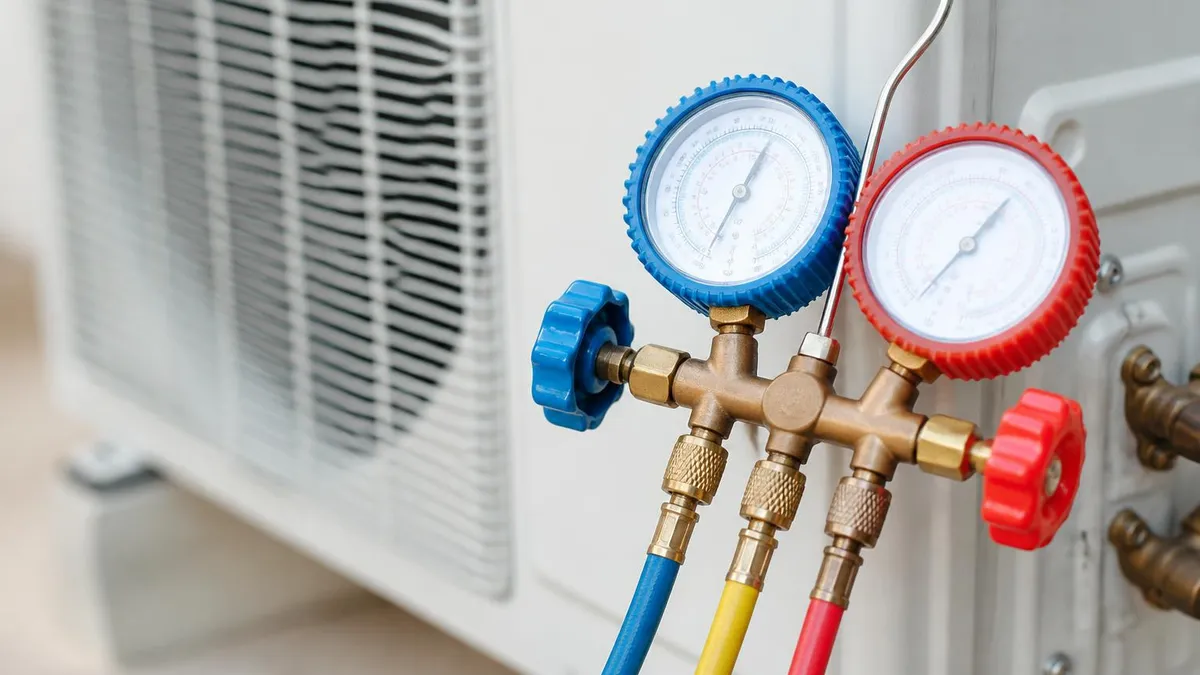
CFM HVAC Basics: How Airflow, Sizing, and System Performance Work Together
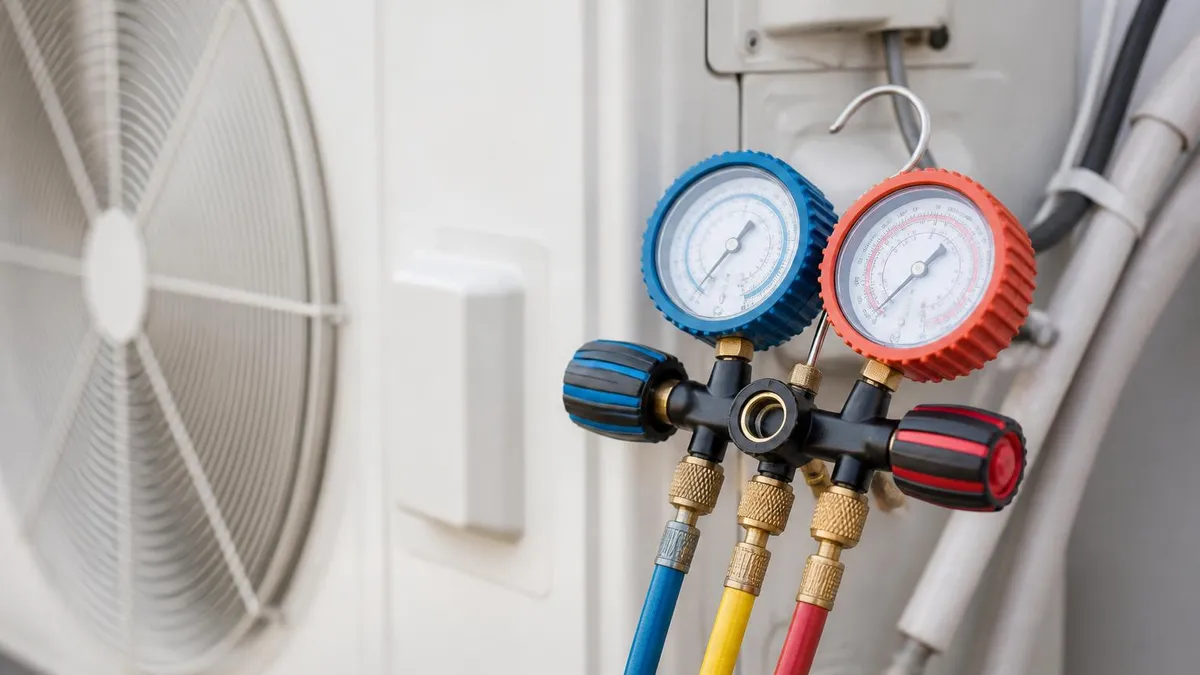
Certified HVAC Contractors: How to Find, Vet, and Hire the Right Professional for Your Home or Business
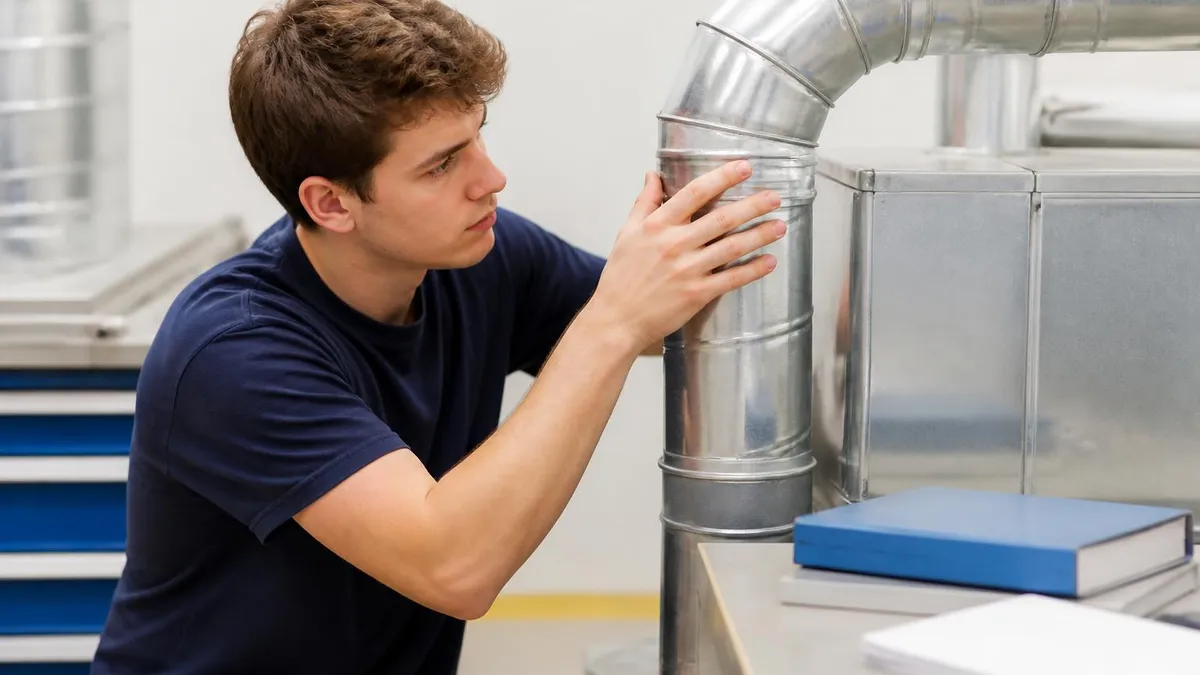
Best HVAC Repair in Bandon, OR: Local Services Near Me Guide
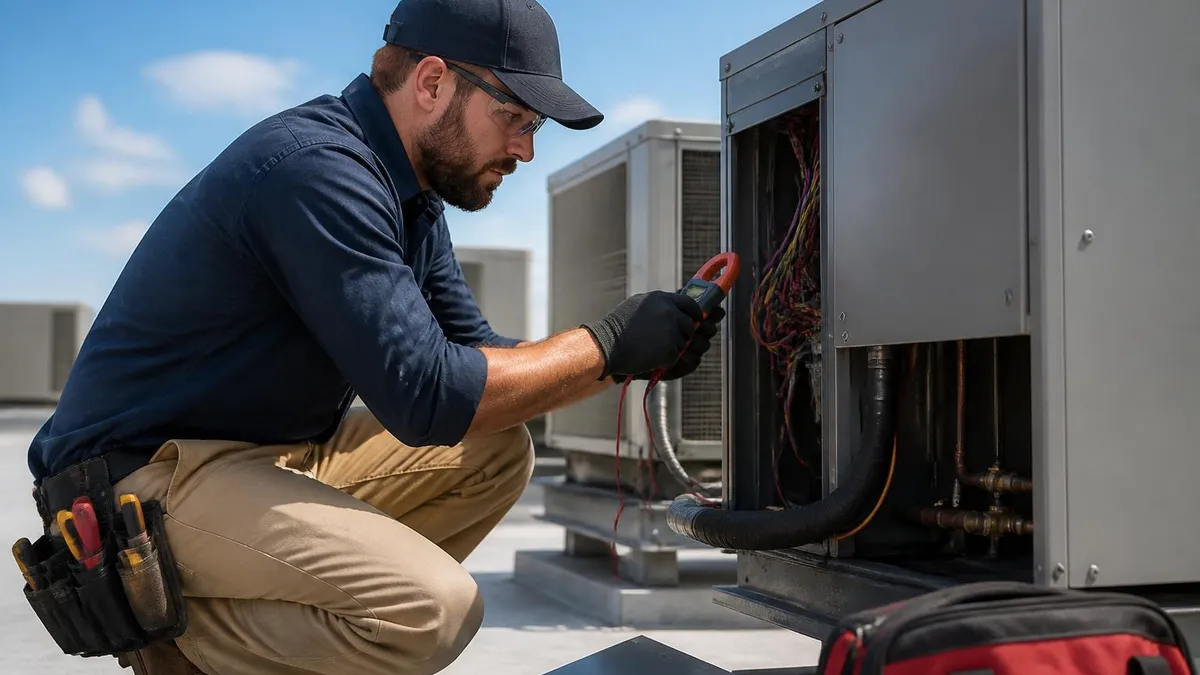
HVAC Installations: The Complete Guide to Planning, Pricing, and Getting It Right the First Time
About the Author

NATE Certified HVAC Technician & Licensing Exam Trainer
Universal Technical InstituteMike Johnson is a NATE-certified HVAC technician and EPA 608 universal-certified refrigerant handler with a Bachelor of Science in HVAC/R Technology. He has 19 years of commercial and residential HVAC installation and service experience and specializes in preparing technicians for NATE certification, EPA 608, A2L refrigerant safety, and state HVAC contractor licensing examinations.