
HVAC Digital Marketing Agency: The Complete Guide to Choosing a Partner, Generating Leads, and Growing Your Heating and Cooling Business Online
An HVAC digital marketing agency builds leads through SEO, PPC, and local search. Learn what they do, what to pay, and how to pick the right partner. 📗

An hvac digital marketing agency is a specialized firm that helps heating and cooling contractors win more service calls, system replacements, and maintenance agreements through online channels. Unlike a generalist marketing shop, these agencies understand seasonality, emergency-service intent, and the way homeowners actually search when a furnace dies at midnight in January. They combine search engine optimization, paid advertising, local listings management, and conversion-focused websites into a single growth engine designed to keep your technicians booked solid through every shoulder season and peak month.
The HVAC market is intensely competitive and increasingly digital. The average homeowner now researches contractors on Google, reads reviews, and compares three or more companies before ever picking up the phone. That shift means word-of-mouth alone no longer fills a schedule. A contractor who ranks on page two of search results, or whose Google Business Profile sits buried beneath competitors, simply loses those high-intent customers to whoever shows up first. Marketing has become the difference between a thriving shop and one that limps through slow months.
This guide explains exactly what an HVAC marketing agency does, how their core services work, and what you should realistically expect to pay. We will walk through search engine optimization, pay-per-click campaigns, local map-pack rankings, review generation, and the metrics that actually predict revenue. You will also learn how to vet an agency, the red flags that signal wasted money, and the questions every contractor should ask before signing a contract or handing over a marketing budget.
Whether you run a two-truck residential operation or a multi-location commercial firm, the fundamentals are the same. You need a steady, predictable stream of qualified leads at a cost that leaves healthy margin. The right partner builds systems that compound over time rather than chasing one-off tactics. Building a recognizable, trusted hvac digital marketing agency relationship is less about flashy ads and more about consistent visibility where customers are already looking for help.
It also helps to understand the broader landscape. The HVAC industry is shifting toward heat pumps, refrigerant regulations are changing, and homeowners are more energy-conscious than ever. Smart marketing reflects those realities, positioning your company around the services with the highest demand and the best margins. An agency that grasps these industry currents can craft messaging that resonates with modern buyers instead of recycling tired generic copy that could describe any contractor in any city.
Throughout this article we will keep the focus practical. Marketing jargon means nothing if it does not translate into booked appointments and signed contracts. By the end you will have a clear framework for evaluating agencies, a sense of fair pricing, and a checklist you can use immediately. The goal is simple: help you spend marketing dollars wisely so that every season brings more revenue, more repeat customers, and a business that grows on a foundation you actually control.
Even contractors who plan to handle marketing in-house benefit from understanding how professional agencies operate. The principles of keyword targeting, fast websites, and consistent review generation apply whether you outsource or build a small internal team. Treat this guide as both a buyer's manual and an education in the modern mechanics of getting found, getting trusted, and getting hired in a digital-first marketplace where attention is the scarcest resource of all.
HVAC Digital Marketing by the Numbers
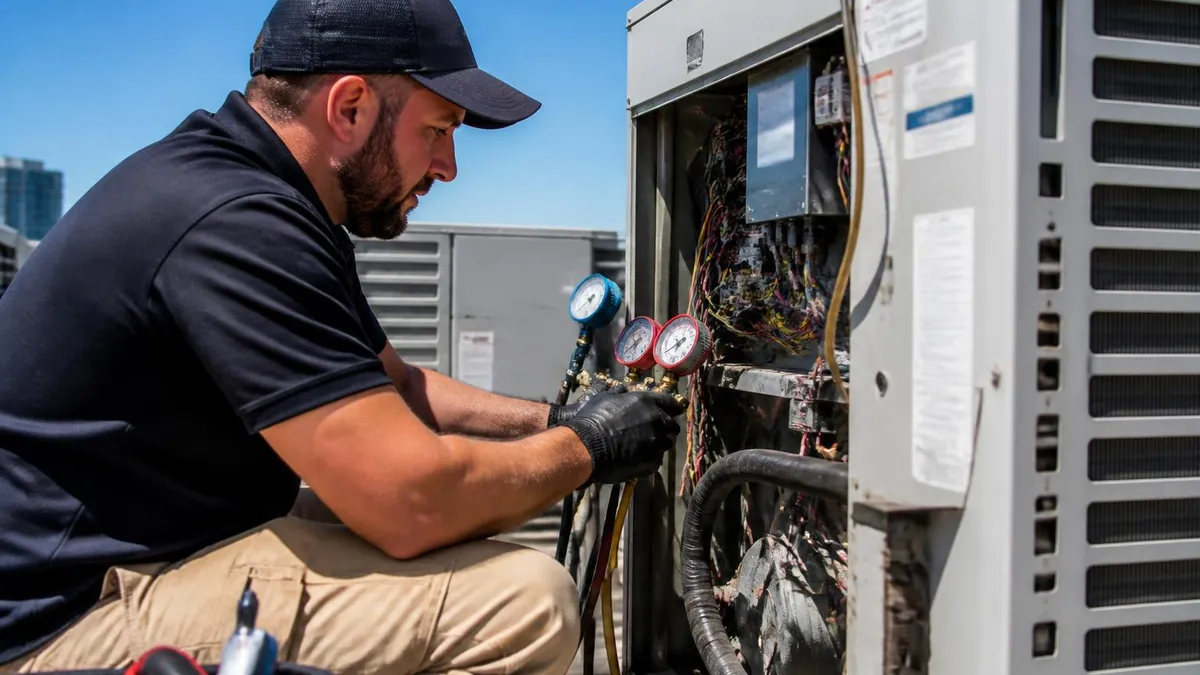
Core Services an HVAC Marketing Agency Provides
Ongoing work to rank your website and pages for high-intent terms like AC repair near me, furnace replacement, and emergency heating service, driving free organic traffic month after month.
Google Ads, Local Services Ads, and social campaigns that put your company at the top of results instantly, billed per click or per qualified lead with tight budget controls.
Optimizing your map listing, managing citations, and earning reviews so you dominate the local map pack where most homeowners click to book service quickly.
Fast, mobile-friendly sites with click-to-call buttons, online booking, and trust signals engineered to turn visitors into booked appointments rather than bounces.
Automated systems that request reviews after every job, monitor ratings across platforms, and respond professionally to protect and grow your online reputation.
Search engine optimization is the backbone of most HVAC marketing programs because it produces compounding, long-term results. When an agency optimizes your site, they research the exact phrases homeowners type—terms like "AC not cooling," "furnace repair near me," or "heat pump installation cost." Each phrase signals a different stage of buyer intent, and a strong strategy maps content to all of them. Emergency terms convert fastest, while educational queries build trust early and capture customers before competitors even appear on their radar.
Effective HVAC SEO operates on three layers. First, technical SEO ensures Google can crawl and index your site quickly, with fast load times, secure HTTPS, and a clean mobile experience. Second, on-page SEO covers the actual content: service pages, location pages, and blog articles written to answer real questions. Third, off-page SEO builds authority through reviews, local citations, and backlinks from reputable sources. Neglecting any one layer caps how high you can climb in competitive metropolitan markets.
Location pages deserve special attention for contractors serving multiple cities or suburbs. A dedicated page for each service area—written with genuine, specific information about that community rather than thin duplicated text—helps you rank in places where you do not have a physical address. Google rewards relevance and punishes spammy duplication, so a good agency creates substantive pages with local landmarks, neighborhood references, and service details that prove you genuinely operate there and understand the area.
Content marketing supports SEO by establishing expertise and capturing long-tail searches. Articles explaining SEER ratings, the difference between heat pumps and furnaces, or how often to change a filter attract homeowners early in their journey. These readers may not need service today, but your company becomes the trusted name they remember when their system fails. Quality content also earns natural links and shares, feeding the authority signals search engines use to rank competing local businesses against one another.
Reviews and reputation feed directly into local rankings. Google factors review quantity, quality, recency, and your response behavior into the map pack algorithm. A contractor with two hundred recent five-star reviews and thoughtful responses will almost always outrank a competitor with a handful of stale ratings. A capable hvac digital marketing agency automates review requests after each completed job, turning satisfied customers into a steady stream of fresh social proof that compounds over time.
SEO results take time, and any agency promising page-one rankings in two weeks is misleading you. Realistic timelines run three to six months for meaningful movement and six to twelve months for competitive markets to mature. The payoff is durability: unlike paid ads that stop the moment you stop spending, organic rankings continue generating leads long after the work is done. This makes SEO the highest-leverage investment for contractors planning to grow steadily over multiple years.
Measurement keeps SEO honest. Reputable agencies track keyword rankings, organic traffic, calls, form fills, and—most importantly—booked jobs attributable to organic search. Vanity metrics like raw impressions matter far less than revenue. Before hiring, ask exactly how an agency reports results and whether they tie their work to phone calls and dollars. If reporting feels vague or focuses only on traffic instead of conversions, treat that as a warning sign about the partnership.
Paid Ads, Local Search, and Website Conversion
Pay-per-click advertising puts your company at the top of search results instantly, making it ideal for filling the schedule during slow periods or launching a new service. Google Search Ads target high-intent terms like emergency AC repair, while you pay only when someone clicks. Smart campaigns use negative keywords, geographic targeting, and ad scheduling to avoid wasting budget on tire-kickers, job seekers, or searches far outside your service area.
Google Local Services Ads (LSAs) sit even higher than standard ads and operate on a pay-per-lead model with the Google Guaranteed badge. You pay only for genuine calls or messages from qualified prospects, and disputed junk leads can often be credited back. For most residential HVAC contractors, LSAs deliver some of the lowest cost-per-acquisition available, which is why experienced agencies prioritize getting clients verified and ranking within them quickly.
Should You Hire an HVAC Marketing Agency?
- +Access to specialists in SEO, PPC, design, and analytics without hiring a full team
- +Faster results from proven HVAC-specific strategies and templates
- +Professional tools and software included in the monthly fee
- +Frees owners and managers to focus on operations and service quality
- +Industry knowledge of seasonality, refrigerant trends, and buyer intent
- +Scalable spend that grows with the business and adjusts by season
- −Monthly retainers can strain budgets for very small operations
- −Results take three to six months for SEO to mature
- −Some agencies lock clients into long contracts with weak deliverables
- −Less direct control over day-to-day messaging and strategy
- −Quality varies widely, and vetting takes real effort
- −Generalist agencies may not understand HVAC nuances or seasonality
Checklist for Vetting an HVAC Digital Marketing Agency
- ✓Confirm they have specific experience working with HVAC or home-service contractors.
- ✓Ask for case studies showing real lead and revenue growth, not just traffic.
- ✓Request references from current clients you can call directly.
- ✓Verify you own your website, domain, ad accounts, and analytics data.
- ✓Review their reporting dashboard and how often you receive updates.
- ✓Clarify contract length and whether month-to-month options exist.
- ✓Ask exactly which services are included versus billed separately.
- ✓Confirm how they track phone calls and attribute booked jobs.
- ✓Check that ad spend is transparent and separate from management fees.
- ✓Avoid anyone guaranteeing number-one rankings or instant SEO results.
Track cost per acquired customer, not clicks.
Impressions, clicks, and rankings are useful signals, but the only number that protects your margin is cost per acquired customer. Divide total marketing spend by the number of booked, paying jobs it generated. If a $3,000 month produces 30 customers worth an average of $400 each, your math works. Insist that any agency reports this figure.
Understanding budgets and return on investment separates contractors who grow profitably from those who burn cash chasing leads. As a rough benchmark, many established HVAC companies invest between five and ten percent of revenue into marketing, with growth-focused firms pushing higher. A small two-truck operation might spend fifteen hundred to three thousand dollars monthly, while a larger multi-location business could invest ten thousand or more across SEO, paid ads, and reputation management combined into one coordinated program.
Agency pricing typically falls into three models. Monthly retainers, the most common, bundle a defined scope of services for a flat fee ranging from roughly fifteen hundred to eight thousand dollars depending on aggressiveness and market competition. Performance or pay-per-lead models charge based on results, which sounds appealing but can become expensive in high-demand seasons. Project-based pricing covers one-time work like a website rebuild. Many contractors use a hybrid, pairing a retainer with separately tracked advertising budgets.
It is critical to separate management fees from media spend. When you run Google Ads, the money paid to Google for clicks is distinct from the fee paid to the agency for managing those campaigns. Reputable agencies make this distinction crystal clear so you always know how much budget reaches actual advertising versus services. Bundled pricing that hides the split makes it impossible to evaluate efficiency and is a common way underperforming agencies obscure poor results from clients.
Return on ad spend, or ROAS, is the headline efficiency metric for paid campaigns. A healthy HVAC target sits around five to eight times spend, meaning every dollar invested returns five to eight in revenue. For lifetime value, the math improves dramatically because a new customer often signs a maintenance agreement and returns for future repairs and a replacement system years later. Agencies that understand lifetime value justify higher acquisition costs because the long-term relationship pays back many times over.
Seasonality should shape budget allocation throughout the year. Demand spikes during the first heat wave of summer and the first cold snap of winter, when emergency searches surge. Smart programs front-load advertising before and during these peaks while leaning on organic SEO and maintenance-plan promotions during slower shoulder seasons. Pouring identical spend into every month wastes money in spring and fall while leaving you under-invested during the windows when homeowners are most desperate and willing to pay premium prices.
Attribution—knowing which marketing produced which job—is where many contractors lose clarity. Call tracking numbers, form-tracking, and CRM integration let you trace a booked job back to the keyword, ad, or page that generated it. Without attribution, you fly blind, unable to know whether SEO, LSAs, or referrals deserve credit. Demand that your agency implement proper tracking from day one so every dollar can be evaluated against the revenue it actually produced for your business.
Finally, patience and consistency compound results. Marketing is not a faucet you turn on for a burst of leads and shut off. The contractors who win treat it as an always-on system that builds brand recognition, authority, and reviews steadily over years. Cutting marketing during a slow month often deepens the slump, while consistent investment smooths the peaks and valleys. Set a sustainable budget, hold your agency accountable to revenue, and let the system mature.

Some agencies lock contractors into twelve-month contracts and retain ownership of the website, domain, ad accounts, and analytics. If you leave, you lose everything you paid to build. Always confirm in writing that you own all assets and data, and favor month-to-month or short-term agreements until the agency proves results.
Deciding between an agency and an in-house effort comes down to budget, expertise, and how much control you want. Hiring a full-time marketer who can handle SEO, paid ads, design, and analytics is expensive and rare—those skill sets seldom live in one person. An agency packages a whole team for less than a single senior salary, which is why most growing contractors outsource at least the technical heavy lifting while keeping brand voice and customer relationships firmly in-house.
That said, in-house marketing offers advantages worth weighing. An internal team member lives and breathes your business, knows your technicians, and can respond instantly to local opportunities. They attend job sites, capture authentic photos, and understand the personalities customers love. For larger companies generating significant revenue, building an internal department with agency support for specialized tasks often delivers the best of both worlds: deep brand knowledge plus outside technical horsepower when campaigns demand it.
A hybrid model frequently works best in practice. You might keep social media, review responses, and content ideas in-house while an agency handles SEO architecture, paid campaign management, and technical website maintenance. This division plays to each party's strengths. Your team supplies authentic local knowledge and fast response, while the agency contributes tools, analytics, and proven playbooks. Clear communication and shared dashboards keep both sides aligned on the metrics that ultimately drive booked appointments and revenue.
Whichever path you choose, brand consistency matters enormously. Your logo, colors, tone, and promises should look identical across your website, ads, trucks, uniforms, and invoices. Homeowners trust companies that appear established and professional everywhere they encounter them. Studying how recognized players present themselves, like the approach in our guide to building a strong hvac digital marketing agency relationship, reveals how disciplined branding compounds trust and makes every marketing dollar work harder over time across channels.
Technology decisions also shape the choice. Modern HVAC marketing leans on customer relationship management software, automated review platforms, call tracking, and scheduling tools. Agencies usually include these in their fees, sparing you the cost and learning curve of buying and integrating each tool separately. An in-house team must purchase and master that stack, which adds expense and time. Factor the true cost of tooling, not just salaries, when comparing the two approaches honestly.
Industry awareness gives any marketer—internal or agency—a decisive edge. The shift toward heat pumps, evolving refrigerant regulations, rising energy costs, and homeowner interest in efficiency all reshape what services to promote and how to position them. Marketers who track these currents craft messaging that feels current and relevant rather than generic. Whether you outsource or hire, prioritize people who genuinely understand HVAC trends and can translate them into campaigns that match where the market is actually heading.
Ultimately, there is no universally correct answer—only the right fit for your size, goals, and appetite for management. Smaller contractors usually start with an agency to access expertise affordably. As they scale, many add in-house staff to own brand and content while retaining agency support for technical work. Reassess the arrangement annually against your revenue goals, and never hesitate to change course if results stall or your needs outgrow the current setup.
Putting everything into practice starts with auditing where you stand today. Search your top services in your own city using an incognito browser and note exactly where you appear—or do not. Check your Google Business Profile for accuracy, photo count, and review recency. Test your website on a phone and time how long it takes to load. This honest baseline reveals the gaps an agency should prioritize and gives you a concrete starting scorecard to measure progress against.
Set clear, revenue-based goals before you spend a dollar. Instead of vague ambitions like "more leads," define targets such as twenty additional booked installs per month or a specific cost per acquired customer. Concrete goals let you evaluate whether marketing is working and hold an agency accountable to outcomes that matter. Share these targets openly during the sales process; an agency that pushes back with realistic expectations is more trustworthy than one that promises whatever you want to hear.
Prioritize the fundamentals before chasing advanced tactics. A fast, mobile-friendly website, a fully optimized Google Business Profile, a steady review-generation system, and basic local SEO will outperform fancy campaigns built on a weak foundation. Many contractors waste money on social media ads while their map listing sits half-finished. Lock down the basics first, because they capture the highest-intent customers—the ones actively searching for help right now and ready to book service today.
Build a review engine and treat it as sacred. Train technicians to politely request a review at the end of every successful job, and use automated text or email follow-ups to make leaving feedback effortless. Respond to every review, positive or negative, with professionalism. Reviews simultaneously boost local rankings, build trust with prospects, and provide honest feedback about your service quality. Few marketing activities deliver as much compounding value for as little ongoing cost as a disciplined review process.
Stay involved even after hiring help. The best client-agency relationships are partnerships, not hand-offs. Review monthly reports, ask questions about underperforming areas, and supply the agency with photos, job updates, and seasonal promotions. Your frontline knowledge makes their campaigns sharper and more authentic. Schedule a recurring monthly call to discuss results and adjust strategy. Agencies perform best for engaged clients who provide feedback and treat them as an extension of the team.
Keep learning the fundamentals of your own trade and market, because credible marketing rests on genuine expertise. Homeowners can sense when a company truly knows heating and cooling versus one coasting on slick ads. The more your team understands systems, codes, efficiency, and the customer's real concerns, the better your content, sales conversations, and reviews become. Practice resources and continuing education sharpen that expertise and, indirectly, make every marketing message you send feel more authoritative and trustworthy.
Finally, measure relentlessly and adjust. Marketing is iterative, not set-and-forget. Watch which channels deliver the lowest cost per customer and shift budget toward winners. Pause campaigns that underperform after a fair test. Double down on the content and keywords that book jobs. The contractors who treat marketing as an ongoing experiment—testing, measuring, and refining—steadily lower their acquisition costs and outgrow competitors who set a budget once and never look at the results again.
HVAC Questions and Answers

Ameristar HVAC: Complete Guide to Units, Reliability, Costs, and Buyer Considerations
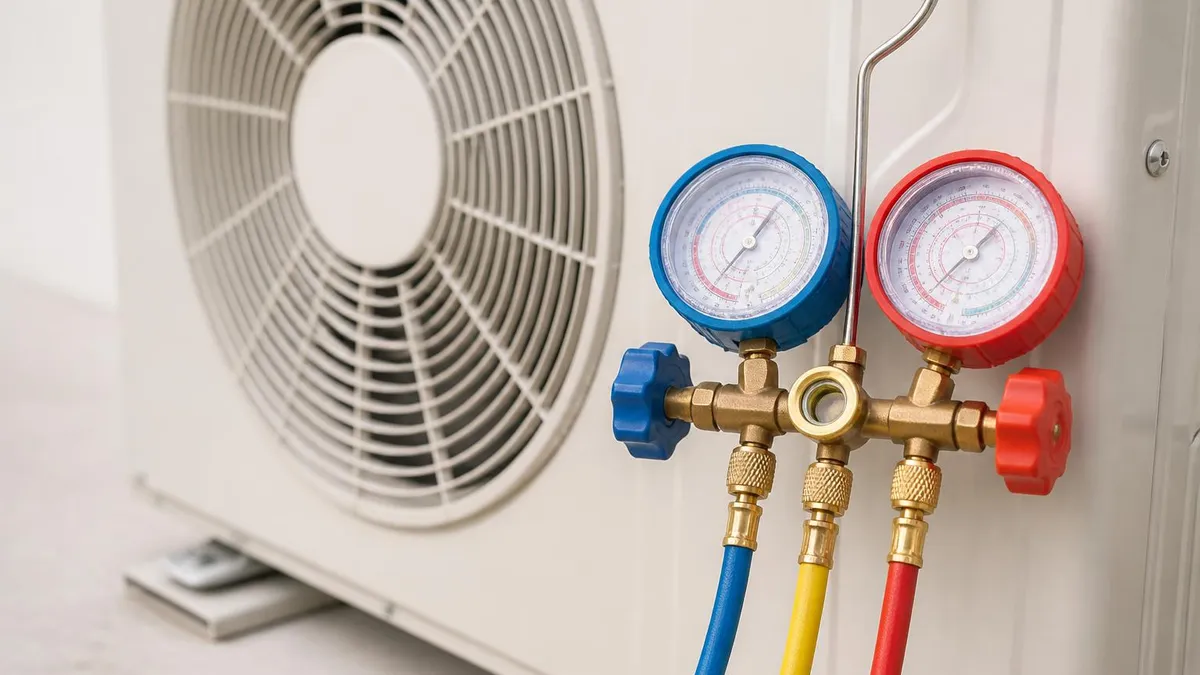
Residential HVAC: Systems, Selection, and Maintenance Basics

HVAC Industry Trends 2026: The Complete Guide to Heat Pumps, Refrigerant Changes, Smart Controls, and Workforce Shifts Reshaping Heating and Cooling

HVAC Advertising: The Complete Playbook for Generating Leads, Booking Calls, and Growing Your Heating and Cooling Business

HVAC License: State Requirements, EPA 608 and Career Path Guide
About the Author

NATE Certified HVAC Technician & Licensing Exam Trainer
Universal Technical InstituteMike Johnson is a NATE-certified HVAC technician and EPA 608 universal-certified refrigerant handler with a Bachelor of Science in HVAC/R Technology. He has 19 years of commercial and residential HVAC installation and service experience and specializes in preparing technicians for NATE certification, EPA 608, A2L refrigerant safety, and state HVAC contractor licensing examinations.