
Ameristar HVAC: Complete Guide to Units, Reliability, Costs, and Buyer Considerations
Ameristar HVAC review covering air conditioners, heat pumps, 🔎 gas furnaces, pricing, warranty, efficiency, and how the brand compares for homeowners.

Ameristar HVAC has built a reputation as a value-oriented residential brand owned by Trane Technologies, sharing many of the same engineering principles, parts platforms, and quality controls as its premium siblings Trane and American Standard. For homeowners shopping for a reliable, no-frills system that won't drain the budget, Ameristar offers air conditioners, heat pumps, gas furnaces, and air handlers designed for everyday performance. The brand targets the entry-level tier, but the lineage matters more than the marketing.
The appeal of Ameristar is straightforward: dependable cooling and heating equipment at a noticeably lower price point than the flagship Trane lineup, manufactured in the same Tyler, Texas factory by the same workforce using overlapping components. That shared parentage means service technicians who already work on Trane and American Standard systems can typically diagnose and repair Ameristar units with familiar tools, refrigerant procedures, and replacement parts ordered through the same distribution network.
This guide walks through Ameristar's product lineup, energy efficiency ratings, expected installation costs, warranty coverage, common service issues, and how the brand stacks up against direct competitors like Goodman, Payne, and Rheem's value lines. We'll also cover what HVAC technicians say about working on these systems, what homeowners should ask their contractor before signing a quote, and where Ameristar fits in the larger picture of choosing a new central comfort system in 2026.
Whether you're replacing a 15-year-old condenser that finally quit on a 95-degree afternoon or planning a full system swap before next winter, understanding the brand's strengths and weaknesses helps you negotiate a smarter installation. Pricing varies dramatically by region, contractor markup, refrigerant charge requirements, and whether you qualify for utility rebates or federal tax credits, so knowing what you're buying is half the battle when comparing bids.
Ameristar isn't trying to be a luxury brand. It doesn't carry the variable-speed compressors, communicating thermostats, or 20+ SEER2 ratings that mark the top tier of residential cooling. What it does offer is a competent, code-compliant system with single-stage operation, reliable scroll compressors on AC models, and the kind of straightforward design that makes future repairs predictable. For many households, that combination of price and parentage is exactly the right trade-off.
We'll dig into specific model lines including the M4AC4 air conditioner series, the M4HP6 heat pump line, and the M801 and M952 gas furnace platforms. Each carries different efficiency tiers, blower configurations, and refrigerant compatibility profiles relevant to the 2025 R-454B transition. Understanding these distinctions matters hvac emergency repair mc lean contractor hands you three quotes and you're trying to decide which actually fits your home's load calculation, ductwork, and climate zone.
By the end of this article, you'll have a clear sense of whether Ameristar belongs on your shortlist, what questions to ask your installer, and how to evaluate the total ownership cost rather than just the sticker price on the equipment itself.
Ameristar HVAC by the Numbers
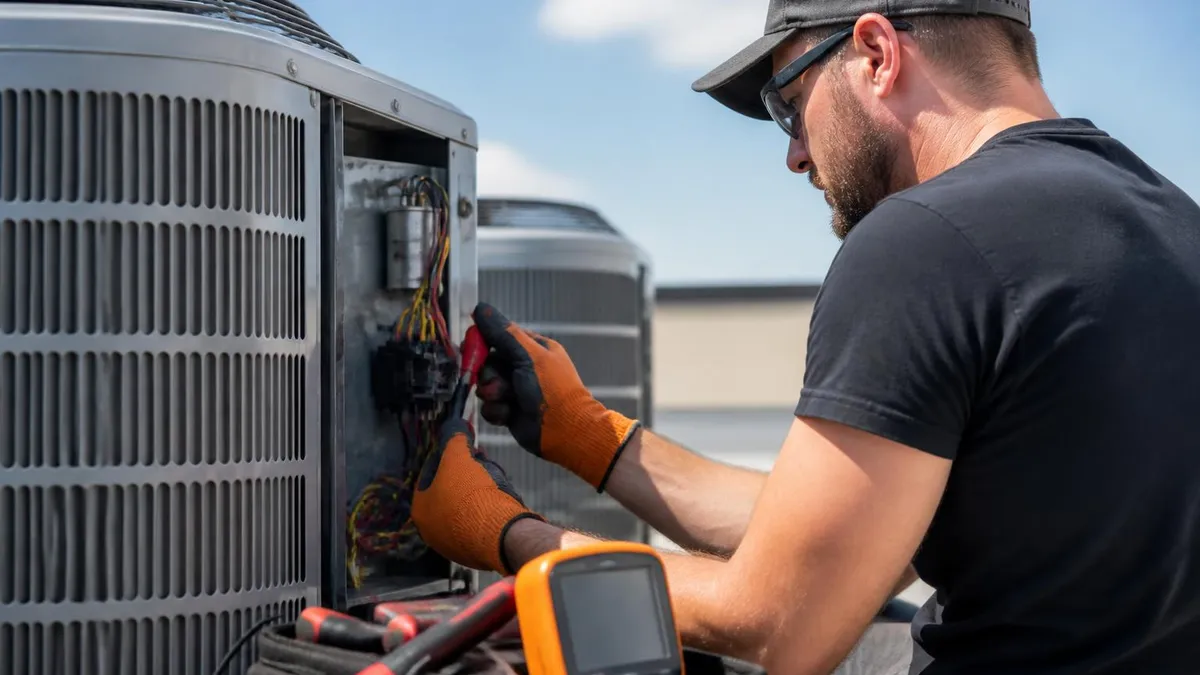
Ameristar Product Lineup at a Glance
Single-stage 14.3 SEER2 condenser using a Climatuff scroll compressor, available in 1.5 to 5 ton capacities. Targets budget-conscious replacement buyers who need code-compliant cooling without premium two-stage modulation.
Single-stage heat pump rated up to 15.2 SEER2 and 8.1 HSPF2, designed for moderate climates where heating loads stay above 25°F balance points. Pairs with M4AH air handlers for matched system performance.
80% AFUE single-stage gas furnace using a multi-speed PSC blower motor. Affordable choice for warmer southern climates where AFUE differences matter less and equipment cost dominates total ownership math.
95% AFUE high-efficiency condensing furnace with sealed combustion and multi-speed blower. Better suited to cold-climate homes where annual gas savings justify the higher upfront equipment investment.
Cased coil and blower assembly designed to match Ameristar condensers and heat pumps. Available with electric heat strip add-ons for backup heating in heat pump applications across mixed climate zones.
To understand where Ameristar fits, it helps to picture the Trane Technologies brand hierarchy. Trane sits at the top with premium variable-speed equipment, communicating controls, and the strongest warranties. American Standard occupies the same engineering tier under a different badge, often sold through different dealer networks. Ameristar is the value play, built on shared platforms but stripped of premium features like dual-stage compressors, ECM variable-speed blowers across the full lineup, and the integrated diagnostic systems that flagship models carry.
That positioning makes Ameristar a direct competitor to Goodman, Payne (Carrier's value brand), Rheem's basic Classic series, and Lennox's Aire-Flo line. Among these, Ameristar's strongest argument is the parts and service ecosystem. Because the units share component design with Trane and American Standard, the contractor diagnosing your unit five years from now doesn't need specialized training or hard-to-find parts. Capacitors, contactors, fan motors, and TXV valves are common across the family.
Goodman has historically competed on a similar value proposition under the Daikin umbrella, with comparable warranties and pricing. The choice between Ameristar and Goodman often comes down to local dealer support, refrigerant transition timing, and which contractor in your area runs the more reputable installation crew. A poorly installed premium unit will underperform a properly installed budget unit every single time.
Where Ameristar trails Trane and American Standard is in the high-efficiency segment. If you want a 20+ SEER2 inverter-driven system with humidity control, zoning, and smart thermostat integration, Ameristar doesn't compete. The lineup tops out at modest efficiency ratings that satisfy federal minimums and qualify for basic utility rebates, but rarely the largest tax credits tied to higher SEER2 thresholds. That's a deliberate market positioning choice, not a quality compromise.
For homeowners with tight ductwork, undersized return air paths, or older homes where airflow problems dominate comfort complaints, the conversation should start with a load calculation and duct inspection long before brand selection. Even the best Ameristar condenser cannot overcome a system starved for return air or sized 30% too large for the home. Reviewing a proper HVAC duct installation approach often delivers more comfort improvement than upgrading equipment tiers.
The contractor's role in brand comparison is enormous. A skilled installer who runs Ameristar as their primary residential line will deliver a better outcome than a contractor who reluctantly installs a flagship brand they don't normally carry. Ask which brand the company installs most often, who handles warranty claims, and whether they stock common parts on their service trucks. Those answers reveal more about your future repair experience than any brochure ever will.
Finally, recognize that resale and home appraisal value rarely distinguishes between HVAC brands at this tier. An appraiser sees a functional central system with documented installation. The brand badge on the condenser matters far less than the maintenance records, refrigerant charge documentation, and whether the system passed its commissioning checks at startup.
HVAC Practice Test Questions
Prepare for the HVAC - Heating Ventilation and Air Conditioning exam with our free practice test modules. Each quiz covers key topics to help you pass on your first try.
HVAC Air Conditioning
HVAC Exam Questions covering Air Conditioning. Master HVAC Test concepts for certification prep.
HVAC Code Compliance
Free HVAC Practice Test featuring Code Compliance. Improve your HVAC Exam score with mock test prep.
HVAC Electrical Controls
HVAC Test Prep for Electrical Controls. Practice HVAC Quiz questions and boost your score.
HVAC Energy Efficiency
HVAC Questions and Answers on Energy Efficiency. Free HVAC practice for exam readiness.
HVAC Heating Systems
HVAC Mock Test covering Heating Systems. Online HVAC Test practice with instant feedback.
HVAC Load Calculations
Free HVAC Quiz on HVAC Load Calculations. HVAC Exam prep questions with detailed explanations.
HVAC Tools and Equipment
HVAC Practice Questions for HVAC Tools and Equipment. Build confidence for your HVAC certification exam.
HVAC Refrigeration
HVAC Test Online for Refrigeration. Free practice with instant results and feedback.
HVAC Safety Practices
HVAC Study Material on Safety Practices. Prepare effectively with real exam-style questions.
HVAC System Design
Free HVAC Test covering System Design. Practice and track your HVAC exam readiness.
HVAC Thermodynamics
HVAC Exam Questions covering Thermodynamics. Master HVAC Test concepts for certification prep.
Understanding Ameristar HVAC Efficiency Ratings
SEER2 replaced the older SEER metric in January 2023, using a higher external static pressure during testing to better reflect real-world ductwork conditions. Ameristar air conditioners typically range from 14.3 to 15.2 SEER2, which meets the federal minimum for both northern and southern regions in the United States after the 2023 update.
This positions Ameristar firmly in the entry-level efficiency tier. Premium systems reach 20+ SEER2 with variable-speed compressors, but they cost roughly twice as much. For homeowners in moderate climates with reasonable cooling hours per year, the payback period on jumping to a high-efficiency tier often exceeds the equipment lifespan.
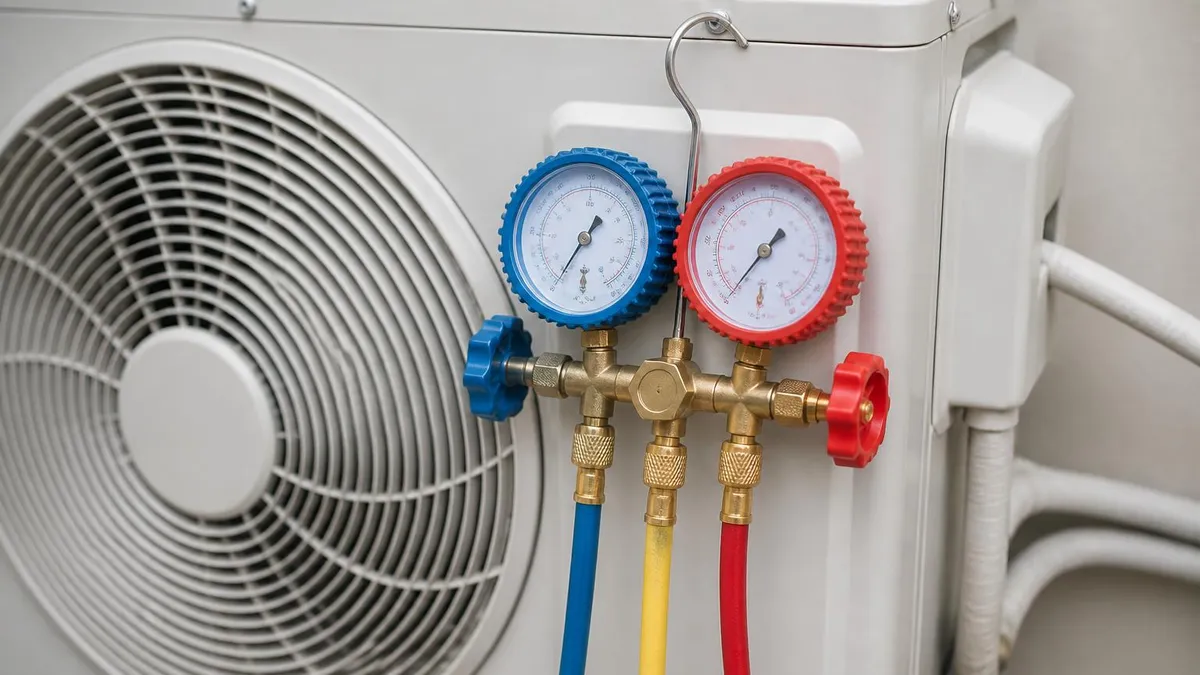
Ameristar HVAC Pros and Cons
- +Lower upfront equipment cost than premium Trane and American Standard models
- +Manufactured in the same Tyler, Texas plant as flagship sibling brands
- +Parts compatibility with Trane and American Standard simplifies future repairs
- +Climatuff scroll compressors offer proven reliability in residential applications
- +10-year parts warranty with online registration is competitive at this tier
- +Widely available through independent contractor networks across the United States
- −Limited high-efficiency options compared to flagship brands
- −Single-stage compressors lack the comfort refinement of variable-speed systems
- −Does not qualify for the highest federal energy efficiency tax credits
- −Fewer smart thermostat and communicating control integrations available
- −Cabinet sound levels are higher than premium tier condensers under load
- −Resale marketing recognition trails better-known brand names with consumers
Pros and Cons at a Glance
| Pros | Cons |
|---|---|
| Lower upfront equipment cost than premium Trane and American Standard models | Limited high-efficiency options compared to flagship brands |
| Manufactured in the same Tyler, Texas plant as flagship sibling brands | Single-stage compressors lack the comfort refinement of variable-speed systems |
| Parts compatibility with Trane and American Standard simplifies future repairs | Does not qualify for the highest federal energy efficiency tax credits |
| Climatuff scroll compressors offer proven reliability in residential applications | Fewer smart thermostat and communicating control integrations available |
| Widely available through independent contractor networks across the United States | Cabinet sound levels are higher than premium tier condensers under load |
Ameristar HVAC Buyer Checklist
- ✓Request a Manual J load calculation rather than rule-of-thumb sizing by square footage
- ✓Verify the model number matches the AHRI certificate the contractor provides
- ✓Confirm refrigerant type and whether the system is R-410A or R-454B compatible
- ✓Ask for written documentation of static pressure measurements after installation
- ✓Register the equipment within 60 days to lock in the full 10-year parts warranty
- ✓Compare three contractor quotes that itemize equipment, labor, and permit costs separately
- ✓Verify the installer pulls a mechanical permit and schedules the required inspection
- ✓Check that the air handler or furnace blower matches the condenser tonnage rating
- ✓Ask whether existing line set will be reused, flushed, or fully replaced with new copper
- ✓Confirm post-install commissioning includes superheat, subcooling, and airflow verification
Installation quality outweighs brand selection
Industry data consistently shows that more than half of all residential HVAC performance complaints trace back to installation errors rather than equipment defects. A skilled installer running Ameristar will deliver better comfort and lower bills than a careless installer with premium equipment. Vet the contractor first, then choose the brand.
Installation costs for an Ameristar central system vary widely based on region, home size, ductwork condition, and refrigerant transition timing. As of 2026, a complete 3-ton single-stage air conditioner replacement with a new matched air handler, line set, and basic thermostat typically falls between $4,500 and $7,800 fully installed. Larger 4 and 5-ton systems push toward $9,500, and adding a high-efficiency gas furnace can bring complete dual-equipment installations into the $10,000 to $13,000 range depending on local labor rates.
Heat pump installations price slightly higher than straight cooling systems because the outdoor unit carries reversing valve assemblies, defrost controls, and additional refrigerant charge. Expect to add roughly $800 to $1,500 over an equivalent tonnage AC quote. The trade-off is eliminating a separate gas furnace and gaining a single piece of equipment that handles both heating and cooling, which simplifies maintenance scheduling and reduces gas line and venting requirements.
Beyond the equipment itself, line set replacement adds $400 to $900, electrical disconnect upgrades run $200 to $500, and condensate pump installation adds another $200 to $400 when gravity drainage isn't available. Homes built before 1990 may need return air upgrades, new supply trunk runs, or whole-system duct sealing to meet today's airflow specifications. These ancillary costs frequently surprise buyers who anchored their budget on equipment price alone.
The 2025 R-454B refrigerant transition has reshaped pricing significantly. New equipment manufactured after January 2025 uses R-454B, an A2L mildly flammable refrigerant requiring updated leak detection and handling protocols. R-410A inventory still exists in distribution channels but pricing on remaining stock has climbed as availability tightens. Contractors selling final R-410A units may offer modest discounts, but the long-term refrigerant cost picture favors R-454B equipment for repairs over the next decade.
Permits, inspections, and disposal of old equipment typically add $250 to $600 to the total. Skipping the permit may save money short-term but creates serious problems when selling the home, since unpermitted mechanical work raises red flags during inspection and can trigger insurance denials after equipment-related fires or water damage events. A reputable contractor always pulls the permit and bakes the cost into the quote.
Federal tax credits under the Inflation Reduction Act and ongoing 25C provisions can offset thousands of dollars in equipment cost, but most Ameristar models do not meet the highest efficiency thresholds required for the maximum credits. Heat pumps generally qualify for the $2,000 credit if they meet CEE tier requirements, which some Ameristar heat pump configurations achieve when properly matched. Confirm AHRI certificate details with your contractor before assuming any credit eligibility, and review current HVAC tax credit guidance for 2026 rules.
Utility rebates from local electric and gas providers can add another $200 to $800 depending on your service territory. Many utilities offer the strongest rebates on heat pump installations replacing electric resistance or older gas equipment, since these conversions reduce peak load and align with state-level decarbonization targets. Apply for these rebates within the deadline window, since most require submission within 60 to 90 days of installation completion.

Through 2026, contractors are still working through final R-410A inventory while ramping R-454B installations. Some quotes may show artificially low pricing on remaining R-410A stock to clear warehouses, but factor in that future repair refrigerant costs will rise sharply as production ceases. Ask whether your specific quoted model uses R-410A or R-454B before signing.
Ameristar's standard warranty includes a 10-year parts limited warranty when the homeowner registers the equipment online within 60 days of installation, plus a 10-year compressor warranty on AC and heat pump models. Failing to register typically reduces the parts warranty to just five years, a costly oversight that catches many homeowners off guard when a control board fails in year seven and they discover their coverage already expired.
The warranty covers replacement parts but explicitly excludes labor. This is industry standard at this tier, but it matters when calculating real ownership costs. A failed evaporator coil under warranty in year eight typically means the part itself is free but the contractor still charges $800 to $1,400 for refrigerant recovery, brazing the new coil into the air handler, recharging the system, and verifying performance. Some contractors offer extended labor warranties for an upfront fee, usually $500 to $1,200 added at installation.
Common service issues reported on Ameristar systems mirror those across the entry-level segment broadly. Run capacitors fail after five to eight years of summer cycling and usually cost under $200 to replace including the service call. Contactors develop pitted contacts that cause hard starting, typically resolved with a $250 to $350 service visit. Condensate drain clogs are seasonal maintenance items rather than warranty defects, but a flooded ceiling or attic from a clogged drain line creates significant collateral damage.
Refrigerant leaks at flare fittings, schrader valves, and TXV connections rank among the most expensive repair categories. A small leak in year four might require dye injection diagnosis ($350), a refrigerant recharge ($400-$700), and replacement of the leaking component. Larger leaks that empty the system fast often signal evaporator coil failure, which means a major repair even if the coil itself is under parts warranty. Annual maintenance inspections catch many of these issues before they cascade into emergency calls.
Air handler blower motors and circuit boards are the next most common failures past the eight-year mark. PSC motor replacement runs $400 to $700 installed, while integrated furnace control boards range $450 to $800 depending on the platform. ECM variable-speed motors on the higher-tier air handlers cost more to replace but typically last longer before failing. Routine filter changes and annual coil cleaning extend motor life considerably by reducing the static pressure the blower has to overcome.
Choosing a contractor matters as much for ongoing service as for initial installation. Ask whether the company offers a maintenance agreement with priority scheduling during summer and winter peak seasons, since waiting three days for a service appointment during a 100-hvac emergency repair mc lean wave is its own form of expensive. Good agreements include two visits per year, basic chemical coil cleaning, refrigerant pressure checks, and electrical contact inspection. A typical HVAC inspection as part of these visits catches issues early.
Finally, document everything. Keep the installation invoice, AHRI certificate, warranty registration confirmation, permit close-out paperwork, and all service records in one folder. When you eventually sell the home, this documentation supports the appraisal, reassures the buyer's inspector, and proves the equipment was properly maintained throughout its life. It also helps the next owner continue any remaining warranty coverage if the unit is still within its 10-year window.
Before finalizing any Ameristar installation, walk through a practical pre-purchase checklist that goes beyond the equipment brochure. Start with a written Manual J load calculation. This calculates the actual cooling and heating BTU requirements based on your home's insulation, window orientation, air infiltration rate, and occupancy. Oversized equipment short-cycles, fails to dehumidify properly, and wears out faster. Undersized equipment runs constantly and never reaches setpoint on extreme days. The math matters more than the badge on the condenser.
Insist on a Manual D ductwork analysis if your existing ducts are over 20 years old or if you've experienced rooms that never reach comfort. Adding a higher-tonnage condenser to undersized ductwork creates static pressure problems that destroy blower motors and degrade efficiency. Sometimes the right answer is a smaller, properly matched system rather than upsizing equipment to overcome airflow restrictions. A competent contractor explains these trade-offs clearly rather than defaulting to whatever was there before.
Verify thermostat compatibility before installation day. Most Ameristar systems work with standard 24V thermostats including the popular Honeywell, Ecobee, and Nest residential models. However, some heat pump configurations with auxiliary heat strips require specific terminal wiring. Confirm whether your existing thermostat will be reused or replaced, and whether the new thermostat handles the dehumidification and fan staging your system supports. A $250 smart thermostat with proper setup often delivers more comfort improvement than a $1,500 equipment upgrade.
Plan for the commissioning visit. After installation, the technician should measure refrigerant superheat and subcooling, verify supply and return static pressure, check temperature split across the coil, confirm condensate drainage works under load, and ensure all electrical connections meet specification. Ask for a written commissioning report with these values documented. This protects both you and the contractor if performance problems emerge later, and it provides a baseline for future maintenance technicians to compare against.
Schedule your installation during the shoulder seasons when possible. Spring and fall typically offer better contractor availability, faster project completion, and occasionally promotional pricing as companies smooth their workload between summer and winter peaks. Emergency replacement during a July heat wave or January cold snap often means paying premium rates for whatever equipment is in stock rather than the optimal match for your home. Planning ahead almost always saves money and improves the installation outcome.
Consider the long-term maintenance plan. A good practice is twice-yearly service: a spring cooling check and a fall heating check. This roughly $200 to $400 annual investment catches most failures before they escalate and keeps the equipment performing near its rated efficiency. Skipping maintenance often shaves years off equipment life and voids portions of the warranty if a failure traces back to neglected service. Build the maintenance budget into your total ownership cost analysis from the start.
Finally, think about future home plans. If you're planning solar panel installation, additions to the home, or eventual conversion to a fully electric heat pump configuration, mention these to your contractor. Sometimes the right Ameristar equipment for today is different from what makes sense if you're upgrading to a heat pump conversion in three years. A thoughtful contractor incorporates these plans into equipment selection rather than just replacing what was there.
Sample HVAC Practice Questions
Try these questions from our free HVAC practice tests. The correct answer and an explanation follow each question.
What does PID stand for in HVAC control systems?
- A. Pneumatic Integrated Damper
- B. Proportional-Integral-Derivative
- C. Pressure-Induced Differential
- D. Programmable Interface Device
Answer: B. Proportional-Integral-Derivative
PID control combines Proportional, Integral, and Derivative actions to minimize error, eliminate steady-state offset, and dampen rapid oscillations.
In HVAC design, 'face velocity' refers to:
- A. The speed of the blower wheel
- B. Airflow velocity across the face area of a coil or filter
- C. Duct velocity at the system outlet
- D. Return air speed at the grille face
Answer: B. Airflow velocity across the face area of a coil or filter
Face velocity is the air speed across the frontal area of a cooling coil, heating coil, or filter, measured in feet per minute (FPM).
Under NFPA 70E electrical safety standards relevant to HVAC, what is the minimum approach boundary for unqualified persons near exposed energized parts at 120V?
- A. Restricted approach boundary
- B. Limited approach boundary
- C. Arc flash boundary
- D. Prohibited boundary
Answer: B. Limited approach boundary
NFPA 70E defines the Limited Approach Boundary as the distance unqualified persons must stay from exposed energized conductors to avoid electrical shock hazard.
What instrument is used to measure airflow velocity in HVAC ductwork?
- A. Manometer
- B. Psychrometer
- C. Anemometer
- D. Hygrometer
Answer: C. Anemometer
An anemometer measures air velocity, which is then used with duct cross-sectional area to calculate airflow in CFM.
HVAC Questions and Answers
HVAC Technician Jobs Near Me: How to Find, Land, and Grow in Local HVAC Careers
HVAC Duct Installation: Materials, Sizing, Sealing and Best Practice
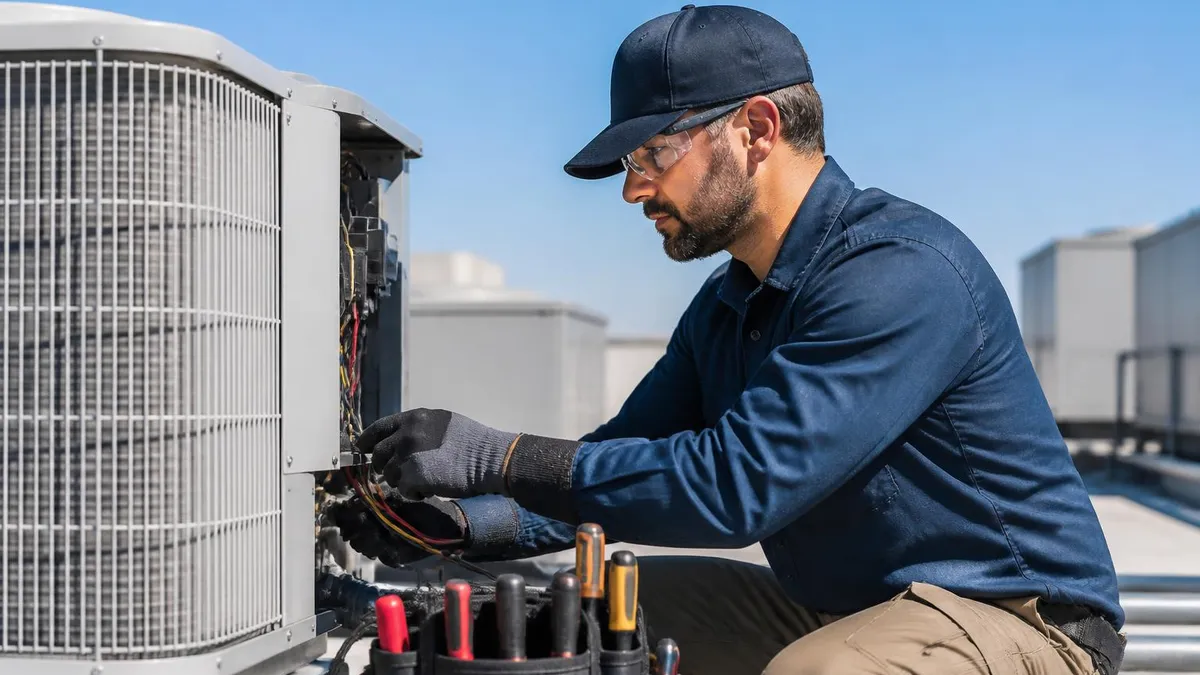
HVAC Inspection: What's Included and Why It Matters
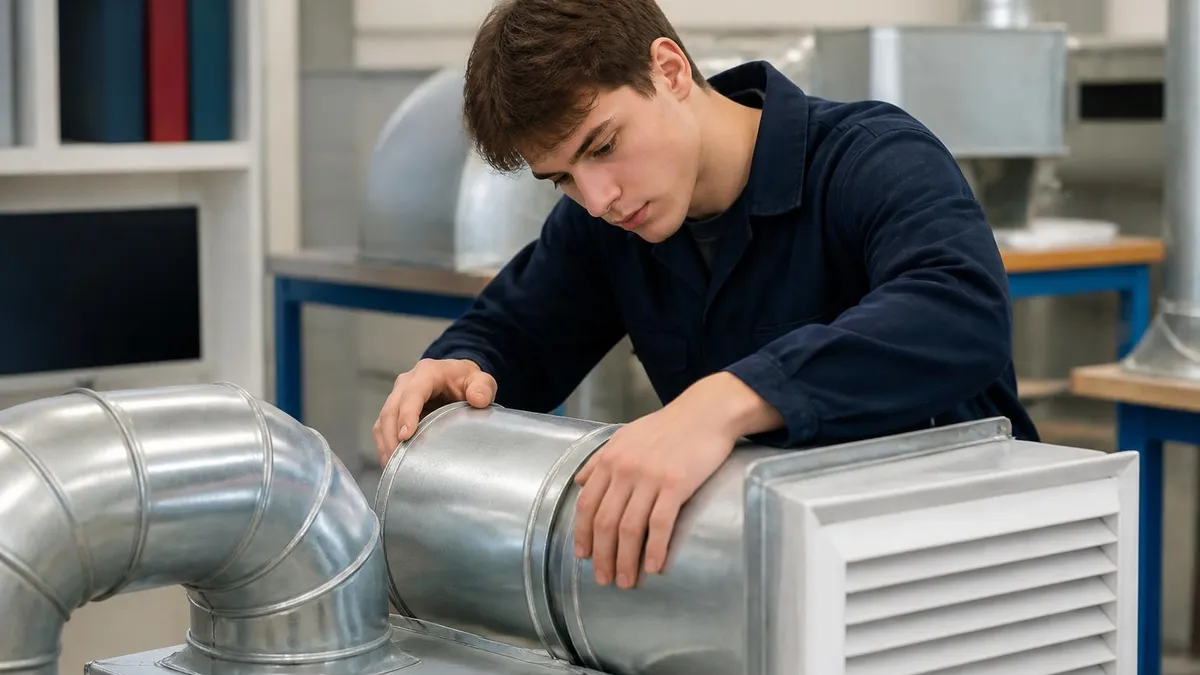
Tax Credit for Installing New HVAC: 2026-2026 Rules
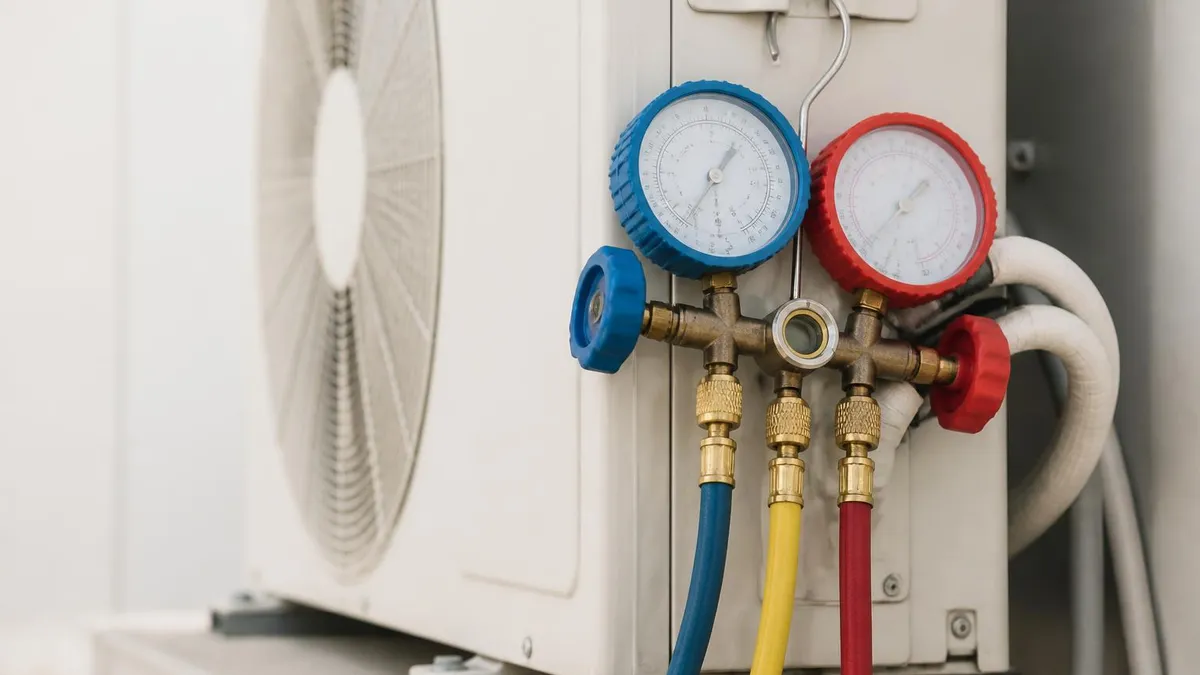
HVAC Heat Pump Systems: How They Work and When They Make Sense
About the Author

NATE Certified HVAC Technician & Licensing Exam Trainer
Universal Technical InstituteMike Johnson is a NATE-certified HVAC technician and EPA 608 universal-certified refrigerant handler with a Bachelor of Science in HVAC/R Technology. He has 19 years of commercial and residential HVAC installation and service experience and specializes in preparing technicians for NATE certification, EPA 608, A2L refrigerant safety, and state HVAC contractor licensing examinations.