
HVAC Brands: Complete Guide to the Best Heating and Cooling Manufacturers in 2026 October
Compare top HVAC brands by reliability, price, warranty, and efficiency. 💡 Expert guide to Carrier, Trane, Lennox, Rheem, Goodman, and more.
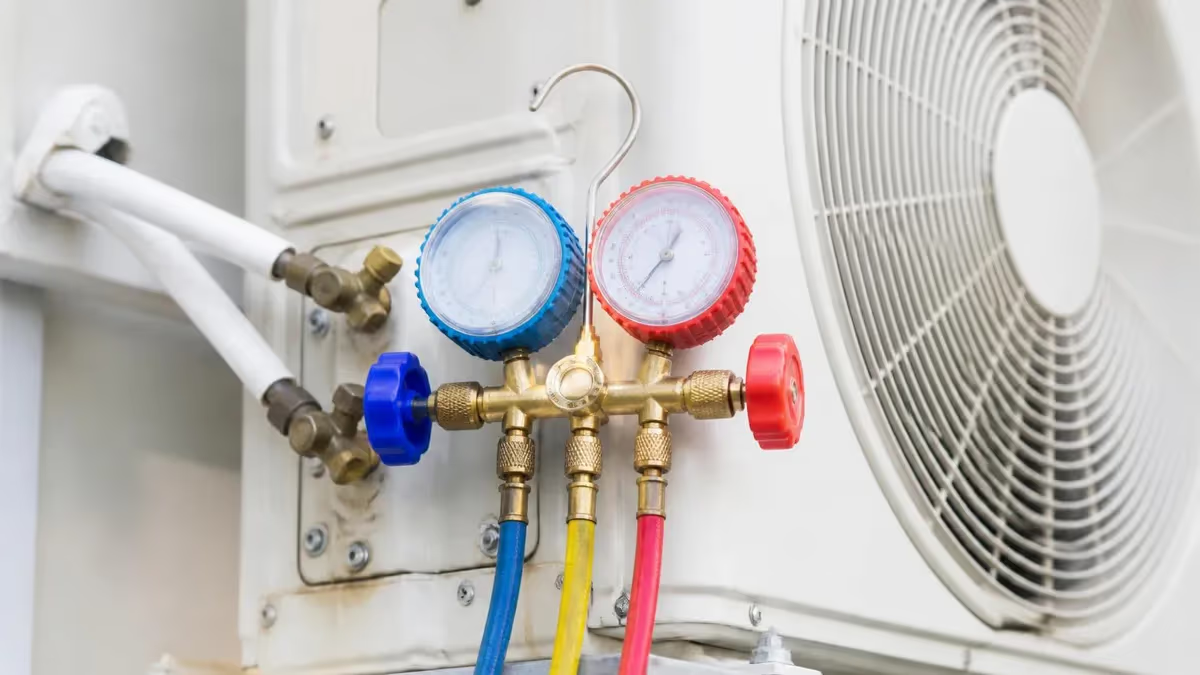
Choosing among the many HVAC brands on the market today can feel overwhelming, especially when each manufacturer promises industry-leading efficiency, quiet operation, and decades of reliable service. The reality is that HVAC brands differ significantly in build quality, parts availability, warranty terms, dealer networks, and long-term operating costs. Whether you are replacing a 15-year-old air conditioner, installing a brand-new heat pump, or upgrading to a modern variable-speed furnace, understanding what separates premium tiers from value tiers will save thousands of dollars over the equipment's lifetime.
This guide breaks down the most respected HVAC manufacturers in North America, comparing their flagship product lines, SEER2 ratings, compressor warranties, and field reliability data. We will look at how parent companies such as Carrier Global, Trane Technologies, Lennox International, Daikin, and Rheem structure their tiered offerings and what those tiers actually mean once equipment is installed in your home. Brand badges often obscure shared components, so knowing the corporate family trees gives buyers genuine use.
The HVAC market in the United States is dominated by roughly a dozen major manufacturers who collectively own dozens of consumer-facing badges. Carrier, Trane, Lennox, Daikin/Goodman, Rheem/Ruud, York/Johnson Controls, and Bosch represent the bulk of residential installations. Each manufacturer competes in three rough tiers: premium variable-speed systems, mid-tier two-stage units, and economy single-stage models built to hit aggressive price points without sacrificing core durability.
Reliability rankings from consumer surveys, contractor reports, and warranty claim data consistently place American Standard, Trane, Bryant, and Carrier near the top for compressor longevity and parts quality. Goodman, Amana, and Daikin have closed the gap dramatically since Daikin's 2012 acquisition, offering aggressive warranties at value pricing. Lennox earns top marks for efficiency innovation but is criticized for proprietary parts that limit repair flexibility outside its dealer network.
Beyond the brand label, installation quality matters more than any badge. A premium Trane installed poorly will fail before a budget Goodman installed correctly. That is why this guide also covers how to evaluate dealer credentials, sizing calculations, and warranty registration rules that protect your investment. Working with qualified certified HVAC contractors ensures the equipment performs as designed and that warranty coverage remains intact.
Pricing varies widely by region, but expect a fully installed central air system from a premium brand to run $7,500 to $14,000, while value brands install for $4,500 to $8,500 for comparable tonnage. Heat pumps, ductless mini-splits, and gas furnaces follow similar tier-based pricing. The cost difference often pays back through lower utility bills, longer equipment life, and stronger warranties over a 15- to 20-year ownership horizon.
By the end of this article you will know which HVAC brands match your budget, climate, home size, and efficiency goals. You will also understand the technical specs that actually matter, the warranty fine print most homeowners overlook, and the red flags that signal a brand or contractor to avoid. Let us start with the numbers that define today's HVAC manufacturing landscape.
HVAC Brands by the Numbers
Major HVAC Manufacturer Tiers and Parent Companies
Parent of Carrier, Bryant, Payne, Heil, Tempstar, and Comfortmaker. Carrier holds premium positioning while Bryant offers nearly identical engineering at slightly lower cost. Payne targets the budget tier.
Owns Trane and American Standard, which share virtually identical components. Known for the Climatuff compressor and spine-fin coil. Premium pricing reflects build quality and a strong commercial reputation.
Parent of Lennox, Armstrong Air, AirEase, Ducane, and Concord. Lennox leads efficiency innovation with the SL28XCV at 28 SEER2. Proprietary parts can complicate independent service.
Owns Daikin, Goodman, and Amana since acquiring Goodman in 2012. Offers industry-leading warranties up to 12 years on parts. Daikin Fit and inverter heat pumps lead the value-premium category.
Parent of York, Coleman, Luxaire, Champion, and Fraser-Johnston. Solid mid-tier reliability with competitive pricing. Often chosen for new construction due to builder relationships.
Comparing top HVAC brands head-to-head requires looking past marketing claims and focusing on measurable specifications. Carrier and Trane consistently rank as the two most reliable premium manufacturers in independent consumer surveys, with compressor failure rates below 4 percent in the first decade of ownership. Their flagship variable-speed systems, the Carrier Infinity 26 and Trane XV20i, deliver SEER2 ratings in the 20-22 range with whisper-quiet operation under 60 decibels at the outdoor unit.
Lennox occupies a unique position as the efficiency leader, with its Signature Collection SL28XCV achieving 28 SEER2, currently the highest residential rating available. However, Lennox relies heavily on proprietary parts and authorized dealers, which can make repairs slow and expensive outside major metro areas. If you live somewhere with limited Lennox dealer coverage, the efficiency advantage may be offset by service headaches over a 15-year ownership period.
Rheem and Ruud, which share identical engineering under different badges, offer excellent mid-tier value. The Rheem Prestige RA20 delivers 20.5 SEER2 with a 10-year parts warranty and a strong reputation for compressor longevity. Rheem has aggressively expanded its dealer network and improved build quality over the past decade, making it a smart choice for buyers who want premium features without the Carrier or Trane price premium.
Goodman and Amana, both owned by Daikin, have transformed from budget afterthoughts into legitimate competitors. The Amana AVXC20 offers a lifetime compressor warranty, virtually unmatched in the industry. Goodman's GSXC18 hits 19 SEER2 at pricing 20-30 percent below comparable Carrier or Trane units. The tradeoff has historically been louder operation and slightly higher service call rates, though recent generations have closed both gaps significantly.
York, Coleman, and Luxaire from Johnson Controls offer dependable mid-tier performance with strong builder relationships. These brands appear frequently in new construction because Johnson Controls offers attractive pricing to production homebuilders. Quality has improved markedly since 2015, and the YXV variable-capacity heat pump competes well against premium offerings on both efficiency and noise. Parts availability is excellent through the extensive HVAC supply house network.
Bosch has emerged as a dark-horse premium brand, particularly in the heat pump category. The Bosch IDS 2.0 inverter-driven heat pump offers exceptional cold-climate performance with seamless modulation from 30 to 100 percent capacity. Bosch products are typically sold through independent contractors rather than exclusive dealer networks, giving buyers more competitive pricing options and flexibility on service providers down the road.
Mitsubishi and Fujitsu dominate the ductless mini-split category, with both offering hyper-heat models that maintain full heating capacity down to minus 13 degrees Fahrenheit. For homes without existing ductwork, additions, or zoned comfort applications, these Japanese manufacturers are virtually unbeatable. Understanding CFM HVAC basics helps explain why ductless systems often outperform traditional central air in specific applications, particularly multi-story homes with uneven temperatures.
HVAC Practice Test Questions
Prepare for the HVAC - Heating Ventilation and Air Conditioning exam with our free practice test modules. Each quiz covers key topics to help you pass on your first try.
HVAC Air Conditioning
HVAC Exam Questions covering Air Conditioning. Master HVAC Test concepts for certification prep.
HVAC Code Compliance
Free HVAC Practice Test featuring Code Compliance. Improve your HVAC Exam score with mock test prep.
HVAC Electrical Controls
HVAC Test Prep for Electrical Controls. Practice HVAC Quiz questions and boost your score.
HVAC Energy Efficiency
HVAC Questions and Answers on Energy Efficiency. Free HVAC practice for exam readiness.
HVAC Heating Systems
HVAC Mock Test covering Heating Systems. Online HVAC Test practice with instant feedback.
HVAC Load Calculations
Free HVAC Quiz on HVAC Load Calculations. HVAC Exam prep questions with detailed explanations.
HVAC Tools and Equipment
HVAC Practice Questions for HVAC Tools and Equipment. Build confidence for your HVAC certification exam.
HVAC Refrigeration
HVAC Test Online for Refrigeration. Free practice with instant results and feedback.
HVAC Safety Practices
HVAC Study Material on Safety Practices. Prepare effectively with real exam-style questions.
HVAC System Design
Free HVAC Test covering System Design. Practice and track your HVAC exam readiness.
HVAC Thermodynamics
HVAC Exam Questions covering Thermodynamics. Master HVAC Test concepts for certification prep.
Premium vs Value HVAC Brands: Detailed Breakdown
Premium HVAC brands include Carrier, Trane, American Standard, Lennox Signature, and Daikin Fit. These manufacturers offer variable-speed compressors, communicating thermostats, advanced humidity control, and SEER2 ratings from 20 to 28. Expect installed costs from $9,500 to $15,000 for a typical 3-ton residential system, with premium pricing reflecting tighter manufacturing tolerances and longer equipment life.
Premium tiers justify their cost through 18- to 25-year service lives, superior comfort with stage modulation, and parts warranties that often extend to 10 or 12 years. Homeowners who plan to stay 10+ years and value quiet operation, even temperatures, and lower utility bills typically see the best return. Premium systems also tend to retain home resale value better than budget alternatives.
Choosing Premium HVAC Brands: Is the Cost Worth It?
- +Longer equipment lifespan averaging 18-25 years with proper maintenance
- +Variable-speed compressors deliver more even temperatures and quieter operation
- +Superior humidity control improves comfort in summer cooling months
- +Stronger compressor warranties often 10-12 years versus 5-10 for value brands
- +Higher SEER2 ratings reduce monthly utility bills by 20-30 percent
- +Better resale value when selling the home within the equipment lifespan
- +Advanced diagnostics and communicating controls simplify professional service
- −Initial cost 30-50 percent higher than comparable value-brand systems
- −Proprietary parts can limit repair options to authorized dealers only
- −Communicating thermostats often require brand-matched replacements
- −Premium dealers charge higher hourly labor rates for service calls
- −Payback period of 8-12 years may exceed planned homeownership window
- −Complex electronics increase potential failure points after warranty expires
HVAC Brand Selection Checklist Before You Buy
- ✓Verify the brand has at least three authorized dealers within 25 miles of your home
- ✓Confirm the specific model carries a 10-year parts warranty registered within 60 days of install
- ✓Request three written quotes for the same brand and model from competing dealers
- ✓Ask the contractor to perform a Manual J load calculation rather than rule-of-thumb sizing
- ✓Check Better Business Bureau ratings and Google reviews for both brand and installer
- ✓Verify SEER2, EER2, and HSPF2 ratings match the AHRI certified matched system
- ✓Compare 10-year total cost of ownership including utilities and projected repairs
- ✓Confirm refrigerant type is R-454B or R-32 to meet 2025 EPA phase-out requirements
- ✓Read warranty exclusions carefully for labor, refrigerant, and consequential damages
- ✓Ensure the installer is NATE-certified and licensed in your state with active insurance
Installation quality matters more than brand prestige
Industry data shows that 60-75 percent of premature HVAC failures stem from installation errors, not equipment defects. A properly installed Goodman will outlast a poorly installed Carrier every time. Prioritize finding a careful, well-reviewed contractor before selecting a specific brand. Even the best HVAC brands fail when sized incorrectly, charged with wrong refrigerant levels, or connected to undersized ductwork.
Understanding warranty structures across HVAC brands is one of the most overlooked aspects of buying a new system, yet it can mean the difference between a $200 repair and a $3,500 replacement out-of-pocket. Most major manufacturers offer a base 10-year parts warranty on compressors and coils, but this coverage is contingent on registering the equipment within 60 to 90 days of installation. Unregistered systems typically default to a 5-year warranty, cutting protection in half just when failures become most common.
Parts warranties cover the cost of replacement components but almost never include labor, refrigerant, or freight. A compressor replacement under warranty still typically costs $800 to $1,500 in labor. Some manufacturers like Trane, Lennox, and Carrier offer extended labor warranties for an additional $400 to $800 at the time of purchase, which can be worthwhile given that labor often exceeds parts cost on major component failures during years 6-12.
Goodman and Amana stand apart in the warranty conversation. Both offer lifetime compressor warranties on flagship models, transferable to a single subsequent homeowner under specific conditions. This represents tremendous value, particularly for buyers planning to stay long-term. However, lifetime warranties have specific maintenance documentation requirements: skipping annual professional inspections can void coverage, so retain every service receipt and document filter changes diligently throughout ownership.
Parts availability varies dramatically by brand and geography. Carrier, Bryant, Trane, American Standard, Rheem, Ruud, York, and Coleman parts are stocked at virtually every HVAC supply house in North America. This means same-day or next-day repairs are typical even for older equipment. Lennox uses many proprietary components available only through authorized dealers, which can extend repair timelines from one day to one week, especially for homes far from major metro markets.
The 2025 refrigerant transition has added complexity to brand selection. All new HVAC equipment must use lower-GWP refrigerants like R-454B or R-32 instead of the phased-out R-410A. Brands have adopted these refrigerants at different paces, and refrigerant compatibility affects future repair costs significantly. Equipment using R-454B currently has limited service technician familiarity, though training is rapidly expanding through industry certification programs.
Extended warranties and service contracts offered by dealers vary widely in value. A typical 10-year extended labor warranty costs $500 to $1,200 and covers both parts and labor for major component failures. Read exclusions carefully: many policies exclude refrigerant leaks, electrical failures from power surges, and damage from improper maintenance. Manufacturer-backed extended warranties tend to be more reliable than dealer-administered programs that depend on the dealer remaining in business.
Maintenance requirements to keep warranty coverage active are often overlooked. Most major brands require annual professional inspections, documented filter changes, and use of OEM or approved replacement parts. Failure to maintain documentation can void coverage entirely if a major claim arises. Keep a dedicated folder with installation paperwork, registration confirmation, annual service receipts, and any repair invoices throughout the equipment's lifespan to protect your investment.

Most HVAC brands automatically reduce parts warranties from 10 years to 5 years if not registered within 60-90 days of installation. This single oversight can cost you $2,000-$4,000 if a major component fails in year 7 or 8. Always confirm registration directly with the manufacturer, not just the dealer. Request written confirmation of warranty registration before paying the final installation invoice.
Avoiding common pitfalls when selecting among HVAC brands can save homeowners thousands of dollars and years of comfort frustration. The most expensive mistake is choosing equipment based on the lowest bid without examining what is included. Cut-rate installations often skip critical steps like proper duct sealing, refrigerant line flushing, electrical disconnect upgrades, or condensate drain modifications. These shortcuts cause performance problems and premature failures that no brand warranty will cover.
Oversizing is the second most common error and happens across every brand tier. Contractors who do not perform proper Manual J load calculations often install systems 25-50 percent larger than needed. Oversized systems short-cycle, fail to dehumidify properly, wear out compressors faster, and waste energy. A properly sized 2.5-ton unit will outperform an oversized 4-ton unit in comfort and longevity every time, regardless of which HVAC brand label appears on the cabinet.
Mixing brand components within a system creates AHRI certification problems that can void warranties and reduce efficiency by 15-25 percent. The outdoor condenser, indoor coil, furnace or air handler, and thermostat must form an AHRI-certified matched set to achieve advertised SEER2 ratings. Some contractors substitute cheaper third-party coils to win bids; always require AHRI certificate numbers in writing for your specific system configuration before signing a contract.
Climate considerations affect brand selection more than most buyers realize. In cold northern climates, heat pumps from Mitsubishi, Bosch, Carrier Infinity Greenspeed, and Trane XV20i with cold-climate certification maintain heating capacity below zero degrees. In humid southern climates, variable-speed systems with extended dehumidification cycles from Lennox, Carrier, or Trane outperform single-stage units regardless of SEER2 rating, providing dramatically more comfortable indoor humidity levels.
For homeowners pursuing careers in the trade, understanding brand-specific technologies is essential. Manufacturer-specific training programs from Carrier University, Lennox Learning, and Trane Technologies provide certifications that command premium hourly rates. Many HVAC technician jobs require or prefer brand-specific factory training, particularly for service positions covering variable-capacity equipment with proprietary communicating controls and diagnostic software.
Smart home integration capabilities vary widely across HVAC brands. Carrier Infinity, Trane ComfortLink, and Lennox iComfort all offer proprietary smart thermostats with mobile apps, energy reports, and geofencing. However, only specific models support Apple HomeKit, Google Home, or Amazon Alexa natively. If smart home integration matters, verify compatibility before purchase rather than discovering limitations after installation when changes become expensive and disruptive.
Negotiating tactics work better with some brands than others. Carrier and Trane authorized dealers have less pricing flexibility because manufacturer minimum advertised pricing policies are strictly enforced. Rheem, York, Goodman, and Bryant dealers often have 10-15 percent more negotiating room. Always request itemized quotes separating equipment, labor, materials, permits, and tax to compare bids accurately and identify where contractors are padding margins on each component.
Practical buying strategies vary based on your situation, but several universal principles apply to every HVAC brand purchase. First, never make a decision in an emergency. If your existing system fails suddenly, install a temporary window unit or portable cooler and take two weeks to research properly. Emergency purchases lead to oversized systems, premium pricing, and rushed installations that compromise long-term performance across every brand category, even the most reputable manufacturers.
Second, time your purchase strategically. HVAC equipment pricing fluctuates seasonally, with the lowest prices typically available in early spring (March-April) and late fall (October-November) when contractors have open schedules. Avoid hvac emergency repair mc lean demand for cooling installations and peak winter demand for heating replacements. Off-season buyers often save 10-20 percent on identical equipment and receive more attentive installation service from less-rushed crews.
Third, get at least three competing bids from established local contractors, not just national chains. Independent contractors often install premium brands at 10-15 percent lower prices than corporate franchises with higher overhead. Verify each contractor's license, insurance, NATE certification status, and Better Business Bureau standing. Request and contact at least three customer references from installations completed 2-5 years ago to assess long-term satisfaction with both equipment and contractor service.
Fourth, ask each contractor to explain why they recommend their preferred brand. A contractor who exclusively installs one brand may be limited by dealer agreements rather than choosing what is best for your home. Contractors offering multiple brand lines can typically recommend equipment more objectively based on your specific needs, budget, and home characteristics rather than steering you toward whatever generates the highest dealer incentive payments.
Fifth, financing terms vary significantly across HVAC brands and dealers. Many manufacturers offer promotional 0 percent financing for 18-60 months on qualifying premium equipment purchases. These programs typically require excellent credit but can make premium equipment affordable through manageable monthly payments. Read terms carefully: deferred interest financing can retroactively charge full interest if balances are not paid within the promotional period, sometimes adding thousands of dollars.
Sixth, consider federal and utility rebates that can significantly reduce net cost. The Inflation Reduction Act provides tax credits up to $2,000 for qualifying heat pump installations and $600 for high-efficiency air conditioners. Many utilities offer additional rebates from $300 to $1,500 for ENERGY STAR-certified equipment. These incentives effectively narrow the price gap between premium and value brands, making higher-efficiency equipment more accessible for budget-conscious buyers.
Finally, schedule professional maintenance immediately after installation rather than waiting until problems develop. Annual tune-ups extend equipment life by 30-40 percent, maintain warranty coverage, catch small problems before they become major repairs, and ensure your system delivers rated efficiency throughout its lifespan. Budget $150 to $250 annually for professional maintenance regardless of which HVAC brand you choose, and consider multi-year service plans that often include priority emergency service.
HVAC Questions and Answers
HVAC Technician Jobs Near Me: How to Find, Land, and Grow in Local HVAC Careers
CFM HVAC Basics: How Airflow, Sizing, and System Performance Work Together
Certified HVAC Contractors: How to Find, Vet, and Hire the Right Professional for Your Home or Business

Ameristar HVAC: Complete Guide to Units, Reliability, Costs, and Buyer Considerations

Best HVAC Repair in Bandon, OR: Local Services Near Me Guide
About the Author

NATE Certified HVAC Technician & Licensing Exam Trainer
Universal Technical InstituteMike Johnson is a NATE-certified HVAC technician and EPA 608 universal-certified refrigerant handler with a Bachelor of Science in HVAC/R Technology. He has 19 years of commercial and residential HVAC installation and service experience and specializes in preparing technicians for NATE certification, EPA 608, A2L refrigerant safety, and state HVAC contractor licensing examinations.