
HVAC Solutions: The Complete Guide to Heating, Cooling, and Indoor Air Quality Systems for Homes and Buildings
💯 Explore modern HVAC solutions for homes and buildings — heating, cooling, IAQ, smart controls, costs, rebates, and how to choose the right system.
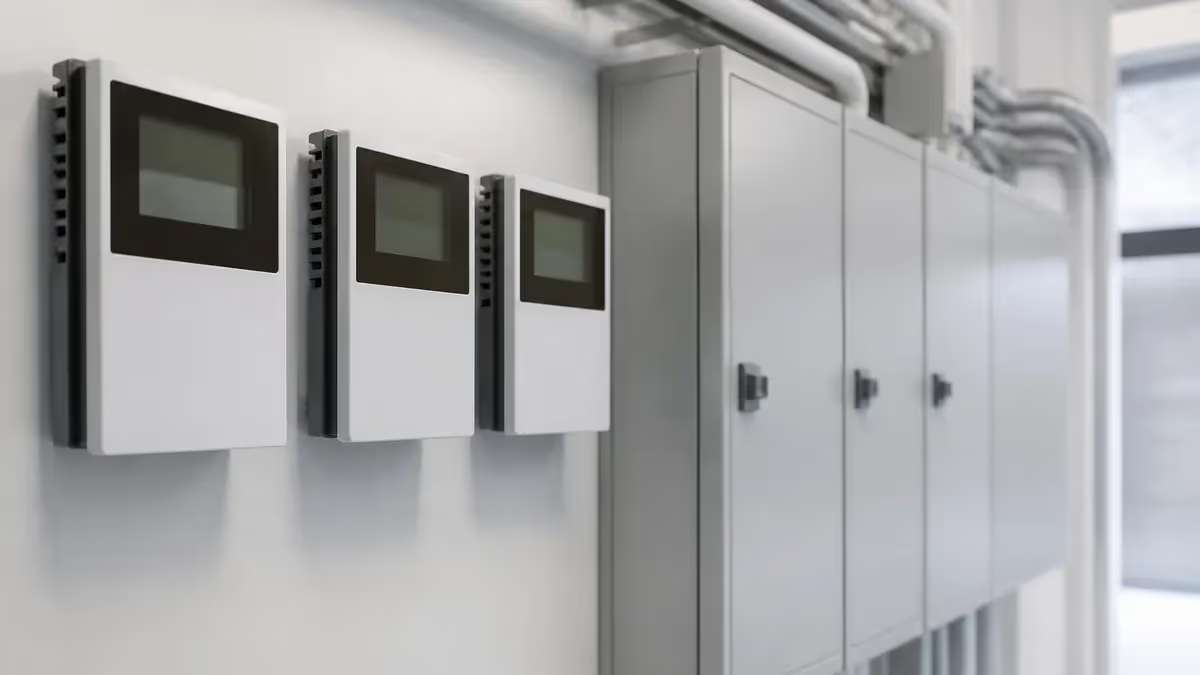
Modern HVAC solutions have evolved far beyond the simple furnace-and-air-conditioner combo of a generation ago. Today, homeowners, building managers, and commercial property owners face a marketplace filled with heat pumps, variable refrigerant flow systems, smart thermostats, zoned controls, hvac equipment parts-splits, energy recovery ventilators, and high-efficiency packaged units. Choosing the right combination is no longer just about comfort — it directly affects monthly utility bills, indoor air quality, equipment longevity, resale value, and a building's carbon footprint over its useful life of fifteen to twenty-five years.
The pressure to upgrade has accelerated sharply since 2023. New federal minimum hvac regulations the phase-down of R-410A refrigerant in favor of A2L blends like R-454B and R-32, expanded utility rebates, and Inflation Reduction Act tax credits worth up to $2,000 for qualifying heat pumps have all reshaped buying decisions. Contractors who once installed the same 14 SEER condenser on every job now have to navigate dozens of variables to recommend the hvac fcu for each climate zone and building envelope.
This guide walks through the full landscape of HVAC solutions available in 2026. We cover system types, sizing principles, ventilation strategies, refrigerant transitions, hvac building automation financing options, and the practical questions that come up during a real installation. Whether you are replacing a tired 20-year-old split system, planning a new construction project, or trying to fix uneven temperatures and high humidity in an older home, the goal is to give you the technical context you need to ask better questions and avoid costly mistakes.
One thing that surprises many first-time buyers is how much of the performance equation depends on factors outside the equipment itself. Ductwork condition, insulation levels, air sealing, window quality, and even the orientation of the house can swing seasonal energy use by 30 to 50 percent. A premium 20 SEER2 heat pump installed on leaky, undersized ducts in a poorly insulated attic will underperform a mid-tier 16 SEER2 unit installed properly in a tight envelope. Before reading further, see the HVAC Duct Calculator for sizing math.
We also address the human side of HVAC. Finding a trustworthy contractor, reading a Manual J load calculation, understanding warranty fine print, knowing when to repair versus replace, and recognizing the warning signs of an undersized or oversized system are all skills that pay off for decades. The cheapest bid is rarely the best value, and the most expensive equipment is not always necessary. The right answer almost always lives somewhere in the middle, calibrated to your climate, your home, and your priorities.
By the end of this guide you will have a working vocabulary for every major HVAC technology on the market, a framework for evaluating bids, and a clear sense of which questions to ask before signing a contract. We will close with a detailed FAQ that addresses the most common concerns we hear from homeowners — from heat pump performance in cold weather to whether you really need a humidifier in a tightly built home.
HVAC is one of the largest single investments most homeowners ever make, second only to roofing and windows. Treat it accordingly. Read carefully, get multiple bids, and make sure the contractor you choose understands not just the equipment, but the building it is going into.
HVAC Solutions by the Numbers

The Main Types of HVAC Systems Available Today
Traditional setup with an outdoor condenser and indoor furnace or air handler connected by refrigerant lines. Reliable, affordable, and the most widely installed option in the US for single-family homes with existing ductwork.
All-electric systems that move heat instead of generating it, providing both heating and cooling. Modern cold-climate models work efficiently down to -15°F and qualify for the largest federal and state incentives in 2026.
Wall- or ceiling-mounted indoor units paired with a single outdoor condenser. Ideal for additions, retrofits, and homes without ducts. Each zone gets independent temperature control with no ductwork energy losses.
All components housed in one outdoor cabinet, typically on a roof or slab. Common in light commercial buildings, manufactured homes, and Southern climates where attic space is limited or non-existent.
Use ground-loop heat exchangers to deliver 300-500% efficiency. Highest upfront cost but lowest operating cost over a 25-50 year lifespan. Qualify for a 30% federal tax credit through 2032 with no cap.
Choosing the right HVAC solution starts with a proper load calculation, not a sales brochure. Manual J — the hvac manual j calculation standard from the Air Conditioning Contractors of America — accounts for square footage, ceiling height, window area and orientation, insulation R-values, air infiltration rates, occupancy, and local climate data. A contractor who sizes by rule of thumb (one ton per 500 square feet) is guessing. Oversized systems short-cycle, waste energy, and fail to dehumidify, while undersized systems run constantly and never reach setpoint on design days.
Climate zone matters enormously. A Phoenix homeowner needs aggressive cooling capacity and minimal heating, while a Minneapolis homeowner needs strong heating with a hvac maintenance tips sized for short summer peaks. Hybrid dual-fuel systems pair a heat pump with a gas furnace and switch automatically based on outdoor temperature and fuel prices, offering the best of both worlds in mixed climates like the mid-Atlantic, Ohio Valley, and Pacific Northwest where neither pure electric nor pure gas is clearly optimal.
Ductwork is the silent partner in any forced-air HVAC system. Studies by the Department of Energy show that typical residential hvac duct design leak 20 to 30 percent of conditioned air into unconditioned spaces like attics and crawlspaces. Before installing new equipment, have your contractor perform a duct blaster test. Sealing and insulating ducts can deliver efficiency gains equivalent to upgrading from 14 SEER2 to 18 SEER2 equipment, often at a fraction of the cost. If you're unsure where to start, get bids from hvac contractors.
Indoor air quality has become a major buying driver since 2020. Modern HVAC solutions integrate MERV 13 or higher filtration, UV-C germicidal lamps, bipolar ionization, fresh-air ventilation via energy recovery ventilators (ERVs), and whole-home humidifiers or dehumidifiers. These add-ons can transform a basic comfort system into a full health-and-wellness platform, particularly important for households with allergies, asthma, or young children.
Smart controls round out the package. Connected thermostats like Ecobee, Nest, and Honeywell T-series learn occupancy patterns, integrate with utility demand-response programs, and provide detailed runtime data that helps detect early signs of equipment trouble. Zoned systems with motorized dampers allow different rooms to maintain different temperatures, eliminating the classic problem of an upstairs bedroom that's always five degrees warmer than the living room.
Refrigerant choice is also a 2026 consideration. The EPA's AIM Act has phased out new R-410A equipment as of January 1, 2025. New installations now use A2L refrigerants like R-454B and R-32, which have global warming potentials roughly 75 percent lower than R-410A. These are mildly flammable and require trained installers, slightly different line set practices, and new leak-detection protocols. Ask any bidder whether they are certified on A2L systems.
Finally, think about the next homeowner. Even if you plan to stay for decades, HVAC upgrades influence resale. Heat pumps are now preferred by buyers in many markets, and high-efficiency systems with extended warranties can add real appraisal value. Document everything — model numbers, installation dates, maintenance records — and keep it with your home file. Buyers and inspectors notice.
HVAC Practice Test Questions
Prepare for the HVAC - Heating Ventilation and Air Conditioning exam with our free practice test modules. Each quiz covers key topics to help you pass on your first try.
HVAC Air Conditioning
HVAC Exam Questions covering Air Conditioning. Master HVAC Test concepts for certification prep.
HVAC Code Compliance
Free HVAC Practice Test featuring Code Compliance. Improve your HVAC Exam score with mock test prep.
HVAC Electrical Controls
HVAC Test Prep for Electrical Controls. Practice HVAC Quiz questions and boost your score.
HVAC Energy Efficiency
HVAC Questions and Answers on Energy Efficiency. Free HVAC practice for exam readiness.
HVAC Heating Systems
HVAC Mock Test covering Heating Systems. Online HVAC Test practice with instant feedback.
HVAC Load Calculations
Free HVAC Quiz on HVAC Load Calculations. HVAC Exam prep questions with detailed explanations.
HVAC Tools and Equipment
HVAC Practice Questions for HVAC Tools and Equipment. Build confidence for your HVAC certification exam.
HVAC Refrigeration
HVAC Test Online for Refrigeration. Free practice with instant results and feedback.
HVAC Safety Practices
HVAC Study Material on Safety Practices. Prepare effectively with real exam-style questions.
HVAC System Design
Free HVAC Test covering System Design. Practice and track your HVAC exam readiness.
HVAC Thermodynamics
HVAC Exam Questions covering Thermodynamics. Master HVAC Test concepts for certification prep.
Heating, Cooling, and Indoor Air Quality Solutions Compared
Heating options in 2026 include gas furnaces (80-98% AFUE), electric furnaces, heat pumps (air-source and geothermal), boilers with hydronic distribution, and supplemental electric resistance strips. Gas furnaces remain the most common solution in cold climates with affordable natural gas, while heat pumps dominate moderate climates and increasingly compete in cold zones thanks to inverter-driven compressors and enhanced vapor injection technology.
Selection depends on fuel availability, climate severity, and electrification goals. A 96% AFUE modulating gas furnace paired with a variable-speed blower delivers exceptional comfort and quiet operation. A cold-climate heat pump delivers similar comfort with lower carbon emissions and qualifies for federal tax credits. Boilers with radiant floor distribution offer the gold standard for comfort but cost significantly more to install and require entirely different distribution infrastructure.
Heat Pump vs. Traditional Furnace + AC: Pros and Cons
- +Single system handles both heating and cooling year-round
- +All-electric operation eliminates gas line and combustion safety risks
- +Qualifies for up to $2,000 federal 25C tax credit plus state and utility rebates
- +Modern cold-climate models maintain capacity to -15°F or lower
- +Lower carbon footprint, especially as electric grids decarbonize
- +Quieter operation with variable-speed inverter compressors
- −Higher upfront cost than equivalent gas furnace plus AC combo
- −Performance drops in extreme cold without proper sizing and backup
- −Requires larger electrical service panel in some homes (200A recommended)
- −Defrost cycles can briefly blow cool air during winter operation
- −Refrigerant repairs require A2L-certified technicians in 2026 and beyond
- −May need duct upgrades since heat pumps deliver lower-temperature air
Pros and Cons at a Glance
| Pros | Cons |
|---|---|
| Single system handles both heating and cooling year-round | Higher upfront cost than equivalent gas furnace plus AC combo |
| All-electric operation eliminates gas line and combustion safety risks | Performance drops in extreme cold without proper sizing and backup |
| Lower carbon footprint, especially as electric grids decarbonize | Defrost cycles can briefly blow cool air during winter operation |
| Quieter operation with variable-speed inverter compressors | May need duct upgrades since heat pumps deliver lower-temperature air |
Pre-Installation Checklist for Any HVAC Solution
- ✓Get a written Manual J load calculation, not a rule-of-thumb estimate
- ✓Test existing ductwork for leakage and static pressure before sizing equipment
- ✓Verify your electrical panel capacity if installing a heat pump or electric system
- ✓Confirm the contractor is licensed, bonded, and insured in your state
- ✓Check that installers are NATE-certified and trained on A2L refrigerants
- ✓Get at least three itemized bids with matching equipment model numbers
- ✓Ask for AHRI matched-system certificate to qualify for warranties and rebates
- ✓Review manufacturer warranty terms — registered units typically get 10 years
- ✓Confirm permit will be pulled and local inspection scheduled
- ✓Document baseline utility usage so you can verify savings post-install
- ✓Apply for federal tax credits, state rebates, and utility incentives before signing
- ✓Schedule annual maintenance plan in writing to protect long-term performance
Spend 30% on equipment, 30% on installation quality, 30% on envelope improvements — and keep 10% in reserve.
The biggest mistake homeowners make is dumping their entire budget into premium equipment while ignoring duct sealing, attic insulation, and air infiltration. A balanced approach — splitting investment between equipment, professional installation, and home envelope improvements — almost always delivers better long-term comfort and energy savings than buying the most expensive system and installing it poorly.
Costs for HVAC solutions vary widely by region, system type, and home size. A straightforward replacement of a 3-ton 14 SEER2 split system in an existing home with good ducts typically runs $7,500 to $10,000 installed in 2026. Stepping up to a 17-18 SEER2 two-stage system adds $1,500 to $3,000. A cold-climate heat pump with backup heat strips ranges from $10,000 to $18,000. Ductless mini-splits run $3,500 to $7,000 per zone. Geothermal installations start around $25,000 and can exceed $45,000 for larger homes.
Federal incentives in 2026 remain generous thanks to the Inflation Reduction Act. The 25C Energy Efficient Home Improvement Credit provides 30% back on qualifying heat pumps, capped at $2,000 annually. The 25D Residential Clean Energy Credit covers 30% of geothermal installations with no cap through 2032. The HEEHRA rebate program, administered by states, offers point-of-sale rebates up to $8,000 for income-qualified households installing heat pumps, plus additional amounts for panel upgrades and electrical work.
State and utility rebates layer on top. Many utilities offer $500 to $2,500 per qualifying heat pump, $200 to $500 for high-efficiency furnaces, and $50 to $150 for smart thermostats. Some states like Massachusetts, New York, California, Maine, and Colorado run additional clean heat programs with rebates reaching $10,000 for whole-home electrification. Check the DSIRE database (Database of State Incentives for Renewables & Efficiency) for current programs in your zip code before signing any contract.
Financing options have expanded dramatically. Manufacturer-backed 0% APR promotional financing is widely available for 12, 18, or 24 months through programs like Wells Fargo, Synchrony, and Service Finance. PACE (Property Assessed Clean Energy) financing in eligible states ties HVAC loans to the property tax bill with terms up to 25 years. Home equity loans, FHA Title I loans, and HELOC products remain popular for larger projects. Always read the fine print on promotional financing — deferred interest can add up if not paid in full by the promo end date. Compare options at finance new hvac system.
When comparing bids, don't focus only on the headline price. Look at the equipment's tonnage, SEER2 and HSPF2 ratings, refrigerant type, blower technology (PSC vs. ECM vs. variable speed), warranty terms, included services like duct sealing or new thermostats, and whether permits and inspections are included. A $9,500 bid with new R-454B equipment, complete duct sealing, a smart thermostat, and a 10-year parts-and-labor warranty is usually a better deal than a $7,500 bid with bare-bones equipment and no extras.
Total cost of ownership matters more than upfront price. A 14 SEER2 system that costs $1,500 less than an 18 SEER2 alternative may use 25% more electricity over its 15-year life, easily wiping out the savings. Run the math: take your annual cooling kWh, multiply by your electric rate, and compare projected operating costs across SEER2 levels. Pair this with maintenance cost projections — typically $150 to $300 per year for a comprehensive service plan — to get the full picture.
Finally, watch out for hidden costs. Older homes may need electrical upgrades ($1,500 to $4,000 for a 200A panel), structural modifications for new equipment placement, asbestos abatement on old ducts, and code-required updates like venting or condensate drainage. Reputable contractors identify these issues during their initial site visit and include them in the quote. If a bid is dramatically lower than competitors, ask what's missing — the answer is often these very items.
As of January 1, 2025, the EPA's AIM Act prohibits manufacturing new R-410A air conditioners and heat pumps. Existing R-410A systems can still be repaired and refrigerant remains available, but at sharply rising prices. If a contractor offers you a 'new' R-410A system in 2026, it is either old stock or improperly labeled. Verify the refrigerant type (R-454B or R-32) on every bid and demand AHRI documentation.
Maintenance is where most HVAC investments succeed or fail. A properly maintained system lasts 15 to 25 years; a neglected one fails in 8 to 12. The cornerstones of a maintenance program are seasonal professional tune-ups (spring for cooling, fall for heating), monthly filter changes during peak season, annual coil cleaning, condensate drain treatment, refrigerant charge verification, and electrical connection tightening. Most reputable contractors offer service agreements at $200 to $400 per year that include two visits, priority scheduling, and discounted repair labor. For full diagnostic options, see hvac repair services near me.
Filter selection deserves more attention than it usually gets. MERV 8 captures basic dust and pollen but allows fine particles through. MERV 11 catches pet dander and mold spores. MERV 13 reaches fine bacteria and smoke particles, the level now recommended by ASHRAE for residential homes. Going higher than the blower can handle creates static pressure problems that reduce airflow, stress the motor, and ironically worsen indoor air quality by causing duct leakage. Check the manufacturer's maximum static pressure rating before upgrading filters.
Common failure points to watch include capacitors (5-10 year typical life), contactors (5-15 years), blower motors (10-15 years), evaporator coils (10-15 years, often the cause of hvac leak detector), and condenser fan motors. Sudden tripped breakers, ice buildup on the outdoor unit, water around the indoor unit, hissing sounds, or burning electrical smells all warrant immediate professional attention. Ignoring small issues almost always leads to bigger and more expensive ones.
Thermostat settings have a surprising impact on system life. Setting back temperatures 7-10 degrees during sleeping or away hours saves 5-10% on annual energy costs without harming equipment. Avoid extreme swings or fast setpoint changes that force the system to run at maximum capacity. For heat pumps especially, gradual setbacks of 2-4 degrees work better than large swings, because heat pumps deliver heat most efficiently when running continuously at moderate output.
Smart maintenance has changed the game. Modern connected thermostats and equipment monitoring systems can detect early signs of trouble — declining capacity, abnormal runtime patterns, communication errors with outdoor units — and alert homeowners or contractors automatically. Some warranty programs now require connected thermostats and remote monitoring as a condition of extended coverage, and many utilities offer rebates or bill credits for participating in connected device demand-response programs during peak summer afternoons.
Documentation is the unsung hero of HVAC ownership. Keep a physical or digital folder with original installation paperwork, AHRI certificate, manufacturer warranty registration, every maintenance and repair invoice, model and serial numbers of all major components, refrigerant type and charge amount, and electrical service capacity. If the system fails under warranty, or if you sell the home, this documentation can be worth thousands of dollars. Many warranty claims are denied solely because the homeowner cannot prove regular maintenance.
Plan for end-of-life replacement proactively rather than reactively. The worst time to buy HVAC equipment is during a July heatwave or January cold snap, when you have no use and limited time to compare bids. If your system is over 12 years old, start gathering bids and information now. Most reputable companies will provide quotes valid for 30-90 days, allowing you to lock in pricing and incentives before failure forces an emergency purchase at a 20-30% premium.
Putting it all together starts with honest self-assessment. Walk through your home and note comfort problems — rooms that are always too hot or cold, persistent humidity issues, dust accumulation, allergy symptoms, drafts, or noise. List your priorities: lowest upfront cost, lowest operating cost, best comfort, quietest operation, smallest carbon footprint, or some combination. This list becomes your filter when evaluating contractor recommendations and equipment options. Without it, you'll be swayed by whichever salesperson is most persuasive on the day they visit.
When interviewing contractors, ask specifically how they size equipment. The right answer mentions Manual J for load calculations, Manual S for equipment selection, and Manual D for hvac duct design. A contractor who can't name these standards or who insists on sizing by square footage alone is one to skip. Ask to see a sample load calculation from a recent job — reputable contractors will gladly share. Ask how many systems they install per year, how long they've been in business, and whether the technicians who'll do the work are employees or subcontractors.
Visit the job site of a recent installation if possible. Look at the workmanship — neat refrigerant lines, properly supported equipment, sealed duct connections, accessible service clearances, clean wire routing, code-compliant condensate drainage. Ask the homeowner about their experience: did the crew show up on time, clean up properly, explain the system, complete punch-list items promptly? Three quality references are worth more than a hundred online reviews.
Read the contract carefully before signing. It should specify equipment model and serial numbers, refrigerant type and quantity, included accessories (line sets, pads, disconnects, thermostats), warranty terms in writing, permit fees, sales tax, payment schedule, and start-completion dates. Beware of contracts that say 'or equivalent' for major components — that's an opening for the contractor to substitute cheaper equipment after you've committed. Get everything in writing, including verbal promises made during the sales visit.
On installation day, plan to be home and engaged. Walk through the work with the crew leader at the start, verify the equipment matches what you ordered (open the boxes if necessary), and review the work midway and at completion. Insist on a startup checklist that documents refrigerant superheat and subcool, static pressure, temperature rise/drop across the coil, electrical readings, and combustion analysis for gas equipment. This 30-minute commissioning process is what separates excellent installations from mediocre ones.
After installation, monitor performance for the first season. Track utility bills against the same months from previous years, adjusting for weather using heating and cooling degree days. Note any comfort issues, unusual sounds, or short-cycling. Most contractors include a 30-90 day callback for adjustments — use it. If something feels off, document it and call. Issues that get fixed in the first month are usually free; issues that linger past warranty become expensive.
Finally, build a long-term relationship with your installer. The same crew that installed your system knows it best and can spot problems years later that a new technician might miss. Many homeowners regret their HVAC purchase not because the equipment failed, but because they switched contractors and lost institutional knowledge. Sign up for the maintenance plan, refer friends if you're happy, and treat your HVAC contractor like the long-term partner they should be. A good HVAC relationship is genuinely a 20-year asset.
Sample HVAC Practice Questions
Try these questions from our free HVAC practice tests. The correct answer and an explanation follow each question.
In a multi-zone mini-split heat pump system, what happens if one indoor unit calls for heating while another calls for cooling simultaneously?
- A. The system defaults to cooling mode for all zones
- B. On a standard multi-split, the system serves the majority mode; on a heat-recovery multi-split (VRF), both can be served simultaneously
- C. The system shuts down to prevent conflicting operations
- D. The reversing valve oscillates rapidly to alternate between modes
Answer: B. On a standard multi-split, the system serves the majority mode; on a heat-recovery multi-split (VRF), both can be served simultaneously
Standard multi-split systems cannot simultaneously heat and cool, but heat-recovery VRF systems can transfer heat from zones needing cooling to zones needing heating at the same time.
Which ASHRAE standard provides minimum ventilation rates for acceptable indoor air quality in commercial buildings?
- A. ASHRAE 90.1
- B. ASHRAE 62.1
- C. ASHRAE 55
- D. ASHRAE 15
Answer: B. ASHRAE 62.1
ASHRAE Standard 62.1 establishes minimum outdoor air ventilation rates and IAQ requirements for commercial and institutional buildings.
Which ASHRAE standard establishes minimum ventilation rates for acceptable indoor air quality in commercial buildings?
- A. ASHRAE 15
- B. ASHRAE 34
- C. ASHRAE 62.1
- D. ASHRAE 90.1
Answer: C. ASHRAE 62.1
ASHRAE Standard 62.1 specifies minimum ventilation rates and other measures to provide acceptable indoor air quality in commercial and institutional buildings.
Which heat pump system configuration is MOST appropriate for a building that requires process cooling year-round regardless of outdoor temperature?
- A. Air-source heat pump with electric auxiliary heat
- B. Water-source heat pump connected to a cooling tower and boiler loop
- C. Dual-fuel heat pump with gas furnace backup
- D. Ground-source heat pump with horizontal loop field
Answer: B. Water-source heat pump connected to a cooling tower and boiler loop
Water-source heat pumps on a shared loop with a cooling tower can reject heat effectively year-round without being dependent on outdoor air temperature, making them ideal for year-round cooling loads.
HVAC Questions and Answers
HVAC Duct Calculator: The Complete Guide to Sizing Ductwork for Airflow, Static Pressure, and System Efficiency
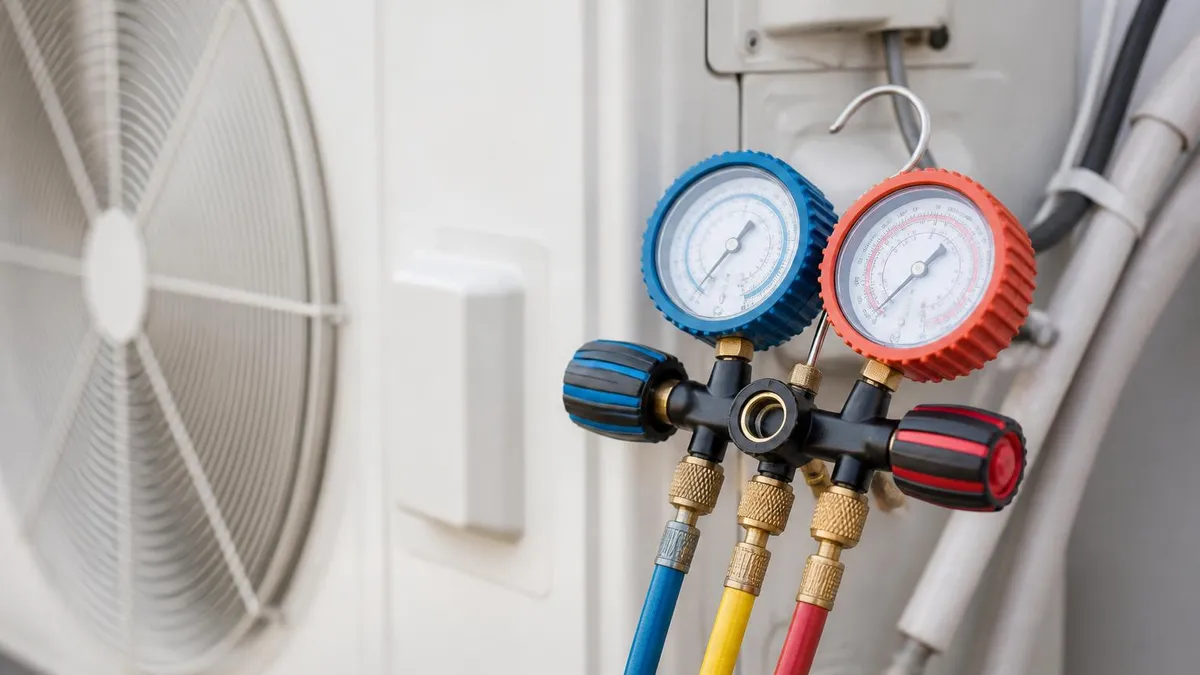
Certified HVAC Contractors: How to Find, Vet, and Hire the Right Professional for Your Home or Business
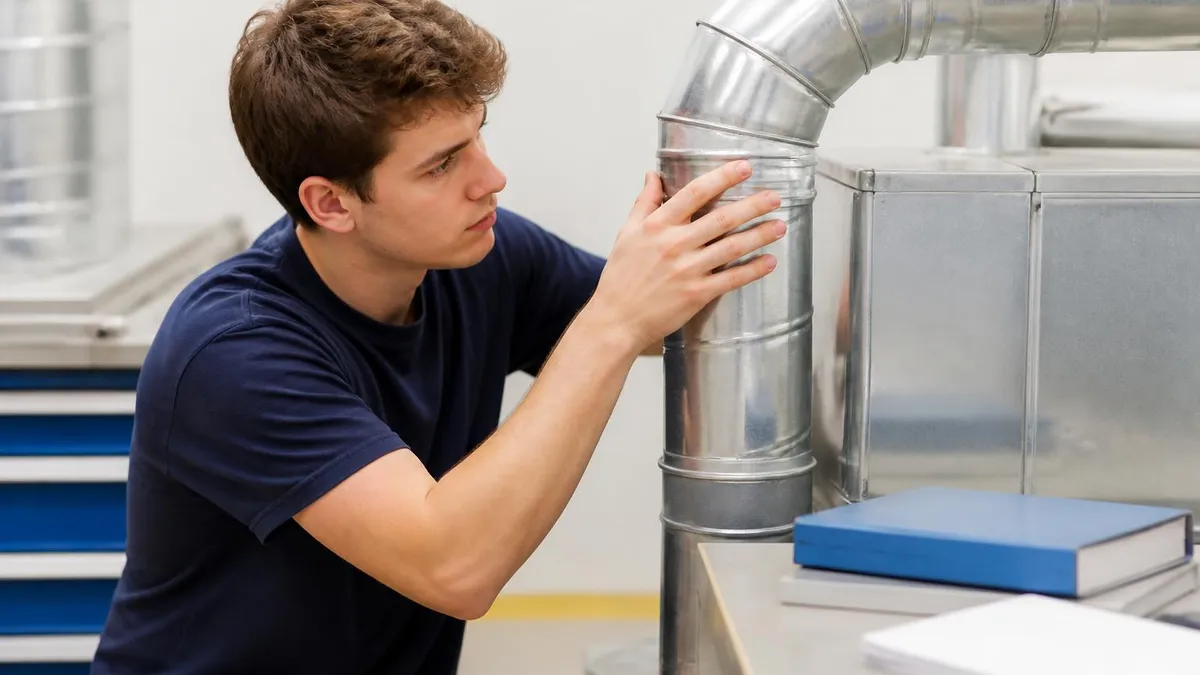
Best HVAC Repair in Bandon, OR: Local Services Near Me Guide
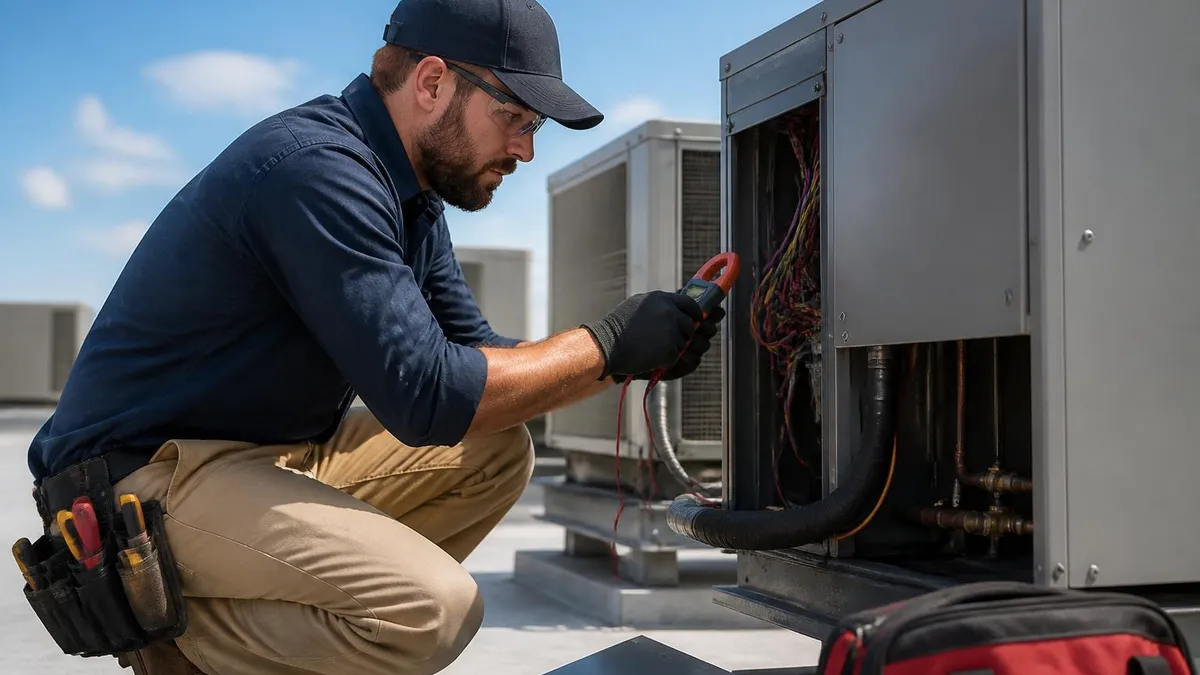
HVAC Installations: The Complete Guide to Planning, Pricing, and Getting It Right the First Time
Finance a New HVAC System: 2026 Loans, 0% APR, and Rebates
About the Author

NATE Certified HVAC Technician & Licensing Exam Trainer
Universal Technical InstituteMike Johnson is a NATE-certified HVAC technician and EPA 608 universal-certified refrigerant handler with a Bachelor of Science in HVAC/R Technology. He has 19 years of commercial and residential HVAC installation and service experience and specializes in preparing technicians for NATE certification, EPA 608, A2L refrigerant safety, and state HVAC contractor licensing examinations.