
HVAC Building Automation: The Complete Guide to Smart Controls, BAS Integration, and Energy Optimization for Modern Buildings
HVAC automation guide covering building automation systems, smart controls, BACnet protocols, energy optimization, and integration strategies for modern... 📚

HVAC automation has transformed how commercial buildings, schools, hospitals, and industrial facilities manage indoor climate, energy consumption, and occupant comfort. A modern building automation system (BAS) connects heating, ventilation, and air conditioning equipment to a centralized network of sensors, controllers, and software that continuously monitors conditions and adjusts operation in real time. Instead of relying on manual thermostats or standalone equipment timers, automated systems use data-driven logic to deliver precise temperature control while cutting energy waste by 20 to 40 percent.
At its core, HVAC building automation integrates field devices like variable air volume (VAV) boxes, chillers, boilers, pumps, dampers, and rooftop units with programmable logic controllers and supervisory software. These components communicate using open protocols such as BACnet, Modbus, and LonWorks, allowing equipment from different manufacturers to share data seamlessly. Operators access the system through a web-based dashboard showing live temperatures, setpoints, alarms, and historical trends across every zone in the facility.
The benefits extend far beyond convenience. Automated demand control ventilation adjusts outside air based on actual CO2 levels rather than fixed schedules, reducing the energy required to heat or cool unoccupied spaces. Optimal start algorithms calculate exactly when to begin morning warm-up so the building reaches setpoint precisely at occupancy, avoiding hours of unnecessary runtime. Fault detection routines spot stuck dampers, failing sensors, and simultaneous heating and cooling before they balloon into utility bill surprises.
For technicians entering the field, understanding automation is no longer optional. Even residential HVAC installations now routinely include smart thermostats, zoning controls, and Wi-Fi connected equipment that share data with cloud platforms. Commercial work demands fluency in control diagrams, network architecture, and graphical programming environments. Many contractors report that the difference between a $25 per hour installer and a $45 per hour controls technician comes down to mastery of building automation fundamentals. For broader system context, see our overview of HVAC Solutions: The Complete Guide to Heating, Cooling, and Indoor Air Quality Systems for Homes and Buildings.
This guide walks through every layer of modern HVAC automation, from the lowest-level sensor wiring to enterprise-scale cloud analytics. You will learn how direct digital control (DDC) systems make decisions, how networks tie thousands of points together, and how to commission a system so it actually delivers the savings the design promised. We will also explore cybersecurity, ASHRAE 90.1 compliance, and the emerging role of machine learning in predictive maintenance.
Whether you are a facility manager evaluating a retrofit, a contractor expanding into controls, or a student preparing for an HVAC certification exam, understanding automation principles will shape your career. The construction industry is projected to install over $120 billion in building automation hardware globally by 2030, and the technicians who can install, program, troubleshoot, and tune these systems are in critical demand across every metropolitan market in the United States.
By the end of this article, you will have a complete mental model of how building automation works, what equipment it controls, which protocols dominate the market, and how to approach common troubleshooting scenarios. We will also cover certification pathways, recommended training resources, and the practical skills that separate junior controls technicians from senior systems integrators commanding six-figure salaries in major markets.
HVAC Automation by the Numbers
Core Components of an HVAC Building Automation System
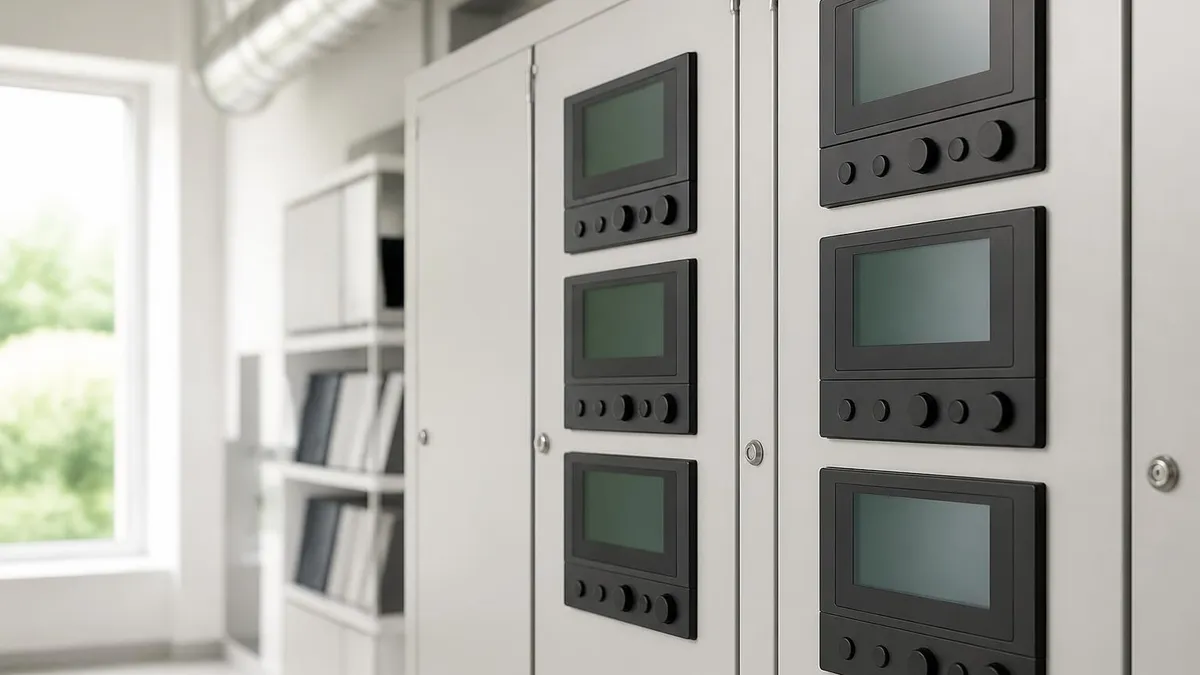
Temperature, humidity, CO2, pressure, and occupancy sensors gather real-time data. Actuators move dampers, valves, and variable frequency drives based on controller commands. These devices form the physical layer that interacts directly with HVAC equipment.
Programmable DDC controllers execute control sequences locally, processing sensor inputs and generating output signals. Modern controllers handle 16 to 64 points each and run BACnet or Modbus communication natively for seamless integration.
The front-end software, often called the operator workstation or head-end, provides graphical dashboards, trending, alarming, and scheduling. Web-based platforms like Niagara, Metasys, and Desigo CC dominate commercial deployments today.
Ethernet backbones, BACnet MS/TP twisted-pair runs, and wireless mesh networks connect controllers across the facility. Proper network design prevents communication bottlenecks and supports future expansion without rewiring entire floors.
Gateways translate between protocols, allowing legacy Modbus equipment, proprietary chiller controls, and BACnet systems to share data. These devices are essential during phased retrofits where new and old equipment must coexist.
Control logic forms the brain of every HVAC automation system, determining how equipment responds to changing conditions throughout the day. The most fundamental sequence is the proportional-integral-derivative (PID) loop, which continuously compares a measured value like supply air temperature against a setpoint and adjusts output signals to minimize error. Properly tuned PID loops eliminate the hunting and overshoot that plague poorly designed systems, delivering stable temperatures within 0.5 degrees of setpoint even as building loads fluctuate.
Above the loop level, sequence of operations documents describe how multiple pieces of equipment coordinate. A typical air handling unit sequence might specify that the supply fan starts first, followed by outside air dampers opening to minimum position, then chilled water valves modulating to maintain a 55-degree discharge temperature. Each step includes safety interlocks, freeze protection logic, and smoke detector overrides that take priority over normal operation when conditions warrant hvac equipment rental.
Optimal start and stop algorithms calculate the latest possible time to begin morning warm-up while still reaching occupancy setpoint on schedule. These calculations factor in outside air temperature, indoor temperature, building thermal mass, and equipment capacity. A well-tuned optimal start routine can eliminate 60 to 90 minutes of unnecessary runtime per day in temperate climates, translating to thousands of dollars annually in commercial buildings with large HVAC equipment.
Demand control ventilation (DCV) represents another major energy-saving strategy enabled by automation. Instead of bringing in fixed amounts of outside air based on design occupancy, DCV monitors CO2 concentrations in occupied zones and modulates outside air dampers to maintain healthy levels with minimum ventilation energy. ASHRAE 62.1 provides the calculation framework, and most modern controllers include pre-built DCV sequences that comply with code requirements. Understanding how vents and dampers interact is critical — review our deep dive on HVAC Vents: The Complete Homeowner's Guide to Types, Sizing, Placement, and Airflow Optimization for more detail.
Economizer control deserves special attention because mistakes here waste enormous amounts of energy. A properly configured economizer uses cool outside air for free cooling whenever conditions allow, only engaging mechanical cooling when outside enthalpy exceeds return air enthalpy. Stuck dampers, failed sensors, and incorrect changeover setpoints can defeat the economizer entirely, forcing the chiller to run during mild weather when free cooling should handle the load. Quarterly verification of economizer function is among the highest-ROI maintenance tasks available.
Reset strategies dynamically adjust setpoints based on actual demand rather than holding fixed values. Supply air temperature reset raises the discharge setpoint when no zones are calling for maximum cooling, reducing reheat at VAV boxes and improving chiller efficiency. Chilled water reset increases the supply water temperature when loads are low, dramatically improving chiller coefficient of performance. Static pressure reset slows down fans when terminal units are mostly closed, saving fan horsepower that compounds across thousands of operating hours.
Advanced sequences increasingly use machine learning and predictive analytics. Cloud-connected automation platforms ingest weather forecasts, occupancy patterns, and utility rate schedules to pre-cool buildings during off-peak periods or shift loads away from demand charge windows. While these techniques require sophisticated integration, even simple rule-based optimization delivers meaningful savings without expensive software licenses.
HVAC Practice Test Questions
Prepare for the HVAC - Heating Ventilation and Air Conditioning exam with our free practice test modules. Each quiz covers key topics to help you pass on your first try.
HVAC Air Conditioning
HVAC Exam Questions covering Air Conditioning. Master HVAC Test concepts for certification prep.
HVAC Code Compliance
Free HVAC Practice Test featuring Code Compliance. Improve your HVAC Exam score with mock test prep.
HVAC Electrical Controls
HVAC Test Prep for Electrical Controls. Practice HVAC Quiz questions and boost your score.
HVAC Energy Efficiency
HVAC Questions and Answers on Energy Efficiency. Free HVAC practice for exam readiness.
HVAC Heating Systems
HVAC Mock Test covering Heating Systems. Online HVAC Test practice with instant feedback.
HVAC Load Calculations
Free HVAC Quiz on HVAC Load Calculations. HVAC Exam prep questions with detailed explanations.
HVAC Tools and Equipment
HVAC Practice Questions for HVAC Tools and Equipment. Build confidence for your HVAC certification exam.
HVAC Refrigeration
HVAC Test Online for Refrigeration. Free practice with instant results and feedback.
HVAC Safety Practices
HVAC Study Material on Safety Practices. Prepare effectively with real exam-style questions.
HVAC System Design
Free HVAC Test covering System Design. Practice and track your HVAC exam readiness.
HVAC Thermodynamics
HVAC Exam Questions covering Thermodynamics. Master HVAC Test concepts for certification prep.
Communication Protocols Powering HVAC Automation
BACnet (Building Automation and Control Networks) is the dominant open protocol in commercial HVAC automation, standardized as ASHRAE 135 and ISO 16484-5. It defines how devices identify themselves, exchange data, and coordinate alarms across a building network. BACnet runs over multiple physical layers including Ethernet (BACnet/IP), twisted-pair MS/TP, and increasingly wireless variants. Major manufacturers including Johnson Controls, Siemens, Honeywell, and Distech all support native BACnet communication.
The protocol uses standardized object types like Analog Input, Binary Output, and Schedule, making cross-vendor integration straightforward. Each object exposes properties such as Present_Value, Status_Flags, and Priority_Array that any BACnet-compliant client can read or write. Modern controllers support BACnet/SC, a secure variant using TLS encryption to address cybersecurity concerns. Approximately 85 percent of new commercial installations specify BACnet as the primary protocol today.
Is HVAC Building Automation Worth the Investment?
- +Reduces HVAC energy consumption by 20 to 40 percent through optimization
- +Enables remote monitoring and troubleshooting from any web browser
- +Detects equipment faults early before they cause comfort complaints or breakdowns
- +Improves indoor air quality with automated CO2-based ventilation control
- +Provides detailed trending data that proves utility rebate compliance
- +Extends equipment life by preventing short-cycling and over-temperature operation
- +Supports advanced strategies like demand response and load shifting for utility incentives
- −Upfront installation cost ranges from $2.50 to $7 per square foot for full retrofits
- −Requires skilled technicians for programming, commissioning, and ongoing maintenance
- −Cybersecurity risks demand network segmentation, patching, and credential management
- −Proprietary software licenses can lock owners into single-vendor service relationships
- −Poorly commissioned systems may underperform manual controls until properly tuned
- −Sensor drift and calibration needs add ongoing maintenance time and cost
HVAC Automation Commissioning Checklist
- ✓Verify every sensor reads within 1 degree or 5 percent of a calibrated reference instrument
- ✓Confirm all actuators stroke fully from 0 to 100 percent without binding or stalling
- ✓Test economizer changeover at both enabled and disabled conditions across the dry bulb range
- ✓Validate optimal start algorithms achieve setpoint within 15 minutes of scheduled occupancy
- ✓Document all PID loop gains and verify stable response without hunting or overshoot
- ✓Test every alarm point generates correct notification and clears properly when condition resolves
- ✓Confirm BACnet device IDs are unique and network traffic stays below 50 percent of bandwidth capacity
- ✓Verify scheduled occupancy modes activate and deactivate equipment as specified in the sequence
- ✓Test safety interlocks including freeze stats, smoke detectors, and high static pressure cutouts
- ✓Run a complete trend export for 30 days and review for excessive cycling or simultaneous heating and cooling
- ✓Validate user permissions and ensure all default passwords have been replaced with strong credentials
- ✓Train facility staff on basic operator functions, alarm response, and schedule adjustments
Up to 30% of automated buildings never achieve design intent without proper commissioning.
Studies from Lawrence Berkeley National Laboratory consistently show that commissioning recovers 10 to 30 percent of HVAC energy use in existing buildings, with median paybacks under 1.1 years. Even new construction benefits from third-party commissioning because contractors regularly leave default parameters in place rather than tuning sequences for site-specific conditions. Budget 2 to 5 percent of total HVAC cost for commissioning, and verify the commissioning provider has actually worked with your specific control platform.
Energy optimization through HVAC automation goes far beyond simple scheduling, encompassing dozens of interconnected strategies that collectively transform building performance. Supply air temperature reset is among the highest-impact measures available, allowing controllers to raise the discharge setpoint by 2 to 8 degrees during low-load periods. This single change can reduce reheat energy in VAV systems by 15 to 25 percent while simultaneously improving chiller efficiency, since chillers operate more efficiently at higher evaporator temperatures.
Variable frequency drives (VFDs) on fans and pumps unlock proportional energy savings that follow the cube law of fluid dynamics. Slowing a fan to 80 percent speed cuts power consumption to roughly 50 percent of full load, while still providing adequate airflow for most operating conditions. Modern automation systems automatically modulate VFDs based on duct static pressure, differential pressure across coils, or terminal unit demand, eliminating the wasteful constant-volume operation common in older installations.
Chilled water and condenser water reset strategies adapt central plant operation to actual load conditions. Raising chilled water supply temperature from 42 to 48 degrees during mild weather can improve chiller efficiency by 1.5 to 2 percent per degree, compounding into substantial savings over a cooling season. Condenser water reset works similarly on the heat rejection side, optimizing cooling tower fan operation against outdoor wet bulb conditions. Both strategies require careful coordination with terminal equipment to avoid creating comfort complaints.
Demand response programs offered by utilities pay building owners to reduce electrical load during peak grid stress events. Automation systems with pre-programmed load shed sequences can globally raise setpoints, dim lighting, and stage off non-critical equipment within minutes of receiving a utility signal. Participating buildings typically earn $25 to $100 per kilowatt-year in capacity payments while contributing to grid reliability. The OpenADR protocol standardizes how utilities communicate dispatch signals to participating facilities.
Plug load management extends automation benefits beyond HVAC into office equipment, lighting, and miscellaneous loads that collectively represent 30 to 40 percent of commercial energy use. Occupancy sensors integrated through the building automation system can power down workstations, monitors, and task lighting during unoccupied hours, while smart receptacles report consumption data that helps identify problem loads. Some platforms now coordinate with electric vehicle charging stations to balance building demand against EV charging loads.
Thermal storage strategies use ice tanks or chilled water tanks to shift cooling production from expensive peak hours to cheaper off-peak periods. The automation system charges the storage tank overnight when electricity costs less and ambient temperatures favor efficient chiller operation, then discharges it during the day to meet cooling loads. In markets with steep time-of-use rate differentials, thermal storage can reduce cooling costs by 30 to 50 percent without changing total energy consumption.
Continuous monitoring and analytics platforms layer on top of building automation systems to identify ongoing optimization opportunities. Fault detection and diagnostics (FDD) software automatically scans trend data for symptoms like simultaneous heating and cooling, stuck dampers, sensor failures, and short cycling. The best platforms prioritize findings by estimated energy waste, helping facility teams focus on the highest-impact issues rather than drowning in routine alarms.

The single biggest cause of underperforming HVAC automation systems is accumulated operator overrides that nobody documents or reverses. A temperature setpoint pushed to 68 degrees for a hot meeting in July often remains in place for years, wasting thousands of dollars annually. Establish a monthly override review process and configure your system to automatically expire manual overrides after 4 to 24 hours unless explicitly extended.
Cybersecurity has become a critical concern for HVAC building automation systems as more controllers connect to corporate networks and the internet. The 2013 Target breach famously originated through an HVAC contractor's remote access credentials, demonstrating that building systems represent a real attack vector into broader corporate infrastructure. Modern best practices require network segmentation that isolates the BAS from business systems, dedicated VLANs for controllers, and firewalls that strictly limit traffic between zones.
Strong authentication is non-negotiable, yet default passwords remain shockingly common on installed systems. Every controller, gateway, and workstation should use unique credentials managed through a centralized identity system like Active Directory. Multi-factor authentication should protect any account capable of changing setpoints or schedules. Vendor remote access requires particular scrutiny — VPN connections with time-limited credentials are far safer than always-on remote desktop arrangements that contractors often request for convenience.
Firmware patching cycles deserve as much attention in building automation as in IT environments. Major BAS vendors regularly publish security updates addressing vulnerabilities in web interfaces, BACnet stacks, and operating systems. Facility teams should subscribe to vendor security bulletins and establish quarterly patching windows that balance security needs against operational risk. The CISA agency publishes industrial control system advisories that frequently cover building automation products. For specialized retrofit work, consider engaging Certified HVAC Contractors: How to Find, Vet, and Hire the Right Professional for Your Home or Business who carry cybersecurity certifications alongside traditional mechanical credentials.
Preventive maintenance for the automation system itself often gets overlooked while mechanical equipment receives careful attention. Sensors drift over time, batteries in wireless devices die, and network switches fail. A comprehensive maintenance program includes annual sensor calibration against traceable references, battery replacement schedules for wireless components, network performance audits, and database backups stored off-site. Without these practices, systems gradually degrade until operators no longer trust their data.
Backup strategies should cover both the controller configuration and the trend database. Modern platforms allow exporting complete site backups including graphics, sequences, schedules, and trend logs. Store these backups in at least three locations including off-site cloud storage, and test restoration quarterly. A ransomware attack or hardware failure can otherwise erase years of fine-tuning that would take weeks or months to recreate from scratch.
Documentation drives effective long-term operation more than any other single factor. As-built control drawings, sequences of operation, point lists, network diagrams, and IP address inventories should be maintained continuously, not just created once at commissioning. When a controller fails at 2 AM, having the replacement procedure documented saves hours of expensive overtime troubleshooting. The best facility teams treat their BAS documentation with the same rigor as building electrical drawings or fire alarm records.
Workforce training rounds out a sustainable automation program. Send at least two staff members to vendor training courses on your specific platform, ideally including both factory courses and ongoing certification updates. Cross-train multiple people to prevent single-points-of-knowledge that walk out the door at retirement. Many organizations also engage third-party monitoring services that watch alarms 24/7 and dispatch local technicians only when issues escalate, providing affordable expertise without permanently expanding headcount.
For technicians and engineers building careers in HVAC automation, structured skill development pays substantial dividends in both compensation and job satisfaction. Start with fundamentals — understanding how psychrometrics, refrigeration cycles, and air distribution work creates the foundation that controls work depends on. You cannot effectively program a sequence of operations without first understanding what the equipment is supposed to accomplish thermodynamically, and shortcuts here lead to systems that technically run but never deliver intended performance.
Hands-on practice with major control platforms separates capable technicians from elite ones. Tridium Niagara, Johnson Controls Metasys, Siemens Desigo CC, and Honeywell WEBs each have distinctive interfaces and programming environments. Most vendors offer factory training courses ranging from $1,500 to $4,000 per week, with certification credentials that command higher hourly rates. Building a home lab using surplus controllers from eBay lets you practice sequences and troubleshooting techniques without risking live building systems.
Network and IT skills increasingly matter as building automation converges with corporate IT infrastructure. Understanding TCP/IP fundamentals, VLAN configuration, firewall rules, and basic Linux administration opens doors that pure mechanical technicians cannot access. Many controls integrators now actively recruit from IT backgrounds because finding network-savvy candidates is harder than teaching them HVAC fundamentals. The CompTIA Network+ certification provides a solid baseline for technicians coming from mechanical roots.
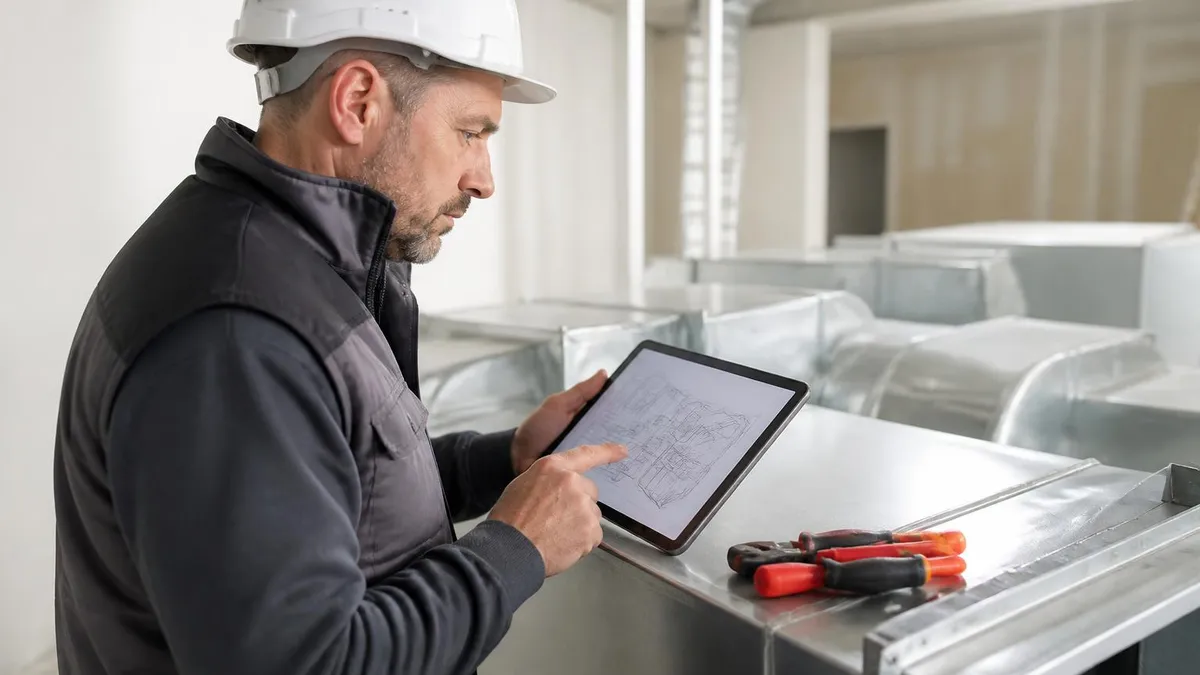
Reading control diagrams fluently is a skill that takes deliberate practice. Sequences of operation use specific conventions for showing inputs, outputs, setpoints, and logic blocks that vary by vendor and engineering firm. Pull old commissioning reports and trace through the logic until you can predict equipment behavior just from reading the documentation.
Pair this with hands-on time at a working control panel, watching live data change as conditions vary, to build the mental models that experienced controls technicians use intuitively. To improve your hvac duct design fundamentals — which directly affects VAV automation — use our HVAC Duct Calculator: The Complete Guide to Sizing Ductwork for Airflow, Static Pressure, and System Efficiency.
Troubleshooting methodology matters more than tool collection. The best technicians follow a disciplined approach: verify the complaint, check recent changes, review trend data, isolate the problem to a subsystem, then test specific components. Jumping immediately to part replacement wastes money and time on symptoms rather than root causes. Document every troubleshooting session including the diagnosis path, so you and your colleagues build an institutional knowledge base that prevents repeating the same investigations.
Certifications signal commitment to employers and clients. The ASHRAE Certified commercial hvac designer credential covers system design principles that controls work depends on. The BACnet International Certification validates protocol expertise. NEBB and AABC commissioning credentials open doors to commissioning provider roles. Manufacturer-specific certifications from Tridium, Johnson Controls, and Siemens demonstrate platform-specific competence. Stacking multiple credentials over a career creates resume strength that supports moves into senior integrator or consulting roles.
Finally, develop business awareness alongside technical skills. Understanding utility rate structures, demand charges, rebate programs, and payback calculations lets you advocate effectively for projects that benefit owners. The technicians who advance into project management and engineering roles consistently combine deep technical knowledge with the ability to articulate financial value in language that decision-makers care about. Spend time learning to read utility bills, calculate simple paybacks, and present recommendations as business cases rather than just technical specifications.
HVAC Questions and Answers
HVAC Solutions: The Complete Guide to Heating, Cooling, and Indoor Air Quality Systems for Homes and Buildings

HVAC Vents: The Complete Homeowner's Guide to Types, Sizing, Placement, and Airflow Optimization

HVAC Duct Calculator: The Complete Guide to Sizing Ductwork for Airflow, Static Pressure, and System Efficiency
Certified HVAC Contractors: How to Find, Vet, and Hire the Right Professional for Your Home or Business

Best HVAC Repair in Bandon, OR: Local Services Near Me Guide
About the Author

NATE Certified HVAC Technician & Licensing Exam Trainer
Universal Technical InstituteMike Johnson is a NATE-certified HVAC technician and EPA 608 universal-certified refrigerant handler with a Bachelor of Science in HVAC/R Technology. He has 19 years of commercial and residential HVAC installation and service experience and specializes in preparing technicians for NATE certification, EPA 608, A2L refrigerant safety, and state HVAC contractor licensing examinations.