
United Rentals - Power & HVAC: The Complete Guide to HVAC Equipment Rental for Contractors, Facility Managers, and Emergency Response Teams
✏️ United Rentals - Power & HVAC equipment rental guide. Compare chillers, air handlers, generators, and cooling towers for emergencies and projects.
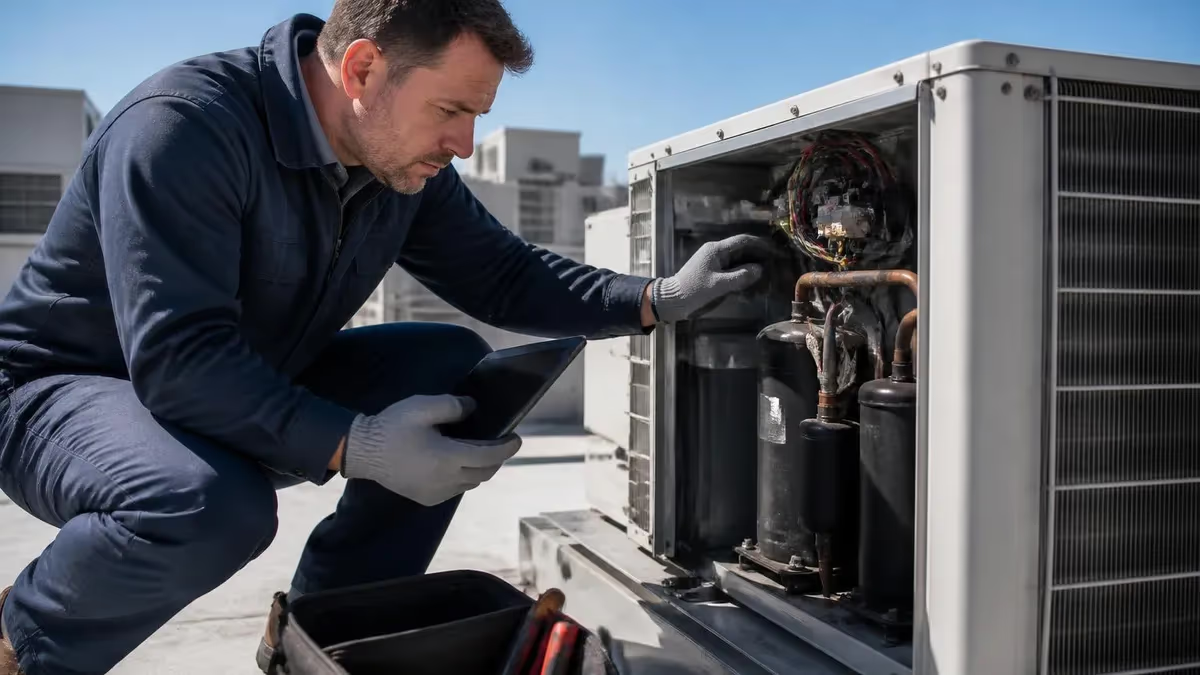
When a chiller fails during a July heat wave or a boiler dies mid-January, the difference between business continuity and catastrophic loss often comes down to how quickly you can get replacement equipment on-site. United Rentals - Power & HVAC has built its reputation on solving exactly these problems, offering a fleet of portable chillers, air handlers, cooling towers, dehumidifiers, generators, and spot coolers that ship within hours rather than weeks. For contractors, facility managers, and emergency response coordinators, understanding the rental ecosystem is now a core competency.
The HVAC equipment rental market in the United States has grown into a multi-billion-dollar industry, driven by aging commercial infrastructure, increasingly volatile weather patterns, and the rise of temperature-sensitive industries like data centers, pharmaceuticals, and food processing. Renting bridges the gap between when something breaks and when a permanent solution arrives, but it also serves planned needs: construction drying, summer load supplementation, planned equipment replacements, and seasonal cooling for events or temporary facilities.
This guide walks through the practical realities of renting HVAC equipment in 2026, from sizing portable chillers in tons of cooling capacity to understanding the fuel logistics of running diesel generators alongside electric air handlers. We will cover how United Rentals structures its Power & HVAC division, compare it with regional competitors like Aggreko and Sunbelt Rentals, and explain what every project manager should know before signing a rental agreement that may run hundreds of dollars per day per unit.
Renting is not always cheaper than buying, and it is not always faster either. A 50-ton air-cooled chiller can cost $4,500 to $7,500 per month to rent, plus delivery, setup, fuel, and demobilization fees. Over a year, that adds up to more than the purchase price of new equipment. But for a six-week emergency or a one-summer-only need, rental wins on cash flow, maintenance liability, and disposal logistics. Knowing when each path makes sense is half the battle.
We will also dive into the technical side: how to specify equipment for a specific load, what voltage and amperage to expect, how to plan for hose runs and condensate management, and which permits or code reviews you might trigger by deploying temporary equipment. Whether you are a property manager keeping a hospital cool during a chiller plant overhaul or a contractor staging gear for a construction dry-in, the principles are the same — measure twice, rent once.
Finally, this article connects to a wider library of HVAC content. For credentialing context, see the related guide on EPA certification, which becomes relevant the moment any technician handles refrigerant in a rented system. The rental world overlaps with installation, repair, code compliance, and indoor air quality more than newcomers expect, and the smartest renters treat every short-term deployment as a small permanent project.
Treat this guide as both a reference and a checklist. By the end, you should know how to size, source, schedule, and de-mobilize HVAC rental equipment with confidence, how to evaluate United Rentals against alternatives, and how to avoid the most expensive mistakes that turn a routine rental into a six-figure problem.
HVAC Equipment Rental by the Numbers
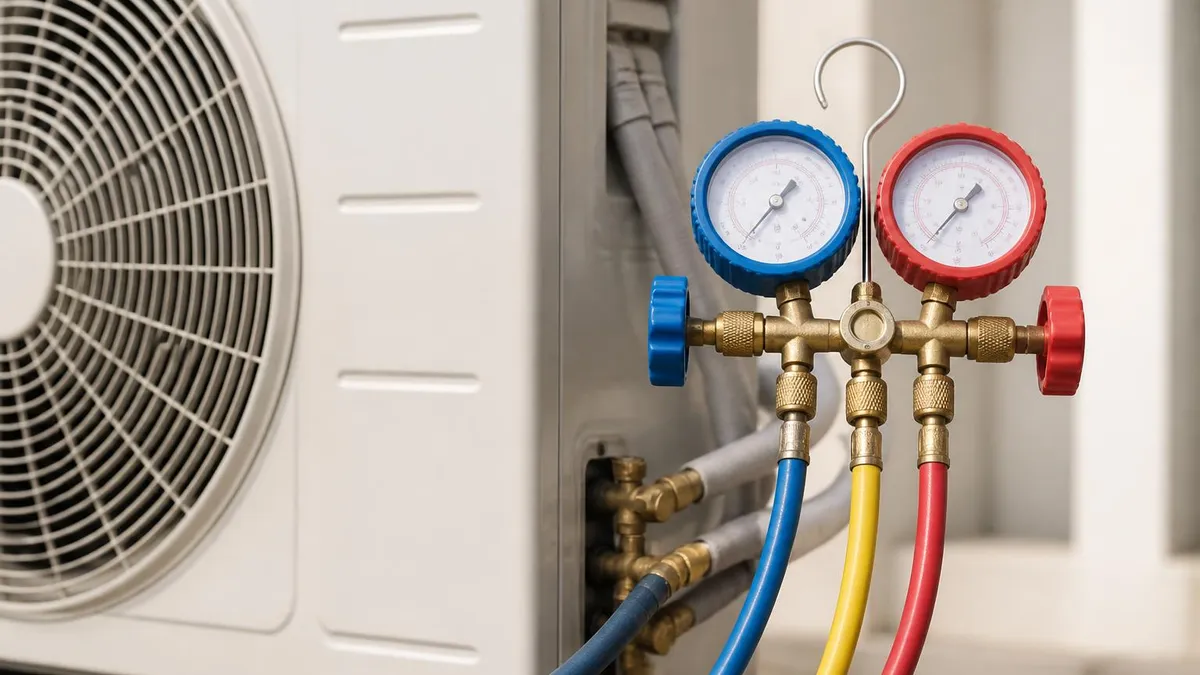
Major Categories of HVAC Rental Equipment
Air-cooled and water-cooled chillers from 1 to 2,000 tons. The workhorse of process cooling, hospital backup, and chiller plant repairs. Trailer-mounted units arrive plug-ready with onboard pumps and controls.
Indoor and outdoor air handlers, packaged rooftop units, and ducted systems for tenant comfort cooling, construction conditioning, and special-event climate control. Capacities run 5 to 100 tons typical.
Open and closed-circuit towers paired with water-cooled chillers when ambient temperatures spike beyond air-cooled efficiency. Sizes 100 to 1,500 nominal tons, with rapid drop-in piping connections.
Desiccant and refrigerant dehumidifiers for water damage restoration, concrete drying, and humidity-sensitive manufacturing. Critical for hospitals, museums, and lithium battery production environments.
Diesel and natural gas generators sized to match HVAC loads, including paralleled units, distribution panels, transformers, and cable runs. Power and HVAC are usually rented together for true turnkey deployments.
United Rentals operates the largest equipment rental fleet in North America, and within that footprint sits a specialized arm known as Power & HVAC. This division grew rapidly after the company's 2017 acquisition of Neff Corporation and continued through smaller tuck-in deals that added hvac fort collins fleets, generator inventory, and trained service technicians. Today the Power & HVAC group operates dedicated branches in nearly every major US metro, each staffed with mechanical engineers, project managers, and 24/7 dispatchers.
The structure matters because HVAC rentals are not like renting a scissor lift. A 500-ton chiller deployment typically involves a pre-rental site survey, a load calculation, hose and cable specifications, condensate routing, electrical permitting in some jurisdictions, and a delivery coordinated with riggers or cranes. United Rentals - Power & HVAC handles all of that as part of a single contract, which is why facility managers often default to it for high-stakes emergencies even when smaller rental houses might be cheaper.
For broader project planning context, the related guide on HVAC installations covers many of the same engineering steps that apply to temporary deployments. A 200-ton emergency chiller still needs proper hydraulic balancing, proper electrical service, and proper controls integration. The only differences are timeline and ownership: rental equipment lives on your site for a defined window, then leaves.
The Power & HVAC fleet itself is heavily standardized. Most chillers run on R-410A or R-134a refrigerant, draw 460V three-phase power, and connect through camlock or grooved Victaulic fittings. Air handlers ship with flexible ductwork kits and variable-speed fans. Generators come in standard sizes — 100, 200, 400, 600, 800, 1250, and 2000 kW — so paralleling and load matching are predictable. This standardization speeds quoting and means a replacement unit can usually swap in within a few hours if something fails on-site.
Pricing on the United Rentals side typically follows a daily, weekly, or monthly rate, with monthly being roughly 3.5 to 4 times the weekly. A 100-ton air-cooled trailer chiller might quote at $9,500 to $14,000 per month, plus a delivery fee of $1,500 to $4,000 depending on distance, plus a pickup fee of similar magnitude, plus fuel surcharges if it is paired with a diesel generator. Always ask for an itemized quote — line items add up faster than the headline rate suggests.
Beyond United Rentals, the competitive landscape includes Aggreko, Sunbelt Rentals Climate Control, Carrier Rental Systems, Trane Rental Services, Johnson Controls Rentals, and many regional players. Each has strengths: Aggreko is strongest internationally and on large industrial deployments. Sunbelt offers aggressive pricing on small-to-mid-size projects. Carrier and Trane benefit from manufacturer-direct support and quick parts access. For most US projects, getting quotes from at least two of these vendors plus United Rentals is best practice.
One underappreciated factor is technician availability. A rented chiller is only as reliable as the hvac scheduling software organization standing behind it, and during heat-wave weeks every rental house is stretched thin. United Rentals' scale gives it a depth advantage here — it can usually pull a technician from an adjacent branch in a true crisis — but the quality of any individual response depends on the local team you happen to draw. Ask your account manager for the local branch's average response time on similar units before signing.
HVAC Practice Test Questions
Prepare for the HVAC - Heating Ventilation and Air Conditioning exam with our free practice test modules. Each quiz covers key topics to help you pass on your first try.
HVAC Air Conditioning
HVAC Exam Questions covering Air Conditioning. Master HVAC Test concepts for certification prep.
HVAC Code Compliance
Free HVAC Practice Test featuring Code Compliance. Improve your HVAC Exam score with mock test prep.
HVAC Electrical Controls
HVAC Test Prep for Electrical Controls. Practice HVAC Quiz questions and boost your score.
HVAC Energy Efficiency
HVAC Questions and Answers on Energy Efficiency. Free HVAC practice for exam readiness.
HVAC Heating Systems
HVAC Mock Test covering Heating Systems. Online HVAC Test practice with instant feedback.
HVAC Load Calculations
Free HVAC Quiz on HVAC Load Calculations. HVAC Exam prep questions with detailed explanations.
HVAC Tools and Equipment
HVAC Practice Questions for HVAC Tools and Equipment. Build confidence for your HVAC certification exam.
HVAC Refrigeration
HVAC Test Online for Refrigeration. Free practice with instant results and feedback.
HVAC Safety Practices
HVAC Study Material on Safety Practices. Prepare effectively with real exam-style questions.
HVAC System Design
Free HVAC Test covering System Design. Practice and track your HVAC exam readiness.
HVAC Thermodynamics
HVAC Exam Questions covering Thermodynamics. Master HVAC Test concepts for certification prep.
Power & HVAC Equipment Types Compared
Air-cooled rental chillers are the most common workhorse, used for everything from temporary tenant cooling to backup during chiller-plant replacements. Trailer-mounted units in the 50 to 500 ton range arrive with onboard pumps, expansion tanks, and digital controls. They reject heat directly to outside air, which makes them ideal when site water is limited or when set-up time matters.
Trade-offs include higher kW per ton compared to water-cooled equivalents and reduced capacity on extreme hot days. Expect a 100-ton nameplate unit to deliver only 85 to 90 tons when ambient temperatures exceed 100°F. Plan for shade where possible, keep at least eight feet of clearance on intake faces, and route chilled-water supply and return hoses with thermal insulation to limit gain across long runs to the building.

Renting vs Buying HVAC Equipment: Which Makes Sense?
- +No upfront capital outlay - operating expense instead of capital expense
- +Service, maintenance, and refrigerant management handled by rental provider
- +Right-sized for the actual project duration rather than peak load forever
- +Rapid deployment - units available within hours for emergencies
- +No disposal liability when equipment reaches end of useful life
- +Access to current refrigerant technology without retrofit costs
- +Tax treatment often favorable as a fully deductible operating cost
- −Monthly rates exceed ownership cost beyond 6 to 9 months of continuous use
- −Limited customization - you accept the standard fleet configuration
- −Availability tightens dramatically during regional heat waves and disasters
- −Hidden fees for delivery, setup, fuel, hoses, and demobilization add up
- −Performance penalties in extreme weather on standardized air-cooled fleets
- −Contract escalators kick in if you extend beyond the original rental window
Pros and Cons at a Glance
| Pros | Cons |
|---|---|
| No upfront capital outlay - operating expense instead of capital expense | Limited customization - you accept the standard fleet configuration |
| Service, maintenance, and refrigerant management handled by rental provider | Availability tightens dramatically during regional heat waves and disasters |
| Right-sized for the actual project duration rather than peak load forever | Hidden fees for delivery, setup, fuel, hoses, and demobilization add up |
| Rapid deployment - units available within hours for emergencies | Performance penalties in extreme weather on standardized air-cooled fleets |
| No disposal liability when equipment reaches end of useful life | Contract escalators kick in if you extend beyond the original rental window |
Pre-Rental Site Readiness Checklist
- ✓Confirm cooling or heating load in tons, BTUs, or kW with a verified calculation
- ✓Identify available electrical service - voltage, phase, amperage, and breaker location
- ✓Measure access route for delivery truck including overhead clearance and turning radius
- ✓Designate equipment placement with at least 8 feet of clearance on intake and discharge faces
- ✓Plan condensate and tower-blowdown drainage routes to approved sewer or sump
- ✓Specify hose or piping runs between rental unit and building connection points
- ✓Confirm fuel delivery schedule and tank capacity if running diesel generators
- ✓Verify any required local permits or fire-marshal sign-offs for temporary equipment
- ✓Stage a backup plan - secondary unit or alternative vendor for critical loads
- ✓Document existing building conditions with photos before equipment arrives on site
Always rent 20 percent more capacity than your peak calculated load.
Rental fleet equipment lives outside, ages on the road, and rarely performs to its full nameplate rating after three or four years of service. Building in a 20 percent capacity buffer covers de-rating from heat, dirty coils, partial-charge refrigerant, and the inevitable surprise extra load that nobody mentioned during the site survey. It is cheaper than a mid-project upgrade.
Cost structure on HVAC rentals is where most projects go sideways. The published daily rate is only the visible tip of the bill. Below the waterline sit delivery and pickup, riggings and cranes, fuel and fuel surcharges, hose and cable rentals, water treatment, condensate management, demobilization cleaning, refrigerant top-offs, and after-hours service call premiums. A 100-ton chiller quoted at $9,500 per month often lands as a $14,000 to $18,000 monthly all-in total once everything is layered on.
Start by demanding a fully itemized quote from your account manager. United Rentals - Power & HVAC and its competitors will all provide this if pushed, though their default proposals tend to be vague. Specifically ask for: base equipment rate, delivery one-way mileage, pickup, hose package, cable package, fuel surcharge formula, service visit hourly rates, after-hours premium multiplier, and end-of-rental wash-out fees. Write each into the contract.
Insurance is the second major cost variable. Rental contracts default to making you responsible for damage, theft, and even loss of use during repairs. The provider will offer a damage waiver — typically 10 to 14 percent of the base rate — but you may already have rented equipment coverage on your commercial general liability or inland marine policy. Check before agreeing. On a $50,000 rental, the difference is $5,000 to $7,000, real money worth a phone call to your broker.
The third issue is rate escalation. Contracts often guarantee the quoted rate only for the initial term. Extend by even one day and you can get bumped to a higher tier or a daily prorated rate that is significantly worse than the monthly. Negotiate an explicit extension clause that preserves the original rate for at least 30 additional days. Heat-wave-driven extensions are extremely common, and providers know it.
Fuel logistics deserve special mention. If your deployment includes diesel generators feeding electric HVAC, you will burn 7 to 30 gallons per hour depending on load. A 600 kW generator running near full load consumes around 42 gallons per hour, which means a 500-gallon tank lasts under 12 hours. United Rentals coordinates fuel delivery as a service, but it adds a per-gallon fuel-delivery markup. On long deployments, contracting direct with a local fuel distributor can save 15 to 25 percent.
Sales tax is the final wrinkle. Equipment rentals are generally taxable in most US states, often at the standard sales tax rate but sometimes at a separate rental tax. Some states exempt rentals to certain industries — manufacturing, agriculture, or new construction — and some allow resale exemption when the rental is rebilled to a client. Get your accounting team involved early so you know whether to pay the tax line on the invoice or claim an exemption.
Finally, plan for demobilization costs. When the rental ends, the provider sends a technician to disconnect, drain, and prep the unit for transport. They will inspect for damage, refrigerant loss, missing accessories, and abnormal wear. Anything outside fair use becomes a charge-back. Document the unit's condition with photos at both arrival and pickup, and walk through the inspection with the technician on-site rather than receiving a surprise invoice three weeks later.
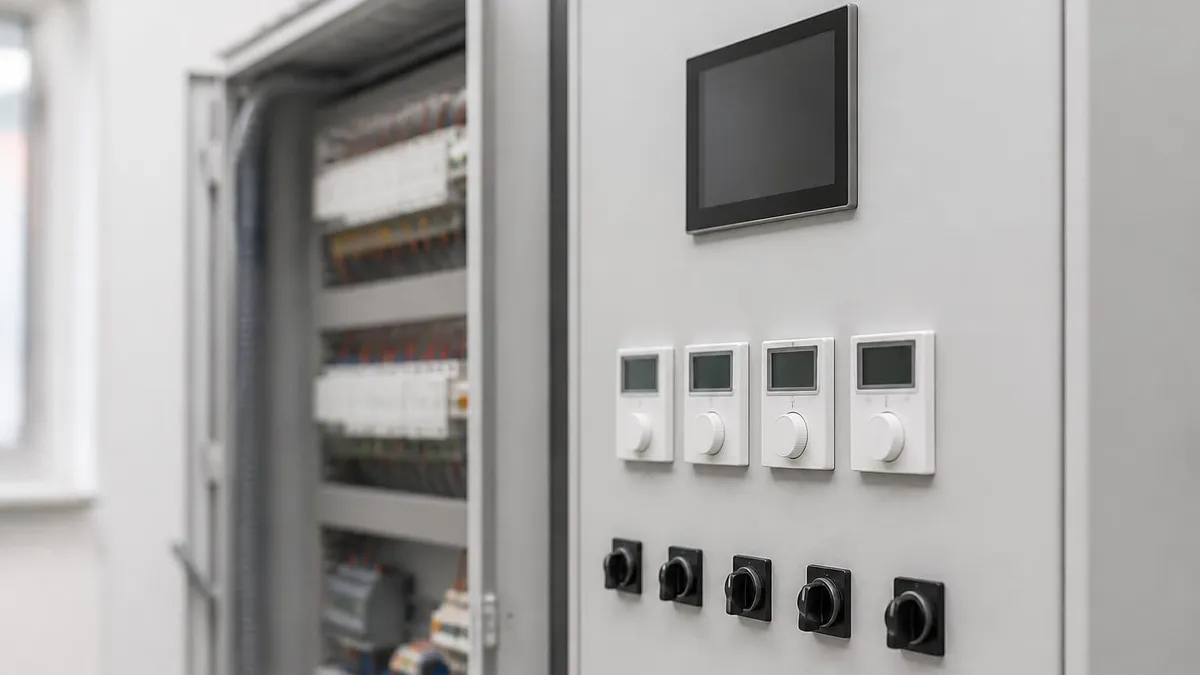
Any technician who connects, disconnects, or services a rental HVAC unit containing refrigerant must hold a current EPA Section 608 certification. This includes your in-house facility staff if they touch the equipment beyond simple visual inspection. Verify credentials before allowing anyone near the refrigerant circuit, and document who performed each service for compliance records. Penalties for violations exceed $50,000 per day per incident under federal regulation.
Logistics is what separates a smooth rental from a deployment that drags into a week of problems. The moment a unit is dispatched, a clock starts ticking on every parallel decision: who is meeting the truck, where will it park, who will rig the unit into place, who will run the electrical service, who will manage hose connections, who will commission the controls, and who will sign the delivery paperwork. Without a designated single point of accountability, things go wrong fast.
Start with a kickoff call as soon as the rental is confirmed. Include your facilities lead, the rental account manager, the rental field service technician, the electrical contractor, the rigger if needed, and any on-site safety officer. Walk through the timeline hour by hour. Confirm crane availability if the unit needs to be lifted onto a roof or behind a fence line. Confirm electrician availability with the right gear sizes and the right utility approvals. A two-hour planning call avoids two-day delays.
Equipment placement deserves more thought than it usually receives. Air-cooled chillers and condensing units need unobstructed airflow on the intake face and clear discharge above. Place them next to a wall or under a soffit and capacity collapses. Cooling towers must be sited away from building intakes to avoid Legionella exposure paths and drift carryover into windows. Generators need fuel-truck access for refueling, plus exhaust routing that does not blow into occupied spaces or fresh-air intakes.
Hose and cable management is a small detail that becomes a big one. Insulated chilled-water hoses run typically in 2-inch, 3-inch, or 4-inch diameters with camlock fittings. Long runs add pressure drop that affects flow rate, which affects delivered tonnage. Keep runs as short as possible, support them off the ground every 8 to 10 feet, and protect them from foot and vehicle traffic with ramps. The same logic applies to electrical cables — properly sized, properly supported, and properly fused.
Controls integration is where many deployments stumble. A rented chiller does not automatically talk to your building automation system. It runs on its own onboard controls with local setpoints and alarms. If you need integration with the BAS for trending, alarming, or sequencing, that has to be specified up-front. United Rentals - Power & HVAC offers BACnet or Modbus communication on larger units as an add-on, but you must request it and your controls contractor must plan for the point mapping.
For broader context on selecting the right professional to handle integration and commissioning, the guide on certified HVAC contractors covers exactly the vetting process that applies to anyone touching rental equipment on your site. The qualifications that matter for a permanent install — licensing, insurance, code knowledge, manufacturer training — apply equally to whoever connects and commissions your rented gear.
Finally, plan for the end of the rental from day one. Photograph the unit on arrival from every angle, log serial numbers and accessory counts, and save the dispatch paperwork. Schedule the pickup at least one week in advance to lock in a truck. Drain water-cooled units, recover refrigerant if required, and complete any contractual cleaning. End-of-rental fees on a 200-ton chiller can easily run $3,000 to $6,000 if the unit returns dirty, drained improperly, or with missing accessories.
The most successful HVAC rental customers treat the process as an engineering project, not a procurement transaction. They calculate loads rigorously, specify equipment by performance rather than nameplate, plan logistics with the same care as a permanent install, and document everything from the first quote through final demobilization. The result is fewer surprises, lower costs, and reliable performance even when conditions get extreme.
Build a vendor shortlist before you need one. Establish accounts with at least two of United Rentals - Power & HVAC, Aggreko, Sunbelt Climate Control, Carrier Rental, and Trane Rental. Get standard rate sheets, credit terms, and master service agreements in place during calm periods. When an emergency hits, you do not want to be filling out a credit application while equipment sits in a yard waiting for dispatch. Pre-approved accounts cut response times by 12 to 24 hours.
Develop in-house load calculation capability or contract with a mechanical engineer who can produce one on short notice. Rental quotes get sharper and equipment performs better when you can tell the vendor you need exactly 312 tons of cooling at 45°F supply with a 12°F delta-T rather than asking them to guess. Vague specs lead to oversized rentals, which costs you money, or undersized rentals, which costs you reputation when the building cannot hold setpoint.
Train your internal team on the basics of temporary equipment. Operators who understand chiller controls, generator fuel logistics, and air handler airflow troubleshooting can resolve 70 percent of routine issues without a service call. Each service call costs $400 to $1,200 and consumes hours. United Rentals offers operator-level training on their fleets — take advantage of it before deployment, especially for facility teams who may rent the same equipment categories repeatedly.
Document every deployment as a case study. Capture equipment selected, runtime, fuel consumed, ambient conditions, performance delivered, and total cost. After three or four projects, patterns emerge: which vendors deliver fastest in your region, which equipment classes underperform on hot days, which line items always inflate, and which contract terms protect you when timelines slip. This institutional knowledge compounds and turns rental management into a competitive advantage.
Plan for the worst day. The morning a chiller plant fails during a 98°F heat wave is the wrong time to learn that your nearest United Rentals branch is overbooked, your backup vendor's account expired, and your facility team has never connected a portable chiller. Run a tabletop exercise once a year. Walk through who calls whom, what equipment ships, where it sets up, and how the bill gets approved. The exercise itself surfaces gaps you can close before they cost you tenants or production hours.
Finally, remember that rental is one tool in a broader resilience toolkit alongside redundant permanent equipment, predictive maintenance, and load-shedding strategies. Use it where it fits — bridging emergencies, supplementing peak load, or supporting one-off projects — but do not use rental as a substitute for sound permanent design. The cheapest emergency rental is the one you never had to call in.
Sample HVAC Practice Questions
Try these questions from our free HVAC practice tests. The correct answer and an explanation follow each question.
Which OSHA standard specifically governs lockout/tagout procedures for HVAC equipment with stored energy?
- A. 29 CFR 1910.147 — Control of Hazardous Energy
- B. 29 CFR 1910.303 — Electrical Standards
- C. 29 CFR 1910.134 — Respiratory Protection
- D. 29 CFR 1926.502 — Fall Protection
Answer: A. 29 CFR 1910.147 — Control of Hazardous Energy
OSHA 29 CFR 1910.147 (Control of Hazardous Energy) governs lockout/tagout procedures to prevent unexpected energization of equipment during maintenance.
When cutting galvanized sheet metal with power shears, what safety practice is most critical?
- A. Wearing cut-resistant gloves and eye protection to guard against sharp edges and metal fragments
- B. Applying oil to the blades before every cut
- C. Using only right-handed shears for safety
- D. Clamping the sheet to a wooden workbench before cutting
Answer: A. Wearing cut-resistant gloves and eye protection to guard against sharp edges and metal fragments
Cut-resistant gloves and eye protection are essential when using power shears because edges are razor-sharp and metal chips can become airborne projectiles.
What does 'sensible heat' refer to in HVAC load calculations?
- A. Heat associated with moisture in the air
- B. Heat that causes a change in temperature without a change in state
- C. Latent heat stored in refrigerant
- D. Heat generated by occupants
Answer: B. Heat that causes a change in temperature without a change in state
Sensible heat causes a measurable temperature change and is calculated using the formula Q = 1.1 × CFM × ΔT for air systems.
Which type of recovery equipment must be used when the refrigerant system's compressor is operational?
- A. System-dependent (passive) recovery equipment
- B. Self-contained recovery equipment
- C. Either type is acceptable
- D. A vacuum pump only
Answer: A. System-dependent (passive) recovery equipment
System-dependent recovery equipment relies on the system's own compressor to push refrigerant into the recovery cylinder and requires the system compressor to be working.
HVAC Questions and Answers
HVAC Solutions: The Complete Guide to Heating, Cooling, and Indoor Air Quality Systems for Homes and Buildings
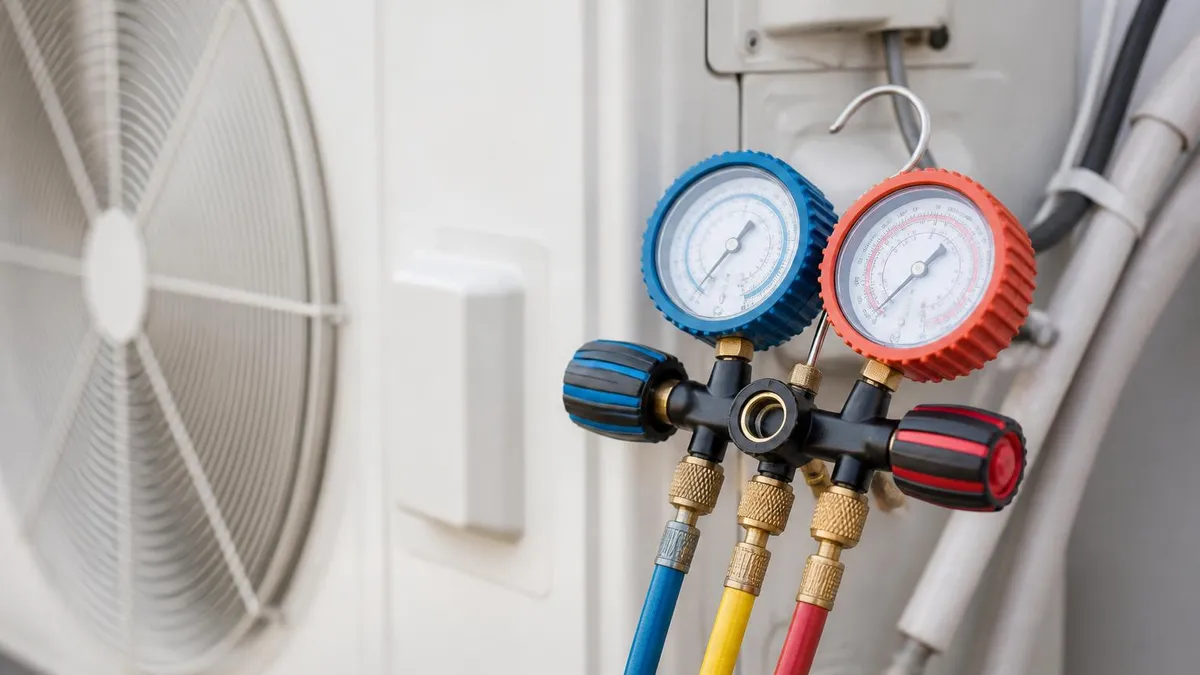
Certified HVAC Contractors: How to Find, Vet, and Hire the Right Professional for Your Home or Business
Best HVAC Repair in Bandon, OR: Local Services Near Me Guide
HVAC Installations: The Complete Guide to Planning, Pricing, and Getting It Right the First Time
EPA Certification for HVAC: The Complete Guide to Section 608 Requirements, Exam Prep, and Career Impact
About the Author

NATE Certified HVAC Technician & Licensing Exam Trainer
Universal Technical InstituteMike Johnson is a NATE-certified HVAC technician and EPA 608 universal-certified refrigerant handler with a Bachelor of Science in HVAC/R Technology. He has 19 years of commercial and residential HVAC installation and service experience and specializes in preparing technicians for NATE certification, EPA 608, A2L refrigerant safety, and state HVAC contractor licensing examinations.