
Evcon HVAC: The Complete Guide to York's Budget Brand, Models, Reliability, and What Homeowners Should Know Before Buying
📚 Evcon HVAC guide covering models, parts, reliability, warranty, and pricing. Learn how Evcon compares to York, Coleman, and other HVAC brands.

When homeowners start shopping for a new furnace or air handler on a tight budget, the name Evcon HVAC almost always shows up in the conversation. Evcon is a value-tier brand owned and manufactured by Johnson Controls, the same parent company behind York, Coleman, Luxaire, and Champion. The brand has been around since the 1970s and has built a reputation for producing no-frills, mid-efficiency equipment that gets the job done without the premium price tag attached to flagship lines.
Understanding where Evcon sits in the broader HVAC market is essential before you sign a quote. The brand competes with other budget-tier names like Ducane, Frigidaire, and Tempstar, and it shares many internal components with its sister brands. That means a contractor servicing your Evcon furnace can often source parts from York or Coleman distributors, which keeps repair costs predictable and downtime short, especially in regions where Johnson Controls dealers are common.
Evcon is best known for its gas furnaces, mobile home furnaces, and matched split systems. The DGAA, DGAH, and DGAT series are particularly popular in manufactured housing, while the Evcon Comfort 80 and Comfort 90 furnaces are common picks for site-built homes. Air handlers like the FEH and FCH series round out the lineup, giving homeowners a complete heating and cooling solution from one manufacturer with consistent installation procedures.
What separates Evcon from premium brands like Carrier, Lennox, or Trane is not the underlying engineering, since much of it is shared with York. The difference comes down to cabinet construction, insulation packages, control board sophistication, and warranty length. Evcon equipment typically uses thinner gauge steel, simpler diagnostic boards, and standard 5-year limited parts warranties rather than the 10-year coverage offered on higher-tier lines from the same factories in Wichita and Norman.
Reliability is where Evcon gets mixed reviews from technicians. The blower motors, gas valves, and inducer assemblies are generally workhorses that last 12 to 18 years with regular maintenance. However, the limit switches, flame sensors, and pressure switches can be more failure-prone than premium equivalents, which is why technicians often stock these parts on the truck when heading to an Evcon service call during the heating season in northern climates.
This guide walks through everything you need to know about Evcon HVAC before you buy, install, repair, or replace one of their systems. We cover model lineups, pricing, warranty coverage, common service issues, parts availability, efficiency ratings, and how Evcon stacks up against competitors. If you're shopping for a complete system, you may also want to review our broader HVAC Solutions: The Complete Guide to Heating, Cooling, and Indoor Air Quality Systems for Homes and Buildings resource for context on whole-home design.
By the end of this article, you should have a clear picture of whether Evcon is the right brand for your home, your budget, and your climate. Whether you're a homeowner researching a replacement, a landlord stocking rental units, or a technician preparing for service calls, the information below reflects current 2026 pricing, model availability, and field experience from licensed HVAC contractors across the United States.
Evcon HVAC by the Numbers
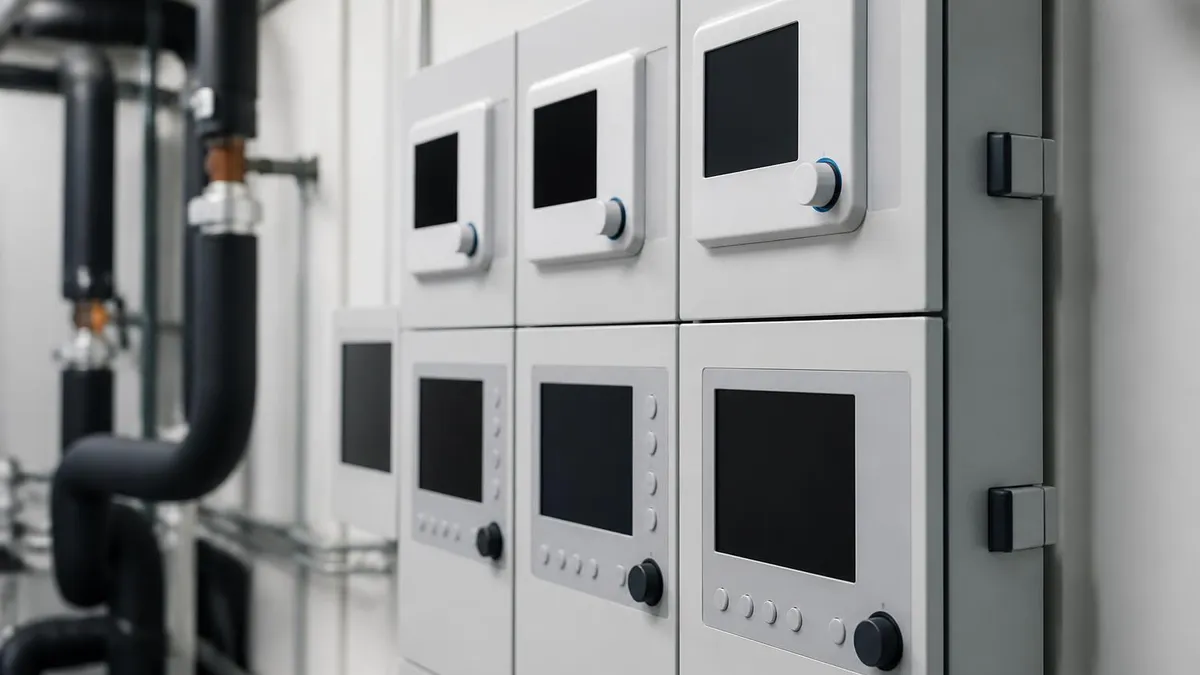
Evcon Brand History and Product Lineup
Evcon was founded in the 1970s and is now manufactured by Johnson Controls, the same parent company that owns York, Coleman, Luxaire, and Champion. Production happens primarily in Wichita and Norman.
Evcon dominates the manufactured housing market with the DGAA, DGAH, and DGAT downflow furnace series. These compact units are designed for tight closet installations and short return ducts.
The Comfort 80 and Comfort 90 series target traditional homes with 80% and 90%+ AFUE ratings. These units offer single-stage and two-stage burner options at competitive entry-level prices.
Evcon offers matched air handlers like the FEH and FCH series along with 13-16 SEER condensing units. The cooling lineup mirrors York and Coleman with rebranded cabinets and identical coils.
Evcon equipment is sold through Johnson Controls distributors and independent HVAC contractors. Parts availability is strong nationwide because components are shared across York, Coleman, and Luxaire lines.
The Evcon lineup is organized around a few core product families that have remained largely consistent for decades, with engineering refreshes happening every five to seven years. The DGAA series is probably the most recognized Evcon model among technicians who service manufactured homes. This downflow gas furnace is designed for closet installation with a sealed combustion chamber, and capacities range from 56,000 to 95,000 BTU. It pairs with virtually any 14-inch wide manufactured housing duct system without expensive transitions.
Moving to site-built homes, the Comfort 80 single-stage furnace is the volume seller. Available in 45,000 to 115,000 BTU sizes, the Comfort 80 hits an 80% AFUE rating with a multi-speed PSC blower motor in entry trims and an ECM motor in upgraded variants. The cabinet is convertible to upflow, downflow, or horizontal orientations, which makes it adaptable to basement, attic, or closet installations without ordering a specific configuration from the distributor in advance.
The Comfort 90 series is where Evcon competes with the high-efficiency market. These condensing furnaces hit 92% to 96% AFUE depending on the specific submodel and stage configuration. They include a secondary heat exchanger, PVC venting, and a condensate drain system. The Comfort 96 two-stage variant offers improved temperature consistency and quieter operation than the single-stage version, though installation complexity increases meaningfully due to venting and drainage requirements that licensed contractors must address.
On the cooling side, Evcon condensing units come in 13, 14, and 16 SEER ratings, with the 14 SEER becoming the new federal minimum baseline depending on your region. The compressor is typically a Copeland scroll, the same component used across York and Coleman lines. Coils use copper tubing with aluminum fins, and the cabinet features a louvered fan grille and powder-coat finish that holds up reasonably well to coastal salt air and northern road salt exposure over the equipment's lifetime.
Air handlers in the Evcon catalog include the FEH electric heat air handlers and the FCH cased coil units designed for use with separate gas furnaces or heat pump compressors. The FEH features factory-installed electric heat strips ranging from 5 to 20 kW, making it a popular choice in southern markets where heat pumps with electric auxiliary heat are the standard configuration. The cabinet insulation is fiberglass with a foil facing rated for the typical residential application.
Evcon also offers package units that combine heating and cooling in a single rooftop or ground-mounted cabinet. These gas-electric and heat pump packages are common on manufactured homes and small commercial buildings. They simplify installation because there's no refrigerant lineset to braze, no indoor unit to fit into a closet, and no electrical separation between indoor and outdoor components. The tradeoff is shorter equipment life due to constant outdoor weather exposure. For more on this process see our HVAC Installations: The Complete Guide to Planning, Pricing, and Getting It Right the First Time guide.
Finally, replacement parts for Evcon equipment are widely available through Johnson Controls distributors, Source 1, and aftermarket suppliers like SupplyHouse and PartsHnC. Common consumables like flame sensors, hot surface igniters, pressure switches, and inducer motors are stocked by most local HVAC supply houses. This parts ecosystem is one of the strongest practical arguments in favor of buying an Evcon system, especially compared to lesser-known imported brands that can leave you waiting weeks for a replacement gas valve during a January cold snap.
HVAC Practice Test Questions
Prepare for the HVAC - Heating Ventilation and Air Conditioning exam with our free practice test modules. Each quiz covers key topics to help you pass on your first try.
HVAC Air Conditioning
HVAC Exam Questions covering Air Conditioning. Master HVAC Test concepts for certification prep.
HVAC Code Compliance
Free HVAC Practice Test featuring Code Compliance. Improve your HVAC Exam score with mock test prep.
HVAC Electrical Controls
HVAC Test Prep for Electrical Controls. Practice HVAC Quiz questions and boost your score.
HVAC Energy Efficiency
HVAC Questions and Answers on Energy Efficiency. Free HVAC practice for exam readiness.
HVAC Heating Systems
HVAC Mock Test covering Heating Systems. Online HVAC Test practice with instant feedback.
HVAC Load Calculations
Free HVAC Quiz on HVAC Load Calculations. HVAC Exam prep questions with detailed explanations.
HVAC Tools and Equipment
HVAC Practice Questions for HVAC Tools and Equipment. Build confidence for your HVAC certification exam.
HVAC Refrigeration
HVAC Test Online for Refrigeration. Free practice with instant results and feedback.
HVAC Safety Practices
HVAC Study Material on Safety Practices. Prepare effectively with real exam-style questions.
HVAC System Design
Free HVAC Test covering System Design. Practice and track your HVAC exam readiness.
HVAC Thermodynamics
HVAC Exam Questions covering Thermodynamics. Master HVAC Test concepts for certification prep.
Evcon HVAC Equipment Categories
Evcon gas furnaces span the entire residential efficiency spectrum, from the 80% AFUE Comfort 80 to the 96% AFUE Comfort 96 two-stage units. The DGAA, DGAH, and DGAT downflow models target manufactured housing with compact cabinets that fit standard 14-inch closet returns. Single-stage models use PSC blower motors, while two-stage and modulating units add ECM motors for variable airflow and lower electrical consumption during partial-load operation.
The internal components share heritage with York and Coleman, including White-Rodgers gas valves, Honeywell or Robertshaw ignition controls, and aluminized steel primary heat exchangers. Secondary heat exchangers on condensing models use stainless steel construction to handle acidic condensate. Service technicians appreciate the straightforward access panels and clearly labeled wiring diagrams glued inside the door panel for quick reference during diagnostic calls.
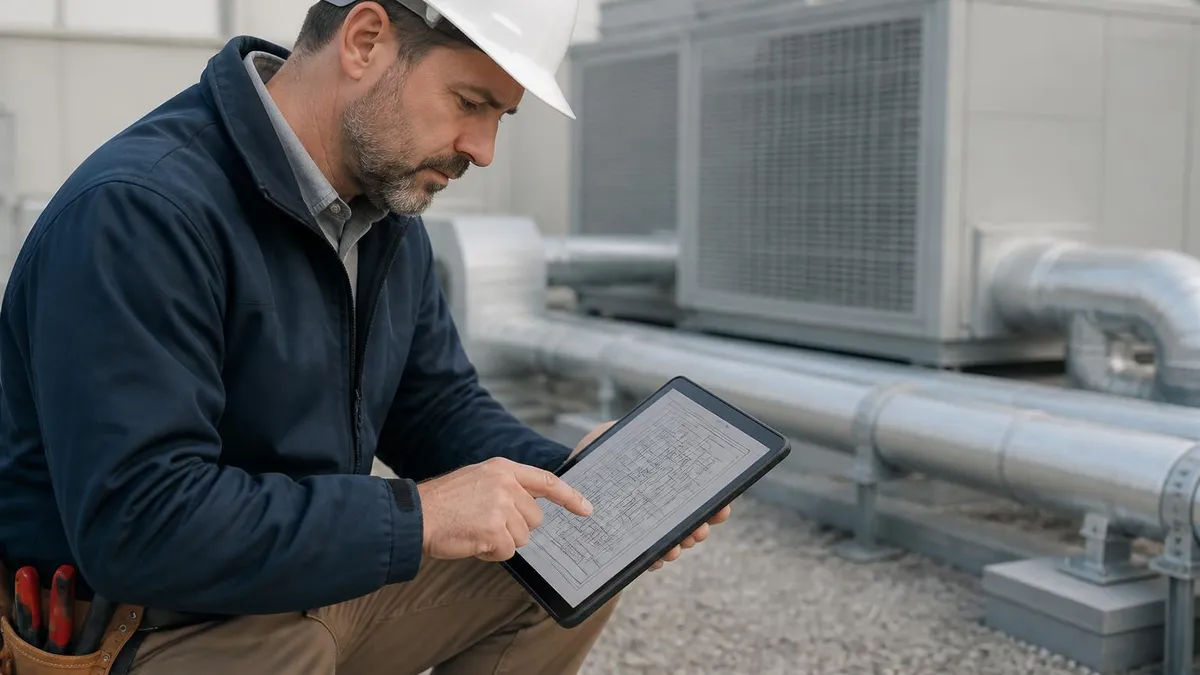
Is Evcon HVAC Worth Buying?
- +Significantly cheaper than premium brands while sharing York and Coleman components
- +Wide parts availability through Johnson Controls distributors nationwide
- +Strong reputation in manufactured housing with purpose-built downflow furnace lineup
- +Multi-position cabinet design simplifies installation in tight spaces
- +Copeland scroll compressors and proven gas valves deliver long service life
- +Service manuals and wiring diagrams included inside every equipment access panel
- −Shorter 5-year standard warranty versus 10-year coverage on premium brands
- −Thinner cabinet insulation can allow more operational sound transmission
- −Limit switches and flame sensors fail more often than premium equivalents
- −Diagnostic boards lack the sophisticated fault codes of high-end systems
- −Resale value impact is lower than installing a Trane, Lennox, or Carrier system
- −Limited variable-capacity options for homeowners wanting modulating performance
Pros and Cons at a Glance
| Pros | Cons |
|---|---|
| Significantly cheaper than premium brands while sharing York and Coleman components | Thinner cabinet insulation can allow more operational sound transmission |
| Wide parts availability through Johnson Controls distributors nationwide | Limit switches and flame sensors fail more often than premium equivalents |
| Strong reputation in manufactured housing with purpose-built downflow furnace lineup | Diagnostic boards lack the sophisticated fault codes of high-end systems |
| Multi-position cabinet design simplifies installation in tight spaces | Resale value impact is lower than installing a Trane, Lennox, or Carrier system |
| Copeland scroll compressors and proven gas valves deliver long service life | Limited variable-capacity options for homeowners wanting modulating performance |
Evcon HVAC Pre-Purchase Checklist
- ✓Verify the model number matches the contractor's quote and the Johnson Controls product catalog
- ✓Confirm the AFUE or SEER rating qualifies for any local utility rebates available in your area
- ✓Request a Manual J load calculation to confirm proper equipment sizing for your home
- ✓Check that your installing contractor is an authorized Johnson Controls or Source 1 dealer
- ✓Ask whether the installation includes a new condensate drain pan and float safety switch
- ✓Confirm the included thermostat is compatible with all stages of heating and cooling
- ✓Verify warranty registration is completed within 60 days of installation to lock in coverage
- ✓Request a written estimate breaking out equipment, materials, and labor as separate line items
- ✓Ask about a 1-year labor warranty in addition to the manufacturer parts warranty
- ✓Schedule the first annual maintenance visit before the start of the next heating season
Register Your Warranty Within 60 Days
Evcon's standard 5-year parts warranty can be extended to 10 years on most components if you register the equipment within 60 days of installation through the Johnson Controls warranty portal. Missing this window is the single most common mistake homeowners make and can cost over $1,200 in out-of-pocket repairs later. Your installer should handle registration, but verify it personally before paying the final invoice.
When Evcon equipment breaks down, the failure modes are predictable enough that experienced technicians can often diagnose problems before they even open the access panel. The single most common service call on Evcon gas furnaces is a failed flame sensor. The flame rod oxidizes over time, and the silicon and microparticle buildup prevents proper flame rectification, causing the burner to ignite briefly before shutting down on a flame-proving fault. Cleaning the sensor with fine steel wool resolves the issue in under five minutes and costs nothing in parts.
The second most common Evcon furnace failure is the hot surface igniter. The Norton silicon nitride igniters used in most Comfort series furnaces last about 5 to 8 years under normal operation, but they can fail prematurely if voltage to the igniter is incorrect or if the homeowner has been frequently power-cycling the system during thermostat setup. Replacement igniters cost between $35 and $80 depending on the specific part number, and the repair takes about 20 minutes for a qualified technician with the right tools.
Pressure switches on Evcon condensing furnaces are another known weak point. The diaphragm inside the switch can develop a slow leak over time, particularly in coastal or high-humidity environments. When the switch fails, the furnace will not start because the safety circuit assumes there is no proper draft from the inducer. Replacement is straightforward, but verifying the correct part number by referencing the model and serial nameplate on the cabinet is essential to avoid ordering the wrong replacement component.
On the air conditioning side, Evcon condensers most frequently develop issues with the dual run capacitor, contactor, and fan motor in that order. Capacitors are the cheapest and easiest replacements at around $25 to $60 in parts, and their failure is signaled by a humming compressor that will not start. Contactors fail when the contacts pit and burn, and fan motors typically fail due to bearing wear after about 10 to 14 years of seasonal operation in moderate to hot climates with regular cycling.
The inducer motor in Evcon condensing furnaces is generally strong, but the bearing failure mode produces a distinctive whining or grinding noise that gradually worsens over weeks. Replacing the assembly costs $200 to $400 in parts and another $150 to $250 in labor. Catching it early prevents collateral damage to the heat exchanger and the control board, which can occur if the inducer seizes and the limit switch does not trip quickly enough during a heating call on a cold winter morning.
Parts availability for Evcon is one of its biggest practical strengths. Because the brand shares components with York, Coleman, and Luxaire, virtually any HVAC supply house in the country can source replacement parts within 24 to 48 hours. Common consumables like flame sensors, igniters, and capacitors are stocked locally and available same-day at most distributors. This is meaningfully better than what you get with budget imported brands or discontinued lines from manufacturers that have exited the residential market entirely.
Finding a qualified technician for Evcon repairs is easy in most metropolitan areas. Any contractor familiar with York or Coleman equipment will know Evcon, since the diagnostic procedures, wiring conventions, and component layouts are nearly identical. For homeowners who need professional help, our directory of Certified HVAC Contractors: How to Find, Vet, and Hire the Right Professional for Your Home or Business can connect you with vetted local pros who handle Johnson Controls brands.
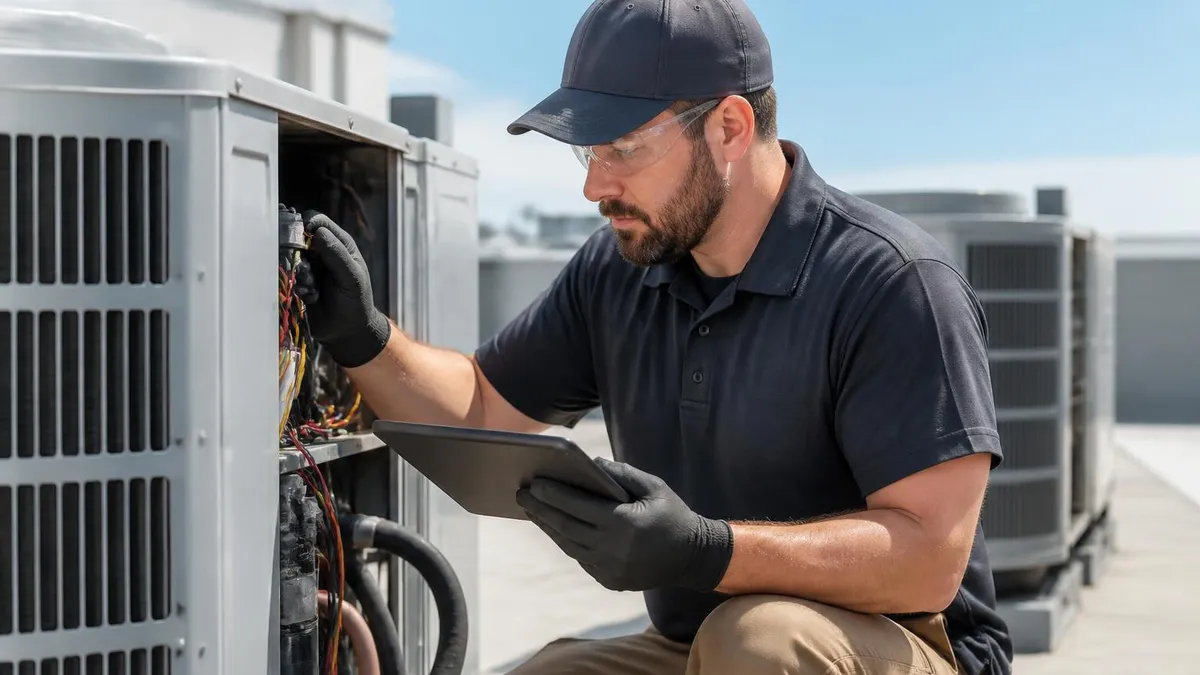
Evcon furnaces manufactured before 2010 with aluminized steel primary heat exchangers have a documented failure mode where cracks develop near the burner ports after 12 to 15 years of service. A cracked exchanger can leak carbon monoxide into your home. Always have a technician perform a combustion analysis and visual exchanger inspection during annual maintenance, especially if your furnace is more than a decade old.
Evcon HVAC pricing falls firmly in the value tier of the residential market, which is exactly where the brand intends to compete. A complete installed 2.5-ton split system with a Comfort 80 single-stage furnace and a 14 SEER condenser typically runs between $5,800 and $7,400 in most metropolitan markets, including labor, refrigerant linesets, electrical, and basic ductwork modifications. The same configuration with a Comfort 96 two-stage condensing furnace adds about $1,500 to $2,200 to the project total.
Comparing those numbers to premium brands tells the value story clearly. An equivalent Trane XL16i or Lennox EL296V installation typically prices between $9,500 and $13,500 depending on your contractor and region. The Carrier Infinity series can reach $14,000 to $18,000 for fully variable-capacity equipment. Evcon delivers most of the underlying performance for substantially less money, which is why landlords, flippers, and budget-conscious homeowners gravitate toward the brand when replacing aging or failed equipment.
Warranty coverage is where Evcon trims to keep costs down. The standard policy provides 5 years on parts, 20 years on the heat exchanger for furnaces, and 5 years on the compressor for air conditioners and heat pumps. Registering within 60 days extends parts coverage to 10 years on most models, which closes much of the gap with premium brands that offer 10-year coverage as standard. Labor warranties are not included from the factory and must be purchased separately from your installing contractor.
hvac energy efficiency news rebates are available for many Evcon installations through utility companies and state programs. The Comfort 96 two-stage furnace and 16 SEER condenser typically qualify for rebates ranging from $200 to $1,200 depending on your utility, climate zone, and program funding. Federal tax credits under the Inflation Reduction Act may also apply to high-efficiency Evcon heat pump installations, providing up to 30% off the project cost capped at $2,000 for qualifying systems.
Resale value impact is a frequently overlooked consideration when choosing Evcon over premium brands. Real estate appraisers and home inspectors generally do not differentiate between HVAC brands at the same efficiency rating, so the equipment label rarely affects appraised value directly. However, buyers and inspectors do sometimes flag budget brands as a future replacement concern, which can become a negotiating point during real estate transactions, especially when the equipment is approaching the end of its expected lifespan.
Total cost of ownership over 15 years tells a more complete story than purchase price alone. An Evcon Comfort 96 furnace operating in a cold climate with annual maintenance typically costs about $400 to $700 in parts and service over its lifetime, plus $4,500 to $7,500 in natural gas consumption depending on local utility rates and home insulation quality. Compared to an 80% AFUE unit, the higher-efficiency Evcon model saves about $200 to $400 per year on heating bills in northern climates.
The bottom line for most homeowners is that Evcon represents a sensible compromise between dirt-cheap imported brands and premium American flagships. You get proven Johnson Controls engineering, broad parts availability, qualified technician access, and reasonable warranty coverage at a price point that fits most household budgets.
For homeowners who want premium variable-capacity comfort and ten-plus-year worry-free operation, stepping up to York Affinity, Carrier Infinity, or Lennox Signature makes sense. For everyone else, Evcon delivers honest value, and you can also read our EPA Certification for HVAC: The Complete Guide to Section 608 Requirements, Exam Prep, and Career Impact for technician-side context.
If you've decided that Evcon is the right brand for your home, the next step is making sure the installation is done correctly, because installation quality matters far more than equipment brand for long-term reliability. Start by getting at least three quotes from licensed contractors who carry Johnson Controls dealer credentials or have experience servicing York and Coleman equipment. Verify each contractor's state license number, insurance certificate, and EPA Section 608 certification before allowing anyone to perform refrigerant work on your property.
Insist on a Manual J load calculation as part of the proposal process. Too many contractors size equipment based on the existing furnace's BTU rating or by rough rule of thumb, which routinely produces oversized systems that short-cycle, dehumidify poorly, and waste energy. A proper Manual J using ACCA-approved software accounts for your home's insulation, window area, infiltration rate, and orientation. The result is right-sized equipment that runs longer at lower output, delivers better comfort, and lasts longer.
Ductwork inspection is another critical part of a proper installation. Many Evcon performance complaints trace back not to the equipment itself but to undersized hvac duct sizing calculator, leaky supply trunks, or missing dampers from the previous installation. Have your contractor perform a static pressure test before installation begins, and address any duct issues as part of the project scope. Spending an extra $800 to $2,500 on duct sealing and resizing often pays back in comfort, efficiency, and equipment longevity within a few years.
Once the new Evcon system is installed, the commissioning process is where good contractors separate themselves from average ones. The technician should measure refrigerant superheat and subcooling, verify proper airflow with a manometer, check gas pressure with a digital manometer, perform a combustion analysis on the furnace, and document all readings on the installation paperwork. If your contractor does not perform these checks, the system may not deliver its rated efficiency or operate within manufacturer specifications.
Annual maintenance is non-negotiable if you want to maximize Evcon's lifespan. Schedule a heating tune-up in early fall and a cooling tune-up in early spring with a contractor who follows a comprehensive checklist. Tasks include cleaning the flame sensor, inspecting the heat exchanger, testing safety controls, washing the condenser coil, checking subcooling hvac, replacing the air filter, and lubricating any non-sealed bearings. A thorough tune-up takes 60 to 90 minutes per visit and costs about $90 to $180 depending on your region.
Filtration choices significantly affect both equipment life and indoor air quality. The pleated MERV 11 or MERV 13 filters that fit standard Evcon air handlers offer a good balance of dust capture and airflow restriction. Avoid the cheapest fiberglass throwaway filters because they let dust accumulate on the evaporator coil and blower wheel, reducing efficiency over time. Also avoid the highest MERV 16 filters in basic systems because the airflow restriction can stress the blower motor.
Finally, consider connecting your new Evcon system to a smart thermostat that supports both heating stages, cooling stages, and any installed heat pump operation. The Ecobee Smart Thermostat Premium and Honeywell T10 Pro both work well with Evcon equipment and provide useful diagnostic data, scheduling flexibility, and remote control through a smartphone app. Stick with thermostats that explicitly list multi-stage compatibility, because mismatched thermostats can prevent your high-stage burner or second compressor stage from ever activating.
Sample HVAC Practice Questions
Try these questions from our free HVAC practice tests. The correct answer and an explanation follow each question.
What is the minimum safe distance a technician should maintain from an electrical panel before beginning work on an HVAC system connected to it?
- A. No specific distance is required if breakers are off
- B. At least 1 foot with insulated tools only
- C. Follow NFPA 70E arc flash boundary requirements based on voltage
- D. At least 6 feet at all times
Answer: C. Follow NFPA 70E arc flash boundary requirements based on voltage
NFPA 70E establishes arc flash protection boundaries that vary based on system voltage and available fault current.
When refrigerant is reclaimed and sent to a reclaim facility, what standard must the reclaimed refrigerant meet before it can be resold?
- A. AHRI 700
- B. UL 207
- C. ASHRAE 34 Grade A
- D. EPA 608 Grade 1
Answer: A. AHRI 700
Reclaimed refrigerant must meet AHRI Standard 700 purity specifications before it can be resold for use in refrigeration and air conditioning equipment.
What is the purpose of an economizer cycle in a commercial HVAC system?
- A. To use outdoor air for free cooling when conditions allow
- B. To recover heat from exhaust gases
- C. To reduce refrigerant charge
- D. To cycle the compressor on and off
Answer: A. To use outdoor air for free cooling when conditions allow
An economizer uses cool outdoor air directly for space cooling, reducing or eliminating compressor operation when outdoor conditions are favorable.
What role does collaboration play in electrical controls for HVAC professionals?
- A. It slows down work unnecessarily
- B. It enhances outcomes through diverse perspectives and shared expertise
- C. It is only needed in emergencies
- D. It reduces individual accountability
Answer: B. It enhances outcomes through diverse perspectives and shared expertise
Collaboration leverages diverse perspectives and combined expertise to achieve better outcomes than any individual could alone.
HVAC Questions and Answers
HVAC Solutions: The Complete Guide to Heating, Cooling, and Indoor Air Quality Systems for Homes and Buildings
Certified HVAC Contractors: How to Find, Vet, and Hire the Right Professional for Your Home or Business
Best HVAC Repair in Bandon, OR: Local Services Near Me Guide
HVAC Installations: The Complete Guide to Planning, Pricing, and Getting It Right the First Time
EPA Certification for HVAC: The Complete Guide to Section 608 Requirements, Exam Prep, and Career Impact
About the Author

NATE Certified HVAC Technician & Licensing Exam Trainer
Universal Technical InstituteMike Johnson is a NATE-certified HVAC technician and EPA 608 universal-certified refrigerant handler with a Bachelor of Science in HVAC/R Technology. He has 19 years of commercial and residential HVAC installation and service experience and specializes in preparing technicians for NATE certification, EPA 608, A2L refrigerant safety, and state HVAC contractor licensing examinations.