
HVAC Installer Jobs: Career Guide, Salary Expectations, and How to Get Hired
Explore hvac installer jobs: duties, pay, certifications, and hiring tips. Full career guide for new and experienced HVAC technicians. 🔎
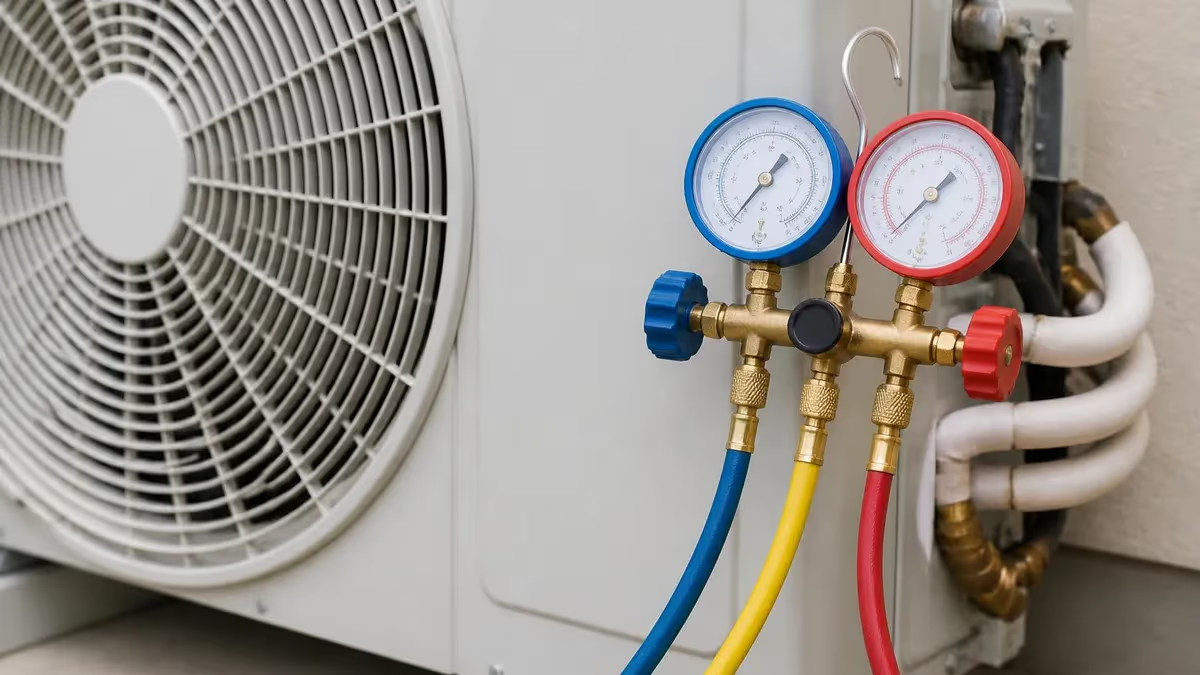
If you are exploring hvac installer jobs, you are stepping into one of the most in-demand skilled trades in the United States. HVAC installers set up heating, ventilation, air conditioning, and refrigeration systems in residential homes, commercial buildings, and industrial facilities. With record housing construction, aging infrastructure, and growing demand for energy-efficient climate control, qualified installers are being hired faster than trade schools can produce them. The Bureau of Labor Statistics projects 9% job growth for HVAC mechanics and installers through 2033, outpacing the average for all occupations by a wide margin.
An HVAC installer's daily work is far more varied than most people expect. On any given day, you might run refrigerant lines through a newly framed house in the morning, test airflow balance in a commercial retail space at noon, and help a colleague troubleshoot an electrical control board by late afternoon. The job demands physical stamina, mechanical aptitude, and a solid grasp of electrical fundamentals, refrigerant handling, and sheet metal fabrication. No two job sites are identical, which keeps the work engaging for people who enjoy hands-on problem-solving and variety in their routine.
Compensation for HVAC installers varies widely by experience, location, and employer type. Entry-level positions at residential contractors typically start between $18 and $24 per hour, while journeyman-level installers in high-cost metropolitan markets can earn $35 to $55 per hour. Union positions often come with additional benefits including pension contributions, health insurance, and paid apprenticeship training that lets you earn while you learn. Over a full career, experienced HVAC professionals regularly cross into six-figure territory when overtime, service calls, and supervisory roles are factored in.
Education requirements for installer roles are more accessible than those for many other well-paying careers. Most employers accept candidates with a high school diploma or GED plus completion of a vocational or community college HVAC program, which typically runs six months to two years. Alternatively, registered apprenticeship programs — offered through unions like UA Local and SMART — provide four to five years of paid on-the-job training combined with classroom instruction. Either pathway leads to the same endpoint: a licensed technician who is EPA 608 certified and ready to handle refrigerants legally on the job.
Certifications play a critical role in career advancement within the HVAC trades. The EPA Section 608 certification is federally mandated for anyone who purchases or handles refrigerants, making it an absolute minimum requirement for installer positions. Beyond that baseline, credentials from NATE (North American Technician Excellence) signal to employers and customers alike that a technician has mastered specific competency areas such as air conditioning, heat pumps, or commercial refrigeration. NATE-certified installers consistently earn higher wages and receive preferential consideration when companies are filling lead technician or foreman roles.
The transition from apprentice to journeyman installer typically takes three to five years, but motivated workers can accelerate that timeline by pursuing additional certifications, taking on complex projects voluntarily, and building relationships with experienced mentors. Many installers eventually move into related opportunities in hvac installer jobs adjacent fields, including sales engineering, project management, or independent contracting. The skills you build installing systems translate directly into the knowledge needed to specify, quote, and sell them — creating a natural career ladder that keeps earnings climbing throughout your working life.
Whether you are a recent high school graduate weighing your options or an experienced tradesperson looking to formalize your credentials, the HVAC installation field offers stable employment, strong wages, and genuine upward mobility. This guide covers everything you need to know about job duties, salary expectations, required certifications, the hiring process, and how to position yourself as a standout candidate in a competitive applicant pool.
HVAC Installer Jobs by the Numbers

Types of HVAC Installer Jobs
Installs split systems, heat pumps, furnaces, and ductwork in single-family and multi-family homes. Work is often fast-paced, with one to two full system installations per day. Strong demand driven by new construction and replacement cycles every 15–20 years.
Works on small office buildings, retail spaces, and restaurants. Projects require rooftop unit installation, commercial ductwork, and variable refrigerant flow systems. Requires broader electrical knowledge and the ability to read commercial blueprints accurately.
Handles large-scale chiller plants, cooling towers, and process ventilation systems in factories and warehouses. Highest-paying installer category. Requires specialized training in industrial controls, large-tonnage equipment, and strict safety protocols.
Fabricates and installs custom ductwork systems. Works alongside HVAC mechanics to ensure proper airflow design. Often employed by sheet metal unions (SMART) with strong apprenticeship programs and excellent long-term wage growth.
Specializes in commercial refrigeration for grocery stores, cold storage facilities, and food processing plants. Requires advanced EPA certification and deep knowledge of refrigerant systems, compressors, and evaporator coil maintenance.
Salary is one of the first questions candidates ask when researching HVAC installer jobs, and the answer depends heavily on geography, employer type, experience level, and the specific systems you are certified to handle. According to the Bureau of Labor Statistics, the median annual wage for HVAC mechanics and installers was approximately $57,300 in 2024, but that number only tells part of the story. The bottom 10% of earners make around $36,000 per year, while the top 10% — typically experienced journeymen in union shops or specialized industrial roles — earn well above $90,000 annually before overtime.
Geography creates dramatic pay differences within the HVAC trades. States with high costs of living and strong union density consistently top the salary charts. In California, Massachusetts, Alaska, and New York, average HVAC installer wages frequently exceed $75,000 per year. By contrast, states in the rural South and Midwest tend to cluster closer to the national median, with averages between $45,000 and $55,000. However, lower-wage regions also carry lower living costs, so real purchasing power can be surprisingly comparable when adjusted for housing, food, and transportation expenses.
Union versus non-union employment is perhaps the single biggest variable in HVAC installer compensation. Union installers enrolled in programs through the United Association of Plumbers and Pipefitters (UA) or the Sheet Metal Workers' International Association (SMART) typically receive wages that are 20–35% higher than non-union counterparts, plus comprehensive health insurance, defined-benefit pensions, and paid vacation. Non-union shops often offer more flexibility, faster promotion to lead roles, and the ability to negotiate individual compensation packages based on demonstrated skill and productivity.
Overtime pay dramatically boosts annual earnings for many HVAC installers. The industry is highly seasonal, with summer air conditioning demand and winter heating emergencies creating predictable spikes in workload. Experienced installers who are willing to work 50–60 hours per week during peak seasons can add $10,000 to $20,000 to their base annual earnings. Emergency service calls on nights and weekends carry premium rates — sometimes 1.5 to 2 times regular hourly pay — making availability during off-hours a significant financial advantage for those who can manage the schedule.
Advancement in pay often tracks closely with certification attainment. An installer who holds only the EPA 608 certification will earn considerably less than one who has also earned NATE credentials in two or three specialty areas such as air conditioning, heat pumps, and gas heating. Employers use certifications as a proxy for verified competence, and they are willing to pay meaningful premiums for documented expertise. Some companies also offer tuition reimbursement or pay bonuses upon passing specific exams, creating a financial incentive to pursue ongoing education throughout your career.
Benefits packages deserve careful evaluation when comparing HVAC employer offers. Health insurance, dental and vision coverage, life insurance, tool allowances, vehicle allowances, and retirement contributions can add $10,000 to $20,000 in annual value on top of base wages. Some larger mechanical contractors provide company trucks fully stocked with tools and parts, eliminating a significant personal expense that independent or small-company installers must absorb out of pocket. When comparing two job offers with similar hourly rates, the benefits package is frequently the deciding factor in total compensation.
Independent contracting is an increasingly popular pathway for experienced HVAC installers who want to maximize earnings and control over their schedule. A self-employed installer or small business owner can charge $85 to $150 per hour for labor and keep a significantly larger share of project revenue than a salaried employee. The tradeoff is that independents must manage their own marketing, bookkeeping, licensing, and insurance — responsibilities that require business skills beyond the technical trade. Many successful independent contractors spent five to ten years building experience and a customer network before making the leap to self-employment.
HVAC Practice Test Questions
Prepare for the HVAC - Heating Ventilation and Air Conditioning exam with our free practice test modules. Each quiz covers key topics to help you pass on your first try.
HVAC Air Conditioning
HVAC Exam Questions covering Air Conditioning. Master HVAC Test concepts for certification prep.
HVAC Code Compliance
Free HVAC Practice Test featuring Code Compliance. Improve your HVAC Exam score with mock test prep.
HVAC Electrical Controls
HVAC Test Prep for Electrical Controls. Practice HVAC Quiz questions and boost your score.
HVAC Energy Efficiency
HVAC Questions and Answers on Energy Efficiency. Free HVAC practice for exam readiness.
HVAC Heating Systems
HVAC Mock Test covering Heating Systems. Online HVAC Test practice with instant feedback.
HVAC Load Calculations
Free HVAC Quiz on HVAC Load Calculations. HVAC Exam prep questions with detailed explanations.
HVAC Tools and Equipment
HVAC Practice Questions for HVAC Tools and Equipment. Build confidence for your HVAC certification exam.
HVAC Refrigeration
HVAC Test Online for Refrigeration. Free practice with instant results and feedback.
HVAC Safety Practices
HVAC Study Material on Safety Practices. Prepare effectively with real exam-style questions.
HVAC System Design
Free HVAC Test covering System Design. Practice and track your HVAC exam readiness.
HVAC Thermodynamics
HVAC Exam Questions covering Thermodynamics. Master HVAC Test concepts for certification prep.
HVAC Certification Paths for Installers
The EPA Section 608 certification is the federal baseline requirement for any HVAC installer who handles refrigerants. The exam covers four areas: Core (universal rules), Type I (small appliances), Type II (high-pressure systems), and Type III (low-pressure systems). Most installer positions require passing the Universal exam, which covers all four sections. Approved testing centers are available across the US, and the exam typically costs $20 to $60 depending on the provider. Certification does not expire, but staying current with refrigerant regulations is an ongoing responsibility.
Preparing for the EPA 608 exam requires understanding the Clean Air Act, refrigerant recovery procedures, leak detection requirements, and proper handling of cylinders. Many vocational programs include EPA 608 prep in their curriculum, and standalone study courses are widely available online. Most candidates report needing 20–40 hours of focused study to pass confidently. Failing one section does not invalidate others — you only retake the section you missed. Most employers expect new hires to hold this certification before their first day on the job handling refrigerant equipment.

Is an HVAC Installer Career Right for You?
- +Strong and growing job market with 9% projected growth through 2033
- +No four-year degree required — vocational programs cost far less than university
- +High earning potential with overtime, union wages, and specialty certifications
- +Variety in daily work across residential, commercial, and industrial environments
- +Genuine job security — HVAC systems need installation and service in every climate
- +Clear advancement pathway from apprentice to journeyman to lead technician or foreman
- −Physically demanding work including lifting heavy equipment, working in tight crawl spaces, and outdoor exposure
- −Seasonal workload spikes create long hours in summer and winter months
- −Upfront costs for tools, work boots, and safety gear can reach $1,000–$3,000
- −Exposure to refrigerants, electrical hazards, and confined spaces requires strict safety discipline
- −On-call rotations during evenings and weekends are common at many companies
- −Initial apprentice wages can feel low before skills and certifications increase earning power
How to Get Hired for HVAC Installer Jobs
- ✓Earn your EPA Section 608 Universal certification before submitting applications
- ✓Complete a vocational HVAC program or enroll in a registered apprenticeship through UA or SMART
- ✓Build a targeted resume that lists specific equipment brands and system types you have installed
- ✓Obtain at least one NATE specialty certification to stand out among entry-level applicants
- ✓Apply directly to residential and commercial HVAC contractors — many never post on job boards
- ✓Request informational interviews with lead technicians to understand what local employers value
- ✓Check your state's licensing board website and ensure you meet all local work authorization requirements
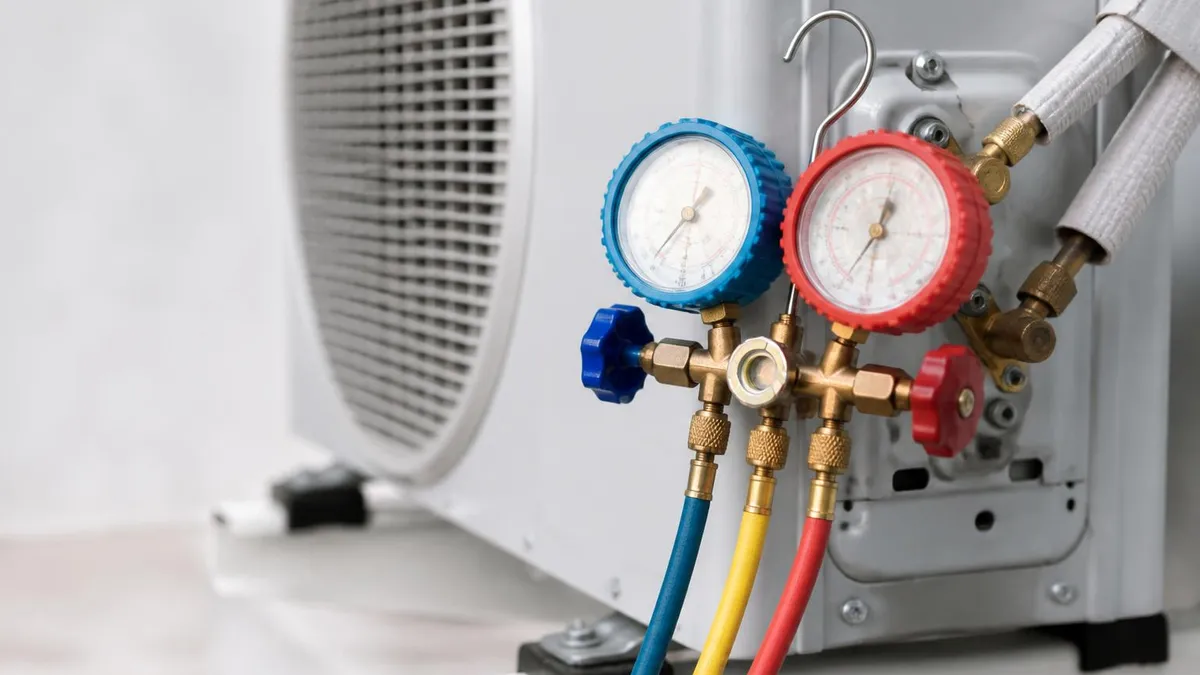
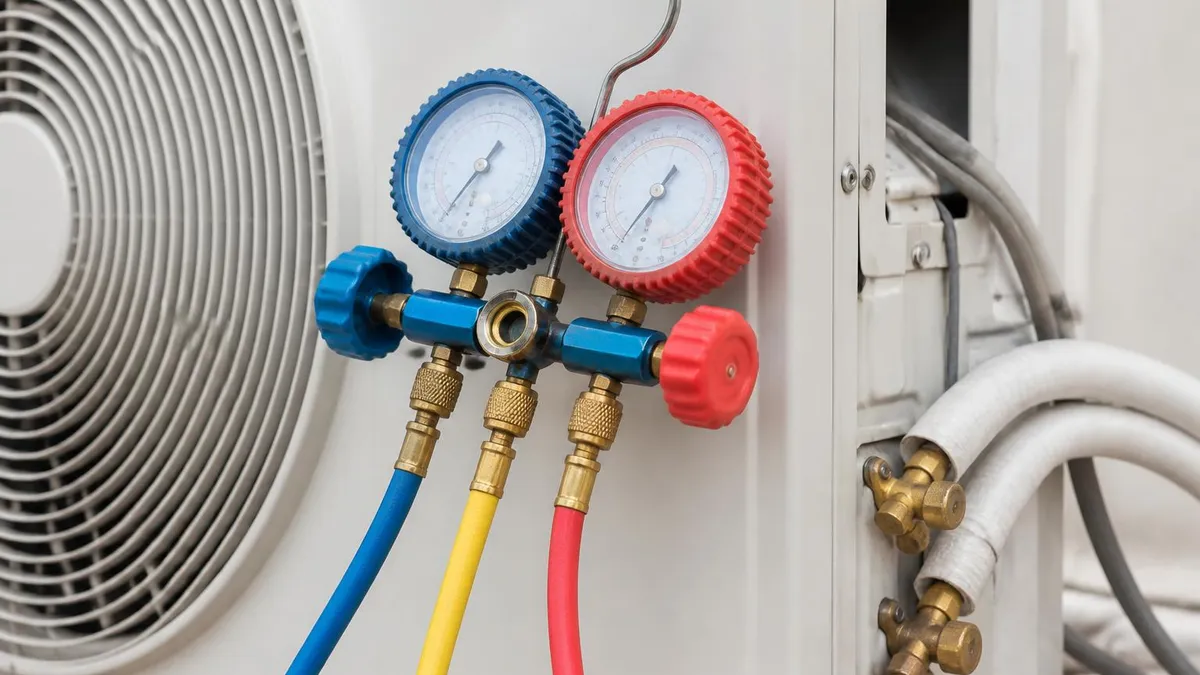
- ✓Assemble a professional tool kit including manifold gauges, a multimeter, and a refrigerant scale
- ✓Practice reading wiring diagrams and equipment manuals to demonstrate self-sufficiency during interviews
- ✓Follow up on applications within five business days with a phone call or brief professional email
NATE-Certified Applicants Earn 10–15% More on Hire
Employers consistently offer higher starting wages to applicants who hold NATE certification compared to uncertified candidates with similar experience. Even passing a single specialty exam before your first job search signals to hiring managers that you invest in your own development — a trait that matters in a field where continuous learning is non-negotiable. Budget time to earn at least one NATE credential before you start applying to mid-tier and senior installer positions.
Advancing beyond an entry-level installer role requires a deliberate combination of skill development, credential accumulation, and relationship building within your employer's organization and the broader trade community. The most successful HVAC careers are built by technicians who treat every job site as a learning opportunity — asking questions, studying equipment manuals, and volunteering for complex installations that push the boundaries of their current skill set. Companies notice employees who grow quickly, and foreman and project supervisor roles are almost always filled from within rather than through outside hiring.
Specialization is one of the fastest routes to higher pay and professional recognition. While a generalist installer who can handle residential split systems will always find work, a technician who becomes the go-to expert in variable refrigerant flow (VRF) systems, geothermal heat pumps, or building automation integration commands premium wages and has a much smaller pool of competitors for top-tier positions. Manufacturers like Daikin, Mitsubishi, and Carrier offer factory training programs that certify installers specifically on their systems, and those brand-specific credentials are highly valued by specialty contractors who focus on those product lines.
Moving into a supervisory role as a lead technician or foreman opens a new compensation tier while keeping you connected to the hands-on work that drew most people to the trade in the first place. Foremen typically earn 15–25% more than journeyman installers and take on responsibilities including job site planning, material ordering, crew coordination, and quality inspection. The transition requires developing communication and organizational skills alongside technical expertise — a combination that relatively few tradespeople invest in deliberately, creating genuine opportunity for those who do.
Project management is the next rung on the career ladder for HVAC professionals who want to move further from the tools and into higher-level planning roles. Commercial mechanical contractors regularly promote experienced foremen into project manager positions where they oversee multi-million-dollar installations, manage subcontractors, and interface directly with general contractors and building owners. Project managers in HVAC typically earn $75,000 to $110,000 annually, and the role rewards people who combine strong technical knowledge with the ability to manage schedules, budgets, and client relationships simultaneously.
Starting your own HVAC contracting business is the ultimate career milestone for many installers. Independent contractors with an established customer base and a strong local reputation can generate annual revenues of $300,000 to $1,000,000 or more with a small crew. Success in self-employment requires business licenses, contractor's insurance, accounting systems, and marketing skills — none of which you typically learn on a job site.
Many successful HVAC business owners spend time studying small business management or working under a business mentor before launching independently, and the preparation almost always pays dividends in the form of faster growth and fewer costly early mistakes.
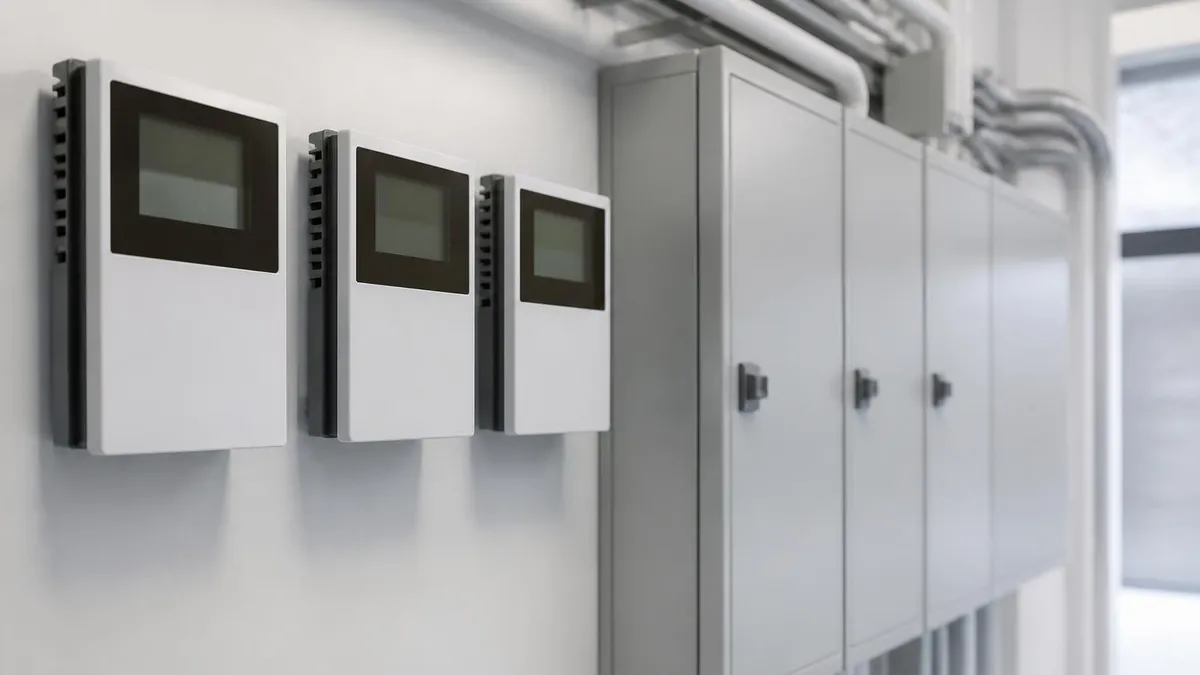
The HVAC industry is also evolving rapidly in ways that create brand-new career paths. Building automation systems (BAS), smart thermostats, and Internet of Things (IoT) sensor networks are increasingly integrated into HVAC installations across commercial properties. Installers who understand how to configure Modbus, BACnet, and Zigbee protocols — and who can commission a building automation controller alongside a traditional chiller system — are extraordinarily scarce and command wages that reflect that scarcity. Pursuing a single community college course in building automation can open doors that remain closed to most installers throughout their careers.
Professional associations provide career development resources that most HVAC installers underutilize. Organizations like ACCA (Air Conditioning Contractors of America), ASHRAE, and SMACNA offer technical seminars, industry publications, and networking events that put you in front of hiring decision-makers and industry leaders. Attending a regional trade show or an association chapter meeting even once or twice a year exposes you to new technologies, job opportunities, and mentors who can accelerate your career in ways that no amount of solo study can replicate. In a relationship-driven trade like HVAC, your professional network is as valuable as any certification on your resume.

The EPA is phasing out R-410A refrigerant under the AIM Act, with production caps already reducing supply and driving up costs. Starting January 1, 2025, new HVAC equipment must use lower-GWP alternatives like R-32 or R-454B. Installers who are not trained on these new refrigerants and their specific handling requirements — including different pressure ratings and flammability classifications — risk equipment damage, safety incidents, and EPA violations. Verify that your training covers the full transition to A2L refrigerant systems before accepting jobs involving new equipment installation.
Preparing for the technical knowledge exams that gate entry to higher-level HVAC installer positions requires a structured, systematic approach rather than passive reading or scattered YouTube video watching. The most effective candidates build a study schedule that mirrors the format of the actual exam, dedicating focused blocks of time to each tested domain rather than reviewing topics in random order.
For the NATE exams, the official study guides published by NATE are the authoritative source for exam scope — any study plan should begin with downloading and carefully reading the current exam blueprint, which lists every competency area and the percentage of questions it represents.
Practice questions are the single most effective study tool for HVAC certification exams. Answering questions under timed conditions forces you to retrieve information actively rather than recognize it passively, which is how exam performance is actually measured. After completing each practice set, spending as much time reviewing incorrect answers as taking the original questions is the strategy that separates candidates who barely pass from those who score in the top quartile. Understanding why a wrong answer was wrong — not just which answer was right — builds the conceptual frameworks that help you handle novel questions on the actual exam.
Hands-on practice is irreplaceable for HVAC exam preparation. Reading about how to braze copper refrigerant lines is categorically different from actually doing it twenty times under the guidance of an experienced journeyman. Candidates who are currently enrolled in an apprenticeship or vocational program have a structural advantage here because they accumulate hands-on repetitions naturally as part of their training. Self-taught candidates who are preparing for exams independently should seek out lab access at community colleges, HVAC training centers, or through manufacturer training programs that provide equipment simulators and supervised practice environments.
Study groups can dramatically accelerate learning when structured correctly. A group of three to five candidates who meet weekly to review practice questions, explain concepts to each other, and quiz each other on wiring diagrams and refrigerant charts will consistently outperform individuals who study in isolation. Teaching a concept to a peer is one of the strongest known methods for consolidating learning — if you cannot explain pressure-enthalpy relationships clearly to a classmate, you do not yet understand them well enough to answer exam questions reliably under time pressure and test anxiety.
Time management on exam day is a skill that deserves specific practice. NATE exams are timed, and some candidates with strong technical knowledge still underperform because they spend too long on difficult questions and run out of time on easier ones. The standard recommendation is to move through the exam at a pace that leaves roughly 20% of your total time for a second review pass.
Mark difficult questions and return to them after completing every question you can answer confidently. On a 100-question exam with a 90-minute time limit, that means targeting no more than 72 minutes for your first pass — a pace that requires deliberate practice to internalize.
Digital resources have transformed HVAC exam preparation over the past decade. Beyond traditional study guides, candidates now have access to video libraries from manufacturers and trade associations, interactive refrigeration cycle simulations, and online question banks that draw from databases of hundreds of verified exam-style questions. Platforms that track your performance by topic area and automatically surface your weakest knowledge domains are particularly powerful — they create a self-adjusting study plan that continuously redirects your effort where it will produce the greatest score improvement rather than letting you over-invest in material you already know well.
Finally, taking care of your physical and mental state in the week before an exam pays dividends that no last-minute cramming session can match. Sleep is when memory consolidation happens — shortchanging sleep in favor of studying the night before an exam reliably degrades both retention and test-taking performance.
Arriving at the testing center rested, having eaten a reasonable meal, and having reviewed your test-taking strategy rather than cramming new material puts you in the optimal cognitive state to demonstrate everything you have worked to learn. Treat exam day as a performance, not a study session, and structure your final preparation week accordingly.
Translating your HVAC knowledge into a successful job search requires more than technical competence — it demands that you present your skills in a way that resonates with hiring managers who review dozens of applications for every open position. A strong HVAC installer resume highlights specific equipment experience, lists certifications prominently at the top, and quantifies accomplishments wherever possible. Instead of writing "installed HVAC systems," write "completed full installation of 12 residential split systems per week, consistently finishing ahead of schedule with zero rework callbacks." Specificity signals competence and attention to detail — traits every HVAC employer prizes.
The interview process for HVAC installer positions almost always includes a practical skills evaluation alongside the traditional conversation. Employers may ask you to read a wiring diagram, identify components in a photo of a refrigerant circuit, or explain your troubleshooting process for a specific fault code.
Preparing for these technical interview components requires reviewing the fundamentals of the systems you have worked on, not just rehearsing generic answers to behavioral questions. Bring your certification cards, a copy of your vocational transcript, and any reference letters from previous employers or instructors — tangible evidence of your credentials makes a stronger impression than verbal claims alone.
Networking within the local HVAC community accelerates hiring outcomes dramatically. Many installer positions are filled through word of mouth before they ever appear on job boards. Attending local ACCA chapter meetings, visiting suppliers where contractors shop for materials, and connecting with journeymen and foremen on professional platforms puts your name in front of the people who make hiring decisions. A personal referral from a trusted employee is worth more to most HVAC employers than an unsolicited application, because it carries an implicit endorsement that reduces the perceived hiring risk for both sides.
Background checks and drug testing are standard practice at HVAC companies, particularly those that work on commercial and government projects. Many federal contracts and school district projects require workers to pass background screens before accessing job sites. Addressing any past legal issues proactively and honestly during the interview process — rather than hoping they will not appear — demonstrates integrity and gives the employer context that a bare background report cannot provide. Companies that value character alongside technical skill frequently hire candidates with minor past issues who handle disclosure with transparency and maturity.
Your first ninety days in an HVAC installer role set the trajectory for your entire tenure at a company. Arrive early, stay late when the job requires it, ask questions before making assumptions on unfamiliar equipment, and treat every interaction with a customer with the same professionalism you would want if they were visiting your own home.
Lead installers and foremen form strong opinions about new hires quickly, and those opinions determine who gets assigned to the most interesting and highest-visibility projects. Demonstrating reliability, curiosity, and a strong work ethic in your first three months pays compounding dividends for years afterward.
Continuing education is not optional in a field where refrigerant regulations, energy codes, and equipment technology evolve as rapidly as they do in HVAC. Setting aside time each year to complete manufacturer training, review updated code publications like ASHRAE Standard 15 and ACCA Manual D, and pursue additional NATE certifications keeps your skills current and your resume competitive.
Many states require continuing education as a condition of license renewal, but even in states where it is not mandated, technicians who invest in ongoing learning consistently earn more and advance faster than those who treat the learning process as complete the moment they pass their initial exams.
The HVAC trades offer something increasingly rare in the modern economy: work that cannot be outsourced, automated away, or performed remotely. Every heating and cooling system that goes into every building in America requires human hands, technical judgment, and physical presence to install correctly.
That fundamental reality guarantees that skilled HVAC installers will remain in demand regardless of economic fluctuations, technology disruptions, or shifts in the broader labor market. For workers willing to invest in the training, certifications, and work ethic required to excel, HVAC installation represents one of the most secure and rewarding career paths available in the skilled trades today.
For a deeper look at this topic, see our guide to hvac installer jobs.
If you want the full picture, the hvac installer jobs guide walks through it step by step.
HVAC Questions and Answers
HVAC Sales: The Complete Guide to Selling Heating and Cooling Systems, Building Customer Trust, and Closing More Deals

HVAC Air Duct Sealing: The Complete Homeowner and Contractor Guide to Sealing Ductwork for Efficiency, Comfort, and Indoor Air Quality
HVAC Solutions: The Complete Guide to Heating, Cooling, and Indoor Air Quality Systems for Homes and Buildings

Commercial HVAC Repair: Systems, Costs, and Service Strategies
HVAC Schooling: Complete Training Guide, Program Requirements, and Career Pathways
How this page was made: written with AI tools. We have not yet matched this exam's facts to an official source, so confirm fees, dates and rules with the exam body. Not reviewed by a subject-matter expert. Editorial policy