
HVAC System Design: Complete Guide to Principles, Methods, and Best Practices
💯 Master hvac system design with this complete guide covering load calculations, equipment selection, ductwork, controls, and energy efficiency.
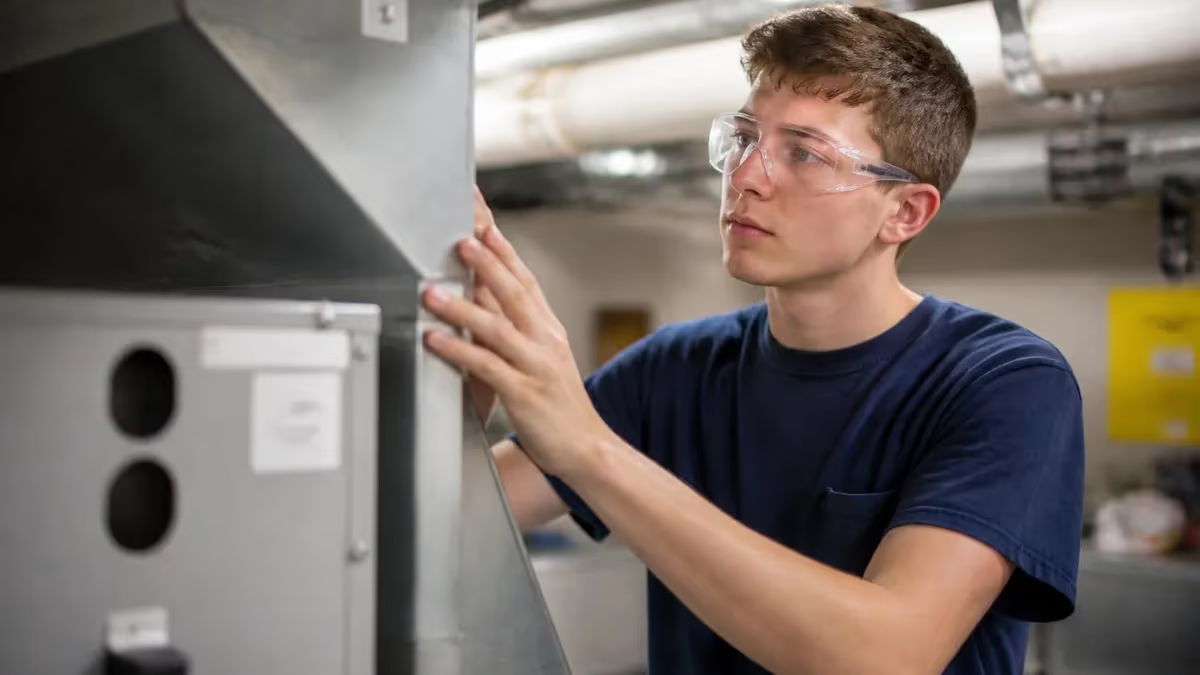
Understanding hvac system design is the foundation of every successful heating, ventilation, and air conditioning project, whether you are working on a single-family home, a multistory office building, or an industrial facility. The design process determines how effectively a system will maintain comfort, manage indoor air quality, and operate efficiently over decades of use. Getting the design right from the start prevents costly retrofits, reduces energy waste, and ensures occupant satisfaction throughout the life of the building.
At its core, HVAC system design is an engineering discipline that balances thermal loads, airflow requirements, equipment capacities, and building characteristics into a coherent, code-compliant solution. Designers must account for local climate data, building orientation, occupancy patterns, internal heat gains from lighting and equipment, and the specific comfort expectations of the people who will use the space. No two buildings are identical, which means no two HVAC designs should be identical either.
The design process typically begins with a thorough Manual J load calculation, which quantifies how much heating and cooling the building actually needs under peak conditions. Oversizing equipment is one of the most common and damaging mistakes in HVAC design — an oversized system cycles on and off too frequently, fails to dehumidify properly, wears out faster, and wastes energy. Accurate load calculations are non-negotiable for any quality design.
Once loads are established, designers select the most appropriate system type. Options range from split systems and packaged units to variable refrigerant flow (VRF) systems, chilled water plants, geothermal heat pumps, and dedicated outdoor air systems (DOAS). Each system type has distinct advantages depending on building size, zoning requirements, budget constraints, and the owner's long-term energy goals. A skilled HVAC designer evaluates all these factors before committing to a system architecture.
Ductwork design is another critical component, governing how conditioned air is distributed throughout the building. Poorly designed duct systems create pressure imbalances, hot and cold spots, excessive noise, and energy losses that undermine even the best equipment selections. Proper duct sizing, sealing, and insulation are essential elements of any complete HVAC design. Manual D calculations guide residential duct design, while commercial projects rely on ASHRAE duct design methods.
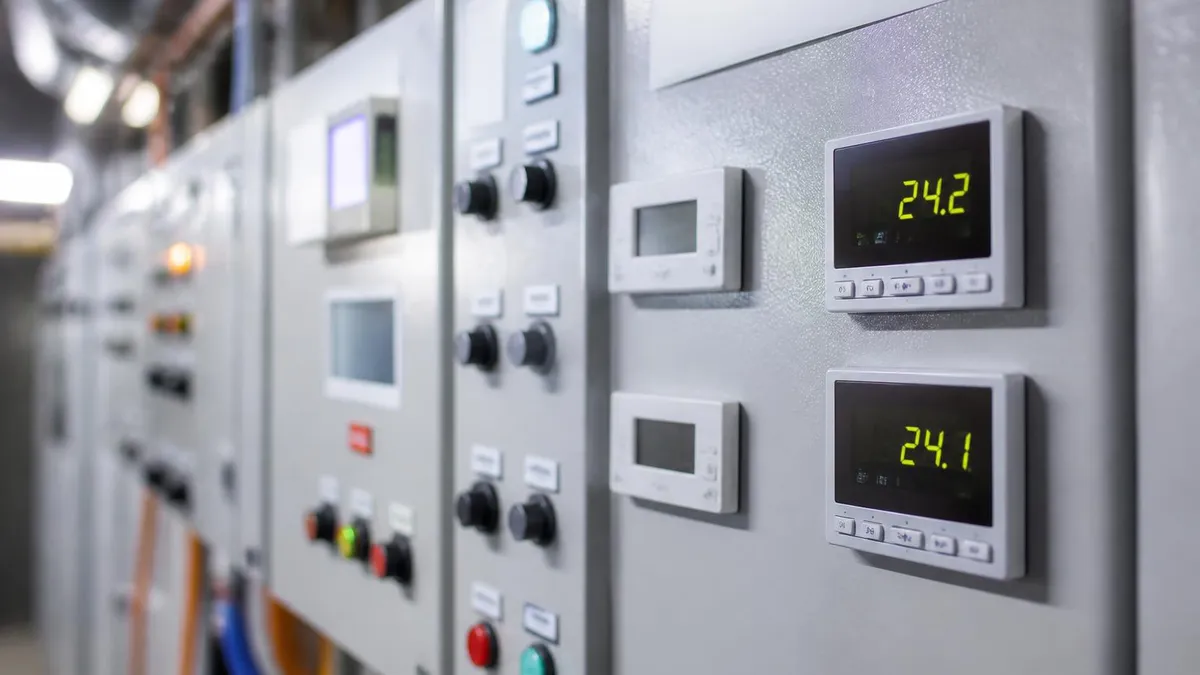
Controls and automation have become increasingly important in modern HVAC design. Smart thermostats, building automation systems (BAS), variable-speed drives, and demand-controlled ventilation all contribute to systems that adapt dynamically to changing conditions rather than running at fixed setpoints. These technologies can reduce energy consumption by 20 to 40 percent compared to conventional fixed-speed systems, making them a central consideration in any new design or major retrofit project.
This guide walks through every major aspect of HVAC system design — from the initial load analysis and system selection through ductwork sizing, equipment specifications, controls integration, and commissioning. Whether you are studying for an HVAC certification exam or approaching your first real-world design project, understanding these principles will sharpen your technical judgment and help you deliver systems that perform reliably for years to come.
HVAC System Design by the Numbers
The HVAC System Design Process Step by Step
Site and Building Analysis
Load Calculation
System Type Selection
Equipment Sizing and Selection
Ductwork and Piping Design
Controls, Commissioning, and Documentation
Selecting the right system type is arguably the most consequential decision in the entire HVAC design process. The wrong system architecture can saddle a building owner with decades of high operating costs, persistent comfort complaints, and maintenance headaches that no amount of fine-tuning can fully resolve. Understanding the characteristics, advantages, and limitations of each major system type is therefore essential knowledge for any HVAC professional or serious student of the field.
Split systems remain the dominant choice for residential applications and smaller commercial buildings. They consist of an outdoor condensing unit paired with an indoor air handler or furnace, connected by refrigerant lines and a duct system. Modern split systems are available in efficiency ratings up to SEER2 29 and include variable-speed compressors and communicating controls that dramatically improve both comfort and energy performance compared to single-stage equipment from even ten years ago. Their relatively low first cost and widespread availability of service technicians make them a practical default for most projects under about 5,000 square feet.
Variable refrigerant flow systems have transformed commercial HVAC design over the past two decades. VRF systems use inverter-driven compressors to modulate refrigerant flow precisely to meet the instantaneous demand of each indoor unit in the building. Because a large office building may have perimeter zones calling for heating while interior zones simultaneously require cooling, VRF heat recovery systems can transfer heat from one zone to another, achieving effective COPs well above 4.0. This simultaneous heating and cooling capability makes VRF particularly attractive for mixed-use buildings with diverse internal load profiles.
Chilled water systems remain the standard for large commercial and institutional buildings above roughly 150,000 square feet. A central plant houses water-cooled or air-cooled chillers that produce chilled water distributed throughout the building to air handling units and fan coil units. Boilers or heat exchangers supply hot water for heating. Chilled water systems offer excellent flexibility for future reconfigurations and support sophisticated optimization strategies such as chiller sequencing, thermal storage, and waterside economizing that can cut annual energy costs significantly compared to direct expansion alternatives.
Geothermal heat pump systems represent a high-efficiency option that leverages stable ground temperatures to achieve heating efficiencies of 300 to 500 percent under favorable conditions. While the upfront cost of ground loop installation is substantial — typically $15,000 to $30,000 or more for a residential system — the long-term energy savings and federal tax incentives can make the economics compelling, especially in climates with both significant heating and cooling loads. HVAC designers working in those climates should include geothermal in every feasibility analysis.
Dedicated outdoor air systems represent a growing design philosophy that decouples ventilation from sensible cooling, delivering precisely controlled, conditioned fresh air to each zone while separate sensible cooling equipment handles the space load. DOAS designs often use energy recovery ventilators to pre-condition incoming outdoor air using the energy in the exhaust stream, dramatically reducing the ventilation load on the cooling plant. This approach aligns naturally with demand-controlled ventilation using CO2 sensors and supports excellent indoor air quality without the humidity and control compromises that occur when ventilation and cooling are combined in a conventional mixed-air system.
Hybrid systems that pair a heat pump with a gas furnace have gained significant market share as designers seek to balance the high efficiency of heat pump operation with the reliable heating capacity of gas combustion during extreme cold snaps. Modern dual-fuel systems use sophisticated controls that automatically switch between the heat pump and the furnace based on outdoor temperature and utility rate signals, optimizing both comfort and cost across the full range of operating conditions. For climates that experience occasional very cold winters but predominantly mild weather, hybrid systems often deliver the best combination of efficiency and reliability.
HVAC System Design: Key Technical Areas
Duct system design begins with calculating the required airflow for each room or zone based on the heating and cooling loads. Residential designers use Manual D, which establishes friction rate targets and sizes each duct segment to deliver the correct CFM with acceptable pressure drop. Commercial designers typically use the equal-friction method, sizing main trunk ducts first and then branching laterals to maintain consistent friction rates throughout the system. Proper duct sizing prevents the velocity noise and airflow imbalances that undermine occupant comfort.
Duct leakage is a major source of energy loss in both residential and commercial buildings. Studies by Lawrence Berkeley National Laboratory found that commercial duct systems can lose 10 to 30 percent of conditioned air through leaks before it reaches occupied spaces. Specifying duct sealing to SMACNA standards, requiring mastic or UL-181-listed tape at all joints, and commissioning duct leakage tests before occupancy are essential design and specification requirements. In California and several other states, duct leakage testing is mandatory under the energy code for new residential construction.

Centralized vs. Decentralized HVAC System Design
- +Centralized systems allow sophisticated optimization and energy management from a single control point
- +Chilled water and hot water plants support economies of scale in equipment efficiency
- +Central systems simplify maintenance by concentrating major equipment in accessible mechanical rooms
- +Redundancy can be built into central plants to provide backup capacity if one unit fails
- +Central systems integrate well with thermal energy storage for peak demand management
- +Building automation systems can monitor and optimize the entire plant from a single interface
- −Centralized plants require significant mechanical room space that reduces rentable square footage
- −Distribution losses in long duct and pipe runs reduce system efficiency despite high plant efficiency
- −Central systems have high first costs that may not be justified for smaller buildings
- −A single point of failure at the central plant can affect the entire building simultaneously
- −Decentralized systems allow individual tenant metering and billing without complex submetering systems
- −Zone-level VRF or split systems can be more energy efficient in buildings with diverse occupancy patterns
HVAC System Design Quality Checklist
- ✓Complete a full Manual J or ASHRAE load calculation — never rely on rules of thumb alone for equipment sizing.
- ✓Verify that selected equipment capacity matches calculated loads within plus or minus 15 percent.
- ✓Size all duct segments using Manual D or equal-friction method and document design airflows for each zone.
- ✓Specify duct sealing requirements and require post-installation duct leakage testing before occupancy.
- ✓Calculate minimum outdoor air requirements per ASHRAE 62.1 and size the outdoor air intake accordingly.
- ✓Select filtration at MERV 13 or higher for commercial applications to support good indoor air quality.
- ✓Confirm that all equipment meets or exceeds applicable ASHRAE 90.1 or IECC minimum efficiency requirements.
- ✓Specify variable-speed drives on fans and pumps over 5 horsepower to reduce part-load energy consumption.
- ✓Include a commissioning plan in the contract documents and require functional performance testing before occupancy.
- ✓Prepare record drawings and a sequence of operations narrative for the building owner and maintenance team.
Oversizing Is the #1 HVAC Design Mistake
Studies consistently show that residential HVAC equipment is oversized by 50 to 100 percent in a significant portion of US homes. Oversized equipment short-cycles, fails to control humidity, creates temperature swings, and wears out faster than correctly sized equipment. Always base equipment selection on completed load calculations, not rough rules of thumb or the largest unit that fits the budget.
Energy efficiency is no longer an optional add-on in HVAC system design — it is a core requirement driven by building energy codes, owner cost expectations, and increasingly by decarbonization commitments at the corporate and municipal level. Understanding how to design for efficiency means knowing which strategies deliver the greatest savings per dollar invested and how to integrate those strategies into a coherent system architecture rather than bolting on disconnected measures after the basic design is set.
The most impactful energy efficiency measure in any HVAC design is right-sizing equipment through accurate load calculations. An oversized system wastes energy in two ways: it runs shorter cycles that are inherently less efficient due to startup and shutdown losses, and it often fails to modulate down to match the mild weather conditions that dominate annual operating hours.
Conversely, equipment with two-stage or variable-capacity compressors can run at partial load for extended periods, maintaining tighter temperature and humidity control while consuming 30 to 50 percent less energy than single-stage alternatives during those mild-weather hours that represent the majority of the cooling season.
Building envelope performance directly determines HVAC load and must be considered as part of the integrated design process rather than treated as someone else's problem. A well-insulated, air-sealed building with low-solar-gain windows requires dramatically less HVAC capacity than the same building with poor envelope performance. HVAC designers who engage early in the design process can influence envelope decisions that reduce equipment costs enough to offset the investment in better insulation — a classic case where integrated design creates value that siloed design destroys.
Energy recovery ventilation captures 60 to 85 percent of the energy in exhaust air and uses it to precondition incoming outdoor air, dramatically reducing the ventilation load on cooling and heating equipment. Total energy recovery (enthalpy) wheels transfer both sensible heat and moisture, making them ideal for humid climates where latent cooling loads are significant. Sensible-only heat exchangers work well in dry climates. Specifying energy recovery is one of the highest-return investments available in commercial HVAC design, with simple paybacks of two to five years in most applications.
Demand-controlled ventilation uses carbon dioxide sensors to modulate outdoor airflow in proportion to actual occupancy, reducing ventilation energy by 30 to 60 percent in spaces with variable occupancy such as conference rooms, auditoriums, and retail spaces. ASHRAE 62.1 explicitly permits and describes DCV as a compliance pathway, and ASHRAE 90.1 requires it in spaces over a certain occupancy density. Specifying well-located CO2 sensors and ensuring that the BAS is properly programmed to respond to those signals are both essential for DCV to deliver its promised savings.
Economizer cycles use outdoor air directly for cooling when conditions are favorable — typically when outdoor air is cooler and drier than the return air. Properly designed and commissioned air-side economizers can eliminate mechanical cooling for hundreds of hours per year in moderate climates, reducing chiller or compressor runtime and extending equipment life. ASHRAE 90.1 requires economizers on most commercial HVAC units above a specified size, and the specific control logic, high-limit shutoff settings, and damper actuator specifications all matter for reliable economizer performance in the field.
High-performance lighting design is also relevant to HVAC designers because lighting consumes energy and generates heat that becomes a cooling load. LED lighting systems produce roughly 75 percent less heat than the incandescent or fluorescent fixtures they replace, and that reduced heat gain translates directly into lower cooling loads and smaller HVAC equipment. Coordinating with the lighting designer early in the project to establish accurate lighting power densities used in the load calculation is a simple step that improves design accuracy and supports more right-sized equipment selection.
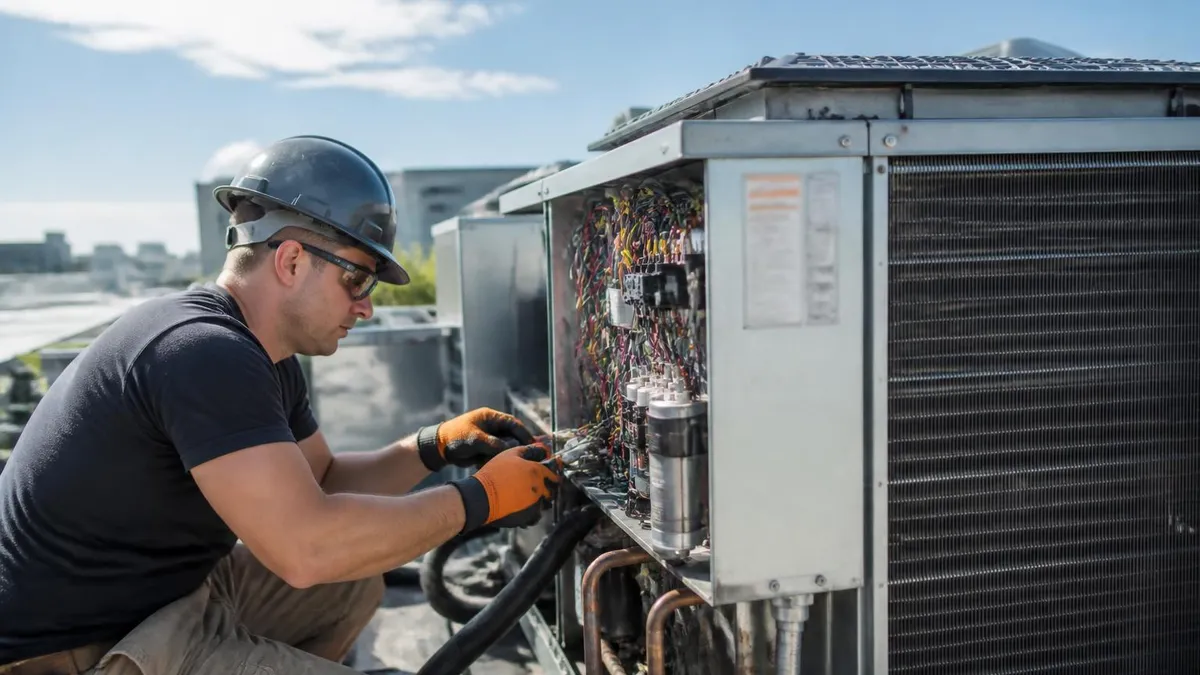
ASHRAE 90.1 and the International Energy Conservation Code (IECC) set mandatory minimum efficiency requirements for HVAC equipment and systems. Many jurisdictions have adopted the 2021 or 2024 editions, which include stricter requirements for heat pump water heaters, VRF systems, and duct insulation. Always verify which code edition your jurisdiction has adopted before finalizing equipment selections — specifying non-compliant equipment can delay permit approval and require costly redesign.
Commissioning is the structured process of verifying that every component of an HVAC system is installed correctly, calibrated properly, and operating in accordance with the design intent. It is not an inspection — it is a performance verification process that involves functional testing of equipment, controls sequences, safety devices, and integrated system responses under real operating conditions. Building commissioning has been shown consistently to identify deficiencies that, if left uncorrected, would increase energy consumption by 10 to 20 percent and generate persistent occupant complaints throughout the system's service life.
The commissioning process begins during the design phase with the development of an Owner's Project Requirements (OPR) document that defines the performance goals the completed system must achieve. The design team then prepares a Basis of Design (BOD) explaining how their design decisions meet those requirements. Having OPR and BOD documents in place before construction begins gives the commissioning authority a clear standard against which to measure system performance and gives contractors unambiguous requirements to meet during installation.
Functional performance testing is the heart of commissioning. The commissioning authority witnesses and documents tests of every major piece of equipment and control sequence, starting with pre-functional checklists that verify physical installation quality and progressing to full functional tests that exercise each system through its complete range of operating modes. Economizer testing, freeze protection testing, smoke control testing, and demand response simulations are all examples of functional tests that reveal deficiencies that visual inspection alone would miss.
Retro-commissioning applies the same methodology to existing buildings that have never been formally commissioned or whose systems have drifted out of optimal operation over time. Studies by the Lawrence Berkeley National Laboratory found that retro-commissioning delivers median energy savings of about 16 percent with a median payback period of 1.1 years — one of the highest-return energy efficiency investments available in the built environment. For building owners looking to reduce operating costs without major capital investment, retro-commissioning is typically the first recommendation any qualified energy engineer should make.
Controls documentation is a frequently neglected but critically important aspect of HVAC system delivery. The sequence of operations — a narrative description of how the control system responds to temperature sensors, occupancy signals, time schedules, and equipment status — should be developed by the HVAC designer and refined in coordination with the controls contractor.
When sequences of operation are clear, unambiguous, and fully documented, building operators can diagnose problems, optimize setpoints, and train new staff effectively. When sequences are absent or buried in contractor submittals that no one reads, the building typically runs on default factory settings that were never optimized for the specific application.
Ongoing monitoring and measurement are the long-term counterparts to commissioning. Continuous commissioning platforms that ingest BAS data and apply fault detection algorithms can identify degrading performance — a failing actuator, a stuck damper, a drifting sensor — before it becomes a major problem. Energy dashboards that track consumption against benchmarks give building operators visibility into performance trends that would otherwise be invisible until the utility bill arrives. These monitoring tools are increasingly affordable and should be specified as a standard component of any well-designed HVAC system.
Training building operators is the final step in successful HVAC system delivery and one of the most commonly skipped. Even a perfectly designed and commissioned system will underperform if the people responsible for its operation do not understand how it works and why it was designed the way it was. A structured training program that covers system overview, control interface operation, routine maintenance procedures, and common troubleshooting steps ensures that the investment in quality design is protected throughout the system's operational life and reduces the likelihood that well-intentioned but uninformed changes will undo the benefits of careful engineering.
For anyone studying HVAC system design — whether preparing for the NATE certification, the EPA 608 exam, a state licensing test, or an engineering PE exam — developing a systematic approach to learning the material pays far greater dividends than memorizing isolated facts. HVAC design integrates thermodynamics, fluid mechanics, heat transfer, electrical systems, and building science into a single discipline, and understanding how these subjects connect is what separates competent technicians from truly skilled designers and engineers.
Start with the fundamentals of psychrometrics, the study of moist air properties that underlies everything from load calculations to duct design to equipment selection. Being able to read a psychrometric chart fluently — identifying dry-bulb temperature, wet-bulb temperature, humidity ratio, dew point, and enthalpy, and tracing what happens to air as it passes through a cooling coil or mixing box — is a core skill that exams test repeatedly and that real-world HVAC problems demand constantly. Invest time here early and the rest of the curriculum becomes significantly easier.
Practice load calculations using both Manual J software and hand calculations for simple residential cases. Understanding what drives each component of the load — window area and SHGC, wall and ceiling insulation levels, infiltration rates, occupancy — builds intuition that makes you a better designer and a more effective reviewer of calculations produced by others. When a calculated load looks unreasonably high or low, experience with the underlying components lets you quickly identify which input is likely wrong rather than accepting the software output uncritically.
Study equipment performance data directly from manufacturer catalogs rather than relying solely on textbook abstractions. Real equipment has performance that varies with entering conditions, airflow, and refrigerant charge. A 3-ton nominal cooling unit might deliver 34,000 BTU/h at 75°F indoor wet-bulb and 95°F outdoor dry-bulb but only 28,000 BTU/h at 80°F indoor wet-bulb and 105°F outdoor — a difference that matters enormously in Phoenix but is irrelevant in Seattle. Certification exams include questions that require you to read and interpret manufacturer performance tables, so practicing with real catalog data is both educationally valuable and exam-relevant.
Focus special attention on electrical controls and safety circuits, which are heavily tested on most HVAC certification exams and are essential knowledge for any technician who will work on real equipment. Understanding how a defrost control board sequences a heat pump through a defrost cycle, how a low-pressure switch protects a compressor during refrigerant loss, and how a high-limit thermostat in a furnace protects against overheating are all topics that appear on exams and arise frequently in real service calls. The logic behind these circuits is consistent across manufacturers even when the specific components differ.
Work through practice questions systematically and use wrong answers as learning opportunities rather than frustrations. When you miss a question about Manual D friction rate targets or ASHRAE 62.1 ventilation requirements, go back to the source material and understand not just the correct answer but why the other choices were wrong. This active engagement with errors builds the deep conceptual understanding that multiple-choice exams reward and that real design work requires. Passive re-reading of notes rarely produces the retention that deliberate practice with feedback achieves.
Finally, seek out real-world exposure whenever possible. Visit mechanical rooms in commercial buildings, shadow experienced technicians on service calls, and study the drawings for projects you encounter professionally. The gap between textbook HVAC knowledge and field competence is bridged by observation and hands-on experience. Every system you examine teaches you something about how designs work in practice — and equally importantly, how they fail — that no amount of classroom or exam preparation can fully replicate. The combination of solid theoretical foundation and real-world observation is what produces the kind of judgment that distinguishes outstanding HVAC professionals.
HVAC Questions and Answers

Ameristar HVAC: Complete Guide to Units, Reliability, Costs, and Buyer Considerations
Residential HVAC: Systems, Selection, and Maintenance Basics

HVAC Industry Trends 2026: The Complete Guide to Heat Pumps, Refrigerant Changes, Smart Controls, and Workforce Shifts Reshaping Heating and Cooling
HVAC Advertising: The Complete Playbook for Generating Leads, Booking Calls, and Growing Your Heating and Cooling Business
HVAC License: State Requirements, EPA 608 and Career Path Guide
About the Author

NATE Certified HVAC Technician & Licensing Exam Trainer
Universal Technical InstituteMike Johnson is a NATE-certified HVAC technician and EPA 608 universal-certified refrigerant handler with a Bachelor of Science in HVAC/R Technology. He has 19 years of commercial and residential HVAC installation and service experience and specializes in preparing technicians for NATE certification, EPA 608, A2L refrigerant safety, and state HVAC contractor licensing examinations.