
HVAC Certification Requirements: The Complete 2026 September Guide to Licensing, Exams, and Career Paths
Master HVAC certification requirements in 2026 September. EPA 608, state licenses, exams explained. Start your career today! 🎓
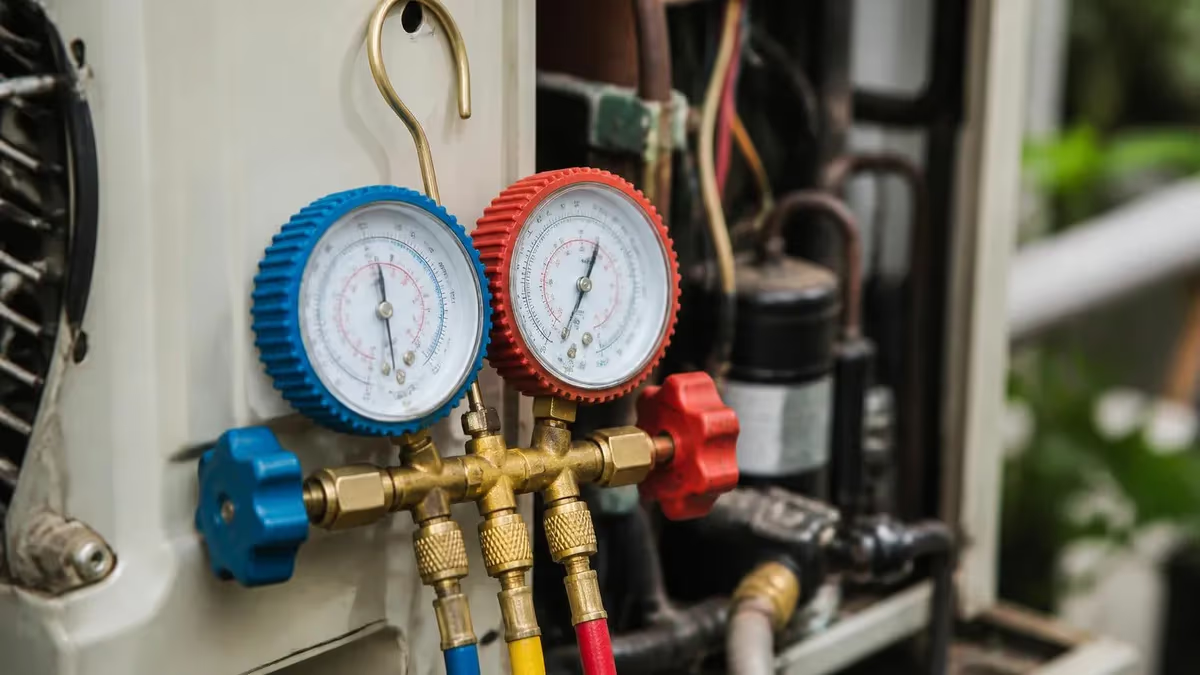
Understanding HVAC certification requirements is the first and most important step toward building a stable, well-paying career in the heating, ventilation, air conditioning, and refrigeration trades. Whether you are just leaving high school, transitioning from another industry, or looking to advance from an apprentice role to a licensed contractor, the certification landscape can feel confusing at first glance. Federal rules, state-specific licensing boards, and voluntary industry credentials all coexist in a system that rewards preparation and penalizes shortcuts. This guide breaks every layer down so you know exactly what to study, what to apply for, and in what order.
At the federal level, the Environmental Protection Agency mandates that any technician who purchases, handles, or reclaims regulated refrigerants must hold an EPA Section 608 certification. This rule applies nationwide regardless of which state you work in, making it the single non-negotiable credential every HVAC professional must earn before touching refrigerant lines.
The exam is administered by EPA-approved testing organizations and covers four certification types: Type I for small appliances, Type II for high-pressure systems, Type III for low-pressure systems, and Universal, which encompasses all three. Most employers expect new hires to arrive with at least a Universal 608 card already in hand.
Beyond EPA 608, every state in the US maintains its own licensing framework for HVAC contractors and journeyman technicians. Some states require a state-issued journeyman license before you can work unsupervised on residential equipment; others require only a contractor license held by the business owner while allowing unlicensed helpers to work under supervision.
Texas, Florida, California, and North Carolina are among the states with the most detailed tiered licensing structures, while a handful of states still delegate licensing authority entirely to individual counties and municipalities. Before committing to a training program, always verify the specific requirements for the state where you plan to work.
Industry-recognized voluntary certifications add significant value on top of mandatory licenses. NATE — North American Technician Excellence — is the most widely respected third-party credential in the residential and light commercial HVAC sector. HVAC Excellence and RSES (Refrigerating Engineers and Technicians Association) credentials are also well-regarded, particularly in commercial and industrial settings. Employers routinely pay higher starting wages to candidates who arrive with NATE certification, and many utility companies require NATE-certified technicians to perform work that qualifies for energy-efficiency rebate programs. These voluntary credentials signal professional commitment and demonstrate competency in specific equipment categories.
Formal education dramatically accelerates the certification process. Community colleges and vocational schools offer certificate and associate degree programs that typically run six months to two years. These programs cover refrigeration theory, electrical fundamentals, load calculations, duct design, and hands-on equipment labs.
Many programs also include EPA 608 exam prep as part of the curriculum, allowing students to test before graduation. If you want the fastest path to employability, a 12-month certificate program at an accredited trade school combined with a NATE exam is often the most efficient route. For a comprehensive look at school options, explore our resource on hvac certification requirements.
Apprenticeship programs offer an alternative path that combines paid on-the-job training with classroom instruction over four to five years. Programs sponsored by ACCA (Air Conditioning Contractors of America) or local HVAC union affiliates typically follow a structured curriculum that mirrors what licensing exams test. Apprentices earn wages from day one, which makes this path financially attractive compared to full-time schooling. The tradeoff is time — a union apprenticeship is a five-year commitment — but graduates emerge with both their hours logged for journeyman licensure and a robust professional network already in place.
The financial payoff for earning HVAC certifications is substantial and well-documented by federal labor data. The Bureau of Labor Statistics reported a 2025 median annual wage of approximately $57,300 for HVAC technicians, with the top ten percent earning more than $85,000 per year. Licensed contractors who own their businesses frequently exceed six figures once their reputation and customer base are established.
The BLS also projects 9 percent employment growth for HVAC technicians through 2033, a rate significantly faster than the average for all occupations. Every certification you earn increases your earning potential and broadens the scope of work you are legally permitted to perform.
HVAC Certification by the Numbers
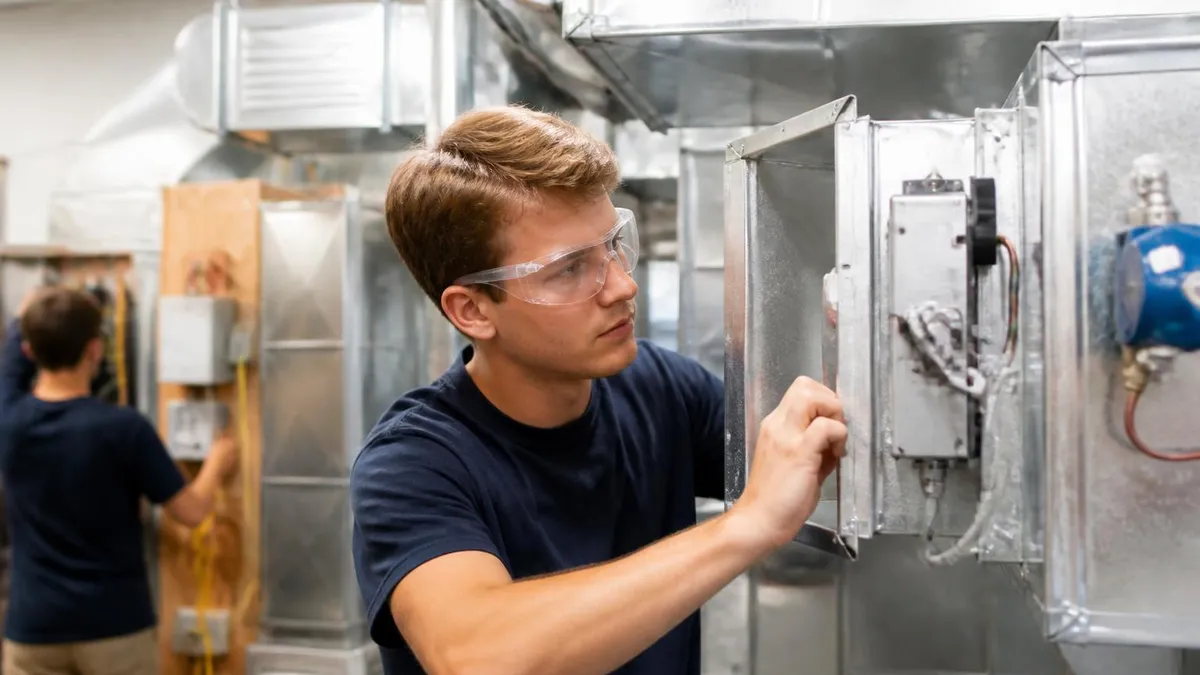
Major HVAC Certification Types Explained
Federally mandated certification for anyone handling regulated refrigerants. Four types — I, II, III, and Universal — covering small appliances, high-pressure systems, low-pressure systems, and all categories combined. Required nationwide without exception.
North American Technician Excellence credential is the industry's most recognized voluntary exam. Specialty areas include air conditioning, heat pumps, gas furnaces, and commercial refrigeration. Many employers prefer or require NATE-certified applicants for field positions.
Required by most states before a technician can work independently without contractor supervision. Eligibility typically requires 2–4 years of documented field experience plus a passing score on a state-administered written exam covering codes and systems.
Allows an individual or business to pull permits and legally contract HVAC work directly with customers. Requirements usually include journeyman experience, a business license, proof of insurance, and a passing score on a business and law examination.
Specialty credentials valued in commercial and industrial HVAC sectors. HVAC Excellence covers installation and service categories. RSES focuses on refrigeration engineering theory. Both are respected by commercial building owners and facilities management firms.
State licensing requirements for HVAC technicians vary enormously across the fifty states, and failing to understand your home state's rules before starting a training program is one of the most common and costly mistakes new entrants make. Florida, for example, operates a two-tier contractor licensing system administered by the Department of Business and Professional Regulation.
The Class A license covers unlimited commercial and residential HVAC work statewide, while the Class B license restricts the licensee to systems below a certain tonnage threshold. Both tiers require passing a technical trade exam plus a business and finance exam, and applicants must document a minimum of four years of verifiable field experience before they are even eligible to apply.
California approaches HVAC licensing through its Contractors State License Board, which issues a C-20 Warm-Air Heating, Ventilating and Air-Conditioning license. California also requires HVAC technicians performing work on refrigeration systems to comply with Title 24 energy code provisions and South Coast Air Quality Management District rules in the Los Angeles basin, adding a regulatory layer that doesn't exist in most other states. Texas, meanwhile, licenses HVAC technicians through the Texas Department of Licensing and Regulation and requires technicians to renew their license every year with documented continuing education hours, keeping working professionals continuously updated on code changes and new technologies.
Some states have reciprocity agreements that allow a licensed technician from one state to obtain licensure in a second state without retaking the full examination. Louisiana and Mississippi, for example, have historically offered reciprocal arrangements for HVAC contractors. However, reciprocity agreements change frequently, and you should always verify current status directly with the target state's licensing board rather than relying on secondhand information. Moving to a new state without verifying license reciprocity can leave you in a situation where you are temporarily unable to work legally while you wait months for a new license application to process.
The North American Technician Excellence certification process begins with an HVAC-Ready exam for students still in training, transitions to a Core exam covering universal fundamentals, and then branches into specialty exams in categories such as air conditioning, heat pumps, gas furnaces, oil-fired equipment, and commercial refrigeration. Each specialty exam tests real-world diagnostic and installation knowledge rather than pure theory, which is why employers treat NATE credentials as a meaningful signal of practical competency. Passing even one NATE specialty exam demonstrates that a technician can diagnose common failures accurately and service equipment to manufacturer specifications.
The HVAC Excellence organization offers two credential tiers: the Professional Level credential for technicians with field experience and the Master Specialist designation for those who have demonstrated mastery across multiple system types. RSES, the Refrigerating Engineers and Technicians Association, operates a graduated member program leading to the Certified Refrigeration Service Engineer designation, which is particularly valuable for technicians working on large commercial chiller plants, industrial cold storage, and food service refrigeration systems. These credentials require multi-part examinations and, in some cases, documented project portfolios that verify hands-on competency at a granular level.
Continuing education is a critical component of maintaining most HVAC credentials. States like Texas, Virginia, and Maryland require licensed contractors to complete anywhere from eight to sixteen hours of approved continuing education per renewal cycle, covering topics such as updated mechanical codes, new refrigerant regulations under the AIM Act, and emerging technologies like variable refrigerant flow systems and connected smart thermostats.
Keeping your credentials current is not merely a bureaucratic formality — refrigerant regulations in particular have shifted significantly in recent years as the EPA phases down high-GWP refrigerants in favor of lower-impact alternatives, and technicians who fall behind on these changes face real liability exposure on the job.
Understanding state-specific code adoption timelines is especially important right now. Many states are in the process of adopting the 2021 International Mechanical Code and 2021 International Fuel Gas Code, which include meaningful changes to equipment clearances, combustion air requirements, and venting specifications.
Technicians who studied for their journeyman exam three or four years ago may find that installation practices they learned as standard are now flagged as code violations during inspection. Annual code update seminars, offered by many state HVAC associations at low or no cost, are one of the most efficient ways to stay current without investing in a full recertification cycle.
HVAC Training Pathways: Which Route Is Right for You?
Vocational and trade school HVAC programs typically run six to twenty-four months and cover refrigeration theory, electrical fundamentals, load calculations, duct design, and hands-on lab work with real equipment. Tuition ranges from $5,000 to $20,000 depending on the school and program length. Many programs build EPA 608 exam preparation directly into the curriculum, allowing students to test for federal certification before or shortly after graduation, giving them a significant head start in the job market.
The primary advantage of the trade school route is speed. A well-structured twelve-month certificate program can take a student with no HVAC background to EPA 608 certified and NATE-ready in a single year. Community colleges often offer the same curriculum at lower tuition than private vocational schools, and some community college programs qualify for federal Pell Grants. The tradeoff compared to apprenticeship is that trade school students pay tuition while learning rather than earning wages, and the lab time — while valuable — cannot fully replicate the variety of real-world job sites an apprentice encounters.
Pursuing HVAC Certification: Benefits and Challenges
- +Above-average and growing job security — BLS projects 9% growth through 2033
- +Strong earning potential, with top technicians exceeding $85,000 annually
- +EPA 608 Universal certification opens doors to all refrigerant-related work nationwide
- +NATE certification commands wage premiums at most residential HVAC employers
- +Multiple credential pathways allow flexibility — school, apprenticeship, or military transition
- +Licensed contractors can own their own business and set their own rates
- −State licensing rules vary widely and can delay career transitions when moving states
- −EPA 608 and journeyman exams require dedicated study time that working adults may struggle to find
- −Trade school tuition can reach $20,000 for longer programs without employer sponsorship
- −Physically demanding work — heavy lifting, confined spaces, and outdoor exposure year-round
- −Continuing education requirements add cost and time to license renewal cycles
- −Refrigerant regulations are evolving rapidly under the AIM Act, requiring ongoing retraining
HVAC Certification Requirements Checklist: Complete These Steps
- ✓Verify your target state's journeyman and contractor license requirements on the official licensing board website.
- ✓Enroll in an accredited HVAC trade school program or apply for a union or non-union apprenticeship.
- ✓Complete EPA Section 608 exam prep and schedule your test at an EPA-approved testing site.
- ✓Pass the EPA 608 Universal exam to unlock access to all refrigerant purchase and handling privileges.
- ✓Log and document all on-the-job training hours using a format acceptable to your state licensing board.
- ✓Register for the NATE Core exam after completing your foundational HVAC training coursework.
- ✓Choose and pass at least one NATE specialty exam — Air Conditioning is the most widely valued starting point.
- ✓Apply for your state journeyman license once you meet the minimum experience hour requirements.
- ✓Obtain general liability insurance and a contractor bond before applying for a contractor license.
- ✓Complete required continuing education hours before each license renewal deadline to stay in good standing.
Universal EPA 608 Certification Is Non-Negotiable
Every HVAC technician in the United States must hold EPA Section 608 certification before purchasing or handling regulated refrigerants — no exceptions. Employers cannot legally assign refrigerant work to uncertified employees, and violations carry fines up to $44,539 per day per violation. Earn your Universal certification first; everything else can follow on a timeline that suits your career path.
The financial investment in HVAC certification is real, but it is also one of the most predictable and manageable educational costs in any skilled trade. EPA 608 exam fees typically range from $20 to $60 depending on the testing provider, making it among the least expensive professional certifications in any technical field.
NATE exam fees run approximately $130 to $160 per attempt, with discounts available for members of ACCA or other industry associations. State journeyman and contractor license application fees vary widely — from under $50 in some states to several hundred dollars in others — but remain modest relative to the lifetime earnings increase those credentials generate.
Trade school tuition is the largest single upfront cost in the certification journey. Certificate programs at community colleges commonly run $3,000 to $8,000 for the full program, while private vocational schools may charge $10,000 to $20,000 for comparable training. However, federal financial aid including Pell Grants is available at accredited community colleges, and many employers offer tuition reimbursement for employees pursuing HVAC credentials while working. Some utility companies and equipment manufacturers also sponsor scholarship programs specifically for HVAC students, particularly in regions where technician shortages are creating service backlogs.
The return on investment calculation strongly favors certification. A technician who earns $18 per hour without credentials may jump to $24 to $27 per hour after earning EPA 608 Universal and NATE Air Conditioning certification — a 33 to 50 percent wage increase. Over a thirty-year career, that differential compounds to hundreds of thousands of dollars in additional lifetime earnings. Contractor license holders who establish their own businesses report average gross revenues of $400,000 to $800,000 annually for small solo-to-three-truck operations in competitive metro markets, with net owner income frequently reaching $100,000 to $150,000 after expenses.
Financing options for HVAC training have expanded significantly in recent years. Income Share Agreements, offered by some private trade schools, allow students to pay a percentage of their post-graduation income rather than tuition upfront. Workforce development programs administered through state labor departments often subsidize or fully cover HVAC training for qualifying candidates, particularly in regions with documented labor shortages. Union apprentices are in the most favorable financial position of all — they earn wages from the first week, receive employer-sponsored health insurance, and accumulate pension benefits while completing their certification journey.
Ongoing certification costs after initial credentialing are worth budgeting for. NATE requires technicians to renew their certification every two years by submitting proof of continuing education hours or retesting. The renewal fee is currently $55 for members and $75 for non-members. State license renewals add another layer of fees and CE costs every one to three years.
A realistic annual budget for maintaining a full suite of credentials — EPA 608 (no renewal required once earned), NATE, and one state contractor license — runs approximately $200 to $400 per year including course fees, which most working technicians recover in less than one week of additional billable labor generated by their certified status.
Equipment and tool investments also belong in any honest cost analysis. HVAC technicians are expected to own a personal set of hand tools, and most employers require technicians to supply their own refrigerant recovery equipment, manifold gauges, and digital multimeters. A fully equipped entry-level tool kit runs $1,500 to $3,000, with higher-end refrigerant analyzers and leak detection equipment adding another $500 to $1,500. These costs are generally deductible as business expenses for self-employed contractors, and many employers offer tool allowances or let new hires use company equipment while building their own kit over the first year of employment.
Geographic location plays a significant role in certification cost-effectiveness. Technicians working in high cost-of-living metro areas like San Francisco, New York, or Seattle benefit from wage scales that are 20 to 40 percent higher than national median figures, making the fixed cost of certification even more efficient to recoup.
Technicians in rural markets may find less competition for certified roles and quicker advancement to supervisory positions, partially offsetting lower absolute wages with faster career progression. Research salary data for your specific region using BLS Occupational Employment Statistics before committing to a training investment, so your financial projections are grounded in local reality rather than national averages.
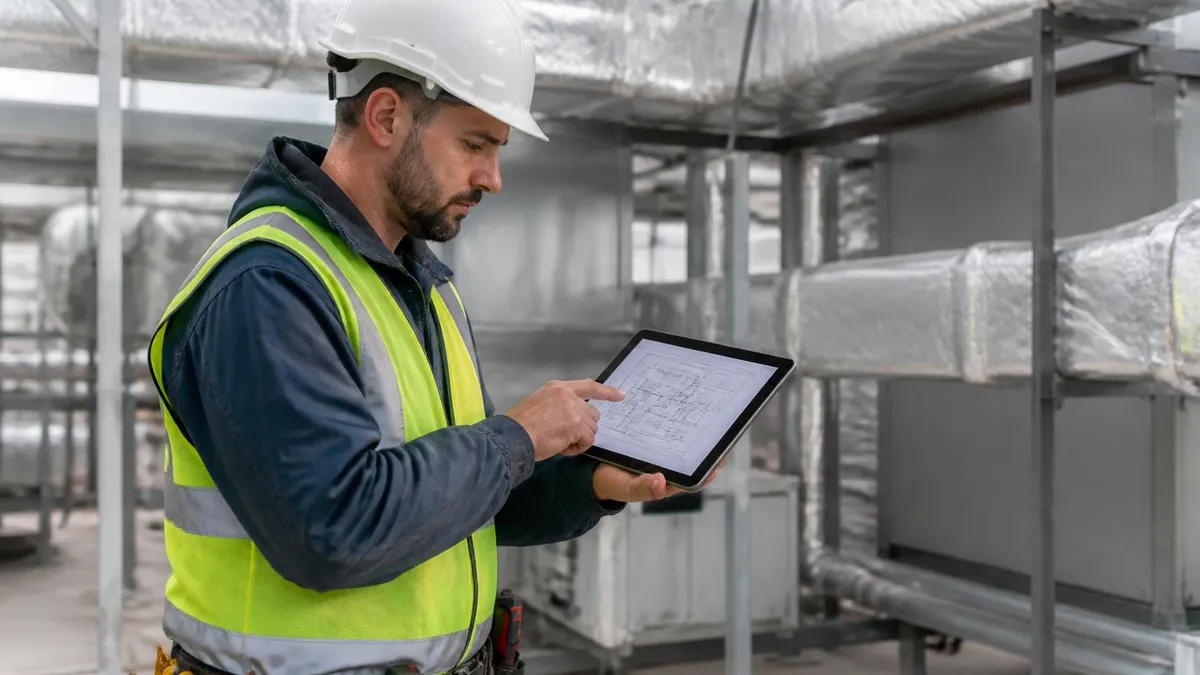
The AIM Act authorizes the EPA to phase down production of high-GWP HFC refrigerants including R-410A, which has been the dominant residential refrigerant for over two decades. Starting January 1, 2025, production and import allowances for R-410A have been reduced, and the EPA is accelerating the transition to lower-GWP alternatives such as R-32 and R-454B. Technicians who are not trained on the new refrigerant types and their handling requirements face both legal risk and equipment damage liability as the transition accelerates through 2026 and beyond.
Advancing from a certified technician to a licensed contractor opens a qualitatively different category of professional opportunities. As a contractor, you can legally pull permits, sign off on installations, and bid commercial projects directly — work that is simply off-limits to uncertified or journeyman-level technicians.
The contractor license examination in most states is divided into two parts: a trade knowledge test covering advanced system design, code compliance, and troubleshooting; and a business and finance test covering contract law, workers' compensation requirements, lien rights, and basic accounting. Preparation for both parts requires a different kind of study than the hands-on diagnostic focus of the journeyman exam.
Commercial HVAC work represents one of the most financially rewarding specializations available to credentialed technicians. Buildings with centralized chiller plants, variable air volume systems, and building automation integration require technicians with advanced training in controls, commissioning, and energy management.
The Building Automation System credential offered through ASHRAE, combined with HVAC journeyman licensure, positions technicians to work on projects where service contracts alone are worth tens of thousands of dollars per building per year. Commercial refrigeration is another high-value niche, with supermarket chains and cold storage operators paying premium rates for certified technicians who can maintain ammonia systems and CO2 transcritical refrigeration plants.
Continuing education in emerging technologies is increasingly a differentiator rather than just a compliance checkbox. Heat pump technology is experiencing a dramatic market expansion driven by state building electrification mandates and Inflation Reduction Act tax credits that make heat pumps financially attractive for residential customers.
Technicians trained on cold-climate heat pumps, variable-speed compressor diagnostics, and integrated heat pump water heater service are commanding higher service rates and receiving job offers in markets where the general technician pool lacks these skills. Investing twelve to twenty hours in a manufacturer-sponsored heat pump training course can meaningfully increase your billable rate within weeks of completing it.
Indoor air quality has similarly emerged as a billable specialty with strong consumer demand. The COVID-19 pandemic accelerated homeowner and building owner awareness of air filtration, UV germicidal irradiation, and ventilation adequacy in ways that have permanently expanded the scope of what customers ask HVAC technicians to evaluate. ASHRAE offers an Indoor Air Quality certificate that covers ventilation standards, contaminant source identification, and measurement protocol — a credential that supports premium pricing for IAQ assessment services. NADCA (National Air Duct Cleaners Association) certification provides similar market positioning for duct cleaning and remediation services.
Building your reputation within the HVAC industry requires intentional effort beyond just accumulating credentials. Joining state and national associations like ACCA, ASHRAE, or PHCC connects you with a peer network that shares technical knowledge, job leads, and business referrals. Many states have active ACCA chapters that host annual conventions, technical workshops, and Young Professionals programs designed for technicians in the first decade of their careers. These networks are also where you learn about apprenticeship committee openings, school advisory board seats, and other volunteer roles that build your professional profile in ways no examination credential can replicate.
Mentorship is an underrated accelerant for HVAC career advancement. Experienced journeymen and contractors who agree to mentor newer technicians consistently report that the teaching relationship deepens their own technical understanding while the mentee benefits from years of practical pattern recognition compressed into direct instruction.
If your employer does not have a formal mentorship program, approach senior technicians proactively and offer to shadow them on complex diagnostic calls. Most experienced technicians are generous with knowledge when a newer colleague demonstrates genuine curiosity and professional seriousness. This kind of informal mentorship, combined with structured credentialing, produces technicians who advance faster than peers who pursue certifications in isolation.
The long-term career horizon for credentialed HVAC professionals is genuinely broad. Options include field service leadership, estimating and project management for commercial contractors, facilities management for hospitals or universities, manufacturer's representative roles, technical training instruction, and independent consulting on energy audits and system optimization. Each of these paths builds directly on the foundational certifications discussed throughout this guide.
The technicians who reach the most rewarding senior roles are almost universally those who treated their early certification investments as the beginning of a continuous learning journey rather than a finish line — and who made a habit of seeking the next credential, the next specialty, and the next technical challenge before their current skill set had fully plateaued.
Practical exam preparation strategy makes a significant difference in first-attempt pass rates for both EPA 608 and NATE certifications. The EPA 608 exam is entirely multiple-choice and heavily weighted toward refrigerant properties, leak detection procedures, recovery and recycling requirements, and proper disposal protocols. Study resources published directly by the EPA and by organizations like ESCO Group provide reliable content alignment with the actual exam. Many experienced technicians recommend taking timed practice exams under realistic conditions at least a week before your scheduled test date, rather than simply reading through study materials passively.
NATE exam preparation benefits from a category-specific approach. The NATE Core exam covers universal topics including electrical theory, refrigeration fundamentals, and airflow principles, and every NATE candidate must pass it before attempting a specialty exam. After passing Core, choose your first specialty based on the type of equipment you will most frequently service in your job — if you work primarily on residential split systems, the Air Conditioning specialty is the logical starting point.
NATE publishes study guides and reference lists for each specialty exam that explicitly state which system standards, equipment tolerances, and diagnostic procedures are testable, making it possible to study efficiently rather than trying to memorize entire textbooks.
Time management during exam preparation is especially challenging for technicians who are working full-time while studying. Block out specific study hours in your calendar the same way you would schedule a service appointment — vague intentions to study whenever time allows almost never result in adequate preparation.
A structured eight-week study plan with four hours per week — two hours of content review and two hours of practice questions — is sufficient for candidates who already have relevant field experience. Candidates studying for their first HVAC certification with no prior background should plan for twelve to sixteen weeks of structured preparation before attempting any proctored examination.
Practice tests are among the most efficient study tools available for HVAC certification exams. Taking practice questions forces active recall rather than passive recognition, which produces measurably better retention and exam performance. Review every question you answer incorrectly immediately after the practice session — understanding why a wrong answer is wrong is more educationally valuable than reviewing questions you already answered correctly. Spaced repetition of missed questions over the following two weeks drives the correct information into long-term memory more reliably than re-reading a chapter the night before your exam.
On exam day, specific tactical habits improve performance independent of how much you studied. Read every question stem completely before looking at the answer choices — many incorrect answers are designed to catch readers who skim and latch onto a partially relevant term without fully understanding what the question is actually asking.
For questions you find difficult, eliminate the clearly wrong answers first, then reason through the remaining options using what you know about the underlying principles. Never leave a multiple-choice question blank — on both EPA 608 and NATE exams, an educated guess carries a 25 to 33 percent chance of being correct, while a blank answer guarantees zero credit.
After passing your certifications, take the time to understand how to properly document and present your credentials to employers. Carry physical or digital copies of your EPA 608 certification card, NATE wallet card, and state license certificate to every job interview.
NATE maintains an online technician verification portal that employers can use to confirm your credential status in real time, which adds credibility when your certification is recent and an employer might otherwise be skeptical. Keep renewal dates in your phone's calendar with reminders set sixty days in advance — missing a renewal deadline forces you to restart portions of the certification process that could have been avoided with simple administrative attention.
Finally, engage with the broader HVAC professional community as you build your credential portfolio. Online forums like HVAC-Talk and the HVAC subreddit connect technicians across experience levels who share diagnostic approaches, code interpretation questions, and career advice. YouTube channels run by working technicians and equipment manufacturers provide practical visual demonstrations of complex system behaviors that static textbook diagrams cannot fully capture.
Regional ACCA chapter events and state HVAC association meetings keep you connected with local contractors who may become future employers, business partners, or referral sources. The certification process is ultimately the beginning of a professional identity, not merely an administrative hurdle — approach it that way from the start and the dividends will compound throughout your entire career.
HVAC Questions and Answers
FCU HVAC: The Complete Guide to Fan Coil Units, How They Work, Where They Excel, and How to Choose the Right System

Finance a New HVAC System: 2026 Loans, 0% APR, and Rebates

HVAC Duct Repair: Common Issues, Costs, and DIY vs Professional

HVAC School -- Programs, Costs, and Career Paths in 2026
HVAC Advertising: The Complete Playbook for Generating Leads, Booking Calls, and Growing Your Heating and Cooling Business
About the Author

NATE Certified HVAC Technician & Licensing Exam Trainer
Universal Technical InstituteMike Johnson is a NATE-certified HVAC technician and EPA 608 universal-certified refrigerant handler with a Bachelor of Science in HVAC/R Technology. He has 19 years of commercial and residential HVAC installation and service experience and specializes in preparing technicians for NATE certification, EPA 608, A2L refrigerant safety, and state HVAC contractor licensing examinations.