
HVAC in Spanish: Complete Terminology Guide for Technicians 2026 October
Master HVAC in Spanish with 200+ key terms for heating, ❓ cooling, ductwork, refrigerants, tools, and safety. Essential bilingual glossary for techs.
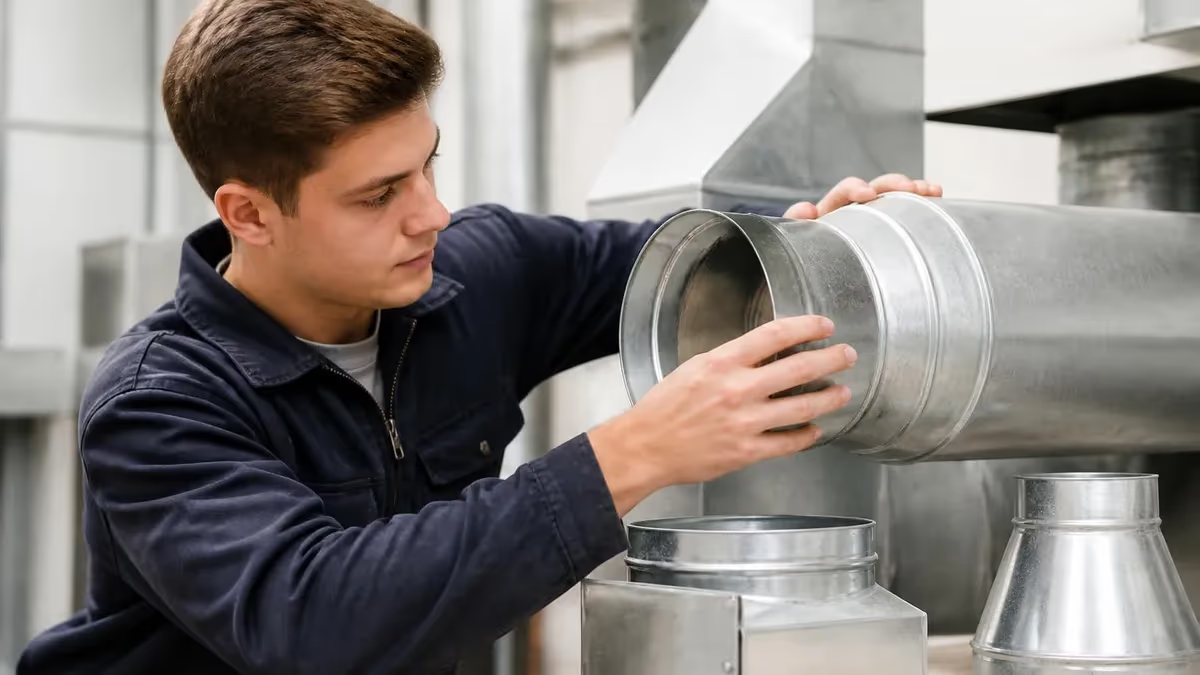
Learning HVAC in Spanish is no longer optional for technicians working across the United States. With nearly 20% of construction trade workers speaking Spanish as their primary language, bilingual communication on the job site is a daily reality. Whether you are an English-speaking technician working alongside Spanish-speaking crews, or a Spanish-speaking professional studying for certification exams written in English, mastering the terminology in both languages directly impacts safety, efficiency, and earning potential.
The HVAC industry uses thousands of specialized terms that do not always translate literally. A "furnace" in English becomes "horno" or "caldera" depending on whether you are discussing a forced-air system or a boiler. "Ductwork" translates as "conductos" or "ductos," while "refrigerant" is "refrigerante." Understanding these distinctions prevents costly mistakes during installations, service calls, and equipment ordering. Misinterpretation of a single term can lead to wrong-sized equipment, improper refrigerant charges, or even safety incidents.
This complete bilingual glossary covers every major area of heating, ventilation, and air conditioning work. You will learn vocabulary for system components, refrigerants and chemicals, hand tools and meters, electrical controls, ductwork and sheet metal, safety procedures, and customer communication phrases. Each term includes the English version, the Spanish translation, and context for proper usage in field conversations and technical documentation.
Beyond vocabulary, this guide explains regional differences in Spanish-speaking communities across the U.S. Mexican Spanish, Puerto Rican Spanish, Cuban Spanish, and Central American Spanish each use slightly different words for the same HVAC concepts. A technician in Miami may hear "aire acondicionado" while a colleague in Los Angeles might use "aire frío" colloquially. Knowing these variations helps you communicate naturally with customers and coworkers from diverse backgrounds.
For apprentices and career-changers, bilingual competency adds measurable value to your resume. Surveys by HVAC trade associations show technicians fluent in both English and Spanish earn 8% to 15% more on average and qualify for supervisory roles faster. hvac service co actively recruit bilingual techs to handle dispatch, training, and customer-facing roles in Hispanic-majority local seo for hvacs. The investment in vocabulary pays dividends across an entire career.
This article is structured for both reference and study. Bookmark it for quick lookups during installations, or work through each section sequentially to build comprehensive fluency. Each component, from compressor to capacitor, is presented with pronunciation notes where helpful. By the end, you will have the working vocabulary needed to read Spanish-language equipment manuals, communicate with crews, train apprentices, and pass certification exams in either language.
Let us begin with the foundational terms every HVAC professional needs, then progress through systems, tools, safety, and finally the conversational phrases that make the difference between getting a job done and getting it done right the first time.
Bilingual HVAC by the Numbers
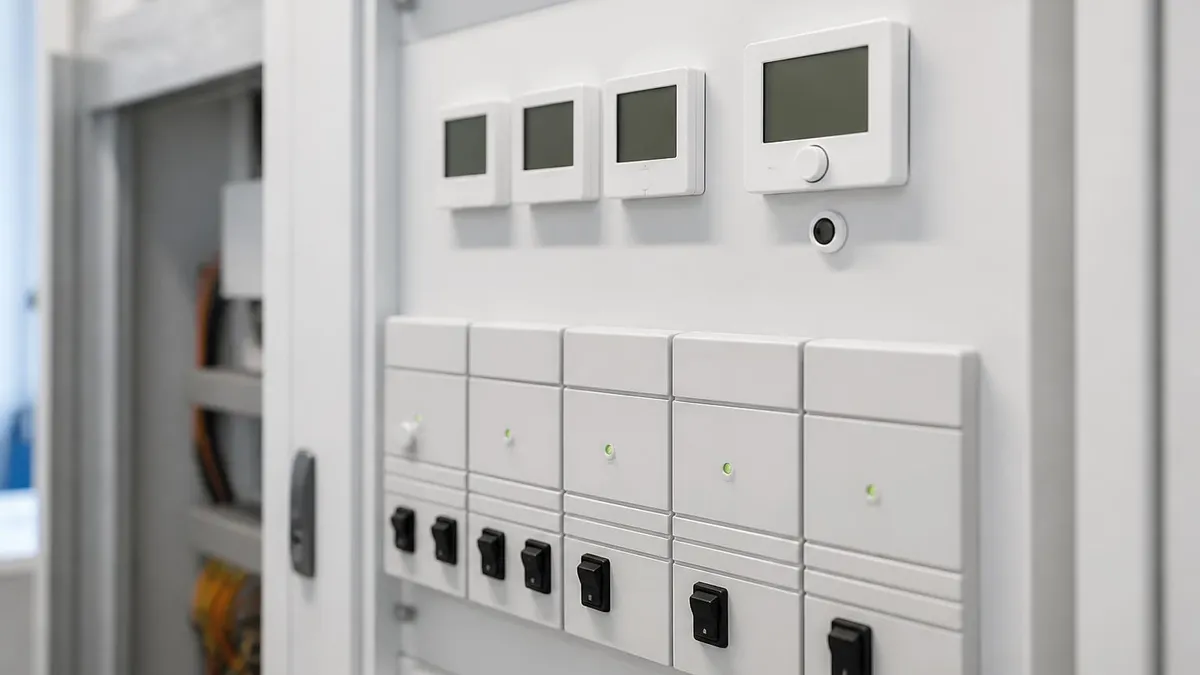
Core HVAC System Terms in Spanish
The universal Spanish term for air conditioning. Often abbreviated as A/A or A.C. in technical documents. Used for both window units and central systems across all Spanish-speaking regions.
Heating, the general term covering furnaces, boilers, and heat pumps. In Mexico and the Southwest, "calentador" specifically refers to water heaters, so context matters when ordering parts.
Ventilation, including exhaust fans, fresh air intakes, and balanced ventilation systems. "Ventilador" means the fan itself, while "ventilación" describes the system or process.
Ductwork or air ducts. "Ductos" is also accepted, especially in technical manuals. Sheet metal trunk lines are "conductos principales" and flexible duct is "conducto flexible."
Thermostat, used identically across all Spanish-speaking countries. Programmable models are "termostato programable" and smart thermostats are "termostato inteligente."
Refrigeration vocabulary forms the backbone of HVAC work, and getting these terms right matters because refrigerant handling carries EPA penalties for errors. The word for refrigerant is "refrigerante," and common types like R-410A, R-32, and R-454B keep their numerical designations in Spanish documentation. The refrigeration cycle itself is "el ciclo de refrigeración," comprising four key components: compressor, condenser, expansion valve, and evaporator.
The compressor, or "compresor," is the heart of any cooling system. Scroll compressors are "compresores tipo scroll" or "compresores de espiral," while reciprocating types are "compresores de pistón." Variable-speed inverter compressors are "compresores inverter" or "compresores de velocidad variable." When ordering replacement units, the model and capacity in BTU or tons translate directly: "toneladas" and "BTU" require no translation, though Spanish manuals sometimes use kilowatts (kW) instead.
The condenser coil, called "serpentín del condensador" or simply "condensador," releases heat outdoors. The outdoor unit assembly is the "unidad exterior" or "unidad condensadora." The evaporator coil is "serpentín del evaporador" or "evaporador," housed in the indoor air handler, which is called "unidad interior" or "manejadora de aire." These terms appear constantly in service tickets, installation drawings, and parts catalogs from manufacturers like Carrier, Trane, Goodman, and Mitsubishi.
The metering device controlling refrigerant flow is the "válvula de expansión" for thermostatic expansion valves (TXV) or "tubo capilar" for capillary tubes. Modern electronic expansion valves are "válvulas de expansión electrónicas" or EEV in shorthand. Pressure measurements use "presión de succión" for suction pressure and "presión de descarga" or "presión de alta" for discharge pressure, measured in PSI or kilopascals (kPa) depending on the manufacturer.
Refrigerant lines have specific names: the "línea de succión" is the larger insulated suction line, and the "línea de líquido" is the smaller copper liquid line. The combined set is often called "tubería de cobre" or copper tubing. Brazing is "soldadura fuerte" using nitrogen purge, which is "purga con nitrógeno." Leak detection is "detección de fugas," and recovery is "recuperación de refrigerante," both regulated under EPA Section 608 rules that apply regardless of which language you work in.
Subcooling and superheat, the two measurements every cooling tech checks, are "subenfriamiento" and "sobrecalentamiento." These translations appear on every set of digital manifold gauges sold in bilingual markets. Charging a system by weight uses "carga por peso" with scales calibrated in pounds or kilograms. The total charge specification is the "carga total de refrigerante" listed on the equipment nameplate, called "placa de datos" or "placa de identificación."
Finally, EPA certification translates as "certificación EPA," and the four certification types (Type I, II, III, Universal) keep their Roman numerals. Many Spanish-language test prep programs exist for technicians pursuing this credential, and the exam content is identical to the English version. Anyone planning to grow into management should review HVAC jobs data to see how bilingual certification opens doors to lead technician, dispatcher, and field supervisor roles.
HVAC Practice Test Questions
Prepare for the HVAC - Heating Ventilation and Air Conditioning exam with our free practice test modules. Each quiz covers key topics to help you pass on your first try.
HVAC Air Conditioning
HVAC Exam Questions covering Air Conditioning. Master HVAC Test concepts for certification prep.
HVAC Code Compliance
Free HVAC Practice Test featuring Code Compliance. Improve your HVAC Exam score with mock test prep.
HVAC Electrical Controls
HVAC Test Prep for Electrical Controls. Practice HVAC Quiz questions and boost your score.
HVAC Energy Efficiency
HVAC Questions and Answers on Energy Efficiency. Free HVAC practice for exam readiness.
HVAC Heating Systems
HVAC Mock Test covering Heating Systems. Online HVAC Test practice with instant feedback.
HVAC Load Calculations
Free HVAC Quiz on HVAC Load Calculations. HVAC Exam prep questions with detailed explanations.
HVAC Tools and Equipment
HVAC Practice Questions for HVAC Tools and Equipment. Build confidence for your HVAC certification exam.
HVAC Refrigeration
HVAC Test Online for Refrigeration. Free practice with instant results and feedback.
HVAC Safety Practices
HVAC Study Material on Safety Practices. Prepare effectively with real exam-style questions.
HVAC System Design
Free HVAC Test covering System Design. Practice and track your HVAC exam readiness.
HVAC Thermodynamics
HVAC Exam Questions covering Thermodynamics. Master HVAC Test concepts for certification prep.
Heating Systems Vocabulary in Spanish
A gas furnace is "horno de gas" or "calefactor de gas," while an oil furnace is "horno de petróleo" or "calefactor de aceite." The heat exchanger inside is the "intercambiador de calor," a critical safety component that must be inspected annually for cracks. Burners are "quemadores," pilot lights are "piloto," and the ignition system is "sistema de ignición" or "encendido." Modern hot surface igniters are "encendedores de superficie caliente."
Boilers are called "calderas," and they heat water for hydronic systems known as "sistemas hidrónicos." Circulating pumps are "bombas de circulación," and expansion tanks are "tanques de expansión." Pressure relief valves, required by code, are "válvulas de alivio de presión." Condensing boilers reaching 95%+ efficiency are "calderas de condensación," and their condensate drains are "drenajes de condensado" requiring neutralization in many jurisdictions.
Pros and Cons of Working Bilingually in HVAC
- +Higher hourly wages and overtime opportunities in Hispanic-majority service areas
- +Faster promotion to lead technician, dispatcher, and field supervisor roles
- +Ability to train Spanish-speaking apprentices and build stronger crews
- +Direct customer communication eliminates translator delays and miscommunication
- +Access to Spanish-language equipment manuals from Mexican and South American manufacturers
- +Stronger job security during downturns because bilingual techs are harder to replace
- +Easier expansion into Latin American markets for service companies
- −Initial time investment to learn 200+ specialized vocabulary terms
- −Regional dialect variations require ongoing learning and adjustment
- −Some technical terms have multiple accepted translations causing confusion
- −Spanish-language certification study materials are less abundant than English
- −Customers may expect translation services for non-HVAC topics during service calls
- −Pronunciation challenges can slow down field communication initially
Pros and Cons at a Glance
| Pros | Cons |
|---|---|
| Higher hourly wages and overtime opportunities in Hispanic-majority service areas | Regional dialect variations require ongoing learning and adjustment |
| Faster promotion to lead technician, dispatcher, and field supervisor roles | Some technical terms have multiple accepted translations causing confusion |
| Ability to train Spanish-speaking apprentices and build stronger crews | Spanish-language certification study materials are less abundant than English |
| Direct customer communication eliminates translator delays and miscommunication | Customers may expect translation services for non-HVAC topics during service calls |
| Access to Spanish-language equipment manuals from Mexican and South American manufacturers | Pronunciation challenges can slow down field communication initially |
Essential HVAC Tools Vocabulary Checklist
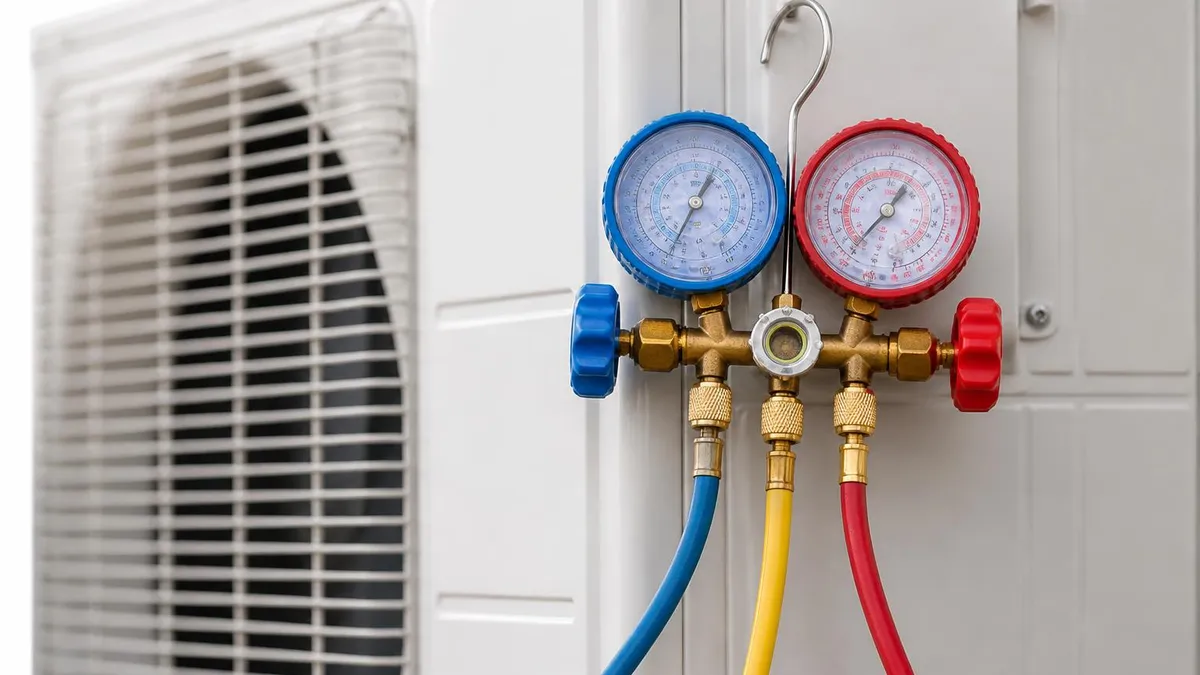
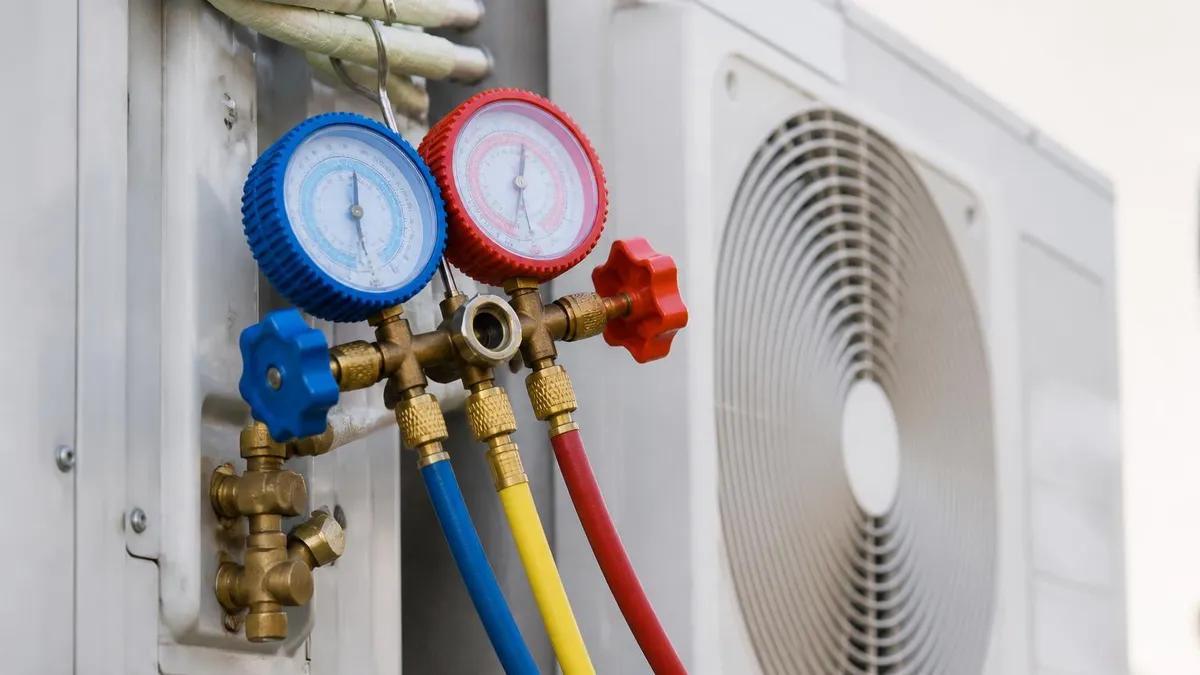
- ✓Manifold gauges = "manómetros" or "juego de manómetros" — essential for refrigerant work
- ✓Vacuum pump = "bomba de vacío" — used to evacuate systems before charging
- ✓Recovery machine = "máquina de recuperación" — required for EPA-compliant refrigerant removal
- ✓Refrigerant scale = "báscula de refrigerante" — measures charge by weight
- ✓Tubing cutter = "cortador de tubería" or "cortatubos" — for clean copper line cuts
- ✓Flaring tool = "abocardador" or "herramienta para abocardar" — creates flare connections
- ✓Multimeter = "multímetro" — measures voltage, amperage, and resistance
- ✓Clamp meter = "amperímetro de gancho" or "pinza amperimétrica" — measures current without breaking circuit
- ✓Leak detector = "detector de fugas" — electronic or UV dye-based
- ✓Combustion analyzer = "analizador de combustión" — required for furnace tuning and CO testing
- ✓Pipe wrench = "llave de tubo" or "llave Stillson" — for gas line work
- ✓Sheet metal snips = "tijeras para metal" or "tijeras hojalateras" — for ductwork fabrication
Always confirm refrigerant type and amount in both languages
When working with Spanish-speaking crews on refrigerant transfers, always write the refrigerant designation (R-410A, R-32, etc.) and the exact weight in pounds AND kilograms on the work ticket. This dual-unit habit prevents costly mistakes and matches the bilingual nameplates on most modern equipment sold in the US.
Electrical vocabulary is where many bilingual technicians struggle most, because electrical terms have evolved differently in Spain versus Latin America. In US HVAC work, the Latin American conventions dominate. Voltage is "voltaje" or "tensión," amperage is "amperaje" or "corriente," and resistance is "resistencia." The basic measurements use the same units: volts, amps, and ohms translate as "voltios," "amperios," and "ohmios."
Capacitors, the most commonly replaced part in residential service, are "capacitores" or "condensadores." Run capacitors are "capacitores de marcha," and start capacitors are "capacitores de arranque." Dual capacitors used in split systems are "capacitores duales," rated in microfarads, written as "microfaradios" or μF. When ordering, always verify both the capacitance and the voltage rating, which is "voltaje nominal," because mismatched voltage causes premature failure.
Contactors are "contactores," the heavy-duty relays that switch compressor and condenser fan power. Their coil voltage is "voltaje de bobina," typically 24 volts in residential systems. Relays are "relés" or "relevadores," and transformers are "transformadores." The 24-volt control transformer stepping down line voltage is the "transformador de 24 voltios." Fuses are "fusibles," and circuit breakers are "interruptores automáticos" or "breakers," the English word used colloquially in many regions.
Motor terminology is critical for diagnostics. The blower motor is "motor del soplador," the condenser fan motor is "motor del ventilador del condensador," and the compressor motor is "motor del compresor." Permanent split capacitor motors are "motores PSC," and ECM motors are "motores ECM" or "motores electrónicos." Motor windings are "devanados" or "bobinados," and a shorted winding is a "devanado en corto." Open windings are "devanados abiertos."
Wiring colors follow North American conventions but with Spanish names: red is "rojo" (R terminal, 24V power), white is "blanco" (W, heat), yellow is "amarillo" (Y, cooling), green is "verde" (G, fan), blue is "azul" (common), and orange is "naranja" (O, reversing valve for heat pumps in cooling). The C terminal common wire is "común," and the R terminal is "alimentación" or "24 voltios." These letters stay the same on all thermostats sold in the US.
Control board terminology covers integrated furnace controls (IFC), or "tarjeta de control integrada," and printed circuit boards generally are "tarjetas de circuito" or "placas de circuito." Diagnostic LED codes are "códigos de diagnóstico LED," and flash codes are "códigos por destellos." Modern communicating systems using proprietary protocols are "sistemas comunicantes," which can be confusing for techs new to brands like Carrier Infinity or Trane ComfortLink.
Safety devices include the high-pressure switch, "interruptor de alta presión," the low-pressure switch, "interruptor de baja presión," and the rollout switch on furnaces, "interruptor de seguridad por flama escapada." Flame sensors are "sensores de flama," and pressure switches on induced draft motors are "interruptores de presión." Limit switches are "limitadores de temperatura." Mastering these terms is essential before tackling complex diagnostics, and the same vocabulary appears in HVAC duct installation documentation when discussing balancing and static pressure measurements.
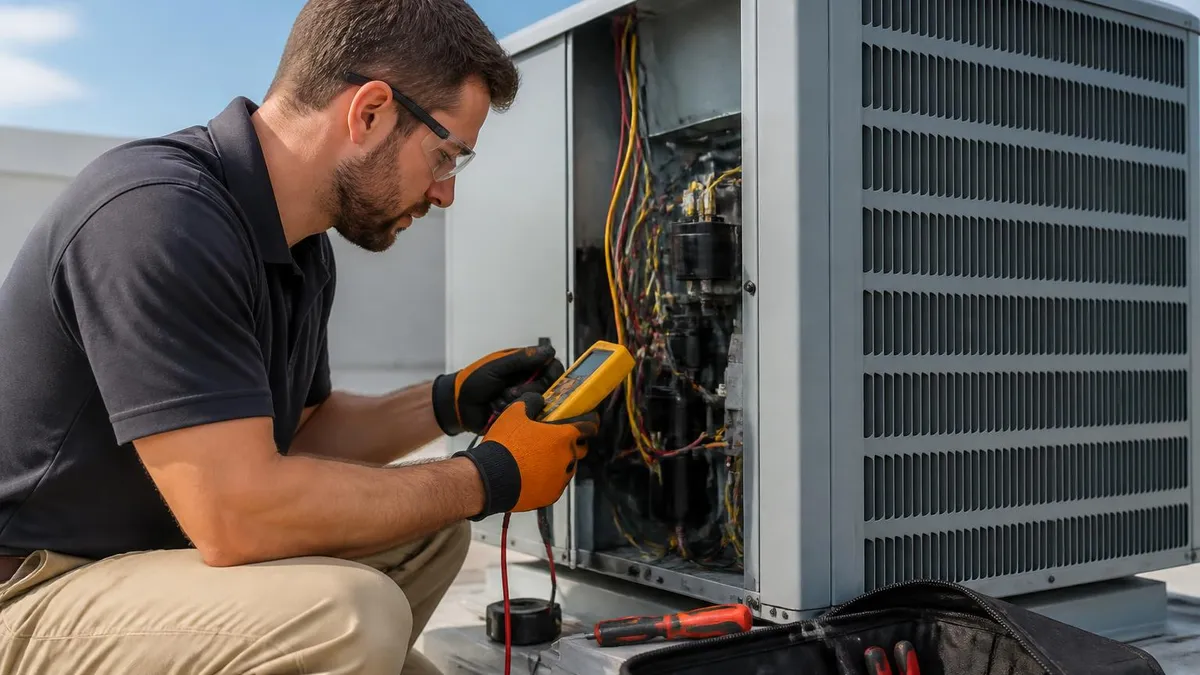
EPA refrigerant handling rules apply identically to all technicians working in the United States, whether they communicate in English or Spanish. Fines for improper venting reach $44,539 per day per violation as of 2024. Always document refrigerant recovery in writing using your shop's standard forms, and never assume verbal instructions cover regulatory requirements.
Customer communication is where bilingual fluency creates the most measurable business value. The opening greeting on a service call sets the tone: "Buenos días, soy técnico de [company name], vengo a revisar su sistema de aire acondicionado" translates as "Good morning, I'm a technician from [company], here to service your air conditioning system." Following with "¿Cuál es el problema que está experimentando?" asks what problem they are experiencing, opening the diagnostic conversation.
Common customer complaints have standard Spanish phrasings worth memorizing. "No enfría" means "it's not cooling," while "no calienta" means "it's not heating." "Hace ruido extraño" describes a strange noise, and "gotea agua" means it's leaking water. "Huele raro" addresses unusual smells, which often indicate burned wiring or microbial growth. "El termostato no responde" means the thermostat isn't responding, often pointing to dead batteries or a tripped float switch.
Explaining repairs requires clear technical Spanish. "Necesita un capacitor nuevo" means "it needs a new capacitor," and "el compresor está dañado" means "the compressor is damaged." For maintenance recommendations, "recomiendo cambiar el filtro cada tres meses" means "I recommend changing the filter every three months." Quoting costs uses "el costo total es" followed by the dollar amount, with payment terms explained as "el pago se realiza al terminar el trabajo" (payment is due upon completion).
Safety warnings carry life-and-death importance and must be communicated clearly. "No use el sistema hasta que se repare" means "don't use the system until it's repaired." "Detecté una fuga de gas" warns of a gas leak, requiring immediate evacuation and utility notification. "El nivel de monóxido de carbono está peligrosamente alto" alerts to dangerous CO levels. Always follow critical safety messages with written documentation the customer signs, even if the conversation occurred in Spanish.
Scheduling and follow-up phrases keep service operations smooth. "Podemos regresar mañana entre las nueve y las once de la mañana" offers a Tuesday morning window. "Le voy a enviar un recordatorio por mensaje de texto" confirms text message reminders. "Si tiene preguntas, llame al número en la factura" directs customers to call the number on their invoice. These scripts can be printed on dispatcher cards to standardize bilingual service across an entire team.
Written documentation rounds out bilingual competency. Service tickets, warranty paperwork, and maintenance agreements should be available in Spanish, even if the technician translates verbally. Many manufacturers including Carrier, Lennox, and Goodman provide bilingual installation manuals and warranty registration. For new construction work, mechanical permits and inspection reports remain in English in most US jurisdictions, but the contractor must explain compliance requirements to Spanish-speaking property owners during walk-throughs. The full cost picture is something every bilingual tech should understand, and resources like HVAC installation cost guides help you discuss budgets confidently with any customer.
Finally, building rapport matters as much as vocabulary. Using formal "usted" rather than informal "tú" with customers, addressing elders as "señor" or "señora," and offering business cards in both languages signals professionalism and respect. These small touches generate referrals, positive reviews, and repeat business that translate directly into income for both technicians and the companies that employ them.
Building lasting fluency in HVAC Spanish requires consistent practice beyond just memorizing vocabulary lists. Start by labeling tools in your truck with Spanish names on masking tape for the first thirty days. This passive repetition reinforces hundreds of terms during your daily work without requiring dedicated study time. Pair this with reading one Spanish-language equipment manual per week from manufacturers like Mabe, Mirage, or LG, all of which publish full technical documentation in Spanish.
Online resources accelerate progress significantly. The North American Technician Excellence (NATE) organization offers Spanish-language test prep materials covering the same exam content as English versions. YouTube channels including "HVAC en Español" and "Refrigeración Total" publish field videos with real diagnostic walkthroughs in Spanish. RSES (Refrigeration Service Engineers Society) hosts bilingual continuing education, and many state contractor licensing boards now accept Spanish-language exams or provide bilingual proctors upon request.
Join local HVAC trade associations and attend their bilingual networking events. The Air Conditioning Contractors of America (ACCA) has chapters across the country, many in Hispanic-majority markets that conduct meetings in both languages. These connections lead to mentorship from senior bilingual technicians who can correct pronunciation, share regional vocabulary preferences, and recommend Spanish-speaking parts suppliers. The relationships you build pay dividends throughout your career through job referrals and continuing education opportunities.
For supervisors and trainers, developing bilingual training materials for your own crews multiplies the value of your investment. Create laminated cheat sheets with the 50 most common terms relevant to your specific service mix, whether that's residential split systems, commercial hvac rtu 3d cad york or refrigeration. Hold weekly five-minute toolbox talks rotating between English and Spanish to give all team members practice. Document standard service procedures bilingually so that any technician can pick up and complete a job another team member started.
Pronunciation deserves dedicated attention because mispronouncing technical terms erodes credibility with Spanish-speaking customers and crew members. The Spanish letter "r" requires a tap rather than the English glide, the "ll" sounds like English "y," and the "j" sounds like English "h." Words like "refrigeración" stress the third syllable, and "compresor" stresses the last syllable. Free apps like Forvo provide native speaker recordings for any term you need to practice. Just 15 minutes of daily pronunciation drilling produces dramatic improvement within two months.
Track your progress with a simple journal noting new terms learned, customer conversations completed successfully, and any words you stumbled on during service calls. Review weekly and add problem terms to flashcard apps like Anki or Quizlet for spaced repetition study. Within six months of consistent practice, most technicians report being able to handle complete service calls in Spanish without code-switching, and within a year they read technical documentation as quickly as in English.
The investment compounds throughout your career. Bilingual technicians become bilingual project managers, bilingual estimators, and bilingual business owners. Spanish fluency expands your potential customer base by 30 to 60 percent depending on your service area, and it positions you uniquely to bid on commercial contracts requiring multilingual service teams. In an industry facing severe labor shortages, the bilingual technician is the most valuable asset on any contractor's roster.
Sample HVAC Practice Questions
Try these questions from our free HVAC practice tests. The correct answer and an explanation follow each question.
Which wire color is standardized for the 24V common (C) terminal in most North American HVAC low-voltage wiring?
- A. Red
- B. Green
- C. Blue
- D. Yellow
Answer: C. Blue
Blue wire is the conventional color for the common (C) terminal on HVAC low-voltage wiring, though installers should always verify with a wiring diagram.
What is the purpose of a Time-Delay Relay (TDR) in a multi-stage commercial HVAC startup sequence?
- A. Limit voltage surges from the utility transformer
- B. Stage the starting of multiple loads to reduce peak demand current
- C. Monitor phase loss on three-phase systems
- D. Automatically adjust setpoints based on outdoor temperature
Answer: B. Stage the starting of multiple loads to reduce peak demand current
TDRs introduce a delay between starting multiple large loads (compressors, fans) so their inrush currents don't overlap, reducing peak demand charges and stress on wiring.
Which approach best demonstrates mastery of refrigeration in HVAC practice?
- A. Following procedures without understanding
- B. Applying principles to novel situations with sound judgment
- C. Relying entirely on technology
- D. Avoiding complex scenarios
Answer: B. Applying principles to novel situations with sound judgment
True mastery involves understanding underlying principles well enough to apply them to new and unfamiliar situations with professional judgment.
An HVAC technician measures 10°F of superheat at the evaporator outlet. This reading indicates:
- A. The evaporator is flooded with liquid
- B. There is a refrigerant overcharge
- C. The refrigerant is fully vaporized with 10°F above saturation
- D. The compressor is short-cycling
Answer: C. The refrigerant is fully vaporized with 10°F above saturation
10°F superheat means the vapor exiting the evaporator is 10°F warmer than the saturation temperature at that pressure.
HVAC Questions and Answers

About the Author

NATE Certified HVAC Technician & Licensing Exam Trainer
Universal Technical InstituteMike Johnson is a NATE-certified HVAC technician and EPA 608 universal-certified refrigerant handler with a Bachelor of Science in HVAC/R Technology. He has 19 years of commercial and residential HVAC installation and service experience and specializes in preparing technicians for NATE certification, EPA 608, A2L refrigerant safety, and state HVAC contractor licensing examinations.