
VRF System HVAC: The Complete Guide to Variable Refrigerant Flow Heating and Cooling
📗 vrf system hvac explained: how variable refrigerant flow works, costs, pros and cons, design basics, and zoning for homes and commercial buildings.

What changed for HVAC - Heating Ventilation and Air Conditioning in 2026
- January 1, 2026: EPA's original installation date for new variable refrigerant flow (VRF) systems using refrigerant with a GWP of 700 or more passed; EPA's sector table now lists January 1, 2027 as the VRF installation compliance date. (source)
- Until January 1, 2027, new VRF systems above 700 GWP may still be installed only if every component was manufactured or imported before January 1, 2026 (EPA final rule published December 12, 2024). (source)
- Until January 1, 2028, VRF systems above 700 GWP may be installed in buildings whose approved permit, issued before October 5, 2023, allowed the HFC, if all components predate January 1, 2026. (source)
- January 1, 2026: EPA leak repair requirements began for appliances holding 15 pounds or more of HFC refrigerant, with a 10% annual leak rate trigger for comfort cooling and a 30-day repair window. (source)
- Certain VRF systems fall in their own EPA subsector, so they are not covered by the residential and light commercial exemption from these leak repair rules. (source)
- May 26, 2026: EPA issued a final rule reconsidering parts of the AIM Act Technology Transitions program; EPA's sector table, updated August 28, 2026, still lists January 1, 2027 for VRF. (source)
- EPA Section 608 technician certification is still required to handle VRF refrigerant, and Section 608 credentials do not expire, so there is no renewal or CE cycle. (source)
Last verified: 2026-10-14 against the U.S. Environmental Protection Agency (EPA).
- GWP limit for new VRF systems: 700 under the EPA AIM Act Technology Transitions rule. (source)
- VRF installation compliance date: January 1, 2027 for systems built from components made or imported before January 1, 2026. (source)
- Permit exception: VRF systems above 700 GWP can be installed until January 1, 2028 with a qualifying building permit issued before October 5, 2023. (source)
- Leak repair threshold: 15 pounds or more of HFC refrigerant, effective January 1, 2026. (source)
- Comfort cooling leak rate trigger: 10% per year, with leaks repaired within 30 days. (source)
- EPA Section 608 certification types: 4 (Type I, Type II, Type III and Universal), and the credential does not expire. (source)
- Section 608 Core exam topics: 10 EPA-listed areas, including recovery techniques, dehydration evacuation, safety and shipping. (source)
Source: U.S. Environmental Protection Agency (EPA), verified 2026-10-14.
A vrf system hvac setup (variable refrigerant flow) lets one inverter outdoor unit serve many zones, and EPA applies a 700 GWP refrigerant limit to new VRF installs from January 1, 2027. Unlike a traditional split system that runs at a single fixed speed, a VRF system continuously varies the amount of refrigerant pumped to each indoor unit. That precise control lets one outdoor condenser serve dozens of indoor zones at once, each holding its own temperature. For technicians studying modern equipment, VRF represents the direction the entire industry is moving, especially in commercial and multi-family construction.
The core idea behind variable refrigerant flow is simple but powerful. Instead of cycling a compressor fully on and then fully off, a VRF system uses an inverter-driven compressor that ramps its speed up or down. When a room needs only a little cooling, the compressor slows and sips electricity. When several rooms call for cooling at the same time, it speeds up to meet the combined load. This modulation eliminates the energy-wasting start-stop cycling that defines older fixed-capacity systems and keeps temperatures remarkably steady.
VRF technology arrived in Japan in the early 1980s and spread across Europe and Asia long before it became common in the United States. Today it is a mainstream choice for offices, hotels, schools, restaurants, and increasingly for high-end homes. Anyone building a career in this field will encounter VRF on the job, and understanding it is a major selling point. If you work in vrf system hvac, knowing how to explain its efficiency and comfort advantages to a skeptical buyer can be the difference between winning and losing a bid.
One reason VRF appeals to building owners is zoning. A conventional rooftop unit or furnace heats or cools the whole structure to a single setpoint, which wastes energy on empty rooms and leaves some spaces too hot or too cold. A VRF system treats each indoor unit as an independent zone with its own thermostat. A corner conference room with afternoon sun can run hard while an interior storage closet barely runs at all, all from the same outdoor unit and refrigerant loop.
The most advanced VRF systems are heat-recovery models. These can cool one zone while simultaneously heating another, capturing the heat pulled out of a warm room and moving it to a cold one instead of dumping it outside. In a building with a sunny south side and a shaded north side, this transfer happens for free. That ability to recycle thermal energy within the same system is why VRF often posts the lowest operating costs of any commercial HVAC option available today.
Refrigerant rules now shape every new VRF job. The EPA Technology Transitions HFC restrictions by sector list a 700 GWP limit for new VRF systems, and only technicians holding EPA Section 608 technician certification may handle the refrigerant.
This guide walks through how variable refrigerant flow works, what it costs to install and run, the realistic pros and cons, the design and zoning fundamentals technicians need to know, and the practical service considerations that separate a smooth installation from a callback nightmare. Whether you are preparing for a certification exam, sizing your first job, or simply trying to understand the equipment you keep seeing on commercial sites, the sections below give you the foundation.
VRF Systems by the Numbers
Core Components of a VRF System
Houses the inverter-driven compressor, condenser coil, and fans. It modulates refrigerant flow to match the total load of every connected indoor zone, ramping speed up or down continuously.
Individual units placed in each zone as ducted, cassette, wall-mounted, or floor-standing models. Each has its own electronic expansion valve to draw exactly the refrigerant its zone needs.
Insulated copper lines carry refrigerant between the outdoor unit and every indoor head. Two-pipe systems handle cooling or heating; three-pipe systems enable simultaneous heat recovery.
Refnet joints and branch controllers split refrigerant flow to multiple indoor units and, in heat-recovery designs, direct hot or cold refrigerant to the correct zone on demand.
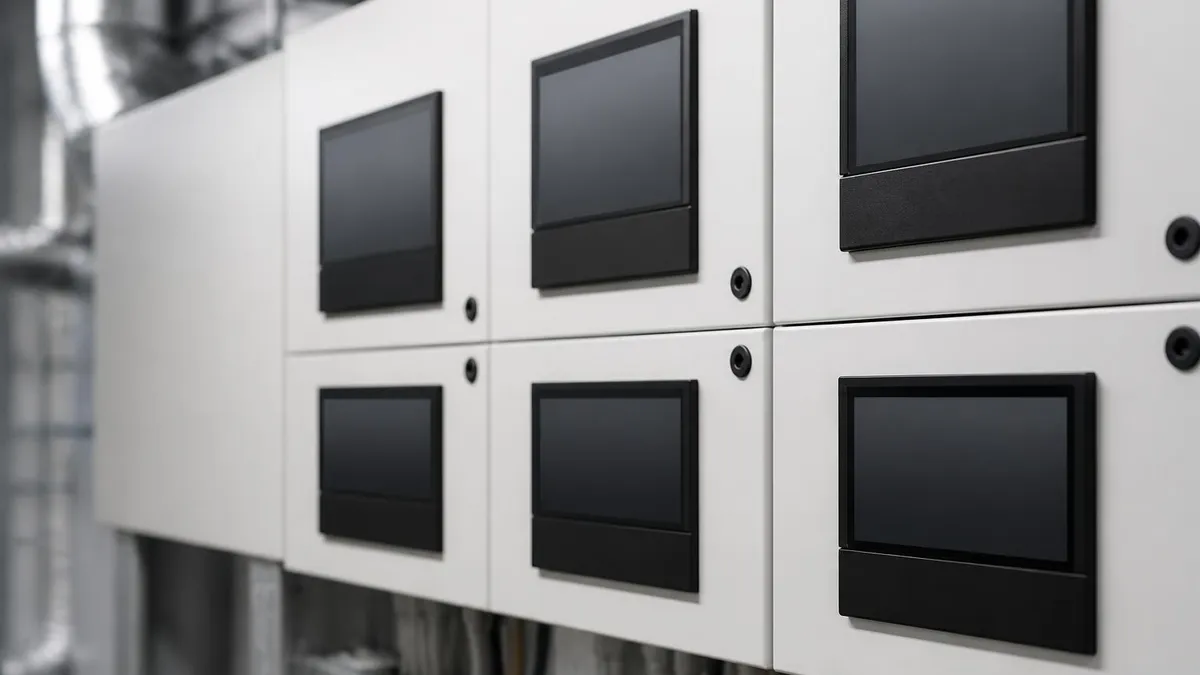
A central controller and individual zone thermostats coordinate the entire system, log faults, schedule operation, and integrate with building automation systems for monitoring.
To understand how a vrf system hvac unit works, start with the inverter compressor at the heart of the outdoor unit. A conventional compressor runs at one speed and shuts off when the thermostat is satisfied, then restarts when the room warms again. An inverter compressor instead spins faster or slower across a wide range, often from roughly 10 percent to 100 percent of capacity. By matching its output to the real-time demand of every indoor zone, it avoids the energy spikes and temperature swings that plague single-stage equipment.
The second key element is the electronic expansion valve, or EEV, located at each indoor unit. The EEV meters precisely how much refrigerant enters that unit's coil. When a zone calls for more cooling, its valve opens wider; when the zone is satisfied, the valve nearly closes. Because every indoor unit controls its own refrigerant intake independently, one VRF outdoor unit can serve a busy lobby and a quiet office at the same time without overcooling either space.
Refrigerant, not water or air, is the medium that carries energy through the building. This matters because refrigerant transfers far more heat per pound than water, so the piping can be smaller and the runs longer. A VRF system can move refrigerant several hundred feet horizontally and many stories vertically, which is why it suits tall, sprawling buildings where ductwork or hydronic piping would be impractical. The smaller pipes also free up valuable ceiling space for other trades.
Communication ties everything together. Each indoor unit, the outdoor unit, and the central controller talk over a low-voltage control wire, constantly sharing setpoints, return-air temperatures, and valve positions. The outdoor unit's logic board sums the demand from every zone and commands the compressor speed accordingly. This continuous conversation is what allows the system to balance dozens of competing requests smoothly, something a simple on-off thermostat circuit could never manage.
In a basic heat-pump VRF system, the whole network operates in one mode at a time, either heating or cooling. This is fine for buildings where every zone tends to need the same thing, such as a small office that is uniformly warm in summer. A two-pipe configuration handles these systems, carrying refrigerant out to the indoor units and back to the condenser. It is the simpler, less expensive flavor of VRF and still delivers excellent zone-by-zone temperature control.
Heat-recovery VRF takes efficiency further. Using a three-pipe layout and branch selector boxes, it can pull heat out of zones that need cooling and pump that same heat into zones that need warmth at the very same moment. A data closet packed with servers can be cooled while its waste heat warms an adjacent break room. Because the energy is recycled rather than rejected outdoors, heat-recovery systems shine in mixed-use buildings with simultaneous heating and cooling demands across different zones.
Finally, defrost and oil management round out the design. In heating mode the outdoor coil can frost over, so the system periodically reverses to melt the ice, much like an air-source heat pump. Oil that circulates with the refrigerant must also be returned reliably to the compressor across those long pipe runs, which is why manufacturers publish strict limits on piping length and elevation. Respecting those limits is essential to long-term reliability and warranty coverage.
Heat Pump vs Heat Recovery VRF Systems
A heat-pump VRF system uses a two-pipe configuration and operates the entire indoor network in a single mode at any given time, either all heating or all cooling. It is the simpler and more affordable option, well suited to buildings where every zone generally needs the same thing, such as a small retail shop or a single-tenant office floor with consistent exposure.
While it cannot heat and cool simultaneously, a heat-pump VRF still delivers individual zone control over temperature and fan speed. Each indoor unit modulates its own capacity, so spaces stay comfortable and energy use drops compared with a fixed-speed system. For many light commercial and residential projects, the lower upfront cost makes heat-pump VRF the practical, budget-conscious choice.

Is a VRF System Worth It? Pros and Cons
- +Exceptional energy efficiency through inverter modulation and load matching
- +Precise individual zone control for personalized comfort
- +Heat-recovery models reuse waste heat for huge operating savings
- +Compact equipment with small refrigerant pipes saves space
- +Quiet operation with no large air handlers or noisy ductwork
- +Long equipment life and easy integration with building automation
- +Scalable design that fits small offices up to large multi-story buildings
- −High upfront equipment and installation cost
- −Requires specialized training and certified installers
- −Large refrigerant charge raises leak and safety considerations
- −Limited heating capacity in very cold climates without backup
- −Proprietary components tie owners to a single manufacturer
- −Complex controls can be harder to troubleshoot than simple systems
Pros and Cons at a Glance
| Pros | Cons |
|---|---|
| Exceptional energy efficiency through inverter modulation and load matching | High upfront equipment and installation cost |
| Precise individual zone control for personalized comfort | Requires specialized training and certified installers |
| Heat-recovery models reuse waste heat for huge operating savings | Large refrigerant charge raises leak and safety considerations |
| Compact equipment with small refrigerant pipes saves space | Limited heating capacity in very cold climates without backup |
| Quiet operation with no large air handlers or noisy ductwork | Proprietary components tie owners to a single manufacturer |
| Long equipment life and easy integration with building automation | Complex controls can be harder to troubleshoot than simple systems |
VRF System Installation Checklist
- ✓Perform a room-by-room load calculation for every zone
- ✓Confirm total connected capacity stays within outdoor unit limits
- ✓Verify refrigerant pipe lengths and elevation meet manufacturer specs
- ✓Size and route refrigerant piping with correct insulation
- ✓Pressure test and evacuate the system to deep vacuum before charging
- ✓Weigh in the precise refrigerant charge per the piping length
- ✓Install branch selectors and joints in accessible locations
- ✓Wire the communication bus and address each indoor unit correctly
- ✓Provide adequate ventilation for refrigerant leak safety per code
- ✓Commission the system and verify each zone responds to its thermostat
- ✓Document settings and train the building owner on the controls
- ✓Schedule the first maintenance visit and filter inspection
Part-load performance is where VRF wins
Buildings spend most of their hours at partial load, not peak load. Because a VRF compressor modulates down to a small fraction of full capacity, it runs at its most efficient point precisely when the building needs the least cooling. That is why IEER ratings, which weight part-load operation, are often far higher than the peak EER for the same equipment.
The cost conversation around a vrf system hvac project has two halves: what you pay to install it and what you pay to run it. Installed costs for VRF typically land higher than conventional split systems or rooftop units, often running 15 to 30 percent more on equipment and labor combined. The premium comes from the inverter-driven outdoor unit, the multiple indoor heads, the branch controllers, and the skilled labor required to braze long refrigerant runs and pressure-test the system correctly.
That higher first cost is the main reason some owners hesitate. A small office might pay a noticeable premium over a packaged rooftop unit, and a homeowner comparing VRF to a standard heat pump will see a bigger invoice. The justification almost always lives on the operating side of the ledger. Because the system modulates capacity and runs at its efficient part-load sweet spot most of the time, monthly energy bills drop substantially compared with fixed-speed equipment that cycles wastefully.
Energy savings of roughly 20 to 30 percent over conventional systems are commonly cited, and heat-recovery models in mixed-load buildings can do even better by recycling waste heat. Over a 15- to 20-year life, those savings frequently repay the installation premium several times over. For a building owner focused on long-term operating cost rather than the lowest possible bid, VRF often produces the best total cost of ownership in the comparison set.
Efficiency ratings tell part of the story. VRF systems are rated using IEER, the Integrated Energy Efficiency Ratio, which weights performance across multiple load points rather than a single peak condition. Because VRF excels at part load, its IEER values, often in the high teens to high twenties, dwarf the peak EER of older equipment. When comparing systems, technicians and salespeople should always reference IEER for VRF rather than peak numbers that understate real-world savings.
Maintenance costs deserve honest discussion too. VRF systems have fewer moving parts in the airstream and no large belt-driven air handlers, which reduces some routine service. However, they require technicians trained on the specific manufacturer's platform, proprietary diagnostic tools, and careful refrigerant management. Filter cleaning at each indoor unit, periodic refrigerant charge verification, and control software checks are typical. Budgeting for a qualified service contract protects the investment and keeps the warranty intact.
Incentives can tilt the math further in VRF's favor. Many utilities and efficiency programs offer rebates for high-IEER equipment, and commercial energy codes increasingly reward the demand reductions VRF delivers. When a building pursues green certification or must meet stringent energy targets, VRF frequently becomes the path of least resistance. Helping a client stack available rebates against the upfront premium is a powerful way to close the deal and shorten the payback period.
Ultimately the financial case rests on the building's profile. A space with steady, uniform loads and a tight budget may be better served by a simpler system. A building with diverse zones, high occupancy, long operating hours, and an owner who holds the property for years is the classic VRF candidate. Running the numbers honestly, including energy, maintenance, and incentives, is the only way to know whether the premium is justified for a given project.
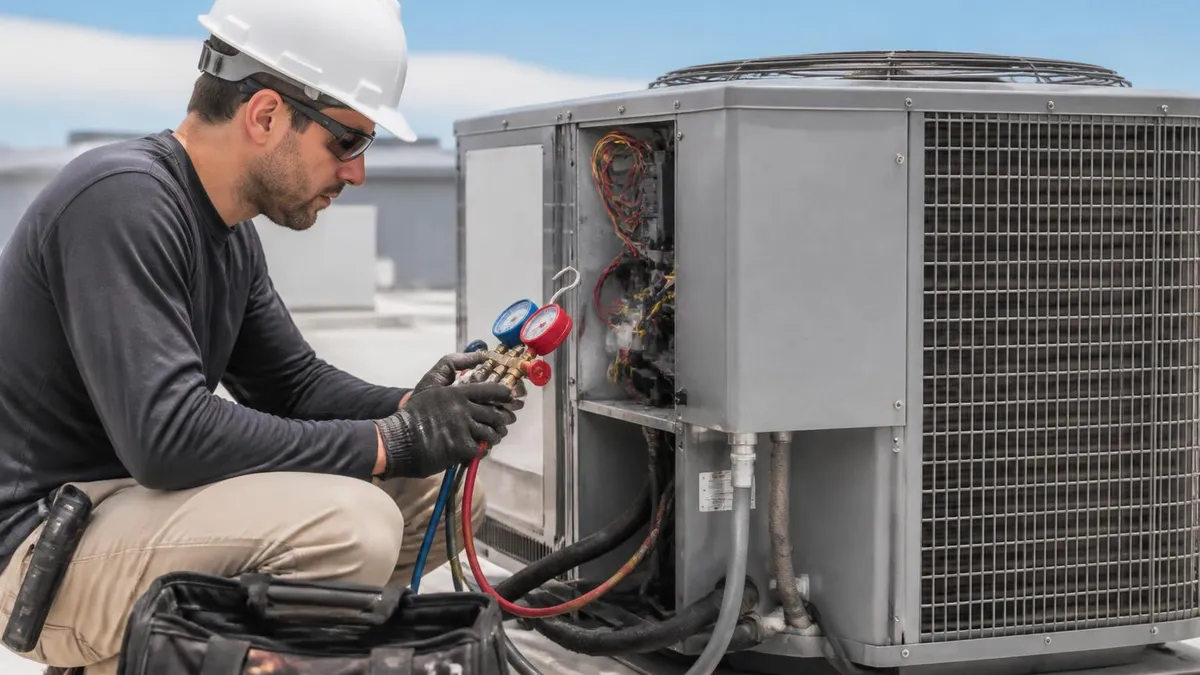
VRF systems hold a large refrigerant charge spread across long piping runs, so a leak in an enclosed space can displace oxygen or exceed refrigerant concentration limits. Codes such as ASHRAE 15 require careful charge calculations and, in some rooms, leak detection or ventilation. Always verify maximum room-volume limits before finalizing a design.
Good VRF design begins with an accurate, zone-by-zone load calculation rather than a rule-of-thumb estimate. Each indoor unit is sized to its specific space using a Manual J style analysis that accounts for solar gain, occupancy, equipment heat, and infiltration.
Because the outdoor unit serves many zones, the designer also checks the diversity factor, the reality that not every zone hits peak demand at the same instant, which allows the condenser to be sized smaller than the simple sum of all the indoor units. Studying for the trade and sharpening these fundamentals is also good preparation for anyone moving into vrf system hvac consulting roles.
Piping design is the next critical discipline. Manufacturers publish strict tables for maximum total pipe length, maximum run to the farthest indoor unit, and maximum elevation difference between units. Refnet joints must be oriented correctly, line sizes must step down properly past each branch, and the whole network must be insulated to prevent condensation. Violating these limits invites oil-return problems, capacity loss, and voided warranties, so careful layout work up front saves expensive corrections later in the project.
Indoor unit selection shapes both performance and aesthetics. Ducted units hide in ceilings and serve multiple rooms through short duct runs, four-way cassettes sit flush in drop ceilings for even air distribution, wall-mounted heads suit retrofits, and floor-standing units fit spaces with no ceiling access. Matching the right style to each zone balances comfort, appearance, and budget, and it is one of the most visible decisions a designer makes from the occupant's point of view.
Controls and commissioning separate a great install from a troubled one. Every indoor unit must be addressed on the communication bus, thermostats mapped to the correct zone, and schedules programmed to match how the building is actually used. Commissioning verifies that each zone heats and cools on command, that the compressor modulates correctly, and that fault logging works. Skipping a thorough commissioning step is one of the most common causes of callbacks and dissatisfied owners on VRF projects.
Service planning starts on day one. Technicians need clear access to branch selector boxes, joints, and indoor units for future maintenance, so these components should never be buried behind permanent finishes. Proprietary diagnostic tools and manufacturer training are essential, because VRF fault codes and control logic differ sharply from conventional equipment. Lining up a qualified service provider before handover protects both the owner and the contractor's reputation over the system's long life.
Integration with building automation is increasingly expected on commercial work. VRF systems can tie into a BAS through gateways that expose zone temperatures, setpoints, and alarms to facility managers. This lets operators schedule occupancy, monitor energy use, and catch problems early from a central dashboard. For larger buildings, this connectivity is often a deciding factor, since it turns the HVAC system into a manageable, data-rich asset rather than a black box.
Finally, plan for the cold-climate edge cases. Air-source VRF heating capacity falls as outdoor temperatures drop, and defrost cycles temporarily interrupt heating. In colder regions, designers may specify low-ambient VRF models, supplemental heat, or water-source VRF tied to a building loop. Understanding these limits prevents the disappointing scenario where a beautifully zoned system cannot keep up on the coldest morning of the year, which is exactly when occupants notice most.
If you want the full picture, the vrf system hvac guide walks through it step by step.
For a deeper look at this topic, see our guide to vrf system hvac.
If you are preparing to work with VRF systems on the job or studying for a certification exam, a few practical habits will serve you well. First, learn one manufacturer's platform deeply before trying to master them all. Daikin, Mitsubishi, LG, Samsung, and others share the same core physics but use different controls, diagnostic tools, and design software. Becoming genuinely proficient on a single platform makes you immediately useful and gives you a framework for understanding the rest of the market more quickly.
Second, treat the manufacturer's design and service literature as your primary reference. VRF is unforgiving of guesswork: pipe length tables, charge calculations, and elevation limits are not suggestions but hard constraints tied to warranty coverage. Get comfortable reading these documents, because a small layout mistake discovered after the walls are closed is far more expensive than ten minutes spent double-checking a table. The best VRF technicians are also careful, methodical readers of specifications.
Third, master evacuation and charging discipline. A VRF system's long piping demands a deep, verified vacuum to remove moisture and noncondensables before charging, and the refrigerant charge must be weighed in precisely based on total pipe length. Sloppy evacuation or guessed charge amounts cause the subtle, intermittent faults that are hardest to diagnose later. Investing in good gauges, a quality vacuum pump, and an accurate scale pays for itself in avoided callbacks and protected compressors.
Fourth, get fluent with the communication and addressing side of the system. Many VRF problems that look mechanical are actually wiring or addressing errors on the control bus. Knowing how to verify that each indoor unit is addressed correctly, that the bus is wired without shorts, and that the central controller sees every unit will let you solve a large share of field issues quickly. This control-side fluency is what separates a junior installer from a trusted commissioning technician.
Fifth, practice explaining VRF in plain language. Whether you are reassuring a homeowner or briefing a facility manager, the ability to describe modulation, zoning, and heat recovery without jargon builds trust and wins work. Use simple analogies: an inverter compressor is like a car's gas pedal rather than an on-off switch, and heat recovery is like moving heat from a crowded room to a cold one instead of throwing it away. Clear communication is a genuine technical skill.
Finally, keep your knowledge current with practice questions and hands-on reps. The technology evolves quickly, with new low-ambient models, refrigerants, and controls arriving regularly. Working through practice tests on air conditioning fundamentals, electrical controls, ductwork, and code compliance keeps the underlying principles sharp, while time spent commissioning real systems builds the instinct you cannot get from a book. Combining steady study with field experience is the surest path to becoming a confident, well-paid VRF specialist.
Sample HVAC Practice Questions
Try these questions from our free HVAC practice tests. The correct answer and an explanation follow each question.
In a commercial Variable Refrigerant Flow (VRF) system, what distinguishes a 'heat recovery' system from a 'heat pump' system?
- A. Heat recovery uses a cooling tower; heat pump is air-cooled
- B. Heat recovery allows simultaneous heating and cooling in different zones; heat pump can only heat or cool the entire system at once
- C. Heat recovery uses two compressors; heat pump uses one
- D. Heat recovery operates on R-410A; heat pump on R-22
Answer: B. Heat recovery allows simultaneous heating and cooling in different zones; heat pump can only heat or cool the entire system at once
VRF heat recovery systems use a branch circuit controller to simultaneously deliver heating refrigerant to some indoor units and cooling to others, maximizing efficiency.
What is the function of a 'differential pressure bypass valve' in a variable flow hydronic system?
- A. To maintain minimum boiler water temperature
- B. To bypass excess water flow when zone valves close off, protecting the pump and boiler
- C. To prevent backflow in the system
- D. To regulate boiler firing rate
Answer: B. To bypass excess water flow when zone valves close off, protecting the pump and boiler
When zone valves close simultaneously, pressure increases. The differential pressure bypass valve opens to allow excess flow to bypass, maintaining minimum boiler flow.
When a heat pump switches from cooling to heating mode, which component reverses refrigerant flow direction?
- A. Thermostatic expansion valve
- B. Reversing valve (4-way valve)
- C. Accumulator
- D. Filter drier
Answer: B. Reversing valve (4-way valve)
The reversing valve (four-way valve) redirects refrigerant flow to switch the roles of the indoor and outdoor coils between heating and cooling modes.
When adding refrigerant to a system that uses a blended refrigerant (such as R-410A), how must it be charged?
- A. As a vapor through the high-pressure side only
- B. As a liquid from the refrigerant cylinder
- C. As a vapor through the low-pressure side only
- D. Either liquid or vapor — blends are not affected by charging method
Answer: B. As a liquid from the refrigerant cylinder
Blended refrigerants like R-410A must be charged as a liquid to prevent fractionation, where different components evaporate at different rates, changing the blend composition.
HVAC Questions and Answers
HVAC Sales: The Complete Guide to Selling Heating and Cooling Systems, Building Customer Trust, and Closing More Deals

HVAC Air Duct Sealing: The Complete Homeowner and Contractor Guide to Sealing Ductwork for Efficiency, Comfort, and Indoor Air Quality

HVAC Drain Pan: Complete Guide to Function, Maintenance, and Troubleshooting
HVAC Solutions: The Complete Guide to Heating, Cooling, and Indoor Air Quality Systems for Homes and Buildings

Commercial HVAC Repair: Systems, Costs, and Service Strategies
About the Author

NATE Certified HVAC Technician & Licensing Exam Trainer
Universal Technical InstituteMike Johnson is a NATE-certified HVAC technician and EPA 608 universal-certified refrigerant handler with a Bachelor of Science in HVAC/R Technology. He has 19 years of commercial and residential HVAC installation and service experience and specializes in preparing technicians for NATE certification, EPA 608, A2L refrigerant safety, and state HVAC contractor licensing examinations.