
HVAC Heat Recovery: How It Works, Types, Benefits, and What You Need to Know
Learn how HVAC heat recovery systems work, the types available, real energy savings, and how to choose the right unit for your home or building. 💡
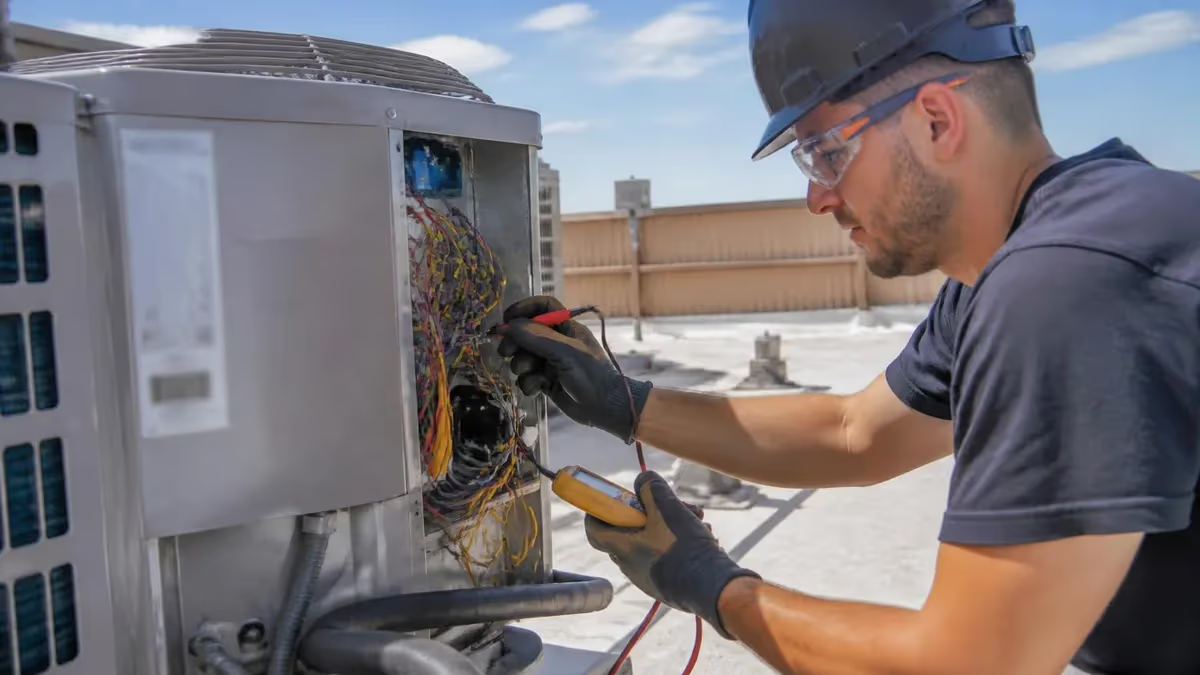
HVAC heat recovery is one of the most impactful technologies in modern heating and cooling, yet many homeowners and building managers have never heard of it. At its core, heat recovery refers to the process of capturing thermal energy that would otherwise be expelled or wasted — energy from exhaust air, refrigerant cycles, or mechanical processes — and redirecting it to pre-condition incoming fresh air or supplement water heating. When properly applied, hvac heat recovery can slash energy consumption by 50 to 80 percent compared to systems that simply discard exhaust air.
The concept is grounded in simple thermodynamics: energy cannot be created or destroyed, only transferred. Traditional ventilation systems pull in cold outdoor air in winter or hot outdoor air in summer and then spend enormous amounts of energy bringing that air to a comfortable temperature. Heat recovery ventilation interrupts this waste cycle by allowing outgoing stale air — which is already at a comfortable indoor temperature — to transfer its thermal energy to the incoming fresh air stream before either stream enters or exits the building.
The result is a dramatic reduction in the load placed on your furnace, air conditioner, or boiler. In a well-insulated home using a high-efficiency heat recovery ventilator, heating and cooling equipment may run for significantly shorter periods, extending equipment life, lowering utility bills, and reducing the building's carbon footprint simultaneously. It is a rare win-win scenario in HVAC engineering.
Heat recovery technology has matured considerably since its introduction in the 1970s energy crisis era. Modern units are compact, quiet, electronically controlled, and available for applications ranging from a single 1,200-square-foot apartment to a sprawling 500,000-square-foot commercial tower. Efficiency ratings now routinely exceed 75 percent sensible heat recovery, with premium enthalpy-based units recovering both heat and moisture at rates above 80 percent.
Understanding how heat recovery fits into an overall HVAC strategy matters whether you are a homeowner evaluating an upgrade, a student preparing for the EPA 608 or NATE certification examinations, or a facilities manager writing specifications for a new construction project. The technology intersects with ventilation codes like ASHRAE 62.1, energy standards like ASHRAE 90.1, and green building programs such as LEED and ENERGY STAR.
This guide covers every major aspect of HVAC heat recovery: the different system types, how each one functions mechanically, the measurable benefits backed by real energy data, the installation and maintenance requirements you should anticipate, and the decision factors that determine which system belongs in which application. By the end, you will have a solid foundation for evaluating, specifying, or simply understanding this essential technology.
HVAC Heat Recovery by the Numbers
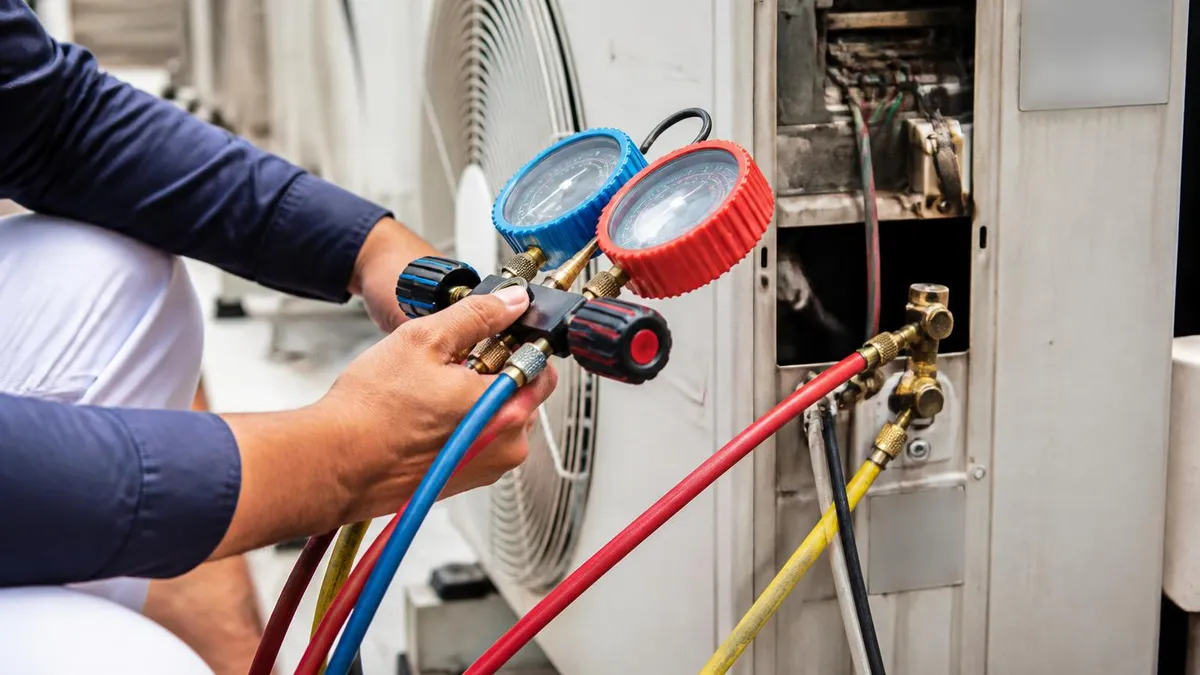
Main Types of HVAC Heat Recovery Systems
Transfers sensible heat only between exhaust and supply air streams using a plate-based core. Best suited to cold, dry climates where controlling indoor humidity is less critical than retaining warmth.
Transfers both sensible heat and latent moisture, making it ideal for hot-humid or cold climates where maintaining indoor humidity balance is just as important as temperature control.
Use a fluid loop connecting two coils in separate air streams to transfer heat indirectly. Ideal for applications where supply and exhaust ducts are far apart or cross-contamination is a concern.
A slowly rotating wheel of heat-exchanging media captures heat from exhaust air and releases it into incoming supply air. High efficiency and low pressure drop make these popular in commercial AHUs.
A specialized application of heat recovery that uses refrigerant cycles to extract heat from indoor air and use it to heat domestic hot water, achieving efficiencies up to 300 percent (COP of 3.0).
Understanding how a heat recovery ventilator works at a mechanical level removes much of the mystery surrounding these systems. An HRV contains two separate air channels that never mix — one carrying stale, warm exhaust air out of the building, and one bringing fresh, cold supply air in from outside. Both air streams pass through a cross-flow or counter-flow heat exchange core, typically made of aluminum, polypropylene, or a similar thermally conductive material. Heat moves from the warmer stream to the cooler stream through the core walls without the two air streams ever physically contacting each other.
In winter operation, the exhaust air leaving your home might be 70°F while outdoor supply air is 20°F. As these streams flow through the core, the exhaust air transfers its heat to the thin separating walls, and those walls transfer it to the incoming supply air.
By the time the supply air exits the core and enters your living space, it may have warmed to 55 to 60°F — a far cry from the brutal 20°F that would have entered a simple exhaust fan system. Your furnace only needs to raise that air the remaining 10 to 15 degrees rather than a full 50 degrees.
Summer operation reverses the logic. Outdoor air arriving at 95°F encounters exhausted indoor air at 75°F in the core. The hot incoming air surrenders heat to the cooler exhaust stream, arriving in the building pre-cooled to perhaps 80°F. Your air conditioner still has work to do, but far less of it. In humid climates, an ERV goes a step further by also transferring moisture, preventing the incoming air from dumping humidity into your already-conditioned interior space.
Rotary thermal wheels function differently. A large cylindrical drum coated with desiccant or bare metal slowly rotates between exhaust and supply airstreams. Each portion of the wheel alternately absorbs heat (and moisture, in desiccant wheels) from the exhaust air and then releases it into the supply air as the wheel turns. Rotation speed is typically one to ten revolutions per minute. These wheels are extraordinarily efficient — sensible efficiencies above 80 percent are common — but require regular cleaning to prevent cross-contamination between streams.
Run-around coil systems solve a specific problem: when exhaust and supply air ducts are located far apart or on different floors of a building, running a direct heat exchange core between them is impractical. Instead, a glycol-water solution circulates through a coil in the exhaust duct, absorbs heat, travels through insulated piping to a coil in the supply duct, releases that heat, and returns to the exhaust side. The efficiency is lower — typically 45 to 65 percent — but the flexibility is unmatched for complex commercial retrofits.
Heat pump-based heat recovery systems use the refrigerant cycle to move heat rather than simply exchange it. A heat pump water heater, for example, extracts heat from indoor air (which may already be heated by the sun, occupants, or equipment) and compresses it to a higher temperature suitable for domestic hot water. This process is so efficient that for every unit of electrical energy input, the system delivers two to three units of thermal energy. In buildings with high hot-water demand — hotels, restaurants, fitness centers — heat pump water heaters generate substantial savings.
Dedicated outdoor air systems (DOAS) with heat recovery represent the commercial building standard for ventilation. In a DOAS configuration, a standalone air handling unit brings in 100 percent outdoor air, passes it through an ERV or HRV core, and delivers it to the zones at neutral temperature — typically 65 to 70°F in heating season and 55 to 60°F in cooling season. Zone-level equipment handles only the sensible and latent loads from occupants, equipment, and solar gain, not the ventilation load. This separation dramatically improves both air quality and system efficiency.
HRV vs ERV vs Heat Pump Heat Recovery: What Is the Difference?
A Heat Recovery Ventilator transfers only sensible heat — the dry temperature component of air — between exhaust and supply streams. Because it does not transfer moisture, it excels in cold, dry climates such as the Upper Midwest, Canada, and mountain regions where indoor air is already too humid from occupant activities in winter. HRVs actively help remove excess indoor moisture by exhausting it with the outgoing air, preventing condensation on windows and walls during frigid weather.
HRV efficiency ratings typically range from 70 to 85 percent sensible heat recovery under standard AHRI 1060 test conditions at 32°F outdoor temperature. Installation costs for residential units range from $1,500 to $3,500 including ductwork modifications, with units themselves priced between $600 and $2,000 depending on capacity. Maintenance involves cleaning the core every three to six months and replacing filters quarterly — tasks most homeowners can handle themselves without professional help.
Advantages and Disadvantages of HVAC Heat Recovery Systems
- +Reduces heating and cooling energy consumption by 50 to 80 percent compared to standard exhaust ventilation
- +Improves indoor air quality by enabling continuous fresh air exchange without the energy penalty
- +Qualifies for federal tax credits (up to 30%) and utility rebates in most US states
- +Extends the service life of primary HVAC equipment by reducing run hours and mechanical stress
- +Supports LEED, ENERGY STAR, and ASHRAE 90.1 compliance for green building certifications
- +Reduces carbon footprint, supporting organizational and regulatory sustainability goals
- −Higher upfront installation cost compared to simple exhaust fans or basic ventilation systems
- −Requires regular maintenance (filter changes, core cleaning) to maintain efficiency ratings
- −Improper sizing leads to either inadequate ventilation or excessive energy use — professional load calculations are essential
- −HRV cores can freeze in extreme cold (below -13°F) without a defrost cycle, requiring careful system selection in northern climates
- −ERV cores can harbor mold or bacteria if moisture is not properly managed, especially in high-humidity environments
- −Adds ductwork complexity that increases installation labor costs and requires careful design to avoid short-circuiting
Pros and Cons at a Glance
| Pros | Cons |
|---|---|
| Improves indoor air quality by enabling continuous fresh air exchange without the energy penalty | Higher upfront installation cost compared to simple exhaust fans or basic ventilation systems |
| Extends the service life of primary HVAC equipment by reducing run hours and mechanical stress | Requires regular maintenance (filter changes, core cleaning) to maintain efficiency ratings |
| Reduces carbon footprint, supporting organizational and regulatory sustainability goals | Improper sizing leads to either inadequate ventilation or excessive energy use — professional load calculations are essential |
HVAC Heat Recovery Installation and Maintenance Checklist
- ✓Perform a Manual J load calculation or ASHRAE 62.1 ventilation rate calculation before selecting unit size
- ✓Choose HRV for cold-dry climates and ERV for hot-humid or mixed climates based on local weather data
- ✓Verify that the unit's AHRI 1060 efficiency rating meets or exceeds your local energy code requirements
- ✓Locate the HRV or ERV centrally to minimize duct runs and balance supply and exhaust airflows within 10 percent
- ✓Install accessible filter housings and label them clearly so occupants can perform routine filter changes
- ✓Verify defrost capability if your climate experiences sustained temperatures below 20°F for more than a week
- ✓Balance the system at startup using a flow hood or digital manometer to confirm supply and exhaust flows match design specs
- ✓Clean the heat exchange core every three to six months using the manufacturer's recommended method
- ✓Inspect condensate drain lines annually to prevent blockages that could damage the core or cause water infiltration
- ✓Document all airflow measurements, filter change dates, and core cleanings in a maintenance log for warranty compliance
A 5% Efficiency Difference Can Mean Hundreds of Dollars Per Year
When comparing HVAC heat recovery units, a sensible heat efficiency difference of just 5 percentage points — say, 75 percent versus 80 percent — can translate to $100 to $300 in additional annual energy savings in a typical US home. Over a 15-year equipment life, that gap compounds to $1,500 to $4,500. Always compare units using AHRI 1060 certified efficiency data at your climate's most representative test temperature, not just the manufacturer's peak rating.
The energy savings delivered by HVAC heat recovery systems are well-documented by both laboratory testing and real-world monitoring studies. The Oak Ridge National Laboratory published findings showing that homes equipped with high-efficiency HRVs reduced ventilation-related energy losses by 70 percent compared to exhaust-only ventilation. The National Renewable Energy Laboratory documented similar results in commercial applications, with DOAS systems incorporating energy recovery reducing total HVAC energy use by 15 to 30 percent relative to conventional all-air systems.
To translate those percentages into dollars, consider a typical 2,000-square-foot home in Chicago, Illinois — ASHRAE Climate Zone 5A. The home requires approximately 100 cubic feet per minute of fresh air per ASHRAE 62.2. Without heat recovery, heating that outdoor air during a typical Chicago winter costs roughly $600 to $900 per year, depending on natural gas prices. An HRV with 80 percent efficiency reduces that cost to $120 to $180 per year — saving $480 to $720 annually on ventilation heating alone, before counting any cooling season benefits.
Commercial buildings achieve even more dramatic returns because the scale of ventilation requirements is so much larger. A 50,000-square-foot office building might require 10,000 CFM of outdoor air under ASHRAE 62.1. Conditioning that air without heat recovery could cost $30,000 to $50,000 per year in a mixed climate. Adding an ERV with 75 percent total efficiency reduces that burden to $7,500 to $12,500 — saving $22,500 to $37,500 annually. At a typical installed system cost of $80,000 to $120,000 for a commercial ERV system, payback occurs in three to four years.
Calculating return on investment accurately requires factoring in local energy prices, climate severity (measured in heating and cooling degree days), the building's ventilation rate, and the unit's specific efficiency at your climate conditions. Online tools from ASHRAE and the Department of Energy's Building Energy Codes Program provide free calculators. Many utilities also offer custom energy modeling as part of their commercial rebate application process, which can help building owners build a compelling business case for capital approval.
Federal incentives under the Inflation Reduction Act significantly improve the ROI calculation for residential applications. The Energy Efficient Home Improvement Credit (Section 25C) covers 30 percent of the cost of qualifying heat pump water heaters and heat recovery ventilators, up to $2,000 per year. Many state and utility programs stack additional rebates on top, potentially covering 40 to 50 percent of total project cost. The Database of State Incentives for Renewables and Efficiency (DSIRE) at dsireusa.org is the authoritative source for checking available incentives in your area.
Beyond direct energy savings, heat recovery systems generate economic value through equipment longevity. When your furnace runs fewer hours per year because incoming ventilation air is pre-conditioned, heat exchanger cracking, blower motor wear, and burner degradation all occur more slowly. Industry data suggests that HVAC primary equipment in buildings with effective heat recovery lasts 20 to 30 percent longer than equivalent equipment in systems without it. Deferred replacement costs add meaningful value to the total ROI calculation, particularly for commercial buildings managing large equipment replacement budgets.
Indoor air quality improvements deliver a less quantifiable but real economic benefit as well. Buildings with effective heat recovery ventilation achieve higher fresh air rates than those relying on infiltration alone, reducing CO2 buildup and volatile organic compound concentrations. Harvard's School of Public Health published a landmark study showing that doubling fresh air rates in office buildings improved cognitive function scores by 101 percent. For commercial tenants, that productivity gain can dwarf the energy cost savings many times over, making heat recovery one of the highest-value investments in the built environment.
A heat recovery ventilator or ERV that is too small will not meet ventilation requirements, leading to CO2 buildup and poor air quality — and potentially putting the building out of compliance with ASHRAE 62.1 or 62.2. A unit that is too large will short-cycle, operate inefficiently, and may cause excessive drying of indoor air in winter. Always size units based on a proper ventilation rate calculation, not on square footage rules of thumb from marketing materials.
Choosing the right HVAC heat recovery system for a specific application involves evaluating six key factors: climate zone, building type and occupancy, ventilation rate requirements, duct layout constraints, budget, and certification goals. Getting this selection right upfront avoids the costly scenario of replacing an undersized or misapplied unit after just a few years of operation — a situation that erases any financial benefit the system might have provided.
Climate zone is the most fundamental selection variable. The US Department of Energy and ASHRAE divide the country into eight climate zones ranging from Zone 1 (hot-humid Florida) to Zone 7 (very cold Alaska and northern Minnesota). In Zones 1 and 2, ERVs are almost universally preferred because summer humidity control is the dominant concern and winters are mild enough that freezing is rarely an issue.
In Zones 6 and 7, HRVs are generally preferred because controlling excess indoor winter humidity is important and the sensible-only HRV handles very cold temperatures more reliably. Zones 3 through 5 are mixed, and climate data analysis — particularly local heating and cooling degree days and average humidity levels — should drive the decision.
Building type shapes the selection in important ways. Single-family residential applications typically use compact, quiet HRV or ERV units designed for 50 to 250 CFM airflow, often integrated with the existing forced-air duct system. Multifamily buildings may use a central ERV serving the whole building or individual units per apartment, depending on code requirements and architect preferences. Commercial office buildings almost universally specify air handling units with integrated energy recovery wheels or plate cores rated for thousands of CFM at ASHRAE 90.1 efficiency thresholds.
Duct layout constraints frequently determine which technology is feasible. A plate-core HRV or ERV requires that supply and exhaust air ducts pass through the same location — typically the mechanical room or basement. If the building's supply and exhaust are on opposite ends of the structure, a run-around coil system becomes the only practical passive heat recovery option, despite its lower efficiency. Rotary wheels require careful attention to leakage control — ASHRAE Standard 84 defines acceptable carryover limits for applications where cross-contamination between supply and exhaust streams is a concern, such as hospitals or laboratories.
Certification goals under LEED v4.1, ASHRAE 189.1, or local energy codes may mandate specific minimum efficiency thresholds that narrow your product selection. LEED's Enhanced Indoor Air Quality credit requires meeting ASHRAE 62.1 minimum ventilation rates, which heat recovery makes far more economical. ASHRAE 90.1-2022, which many states have adopted as their commercial energy code, requires energy recovery in climate zones 3 through 8 when outdoor air fractions exceed 70 percent — effectively mandating heat recovery in most dedicated outdoor air system applications.
Installation quality is as important as product selection. An improperly commissioned HRV with supply and exhaust flows mismatched by more than 15 percent will either under-ventilate or create pressure imbalances that allow unconditioned air to infiltrate through the building envelope. Filters must be correctly sized and accessible — systems with poorly accessible filters are almost never maintained properly, leading to core fouling that reduces efficiency by 20 to 40 percent within the first two years of operation. Specify clearly in your project documents that commissioning must include airflow verification using calibrated instruments.
Maintenance planning must begin at the design stage, not after installation. Every heat recovery system has a maintenance schedule — typically quarterly filter replacement, semi-annual core cleaning, and annual inspection of defrost controls, condensate drains, and fan bearings. Building owners who do not plan for this maintenance see efficiency degrade rapidly.
A major university study tracking 50 installed HRVs found that units with documented maintenance plans retained 92 percent of their original efficiency after five years, while poorly maintained units had fallen to just 61 percent efficiency — barely better than unrecovered ventilation in some cases. Maintenance is not optional; it is the investment that protects the investment.
For students preparing for HVAC certifications and licensing examinations, heat recovery is a topic that appears with increasing frequency as energy codes tighten and green building programs expand. NATE (North American Technician Excellence) certification exams test knowledge of heat recovery ventilators in the context of residential and light commercial air systems. The EPA 608 exam, while primarily focused on refrigerant handling, overlaps with heat pump heat recovery in its coverage of refrigerant cycles, pressure-enthalpy relationships, and system efficiency. Understanding heat recovery conceptually will strengthen your performance across multiple exam domains.
When studying heat recovery for certification purposes, focus first on the vocabulary: sensible heat, latent heat, enthalpy, effectiveness, and coefficient of performance are all terms that appear regularly. Sensible heat changes the temperature of air without changing its moisture content — this is what HRVs recover. Latent heat changes the moisture content of air without changing its dry-bulb temperature — this is what ERVs additionally recover. Enthalpy combines both sensible and latent components and is the correct measure for evaluating ERV total performance.
Effectiveness is the engineering metric used to rate heat exchangers. It is calculated as the ratio of actual heat transfer to the maximum possible heat transfer. If outdoor air is 20°F, indoor exhaust is 70°F, and the supply air exits the core at 60°F, the sensible effectiveness is (60 − 20) ÷ (70 − 20) = 80 percent. Practice calculating effectiveness at different conditions — exam questions often present this type of calculation with varying inlet temperatures to test whether you understand the formula rather than simply memorizing a number.
ASHRAE Standard 62.1 (commercial) and 62.2 (residential) govern minimum ventilation rates in occupied spaces. Both standards allow credit for heat recovery in the sense that they specify airflow requirements regardless of how you meet them — but meeting those airflow requirements becomes economically viable only when heat recovery is in place. Exam questions on code compliance frequently present a scenario where the building requires a certain CFM of outdoor air and ask candidates to select the appropriate equipment or calculate the energy impact of providing that air with and without recovery.
ASHRAE 90.1-2022 energy efficiency requirements for commercial buildings include specific heat recovery mandates based on climate zone and outdoor air fraction. Table 6.5.1.1 in 90.1 specifies the thresholds at which energy recovery is required. If an air handling unit serves a climate zone 5 building and the outdoor air fraction exceeds 50 percent, energy recovery is generally required. These specific thresholds are prime exam material for those pursuing LEED GA/AP credentials or ASHRAE certifications.
Laboratory practice is the complement to theoretical study. If your HVAC training program or employer has an HRV or ERV unit available, hands-on time with that equipment is invaluable. Practice identifying the supply and exhaust air inlets and outlets, locating and replacing the filter, removing and inspecting the heat exchange core, and measuring airflows with a digital manometer. The ability to troubleshoot a poorly performing unit — distinguishing between a fouled core, a failed fan motor, and a blocked condensate drain — is the practical knowledge that separates excellent technicians from merely credentialed ones.
Study resources for heat recovery topics include the ASHRAE Handbook — Fundamentals (Chapter 26, Air-to-Air Energy Recovery Equipment), ACCA Manual D for duct design applicable to integrated HRV systems, and the AHRI 1060 standard that defines certified testing procedures. PracticeTestGeeks offers practice tests covering HVAC air conditioning principles and code compliance that include questions on ventilation, energy recovery, and system efficiency — ideal for reinforcing theoretical knowledge with exam-format application questions before your certification date.
Sample HVAC Practice Questions
Try these questions from our free HVAC practice tests. The correct answer and an explanation follow each question.
What is the difference between an HRV (Heat Recovery Ventilator) and an ERV (Energy Recovery Ventilator)?
- A. HRV transfers only sensible heat; ERV transfers both sensible heat and moisture (latent energy)
- B. HRV is for commercial use; ERV is for residential use only
- C. HRV uses refrigerant; ERV uses thermal wheels
- D. HRV improves IAQ; ERV improves energy efficiency only
Answer: A. HRV transfers only sensible heat; ERV transfers both sensible heat and moisture (latent energy)
An HRV transfers only sensible heat (temperature) between outgoing and incoming air streams. An ERV transfers both sensible heat and latent heat (moisture), making it more appropriate for climates where humidity control matters.
In a commercial Variable Refrigerant Flow (VRF) system, what distinguishes a 'heat recovery' system from a 'heat pump' system?
- A. Heat recovery uses a cooling tower; heat pump is air-cooled
- B. Heat recovery allows simultaneous heating and cooling in different zones; heat pump can only heat or cool the entire system at once
- C. Heat recovery uses two compressors; heat pump uses one
- D. Heat recovery operates on R-410A; heat pump on R-22
Answer: B. Heat recovery allows simultaneous heating and cooling in different zones; heat pump can only heat or cool the entire system at once
VRF heat recovery systems use a branch circuit controller to simultaneously deliver heating refrigerant to some indoor units and cooling to others, maximizing efficiency.
What is 'heat recovery' in commercial HVAC and provide an example?
- A. Recovering heat from the condenser to preheat domestic hot water instead of rejecting all heat to a cooling tower
- B. Using waste heat from lighting systems to reduce heating loads
- C. Recovering heat from occupants to eliminate the need for heating
- D. Using economizer mode to recover heat in winter for reheating
Answer: A. Recovering heat from the condenser to preheat domestic hot water instead of rejecting all heat to a cooling tower
Heat recovery captures heat that would otherwise be wasted—the most common commercial application is using chiller condenser heat to preheat domestic hot water, reducing boiler energy use.
How does a heat pump water heater work?
- A. It heats water using electric resistance elements supplemented by solar panels
- B. It uses refrigeration cycle (heat pump technology) to extract heat from surrounding air to heat water, achieving COP of 3-4 (200-400% efficient)
- C. It recovers waste heat from the HVAC system condenser to heat water
- D. It uses ground-source heat pump technology exclusively to heat domestic water
Answer: B. It uses refrigeration cycle (heat pump technology) to extract heat from surrounding air to heat water, achieving COP of 3-4 (200-400% efficient)
A heat pump water heater uses a refrigeration cycle to extract heat from ambient air and transfer it to the water tank, achieving 200-400% efficiency versus 100% for electric resistance heaters.
HVAC Questions and Answers
FCU HVAC: The Complete Guide to Fan Coil Units, How They Work, Where They Excel, and How to Choose the Right System
Finance a New HVAC System: 2026 Loans, 0% APR, and Rebates
HVAC Duct Repair: Common Issues, Costs, and DIY vs Professional

HVAC School -- Programs, Costs, and Career Paths in 2026
HVAC Advertising: The Complete Playbook for Generating Leads, Booking Calls, and Growing Your Heating and Cooling Business
About the Author

NATE Certified HVAC Technician & Licensing Exam Trainer
Universal Technical InstituteMike Johnson is a NATE-certified HVAC technician and EPA 608 universal-certified refrigerant handler with a Bachelor of Science in HVAC/R Technology. He has 19 years of commercial and residential HVAC installation and service experience and specializes in preparing technicians for NATE certification, EPA 608, A2L refrigerant safety, and state HVAC contractor licensing examinations.