
What Is an HVAC System? Complete Guide to Heating, Ventilation, and Air Conditioning
🏆 What is an HVAC system? Learn how heating, ventilation, and air conditioning work together, system types, costs, and maintenance basics.
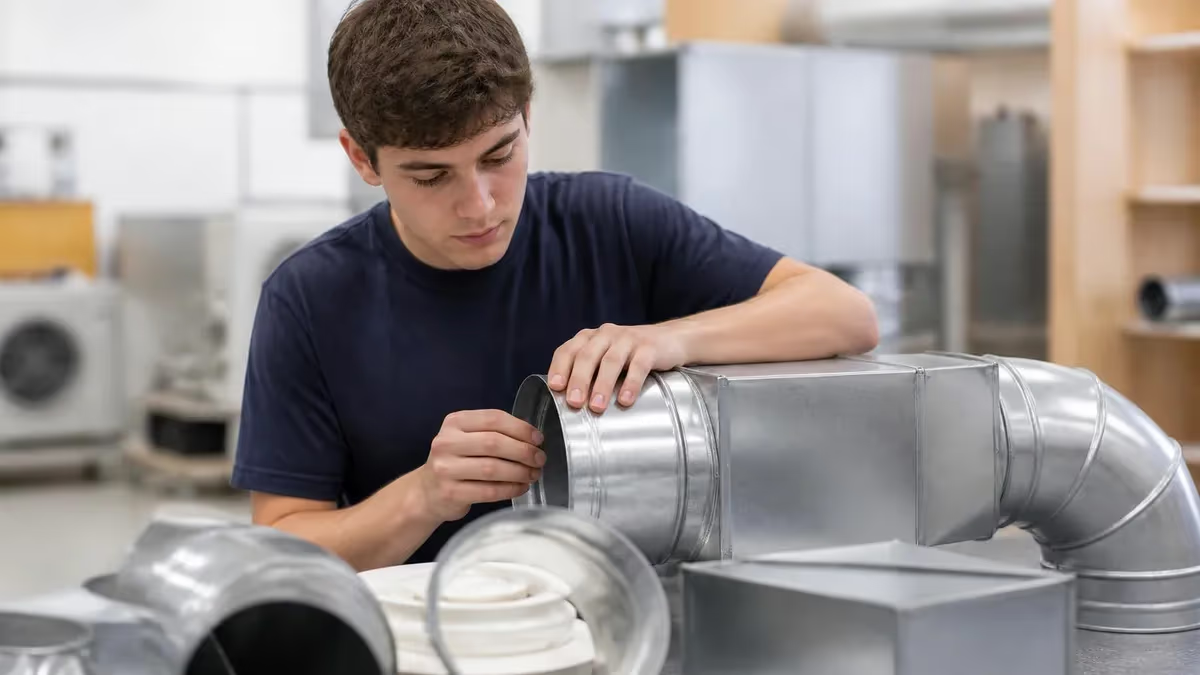
If you have ever wondered what is an HVAC system, the short answer is that HVAC stands for heating, ventilation, and air conditioning — the integrated network of equipment that controls temperature, humidity, and air quality inside a building. Whether you live in a one-bedroom apartment or manage a 50,000 square foot warehouse, an HVAC system is what keeps the indoor environment comfortable, healthy, and breathable across every season of the year.
At its core, an HVAC system moves thermal energy from one place to another. In summer, it pulls heat out of your home and dumps it outside. In winter, it generates heat (or pulls it from outdoor air or the ground) and distributes it indoors. Along the way, it filters dust, controls humidity, removes stale air, and brings in fresh outside air. That continuous exchange is what separates a true HVAC system from a simple window unit or space heater.
A complete residential system typically includes a furnace or heat pump, an air conditioner condenser, an indoor air handler with a blower fan, a network of ducts, supply and return registers, a thermostat, and one or more air filters. Commercial systems add chillers, boilers, rooftop units, variable air volume (VAV) boxes, and building management controls. The exact mix depends on climate, building size, fuel availability, and budget.
Modern HVAC has changed dramatically in the past decade. Variable-speed compressors, ECM blower motors, smart thermostats, and inverter heat pumps now deliver efficiency ratings that would have seemed impossible in 2010. A new 18 SEER2 heat pump can heat a home for less than half the operating cost of a 1990s electric furnace. That efficiency push is why HVAC is one of the fastest-growing skilled trades in the United States.
HVAC matters for more than comfort. The EPA estimates Americans spend roughly 90 percent of their time indoors, where air pollutant concentrations can be two to five times higher than outdoor levels. A properly designed system dilutes those pollutants, controls relative humidity between 30 and 60 percent (the range where mold, dust mites, and viruses struggle), and prevents the moisture problems that destroy building materials and trigger respiratory issues.
This guide walks through every major component, system type, and decision point so you understand how the equipment works, what it costs, and how to keep it running. We will cover split systems versus packaged units, gas furnaces versus heat pumps, ductwork basics, filtration, thermostats, energy efficiency ratings, and the maintenance routines that double equipment lifespan. Along the way, you will find links to HVAC Maintenance resources and practice quizzes if you are studying for a trade certification.
Whether you are a homeowner trying to decide between repair and replacement, a new homeowner learning your equipment for the first time, or an apprentice studying for the EPA 608 exam, understanding the fundamentals of HVAC will save you money, prevent breakdowns, and help you make smarter decisions every time a contractor walks through your door.
HVAC Systems by the Numbers
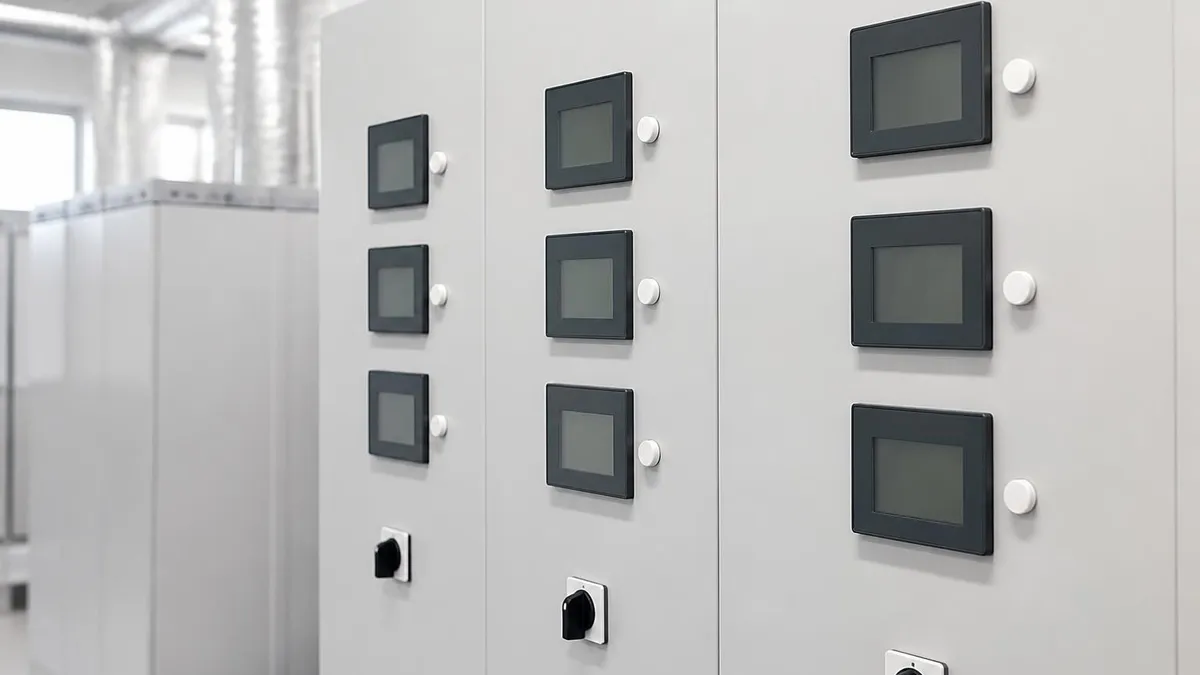
Core HVAC Components Explained
The primary heating source. Gas furnaces burn natural gas or propane to produce heat, while heat pumps transfer heat from outdoor air or the ground using a refrigerant cycle, providing both heating and cooling.
The outdoor unit containing the compressor and condenser coil. It releases heat absorbed from indoor air, allowing the refrigerant to cycle back inside and continue cooling your home efficiently throughout summer.
The indoor unit that circulates conditioned air through ductwork. Contains the evaporator coil, blower motor, and often the air filter. Variable-speed models adjust airflow for comfort and efficiency.
Sheet metal or flex ducts that distribute air to every room. Supply registers deliver conditioned air while return grilles pull stale air back to the system for re-conditioning and filtration.
The brain of the system. Senses indoor temperature and signals equipment to cycle on or off. Smart thermostats add scheduling, geofencing, and remote control via smartphone apps.
To really answer the question of what is an HVAC system, you have to understand the physics behind it. Every HVAC system is essentially a heat transfer machine. Heat naturally flows from warmer areas to cooler areas, and HVAC equipment uses electricity, gas, or fuel oil to either accelerate that natural flow or reverse it. The refrigeration cycle, combustion, and forced convection are the three primary mechanisms at work.
The refrigeration cycle is the heart of every air conditioner and heat pump. A chemical refrigerant — historically R-22, now R-410A and the newer A2L refrigerants like R-454B — circulates between the indoor evaporator coil and outdoor condenser coil. The compressor pressurizes the refrigerant into a hot, high-pressure gas. As it travels through the condenser coil outside, it releases heat to the outdoor air and condenses into a liquid.
That liquid refrigerant then passes through a metering device (a TXV or fixed orifice) which drops its pressure dramatically. The cold, low-pressure refrigerant enters the indoor evaporator coil where it absorbs heat from the air being blown across it by the blower fan. Your home gets cooler because heat is literally being carried outside in the refrigerant stream. A heat pump simply reverses this cycle in winter to deliver heat instead of cold.
Combustion heating works differently. In a gas furnace, natural gas or propane mixes with air and burns inside a sealed heat exchanger. The blower pushes household air across the outside of that heat exchanger, picking up heat without ever mixing with the combustion gases. Exhaust gases vent outside through a flue. Modern condensing furnaces extract additional heat from the exhaust, reaching efficiency ratings of 95 to 98 percent AFUE.
Forced convection is what actually delivers comfort to your living space. The blower motor pushes hundreds to thousands of cubic feet of air per minute through your ducts. Supply registers in each room deliver heated or cooled air, while return grilles pull room air back to the air handler for re-conditioning. A well-designed system creates gentle circulation without drafts, hot spots, or pressure imbalances between rooms.
Ventilation, the V in HVAC, is the most overlooked function. Code-built homes are increasingly airtight, which is great for energy but terrible for indoor air quality without mechanical ventilation. Energy recovery ventilators (ERVs) and heat recovery ventilators (HRVs) bring in fresh outdoor air while transferring heat or moisture between the incoming and outgoing streams, dramatically reducing the energy penalty of ventilation.
Finally, modern systems integrate sophisticated controls. A thermostat is no longer a simple bimetal switch — it is a microprocessor running algorithms that learn your schedule, predict warm-up times, monitor humidity, and even communicate with utility demand-response programs. Reading the HVAC Trade School overview can help if you are interested in learning these systems professionally.
HVAC Practice Test Questions
Prepare for the HVAC - Heating Ventilation and Air Conditioning exam with our free practice test modules. Each quiz covers key topics to help you pass on your first try.
HVAC Air Conditioning
HVAC Exam Questions covering Air Conditioning. Master HVAC Test concepts for certification prep.
HVAC Code Compliance
Free HVAC Practice Test featuring Code Compliance. Improve your HVAC Exam score with mock test prep.
HVAC Electrical Controls
HVAC Test Prep for Electrical Controls. Practice HVAC Quiz questions and boost your score.
HVAC Energy Efficiency
HVAC Questions and Answers on Energy Efficiency. Free HVAC practice for exam readiness.
HVAC Heating Systems
HVAC Mock Test covering Heating Systems. Online HVAC Test practice with instant feedback.
HVAC Load Calculations
Free HVAC Quiz on HVAC Load Calculations. HVAC Exam prep questions with detailed explanations.
HVAC Tools and Equipment
HVAC Practice Questions for HVAC Tools and Equipment. Build confidence for your HVAC certification exam.
HVAC Refrigeration
HVAC Test Online for Refrigeration. Free practice with instant results and feedback.
HVAC Safety Practices
HVAC Study Material on Safety Practices. Prepare effectively with real exam-style questions.
HVAC System Design
Free HVAC Test covering System Design. Practice and track your HVAC exam readiness.
HVAC Thermodynamics
HVAC Exam Questions covering Thermodynamics. Master HVAC Test concepts for certification prep.
Types of HVAC Systems
A split system is the most common residential HVAC configuration in the United States, accounting for roughly 70 percent of installed systems. It splits the equipment into two units: an outdoor condenser containing the compressor and condenser coil, and an indoor air handler or furnace containing the evaporator coil and blower. The two are connected by refrigerant lines, a condensate drain, and control wiring running through an exterior wall.
Split systems are popular because they offer excellent efficiency, quiet indoor operation, and flexibility to pair different heating and cooling components. You can install a gas furnace with an AC condenser, an electric air handler with a heat pump, or a dual-fuel system that switches between gas and heat pump based on outdoor temperature. Repair costs are generally lower because components are accessible and standardized across manufacturers.

Central HVAC System: Pros and Cons
- +Whole-home comfort with a single thermostat and integrated controls
- +Higher capacity handles large square footage and extreme climates efficiently
- +Centralized filtration improves indoor air quality across every room
- +Quiet indoor operation since the compressor sits outside
- +Compatible with humidifiers, UV lights, and advanced filtration add-ons
- +Adds resale value and meets buyer expectations in most US markets
- +Long equipment lifespan of 15 to 20 years with proper maintenance
- −Higher upfront installation cost than window units or space heaters
- −Requires existing or installed ductwork, which can be invasive in older homes
- −Duct leaks and poor design can waste 20 to 30 percent of conditioned air
- −Single zone control means heating or cooling unused rooms wastes energy
- −Annual professional maintenance is needed to maintain warranty coverage
- −Refrigerant repairs require EPA-certified technicians and specialized tools
Pros and Cons at a Glance
| Pros | Cons |
|---|---|
| Whole-home comfort with a single thermostat and integrated controls | Higher upfront installation cost than window units or space heaters |
| Higher capacity handles large square footage and extreme climates efficiently | Requires existing or installed ductwork, which can be invasive in older homes |
| Centralized filtration improves indoor air quality across every room | Single zone control means heating or cooling unused rooms wastes energy |
| Quiet indoor operation since the compressor sits outside | Annual professional maintenance is needed to maintain warranty coverage |
| Compatible with humidifiers, UV lights, and advanced filtration add-ons | Refrigerant repairs require EPA-certified technicians and specialized tools |
HVAC System Homeowner Maintenance Checklist
- ✓Replace 1-inch air filters every 30 to 60 days, or media filters every 6 to 12 months
- ✓Keep outdoor condenser clear of leaves, grass clippings, and shrubs within two feet
- ✓Inspect condensate drain line monthly during cooling season for clogs or algae
- ✓Schedule professional cooling tune-up every spring before summer demand peaks
- ✓Schedule professional heating tune-up every fall before the first cold snap
- ✓Test thermostat batteries and update programmed schedules twice a year
- ✓Listen for unusual noises like grinding, hissing, or banging that signal early problems
- ✓Check supply registers in every room for full unobstructed airflow
- ✓Clean return grilles with a vacuum to remove accumulated dust and pet hair
- ✓Verify carbon monoxide detectors are working if you have any gas-fired equipment
Filter changes alone can cut repair calls by 50 percent
HVAC contractors report that more than half of summer no-cool service calls trace back to a clogged air filter. A dirty filter starves the evaporator coil of airflow, causing it to freeze into a solid block of ice. Setting a calendar reminder to change your filter every 60 days is the single highest-ROI maintenance task any homeowner can perform.
Energy efficiency is where modern HVAC has changed the most in the past 15 years, and understanding the rating system pays off every month on your utility bill. The federal government, through the Department of Energy, sets minimum efficiency standards that have steadily tightened since the 1990s. In 2023, the industry transitioned from SEER to SEER2 ratings, which use a more realistic testing methodology that accounts for external static pressure in real-world duct systems.
SEER2 (Seasonal Energy Efficiency Ratio 2) measures cooling output divided by electrical input over an entire cooling season. The current minimum for new split-system air conditioners is 14.3 SEER2 in northern states and 15.2 SEER2 in southern states. High-efficiency units reach 20 SEER2 or higher using variable-speed compressors and ECM blower motors that ramp output up and down based on demand rather than cycling fully on and off.
For heating, two ratings matter. HSPF2 (Heating Seasonal Performance Factor 2) rates heat pump efficiency, with current minimums of 7.5 and high-end units reaching 10 or higher. AFUE (Annual Fuel Utilization Efficiency) rates gas and oil furnaces as a percentage — an 80 percent AFUE furnace delivers 80 cents of heat per dollar of gas, while a 96 percent AFUE condensing furnace delivers 96 cents per dollar. The difference adds up to hundreds of dollars annually in cold climates.
Heat pumps are the fastest-growing segment because they deliver more than one unit of heat energy per unit of electricity consumed — often 2.5 to 4 units, expressed as Coefficient of Performance or COP. This is possible because heat pumps move existing heat rather than creating it from combustion or resistance. Even a 3.5 COP heat pump on cold winter days outperforms a 96 percent furnace on a per-BTU cost basis in most US utility markets.
Beyond the equipment itself, system design drives real-world efficiency. A 20 SEER2 unit installed with leaky ducts in an uninsulated attic may perform worse than a 14.3 SEER2 unit installed with sealed ducts in conditioned space. Manual J load calculations, Manual D duct design, and proper refrigerant charge can swing actual performance by 30 percent or more. This is why a good contractor matters as much as a good equipment brand.
Federal tax credits and utility rebates have transformed the cost equation. The Inflation Reduction Act created credits up to $2,000 for qualifying heat pump installations, plus state and utility rebates that can reach another $8,000 for income-qualified households. ENERGY STAR certified equipment qualifies for the highest tier in most programs, and the AHRI directory lets you verify whether a specific indoor and outdoor unit combination meets the certification threshold.
Finally, smart thermostats and zoning systems add another efficiency layer. Setting back the thermostat 7 to 10 degrees while you sleep or work can cut heating and cooling bills by 10 percent. Zoned systems with motorized dampers condition only the rooms you are using, while smart thermostats use geofencing to detect when nobody is home and automatically adjust setpoints.
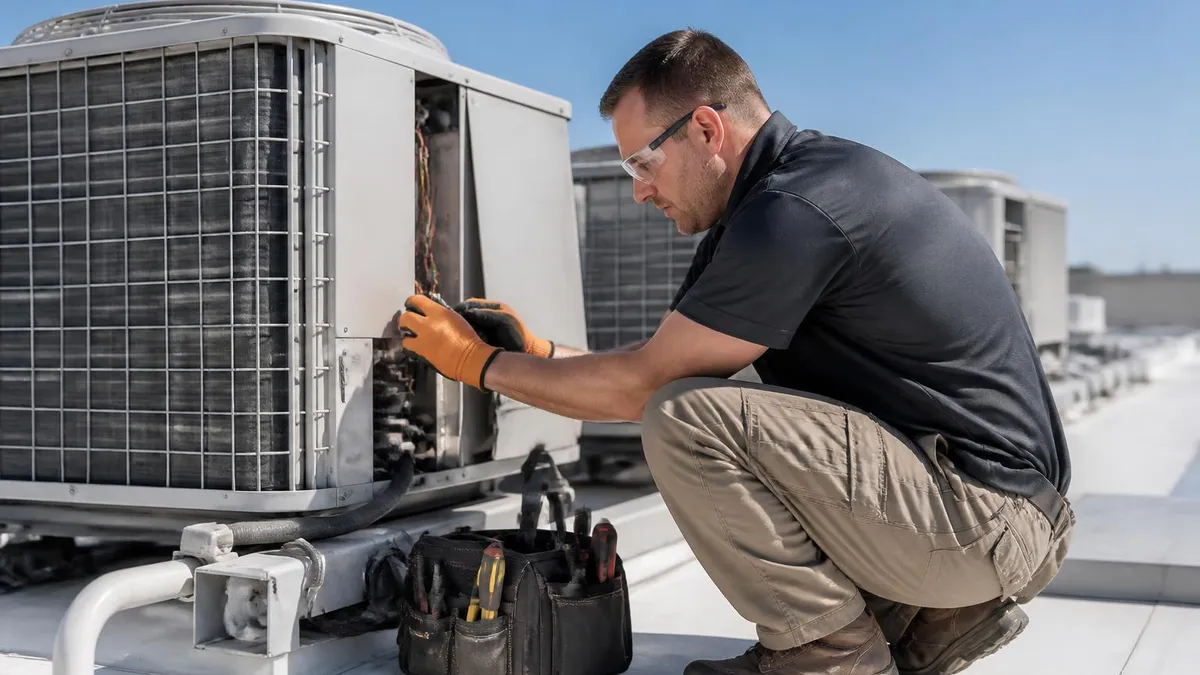
If your system was installed before 2010, it likely uses R-22 (Freon), which has been illegal to manufacture or import in the US since January 2020. Reclaimed R-22 still exists but costs $150 to $300 per pound, making refrigerant leak repairs prohibitively expensive. Most homeowners with R-22 systems should plan to replace rather than repair when a major refrigerant issue occurs.
Understanding HVAC costs helps you budget intelligently and avoid contractor sticker shock. A complete residential system replacement typically runs $5,500 to $12,500 installed, with the wide range driven by tonnage, efficiency tier, fuel type, and regional labor rates. A basic 14.3 SEER2 single-stage 3-ton system in a southern market might land at $6,500, while a 20 SEER2 variable-speed 5-ton system with a 96 percent furnace in a high-cost market can exceed $18,000.
Individual component replacements vary widely. A new furnace alone runs $3,500 to $7,500. An AC condenser replacement is typically $4,000 to $8,000 because the indoor evaporator coil should be replaced at the same time to maintain refrigerant compatibility and warranty coverage. A heat pump system replacement falls between $7,000 and $14,000. Ductless mini-split installations cost $3,500 to $5,500 per indoor head plus the outdoor unit.
Lifespan expectations depend on equipment type and maintenance. Gas furnaces typically last 18 to 25 years. Air conditioners and heat pumps average 12 to 17 years in coastal climates where salt air corrodes outdoor coils, and 15 to 20 years inland. Ductwork itself can last 30 to 50 years if properly sealed and insulated. Knowing when to repair versus replace is the most important financial decision a homeowner makes about HVAC.
The 50 percent rule provides useful guidance: if a single repair costs more than 50 percent of replacement cost, and your system is over 10 years old, replacement is usually the smarter financial choice. Compressor replacement, evaporator coil replacement on R-22 systems, and heat exchanger cracks on old furnaces typically trigger this calculation. For service in specific markets, our HVAC Rancho Cucamonga CA: Complete Guide to Repair, Service, and System Care guide walks through pricing in detail.
Operating costs vary by climate and fuel. The US average household spends about $2,000 annually on heating and cooling combined, but that ranges from $1,200 in mild climates to $3,500 in extreme climates. Electric heating in cold regions can push annual bills over $4,000 without a heat pump. Gas furnaces typically cost 30 to 50 percent less to operate than electric resistance heat in most US markets.
Installation quality often matters more than equipment quality. ENERGY STAR estimates that up to half of HVAC systems are installed improperly, costing homeowners 30 percent in efficiency losses. Look for NATE-certified technicians, written Manual J load calculations, post-installation static pressure measurements, and refrigerant charge verification with weighed-in or subcooling methods. Cheap installs often mean expensive callbacks.
Warranty coverage is the final piece. Most equipment comes with a 10-year parts warranty when registered with the manufacturer within 60 to 90 days of installation. Labor warranties are separate, typically 1 to 10 years through the installing contractor. Extended warranties (3 to 12 years) cost $300 to $1,500 and may make sense for premium variable-speed equipment with expensive control boards and ECM motors.
If you take just one thing from this guide, let it be this: HVAC systems reward attention and punish neglect. The homeowners who get 20 years of trouble-free service from a $10,000 system are the same ones who change filters on schedule, clear debris from their outdoor unit, and have a technician inspect the equipment twice a year. The ones who replace systems every 8 to 10 years almost always skipped the basics.
Start by knowing your equipment. Walk to your furnace or air handler and write down the make, model, and serial number. Take a photo of the data plate on your outdoor condenser. Note the tonnage (a 3-ton unit cools roughly 1,500 to 1,800 square feet in average climates), refrigerant type, and installation date. This information saves time on every service call and tells you whether your system uses obsolete R-22, modern R-410A, or the newest A2L refrigerants.
Learn the seasonal rhythm. Spring is for cooling tune-ups: technicians check refrigerant charge, clean the condenser coil, verify capacitor health, and measure airflow. Fall is for heating tune-ups: combustion analysis on gas furnaces, heat exchanger inspection, ignition system testing, and gas pressure verification. Booking these in shoulder seasons (March-April and September-October) means lower prices and faster scheduling than emergency calls during heat waves or cold snaps.
Set a filter strategy that actually works. Buy six filters at once, write the install date on each one with a Sharpie, and stage them where you will see them. The cheapest 1-inch fiberglass filters protect the equipment but do little for air quality. MERV 8 pleated filters strike the best balance for most homes. MERV 13 filters capture viruses and fine particles but require systems designed for the additional pressure drop — verify with your installer before upgrading.
Pay attention to early warning signs. Short cycling (the system turns on and off rapidly) often signals an oversized unit, low refrigerant, or a failing capacitor. Warm air from cooling vents usually means low refrigerant or a frozen coil. Yellow furnace flames instead of crisp blue indicate combustion problems and possible carbon monoxide risk. Strange smells, water around the indoor unit, or repeatedly tripped breakers all warrant immediate professional attention.
Plan for replacement before failure. The worst time to shop for a new system is the day your old one dies in 95 degree heat. Contractors charge premium prices for emergency replacements, you have no time to compare bids, and you may settle for whatever equipment is in stock. Once your system passes 12 years old, start getting replacement quotes during slow seasons so you can make an informed decision when the time comes.
Finally, keep learning. HVAC technology evolves constantly. Inverter-driven heat pumps, A2L refrigerants, integrated indoor air quality monitoring, and grid-interactive controls are all reshaping what residential systems can do. Understanding the basics covered in this guide — components, system types, efficiency ratings, costs, and maintenance — gives you the foundation to evaluate every new technology and contractor pitch you encounter for the next two decades.
Sample HVAC Practice Questions
Try these questions from our free HVAC practice tests. The correct answer and an explanation follow each question.
What is the primary function of an expansion tank in a closed-loop hydronic heating system?
- A. To increase system water pressure
- B. To accommodate the volume increase of water as it heats and expands
- C. To filter debris from the water
- D. To balance flow between multiple zones
Answer: B. To accommodate the volume increase of water as it heats and expands
As water heats it expands in volume. The expansion tank absorbs this expanded volume, preventing excessive pressure buildup.
What condition is indicated when the suction line of an air conditioning system is heavily frosted all the way back to the compressor?
- A. Overcharge of refrigerant only
- B. Low refrigerant charge
- C. Flooded evaporator with liquid returning to the compressor
- D. Normal operation in humid conditions
Answer: C. Flooded evaporator with liquid returning to the compressor
Frost extending back to the compressor indicates liquid refrigerant is returning (flooding back), which can cause liquid slugging and compressor damage.
What is subcooling in an air conditioning system?
- A. Cooling the evaporator below its design temperature
- B. Lowering refrigerant below its saturation temperature in the liquid state
- C. Removing superheat from suction gas
- D. Operating the system below outdoor design conditions
Answer: B. Lowering refrigerant below its saturation temperature in the liquid state
Subcooling is the number of degrees the liquid refrigerant has been cooled below its saturation (condensing) temperature.
What is the purpose of the filter-drier in an air conditioning system?
- A. Reduce refrigerant pressure
- B. Remove moisture and contaminants from the refrigerant
- C. Separate oil from refrigerant
- D. Meter refrigerant flow to the evaporator
Answer: B. Remove moisture and contaminants from the refrigerant
The filter-drier removes moisture (which can cause acid and freeze-ups) and solid contaminants from the refrigerant circuit.
HVAC Questions and Answers
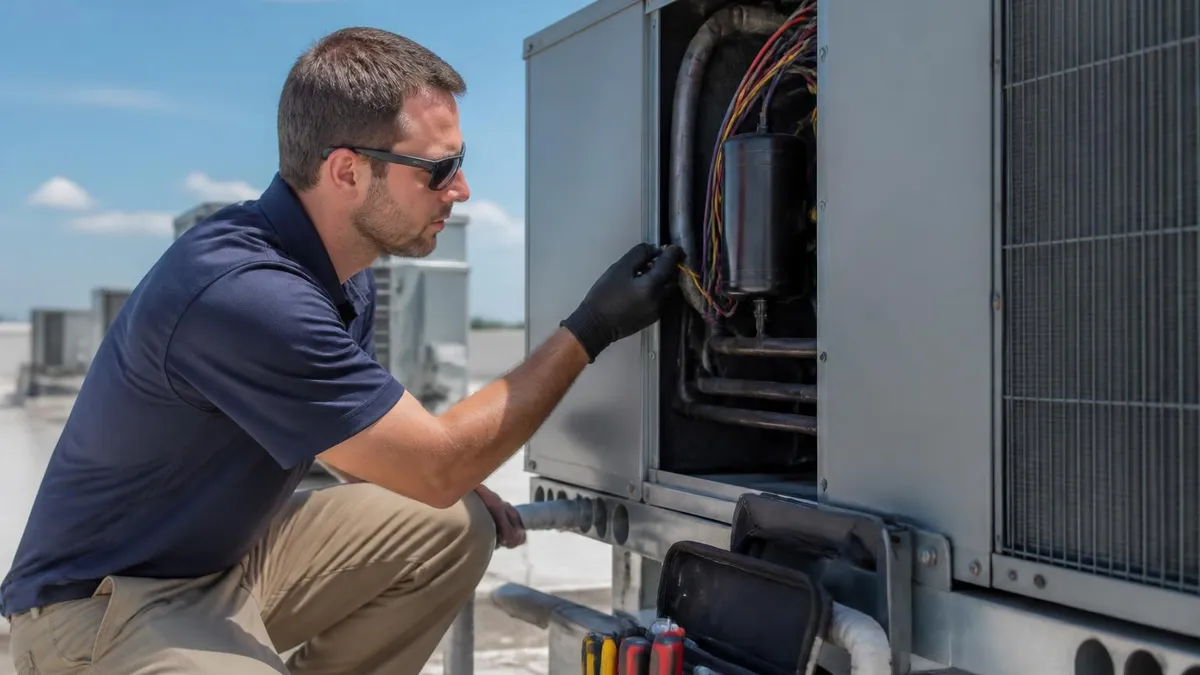

About the Author

NATE Certified HVAC Technician & Licensing Exam Trainer
Universal Technical InstituteMike Johnson is a NATE-certified HVAC technician and EPA 608 universal-certified refrigerant handler with a Bachelor of Science in HVAC/R Technology. He has 19 years of commercial and residential HVAC installation and service experience and specializes in preparing technicians for NATE certification, EPA 608, A2L refrigerant safety, and state HVAC contractor licensing examinations.