
SEER HVAC: What the Seasonal Energy Efficiency Ratio Means for Your Home and Energy Bills
✅ Learn what SEER means in HVAC, how ratings affect energy bills, minimum standards, and how to choose the right system for your home.
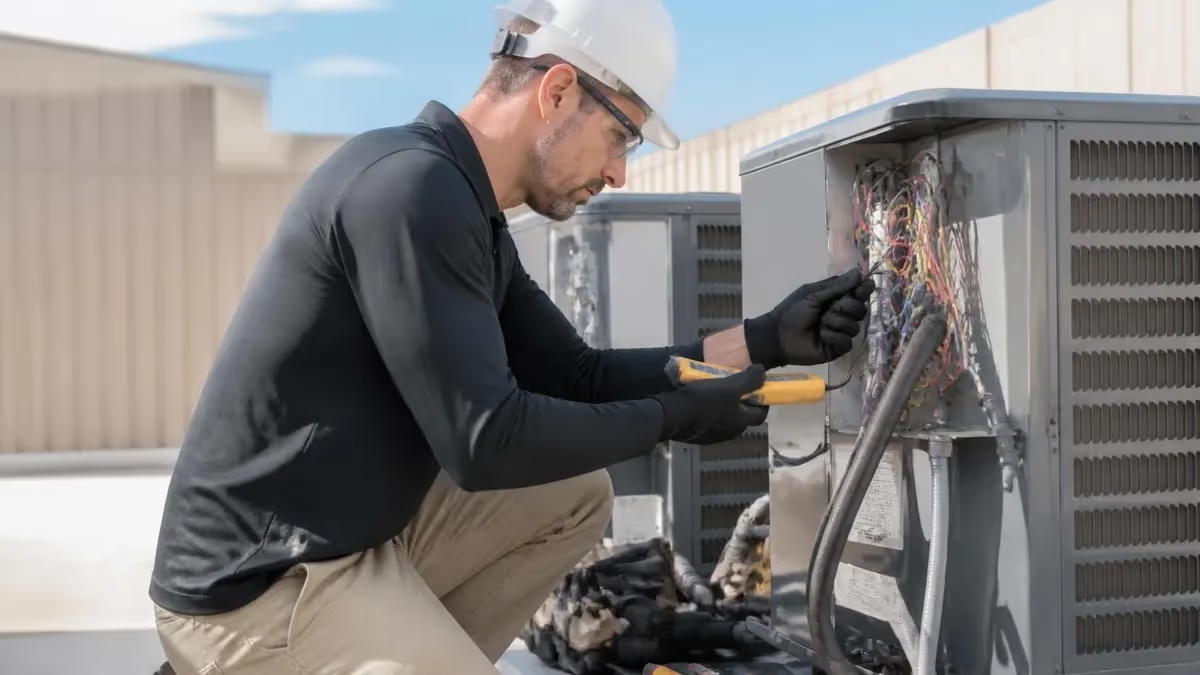
Understanding SEER HVAC ratings is one of the most practical things a homeowner or HVAC professional can do before purchasing or recommending a cooling system. SEER stands for Seasonal Energy Efficiency Ratio, and it measures how efficiently an air conditioner or heat pump converts electricity into cooling over an entire cooling season.
The higher the SEER number, the less electricity the system needs to produce the same amount of cooling — which directly translates into lower monthly utility bills. Whether you are buying a new central air system or advising a customer on an upgrade, SEER is the first number you should understand.
The SEER rating is calculated by dividing the total cooling output of an air conditioner during a typical cooling season (measured in BTUs) by the total electric energy input (measured in watt-hours) over that same period. For example, a system with a SEER rating of 20 uses significantly less electricity than a SEER 14 unit to deliver the same amount of cooling.
This is not a small difference — upgrading from a SEER 10 unit to a SEER 20 unit can cut your cooling energy consumption nearly in half, which adds up to hundreds of dollars in savings every summer in warm climates like Texas, Florida, or Arizona.
Federal minimum SEER requirements have risen steadily over the decades as the U.S. Department of Energy tightened efficiency standards. As of January 2023, the DOE introduced updated standards called SEER2, which use a slightly different testing protocol that more accurately reflects real-world installation conditions, including external static pressure in ductwork. Most new systems sold today are rated under the SEER2 framework, though SEER and SEER2 ratings are often displayed side by side on equipment labels to help contractors and consumers compare units across generations.
For homeowners in the northern United States, the current minimum SEER2 requirement for split-system air conditioners is 13.4 (roughly equivalent to the old SEER 14). In the hotter southern and southwestern regions — including states like Alabama, Arkansas, Delaware, Florida, Georgia, Hawaii, Kentucky, Louisiana, Maryland, Mississippi, North Carolina, Oklahoma, South Carolina, Tennessee, Texas, and Virginia — the minimum is 14.3 SEER2 (approximately equivalent to SEER 15). These regional differences reflect the greater number of cooling hours experienced in warmer climates, where efficiency gains have a bigger impact on total annual energy costs and grid demand.
Beyond federal minimums, many utility companies and state programs offer rebates for systems that exceed baseline efficiency levels, typically starting at SEER 16 or higher. Programs like ENERGY STAR certification require a minimum of SEER 15 for split systems, which is a useful benchmark for homeowners seeking above-average efficiency without paying a premium for the highest-tier equipment. Knowing where your system falls relative to these thresholds can help you qualify for significant financial incentives that reduce the total cost of ownership over the life of the equipment.
HVAC technicians studying for certifications or licensing exams will frequently encounter SEER-related questions, as efficiency ratings connect to core topics like refrigeration cycles, load calculations, ductwork design, and energy codes. If you are preparing for an hvac seer knowledge assessment or a state licensing exam, understanding SEER from both a theoretical and practical standpoint is essential. You should be able to explain how the rating is derived, how it affects equipment selection, and what real-world factors can cause a system to perform below its rated SEER value in the field.
This article covers everything you need to know about SEER ratings: how the calculation works, what the current standards require, how to choose the right efficiency tier for a given climate and budget, and how factors like duct leakage, refrigerant charge, and airflow affect whether a system actually achieves its rated efficiency. By the end, you will have a solid foundation for making smart decisions — whether you are a homeowner comparing bids, a student preparing for exams, or a technician looking to explain efficiency to customers more effectively.
HVAC SEER Ratings by the Numbers
SEER Rating Tiers: From Baseline to Ultra-Efficient
These systems meet federal baseline requirements and carry the lowest upfront cost. They are suitable for mild climates or rarely occupied spaces where air conditioning runs fewer hours per year. Operating costs are higher than mid-efficiency units over a full cooling season.
The sweet spot for most U.S. homeowners. These units often qualify for ENERGY STAR certification and utility rebates, and they recover their higher purchase price through energy savings within five to eight years in warm climates. Most new residential installations fall in this tier.
Premium two-stage or variable-speed systems that offer precise temperature control and significantly lower electricity bills. Ideal for climates with long, hot summers. The added cost over mid-range units can be justified through rebates, tax credits, and reduced monthly operating expenses.
Inverter-driven variable-speed systems with advanced scroll compressors. These deliver SEER ratings of 25 or higher under ideal conditions. Best suited for high-performance homes, passive house designs, or regions where electricity rates are very high and cooling loads are intense.
Calculating the actual dollar savings from a SEER upgrade is straightforward once you understand the underlying math. Start by determining your current system's SEER rating and the SEER of the replacement unit you are considering. The formula for estimating annual savings is: Annual Savings = (1 − Old SEER ÷ New SEER) × Annual Cooling Cost.
So if your existing SEER 10 system costs you $900 per year to run and you upgrade to SEER 20, your savings would be roughly 50 percent, or about $450 annually. Over a 15-year system lifespan, that single upgrade could save more than $6,700 in today's dollars, not counting the effect of rising electricity rates.
Climate plays an enormous role in how much a higher SEER rating actually saves you. In Phoenix, Arizona, where a home may run its air conditioner 2,800 hours per year or more, the difference between SEER 14 and SEER 18 translates into hundreds of kilowatt-hours each month. In Minneapolis, Minnesota, where cooling season might last only 800 hours, the payback period for a premium unit stretches considerably. This is why the federal government imposes different minimum SEER standards by region — the efficiency investment simply pays off faster in hot climates where the equipment works harder and longer each year.
To illustrate with real numbers, consider a 3-ton (36,000 BTU/hr) air conditioning system running in Atlanta, Georgia — a city with approximately 2,400 cooling hours per year. At SEER 14, the system would consume roughly 6,171 kilowatt-hours per cooling season. At SEER 18, that same cooling load requires only about 4,800 kWh. At the U.S. average electricity rate of about 16 cents per kWh as of early 2026, the SEER 18 system saves roughly $220 per year. Over 15 years, that amounts to $3,300 in savings, which often offsets a significant portion of the premium paid for a higher-efficiency unit.
Beyond simple operating costs, SEER ratings also affect peak demand charges for commercial customers and contribute to grid stability during heat waves. Utilities in states like California, Texas, and New York have aggressive demand-response programs that reward customers with high-SEER equipment by paying them to pre-cool their homes during off-peak hours. Some utilities offer time-of-use rates that make high-SEER variable-speed systems even more valuable, since these units can ramp down during expensive peak-rate windows while still maintaining comfort through their superior part-load efficiency.
It is important to note that a system's rated SEER is achieved under laboratory test conditions defined by the Air-Conditioning, Heating, and Refrigeration Institute (AHRI). Real-world performance can vary significantly depending on installation quality, duct condition, refrigerant charge accuracy, and local climate deviations from the standard test profile. Studies by organizations like the Florida Solar Energy Center have found that improperly installed systems commonly operate at 20 to 30 percent below their rated efficiency. This means a properly installed SEER 16 unit can easily outperform a poorly installed SEER 20 unit in the field.
Consumers and HVAC contractors should also consider the distinction between SEER (the traditional rating) and EER (Energy Efficiency Ratio). While SEER measures seasonal performance across a range of temperatures and part-load conditions, EER measures efficiency only at a single peak condition: 95°F outdoor temperature, 80°F indoor temperature, and 50 percent relative humidity.
A high EER rating indicates a system that performs especially well during the hottest days of the year — the days that matter most for comfort and for peak grid demand. In very hot, dry climates like Las Vegas or Phoenix, EER may be a more meaningful purchasing criterion than SEER alone.
When advising customers or preparing for an HVAC licensing exam, it pays to know all the efficiency metrics and their interrelationships. SEER, SEER2, EER, HSPF (Heating Seasonal Performance Factor for heat pumps), and COP (Coefficient of Performance) each describe efficiency under different conditions and for different equipment types. A well-rounded HVAC professional can explain these distinctions clearly, match equipment to climate conditions, and help customers make financially sound decisions that also reduce environmental impact. Understanding all of these metrics is also essential for professionals working in hvac seer-related roles where equipment selection and customer education are daily responsibilities.
HVAC Practice Test Questions
Prepare for the HVAC - Heating Ventilation and Air Conditioning exam with our free practice test modules. Each quiz covers key topics to help you pass on your first try.
HVAC Air Conditioning
HVAC Exam Questions covering Air Conditioning. Master HVAC Test concepts for certification prep.
HVAC Code Compliance
Free HVAC Practice Test featuring Code Compliance. Improve your HVAC Exam score with mock test prep.
HVAC Electrical Controls
HVAC Test Prep for Electrical Controls. Practice HVAC Quiz questions and boost your score.
HVAC Energy Efficiency
HVAC Questions and Answers on Energy Efficiency. Free HVAC practice for exam readiness.
HVAC Heating Systems
HVAC Mock Test covering Heating Systems. Online HVAC Test practice with instant feedback.
HVAC Load Calculations
Free HVAC Quiz on HVAC Load Calculations. HVAC Exam prep questions with detailed explanations.
HVAC Tools and Equipment
HVAC Practice Questions for HVAC Tools and Equipment. Build confidence for your HVAC certification exam.
HVAC Refrigeration
HVAC Test Online for Refrigeration. Free practice with instant results and feedback.
HVAC Safety Practices
HVAC Study Material on Safety Practices. Prepare effectively with real exam-style questions.
HVAC System Design
Free HVAC Test covering System Design. Practice and track your HVAC exam readiness.
HVAC Thermodynamics
HVAC Exam Questions covering Thermodynamics. Master HVAC Test concepts for certification prep.
SEER vs SEER2 vs EER: Understanding All Three Efficiency Ratings
SEER (Seasonal Energy Efficiency Ratio) measures the total cooling output of an air conditioner in BTUs divided by the total electrical energy consumed in watt-hours over a full cooling season. The calculation uses a range of outdoor temperatures from 65°F to 104°F, weighted by frequency to simulate a typical U.S. summer. A higher SEER means less electricity used per unit of cooling delivered, which directly lowers utility bills during the summer months.
The traditional SEER standard was set by AHRI and used in the U.S. from 1987 through December 2022. It was tested under relatively lenient duct conditions that did not fully reflect the resistance of real residential ductwork. Despite this limitation, SEER became the universal language of air conditioner efficiency in the U.S. market and is still printed on many product labels alongside the newer SEER2 rating for consumer reference and backward compatibility.

High-SEER Systems: Benefits and Trade-Offs to Consider
- +Significantly lower monthly electricity bills in warm and hot climates with long cooling seasons
- +Eligible for ENERGY STAR certification, utility rebates, and federal tax credits that reduce net purchase price
- +Variable-speed compressors provide more precise temperature control and improved humidity removal
- +Quieter operation compared to single-stage low-SEER equipment running at full capacity
- +Longer equipment lifespan due to reduced compressor cycling and more gradual start-stop loads
- +Reduced carbon footprint and lower grid demand, which supports sustainability and demand-response programs
- −Higher upfront purchase and installation cost compared to minimum-efficiency baseline systems
- −More complex technology means higher repair costs and fewer technicians qualified to service variable-speed inverter systems
- −Payback period can exceed 10 years in mild northern climates where cooling season is short
- −Advanced electronics and variable-speed drives introduce more potential failure points than simple single-stage systems
- −Not all homes can take full advantage of high SEER — leaky ducts, undersized equipment, or poor insulation cap real-world efficiency gains
- −SEER2 ratings may be confusing to consumers still familiar with the old SEER standard, leading to comparison errors
How to Choose the Right SEER Rating for Your Home
- ✓Identify your climate zone using the DOE's regional efficiency map or your local utility's guidance.
- ✓Calculate your annual cooling hours by reviewing past utility bills or local degree-day data.
- ✓Get current electricity rates from your utility bill to accurately project annual operating cost differences.
- ✓Request AHRI-certified efficiency ratings (SEER2 and EER) for all equipment you are comparing.
- ✓Check your utility company's rebate portal for minimum SEER thresholds that qualify for cash incentives.
- ✓Verify that your home's duct system is in good condition before investing in high-efficiency equipment.
- ✓Ask contractors to perform a Manual J load calculation so the new system is properly sized, not just swapped by tonnage.
- ✓Compare total cost of ownership — not just purchase price — over a 10- to 15-year horizon.
- ✓Confirm the system meets the minimum SEER2 standard for your region before accepting any bid.
- ✓Request documentation of AHRI matching between the indoor coil, outdoor unit, and air handler for proper efficiency certification.
A SEER 20 System Installed Poorly Will Underperform a Properly Installed SEER 16
Research consistently shows that installation quality — including correct refrigerant charge, proper airflow, sealed ductwork, and matched equipment — has a larger impact on real-world efficiency than the nameplate SEER rating alone. Always hire a contractor who performs ACCA Manual J, S, and D calculations, verifies refrigerant charge by weight or subcooling/superheat, and tests static pressure before and after installation. The rated SEER is a ceiling, not a guarantee.
Even the highest-rated SEER system can perform well below expectations if the installation is substandard or the home's envelope has significant deficiencies. One of the most common causes of real-world underperformance is improper refrigerant charge. Studies by the California Energy Commission have found that a significant percentage of newly installed residential air conditioners have refrigerant charge errors of 10 percent or more. An overcharged or undercharged system not only delivers less cooling per watt consumed — it also suffers accelerated compressor wear, shortened equipment life, and in some cases void of warranty coverage because manufacturers specify exact charge procedures.
Duct leakage is another major factor that degrades effective SEER performance in the field. The U.S. Department of Energy estimates that the average American home loses 20 to 30 percent of conditioned air through duct leaks before it reaches the living space.
When a system is installed in a house with leaky ducts in unconditioned spaces like attics or crawlspaces, the effective system efficiency can drop by two to four SEER points or more. This is one reason why many building performance programs require duct blaster testing as a condition of rebate approval — they want to verify that the duct system won't undermine the efficiency investment the homeowner just made.
Airflow problems are equally destructive to SEER performance. Each ton of cooling capacity requires approximately 400 cubic feet per minute (CFM) of airflow across the indoor coil. When airflow falls below this threshold — due to undersized return grilles, clogged filters, closed supply vents, or improperly sized duct systems — the system's efficiency drops and the coil can freeze.
Low airflow also reduces the system's ability to remove latent heat (humidity), which is a major component of comfort in humid climates like the Southeast and Gulf Coast. SEER testing assumes correct airflow, so any deviation from design conditions degrades the real-world performance relative to the nameplate rating.
Thermostat placement and control strategies also influence real-world SEER attainment. A thermostat installed in direct sunlight, near a heat-producing appliance, or in a room with poor air circulation will cause the system to run longer cycles than necessary, burning more electricity without delivering additional comfort. Smart thermostats with occupancy detection, learning algorithms, and demand-response capabilities can meaningfully improve effective system efficiency by optimizing runtime and avoiding unnecessary cycling. The investment in a quality thermostat is often one of the highest-ROI efficiency upgrades available to homeowners who already have a reasonably efficient system.
Equipment sizing errors represent another frequently overlooked source of SEER degradation. Contractors who replace systems by matching the tonnage of the old equipment — without performing a new Manual J load calculation — often install oversized systems. An oversized air conditioner short-cycles, meaning it reaches thermostat setpoint quickly, shuts off, then restarts shortly after as the space warms back up.
Short cycling is highly inefficient because compressors draw several times their running amperage during startup, and the system never reaches the efficient steady-state operation at which its SEER rating was measured. An oversized SEER 18 system may deliver effective real-world efficiency equivalent to a properly sized SEER 14 unit.
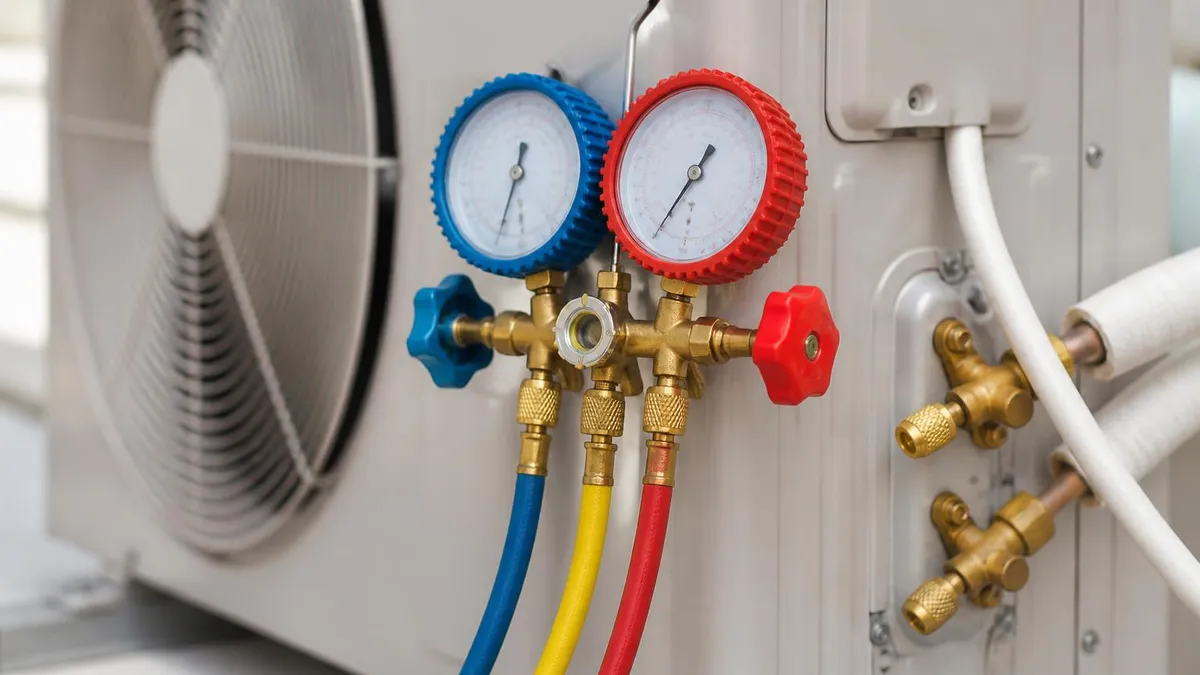
Maintenance practices over the system's life directly affect whether it maintains its rated efficiency year after year. A dirty condenser coil — the outdoor heat exchanger — can raise discharge pressure and force the compressor to work harder, reducing efficiency by 10 to 30 percent depending on the severity of fouling. Similarly, a clogged indoor evaporator coil reduces airflow and heat transfer, while a dirty blower wheel reduces CFM delivery to the space. Annual professional maintenance that includes coil cleaning, refrigerant verification, filter replacement, and blower inspection is essential to preserving the efficiency the homeowner paid for at installation.
For HVAC students and technicians, understanding the gap between rated and real-world SEER is a critical professional skill. It informs how you communicate with customers about reasonable expectations, how you diagnose systems that are underperforming on utility bills, and how you prioritize commissioning tasks on a new installation. Exam questions in this area frequently test whether candidates understand that SEER is a best-case laboratory figure, and that field conditions — refrigerant charge, airflow, duct integrity, equipment sizing — collectively determine whether that rating is ever achieved in practice.
As of January 1, 2023, it is illegal to manufacture or sell new residential air conditioning equipment that does not meet the updated SEER2 minimum requirements (13.4 SEER2 in the North, 14.3 SEER2 in the South and Southwest). Contractors should verify that all equipment they install meets the regional standard for their location, as installing non-compliant equipment can result in failed inspections, permit issues, and potential liability. Always request the AHRI certificate to confirm compliance before committing to a purchase.
High-SEER systems have become significantly more accessible to average homeowners in recent years, thanks to a combination of falling component costs, expanded utility rebate programs, and federal tax incentives introduced or extended under the Inflation Reduction Act of 2022.
The IRA's Energy Efficient Home Improvement Credit (25C) allows homeowners to claim a tax credit of up to 30 percent of the cost of qualifying high-efficiency HVAC equipment, with an annual cap of $600 for central air conditioners and $2,000 for qualifying heat pumps. This can meaningfully reduce the net cost of stepping up from a baseline SEER system to a high-efficiency unit that delivers long-term savings.
Utility rebate programs layer on top of federal tax incentives and vary widely by state and provider. States like California, New York, Massachusetts, and Minnesota have particularly aggressive efficiency programs that can provide cash-back rebates of $200 to $1,500 or more for high-SEER equipment installations.
Some programs also offer low-interest financing for the incremental cost of efficiency upgrades, making it easier for households with limited upfront budgets to access the long-term savings of high-SEER technology. The Database of State Incentives for Renewables and Efficiency (DSIRE) maintained by North Carolina State University is the most comprehensive resource for tracking these programs by location.
Variable refrigerant flow (VRF) systems represent the pinnacle of SEER efficiency in residential and light commercial applications. These systems use inverter-driven compressors that modulate capacity continuously from as little as 10 percent to 100 percent of rated output, allowing them to precisely match the building's cooling load at any given moment. Because they almost never run at full capacity, VRF systems achieve SEER ratings in the range of 20 to 28 or higher under favorable conditions. They are increasingly popular in high-performance residential construction, multifamily buildings, and commercial retrofit projects where operating costs are a primary concern.
Mini-split systems — also known as ductless split systems — frequently carry the highest residential SEER ratings available on the market. Without duct losses to contend with, a ductless system can deliver cooling directly to individual zones with minimal energy waste, and many models from manufacturers like Mitsubishi, Daikin, LG, and Fujitsu achieve SEER ratings of 20 to 30 or higher.
They are particularly well suited for additions, converted spaces, or homes where adding ductwork is impractical. The installed cost per ton is typically higher than ducted systems, but the elimination of duct losses and ability to zone cooling to occupied areas often justifies the premium in energy savings and comfort.
For HVAC professionals looking to differentiate themselves in a competitive market, expertise in high-efficiency system design and selection is increasingly valuable. As building energy codes tighten and homeowners become more energy-cost conscious, the ability to clearly explain SEER ratings, calculate real-world savings, identify rebate opportunities, and properly commission high-efficiency equipment is a significant competitive advantage. Professionals who can credibly guide customers through the efficiency decision — rather than defaulting to the cheapest compliant system — build stronger relationships and earn more referrals. This knowledge set is also directly tested on several HVAC certification and licensing exams.
Heat pumps deserve special mention in any discussion of SEER and HVAC efficiency. A heat pump is essentially a reversible air conditioner that can both cool and heat a space, and its cooling efficiency is rated by SEER just like a conventional air conditioner. Modern variable-speed heat pumps from brands like Carrier, Trane, Lennox, and Bosch achieve cooling-season SEER ratings of 18 to 24 or higher, while also delivering heating that is two to four times more energy-efficient than electric resistance heat.
In climates where both heating and cooling are significant seasonal loads — the mid-Atlantic, Southeast, and Pacific Northwest — a high-SEER heat pump offers the best overall energy performance of any residential HVAC option currently available.
As the HVAC industry continues to evolve toward higher efficiency and lower environmental impact, SEER ratings will remain a central metric for equipment selection, code compliance, and customer communication. Staying current with the latest SEER2 standards, available incentive programs, and technology developments in variable-speed and inverter-driven systems is an ongoing professional obligation. Resources like the AHRI directory, ENERGY STAR's certified products list, and your state's energy office website are valuable references for keeping your knowledge up to date in a field where the standards change regularly and the stakes — for both homeowners and the grid — are substantial.
If you are an HVAC student or apprentice preparing for a certification or licensing exam, developing a solid command of SEER concepts will pay dividends on test day and in the field.
Exam questions related to SEER typically fall into a few categories: conceptual questions about what the metric measures and how it is calculated, code questions about current minimum standards and regional requirements, application questions about how to select appropriate equipment for a given scenario, and diagnostic questions about why a system might not be achieving its rated efficiency. Understanding all four categories thoroughly is the most efficient preparation strategy.
For conceptual mastery, start with the SEER formula itself: total seasonal cooling BTUs divided by total seasonal watt-hours of energy consumed. Be comfortable with the idea that SEER is a ratio, not an absolute measurement, and that it describes average performance over an entire season rather than performance at a single operating point.
Know that higher SEER means greater efficiency, and that the relationship between SEER and energy consumption is inversely proportional — doubling the SEER cuts energy consumption roughly in half for the same cooling output. These relationships show up repeatedly on multiple-choice exams in both direct and applied forms.
For code knowledge, memorize the current SEER2 minimums: 13.4 for the North, 14.3 for the South/Southwest. Know that these replaced the old SEER 13 and SEER 14 minimums respectively, and understand why the new SEER2 testing protocol produces slightly lower numbers for the same equipment. Be aware that the DOE has further proposed increasing efficiency standards in the coming years, so staying current with trade publications like ACHR News, Contracting Business, and the ASHRAE Journal will help you anticipate changes before they appear on updated exam versions.
For application questions, practice working through equipment selection scenarios that involve climate data, load calculations, and efficiency comparisons. Given a cooling load in BTUs, a SEER rating, and a set of electricity rate and annual operating hour assumptions, you should be able to calculate annual energy consumption, operating cost, and payback period for competing equipment options. These calculations are not mathematically complex, but they require you to keep the formulas and unit conversions straight under exam time pressure. Practice them until they are automatic.
For diagnostic questions, understand the key field variables that cause systems to underperform relative to their rated SEER: improper refrigerant charge (over or under), reduced airflow from coil fouling or duct restrictions, duct leakage in unconditioned spaces, equipment oversizing causing short cycling, and improper equipment matching between indoor and outdoor units. Know that AHRI certification requires specific matched system combinations, and that mixing a high-SEER outdoor unit with a non-certified indoor coil will void the efficiency rating and potentially the warranty. These are practical, real-world scenarios that frequently appear in field-level certification exams.
Beyond exam preparation, building habits of efficiency-first thinking will make you a better HVAC technician throughout your career. Every service call is an opportunity to check refrigerant charge, verify airflow, inspect duct connections, and note whether the system is delivering the efficiency its nameplate promises. Customers who notice lower utility bills and better comfort after your service visits become loyal repeat customers and enthusiastic referral sources. In a trade where reputation and word-of-mouth drive a significant share of business, the technical quality of your efficiency work has direct business value that compounds over time.
Finally, stay engaged with the ongoing evolution of HVAC efficiency standards, refrigerants, and technologies. The industry is in the middle of a significant refrigerant transition — moving from R-410A to lower-global-warming-potential alternatives like R-32 and R-454B — and this transition will affect how systems are designed, charged, and serviced.
New refrigerants have different pressure profiles, flammability classifications, and handling requirements that will show up on future exams and in field work. Technicians who invest in continuous learning — through manufacturer training, NATE certifications, ASHRAE courses, and industry trade events — will be best positioned to thrive as HVAC systems become more sophisticated, more efficient, and more deeply integrated with smart building technologies and the electric grid.
HVAC Questions and Answers
HVAC Sales: The Complete Guide to Selling Heating and Cooling Systems, Building Customer Trust, and Closing More Deals
HVAC Air Duct Sealing: The Complete Homeowner and Contractor Guide to Sealing Ductwork for Efficiency, Comfort, and Indoor Air Quality
HVAC Solutions: The Complete Guide to Heating, Cooling, and Indoor Air Quality Systems for Homes and Buildings

Commercial HVAC Repair: Systems, Costs, and Service Strategies
HVAC Apprenticeship Programs: Your Complete Guide to Starting a Hands-On Career in Heating, Ventilation, and Air Conditioning
About the Author

NATE Certified HVAC Technician & Licensing Exam Trainer
Universal Technical InstituteMike Johnson is a NATE-certified HVAC technician and EPA 608 universal-certified refrigerant handler with a Bachelor of Science in HVAC/R Technology. He has 19 years of commercial and residential HVAC installation and service experience and specializes in preparing technicians for NATE certification, EPA 608, A2L refrigerant safety, and state HVAC contractor licensing examinations.