
HVAC Ventilation: The Complete Guide to Indoor Air Quality, Airflow Design, and Mechanical Ventilation Systems
HVAC ventilation explained: system types, CFM sizing, ASHRAE 62.2 compliance, ductwork basics, and indoor air quality best practices. ❓
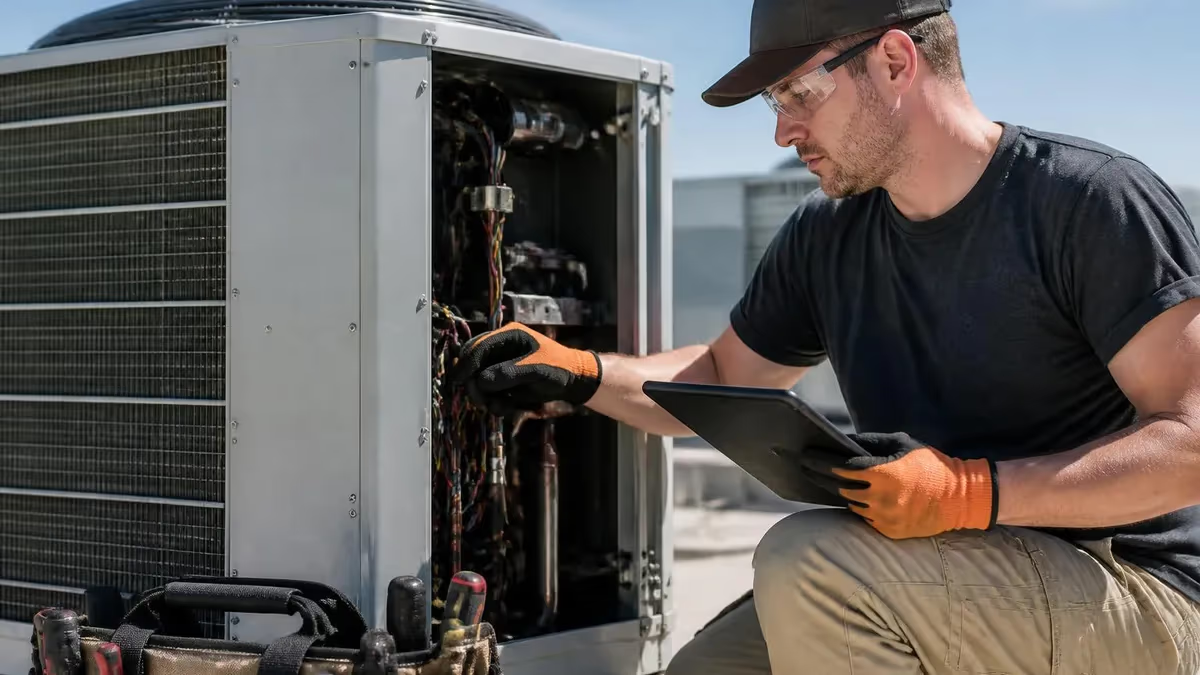
HVAC ventilation is the deliberate process of supplying outdoor air to a building and exhausting stale indoor air to maintain healthy, comfortable, and code-compliant indoor environments. Without proper ventilation, even the most efficient heating and cooling equipment will trap moisture, carbon dioxide, volatile organic compounds, and odors inside the conditioned space. Modern tight-envelope construction has made mechanical ventilation a non-negotiable design element rather than an optional upgrade, and understanding it is essential for technicians, contractors, and informed homeowners alike.
The shift from drafty mid-century homes to today's airtight, energy-efficient structures has fundamentally changed how we approach airflow. A house built in 1965 might naturally exchange its full volume of air every hour through cracks and gaps, while a 2024 spray-foam-insulated home may only manage 0.1 air changes per hour without mechanical help. This dramatic reduction in infiltration delivers huge energy savings but creates a hidden hazard: pollutants concentrate to levels that can damage health, building materials, and HVAC equipment over time.
Three main approaches dominate residential and light-commercial ventilation today: exhaust-only systems that rely on negative pressure to pull in outdoor air, supply-only systems that pressurize the home with filtered outdoor air, and balanced systems like heat recovery ventilators (HRVs) and energy recovery ventilators (ERVs) that exchange equal volumes of incoming and outgoing air while reclaiming thermal energy. Each strategy has distinct strengths, climate suitability, installation costs, and maintenance requirements that we will explore in depth throughout this guide.
Ventilation rates are not arbitrary; they are governed by ASHRAE Standard 62.1 for commercial buildings and ASHRAE 62.2 for residential applications. The 2022 revision of 62.2 requires roughly 7.5 cubic feet per minute (CFM) per person plus 3 CFM per 100 square feet of floor area as a baseline whole-house rate. A 2,400-square-foot home with four occupants therefore needs approximately 102 CFM of continuous outdoor air, delivered either continuously by a low-watt fan or intermittently by a higher-capacity unit with timer controls.
Beyond meeting code, well-designed ventilation directly affects occupant productivity, sleep quality, asthma symptoms, and respiratory infection rates. Harvard's CogFx study documented measurable cognitive improvements when CO2 levels dropped from 1,400 ppm to under 600 ppm, and the EPA estimates Americans spend roughly 90 percent of their time indoors, where pollutant concentrations can be two to five times higher than outdoors. Ventilation is the single most powerful HVAC tool for reducing that exposure without resorting to expensive air cleaning hardware.
Throughout this guide we will cover system selection, CFM calculations, duct layout principles, controls integration with thermostats and humidistats, commissioning procedures, troubleshooting common failures, and the latest IECC and ASHRAE code updates. Whether you are preparing for an HVAC licensing exam, planning a new build, or upgrading an existing system, you will leave with the practical knowledge to specify, install, and maintain ventilation equipment that actually performs as designed in real-world conditions across every U.S. climate zone.
HVAC Ventilation by the Numbers
Key Facts at a Glance
| Item | Value | Details |
|---|---|---|
| Per Person Required | 7.5 CFM | ASHRAE 62.2 baseline |
| Time Spent Indoors | 90% | EPA average for Americans |
| ERV Installation Cost | $1,500–$4,500 | Typical residential range |
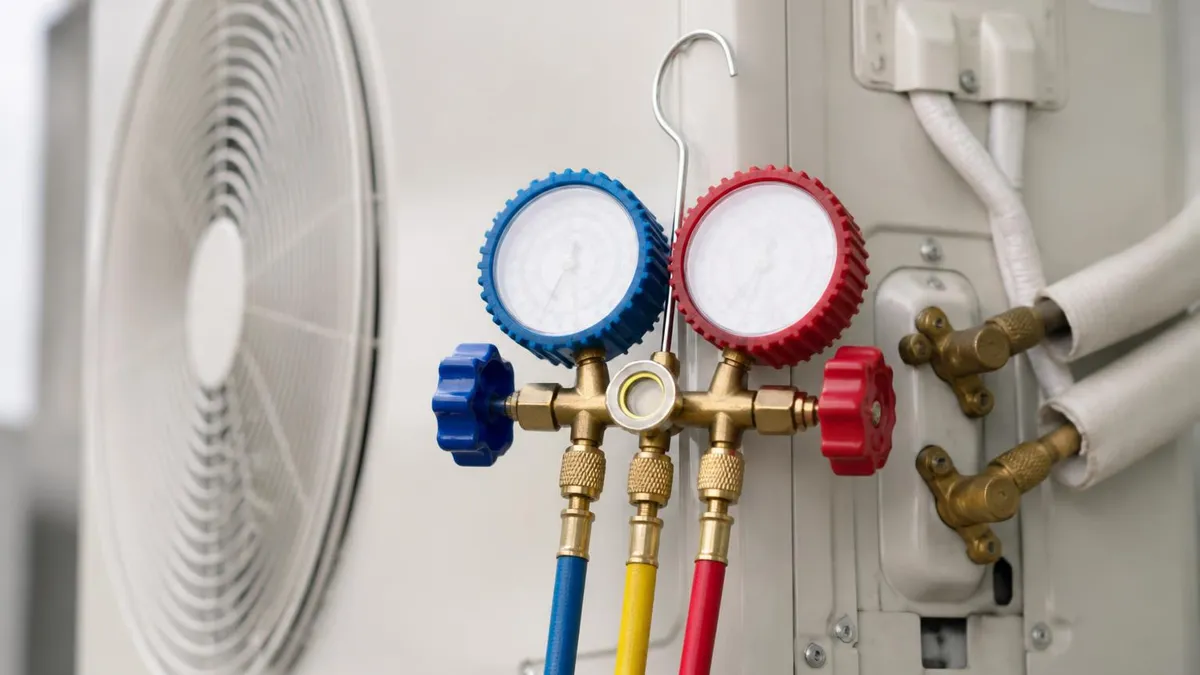
Four Main Types of Mechanical Ventilation Systems
Bath fans and a continuous exhaust unit depressurize the home, pulling outdoor air through passive inlets and envelope leaks. Cheapest option but risks moisture intrusion in humid climates and backdrafting of combustion appliances.
A dedicated fan pushes filtered outdoor air into the return plenum or living space, slightly pressurizing the home. Excellent for keeping pollutants and humidity out, but adds heating and cooling load on extreme days.
Heat recovery ventilators move equal volumes of supply and exhaust air through a cross-flow core that transfers sensible heat. Ideal for cold, dry climates where humidity transfer is unwanted and energy savings matter.
Energy recovery ventilators add latent heat (moisture) transfer to the equation, helping retain humidity in winter and reject it in summer. The dominant choice for mixed and humid U.S. climates today.
Calculating the right airflow for a ventilation system starts with ASHRAE 62.2-2022, the standard adopted by nearly every U.S. residential energy code including IECC 2021. The whole-house mechanical ventilation rate formula is Qfan = 0.03 × floor area in square feet + 7.5 × (number of bedrooms + 1). For a 2,000-square-foot, three-bedroom home, that produces 0.03 × 2,000 + 7.5 × 4 = 60 + 30 = 90 CFM of continuous outdoor air. This number drives equipment selection more than any other single calculation.
Beyond whole-house rates, local exhaust requirements apply to bathrooms and kitchens. Bathrooms need either 50 CFM intermittent or 20 CFM continuous, while kitchen range hoods must move at least 100 CFM intermittently or 5 air changes per hour continuously. Makeup air becomes mandatory under IRC M1503.6 whenever a range hood exceeds 400 CFM, because pulling that much air out of a tight home without replacement can backdraft water heaters, fireplaces, and furnaces with potentially fatal carbon monoxide consequences.
hvac duct sizing calculator for ventilation follows similar principles to forced-air HVAC but with much lower velocities. Aim for 700 feet per minute or less in main trunks and 500 FPM in branches to keep fans quiet and efficient. A 90 CFM system typically uses 6-inch round insulated flex or smooth-wall rigid duct, while larger 200+ CFM commercial-style residential systems may need 8-inch or rectangular duct. Static pressure budgets matter enormously; most residential HRVs and ERVs are rated at 0.4 inches water column external static pressure, so every elbow and termination must be counted.
Outdoor air intake placement is governed by ASHRAE 62.2 Section 6.8, which requires intakes to be at least 10 feet from any contamination source including plumbing vents, dryer exhausts, combustion flues, and parking areas. Intakes should also be at least 2 feet above grade to avoid snow drifts and surface pollutants, and screens with quarter-inch mesh prevent pest entry. A properly placed intake with a weatherproof hood dramatically improves the air quality delivered to occupants compared to a poorly located one.
Sizing tools have come a long way; manufacturers like Panasonic, Broan, Fantech, Zehnder, and Renewaire all publish online selection calculators that account for duct runs, climate zone, and occupancy. For complex projects, ACCA Manual D for hvac duct design and Manual J for load calculation should be supplemented with the latest HVAC duct calculator resources to ensure the ventilation ducting does not starve or overpressure either the supply or exhaust side of a balanced system.
Finally, controls and commissioning determine whether the calculated CFM actually shows up in the real world. Every installation should be measured at startup with a flow hood or anemometer, not assumed from nameplate ratings. Balanced systems must verify that supply and exhaust flows match within 10 percent, and unbalanced flows should be intentional and documented. RESNET 380 and BPI building performance standards now require this measurement step for any home seeking ENERGY STAR or Zero Energy Ready certification, reflecting how often field performance diverges from design intent.
HVAC Practice Test Questions
Prepare for the HVAC - Heating Ventilation and Air Conditioning exam with our free practice test modules. Each quiz covers key topics to help you pass on your first try.
HVAC Air Conditioning
HVAC Exam Questions covering Air Conditioning. Master HVAC Test concepts for certification prep.
HVAC Code Compliance
Free HVAC Practice Test featuring Code Compliance. Improve your HVAC Exam score with mock test prep.
HVAC Electrical Controls
HVAC Test Prep for Electrical Controls. Practice HVAC Quiz questions and boost your score.
HVAC Energy Efficiency
HVAC Questions and Answers on Energy Efficiency. Free HVAC practice for exam readiness.
HVAC Heating Systems
HVAC Mock Test covering Heating Systems. Online HVAC Test practice with instant feedback.
HVAC Load Calculations
Free HVAC Quiz on HVAC Load Calculations. HVAC Exam prep questions with detailed explanations.
HVAC Tools and Equipment
HVAC Practice Questions for HVAC Tools and Equipment. Build confidence for your HVAC certification exam.
HVAC Refrigeration
HVAC Test Online for Refrigeration. Free practice with instant results and feedback.
HVAC Safety Practices
HVAC Study Material on Safety Practices. Prepare effectively with real exam-style questions.
HVAC System Design
Free HVAC Test covering System Design. Practice and track your HVAC exam readiness.
HVAC Thermodynamics
HVAC Exam Questions covering Thermodynamics. Master HVAC Test concepts for certification prep.
Comparing HRV, ERV, and Exhaust-Only Ventilation Strategies
Heat recovery ventilators excel in cold, dry climates like the northern Plains, upper Midwest, and Mountain West where winter humidity is naturally low and adding moisture transfer would over-humidify the home. The aluminum or polymer cross-flow core captures 70 to 85 percent of sensible heat from outgoing air and transfers it to incoming fresh air, dramatically reducing the heating load required to condition ventilation air to room temperature during sub-zero weather.
HRVs typically cost $1,200 to $3,500 installed in residential applications and require dedicated ductwork separate from the forced-air system in best-practice installations. Defrost cycles are critical in extreme cold; below roughly 23°F outdoor temperature, frost can form on the core and most units automatically reverse or shut down the supply fan for a few minutes each hour to clear ice. Sizing should match the ASHRAE 62.2 calculated rate with at least 25 percent boost capacity for kitchen and bath demand.

Advantages and Drawbacks of Whole-House Mechanical Ventilation
- +Removes CO2, VOCs, odors, and bioeffluents that accumulate in airtight homes
- +Reduces moisture-related issues like mold, condensation, and wood rot
- +Filters incoming outdoor air to remove pollen, dust, and PM2.5 particles
- +Required by IECC 2021 and IRC 2021 for code compliance in new construction
- +Recovers 60-85% of conditioning energy with HRV or ERV cores
- +Improves cognitive performance, sleep quality, and respiratory health
- −Upfront installation costs ranging from $500 to $4,500 plus electrical work
- −Requires ongoing filter changes and core cleaning every 3-6 months
- −Adds 30-80 watts of continuous fan power consumption
- −Can introduce outdoor pollutants if intake placement is poor
- −Balanced systems need professional commissioning to verify CFM flows
- −Frost protection in cold climates may reduce winter delivery rates
HVAC Ventilation Installation Checklist
- ✓Calculate required CFM using ASHRAE 62.2-2022 whole-house formula
- ✓Select system type based on climate zone and combustion appliance presence
- ✓Locate outdoor intake at least 10 feet from any contamination source
- ✓Install dedicated insulated duct runs with R-6 minimum in unconditioned spaces
- ✓Seal all duct joints with mastic or UL 181 foil tape, never cloth duct tape
- ✓Use rigid metal or smooth-wall flex duct on long runs to minimize static pressure
- ✓Wire dedicated 120V circuit for the ventilation unit with accessible disconnect
- ✓Install MERV 8-13 filters on both supply intake and return-side connection
- ✓Commission the system with a flow hood to verify supply and exhaust CFM
- ✓Label all ventilation controls, dampers, and access panels for future service
ASHRAE 62.2 Is Now Mandatory in Most States
As of the 2021 IECC and 2021 IRC adoption cycles, more than 35 states require whole-house mechanical ventilation meeting ASHRAE 62.2 in all new residential construction. Failure to install or commission ventilation properly is now a code violation that can prevent occupancy permits and void warranties on tight-envelope assemblies.
Indoor air quality is the ultimate measure of whether a ventilation system is doing its job, and it depends on far more than just CFM numbers on a nameplate. The EPA consistently ranks indoor air pollution among the top five environmental health risks, with concentrations of common contaminants like formaldehyde, benzene, and PM2.5 routinely measuring two to five times higher inside homes than outside. Ventilation dilutes these pollutants, but only if the delivered air is actually clean and the exhaust actually removes contaminated air from occupied zones.
Carbon dioxide is the most useful single proxy for ventilation adequacy because human respiration produces it continuously and predictably. Outdoor CO2 sits around 420 ppm in 2026, ASHRAE 62.1 targets keeping indoor levels below 1,100 ppm, and research from Harvard and LBNL has shown measurable cognitive decline beginning around 1,000 ppm. A $100 NDIR sensor placed in a bedroom or office can quickly reveal whether the ventilation system is sized and operating correctly under real occupancy loads, especially during sleep when doors close and CO2 climbs fastest.
Volatile organic compounds present a tougher challenge because they off-gas continuously from furniture, flooring, paints, cleaning products, and personal care items. Ventilation is the only practical way to manage VOC exposure in occupied buildings since activated carbon filtration is expensive, short-lived, and ineffective against formaldehyde. New construction and recently renovated spaces typically need 50 to 100 percent higher ventilation rates for the first six to twelve months while building materials cure and emissions decline to baseline levels.
Humidity control is the hidden third dimension of ventilation performance. ASHRAE recommends keeping indoor relative humidity between 30 and 60 percent year-round; below 30 percent triggers dry skin, static electricity, and increased viral transmission, while above 60 percent encourages dust mites, mold growth, and material degradation. ERV systems excel here because they actively transfer moisture between airstreams, but even HRV and exhaust-only systems benefit from integrated dehumidification or humidification controls tied to whole-house humidistats.
Particulate matter, particularly PM2.5 from wildfire smoke, traffic, cooking, and outdoor agriculture, has become a growing concern across the western United States. A well-designed ventilation system with MERV 13 filtration on the outdoor air intake can reduce indoor PM2.5 concentrations by 80 to 95 percent compared to passive infiltration. During acute smoke events, switching the ventilation to recirculation-only mode with portable HEPA support is the standard recommendation from public health agencies like the CDC and California Air Resources Board.
Beyond dilution and filtration, source control remains the most cost-effective IAQ strategy. Choosing low-VOC paints and adhesives, sealing attached garages from living spaces, using induction cooktops, and maintaining radon mitigation systems all reduce the burden on ventilation equipment. Working with qualified HVAC contractors who understand whole-building diagnostics ensures these strategies are integrated rather than treated as afterthoughts during design and installation.
Never install exhaust-only ventilation in a home with atmospherically vented water heaters, furnaces, or fireplaces without a worst-case depressurization test. Negative pressures above 5 Pa can backdraft combustion appliances and pull deadly carbon monoxide into the living space. Always upgrade to sealed-combustion equipment before adding exhaust capacity.
Maintenance is where most commercial hvac design quietly fail. Unlike a furnace that stops producing heat when something breaks, a ventilation system can continue running while delivering half its rated CFM or pulling contaminated air, with no obvious symptom until occupants report headaches, condensation appears on windows, or a blower door test reveals the problem years later. Building a consistent maintenance routine is the difference between a system that protects occupants for 20 years and one that becomes a liability within five.
Filter replacement is the single most important task. Outdoor air intakes accumulate pollen, insects, and debris faster than most homeowners expect, especially in spring and fall. MERV 8 prefilters typically need replacement every three months, while higher-MERV filters last four to six months depending on local air quality. A clogged filter starves the supply fan, reduces CFM delivery by 30 to 50 percent, and forces the motor to work harder, shortening its lifespan and raising energy bills incrementally over time without any obvious warning sign.
HRV and ERV cores require periodic cleaning that varies by core type and manufacturer. Aluminum sensible cores can be vacuumed and rinsed with mild detergent every 6 to 12 months, while polymer membrane ERV cores generally need only vacuuming and should never be wetted because moisture damages the desiccant coating. Enthalpy wheels self-clean to some degree but should be inspected annually for belt wear, motor amp draw, and any visible contamination that could indicate filter bypass or duct contamination upstream.
Condensate drains on ERV and high-efficiency HRV units must be checked at least twice yearly. A blocked drain causes water to back up into the cabinet, eventually overflowing onto floors or, worse, into the supply duct where it creates an immediate mold risk. Installing a float switch on the condensate pan that interrupts the fan circuit on overflow is cheap insurance and is required by IMC 307.2.3 in many jurisdictions for any system with mechanical hvac parts and supply.
Annual commissioning verification catches drift before it becomes failure. A simple flow hood measurement at each supply and exhaust register confirms the system is delivering design airflow, and a $50 manometer reading at the ventilation unit's pressure ports verifies static pressure has not climbed due to filter loading or duct restrictions. Document baseline numbers at startup so future readings have a meaningful reference point. Many sophisticated systems now include built-in flow sensors and Wi-Fi diagnostics that automate this entirely.
For complex problems involving moisture, odor migration, or persistent high CO2 readings, partnering with experienced HVAC repair services near me who own blower doors, duct blasters, and infrared cameras pays for itself quickly. Ventilation issues often masquerade as comfort complaints, HVAC sizing problems, or building envelope failures, and only a systematic whole-house diagnostic process can isolate the true root cause before expensive but ineffective repairs are attempted.
Practical specification and installation of ventilation systems involves dozens of small decisions that collectively determine whether the system performs as designed for decades or fights the homeowner from day one. Start every project with a written ventilation design narrative that documents the chosen system type, calculated CFM rates, intake and exhaust locations, control strategy, and commissioning targets. This single page becomes invaluable years later when troubleshooting or upgrading, and it is increasingly required for ENERGY STAR, LEED, and Passive House certifications.
Choose equipment from manufacturers with strong North American service networks and readily available replacement parts. Leading residential brands include Panasonic Intelli-Balance, Broan AI Series, Fantech SHR and Flex, Zehnder ComfoAir, Renewaire EV Premium, Aprilaire 8000-series, and Mitsubishi Lossnay. Avoid bargain imports without UL listing or HVI certification because performance ratings on uncertified equipment often overstate real-world CFM by 30 to 50 percent, leading to chronic undersizing that is nearly impossible to diagnose without specialized test equipment.
Integrate ventilation controls with the broader HVAC system rather than treating them as standalone. Modern smart thermostats from ecobee, Honeywell Resideo, and Nest now include ventilation control outputs that can run the ERV or HRV in sync with the air handler, ramp it up during high occupancy or poor outdoor air quality, and shut it down during wildfire smoke events using PurpleAir or AirNow integrations. Programming these correctly during commissioning prevents the system from running uselessly while the home is vacant or during peak utility demand periods.
Pay close attention to noise. Ventilation runs continuously or near-continuously, which means even modest sound levels become annoying quickly. Select fans rated at 1.0 sones or less for bedrooms and living spaces, locate the central unit in a conditioned but isolated space like a mechanical closet rather than over occupied rooms, and use vibration-isolation mounts and flexible duct connectors at the unit to prevent structural transmission. A quiet system is one that gets left running; a noisy one gets switched off and defeats the entire purpose of the installation.
Budget realistically for the whole installation, not just the equipment. A high-quality ERV unit might cost $1,200 to $2,500, but professional installation including dedicated ductwork, controls, electrical, intake hood, and commissioning typically adds another $2,000 to $4,000. Retrofits into existing homes can run substantially higher when wall and ceiling penetrations are involved. These numbers compare favorably with the costs documented in our hvac installation leeds guide and represent excellent long-term value when amortized across a 20-year equipment lifespan.
Finally, educate the building occupants. Even the best-designed ventilation system fails when homeowners disable it because they do not understand its purpose, hear unfamiliar sounds during defrost cycles, or panic when winter humidity changes from the dry baseline they grew up with. Leave behind a one-page owner's guide that explains what the system does, how to change filters, what the indicator lights mean, and who to call for service. This single document dramatically increases the long-term success rate of any ventilation installation across every climate zone.
Sample HVAC Practice Questions
Try these questions from our free HVAC practice tests. The correct answer and an explanation follow each question.
What ASHRAE standard primarily governs acceptable ventilation rates and duct design for commercial HVAC systems?
- A. ASHRAE 62.1
- B. ASHRAE 90.1
- C. ASHRAE 55
- D. ASHRAE 15
Answer: A. ASHRAE 62.1
ASHRAE 62.1 specifies minimum ventilation rates and indoor air quality requirements, including duct design criteria, for commercial buildings.
Which ASHRAE standard provides minimum ventilation rates for acceptable indoor air quality in commercial buildings?
- A. ASHRAE 90.1
- B. ASHRAE 62.1
- C. ASHRAE 55
- D. ASHRAE 15
Answer: B. ASHRAE 62.1
ASHRAE Standard 62.1 establishes minimum outdoor air ventilation rates and IAQ requirements for commercial and institutional buildings.
A commercial building's HVAC design specifies a supply air temperature of 55°F. If the return air is 75°F, what is the temperature difference (ΔT) used in airflow calculations?
- A. 10°F
- B. 15°F
- C. 20°F
- D. 30°F
Answer: C. 20°F
The supply-to-return temperature difference (ΔT) is 75°F − 55°F = 20°F, which is used in the sensible heat formula Q = 1.08 × CFM × ΔT to size airflow.
Which ASHRAE standard establishes minimum ventilation rates for acceptable indoor air quality in commercial buildings?
- A. ASHRAE 15
- B. ASHRAE 34
- C. ASHRAE 62.1
- D. ASHRAE 90.1
Answer: C. ASHRAE 62.1
ASHRAE Standard 62.1 specifies minimum ventilation rates and other measures to provide acceptable indoor air quality in commercial and institutional buildings.
HVAC Questions and Answers

HVAC Duct Supplies: The Complete Buyer's Guide to Ductwork Components, Sizing, and Installation Materials
HVAC Duct Calculator: The Complete Guide to Sizing Ductwork for Airflow, Static Pressure, and System Efficiency
Certified HVAC Contractors: How to Find, Vet, and Hire the Right Professional for Your Home or Business

Best HVAC Repair in Bandon, OR: Local Services Near Me Guide
HVAC Installations: The Complete Guide to Planning, Pricing, and Getting It Right the First Time
About the Author

NATE Certified HVAC Technician & Licensing Exam Trainer
Universal Technical InstituteMike Johnson is a NATE-certified HVAC technician and EPA 608 universal-certified refrigerant handler with a Bachelor of Science in HVAC/R Technology. He has 19 years of commercial and residential HVAC installation and service experience and specializes in preparing technicians for NATE certification, EPA 608, A2L refrigerant safety, and state HVAC contractor licensing examinations.