
HVAC Parts and Supply: The Complete Guide to Sourcing, Identifying, and Buying Heating and Cooling Components in 2026 October
HVAC parts and supply guide covering capacitors, motors, 💯 refrigerant, filters, distributors, and wholesale pricing for techs and homeowners.
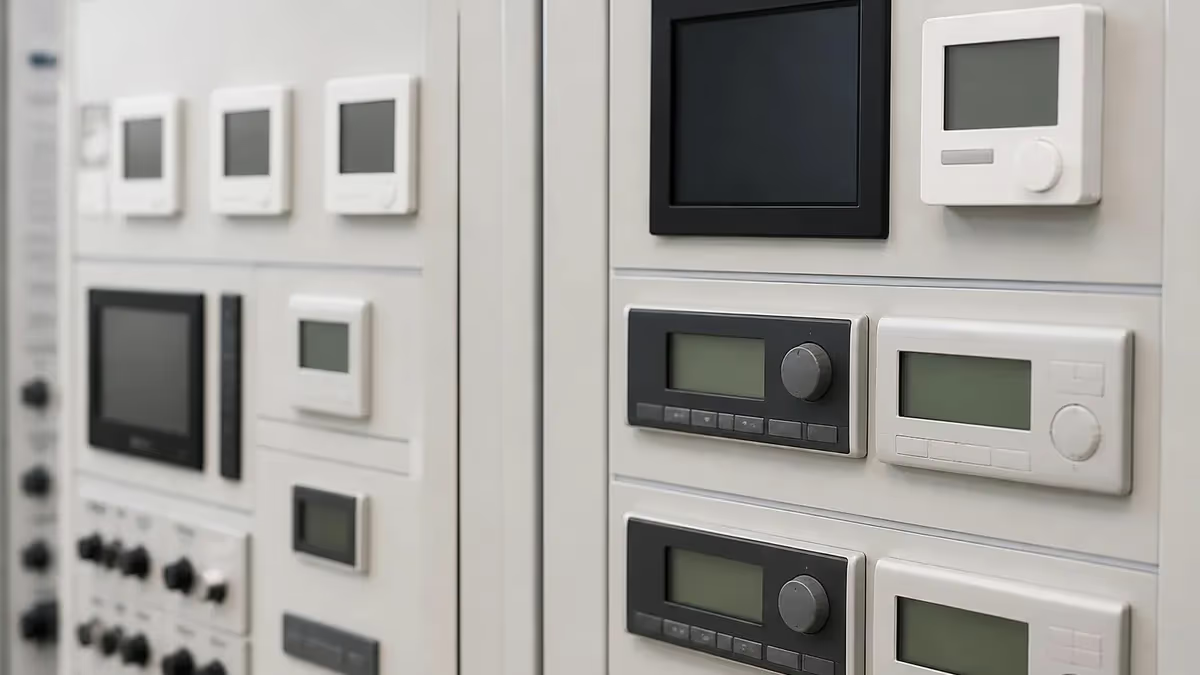
The world of hvac parts and supply is enormous, fragmented, and surprisingly technical, which is why so many homeowners and even newer technicians feel overwhelmed the first time they walk into a wholesale counter or open a distributor catalog. From dual-run capacitors and contactors to ECM blower motors, thermal expansion valves, and refrigerant cylinders, every system in your home or building depends on dozens of small components that wear out, fail, or simply need replacement on a predictable schedule that most people never plan for.
This guide walks through the entire HVAC parts ecosystem the way an experienced service technician would explain it to a friend. You will learn how parts are categorized, where wholesalers buy from, what OEM versus aftermarket really means, how to identify a part by its rating plate, and how to avoid the common pricing traps that cost homeowners hundreds of dollars on simple repairs that should run well under a hundred dollars in materials.
HVAC supply houses have changed dramatically over the past decade. Big chains like Ferguson, Johnstone Supply, Gemaire, Baker Distributing, and US Air Conditioning Distributors dominate the wholesale tier, while online retailers such as SupplyHouse, AC Wholesalers, and Repair Clinic have opened access to homeowners who used to be locked out of parts entirely. That shift has consequences for warranty coverage, pricing transparency, and the role of the local contractor.
Whether you are a homeowner trying to source a capacitor before the weekend heat wave hits, a property manager keeping spare belts and filters on hand, or an apprentice learning what lives on the truck, understanding parts is the foundation of every other HVAC skill. For broader context on system-level decisions, our overview of HVAC Solutions connects parts choices to bigger equipment strategy.
We will also cover the unglamorous side of the hvac equipment distributor: backorders, model number lookups, refrigerant tracking under EPA 608 rules, and the difference between a stock part and a special-order part. These details matter because the most expensive repair is the one that drags on for a week while a technician waits for the right blower wheel to arrive from a regional warehouse three states away.
By the end of this guide you will be able to read a nameplate, walk into a supply house with the right information, ask intelligent questions about cross-references, and avoid being upsold on parts you do not need. You will also understand which jobs are genuinely DIY and which ones legally or practically require a licensed contractor with EPA certification.
Most importantly, you will see HVAC parts the way pros see them: not as random pieces, but as a layered system where every component has a job, a lifespan, and a logical replacement strategy that protects the equipment around it.
HVAC Parts and Supply by the Numbers

Categories of HVAC Parts You Need to Know
Capacitors, contactors, relays, transformers, fuses, and control boards. These are the highest-failure-rate parts in residential AC and account for the majority of summer service calls.
Condenser fan motors, blower motors, ECM modules, inducer motors, and belts. ECM technology has replaced most PSC motors in newer equipment but costs three to five times as much.
R-410A, R-32, R-454B, expansion valves, filter driers, schrader cores, and brazing supplies. EPA 608 certification is required to purchase refrigerant in any quantity.
Pleated filters, MERV-rated media, blower wheels, dampers, registers, and flexible duct. These parts directly affect indoor air quality and system efficiency over time.
Thermostats, zone boards, pressure switches, flame sensors, limit switches, and rollout switches. Modern smart controls have expanded this category dramatically since 2018.
Where you buy your HVAC parts matters almost as much as which parts you buy, because the wholesale supply chain operates on relationships, account pricing, and stocking decisions that vary wildly by region. The five largest wholesale distributors in the United States — Watsco brands like Gemaire, Baker, and Carrier Enterprise, plus independent giants like Johnstone Supply and Ferguson HVAC — collectively operate thousands of branches and set the pace for parts availability across most metros.
Wholesale counter sales are still the backbone of professional HVAC. A licensed contractor opens an account, gets net-30 terms, and walks in each morning to grab whatever was not on the truck. Counter pricing is rarely posted publicly, and the same part can cost 20 to 40 percent more at a different chain across town. This is why experienced contractors maintain accounts at two or three suppliers and check prices before placing larger orders.
Online retailers have disrupted this model significantly. Sites like SupplyHouse.com, AC Wholesalers, PexUniverse, and Repair Clinic sell directly to homeowners and small contractors, often at prices below traditional wholesale once shipping is included. The trade-off is that online buyers cannot inspect parts before purchase, technical support is thinner, and returns on opened refrigerant or electrical components are usually impossible.
Manufacturer parts portals are the third channel. Carrier, Trane, Lennox, Goodman, and Rheem all maintain authorized dealer networks where only credentialed contractors can buy OEM replacement parts at distributor pricing. This is why a homeowner trying to source a specific Lennox control board sometimes has to go through a dealer regardless of how much the part actually costs to make. For repair-driven decisions, our guide on hvac maintenance service explains how preventive parts replacement fits into broader maintenance programs.
Local independent supply houses still thrive in many markets. These shops survive by stocking obscure parts the chains will not carry, offering same-day delivery to longtime contractors, and providing the kind of technical expertise that comes from a counter person who has been selling parts for thirty years. If you are doing serious HVAC work in one metro, finding the best independent supplier is often more valuable than any chain account.
Hardware stores and big-box retailers occupy a different tier. Home Depot, Lowes, and Menards stock common filters, basic thermostats, and some universal parts, but their selection is narrow and pricing is consumer-grade rather than wholesale. They serve as a last-resort option when something fails after hours and a homeowner needs a part immediately.
Salvage and reclamation suppliers round out the picture. Used motors, blower assemblies, and even compressors from decommissioned systems sometimes get tested and resold at deep discounts, which is particularly useful for older R-22 systems where new replacement parts are either expensive or no longer manufactured at all.
HVAC Practice Test Questions
Prepare for the HVAC - Heating Ventilation and Air Conditioning exam with our free practice test modules. Each quiz covers key topics to help you pass on your first try.
HVAC Air Conditioning
HVAC Exam Questions covering Air Conditioning. Master HVAC Test concepts for certification prep.
HVAC Code Compliance
Free HVAC Practice Test featuring Code Compliance. Improve your HVAC Exam score with mock test prep.
HVAC Electrical Controls
HVAC Test Prep for Electrical Controls. Practice HVAC Quiz questions and boost your score.
HVAC Energy Efficiency
HVAC Questions and Answers on Energy Efficiency. Free HVAC practice for exam readiness.
HVAC Heating Systems
HVAC Mock Test covering Heating Systems. Online HVAC Test practice with instant feedback.
HVAC Load Calculations
Free HVAC Quiz on HVAC Load Calculations. HVAC Exam prep questions with detailed explanations.
HVAC Tools and Equipment
HVAC Practice Questions for HVAC Tools and Equipment. Build confidence for your HVAC certification exam.
HVAC Refrigeration
HVAC Test Online for Refrigeration. Free practice with instant results and feedback.
HVAC Safety Practices
HVAC Study Material on Safety Practices. Prepare effectively with real exam-style questions.
HVAC System Design
Free HVAC Test covering System Design. Practice and track your HVAC exam readiness.
HVAC Thermodynamics
HVAC Exam Questions covering Thermodynamics. Master HVAC Test concepts for certification prep.
OEM vs Aftermarket vs Universal HVAC Parts
OEM (Original Equipment Manufacturer) parts are made by or specifically for the original equipment brand. A Carrier blower motor sold by Carrier Enterprise with a Carrier part number is OEM, even if the actual motor is built by Genteq or Regal Beloit. OEM parts maintain warranty coverage, fit perfectly, and use exact electrical specifications.
The downside is cost and availability. OEM parts often run 50 to 200 percent more than equivalent aftermarket options, and obscure boards or proprietary modules can take days to ship. For systems still under manufacturer warranty, however, OEM is usually the only acceptable choice because aftermarket installation voids coverage.
Buying Online vs Buying from a Local Supply House
- +Lower prices on common parts like capacitors, contactors, and filters
- +24/7 ordering with detailed cross-reference search tools
- +Access for homeowners and unlicensed buyers without an account
- +Larger selection of obscure or discontinued parts
- +Detailed customer reviews and installation videos
- +No upselling or pressure from counter staff
- +Free shipping thresholds often beat local delivery fees
- −No same-day availability when system is down in summer
- −Shipping damage on glass-tube capacitors and control boards
- −Limited technical advice compared to a knowledgeable counter person
- −Refrigerant requires EPA 608 verification that some sites skip improperly
- −Returns and warranty claims are slow and document-heavy
- −Counterfeit parts have appeared on marketplace listings
- −No relationship use when you need a rare part fast
HVAC Parts Identification Checklist Before You Buy
- ✓Record the equipment model number from the rating plate, not the thermostat
- ✓Write down the full serial number for warranty lookup
- ✓Photograph the failed part from at least three angles including the wiring side
- ✓Note the voltage rating: 24V, 115V, 208V, 230V, or 460V
- ✓Capture microfarad (MFD) rating and tolerance for capacitors
- ✓For motors, document horsepower, RPM, rotation direction, and shaft diameter
- ✓Verify refrigerant type before ordering metering devices or driers
- ✓Check production date on the equipment to confirm warranty eligibility
- ✓Cross-reference the OEM part number on the manufacturer parts portal
- ✓Confirm part is in stock locally before promising a same-day repair
When in doubt, replace both capacitors during a service call
A dual-run capacitor and a start capacitor together cost under thirty dollars wholesale. Heat, voltage spikes, and age weaken them long before they fail outright, and a marginal capacitor that tests within spec today often fails within ninety days. Replacing both during a compressor-related call prevents callbacks and protects the compressor itself from hard-start damage.
Pricing in HVAC parts and supply is one of the least transparent corners of the trade, and that opacity is intentional. Wholesale distributors build pricing tiers based on volume, account history, and brand loyalty, so the same blower motor can cost a small one-truck shop 40 percent more than what a large mechanical contractor pays for the identical SKU. Understanding these tiers helps explain why repair invoices vary so dramatically between contractors in the same market.
The classic markup formula in residential HVAC is roughly three times wholesale cost, sometimes called the rule of three. A capacitor that costs the contractor 12 dollars at the counter shows up on the invoice at 36 to 50 dollars, and that is considered fair pricing because it covers truck stock, warranty risk, returns, and the labor overhead of carrying inventory. Markups higher than four times wholesale are common but increasingly hard to defend as online price transparency grows.
Hidden costs surprise even experienced buyers. Hazmat shipping fees on refrigerant cylinders, cardboard core charges on motors, restocking fees on returned electronics, and minimum order surcharges from smaller distributors all add up. A 200 dollar part order can easily carry 40 dollars in invisible fees that never appear in the initial quote.
Refrigerant pricing deserves its own analysis. R-410A pricing has swung from 80 dollars per 25-pound jug in 2020 to over 400 dollars per jug during peak shortage windows, and the 2025 phasedown to R-454B and R-32 has reset the pricing landscape entirely. Contractors who locked in supply contracts before the transition saved homeowners hundreds of dollars per leak repair.
Special-order surcharges punish poor planning. A control board ordered overnight from a regional manufacturer warehouse can cost twice the standard price plus expedited shipping. This is why pros stock common boards on the truck even when the upfront inventory investment seems wasteful — the time saved on a no-cool call in August more than pays for itself.
Bulk buying changes the math for property managers and multi-unit owners. Buying filters by the case, capacitors by the ten-pack, and belts in pre-cut assortments cuts per-hvac unit costs by 30 to 60 percent. Many supply houses run quarterly promotions on stocking items that reward planning ahead of cooling season.
Finally, regional pricing differences are larger than most homeowners realize. The same Goodman blower motor can vary by 25 percent in price between Phoenix, Atlanta, and Boston based on freight, local competition, and distributor stocking strategy. Shopping outside your immediate metro through online retailers is often the most effective way to escape these regional premiums on big-ticket items.
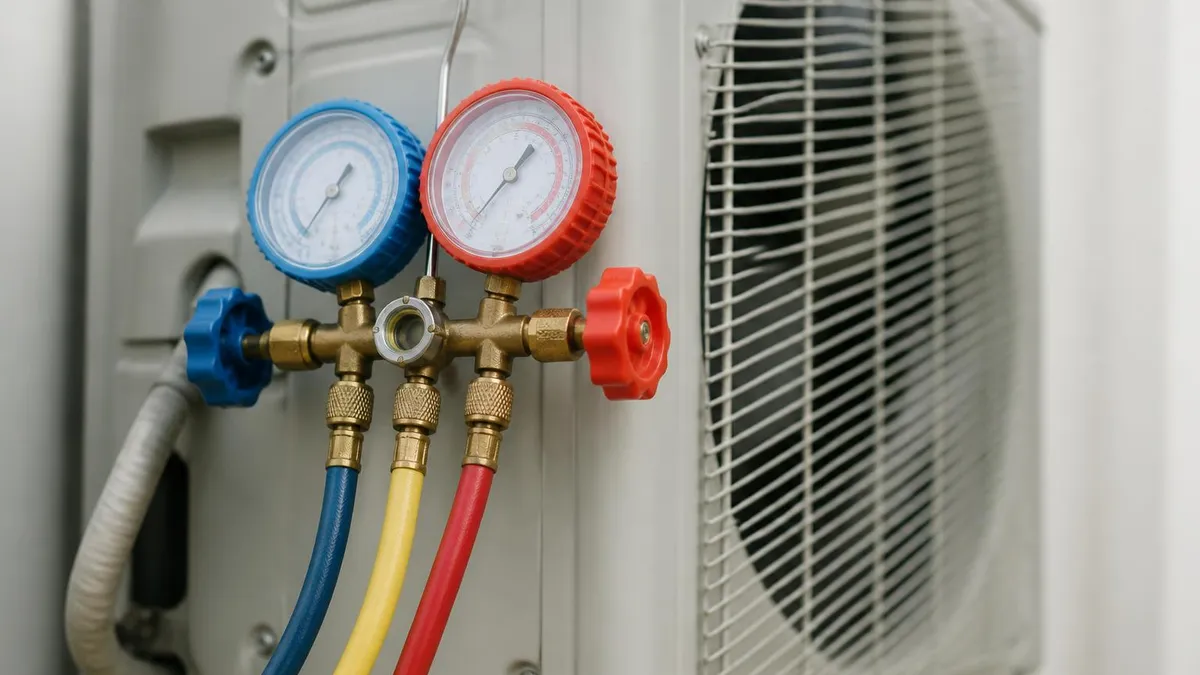
Federal law requires EPA Section 608 certification to purchase or handle most HVAC refrigerants, including R-410A, R-32, R-454B, and legacy R-22. Reputable suppliers verify certification before sale. Buying refrigerant through marketplace listings that skip verification is illegal and can void any warranty on the equipment it goes into.
Buying HVAC parts and supply intelligently comes down to preparation, relationships, and a healthy skepticism about both the lowest and the highest prices you see. The cheapest part is rarely the right part, and the most expensive part is often just OEM markup applied to the same component sitting on a shelf one aisle over with a different label. The skill is knowing which is which and when each choice makes sense.
Start every parts decision with the equipment nameplate. The model and serial number unlock the manufacturer parts portal, warranty status, and accurate cross-reference data. Without that information, you are guessing, and guessing in HVAC parts is how a homeowner ends up with a 5-2-1 hard start kit that does not match the compressor or a thermostat that lacks the right number of wires.
Build relationships with at least one knowledgeable counter person at your preferred supply house. That person is more valuable than any catalog. They will warn you about which production runs had quality issues, which generic boards actually work, and which manufacturer reps will honor a goodwill warranty claim outside the standard window. These conversations rarely happen on retailer websites.
Standardize your truck stock or homeowner spare bin. Common capacitors in five microfarad values, two contactor sizes, a universal fan motor, a few filter sizes, and a roll of refrigerant-rated tubing handle 80 percent of emergency situations. For deeper system thinking on multi-component decisions, our overview of Commercial HVAC Contractors Near Me covers how larger operators structure their parts strategies across multiple buildings.
Watch for counterfeits on marketplace platforms. Counterfeit Honeywell thermostats, fake Copeland compressors, and rebadged no-name capacitors have flooded certain channels since 2022. Buying from authorized distributors or the manufacturer directly is the only reliable defense, and the price difference is rarely worth the warranty and safety risk.
Plan around lead times for anything beyond truck stock. Variable-speed blower modules, communicating thermostats, and proprietary control boards routinely have one to three week lead times during peak season. Ordering ahead of forecasted weather extremes and stocking a small buffer of high-failure items prevents the worst customer-facing delays.
Document every parts purchase against the equipment it goes into. A simple log of part number, supplier, date, and equipment serial pays back enormously during warranty disputes, callbacks, and end-of-life equipment evaluations. Property managers and service companies that maintain this discipline routinely recover thousands of dollars per year in warranty reimbursements that less organized operators leave on the table.
Putting all this knowledge into action requires a practical workflow that you can repeat under pressure, whether you are a homeowner facing a no-cool emergency on a Saturday afternoon or a technician trying to clear a backlog of service tickets during a heat wave. The pros who consistently deliver fast, profitable repairs have systematized parts decisions so they take seconds rather than minutes per call.
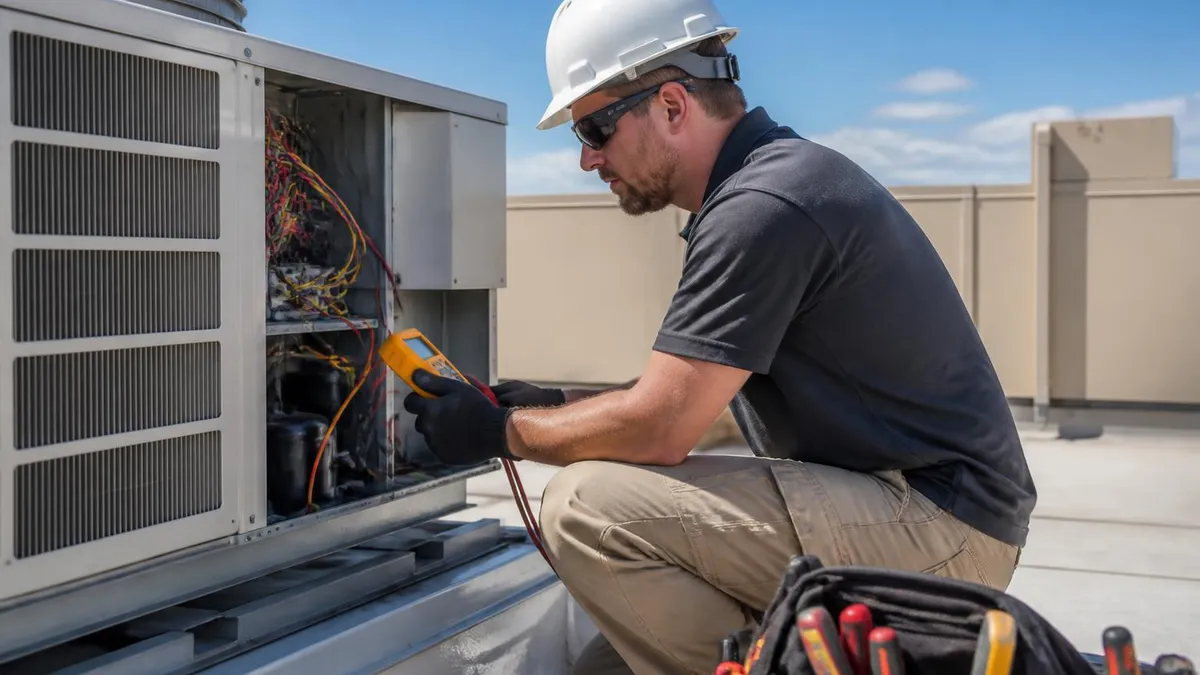
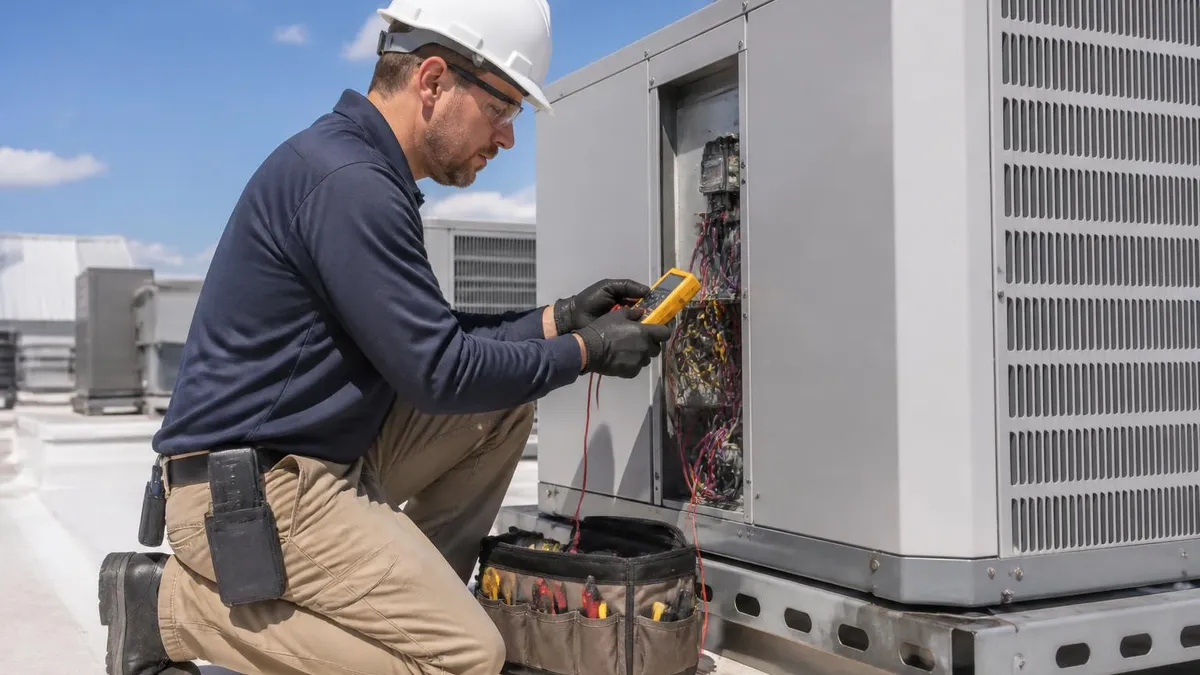
Begin with diagnostics before parts. The single most expensive mistake in HVAC parts buying is replacing the wrong component because the symptom was misread. A failed capacitor and a failed contactor produce nearly identical symptoms in some scenarios, and a weak compressor mimics a low-charge condition closely enough to fool inexperienced techs. Confirm the failure with meters and gauges, not assumptions, before opening your wallet.
Match the replacement part to the application, not just the original part. Older equipment was often installed with undersized capacitors or marginal motors, and a like-for-like replacement perpetuates the original mistake. Sizing up a capacitor slightly within the manufacturer tolerance, choosing a higher-efficiency motor, or upgrading to a smart thermostat during a repair adds real value to the homeowner.
Keep accurate model number records of every system you touch. A simple photograph of the rating plate stored in your phone or service software pays back the next time that system needs attention. For technicians, this habit alone differentiates organized professionals from those who burn 20 minutes per call hunting nameplates buried behind insulation or under condenser covers.
Develop preferred suppliers and stick with them long enough to earn the relationship benefits. Spreading your spend across six distributors looking for the lowest price on each transaction often costs more than concentrating with two who give you priority on emergencies, share market intelligence, and quietly absorb the occasional defective part return without paperwork drama.
Train apprentices and helpers on parts identification early. Sending a helper to the counter without preparation wastes both their time and yours when they return with the wrong universal motor or a capacitor with the right capacitance but the wrong voltage. Teach the rating plate workflow, the cross-reference process, and the questions to ask before they ever leave the shop.
Finally, stay current on hvac regulationss and code changes. The shift to A2L refrigerants like R-32 and R-454B in 2025 changed parts requirements for king valve hvac leak detection sensors, and even some brazing alloys. Suppliers who specialize in your equipment brands typically run free training sessions on these transitions, and attending them is the cheapest continuing education in the trade.
For homeowners reading this guide, the practical takeaway is simpler. Document your equipment, identify a trustworthy local contractor, ask for itemized invoices that list parts with manufacturer part numbers, and maintain a small file of past repairs. These habits give you use on every future repair and prevent the most common form of overcharging in the industry.
HVAC Questions and Answers

HVAC Companies Portland: The Complete Guide to Finding, Vetting, and Hiring the Best Heating and Cooling Contractors in the Rose City
HVAC Repair Portland: The Complete 2026 Homeowner's Guide to Furnace, AC, and Heat Pump Service in the Rose City

Commercial HVAC Contractors Near Me: How to Find, Vet, and Hire the Right Local Pro for Your Building

HVAC Tune Up Service: The Complete Guide to Professional HVAC Maintenance and Why It Pays for Itself
HVAC Solutions: The Complete Guide to Heating, Cooling, and Indoor Air Quality Systems for Homes and Buildings
About the Author

NATE Certified HVAC Technician & Licensing Exam Trainer
Universal Technical InstituteMike Johnson is a NATE-certified HVAC technician and EPA 608 universal-certified refrigerant handler with a Bachelor of Science in HVAC/R Technology. He has 19 years of commercial and residential HVAC installation and service experience and specializes in preparing technicians for NATE certification, EPA 608, A2L refrigerant safety, and state HVAC contractor licensing examinations.