
DOE HVAC Regulations News: The Complete 2026 October Guide to Federal Efficiency Standards, SEER2 Updates, and Refrigerant Transition Rules
📚 DOE HVAC regulations news: SEER2 minimums, A2L refrigerant rules, regional standards, and 2026 October federal efficiency updates explained for techs and

US HVAC equipment is regulated mainly by two federal agencies: the Department of Energy (DOE) sets minimum efficiency (SEER2, EER2 and HSPF2 for equipment manufactured on or after January 1, 2023), and the EPA controls refrigerants (Section 608 technician certification and AIM Act limits that cap new residential and light-commercial air conditioners and heat pumps at a GWP of 700 from January 1, 2025). State and local codes and licensing add a third layer on top.
The DOE efficiency rule divides the country into three regions: North, Southeast and Southwest. Split-system air conditioners must meet 13.4 SEER2 in the North and 14.3 SEER2 in the Southeast and Southwest (for units under 45,000 Btu/hr), while split-system heat pumps must meet 14.3 SEER2 and 7.5 HSPF2 nationwide. The Southwest also has a minimum EER2.
The EPA side is about refrigerant. Anyone who services equipment that could release refrigerant must hold an EPA Section 608 certification, which does not expire, and new equipment is moving from R-410A to lower-GWP A2L refrigerants such as R-454B and R-32. Venting refrigerant is prohibited.
This guide walks through the rules that matter for licensing exams and day-to-day work: the efficiency minimums, regional installation rules, the refrigerant transition, enforcement, and what is coming next. Primary sources are listed in the table below so you can confirm current status before relying on any single date, because these rules are revised from time to time.
HVAC Regulations at a Glance (verified October 2026)
| Regulation | Agency | What it requires | Effective date |
|---|---|---|---|
| SEER2 / HSPF2 minimums, central AC and heat pumps (10 CFR 430.32(c)(5)) | DOE | Split AC 13.4 SEER2; split heat pump 14.3 SEER2 and 7.5 HSPF2; single-package AC 13.4 SEER2; single-package heat pump 13.4 SEER2 and 6.7 HSPF2 | Equipment manufactured on or after Jan 1, 2023 |
| Regional AC standards (10 CFR 430.32(c)(6)) | DOE | Southeast and Southwest: split AC under 45,000 Btu/hr must be 14.3 SEER2; Southwest also needs 11.7 EER2 (9.8 EER2 if SEER2 is 15.2 or higher). A unit rated below the regional standard cannot be installed in that region | Installed on or after Jan 1, 2023 |
| Gas furnace efficiency (10 CFR 430.32(e)) | DOE | Non-weatherized gas furnaces must reach 95% AFUE (currently 80%); check the Federal Register for any change | Manufactured on or after Dec 18, 2028 |
| Water heater efficiency (10 CFR 430.32(d)) | DOE | Higher uniform energy factor (UEF) minimums for new water heaters | Manufactured on or after May 6, 2029 |
| Section 608 technician certification (40 CFR Part 82, Subpart F) | EPA | Technicians who maintain, service, repair or dispose of equipment that could release refrigerant must pass an EPA-approved test (Type I, II, III or Universal); certification does not expire | In force |
| Venting prohibition (Clean Air Act Section 608) | EPA | Intentionally venting or knowingly releasing refrigerant, including HFCs, is prohibited; recovery equipment and evacuation to set levels are required | In force |
| AIM Act HFC rules (42 U.S.C. 7675) | EPA | Phases down HFC production and consumption, manages HFCs and substitutes, and sets sector restrictions | Enacted Dec 27, 2020 |
| Technology Transitions: residential and light-commercial AC and heat pumps | EPA | GWP limit of 700 for new equipment (R-410A is above it; R-454B and R-32 are below). Systems whose components were all made before Jan 1, 2025 have no installation compliance date | Manufacture/import from Jan 1, 2025 |
| Technology Transitions: variable refrigerant flow (VRF) systems | EPA | GWP limit of 700 for installed systems | Installation from Jan 1, 2027 |
Sources: 10 CFR Part 430 (eCFR), EPA HFC restrictions by sector, EPA Section 608 certification. State licensing requirements vary by state and are not covered by this table.
DOE HVAC Regulations by the Numbers
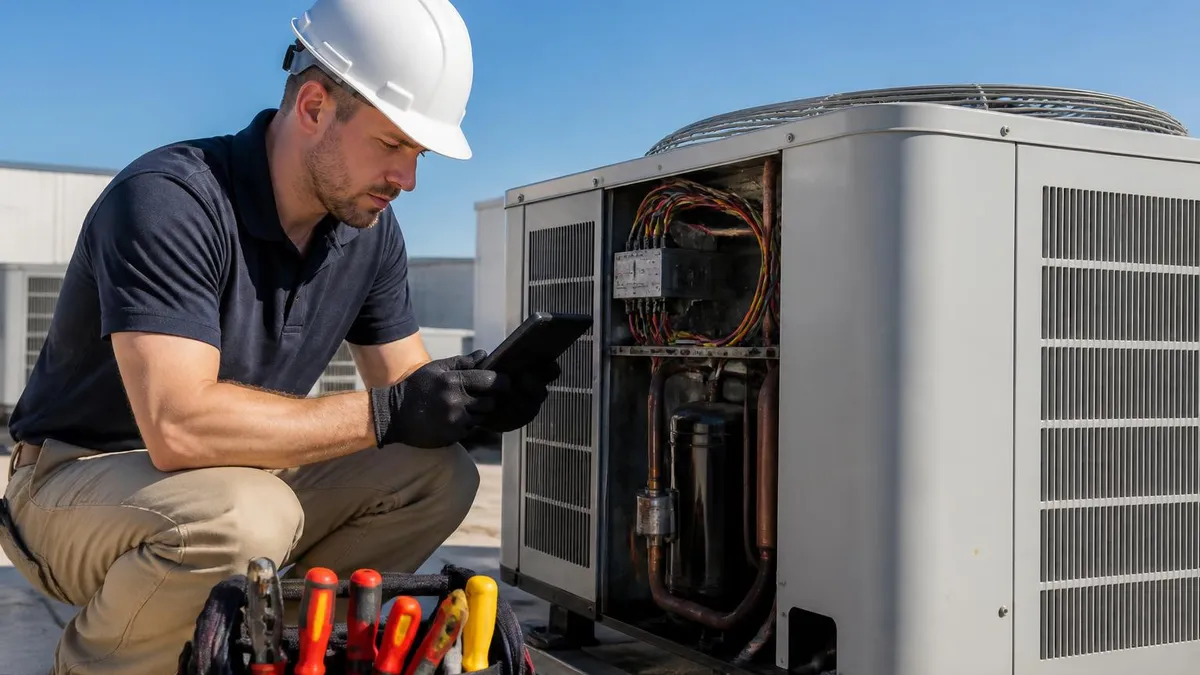
Core DOE Efficiency Standards in Effect for 2026
Split-system air conditioners under 45,000 Btu/hr must meet 13.4 SEER2 in the North and 14.3 SEER2 in the Southeast and Southwest. Single-package air conditioners must meet 13.4 SEER2, and the Southwest also has an EER2 minimum. Standards apply to equipment manufactured on or after January 1, 2023.
Split-system heat pumps must meet 14.3 SEER2 and 7.5 HSPF2 nationwide, and single-package heat pumps must meet 13.4 SEER2 and 6.7 HSPF2. The SEER2 and HSPF2 ratings use an updated DOE test procedure.
For the regional air conditioner standards, DOE rules say an outdoor unit whose certified combination is rated below the standard for a region cannot be installed there on or after January 1, 2023. The North has no stricter regional standard.
Under the AIM Act and EPA Technology Transitions rule, new residential and light-commercial air conditioners and heat pumps manufactured or imported from January 1, 2025 must use refrigerants with a global warming potential (GWP) below 700, which in practice means A2L refrigerants such as R-454B or R-32.
Commercial unitary equipment has its own DOE efficiency standards in 10 CFR Part 431, separate from the residential rules above. Check the current Part 431 tables for the exact IEER, EER and COP minimums for each equipment class.
The A2L Refrigerant Transition
The biggest recent change for technicians is the shift from R-410A to A2L refrigerants. The American Innovation and Manufacturing (AIM) Act, enacted December 27, 2020, authorizes the EPA to phase down HFCs and set sector-based restrictions. Under the EPA Technology Transitions program, new residential and light-commercial air conditioners and heat pumps manufactured or imported from January 1, 2025 must use a refrigerant with a GWP below 700. R-410A is above that limit.
The two common replacements are R-454B and R-32. Both are classed A2L, meaning low toxicity and mildly flammable, which changes how equipment is designed and serviced. Follow the equipment manufacturer's instructions for leak detection, ventilation, brazing practice, A2L-rated recovery machines, gauges and leak detectors, and charge method.
EPA's current table says no installation compliance date applies to systems whose specified components were all manufactured or imported before January 1, 2025, so existing R-410A stock is not automatically barred from installation. Confirm the table on EPA's site before quoting older inventory. Variable refrigerant flow (VRF) systems have an installation date of January 1, 2027.
Homeowners with an existing R-410A system do not have to replace it. The federal equipment rules apply to new equipment, and the Section 608 rules still allow technicians to service existing systems. For routine service and leak inspection, see our guide on hvac maintenance service.
Section 608 certification remains the federal credential for handling refrigerants, and manufacturers may add their own training expectations for A2L equipment. Building codes and state rules on A2L equipment are adopted on different schedules, so check which edition your jurisdiction uses before each job.
HVAC Practice Test Questions
Prepare for the HVAC - Heating Ventilation and Air Conditioning exam with our free practice test modules. Each quiz covers key topics to help you pass on your first try.
HVAC Air Conditioning
HVAC Exam Questions covering Air Conditioning. Master HVAC Test concepts for certification prep.
HVAC Code Compliance
Free HVAC Practice Test featuring Code Compliance. Improve your HVAC Exam score with mock test prep.
HVAC Electrical Controls
HVAC Test Prep for Electrical Controls. Practice HVAC Quiz questions and boost your score.
HVAC Energy Efficiency
HVAC Questions and Answers on Energy Efficiency. Free HVAC practice for exam readiness.
HVAC Heating Systems
HVAC Mock Test covering Heating Systems. Online HVAC Test practice with instant feedback.
HVAC Load Calculations
Free HVAC Quiz on HVAC Load Calculations. HVAC Exam prep questions with detailed explanations.
HVAC Tools and Equipment
HVAC Practice Questions for HVAC Tools and Equipment. Build confidence for your HVAC certification exam.
HVAC Refrigeration
HVAC Test Online for Refrigeration. Free practice with instant results and feedback.
HVAC Safety Practices
HVAC Study Material on Safety Practices. Prepare effectively with real exam-style questions.
HVAC System Design
Free HVAC Test covering System Design. Practice and track your HVAC exam readiness.
HVAC Thermodynamics
HVAC Exam Questions covering Thermodynamics. Master HVAC Test concepts for certification prep.
How DOE HVAC Regulations News Becomes Law
Most DOE rulemakings start with a petition, a statutory mandate under the Energy Policy and Conservation Act, or a periodic review. DOE may publish an Advance Notice of Proposed Rulemaking (ANOPR) to ask the public about scope, test procedures and economic impact. It is not binding.
Manufacturers, utilities, efficiency advocates and contractor associations submit data on shipments, efficiency levels and consumer costs, which shapes the formal proposal that follows.
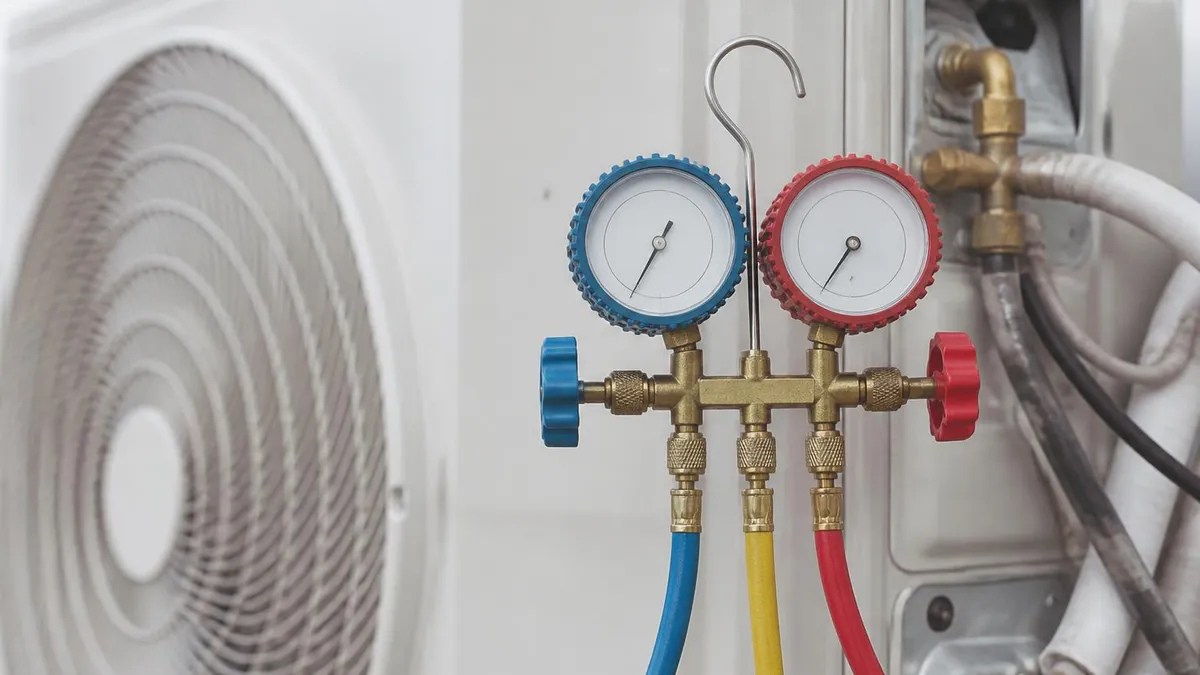
Impact of Stricter DOE HVAC Standards: Pros and Cons
- +Lower operating costs for homeowners through higher SEER2 and HSPF2 ratings
- +Lower greenhouse gas emissions from reduced energy use and lower-GWP refrigerants
- +Variable-speed and inverter-driven equipment is becoming common
- +Clear paperwork trail through AHRI certificates at the permit desk
- −Higher upfront equipment costs for higher-efficiency systems
- −Training needs for technicians moving to A2L refrigerant handling
- −Larger equipment can complicate closet and attic retrofits
- −A2L-rated recovery machines, gauges and leak detectors may need to be purchased
- −Regional installation rules require checking the unit rating against the local standard
- −More documentation at permit and inspection stages
DOE HVAC Regulations Compliance Checklist for Contractors
- ✓Verify the AHRI certificate number for every matched indoor and outdoor pair before installation
- ✓Confirm the equipment SEER2, EER2, and HSPF2 ratings meet your region's current minimum
- ✓Check refrigerant type and ensure technicians hold valid A2L training certification
- ✓Inspect for A2L-rated leak detection sensors on new split systems and replace as needed
- ✓Use only A2L-compatible recovery machines, gauges, and electronic leak detectors on new work
- ✓Charge by the equipment manufacturer's instructions, usually by weight for blended refrigerants
- ✓Submit AHRI certificates with permit applications when required by local jurisdiction
- ✓Verify the unit rating meets the regional standard (Southeast and Southwest) at the time of installation
- ✓Maintain EPA Section 608 records and reclaim documentation for every refrigerant transaction
- ✓Prepare customers to understand higher upfront costs versus lower operating costs
A mismatched indoor and outdoor pair can fail the efficiency rating.
Efficiency ratings apply to a tested combination. An outdoor condenser may be compliant on its own, but if it is paired with an indoor coil that is not on the AHRI certificate for that combination, the installed system may not match its rating. Print the AHRI certificate before the job and attach it to the permit package when required.
Enforcement and Penalties
DOE efficiency rules fall mainly on manufacturers and importers. A person who knowingly violates the prohibited acts in 10 CFR 429.102 may face a civil penalty of up to $575 per violation, and for some violations each unit sold or each day of noncompliance counts as a separate violation.
Refrigerant rules carry their own penalties. Under the Clean Air Act, EPA civil penalties are inflation-adjusted and can exceed $100,000 per day per violation (the 40 CFR 19.4 table lists $124,426 for 42 U.S.C. 7413(b)). Venting refrigerant, including HFC and A2L refrigerants, remains prohibited under Section 608 rules, so even small deliberate releases are not acceptable.
For contractors, the practical risk is a failed inspection or a licensing complaint. Installing equipment that does not match the regional standard can force reinstallation at your cost and may draw action from your state licensing board. Keep the AHRI certificate for each matched pair, your Section 608 certification, and refrigerant recovery and purchase records in the job file. For help vetting providers, see our guide on hvac contractors.
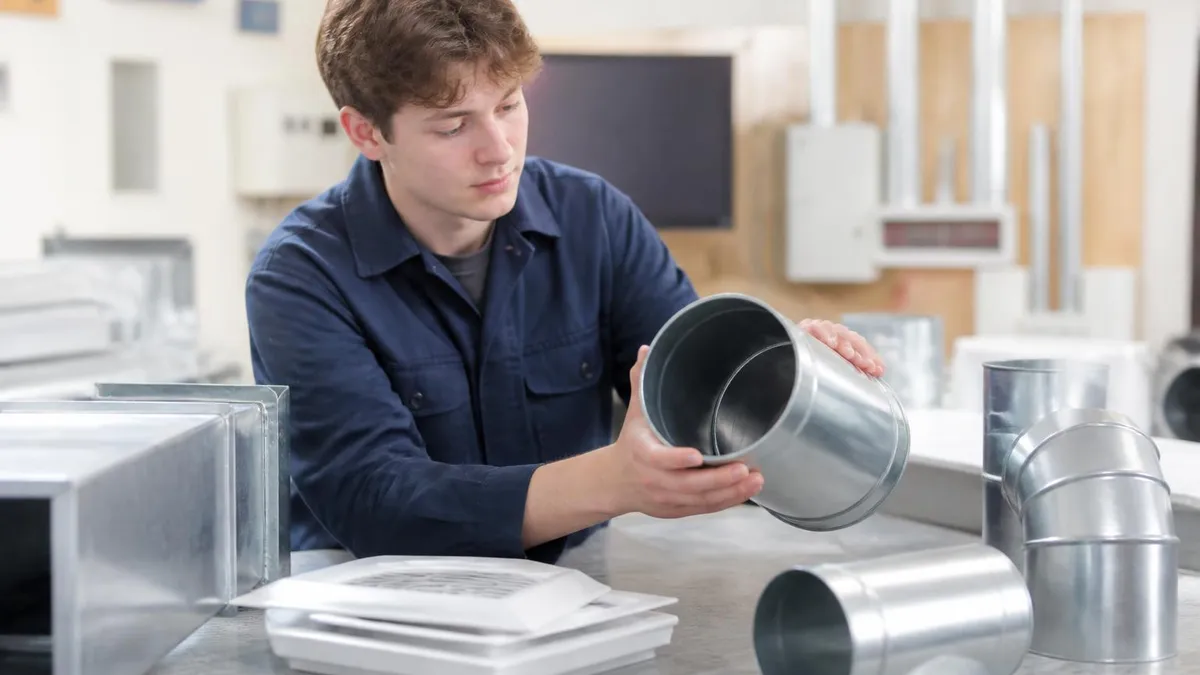
Under 10 CFR 430.32, the national SEER2 and HSPF2 minimums apply by manufacture date (January 1, 2023), while the Southeast and Southwest regional air conditioner standards apply by installation date. An outdoor unit rated below the regional standard cannot be installed in that region. Confirm the rating before you quote.
What Is Coming Next
Several DOE and EPA dates are already set in the rules. Non-weatherized gas furnaces are written to reach 95% AFUE for units manufactured on or after December 18, 2028, up from 80% today, and new water heaters face higher UEF minimums for units manufactured on or after May 6, 2029. Because efficiency rules are sometimes challenged or revised, check the Federal Register and 10 CFR 430.32 before relying on any future date.
EPA's Technology Transitions rules also cover larger systems. Its current table lists a GWP limit of 700 for comfort-cooling chillers from January 1, 2025, for data centers and computer room air conditioning from January 1, 2027, and for VRF systems from January 1, 2027. Supermarket systems get an interim GWP limit of 1,400 from January 1, 2027, tightening in 2032.
Federal tax credits for home HVAC upgrades have also changed. The IRS Energy Efficient Home Improvement Credit applied only to property placed in service before December 31, 2025, so heat pump and central air upgrades installed in 2026 do not qualify for it. Some state and utility rebates still exist, but they vary by location. For equipment options, see HVAC Solutions.
Staying Compliant in Daily Practice
Start with a few habits. Check the Federal Register and EPA's Technology Transitions page on a regular schedule, because dates and rules change. Keep the AHRI certificate for every matched indoor and outdoor pair in the job file and attach it to permit packages when your jurisdiction requires it.
Equip each vehicle with A2L-rated tools if you work on A2L equipment, and follow the manufacturer's charging instructions. Track your credentials in one place: EPA Section 608 certification does not expire, but state licenses and manufacturer training may need renewal. Learn the vocabulary in our hvac terms guide.
Explain the rules to customers in plain language: why a new system costs more than an older one, what SEER2 means, and which refrigerant the system uses. Stock A2L-compatible parts ahead of time; see HVAC Parts and Supply for planning.
Sample HVAC Practice Questions
Try these questions from our free HVAC practice tests. The correct answer and an explanation follow each question.
Which organization certifies refrigerant reclaimers to ensure they meet purity standards for reclaimed refrigerant?
- A. EPA directly certifies reclaimers
- B. ASHRAE
- C. AHRI (Air-Conditioning, Heating, and Refrigeration Institute)
- D. DOE (Department of Energy)
Answer: C. AHRI (Air-Conditioning, Heating, and Refrigeration Institute)
AHRI (Air-Conditioning, Heating, and Refrigeration Institute) certifies refrigerant reclaimers under its reclamation certification program, ensuring they process refrigerant to AHRI Standard 700 purity levels.
When recovering refrigerant from a system with a hermetically sealed compressor that is NOT operational, what recovery efficiency must be achieved for systems containing less than 200 lbs of refrigerant manufactured after November 15, 1993?
- A. 80%
- B. 90%
- C. 95%
- D. 4 inches of mercury vacuum
Answer: C. 95%
For systems manufactured after November 15, 1993, with non-operational compressors and less than 200 lbs refrigerant, 90% recovery efficiency or 4 inches Hg vacuum is required.
What is the correct color coding for a refrigerant recovery cylinder that has been used and contains refrigerant?
- A. Green
- B. Yellow with a gray collar
- C. White
- D. Blue
Answer: B. Yellow with a gray collar
Used refrigerant recovery cylinders are identified by a yellow body with a gray collar, distinguishing them from new refrigerant cylinders which use manufacturer colors.
In HVAC practice, what is the best approach to quality improvement in energy efficiency?
- A. Make changes without measuring results
- B. Use data-driven methods with measurable outcomes
- C. Wait for problems to occur before acting
- D. Copy what other organizations do without analysis
Answer: B. Use data-driven methods with measurable outcomes
Data-driven quality improvement with measurable outcomes ensures that changes actually produce the intended improvements and can be verified.
HVAC Questions and Answers
HVAC Repair Portland: The Complete 2026 Homeowner's Guide to Furnace, AC, and Heat Pump Service in the Rose City
HVAC Tune Up Service: The Complete Guide to Professional HVAC Maintenance and Why It Pays for Itself
HVAC Solutions: The Complete Guide to Heating, Cooling, and Indoor Air Quality Systems for Homes and Buildings
Certified HVAC Contractors: How to Find, Vet, and Hire the Right Professional for Your Home or Business
HVAC Parts and Supply: The Complete Guide to Sourcing, Identifying, and Buying Heating and Cooling Components in 2026
About the Author

NATE Certified HVAC Technician & Licensing Exam Trainer
Universal Technical InstituteMike Johnson is a NATE-certified HVAC technician and EPA 608 universal-certified refrigerant handler with a Bachelor of Science in HVAC/R Technology. He has 19 years of commercial and residential HVAC installation and service experience and specializes in preparing technicians for NATE certification, EPA 608, A2L refrigerant safety, and state HVAC contractor licensing examinations.