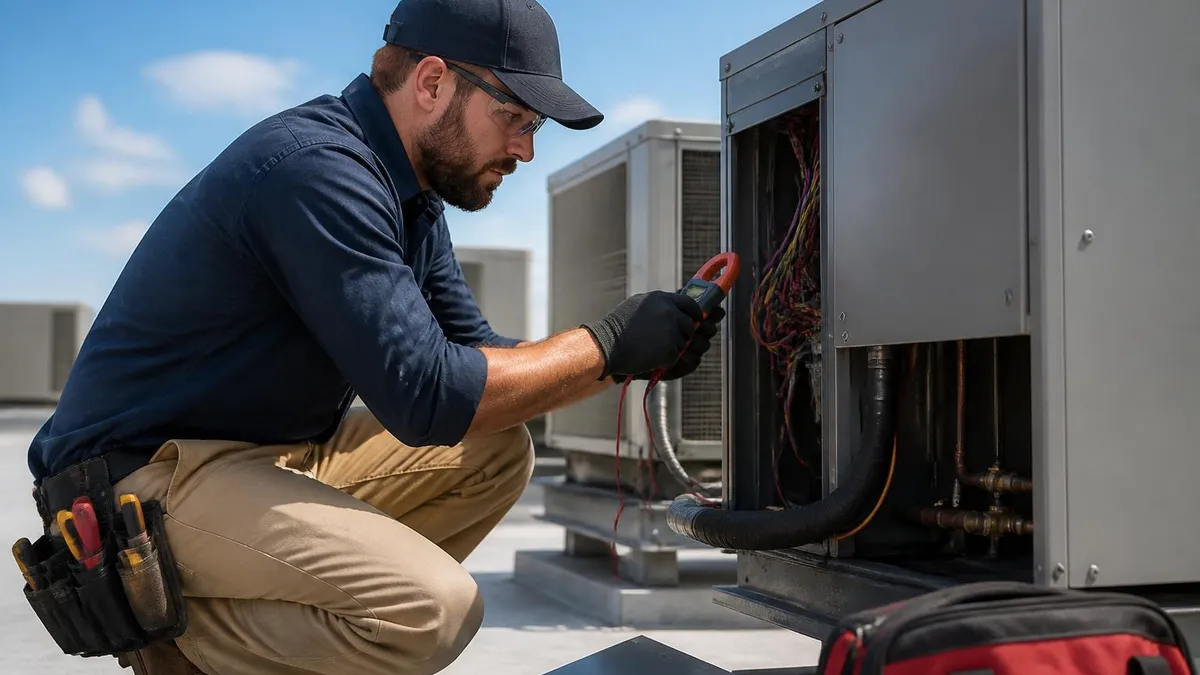
HVAC Tune Up Service: The Complete Guide to Professional HVAC Maintenance and Why It Pays for Itself
HVAC tune up service explained — what's included, real costs, seasonal timing, and why annual maintenance saves you 15-30% on energy bills. 📝
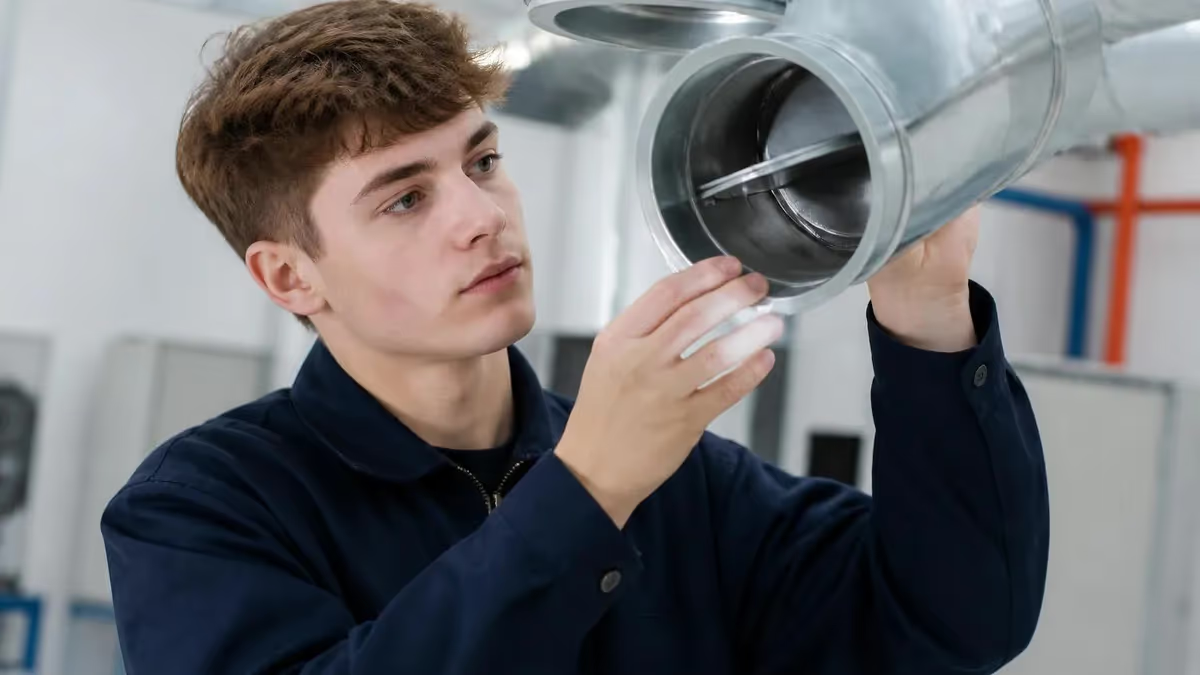
An hvac service wichita ks is the single most cost-effective thing a homeowner can do to protect a heating and cooling system, and yet roughly 60% of American households skip it entirely. A professional tune up is a structured inspection plus cleaning that catches refrigerant leaks, weak capacitors, dirty coils, and failing motors before they cascade into a $4,000 compressor replacement on the hottest day of July. Most manufacturers also require documented annual maintenance to keep the equipment warranty valid, which alone is reason enough to put it on the calendar.
The phrase covers a lot of ground. A spring tune up focuses on the cooling side: condenser coil cleaning, refrigerant pressure verification, condensate drain flushing, and electrical contact tightening. A fall tune up covers the heating side: burner inspection, heat exchanger examination, flame sensor cleaning, gas pressure testing, and carbon monoxide measurement at the flue. Both visits typically run 60 to 90 minutes and cost between $89 and $199 depending on region, contractor, and whether you bundle them into a maintenance plan.
Skipping maintenance is not just risky, it is mathematically expensive. The U.S. Department of Energy estimates that a neglected HVAC system loses about 5% of its efficiency each year through dust accumulation, refrigerant drift, and worn components. After five years, that compounds into a system that burns 25% more energy to deliver the same comfort. On a $2,400 annual utility bill, that is $600 in waste that a $150 tune up could have prevented. The math is not even close.
There is also a longevity argument. Properly maintained gas furnaces routinely last 20 to 25 years, while neglected units often fail at 12. Central air conditioners stretch from a typical 12-year lifespan to 18 or 20 when coils stay clean and refrigerant stays charged. Extending equipment life by even five years effectively saves a homeowner $4,000 to $8,000 in deferred replacement costs, which dwarfs the cumulative cost of decades of tune ups.
This guide walks through everything a homeowner needs to know: what a real tune up includes versus what fly-by-night companies skip, how to spot upsell traps, when to schedule, what to ask for in writing, and how to evaluate maintenance agreements. We will cover the cooling-side and heating-side checklists separately, explain the technical readings a good technician should record, and show you how to read the invoice afterward to verify the work was actually performed. If you are vetting contractors right now, our guide to hvac contractors is a useful companion read.
One final framing point. A tune up is not a repair visit and it is not a sales call. It is preventive maintenance, and the best technicians treat it that way. If your provider shows up, spends 20 minutes spraying the coil, and hands you a $3,000 quote for a new system, you did not get a tune up. You got a sales pitch. Knowing the difference is what this article is about.
HVAC Tune Up Service by the Numbers
What a Professional HVAC Tune Up Actually Includes
Both the outdoor condenser coil and the indoor evaporator coil get inspected and cleaned. Dirty coils are the number-one cause of efficiency loss and high head pressure that kills compressors.
Technician measures suction and head pressure, superheat, and subcooling. Readings confirm whether the charge is correct or whether a slow leak has developed since the last visit.
Capacitors are tested under load, contactors checked for pitting, and amp draws measured on motors. Weak capacitors are the single most common cause of summer breakdowns.
On gas furnaces, the technician measures flue gas, checks the heat exchanger with a camera, tests gas pressure, and verifies safe carbon monoxide levels before sign off.
Static pressure across the air handler is measured and compared to manufacturer specs. High static pressure indicates dirty filters, undersized ductwork, or blocked returns.
Pricing for an hvac tune up service ranges widely, and understanding why helps you separate fair quotes from rip-offs. The national average for a standard single-system visit sits between $89 and $199, with $129 being the most common price point in 2026. That covers one heating system or one cooling system, not both. If you have a dual-fuel setup or a separate AC and furnace, expect to pay for two visits unless the contractor offers a combined seasonal package.
Regional differences are significant. Homeowners in the Pacific Northwest and Mountain West typically pay $89 to $129 for a tune up, while customers in the Northeast and high-cost coastal markets see $149 to $249 for the same scope of work. Labor rates drive most of that variance, although equipment access also matters: a rooftop unit on a three-story home costs more to service than a slab-mounted condenser at ground level. If you are in the Pacific Northwest, our directory of hvac companies portland gives a useful sense of local pricing norms.
Bundled maintenance plans change the math considerably. Most reputable contractors offer annual agreements ranging from $180 to $360 that include two visits (spring cooling, fall heating), priority scheduling during heat waves and cold snaps, and a 10 to 20 percent discount on any repairs needed during the year. For households with both AC and furnace, this almost always beats paying for individual visits, and the priority scheduling alone is worth the price when your system fails on a Friday afternoon in August.
Watch out for suspiciously low-priced tune ups, especially the $39 and $49 deals advertised on Facebook and local coupon sites. These are loss leaders designed to get a technician inside your home so they can sell you something. The actual inspection takes 15 minutes, no readings get recorded, and the conversation pivots quickly to a new system quote. A real tune up cannot be performed in 15 minutes, and reputable contractors do not need to use bait pricing to fill their schedules.
Add-on services can legitimately increase the price. Condensate pump replacement runs $150 to $250, hard-start kits for older compressors cost $80 to $180 installed, and surge protectors for the outdoor unit run $120 to $250. None of these are part of a standard tune up, and a good technician will explain the issue, show you the failed component, and quote the work before doing it. If they replace something without asking first, push back on the invoice.
Multi-system homes get a discount almost universally. If your home has two zones with separate equipment, a single visit covering both should run roughly $180 to $280 rather than double the single-system price. Always ask about multi-unit pricing upfront. Similarly, some contractors waive the tune up fee entirely if you book a repair visit at the same time, since they are already on site and need only the additional 45 minutes to complete the inspection.
The bottom line on pricing: anything under $79 is bait, anything over $250 for a basic visit is overpriced unless you have unusual access challenges, and the sweet spot for honest, thorough work is $99 to $179 per system. Get itemized quotes in writing, and never accept verbal estimates for anything beyond the base tune up itself.
HVAC Practice Test Questions
Prepare for the HVAC - Heating Ventilation and Air Conditioning exam with our free practice test modules. Each quiz covers key topics to help you pass on your first try.
HVAC Air Conditioning
HVAC Exam Questions covering Air Conditioning. Master HVAC Test concepts for certification prep.
HVAC Code Compliance
Free HVAC Practice Test featuring Code Compliance. Improve your HVAC Exam score with mock test prep.
HVAC Electrical Controls
HVAC Test Prep for Electrical Controls. Practice HVAC Quiz questions and boost your score.
HVAC Energy Efficiency
HVAC Questions and Answers on Energy Efficiency. Free HVAC practice for exam readiness.
HVAC Heating Systems
HVAC Mock Test covering Heating Systems. Online HVAC Test practice with instant feedback.
HVAC Load Calculations
Free HVAC Quiz on HVAC Load Calculations. HVAC Exam prep questions with detailed explanations.
HVAC Tools and Equipment
HVAC Practice Questions for HVAC Tools and Equipment. Build confidence for your HVAC certification exam.
HVAC Refrigeration
HVAC Test Online for Refrigeration. Free practice with instant results and feedback.
HVAC Safety Practices
HVAC Study Material on Safety Practices. Prepare effectively with real exam-style questions.
HVAC System Design
Free HVAC Test covering System Design. Practice and track your HVAC exam readiness.
HVAC Thermodynamics
HVAC Exam Questions covering Thermodynamics. Master HVAC Test concepts for certification prep.
Spring vs. Fall vs. Mid-Season HVAC Tune Up Scheduling
The ideal window for a spring tune up is late March through early May, before outdoor temperatures regularly exceed 70°F. Technicians need cooling weather to verify refrigerant pressures and capacity, but they need to beat the May rush when every contractor in town gets slammed. Booking by mid-April typically guarantees flexible scheduling and your choice of morning or afternoon slots.
A spring visit focuses heavily on the outdoor condenser: coil cleaning, fin straightening, fan motor inspection, and electrical component testing. The technician also flushes the condensate drain line, inspects the evaporator coil if accessible, and verifies thermostat operation in cooling mode. Expect 60 to 75 minutes on site, longer if the coil needs deep cleaning or the unit has not been serviced in several years.

Annual HVAC Tune Up Service: Is It Worth the Cost?
- +Extends equipment lifespan by 5 to 8 years on average
- +Maintains manufacturer warranty validity, which usually requires documented annual maintenance
- +Reduces utility bills by 15 to 30 percent compared to neglected systems
- +Catches refrigerant leaks, weak capacitors, and cracked heat exchangers before they become emergencies
- +Provides priority scheduling during heat waves and cold snaps when others wait two weeks
- +Generates documentation that boosts home resale value and inspection outcomes
- +Identifies indoor air quality issues like mold growth on coils or biofilm in condensate lines
- −Annual cost of $89 to $199 per system adds up over a decade of ownership
- −Some contractors use tune ups as sales opportunities to push premature replacements
- −Low-skill technicians may rush through inspections without taking proper readings
- −Scheduling requires being home during business hours for 60 to 90 minutes
- −Cheap discount tune ups often skip critical steps like static pressure measurement
- −Add-on parts and repairs can quickly inflate the final invoice beyond the base price
- −Newer equipment under five years old sees less measurable benefit than older systems
Pros and Cons at a Glance
| Pros | Cons |
|---|---|
| Maintains manufacturer warranty validity, which usually requires documented annual maintenance | Some contractors use tune ups as sales opportunities to push premature replacements |
| Catches refrigerant leaks, weak capacitors, and cracked heat exchangers before they become emergencies | Low-skill technicians may rush through inspections without taking proper readings |
| Provides priority scheduling during heat waves and cold snaps when others wait two weeks | Cheap discount tune ups often skip critical steps like static pressure measurement |
| Generates documentation that boosts home resale value and inspection outcomes | Add-on parts and repairs can quickly inflate the final invoice beyond the base price |
| Identifies indoor air quality issues like mold growth on coils or biofilm in condensate lines | Newer equipment under five years old sees less measurable benefit than older systems |
Homeowner Pre-Visit Checklist for Your HVAC Tune Up
- ✓Replace or clean your air filter the day before so the technician sees real operating conditions
- ✓Clear at least three feet of space around the outdoor condenser unit by trimming bushes and removing debris
- ✓Make sure both the indoor air handler and outdoor unit are accessible without moving stored items
- ✓Locate your last maintenance invoice or paperwork so the technician knows the service history
- ✓Note any specific symptoms like uneven temperatures, unusual sounds, or longer run cycles
- ✓Test your thermostat batteries and replace them if more than a year old
- ✓Confirm the technician will provide written readings including superheat, subcooling, and static pressure
- ✓Ask in advance about the visit duration so you can plan around the appointment window
- ✓Verify the contractor is licensed, insured, and EPA Section 608 certified to handle refrigerant
- ✓Have your home warranty paperwork ready if maintenance is required to keep coverage active
Change your filter every 60 to 90 days
If you do nothing else between professional tune ups, change your air filter on schedule. A clogged filter is the leading cause of frozen evaporator coils, cracked heat exchangers, and blower motor failures. A $15 filter every two months is the cheapest insurance policy in home maintenance. Mark calendar reminders for every other month and stick to them religiously, even if the filter looks clean.
Knowing the red flags during an hvac tune up service visit is what separates educated homeowners from the people who get fleeced. The most common upsell scam is the dramatic safety alarm: a technician comes out, runs through a quick inspection, and announces your heat exchanger is cracked and your family is at imminent risk of carbon monoxide poisoning. The recommended solution is always a $7,000 to $12,000 new furnace, conveniently available for installation tomorrow.
Real heat exchanger cracks do happen, but they are far rarer than disreputable contractors suggest. Demand to see the crack with your own eyes through the borescope camera, ask for a video recording, and request a written carbon monoxide reading from the flue and ambient air. A genuine crack produces measurable CO in living spaces, usually above 9 parts per million. If the reading is zero and the contractor still insists the system is unsafe, get a second opinion before signing anything.
Refrigerant scams are the cooling-season equivalent. The technician announces your system is low on refrigerant, charges you $400 to add two pounds of R-410A or R-454B, and leaves without finding the leak. Six months later you are low again. A correctly charged system that is losing refrigerant has a leak, period. Adding refrigerant without performing a leak search is malpractice, and EPA Section 608 regulations actually require leak detection above certain thresholds. Demand a leak search before any refill.
Capacitor upsells are another common trap. A weak capacitor is a legitimate finding and replacement runs $150 to $250 installed. But some technicians replace capacitors that test fine, knowing the homeowner cannot verify the original reading. Ask to see the microfarad measurement on the technician's meter before and after, and compare it to the rating printed on the capacitor itself. A capacitor that tests within 6% of rating does not need replacement.
The duct cleaning add-on deserves its own warning. Genuine duct cleaning requires specialized equipment, takes three to six hours, and costs $400 to $800 done properly. The version sometimes offered as an add-on during a tune up, where a technician runs a brush through a few inches of ductwork for an extra $99, is theatrical and accomplishes essentially nothing. EPA guidance is clear that routine duct cleaning is not necessary unless visible mold, vermin infestation, or substantial dust release is documented.
Watch for technicians who skip the written report. A legitimate tune up generates a one to two page document with specific numerical readings: refrigerant pressures, superheat and subcooling values, static pressure, amp draws on each motor, capacitor readings, gas pressure, and CO measurements. If you receive only a checkmark form with no numbers, you did not get a real tune up regardless of what the invoice claims. Insist on written readings or do not pay.
Finally, beware of the same-day pressure pitch. Even if a real problem exists, almost nothing in residential HVAC is so urgent that it requires immediate action without competitive bids. The exception is an active gas leak or confirmed CO in living space, in which case the system gets shut off and you call the gas utility, not a contractor pushing a $9,000 replacement. Any contractor who refuses to leave you a written quote you can shop around is not a contractor you want to work with.
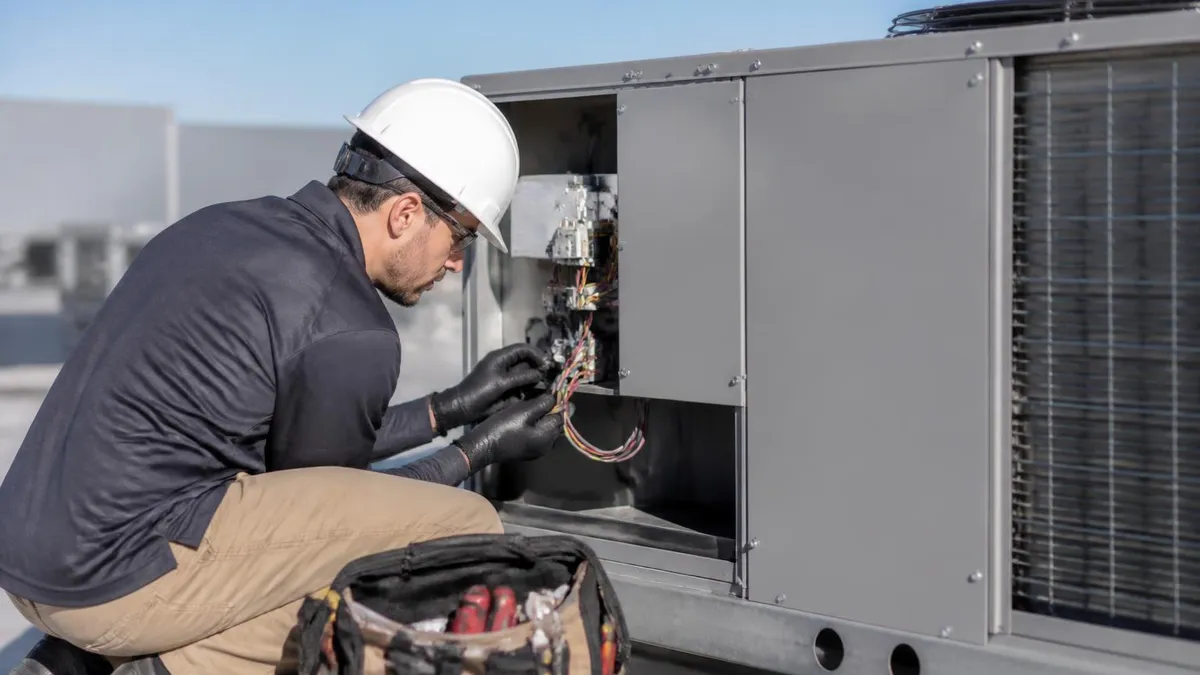
Never let a contractor pressure you into running a furnace they have declared unsafe pending replacement. If a heat exchanger crack is genuinely confirmed with CO readings above 9 ppm in living areas, the equipment should be shut off and red-tagged until repair or replacement. Install a UL-listed CO alarm on every level of your home, replace alarms every 7 to 10 years per manufacturer guidance, and test them monthly. CO poisoning kills approximately 430 Americans each year, and HVAC equipment is a primary cause.
Maintenance agreements, sometimes called service plans or comfort club memberships, are the structured way most homeowners pay for ongoing HVAC tune up service. Done right, these plans deliver real value through bundled visits, priority scheduling, and meaningful repair discounts. Done poorly, they are recurring revenue traps that lock you into a single contractor with weak service and limited recourse. Reading the contract carefully before signing is essential.
The standard residential agreement covers two visits per year, one for cooling and one for heating, at a total annual cost of $180 to $360 depending on equipment count and regional pricing. Premium tiers run $400 to $600 and typically add benefits like waived diagnostic fees on repair calls, 24-hour emergency response guarantees, and 15 to 25 percent discounts on parts and labor.
For households with multiple systems or older equipment, the premium tier often pays for itself with a single repair call. For comparison shopping, our overview of hvac solutions covers how maintenance fits into the broader system lifecycle.
Warranty compliance is the underappreciated reason to maintain a written maintenance record. Virtually every major manufacturer including Carrier, Trane, Lennox, Goodman, and Rheem requires annual professional maintenance documentation to keep the parts warranty in force. If a compressor or heat exchanger fails in year seven of a ten-year warranty and you cannot produce service records, the manufacturer denies the claim. That decision can cost $2,500 to $4,500 on a single component replacement.
Transferability is a contract detail worth checking before signing. Some agreements transfer to a new homeowner if you sell the house, which adds a small but real selling point during the transaction. Others terminate the moment the deed changes hands, with no refund of prepaid visits. If you anticipate selling within the agreement term, negotiate transferability upfront or pay month-to-month rather than annually in advance.
Cancellation terms vary widely and deserve close attention. Reasonable agreements allow cancellation with 30 days notice and prorate any prepaid balance. Predatory agreements lock you in for a full year with no refund, automatically renew without notice, and require certified mail to cancel. Read the cancellation clause before signing, and prefer agreements that bill monthly or quarterly rather than annually in advance.
Multi-year agreements deserve skepticism. A three-year contract at a discounted rate sounds appealing, but you are betting that the contractor will still be in business and still doing quality work three years from now. The residential HVAC industry has high turnover, with companies sold or shuttered regularly. A one-year agreement renewed annually gives you flexibility to switch contractors if service quality declines, which it often does after acquisitions or leadership changes.
Finally, evaluate the actual scope of work promised in the agreement. The contract should list every task the technician will perform on each visit, not just say tune up included. A bulleted list with 15 to 20 specific items, including measurements like static pressure and refrigerant subcooling, is the hallmark of a serious contractor. A vague reference to standard maintenance is a warning sign that the visits will be cursory and inconsistent.
Finalizing your approach to HVAC tune up service comes down to a few practical habits that compound over years of equipment ownership. The first is consistency: book the spring visit immediately after Daylight Saving Time begins in March, and book the fall visit immediately after Labor Day. Tying maintenance to calendar anchors you will not forget is far more reliable than vague intentions to call when the weather changes. Most contractors will set recurring annual reminders if you ask.
The second habit is documentation. Keep a single folder, physical or digital, with every tune up invoice, parts replacement record, and equipment manual from the day you move into the house. When you eventually sell, this folder adds real value to the listing and shortens negotiation over the home inspection. When equipment fails under warranty, this folder is the difference between a covered repair and a denied claim. It takes 30 seconds to file each document and saves thousands over a decade.
The third habit is filter discipline. Set a recurring reminder for every 60 days, buy filters in six-packs to eliminate the friction of running out, and choose the right filter rating for your equipment. MERV 8 to 11 is the sweet spot for most residential systems, balancing filtration with airflow. MERV 13 and higher restrict airflow enough to raise static pressure on undersized systems, causing premature blower failures. Higher is not always better.
The fourth habit is annual self-inspection. Once a year, ideally in spring before the cooling tune up, walk around the outdoor condenser and clear vegetation back to three feet on all sides. Check the condensate drain outlet for water flow during operation. Look for water stains or rust under the indoor air handler. These five-minute checks catch issues your technician might miss and demonstrate to your contractor that you are an engaged customer worth their best work.
The fifth habit is honest evaluation of equipment age. A 22-year-old furnace that has been impeccably maintained is still a 22-year-old furnace, and continuing to dump money into tune ups and repairs eventually crosses the breakeven point versus replacement. The rule of thumb is that if a single repair exceeds 50 percent of the cost of new equipment and the system is older than 15 years, replacement is usually the better financial move. Our planning guide on hvac installation leeds covers the replacement decision in detail.
Finally, build a relationship with one good contractor rather than chasing the cheapest tune up each year. Technicians who know your equipment, your home layout, and your usage patterns deliver better preventive work than rotating strangers do. They notice when something changes from last year, they remember which parts are original and which have been replaced, and they prioritize your call when you have an emergency. Loyalty earns better service in this industry, and the math on a long-term relationship beats coupon hunting nearly every time.
The combined effect of these habits is straightforward. A homeowner who books two tune ups a year, changes filters every 60 days, keeps documentation, and maintains a relationship with one good contractor will spend roughly $300 to $500 annually on HVAC maintenance and avoid the $4,000 to $12,000 emergency replacements that catch unprepared neighbors by surprise. That is the entire value proposition of professional HVAC tune up service compressed into one sentence: small predictable costs prevent large unpredictable ones.
Sample HVAC Practice Questions
Try these questions from our free HVAC practice tests. The correct answer and an explanation follow each question.
Which professional attribute is most valued in energy efficiency within the HVAC field?
- A. Working in isolation
- B. Accountability and commitment to standards
- C. Avoiding challenging situations
- D. Prioritizing personal convenience
Answer: B. Accountability and commitment to standards
Accountability and commitment to professional standards build trust and ensure consistent, high-quality practice.
What role does collaboration play in thermodynamics for HVAC professionals?
- A. It slows down work unnecessarily
- B. It enhances outcomes through diverse perspectives and shared expertise
- C. It is only needed in emergencies
- D. It reduces individual accountability
Answer: B. It enhances outcomes through diverse perspectives and shared expertise
Collaboration leverages diverse perspectives and combined expertise to achieve better outcomes than any individual could alone.
What is the value of continuing education in refrigeration for HVAC professionals?
- A. It is only needed for recertification
- B. It keeps professionals current with evolving standards and practices
- C. It is primarily a social activity
- D. It replaces workplace experience
Answer: B. It keeps professionals current with evolving standards and practices
Continuing education ensures professionals stay current with the latest developments, standards, and best practices in their field.
What is the value of continuing education in electrical controls for HVAC professionals?
- A. It is only needed for recertification
- B. It keeps professionals current with evolving standards and practices
- C. It is primarily a social activity
- D. It replaces workplace experience
Answer: B. It keeps professionals current with evolving standards and practices
Continuing education ensures professionals stay current with the latest developments, standards, and best practices in their field.
HVAC Questions and Answers

HVAC Companies Portland: The Complete Guide to Finding, Vetting, and Hiring the Best Heating and Cooling Contractors in the Rose City
HVAC Solutions: The Complete Guide to Heating, Cooling, and Indoor Air Quality Systems for Homes and Buildings
Certified HVAC Contractors: How to Find, Vet, and Hire the Right Professional for Your Home or Business
Best HVAC Repair in Bandon, OR: Local Services Near Me Guide