
HVAC Repair Portland: The Complete 2026 October Homeowner's Guide to Furnace, AC, and Heat Pump Service in the Rose City
🎯 HVAC repair Portland guide: average costs, common furnace and heat pump failures, licensing rules, and how to vet local contractors before they arrive.
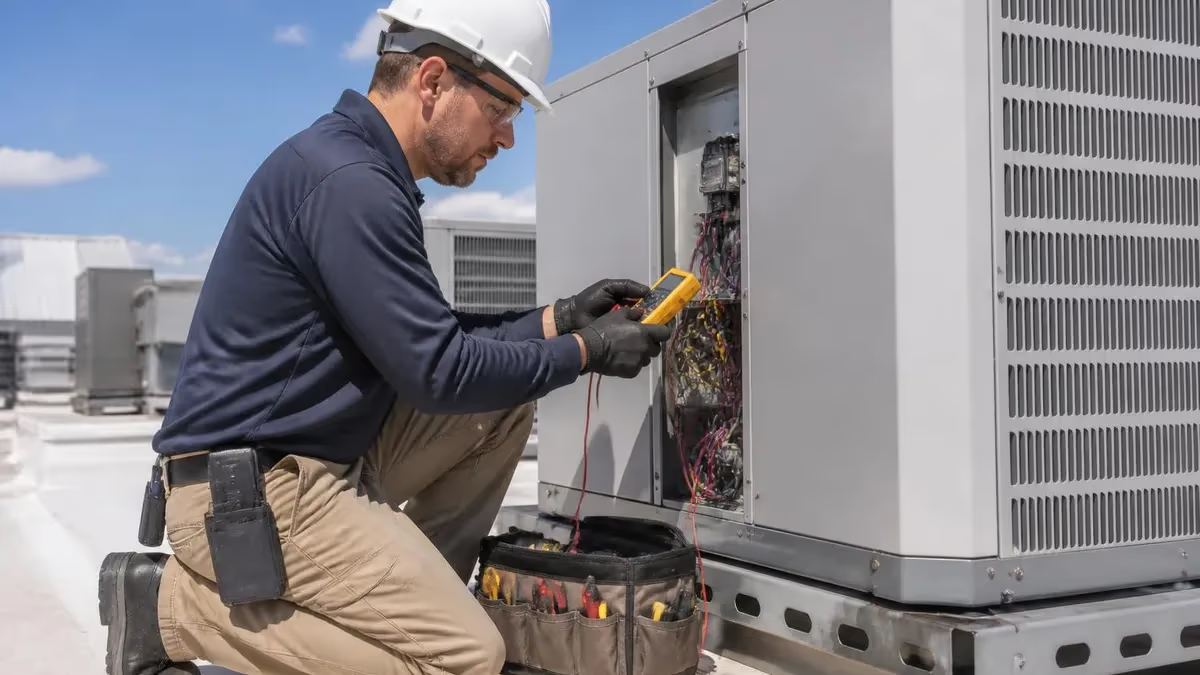
When your system fails on a 28-degree January morning or during a rare 105-degree heat dome week, hvac repair Portland homeowners can trust is suddenly the most important search you will ever run. The Rose City sits in a unique climate zone where mild rainy winters mask aging equipment for years, then a single cold snap exposes every weak igniter, clogged condensate line, and undersized heat pump in town. Knowing what to expect before you call helps you avoid panic pricing and rushed decisions.
Portland's housing stock skews older than the national average, with thousands of homes in Northeast, Southeast, and the inner Westside built before 1950. That means original ductwork, knob-and-tube electrical near the air handler, and oil-to-gas conversions that were never properly resized. Repair calls here are rarely as simple as swapping a capacitor. A good technician needs to understand vintage gravity furnace retrofits, mini-split conversions in bungalows, and the quirks of crawlspace-mounted equipment that floods every February.
Local code adds another layer. Portland enforces the Oregon Residential Specialty Code, requires permits for most equipment swaps over $1,000, and the Bureau of Development Services audits contractors aggressively. Cash-only handymen quoting suspiciously low prices almost always skip permits, which can derail a future home sale or void manufacturer warranties. Before hiring anyone, you should review broader HVAC Solutions to understand what a properly designed system should look like in your specific home.
The repair landscape changed dramatically after 2023, when Energy Trust of Oregon expanded heat pump rebates and the Inflation Reduction Act layered federal tax credits on top. Many Portland repair calls now turn into replacement conversations because the math has shifted. A $1,800 furnace board repair on a 22-year-old unit often makes less sense than a $14,000 heat pump install netting $8,000 in combined incentives. Honest local contractors will run those numbers with you instead of pushing the most profitable option.
Pricing transparency varies wildly across the metro. Diagnostic fees range from $89 to $189 depending on the company, time of day, and whether you are inside the I-205 loop or out in Gresham, Beaverton, or Hillsboro. After-hours weekend calls in January routinely add $150 surcharges. Knowing the going rate before you pick up the phone protects you from emergency upcharging when you are cold, tired, and just want heat back on tonight.
This guide walks through every part of the Portland HVAC repair process: typical failure modes by season, what a fair diagnostic visit looks like, how to read an estimate line by line, when to repair versus replace, and the licensing and bonding details that separate legitimate contractors from fly-by-night operators. By the end, you will know exactly what questions to ask, what red flags to spot, and roughly what your repair should cost.
We also cover how Portland's specific climate, building stock, and incentive ecosystem create both opportunities and traps that homeowners in other cities never face. Whether you own a 1908 Craftsman in Sellwood, a 1960s ranch in Tigard, or a new townhouse in the Pearl, the principles below will help you make a repair decision you will not regret six months from now.
Portland HVAC Repair by the Numbers
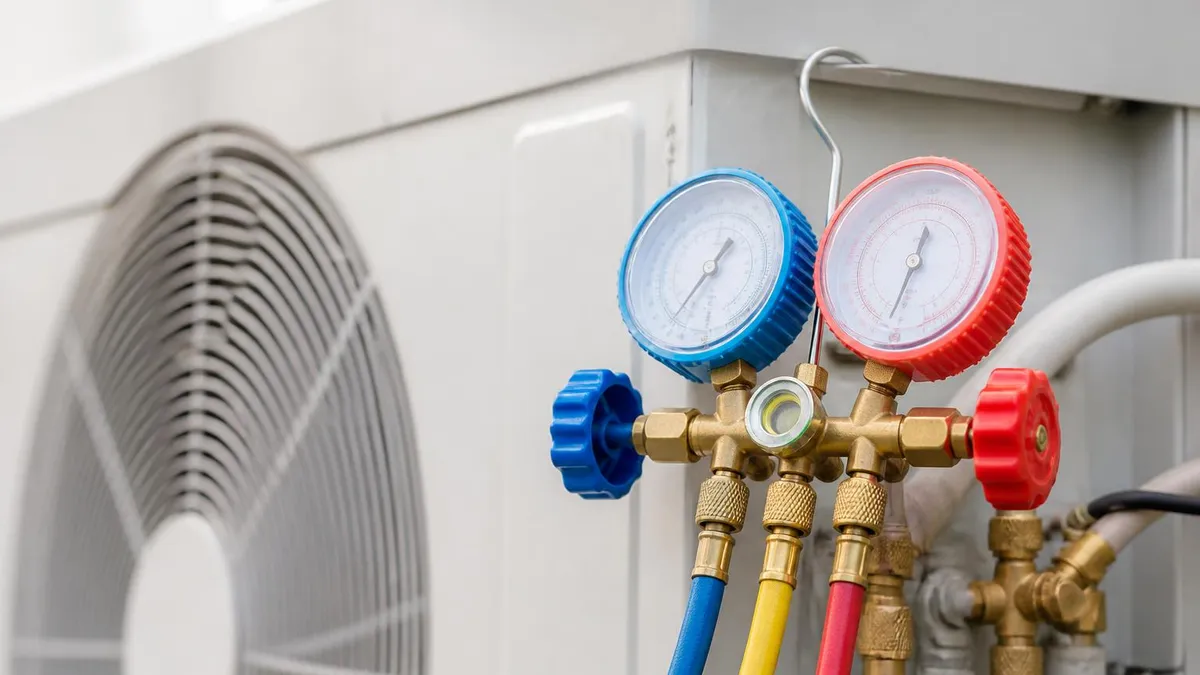
Common Portland HVAC Failures by Season
Cold snaps below 25°F push aging gas furnaces past their limits. Hot surface igniters crack, draft inducer motors seize, and pressure switches fail from condensate freezing inside flue pipes during sub-freezing overnight runs.
July and August heat domes force older heat pumps to run 18-hour duty cycles. Dual-run capacitors fail first, followed by contactor pitting and refrigerant pressure faults from condensers buried under blackberry bushes nobody trimmed.
As humidity rises in April and May, clogged condensate lines back up into furnace cabinets, triggering float switch shutdowns. Crawlspace pumps fail silently for weeks before homeowners notice musty smells or water stains on ceilings.
The first cold mornings of October reveal thermostat batteries that died over summer, smart thermostats with stale firmware, and zone control boards that lost programming during summer power flickers from windstorms.
Understanding how Portland HVAC repair companies actually price their work is the single biggest advantage you can give yourself before making the call. Most local shops use one of three pricing models: time and materials with a service fee, flat-rate book pricing, or membership-based maintenance plans with discounted repairs. Each has trade-offs, and the model a company uses tells you a lot about their business philosophy and how transparent they will be when the technician arrives at your house.
Time and materials is the old-school approach still used by independent operators and a few legacy family-owned shops. You pay a diagnostic fee, then hourly labor (typically $125 to $175 in Portland) plus parts at a markup of 30 to 80 percent. This model rewards experienced techs who work fast and punishes you if a junior tech is still learning. Ask upfront how many years the dispatched technician has been in the trade and whether they hold an Oregon limited maintenance electrical license.
Flat-rate pricing dominates the larger Portland chains and franchise operations. The tech pulls out a tablet with a national pricebook and quotes you a fixed number for, say, a capacitor replacement: $389. That same capacitor costs the company $18 wholesale and takes 12 minutes to install. The flat rate covers truck stock, warranty, and overhead, but the markup is significant. The advantage is predictability. You know the cost before work begins, and you can compare quotes apples-to-apples between companies.
Membership plans have exploded in Portland over the past five years. For $19 to $29 monthly, you get two annual tune-ups, priority scheduling during heat domes and cold snaps, and 10 to 20 percent off repairs. The math works if you actually use both tune-ups and have one repair per year. If your system is newer and reliable, you are essentially prepaying for service you may never need. For older systems, the priority dispatch alone can be worth it when every other homeowner in Portland is calling on the same January morning.
Diagnostic fees deserve their own discussion. Reputable Portland companies charge $89 to $149 to send a licensed technician to your home, diagnose the problem, and provide a written estimate. Some waive that fee if you approve the repair on the spot. Others credit it toward the work but keep it if you decline.
Be wary of any company advertising free diagnostics; that cost is always built into the repair quote, usually with a markup, and the tech is incentivized to find something to sell. A fair certified contractor will charge a reasonable diagnostic and let you walk away without pressure if you want a second opinion. Reviewing how to find certified HVAC contractors beforehand saves significant frustration.
Emergency and after-hours surcharges are another Portland reality. Most companies define normal hours as Monday through Friday 8 AM to 5 PM. Saturday calls add $75 to $125. Sundays and holidays jump to $150 to $250 above the standard diagnostic. January nights below 20 degrees often trigger surge pricing on top of that. If your system fails at 9 PM and the temperature inside is still 64 degrees, you can almost always wait until morning. Space heaters from Fred Meyer for $35 will bridge the gap without paying a $400 emergency premium.
Finally, parts pricing variance is enormous. The same OEM circuit board for a Trane XV80 furnace might quote at $485 from one company and $890 from another. Both are markups on a $240 wholesale part. The honest companies disclose their markup policy when asked. The shady ones get evasive or claim the part is proprietary. Always request the part number, manufacturer, and warranty terms in writing before approving work over $500.
HVAC Practice Test Questions
Prepare for the HVAC - Heating Ventilation and Air Conditioning exam with our free practice test modules. Each quiz covers key topics to help you pass on your first try.
HVAC Air Conditioning
HVAC Exam Questions covering Air Conditioning. Master HVAC Test concepts for certification prep.
HVAC Code Compliance
Free HVAC Practice Test featuring Code Compliance. Improve your HVAC Exam score with mock test prep.
HVAC Electrical Controls
HVAC Test Prep for Electrical Controls. Practice HVAC Quiz questions and boost your score.
HVAC Energy Efficiency
HVAC Questions and Answers on Energy Efficiency. Free HVAC practice for exam readiness.
HVAC Heating Systems
HVAC Mock Test covering Heating Systems. Online HVAC Test practice with instant feedback.
HVAC Load Calculations
Free HVAC Quiz on HVAC Load Calculations. HVAC Exam prep questions with detailed explanations.
HVAC Tools and Equipment
HVAC Practice Questions for HVAC Tools and Equipment. Build confidence for your HVAC certification exam.
HVAC Refrigeration
HVAC Test Online for Refrigeration. Free practice with instant results and feedback.
HVAC Safety Practices
HVAC Study Material on Safety Practices. Prepare effectively with real exam-style questions.
HVAC System Design
Free HVAC Test covering System Design. Practice and track your HVAC exam readiness.
HVAC Thermodynamics
HVAC Exam Questions covering Thermodynamics. Master HVAC Test concepts for certification prep.
Furnace, Heat Pump, and AC Repair Breakdown
Gas furnaces remain the dominant heating type in Portland, especially in homes built before 2010. The most common repair calls involve hot surface igniters ($180 to $340 installed), flame sensors ($120 to $220), draft inducer motors ($450 to $780), and integrated control boards ($550 to $950). Symptoms include short cycling, repeated lockouts, or the furnace running constantly without heat output. A competent tech runs combustion analysis and checks gas pressure, not just visual inspection.
Heat exchanger cracks are the diagnosis nobody wants to hear. On a 15-plus year old furnace, a cracked exchanger means carbon monoxide risk and immediate red-tag from the gas utility. Replacement cost runs $1,800 to $2,600 in parts alone, often making full furnace replacement more economical. NW Natural will shut off gas to a confirmed cracked exchanger until repair, so this is not a defer-and-see situation. Get a second opinion if a single tech makes the call without inspection camera footage.
Hiring a Large Chain vs Independent Portland HVAC Contractor
- +Large chains offer 24/7 dispatch and faster response during heat domes and cold snaps
- +Established financing options through Synchrony, GreenSky, or in-house plans
- +Standardized flat-rate pricing makes apples-to-apples comparison easier
- +Stronger warranty backing and bonded labor guarantees on installs over $5,000
- +Background-checked technicians with uniform training and brand accountability
- +Higher likelihood of carrying parts in truck inventory for same-day fixes
- +Direct rebate processing for Energy Trust of Oregon and federal incentives
- −Significantly higher prices due to franchise fees, marketing, and overhead costs
- −Commission-based technicians incentivized to upsell replacements over repairs
- −High turnover means the tech at your door may have under two years experience
- −Less flexibility on after-hours surcharges and weekend diagnostic fees
- −Generic national pricebooks ignore Portland-specific code and crawlspace realities
- −Repair quotes routinely 30-60 percent higher than independent shop equivalents
Pros and Cons at a Glance
| Pros | Cons |
|---|---|
| Established financing options through Synchrony, GreenSky, or in-house plans | Significantly higher prices due to franchise fees, marketing, and overhead costs |
| Standardized flat-rate pricing makes apples-to-apples comparison easier | Commission-based technicians incentivized to upsell replacements over repairs |
| Background-checked technicians with uniform training and brand accountability | High turnover means the tech at your door may have under two years experience |
| Higher likelihood of carrying parts in truck inventory for same-day fixes | Less flexibility on after-hours surcharges and weekend diagnostic fees |
| Direct rebate processing for Energy Trust of Oregon and federal incentives | Generic national pricebooks ignore Portland-specific code and crawlspace realities |
Portland HVAC Contractor Vetting Checklist
- ✓Verify active Oregon CCB (Construction Contractors Board) license at ccb.state.or.us
- ✓Confirm the company holds a current HVAC bond minimum of $20,000
- ✓Check Oregon BOLI for unresolved wage claims against the contractor
- ✓Require proof of $1 million general liability insurance before work begins
- ✓Look up the technician's individual journeyman or limited HVAC license number
- ✓Read at least 20 recent Google reviews focusing on repair (not install) feedback
- ✓Confirm written estimate includes part numbers, labor breakdown, and warranty terms
- ✓Verify the contractor pulls a Portland BDS permit for any equipment replacement
- ✓Ask for three references from repair customers within the past 90 days
- ✓Get a second opinion on any quote exceeding $1,500 before approving work
The 50 Percent Rule Has Changed
Traditional HVAC wisdom said replace when repair cost exceeds 50 percent of new equipment. In Portland's current rebate environment, that threshold has dropped to roughly 30 percent for heat pump candidates because stacked Energy Trust and federal incentives can knock $8,000 or more off replacement. Always run both numbers before approving expensive repairs on equipment over 12 years old.
The repair-versus-replace decision is where most Portland homeowners either save thousands or waste them. The traditional rule of thumb—replace if repair cost exceeds 50 percent of new equipment cost—was designed for a world without aggressive rebate stacking. In 2026 Portland, that rule is outdated for any home heated by gas, oil, or an aging electric system. The math now favors replacement at much lower thresholds because Energy Trust of Oregon, Portland General Electric, Pacific Power, and federal IRA tax credits combine to subsidize 40 to 60 percent of a qualifying heat pump install.
Start by calculating remaining useful life. A well-maintained gas furnace lasts 18 to 22 years in Portland's mild climate. Heat pumps average 14 to 17 years before major component failure cascades. Straight AC systems often hit 16 to 20 years because they run only three months annually. If your equipment is past 75 percent of expected life and facing a repair over $800, you should request a replacement quote even if you plan to repair. Knowing the alternative cost changes the conversation.
Energy efficiency gains compound the financial case. A 1998 80-percent AFUE furnace paired with a 10-SEER AC roughly doubles the operating cost of a modern 96-percent variable-speed furnace or a 18-SEER2 heat pump. Portland General Electric residential rates climbed 17 percent between 2023 and 2025, and NW Natural gas rates rose nearly 22 percent in the same window. Continuing to repair an inefficient system locks you into rising operating costs that often exceed the financing payment on new equipment.
Comfort and air quality matter more than spec sheets suggest. Older single-stage equipment cycles on and off aggressively, creating temperature swings and humidity problems in tight modern Portland remodels. Variable-speed heat pumps and modulating furnaces run longer at lower outputs, filter more air, and quietly maintain consistent temperatures across multi-story homes. If you have rooms that never feel right, replacement may solve comfort issues that years of repairs cannot fix. Many homeowners report this as the unexpected benefit they wish they had pursued sooner.
The trade-in math involves more than just rebates. Federal Section 25C tax credits return up to $2,000 for qualifying heat pumps installed in 2026. Energy Trust of Oregon adds $1,200 to $2,800 depending on system performance and home type. Portland's Inflation Reduction Act state-level HEEHRA program layers another $4,000 to $8,000 for income-qualified households below 150 percent of area median income. These programs change annually and have funding caps, so timing matters. Looking at proper HVAC installation requirements early helps you plan rather than scramble.
Permitting requirements also affect the decision. Major Portland repairs that touch the gas line, electrical service, or refrigerant lines often require a Bureau of Development Services permit anyway. Once you are pulling a permit and bringing inspectors into your crawlspace, the incremental hassle of a full replacement is smaller than people expect. Many homeowners discover that repair-related permit work uncovers ductwork failures, missing combustion air, or code violations that should have been addressed years ago.
Finally, consider the next homeowner. Portland's housing market still rewards homes with newer mechanical systems, especially heat pumps that align with the city's climate goals. Real estate agents in Northeast and Southeast Portland report that aging gas furnaces increasingly raise buyer concerns during inspections, sometimes resulting in $5,000 to $15,000 price reductions. If you plan to sell within five years, the replacement investment often pays back at closing in addition to any energy savings you capture in the meantime.
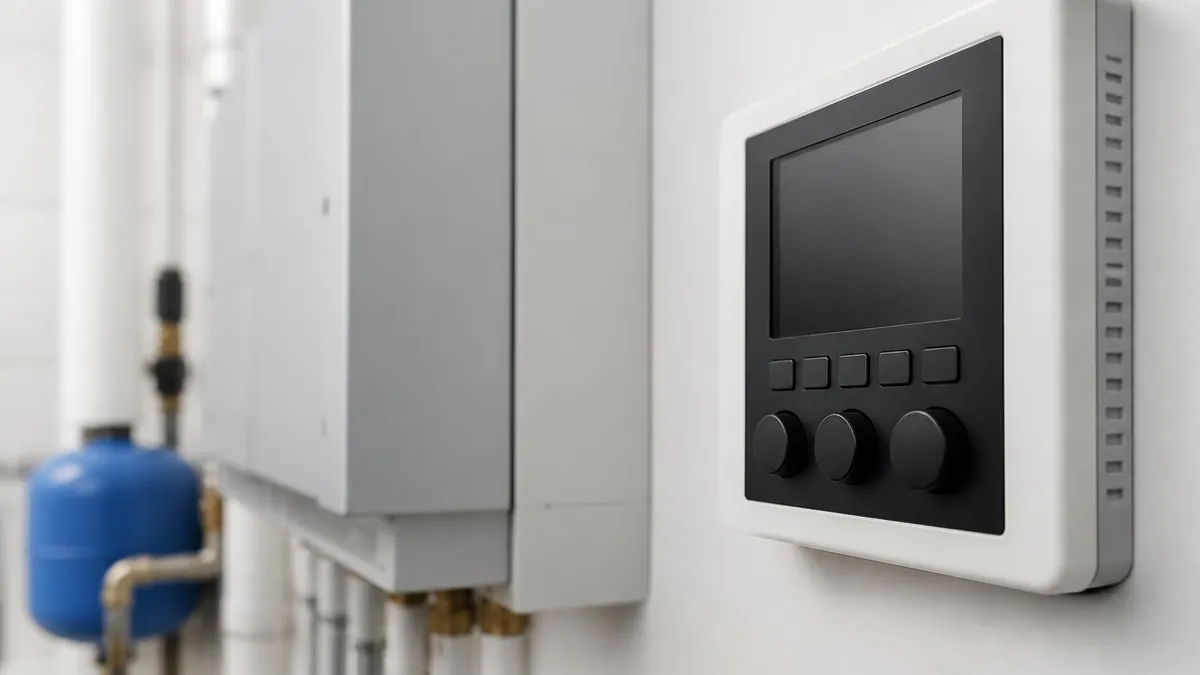
NW Natural technicians have authority to shut off gas service to any furnace with a confirmed cracked heat exchanger, dangerous combustion readings, or improper venting. If your furnace is over 18 years old and a contractor flags safety concerns, get a second opinion within 24 hours. A red tag in February forces emergency replacement at peak demand pricing, often costing $3,000 more than the same job scheduled in spring.
Permits, codes, and rebate stacking form the regulatory backbone of every legitimate HVAC repair and replacement in Portland. Skipping any of these creates problems that surface years later, usually when you try to sell your home and a buyer's inspector finds unpermitted work. The Portland Bureau of Development Services requires mechanical permits for furnace replacement, heat pump installation, ductwork modification, and any gas line alteration. Standalone repairs that swap a like-for-like component generally do not require permits, but the line gets blurry quickly.
Oregon's licensing structure separates HVAC work into several tiers. Contractors must hold an active CCB license number and either employ licensed journeyman HVAC technicians or maintain an HVAC General Contractor endorsement. Individual technicians need either a limited maintenance electrical license for control work or a journeyman HVAC license for refrigerant handling. EPA Section 608 certification is federally required for anyone touching refrigerant. If a tech cannot produce these credentials when asked, walk away. Understanding EPA certification for HVAC requirements helps you ask the right questions.
Energy Trust of Oregon administers most of the residential rebate programs Portland homeowners use. Their cash incentive structure for 2026 includes $1,200 for qualifying ducted heat pumps, $2,800 for ducted heat pumps replacing electric resistance heat, $800 for ductless mini-splits, and $400 for high-efficiency gas furnaces. ETO requires you to use a Trade Ally Network contractor, so always ask if the company you are considering holds that designation before signing anything. Non-Trade Ally installs cannot capture these rebates retroactively.
Federal tax credits under Section 25C of the IRA provide an additional 30 percent of project cost up to $2,000 annually for heat pumps meeting CEE Tier 2 efficiency standards. The credit resets each tax year, meaning a multi-zone install completed across December and January can capture credits in two separate tax years. Most homeowners do not know this timing trick exists. A knowledgeable Portland contractor will discuss it during the quoting process and structure the install accordingly when it makes sense for your situation.
Portland Clean Energy Fund grants and PGE/Pacific Power utility rebates can layer on top for income-qualified households. The combined incentive ceiling for low and moderate income Portland households now exceeds $14,000 in some cases, effectively making a $16,000 heat pump install cost less than $4,000 out of pocket. Income verification involves submitting tax returns, but the savings make the paperwork worthwhile. Many community-based organizations in East Portland and North Portland help residents navigate the application process at no charge.
Permit inspection failures are more common than contractors admit. The most frequent issues include improper condensate drainage, missing combustion air ducts in conditioned spaces, undersized electrical disconnects, and unsealed wall penetrations. A good contractor schedules the rough-in inspection before closing up access panels, then schedules final inspection within 90 days. Cheap contractors skip these steps and either submit fraudulent paperwork or never close the permit at all. An open permit shows up in title searches and can delay home sales by weeks or months while you scramble to resolve it.
Documentation discipline protects you from every scenario above. Keep copies of the permit, the inspection cards, manufacturer warranty registration, rebate application receipts, and the final invoice with technician signatures. Store them digitally and physically. When you sell the house in seven years, your buyer's inspector will ask. When a warranty claim arises in year nine, the manufacturer will require proof. The five minutes of organization upfront prevents the four hours of scrambling later, and it materially increases your home's resale value when the time comes.
Practical preparation before you even pick up the phone separates homeowners who get fair treatment from those who get fleeced. Start by gathering basic system information: the make, model, and serial number from your furnace, air handler, or outdoor heat pump unit. These are usually on a sticker inside the cabinet door or on the side of the condenser. The age of the unit and warranty status dramatically affect repair-versus-replace economics, and any tech who arrives without this information already has an information advantage you should neutralize.
Document the symptoms in detail before calling. Note exactly when the problem started, what sounds the system makes, whether the thermostat displays correctly, and whether circuit breakers have tripped. Take photos of any error codes flashing on the control board. Smart thermostat owners should screenshot the runtime history showing when the system stopped responding. This level of detail helps the dispatcher route the right technician with the right parts on the truck, often saving a second trip charge.
Get at least two quotes for any repair over $800. Three is better, four is overkill. Portland's HVAC repair market has enough capacity during shoulder seasons that you can usually get same-day or next-day diagnostic visits. Schedule them close together so the symptoms have not changed between visits. Compare the quotes line by line. If one contractor diagnoses a $1,400 control board failure and two others say it is a $180 flame sensor, the outlier is almost always wrong or dishonest. Trust the consensus diagnosis.
Negotiate, but smartly. Most Portland HVAC companies have 5 to 15 percent flexibility built into flat-rate pricing, especially during slow periods between heating and cooling seasons. April, May, September, and October are the best months for non-emergency repairs and replacements. Ask politely if the quoted price is their best offer and whether they have any current promotions or financing specials. Mention you are getting other quotes. Do not lie about competing prices, but signaling that you are comparison shopping changes the dynamic significantly.
Plan financing before the emergency happens. Most Portland HVAC companies partner with Synchrony, GreenSky, or Wells Fargo for promotional 0-percent financing on repairs and replacements over $2,500. Pre-qualifying takes 10 minutes online and does not affect your credit score. Knowing your approved amount and rate ahead of time removes the pressure to make rushed decisions at the kitchen table with a sales-trained comfort advisor. The best deals require credit scores above 700, so check yours through Credit Karma or your bank before a system actually fails.
Build a maintenance habit even if you skip the formal annual plan. Replace filters every 60 to 90 days, keep the outdoor condenser clear of leaves and blackberry growth common in Portland yards, rinse the condenser coils gently with a garden hose each spring, and check the condensate drain line monthly during cooling season. These five-minute tasks prevent roughly 40 percent of repair calls. The technicians who arrive at your house will tell you the same thing if you ask which preventive habits actually matter most for system longevity.
Finally, build a relationship with one reliable Portland HVAC company before you desperately need them. The repeat-customer dynamic is powerful in this trade. Companies prioritize known customers during peak demand, often quote lower prices, and dispatch their most experienced technicians to maintenance plan members. The $250 you spend on an annual tune-up buys goodwill that pays back exponentially during the January 4 AM cold snap when every other homeowner is also dialing for help and waiting six hours for someone to answer.
Sample HVAC Practice Questions
Try these questions from our free HVAC practice tests. The correct answer and an explanation follow each question.
What is a 'dual-fuel' or 'hybrid' heat pump system?
- A. A system that uses two refrigerants simultaneously for improved efficiency
- B. A system pairing an air-source heat pump with a gas furnace, using the heat pump for mild weather and switching to gas heat when it's more cost-effective at very cold temperatures
- C. A system that provides both heating and domestic hot water using two separate refrigerant circuits
- D. A system with both a ground-source and air-source heat pump for redundancy
Answer: B. A system pairing an air-source heat pump with a gas furnace, using the heat pump for mild weather and switching to gas heat when it's more cost-effective at very cold temperatures
A dual-fuel system uses a heat pump as the primary heating source and a gas furnace as backup, switching between the two based on outdoor temperature and energy cost.
What is a 'variable-speed' or 'inverter-driven' heat pump and why is it more efficient?
- A. A heat pump that can switch between heating and cooling modes
- B. A heat pump with a variable-speed compressor that can modulate output from ~25% to 100%, matching actual load and avoiding on/off cycling losses
- C. A heat pump with multiple indoor units
- D. A heat pump with a variable-speed outdoor fan only
Answer: B. A heat pump with a variable-speed compressor that can modulate output from ~25% to 100%, matching actual load and avoiding on/off cycling losses
Variable-speed (inverter-driven) heat pumps use DC inverter technology to continuously vary compressor speed, operating efficiently at partial load rather than on/off cycling—providing precise temperature control and significantly higher seasonal efficiency.
What is the significance of the 'lockout temperature' setting on a heat pump thermostat?
- A. The indoor temperature below which the heat pump will not operate
- B. The outdoor temperature below which the heat pump compressor is locked out and only auxiliary heat operates
- C. The temperature at which the defrost control initiates a defrost cycle
- D. The discharge temperature above which the compressor locks out for protection
Answer: B. The outdoor temperature below which the heat pump compressor is locked out and only auxiliary heat operates
The lockout temperature prevents the heat pump from operating at extremely low outdoor temperatures where it would be inefficient or potentially damaging, relying solely on auxiliary heat.
Which refrigerant is most commonly used in modern residential heat pumps in the United States?
- A. R-22
- B. R-410A
- C. R-12
- D. R-134a
Answer: B. R-410A
R-410A replaced R-22 as the standard residential heat pump refrigerant due to its higher efficiency and zero ozone depletion potential.
HVAC Questions and Answers
HVAC Solutions: The Complete Guide to Heating, Cooling, and Indoor Air Quality Systems for Homes and Buildings
Certified HVAC Contractors: How to Find, Vet, and Hire the Right Professional for Your Home or Business
Best HVAC Repair in Bandon, OR: Local Services Near Me Guide
HVAC Installations: The Complete Guide to Planning, Pricing, and Getting It Right the First Time
EPA Certification for HVAC: The Complete Guide to Section 608 Requirements, Exam Prep, and Career Impact
About the Author

NATE Certified HVAC Technician & Licensing Exam Trainer
Universal Technical InstituteMike Johnson is a NATE-certified HVAC technician and EPA 608 universal-certified refrigerant handler with a Bachelor of Science in HVAC/R Technology. He has 19 years of commercial and residential HVAC installation and service experience and specializes in preparing technicians for NATE certification, EPA 608, A2L refrigerant safety, and state HVAC contractor licensing examinations.