
Industrial HVAC Preventive Maintenance Services: The Complete Guide for Facility Managers
Master industrial HVAC preventive maintenance services. Cut energy costs, prevent breakdowns, and extend equipment life. ✅ Real checklists, costs & tips.
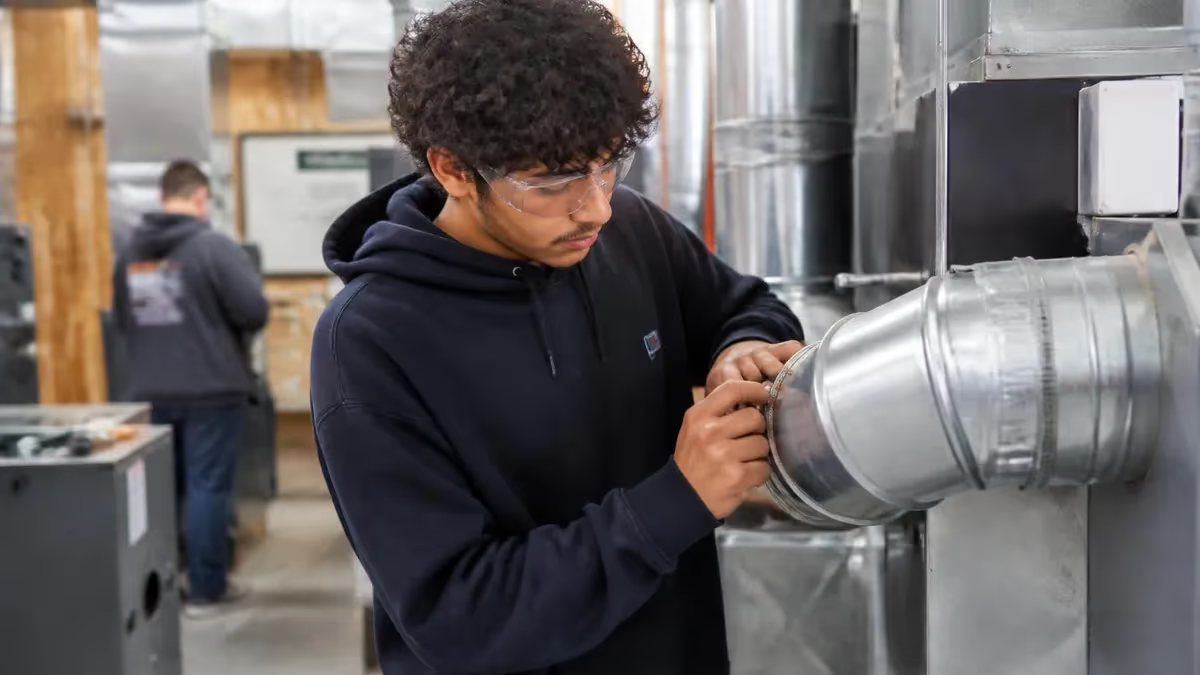
Industrial HVAC preventive maintenance services are the backbone of any serious facility management program. Unlike residential systems that might run a few thousand hours per year, industrial HVAC equipment operates around the clock in environments filled with dust, chemical vapors, extreme temperature swings, and heavy production loads. Without a disciplined, scheduled maintenance program, even the most strong rooftop unit, chiller, or air-handling unit will degrade faster than its rated lifespan — costing your operation tens of thousands of dollars in emergency repairs, unplanned downtime, and premature replacement.
The stakes in industrial settings are uniquely high. A failed HVAC system in a pharmaceutical cleanroom can compromise an entire batch of product worth hundreds of thousands of dollars. A chiller shutdown in a data center can force emergency load transfers and risk hardware damage. Even in less critical environments like warehouses or manufacturing floors, a broken cooling system in summer creates OSHA-reportable heat-stress hazards for workers and can grind production to a halt. Preventive maintenance is not a cost — it is risk insurance with a measurable return on investment.
Most facility managers who invest in structured industrial hvac preventive maintenance programs report energy savings between 15% and 30% annually compared to run-to-failure approaches. That figure comes from a combination of factors: clean coils transfer heat more efficiently, properly lubricated motors draw less amperage, calibrated controls eliminate unnecessary runtimes, and timely filter replacements reduce static pressure so fans don't work harder than needed. Every dollar spent on scheduled maintenance typically returns three to five dollars in avoided repair and energy costs over a five-year horizon.
This guide is designed for facility managers, maintenance supervisors, and HVAC technicians who are responsible for large commercial or industrial systems. We will walk through the science behind preventive maintenance, explain what a complete PM program looks like from daily walkthroughs to annual overhauls, cover the real costs involved, and give you actionable checklists you can implement immediately. Whether you manage a single large manufacturing plant or a portfolio of industrial properties, the principles here apply directly to reducing your total cost of ownership.
One of the most important distinctions to understand from the outset is the difference between preventive maintenance (PM) and predictive maintenance (PdM). PM is time-based: you change filters every 90 days, inspect belts every six months, and perform a full coil cleaning annually regardless of what the equipment looks like. PdM is condition-based: vibration sensors and thermal cameras tell you when a bearing is beginning to fail so you can schedule replacement before it seizes. Best-in-class industrial programs use both approaches together, allowing time-based tasks to catch obvious wear while sensor data catches the subtle failures that visual inspection misses.
Understanding the regulatory environment is also critical for industrial facilities. OSHA standards, EPA refrigerant regulations under Section 608 of the Clean Air Act, ASHRAE Standard 180 for commercial HVAC inspection and maintenance, and local building codes all create compliance obligations that a well-designed PM program helps you satisfy. Failure to maintain equipment properly can expose your organization to fines, permit revocations, and liability in the event of an incident. A documented PM program with service records is your best defense in any regulatory audit or litigation scenario.
Throughout this guide, we reference real numbers, specific maintenance intervals, and practical examples drawn from industrial practice. HVAC certification exams test many of these concepts directly, so if you are studying for your EPA 608, NATE certification, or any commercial HVAC credential, pay particular attention to the technical sections on refrigerant handling, coil maintenance, and controls calibration. The knowledge that makes you a better facility manager is the same knowledge that helps you pass the exam on the first attempt.
Industrial HVAC Preventive Maintenance by the Numbers
Core Components of an Industrial HVAC PM Program
Industrial environments generate far more airborne particulate than commercial spaces. PM programs must specify filter type (MERV rating), inspection frequency, replacement triggers based on pressure drop, and disposal procedures for filters loaded with industrial contaminants.
Leak detection, refrigerant charge verification, oil analysis, and compressor health checks are EPA-mandated for systems over 50 lbs of refrigerant. Proper documentation of all refrigerant additions is required under Section 608 of the Clean Air Act.
Belts, bearings, motors, pulleys, and couplings all have wear characteristics that can be identified during scheduled inspections. Vibration analysis and thermal imaging catch bearing failures weeks before they cause catastrophic breakdowns and collateral equipment damage.
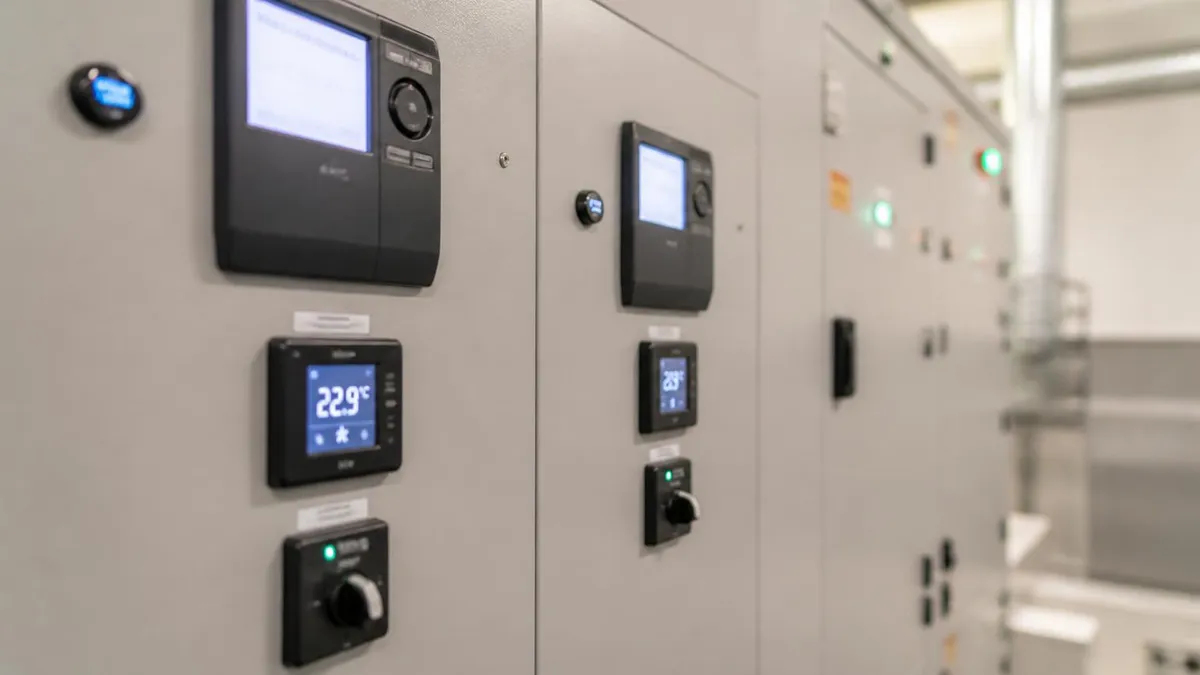
Building automation systems (BAS), thermostats, variable frequency drives (VFDs), and economizer controls must be calibrated periodically. A thermostat reading 2°F high can force a chiller to run unnecessarily, wasting thousands of dollars per year in electricity.
Evaporator and condenser coils accumulate dust, oils, and biological growth that dramatically reduce heat transfer efficiency. Industrial coil cleaning requires specialized chemicals, proper containment of runoff, and protection of adjacent equipment and personnel.
Establishing the right maintenance intervals is arguably the most important decision in designing an industrial HVAC preventive maintenance program. Interval selection must balance three competing pressures: the manufacturer's recommended service schedule (which assumes standard operating conditions), the actual duty cycle and environment your equipment faces, and the budget realities of your maintenance department. In most industrial settings, manufacturer intervals are a minimum baseline — actual conditions often demand more frequent service.
Daily maintenance tasks are often overlooked because they seem trivial, but they are the early-warning layer of your entire program. Technicians should perform morning walkthroughs that include visual inspection of condensate drain pans for standing water, listening for unusual noises from compressors and fans, checking control panel indicator lights for fault codes, verifying that air-handling units are producing the expected supply air temperature, and confirming that outdoor condenser units are free of debris blockage. These five-minute checks catch problems when they are still cheap to fix.
Monthly PM tasks move into more substantive territory. Filter inspection and replacement (or cleaning for washable industrial filters) should happen at least monthly in dusty manufacturing environments, even if the manufacturer specifies quarterly changes. Belt tension checks are critical — a belt that has stretched even 10% past its design tension slips under load, generates heat, and can fail suddenly. Condensate drain lines in industrial facilities often clog with algae and debris much faster than in residential applications, so monthly flushing with a dilute bleach solution prevents the overflow that can damage motors, insulation, and structural elements below the unit.
Quarterly PM visits are typically the first tier that requires a licensed HVAC technician rather than in-house maintenance staff. These visits should include refrigerant pressure checks and leak detection using electronic leak detectors (required by EPA regulations for commercial refrigerant systems), lubrication of motor bearings and fan shaft bearings using manufacturer-specified grease types and quantities, electrical connection tightening (vibration from industrial operations loosens terminal connections over time, creating resistance heating that causes premature component failure), and a full review of the building automation system setpoints to confirm they match the current production schedule and occupancy patterns.
Semi-annual maintenance is the right interval for coil cleaning in most industrial applications. Evaporator coils in manufacturing environments can accumulate enough contamination in six months to reduce airflow by 20% and heat transfer efficiency by 30%. This is not a task that can be done with a garden hose — industrial coil cleaning requires a foaming coil cleaner appropriate for the contaminant type (different products for grease, mineral scale, and biological growth), low-pressure rinsing to avoid fin damage, and collection of chemical runoff to comply with local wastewater regulations.
Condenser coils on rooftop units may need cleaning more frequently if they face prevailing winds that carry exhaust from manufacturing processes.
Annual PM tasks represent the deepest level of scheduled service. Compressor oil analysis, which involves drawing a small sample and sending it to a laboratory, can detect wear metals that indicate internal compressor wear before the compressor fails. Refrigerant circuit pressure testing, duct system inspection for leaks and deteriorating insulation, full calibration of all BAS sensors and controllers, and megohm testing of motor windings to detect insulation breakdown are all appropriate annual tasks. For chiller-based systems, annual tube bundle inspection and cleaning is essential — even a thin scale deposit on chiller tubes significantly increases energy consumption.
The interval schedule must also account for seasonal factors specific to your region and industry. Facilities in the Sun Belt may need more frequent condenser coil cleaning due to cottonwood seeds and pollen that clog fins. Facilities near agricultural operations face peak filter loading during harvest season. Coastal facilities must contend with salt air corrosion that attacks coil fins and electrical panels. Building an intelligent, location-aware PM schedule is what separates a generic maintenance program from one that actually protects your equipment and your budget.
Industrial HVAC PM Strategies: Preventive, Predictive, and Reactive
Preventive maintenance (PM) is a time-based approach where service tasks are performed on a fixed schedule regardless of equipment condition. The main advantages are simplicity and predictability — you can plan labor, order parts, and budget costs well in advance. Standard PM intervals for industrial HVAC equipment include monthly filter inspections, quarterly refrigerant checks, semi-annual coil cleaning, and annual compressor oil analysis. For most facilities, a well-designed PM program reduces unplanned breakdowns by 40% compared to reactive-only maintenance.
The primary limitation of pure preventive maintenance is over-servicing or under-servicing. If you replace bearings on a fixed 12-month cycle but some bearings last 18 months while others fail at 8 months due to load variations, you waste money on the long-lived bearings and still experience failures on the short-lived ones. This is why most sophisticated industrial programs use PM as a baseline and layer in predictive techniques to catch equipment that degrades faster than the standard interval predicts. Cost per PM visit for industrial HVAC equipment typically ranges from $500 to $3,000 depending on system size and complexity.

Pros and Cons of Outsourcing Industrial HVAC Preventive Maintenance
- +Access to factory-trained technicians with specialized tools and certifications not available in-house
- +Guaranteed response times written into service-level agreements, reducing downtime risk
- +Contractor carries liability insurance and EPA certification for refrigerant handling
- +Parts procurement at contractor pricing, often 15–25% below retail
- +Detailed service reports and CMMS integration provide audit-ready documentation
- +Scalable coverage across multiple facilities without increasing headcount
- −Monthly service contract fees can range from $2,000 to $15,000 per facility depending on equipment count
- −Less institutional knowledge of your specific equipment history and operational quirks
- −Scheduling flexibility limited by contractor workload, especially during peak summer demand
- −Turnover among contractor technicians means retraining new staff on your systems
- −Contract terms may lock you into multi-year agreements with penalty clauses for early termination
- −Response quality varies significantly between national service chains and local independent contractors
Pros and Cons at a Glance
| Pros | Cons |
|---|---|
| Access to factory-trained technicians with specialized tools and certifications not available in-house | Less institutional knowledge of your specific equipment history and operational quirks |
| Guaranteed response times written into service-level agreements, reducing downtime risk | Scheduling flexibility limited by contractor workload, especially during peak summer demand |
| Contractor carries liability insurance and EPA certification for refrigerant handling | Turnover among contractor technicians means retraining new staff on your systems |
| Detailed service reports and CMMS integration provide audit-ready documentation | Contract terms may lock you into multi-year agreements with penalty clauses for early termination |
| Scalable coverage across multiple facilities without increasing headcount | Response quality varies significantly between national service chains and local independent contractors |
Industrial HVAC Preventive Maintenance Checklist
- ✓Inspect and replace air filters based on pressure drop readings, not just calendar schedule
- ✓Check refrigerant pressures and log suction and discharge readings at every PM visit
- ✓Clean evaporator and condenser coils semi-annually using appropriate chemical cleaners
- ✓Lubricate all motor and fan shaft bearings with manufacturer-specified grease type and quantity
- ✓Inspect and tension belts on belt-drive fans and adjust to manufacturer specifications
- ✓Flush condensate drain lines and clean drain pans to prevent algae buildup and overflow
- ✓Test and calibrate all BAS sensors, thermostats, and economizer controls quarterly
- ✓Perform electrical connection tightening on all terminal blocks and contactors annually
- ✓Document refrigerant additions in the equipment log as required by EPA Section 608
- ✓Conduct vibration analysis on compressors and large fan motors at least semi-annually
The 1-3-5 Rule of Industrial HVAC Maintenance Costs
Every $1 spent on planned preventive maintenance saves $3 in repair costs and $5 in avoided downtime losses. This ratio, validated across hundreds of industrial facilities by the U.S. Department of Energy's Better Buildings program, is the single most compelling financial argument for investing in a structured PM program. Facilities that track their maintenance spend carefully consistently find that PM programs pay for themselves within 18 to 24 months through reduced emergency service calls and lower energy bills alone.
Understanding the true cost of an industrial HVAC preventive maintenance program requires looking beyond the line item on your maintenance budget and accounting for the full financial picture — energy savings, avoided repairs, extended equipment life, regulatory compliance value, and reduced insurance premiums. When you run the complete analysis, the ROI of a well-designed PM program is almost always compelling, even for facilities that are operating under tight budget constraints.
The energy cost savings alone often justify the entire PM program budget. The U.S. Department of Energy has documented that dirty coils increase compressor energy consumption by 10% to 30% depending on contamination level. For a 100-ton industrial chiller running 6,000 hours per year at an average electricity cost of $0.10 per kilowatt-hour, that translates to a savings of $7,200 to $21,600 per year just from keeping the coils clean.
Add the savings from properly calibrated controls eliminating unnecessary runtime, correctly charged refrigerant circuits operating at peak efficiency, and clean filters reducing fan motor load, and the total energy savings in a typical 50,000-square-foot industrial facility can easily exceed $30,000 annually.
Equipment life extension is the second major financial benefit. Industrial HVAC equipment — chillers, large rooftop units, air-handling units, cooling towers — represents capital investments of $50,000 to $500,000 per unit. The expected service life of a well-maintained industrial chiller is 25 to 30 years. The same chiller operated without consistent preventive maintenance typically requires major compressor rebuilds or full replacement in 12 to 15 years. Extending equipment life by even five years on a $150,000 chiller, accounting for the time value of money, represents a present value of $30,000 to $50,000 in deferred capital expenditure.
Labor cost management is another area where PM programs deliver measurable value. Emergency HVAC repairs in industrial settings almost always incur overtime premiums, expedited parts shipping, and the coordination overhead of managing an unplanned crisis.
A study by the Association for Facilities Engineering found that emergency maintenance labor costs 3 to 9 times more per task-hour than planned maintenance labor, because planned work allows technicians to have all parts, tools, and access ready before they start. A PM program that converts even 30% of your emergency calls to planned work can reduce your total maintenance labor cost by 15% to 20%.
Insurance and risk management considerations add another layer of financial justification. Many commercial property insurers offer premium discounts of 5% to 10% for facilities with documented PM programs, because maintained equipment has a statistically lower risk of fire (overheated motors and electrical connections are a leading cause of HVAC-related fires) and water damage (failed condensate drains and refrigerant line leaks cause significant property damage). Beyond insurance premiums, documented PM records are critical in any insurance claim situation — adjusters are far more likely to approve claims for equipment that has a clear maintenance history.
The cost structure of industrial HVAC PM services varies widely based on geographic market, equipment type, and service scope. A basic PM contract covering a single large rooftop unit might cost $1,200 to $2,400 per year in most U.S. markets. A comprehensive service agreement covering a central plant with chillers, cooling towers, air handlers, and a full BAS integration can run $50,000 to $150,000 annually for a large industrial campus.
Understanding what is included in each tier is critical — some contracts include parts, others are labor-only, and the difference between a parts-included and parts-excluded contract can be enormous if major components fail during the contract period.
For facilities that want to control costs while maintaining service quality, a hybrid model is often the best approach. Use in-house technicians for daily and monthly tasks that require presence but minimal specialized training — filter changes, visual inspections, condensate drain flushing, BAS alarm response. Contract out the specialized quarterly and annual tasks that require EPA certification, advanced test equipment, or manufacturer factory training — refrigerant work, compressor oil analysis, chiller tube cleaning, VFD programming. This division of labor captures the cost efficiency of in-house staff while ensuring that technically demanding tasks are handled by qualified specialists.
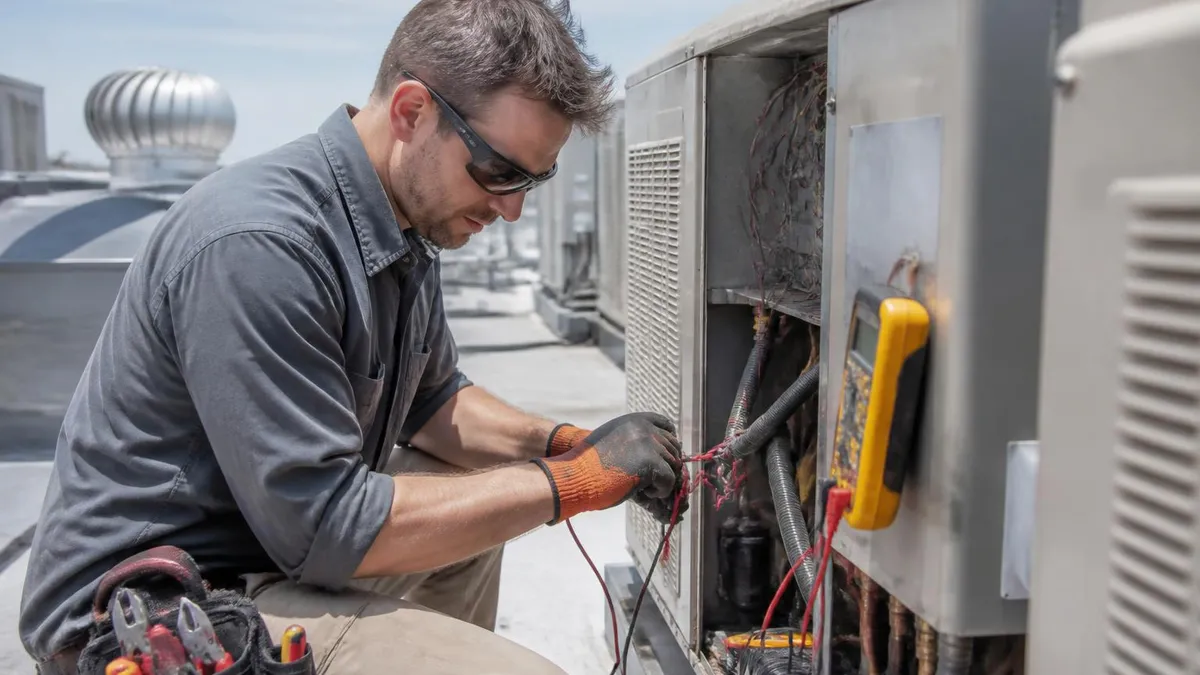
Under EPA Section 608, facilities with appliances containing 50 or more pounds of refrigerant must repair leaks that exceed 20% (comfort cooling) or 30% (industrial) of the system charge within 30 days of discovery. Violations carry penalties up to $44,539 per day per violation. All refrigerant recovery, recycling, and reclamation work must be performed by EPA-certified technicians. Ensure your PM contractor's certifications are current and that your refrigerant purchase and addition logs are complete and accessible for inspection.
Building a successful industrial HVAC preventive maintenance program from the ground up — or overhauling an inherited one — requires a systematic approach that begins with a thorough equipment inventory and condition assessment. You cannot build an effective PM schedule without knowing exactly what equipment you have, how old it is, what its current condition is, and what the manufacturer's recommended service intervals are. This baseline audit is the foundation everything else rests on, and skipping it is one of the most common reasons that new PM programs fail to deliver their promised results.
The equipment inventory process should capture, at minimum, the following data for each piece of HVAC equipment: manufacturer name, model number, serial number, installation date, refrigerant type and charge quantity, motor horsepower ratings, belt sizes and pulley dimensions, filter sizes and MERV ratings, and the location of as-built drawings and equipment manuals.
This information should be entered into a computerized maintenance management system (CMMS) — software platforms like eMaint, Fiix, or Maximo are widely used in industrial settings — that will generate work orders automatically based on the schedules you program. Paper-based PM systems are no longer adequate for facilities with more than a handful of units.
After the inventory is complete, a condition assessment should be performed on every piece of equipment. This is not a full PM visit — it is a diagnostic evaluation to identify any equipment that needs immediate corrective maintenance before the PM program begins.
Starting a PM program on equipment that already has a failing compressor, corroded coils, or deteriorated ductwork sets the program up for failure: the equipment will break down despite the PM visits, and leadership will incorrectly conclude that the PM program is not working when the real issue is deferred maintenance that should have been addressed before the program launched.
Developing the actual PM task procedures is the next step, and it is where many facilities make a critical mistake by relying on generic checklists rather than equipment-specific procedures. A PM checklist for a 100-ton centrifugal chiller is completely different from one for a 5-ton rooftop unit, even though both are cooling systems.
Manufacturer service manuals provide the authoritative task list and specification values — torque values for bolted connections, refrigerant subcooling and superheat targets, vibration amplitude limits, bearing temperature maximums, and motor current draw specifications. Embedding these specific values in your PM work orders is what transforms a vague checklist into a genuine quality control tool.
Training is the most frequently underinvested element of industrial PM programs. Investing in equipment, software, and service contracts without ensuring that the technicians executing the program have the knowledge and skills to do the work correctly is a recipe for PM tasks being completed on paper but not in practice. HVAC technician training programs, NATE certification prep, and manufacturer-specific training courses all contribute to building a maintenance team that can actually deliver the value a PM program promises. Resources like HVAC school programs provide structured pathways for technicians to build the systematic knowledge base that industrial PM work requires.
Key performance indicators (KPIs) are essential for measuring whether your PM program is actually delivering results and for making the case to leadership that the investment is worthwhile.
The most important KPIs for an industrial HVAC PM program include: planned maintenance compliance rate (target: above 95% of scheduled tasks completed on time), mean time between failures (MTBF) for critical equipment (should increase year over year), maintenance cost per square foot (should decrease as the program matures), energy consumption per unit of production output (should decrease as equipment efficiency improves), and emergency work order percentage (target: below 15% of total maintenance work orders). Tracking these metrics monthly and presenting them to facility leadership creates accountability and provides the data needed to justify budget requests for program expansion.
Program maturity takes time — most facilities find that it takes 18 to 24 months of consistent PM execution before the full benefits become visible in the KPI data. This is because many of the benefits of PM (extended equipment life, reduced major failure frequency) only appear over longer time horizons.
In the first year, you may actually see maintenance costs increase slightly as deferred maintenance issues are identified and corrected. This is a sign that the program is working correctly, not a reason to abandon it. Communicate this expectation to leadership at the outset so that the program has the runway it needs to demonstrate its value.
For HVAC technicians and facility managers who are preparing for certification exams, industrial preventive maintenance concepts appear throughout the most widely taken credentials in the field. The EPA 608 certification, required for anyone who purchases or handles regulated refrigerants, tests candidates extensively on leak detection requirements, refrigerant recovery procedures, and the record-keeping obligations that are central to any industrial PM program. Questions about when a leak must be repaired, what documentation must be maintained, and which refrigerant types require which handling procedures are all fair game on the 608 exam.
NATE (North American Technician Excellence) certifications, which are the most widely recognized voluntary credentials in the HVAC industry, include dedicated commercial and industrial tracks that test PM-related knowledge in depth. The Commercial Air Conditioning specialty exam covers topics including chilled water system operation, cooling tower maintenance, large air-handling unit service, and building automation system integration — all of which are core components of a serious industrial PM program.
Candidates who have hands-on experience performing PM tasks on industrial equipment consistently outperform those who have only studied the theory, because the exam questions are grounded in practical scenarios that reflect real-world maintenance challenges.
The ASHRAE Standard 180 certification program, offered in partnership with the Building Commissioning Association, is specifically focused on commercial HVAC inspection and maintenance procedures. Standard 180 defines minimum maintenance activities for a wide range of HVAC equipment types and provides a framework for developing defensible PM programs that meet industry best practices. Facilities that align their PM programs with ASHRAE 180 have a strong foundation for any regulatory or insurance audit, and technicians who are familiar with the standard's requirements have a significant advantage in commercial and industrial job markets.
Exam preparation for any of these credentials benefits enormously from practice testing that targets the specific knowledge domains tested. Refrigerant handling, psychrometrics, electrical fundamentals, controls logic, and mechanical system diagnosis are all areas where practice questions help candidates identify gaps in their knowledge before they walk into the testing center. The most common reason candidates fail these exams on the first attempt is not lack of field experience — it is unfamiliarity with the specific vocabulary and conceptual frameworks that the exam uses to assess knowledge that experienced technicians often apply intuitively without being able to articulate the underlying principles.
For facility managers who are not pursuing personal certification but who are responsible for managing certified technicians and PM contractors, understanding what certifications mean and what they require is essential for evaluating service provider qualifications. An EPA 608 Universal certification is the baseline requirement for anyone working on refrigerant-containing equipment above 5 lbs. NATE certification in the appropriate specialty indicates that a technician has demonstrated competency on a standardized national exam. Factory training certifications from manufacturers like Carrier, Trane, Daikin, and Johnson Controls indicate equipment-specific expertise that is particularly valuable for complex industrial systems under warranty.
Documentation practices are tested on certification exams and are equally important in day-to-day PM program management. Every PM visit should generate a service report that documents the tasks performed, the measurements taken (refrigerant pressures, motor amperage, belt tension, filter pressure drop), the parts replaced, and any deficiencies found that require follow-up corrective maintenance.
This documentation serves multiple purposes simultaneously: it provides the data needed to track equipment condition over time, it creates the audit trail required by EPA refrigerant regulations, it supports warranty claims for equipment that fails prematurely, and it provides the evidence needed to justify capital expenditure requests for equipment replacement.
The intersection of technology and industrial HVAC maintenance is evolving rapidly, and staying current with emerging tools is increasingly important for both practitioners and exam candidates. IoT-connected sensors that continuously monitor equipment performance parameters, AI-based fault detection and diagnostics (FDD) systems that analyze sensor data to identify anomalies before they become failures, and drone-based inspection of rooftop equipment are all moving from early adoption into mainstream industrial use.
Understanding these technologies at a conceptual level — how they work, what they detect, and what their limitations are — is increasingly likely to appear in updated versions of commercial HVAC certification exams.
Sample HVAC Practice Questions
Try these questions from our free HVAC practice tests. The correct answer and an explanation follow each question.
What does 'latent heat' refer to in HVAC applications?
- A. Heat transferred by direct contact between surfaces
- B. Heat that changes the temperature of a substance
- C. Heat absorbed or released during a phase change without a temperature change
- D. Radiant heat from the sun entering through windows
Answer: C. Heat absorbed or released during a phase change without a temperature change
Latent heat is the heat energy absorbed or released when a substance changes phase (e.g., liquid to vapor) without any change in temperature.
How do low-e window coatings contribute to HVAC energy efficiency?
- A. They reflect infrared radiation, reducing solar heat gain in summer and heat loss in winter
- B. They improve the structural insulation value of the glass
- C. They reduce visible light transmission to lower lighting loads
- D. They prevent condensation that could damage HVAC ductwork
Answer: A. They reflect infrared radiation, reducing solar heat gain in summer and heat loss in winter
Low-e coatings selectively reflect long-wave infrared radiation, reducing unwanted solar heat gain in summer and slowing heat escape through windows in winter.
What is the value of continuing education in electrical controls for HVAC professionals?
- A. It is only needed for recertification
- B. It keeps professionals current with evolving standards and practices
- C. It is primarily a social activity
- D. It replaces workplace experience
Answer: B. It keeps professionals current with evolving standards and practices
Continuing education ensures professionals stay current with the latest developments, standards, and best practices in their field.
When refrigerant is reclaimed and sent to a reclaim facility, what standard must the reclaimed refrigerant meet before it can be resold?
- A. AHRI 700
- B. UL 207
- C. ASHRAE 34 Grade A
- D. EPA 608 Grade 1
Answer: A. AHRI 700
Reclaimed refrigerant must meet AHRI Standard 700 purity specifications before it can be resold for use in refrigeration and air conditioning equipment.
HVAC Questions and Answers
FCU HVAC: The Complete Guide to Fan Coil Units, How They Work, Where They Excel, and How to Choose the Right System
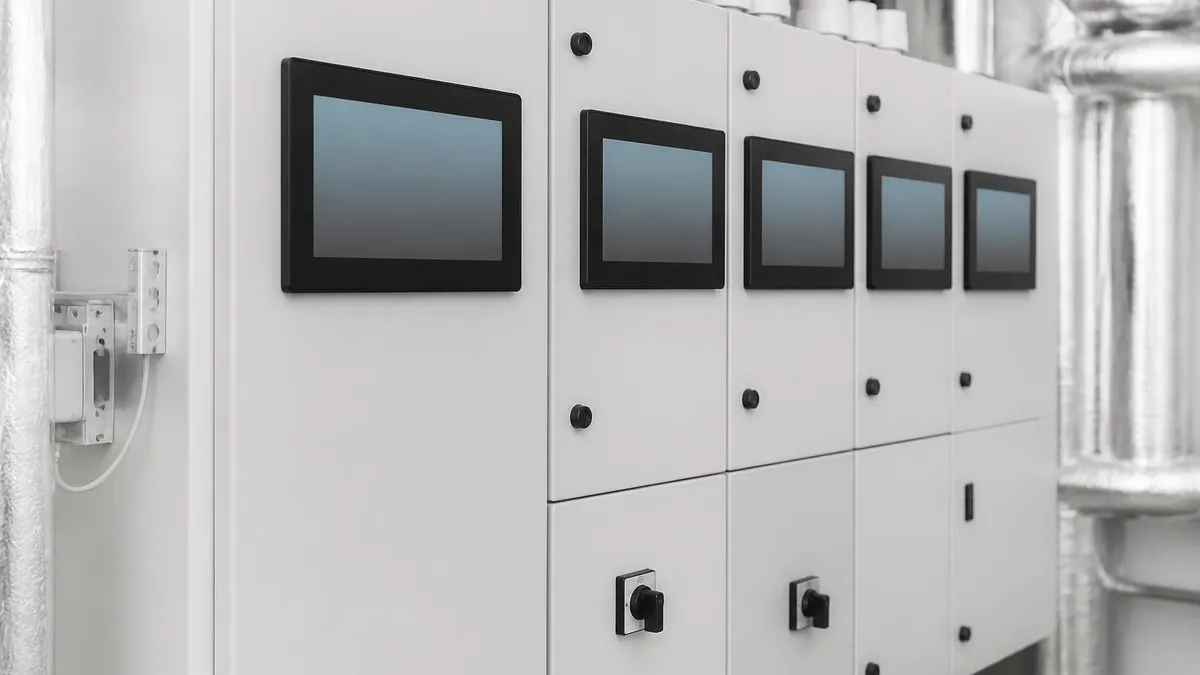
Finance a New HVAC System: 2026 Loans, 0% APR, and Rebates
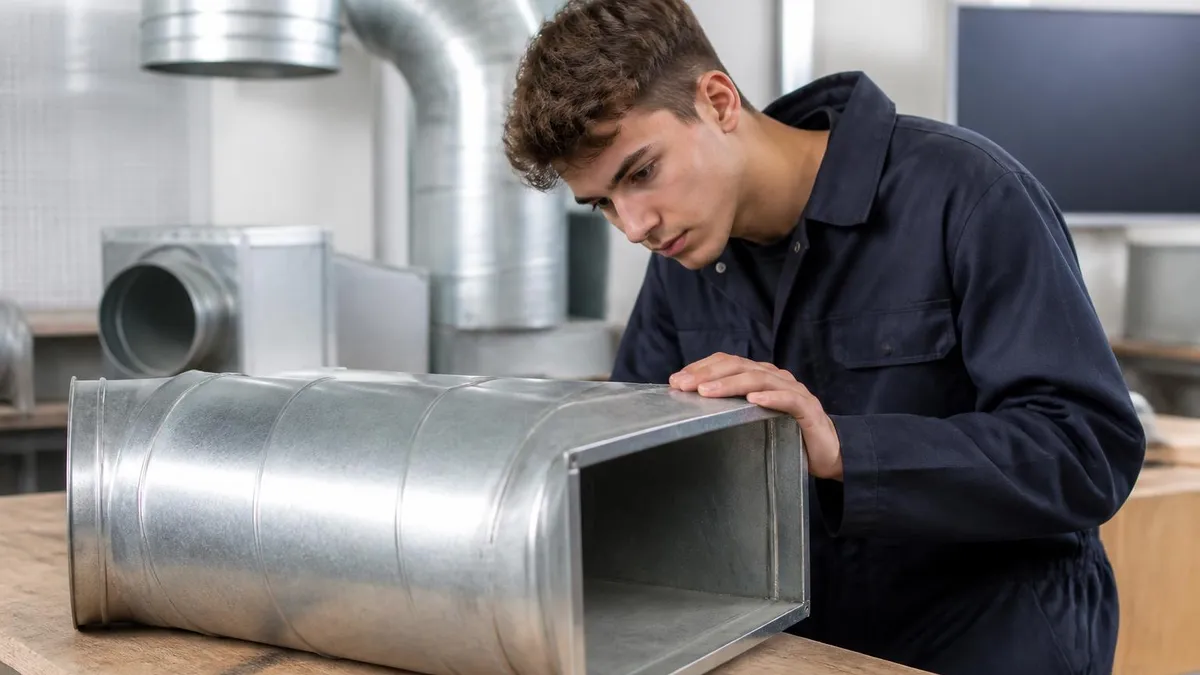
HVAC Duct Repair: Common Issues, Costs, and DIY vs Professional
HVAC School -- Programs, Costs, and Career Paths in 2026
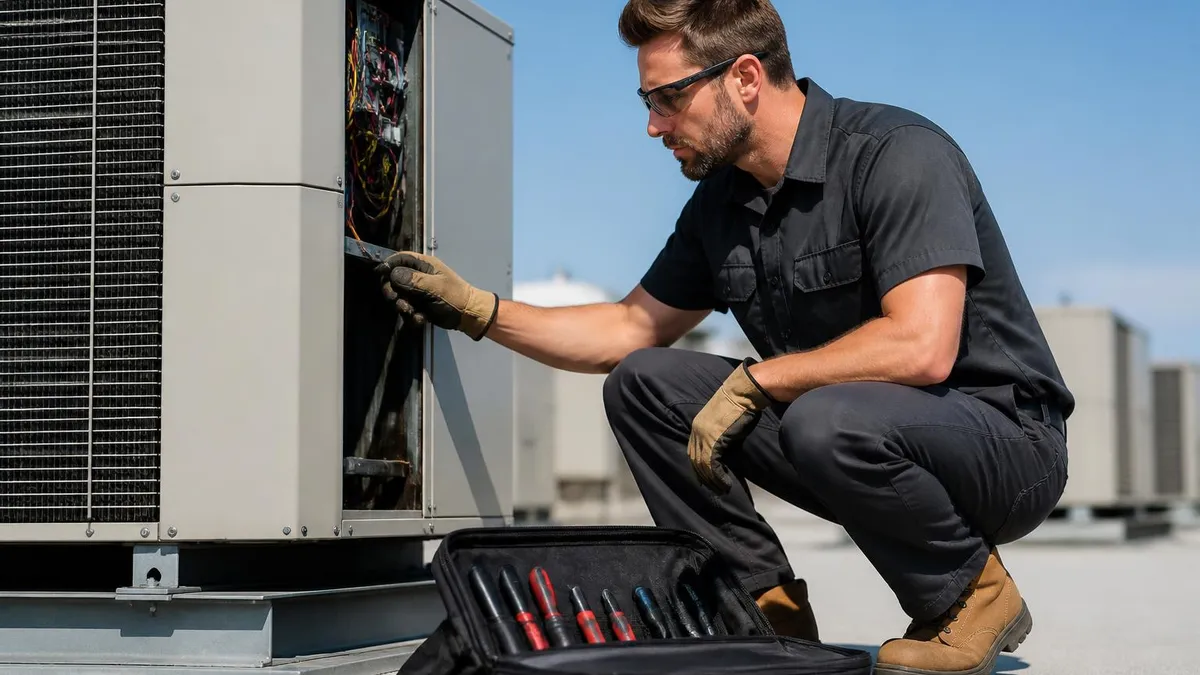
HVAC Advertising: The Complete Playbook for Generating Leads, Booking Calls, and Growing Your Heating and Cooling Business
About the Author

NATE Certified HVAC Technician & Licensing Exam Trainer
Universal Technical InstituteMike Johnson is a NATE-certified HVAC technician and EPA 608 universal-certified refrigerant handler with a Bachelor of Science in HVAC/R Technology. He has 19 years of commercial and residential HVAC installation and service experience and specializes in preparing technicians for NATE certification, EPA 608, A2L refrigerant safety, and state HVAC contractor licensing examinations.