
ERV HVAC Systems: Complete Guide to Energy Recovery Ventilation, Components, and Installation
ERV HVAC explained: how energy recovery ventilators work, costs, installation, sizing, and benefits for modern homes and commercial buildings. 🏆

An ERV HVAC system, short for energy recovery ventilator, is one of the most important upgrades in modern building science. As homes and commercial spaces have become tighter and better insulated to meet today's energy codes, indoor air quality has suffered. ERV HVAC equipment solves that problem by exchanging stale indoor air with fresh outdoor air while transferring heat and moisture between the two streams, dramatically reducing the load on heating and cooling equipment without sacrificing comfort or air quality.
Understanding HVAC systems means understanding the relationship between ventilation, conditioning, and energy efficiency. A traditional HVAC system simply heats or cools recirculated indoor air, while a modern integrated design pairs the air handler with ventilation hardware like an ERV or HRV. This combination keeps CO2 levels low, removes volatile organic compounds, manages humidity, and prevents the stuffy, headache-inducing environment common in airtight buildings constructed after roughly 2010.
This guide walks through every major HVAC system type, from split systems and packaged units to heat pumps, geothermal, ductless mini-splits, and energy recovery ventilators. You will learn how each system works, when to choose one over another, what installation typically costs in 2026, and how the components interact to deliver year-round comfort. Whether you are studying for the EPA 608 exam, replacing an aging unit, or specifying equipment for a new build, the fundamentals here apply.
HVAC stands for heating, ventilation, and air conditioning, and each letter represents a discipline with its own physics, hardware, and code requirements. Heating uses combustion, electrical resistance, or refrigeration to add thermal energy. Air conditioning removes heat and moisture through the refrigeration cycle. Ventilation introduces fresh outdoor air and exhausts contaminants. The most effective systems balance all three without forcing any single component to overwork, which is exactly the gap an ERV fills.
The Department of Energy estimates that HVAC accounts for roughly 48 percent of energy use in the average U.S. home, making system selection one of the highest-use decisions a homeowner or building operator makes. Choosing the wrong tonnage, the wrong refrigerant, or the wrong duct layout can cost thousands of dollars in wasted energy over the equipment's 15 to 20 year lifespan. Choosing well, and pairing the system with proper ventilation, delivers decades of low-cost comfort.
Throughout this article you will see references to SEER2, HSPF2, AFUE, MERV, and CFM. These efficiency and performance ratings are how engineers compare equipment objectively. We will define each one in context so the numbers translate into real-world decisions about comfort, utility bills, and indoor air quality. If you ever need professional help, search for 24 hour HVAC repair near me to find emergency technicians in your area.
By the end of this guide you will know exactly how an ERV differs from an HRV, how a heat pump differs from a furnace, what a variable-speed compressor actually does, and why duct design often matters more than the equipment connected to it. Let us start with the numbers that frame every HVAC decision.
ERV HVAC Systems by the Numbers
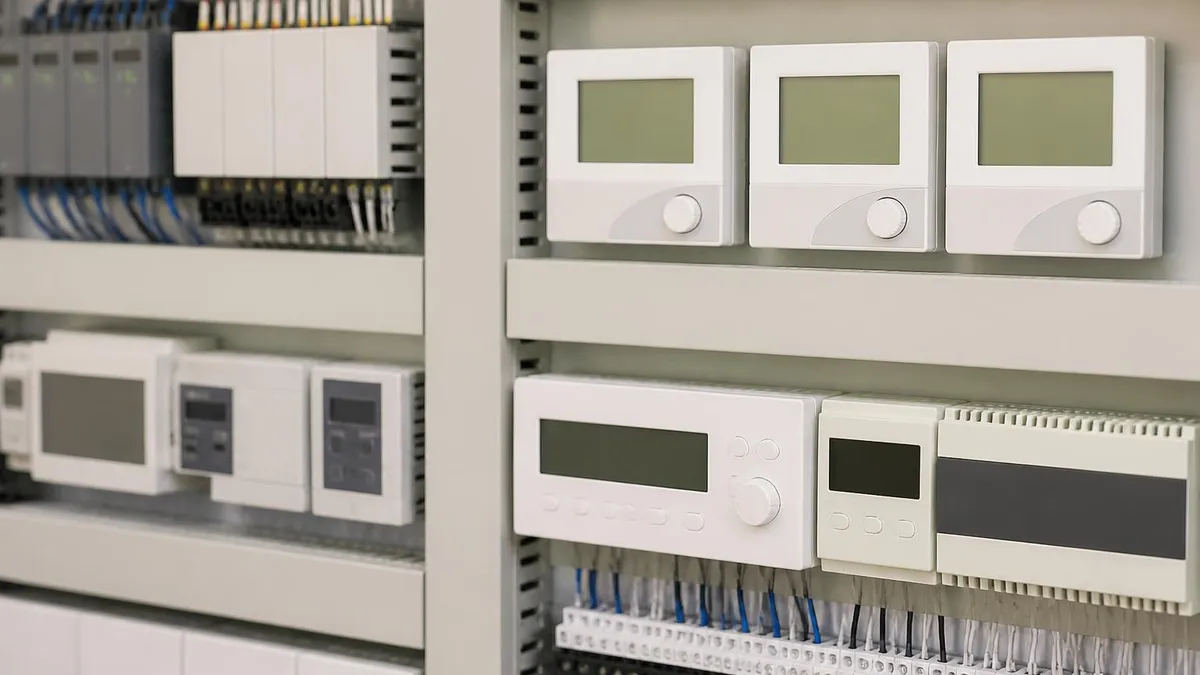
Major HVAC System Types You Need to Know
The most common residential setup, with an outdoor condenser paired with an indoor air handler or furnace. Refrigerant lines connect the two, and supply ducts distribute conditioned air throughout the home. Reliable, serviceable, and widely supported by every HVAC technician.
All components, including compressor, coil, and blower, live inside a single cabinet, usually on the roof or a concrete pad. Common in light commercial and southern U.S. homes without basements. Easier to service from one location but more exposed to weather damage.
Reversible refrigeration systems that heat in winter and cool in summer using a single piece of outdoor equipment. Modern cold-climate heat pumps work efficiently down to negative 15 degrees Fahrenheit, making them viable nationwide and the fastest-growing HVAC category in 2026.
Wall-mounted indoor heads connected to a small outdoor unit via refrigerant lines, with no ductwork required. Ideal for additions, garages, and zoned retrofits. Each head operates independently, giving room-by-room temperature control and high efficiency.
Ground-source heat pumps that exchange heat with the earth through buried loops. Highest efficiency available, with COP ratings above 4.0, but installation costs run $20,000 to $40,000 due to drilling or excavation. Federal tax credits cover 30 percent through 2032.
An energy recovery ventilator works by passing two air streams, one incoming from outside and one outgoing from inside, through a specialized core that transfers both heat and moisture without mixing the two streams. The core is typically made of treated paper, polymer membrane, or aluminum, and it operates passively, meaning no compressor is needed. Two small fans drive the airflow, drawing roughly 30 to 70 watts during normal operation, which is far less than any conditioning equipment would consume to treat the same volume of fresh air.
In winter, warm humid indoor air being exhausted gives up its heat and moisture to the cold dry incoming air, pre-warming and pre-humidifying it before it enters the home. In summer, the process reverses. Hot humid outdoor air gives up heat and moisture to the cooler drier exhaust stream, reducing both the sensible and latent load on the air conditioner. This dual transfer is what distinguishes an ERV from a heat recovery ventilator, which moves only sensible heat and leaves humidity alone.
Most residential ERVs are sized between 100 and 250 CFM, which is enough fresh air for a typical 2,000 to 4,000 square foot home under ASHRAE 62.2 requirements. The unit either ties into the existing return duct of the HVAC system or runs on dedicated ductwork with its own supply and exhaust grilles. The dedicated approach gives better control but costs more to install, while the simple tie-in works fine in most retrofits where space is limited.
Controls vary from a simple on-off switch to sophisticated humidistat and CO2-sensing modules that ramp ventilation up and down based on real-time indoor air quality. Smart ERVs from manufacturers like Panasonic, Broan, Zehnder, and Renewaire integrate with thermostats and home automation systems to deliver fresh air only when needed, which extends core life and minimizes energy use. Expect to pay $400 to $1,500 for the unit itself, plus another $500 to $1,500 for professional installation.
An ERV is most valuable in climates with significant humidity swings, such as the Southeast, Midwest, and Mid-Atlantic. In dry climates like Arizona or Colorado, an HRV may be the better choice because preserving indoor humidity in winter is usually undesirable. The general rule is that if your average outdoor dew point varies widely between seasons, an ERV will outperform an HRV on both comfort and energy savings throughout the year.
One of the most overlooked benefits of an ERV is its impact on radon and VOC dilution. By continuously introducing fresh outdoor air and exhausting stale indoor air, the unit prevents accumulation of common indoor pollutants from cooking, cleaning products, off-gassing furniture, and combustion appliances. For homes built since 2015 to tight envelope standards, an ERV is no longer a luxury, it is a structural requirement for healthy indoor air. When equipment fails, knowing what is included in HVAC servicing helps you communicate clearly with technicians.
Proper commissioning is essential. After installation, a technician should measure airflow at every grille, balance the supply and exhaust streams within 10 percent of each other, and verify that the core is seated correctly. An imbalanced ERV either pressurizes or depressurizes the building, which can pull combustion gases back down a flue or push humid air into wall cavities where it condenses and rots the framing.
HVAC Practice Test Questions
Prepare for the HVAC - Heating Ventilation and Air Conditioning exam with our free practice test modules. Each quiz covers key topics to help you pass on your first try.
HVAC Air Conditioning
HVAC Exam Questions covering Air Conditioning. Master HVAC Test concepts for certification prep.
HVAC Code Compliance
Free HVAC Practice Test featuring Code Compliance. Improve your HVAC Exam score with mock test prep.
HVAC Electrical Controls
HVAC Test Prep for Electrical Controls. Practice HVAC Quiz questions and boost your score.
HVAC Energy Efficiency
HVAC Questions and Answers on Energy Efficiency. Free HVAC practice for exam readiness.
HVAC Heating Systems
HVAC Mock Test covering Heating Systems. Online HVAC Test practice with instant feedback.
HVAC Load Calculations
Free HVAC Quiz on HVAC Load Calculations. HVAC Exam prep questions with detailed explanations.
HVAC Tools and Equipment
HVAC Practice Questions for HVAC Tools and Equipment. Build confidence for your HVAC certification exam.
HVAC Refrigeration
HVAC Test Online for Refrigeration. Free practice with instant results and feedback.
HVAC Safety Practices
HVAC Study Material on Safety Practices. Prepare effectively with real exam-style questions.
HVAC System Design
Free HVAC Test covering System Design. Practice and track your HVAC exam readiness.
HVAC Thermodynamics
HVAC Exam Questions covering Thermodynamics. Master HVAC Test concepts for certification prep.
ERV vs HRV vs Standard Ventilation
Energy recovery ventilators transfer both heat and moisture between incoming and outgoing air streams. This dual exchange is ideal for mixed and humid climates where humidity management is a year-round concern. Typical sensible efficiency runs 70 to 80 percent, and latent efficiency runs 50 to 70 percent, depending on the core material and airflow rate.
ERVs work best in homes built to code post-2012, where envelope tightness measures below 3 ACH50. Expect installation costs of $1,500 to $3,500 turnkey for a residential ducted system. The unit pays for itself in energy savings within 7 to 12 years in most climates, faster when paired with high-efficiency heating and cooling equipment.

Should You Install an ERV With Your HVAC System?
- +Recovers 70 to 80 percent of heating and cooling energy from exhausted air
- +Improves indoor air quality by diluting CO2, VOCs, and radon continuously
- +Balances humidity year-round, especially valuable in mixed climates
- +Reduces load on heating and cooling equipment, extending its lifespan
- +Qualifies for federal tax credits and many utility rebates in 2026
- +Operates quietly at 30 to 50 decibels, quieter than a refrigerator
- +Required by ASHRAE 62.2 and IRC in most new construction
- −Adds $1,500 to $3,500 to installation cost over standard ventilation
- −Core requires cleaning or replacement every 5 to 10 years
- −Less effective in extreme cold below negative 10 degrees without defrost cycle
- −Requires balanced airflow commissioning to avoid pressurization issues
- −Not ideal for dry climates where HRV is the better choice
- −Adds another mechanical component that can fail and need service
ERV HVAC Installation and Sizing Checklist
- ✓Perform a Manual J load calculation to determine ventilation CFM requirements
- ✓Verify envelope tightness with a blower door test to confirm ERV is needed
- ✓Choose ERV over HRV in any climate with summer dew points above 60 degrees
- ✓Size unit for ASHRAE 62.2 minimum: 7.5 CFM per person plus 0.03 CFM per square foot
- ✓Select supply and exhaust locations to avoid short-circuiting between grilles
- ✓Insulate exterior ductwork to R-8 minimum to prevent condensation in unconditioned spaces
- ✓Install a condensate drain with proper trap for cooling season operation
- ✓Commission with a calibrated flow hood and balance streams within 10 percent
- ✓Wire interlock with HVAC blower or install dedicated controller for continuous operation
- ✓Document filter and core service intervals in homeowner manual and on equipment label
Match the ventilator to your local dew point, not the marketing brochure
The single biggest ERV mistake is installing the wrong type for the climate. Pull 10-year average dew point data from NOAA for your zip code. If summer dew points consistently exceed 60 degrees Fahrenheit, choose ERV. If winter indoor humidity drops below 25 percent regularly, choose HRV. Get this decision right and the unit will pay for itself; get it wrong and you will fight comfort and humidity issues forever.
The cost of an ERV HVAC integration in 2026 ranges from $1,500 for a basic retrofit tied into existing ductwork up to $7,500 for a fully dedicated ducted system in a custom home. The unit itself accounts for roughly one third of the total, with labor, dedicated ductwork, electrical, controls, and commissioning making up the rest. Premium units from Zehnder or RenewAire can push residential project costs above $10,000 when paired with HEPA filtration and multi-zone control.
Federal incentives in 2026 remain generous. The Inflation Reduction Act extended the 25C tax credit through 2032, covering 30 percent of qualifying ERV and HRV installations up to $1,200 per year as part of the broader home energy improvement category. Many state and utility programs stack on top, with rebates of $200 to $600 common in the Northeast, Pacific Northwest, and California. Always confirm eligibility before signing a contract because some programs require pre-approval.
Operating cost is minimal. A typical 150 CFM ERV draws 45 watts continuously, which works out to roughly $4 per month at the national average electricity rate. The energy savings from reduced HVAC runtime usually exceed $10 to $40 per month, depending on climate severity and equipment efficiency, giving a net positive monthly return from day one. Over a 15-year service life, an ERV typically saves $1,800 to $7,000 in HVAC operating costs.
Efficiency ratings to compare across units include sensible recovery efficiency, latent recovery efficiency, total recovery efficiency, and the AHRI-certified airflow at a specified static pressure. Look for units certified to the Home Ventilating Institute standards because manufacturer claims without HVI listing are often inflated. A solid mid-tier ERV will show 75 percent sensible recovery at 100 CFM and 0.2 inches water column external static pressure.
System pairing matters. An ERV connected to an oversized HVAC system will short cycle the conditioning equipment, since fresh outdoor air is being constantly pre-treated before entering the home. The fix is either a properly sized two-stage or variable-speed system or running the HVAC blower continuously at low speed. Variable-speed ECM blowers are nearly standard on premium equipment in 2026 and pair beautifully with continuous ventilation.
For commercial applications, ERVs scale from 500 CFM rooftop units to 20,000 CFM custom air handlers serving entire schools or hospitals. Title 24 in California and ASHRAE 90.1 nationally require energy recovery on most new commercial HVAC systems above defined thresholds, typically anything moving more than 5,000 CFM with outdoor air fractions above 70 percent. Compliance is now the norm, not the exception, and the equipment landscape has matured accordingly.
If you are budgeting for a complete replacement, our breakdown of HVAC installation cost shows current pricing by system type, region, and tonnage. Bundling an ERV into a full system replacement always costs less than a standalone retrofit because the ductwork is already open and labor is already onsite.
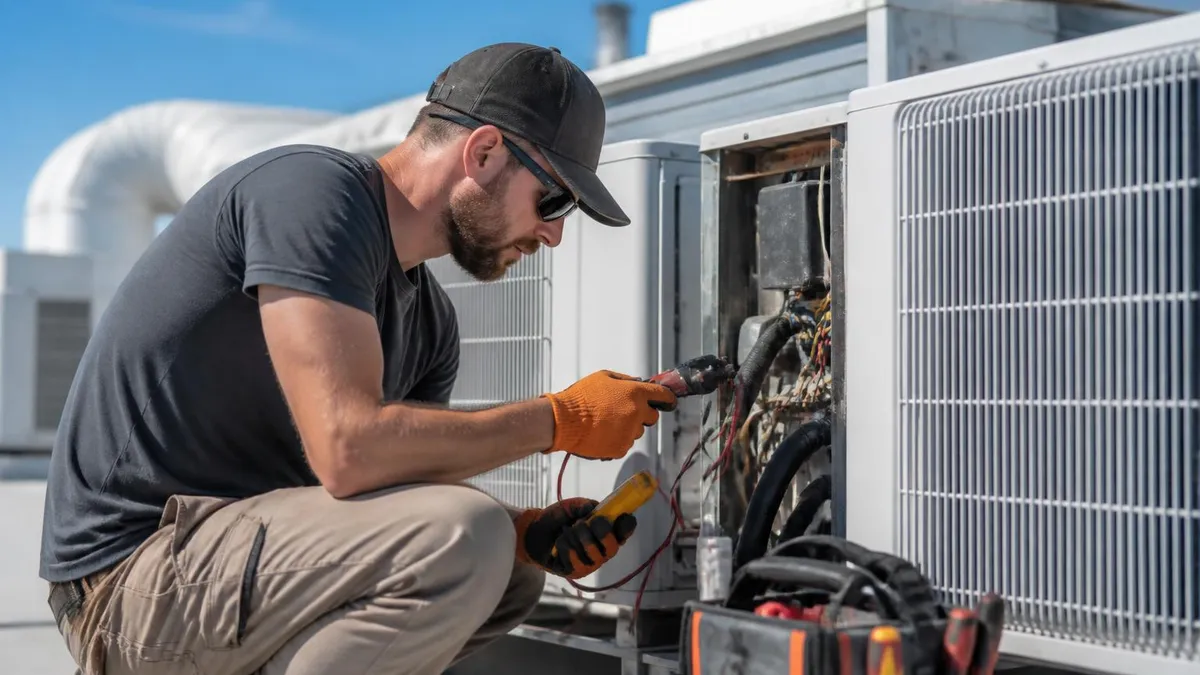
Any home with atmospheric-vented gas appliances, including water heaters, furnaces, and fireplaces, must have a combustion safety test performed after ERV installation. An imbalanced or oversized ventilation system can backdraft flue gases into living space, creating a carbon monoxide hazard. A certified BPI or RESNET professional should verify draft and worst-case depressurization before final commissioning.
Maintenance for an ERV HVAC system is straightforward but non-negotiable. The two pre-filters protecting the core must be inspected every three months and replaced every six to twelve months depending on outdoor air quality and indoor activity. In wildfire-prone regions, expect to change them monthly during fire season. Clogged pre-filters reduce airflow, shrink heat recovery efficiency, and stress the fans, leading to premature motor failure within a few years.
The core itself needs cleaning every one to two years. Most modern cores slide out without tools and can be vacuumed gently and rinsed with mild soapy water if the manufacturer permits. Polymer and paper cores cannot be rinsed and must be vacuum-cleaned only. Aluminum plate cores tolerate full water immersion. Read the manual before any cleaning and document service dates on a sticker affixed to the unit cabinet.
Condensate drains for ERVs operating in cooling mode require the same attention as those serving an evaporator coil. A clogged drain pan overflows and damages ceilings, drywall, and flooring below. Pour a cup of distilled vinegar through the drain line every spring before cooling season to dissolve biofilm buildup. Install a wet switch float to automatically shut down the unit if water levels rise unexpectedly, a $30 part that prevents thousands in water damage.
Common ERV problems include condensation on supply ducts in summer, frost accumulation on the core in deep winter, and short circuiting between supply and exhaust grilles. Condensation usually means missing duct insulation. Frost means the defrost cycle is failing or undersized for your climate. Short circuiting means grilles are too close together and need relocation. None of these are difficult to fix once correctly diagnosed by a technician familiar with ventilation systems.
Indoor air quality verification is a smart annual exercise. Inexpensive CO2 monitors give a real-time picture of how well your ventilation is performing. Levels should stay below 1,000 ppm in occupied rooms, and ideally below 800 ppm. If your ERV is properly sized and commissioned, achieving these targets is effortless. If CO2 climbs above 1,200 ppm with the ERV running, airflow has dropped somewhere and a service call is in order.
For homeowners who want extra filtration beyond what the ERV provides, a downstream MERV-13 filter in the main HVAC return removes fine particulates including pollen, smoke, and bacteria. Higher MERV ratings increase pressure drop, so always confirm the air handler can tolerate the added resistance before upgrading. ECM blowers handle MERV-13 easily; older PSC motors may struggle and require a low-pressure-drop deep-pleat filter to compensate.
For added biological control, some buildings add a UV light for HVAC downstream of the cooling coil to suppress mold growth on the wet coil surface. UV lamps complement ERV ventilation by eliminating one of the most common indoor air contamination sources at its origin point.
Final preparation advice for anyone studying HVAC systems for licensing or certification exams comes down to mastering a handful of foundational concepts, then applying them to whatever scenario the test throws at you. The refrigeration cycle, psychrometrics, airflow physics, and electrical control logic are the four pillars. If you understand each thoroughly, you can reason your way through almost any equipment-specific question, including ERV and energy recovery topics that appear with increasing frequency on modern exams.
Spend dedicated study time on psychrometric charts. Reading wet bulb, dry bulb, dew point, relative humidity, and enthalpy from a chart is essential for understanding what an ERV actually does, why latent versus sensible recovery matters, and how to size both ventilation and cooling equipment correctly. Most exam takers underestimate psychrometrics because it looks intimidating; in reality, a few hours with worked examples cracks it open and unlocks dozens of test questions.
Learn the ASHRAE 62.2 ventilation calculation cold. It comes up on residential exams, contractor licensing exams, and energy auditor certifications. The formula is straightforward: total CFM equals 7.5 multiplied by number of bedrooms plus one, plus 0.03 multiplied by conditioned square footage. Memorize it, work five practice problems, and you will have it permanently. The same calculation is also embedded in the IRC and IECC in slightly varied form.
For practical fieldwork, invest in a good combustion analyzer, manometer, and flow hood early in your career. These three instruments let you commission and troubleshoot any HVAC and ventilation system you encounter. They also separate professional technicians from parts changers in the eyes of customers and inspectors. Quality used equipment can be sourced from Fieldpiece, Testo, and TSI for under $2,000 total in 2026, a fraction of what a single failed callback would cost.
Stay current with refrigerant transitions. R-410A is being phased down under the AIM Act, with R-454B and R-32 emerging as the dominant residential replacements through 2030. New systems require new tools, gauges rated for higher pressures, and updated EPA 608 understanding because R-454B is mildly flammable, classified A2L. Charging procedures, leak detection, and code requirements differ in important ways from R-410A practice.
Practice exams remain the single most efficient study tool. Working questions in the same format as the real exam builds pattern recognition, exposes weak areas, and trains you to manage time under pressure. Plan to complete at least 300 practice questions across the major HVAC subject areas before sitting for any licensing or certification exam. Track your wrong answers in a notebook and review them weekly until the concepts are second nature.
Finally, remember that HVAC is a hands-on trade. Reading and quiz practice build the framework, but real competence comes from installing, commissioning, and troubleshooting actual equipment. Find a mentor, volunteer for service calls, and spend time in mechanical rooms watching how professionals diagnose problems. Combined with consistent study, hands-on time produces the rounded skill set that employers, customers, and inspectors recognize and reward.
HVAC Questions and Answers


About the Author

NATE Certified HVAC Technician & Licensing Exam Trainer
Universal Technical InstituteMike Johnson is a NATE-certified HVAC technician and EPA 608 universal-certified refrigerant handler with a Bachelor of Science in HVAC/R Technology. He has 19 years of commercial and residential HVAC installation and service experience and specializes in preparing technicians for NATE certification, EPA 608, A2L refrigerant safety, and state HVAC contractor licensing examinations.