
HVAC Trade: Your Complete Guide to Entering, Advancing, and Thriving in the Heating and Cooling Industry
Explore the hvac trade from apprenticeship to master technician. 📚 Learn salaries, licensing steps, and top skills needed in 2026 September.
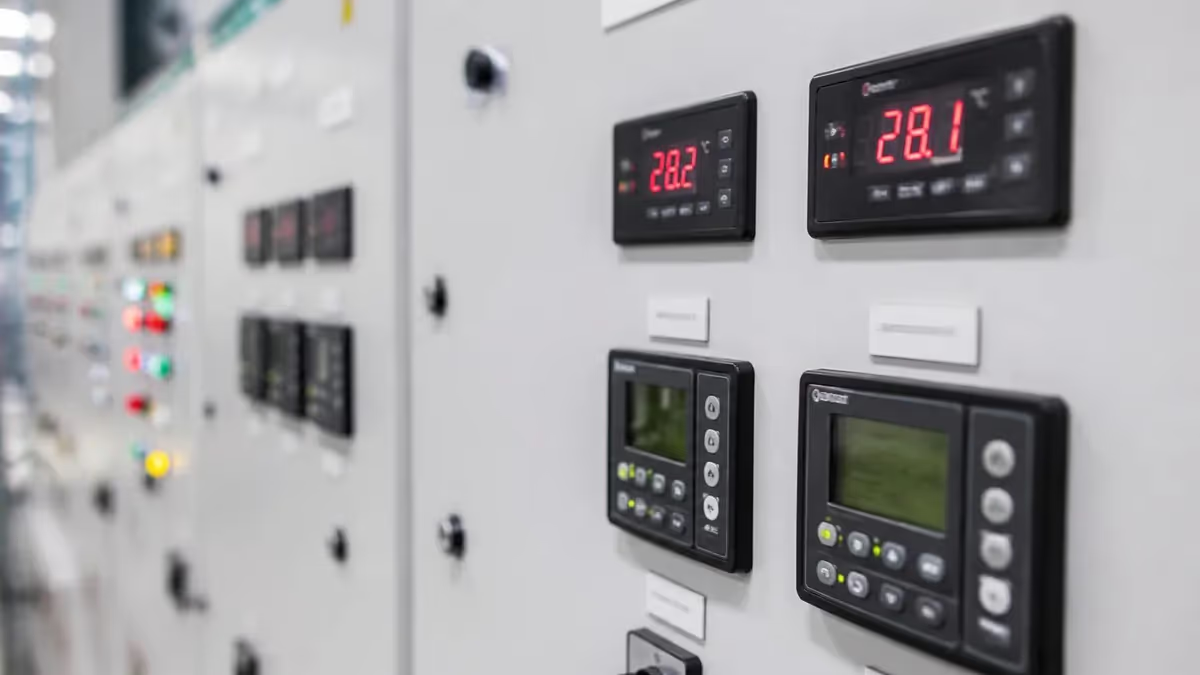
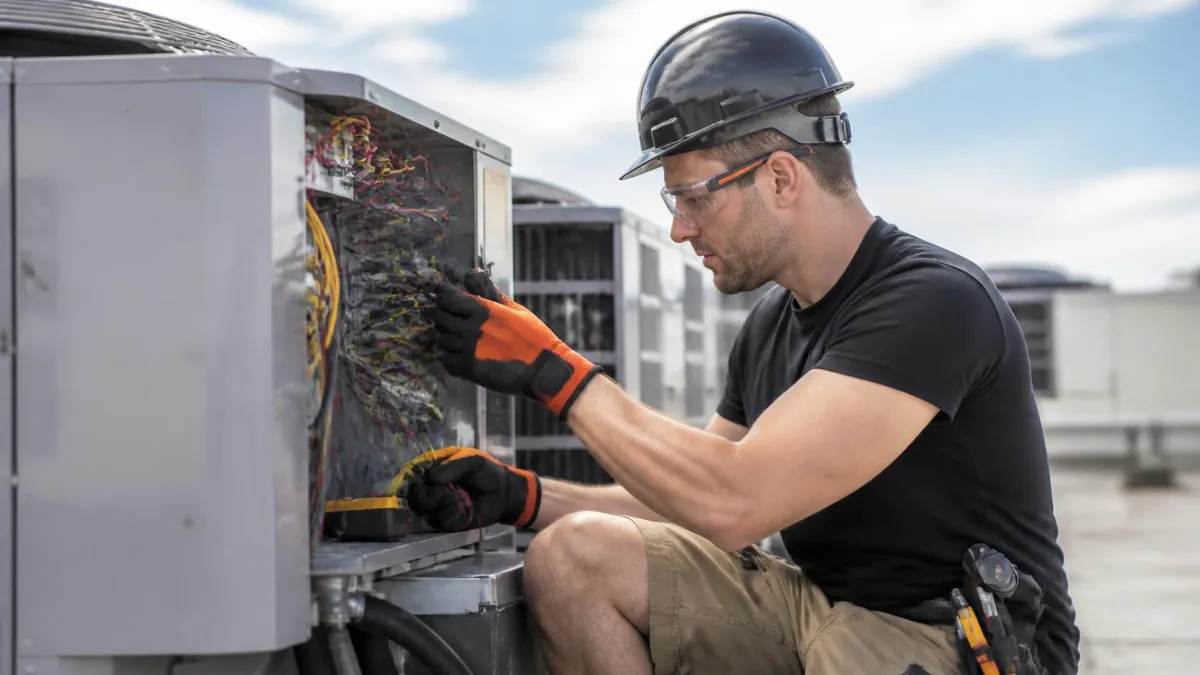
The hvac trade is one of the most stable and well-compensated skilled professions in the United States, offering workers a clear career ladder from entry-level apprentice to licensed master technician. Unlike many white-collar fields disrupted by automation, HVAC technicians perform hands-on work that cannot be outsourced or replaced by software — installing rooftop units, diagnosing refrigerant leaks, and commissioning commercial controls systems all require physical presence and deep technical judgment. If you are exploring a trade career or looking to advance in the hvac trade, understanding the full scope of the profession is the best place to start.
The demand for qualified HVAC workers has accelerated sharply in recent years. The U.S. Bureau of Labor Statistics projects roughly 9 percent job growth for HVAC and refrigeration mechanics through 2032 — substantially faster than the average for all occupations. Factors driving this surge include aging residential and commercial infrastructure, the nationwide push to replace fossil-fuel heating systems with heat pumps, and stricter energy-efficiency regulations that require certified professionals to install and commission new equipment. Simply put, there are more jobs than trained workers to fill them, and wages are rising accordingly.
Entering the HVAC trade typically begins with a formal apprenticeship program, a vocational school certificate, or a combination of both. Apprenticeships through organizations like UA (United Association), NATE, or local mechanical contractors associations usually last three to five years and blend paid on-the-job training with classroom instruction. Vocational programs at community colleges can compress foundational knowledge into one or two semesters, allowing students to enter the workforce faster, though they still need hands-on hours to qualify for state licensing. Both pathways are legitimate, and many technicians combine elements of each.
Licensing requirements vary significantly by state. Some states, like California and Texas, have robust statewide licensing frameworks with tiered levels — journeyman, contractor, and sometimes specialty endorsements. Others delegate licensing to individual counties or cities, creating a patchwork of requirements that can surprise technicians who relocate.
Regardless of state, all technicians who handle refrigerants must hold an EPA Section 608 certification, which covers the four categories of refrigerant handling: small appliances (Type I), high-pressure systems (Type II), low-pressure systems (Type III), and the universal certification covering all three. The EPA 608 exam is administered by HVAC Excellence, NATE, and several other approved testing organizations.
Specialization is increasingly valuable in the HVAC trade. While a generalist technician can find steady residential service work, specialists in commercial HVAC controls, refrigeration, or building automation systems command significantly higher wages. The move toward smart thermostats, IoT-connected HVAC equipment, and cloud-based building management systems has created demand for technicians comfortable with low-voltage wiring, network configuration, and manufacturer-specific programming software. Adding these skills to a core HVAC background positions a technician for senior roles that blend electrical knowledge, refrigeration expertise, and digital fluency.
Compensation in the HVAC trade reflects the combination of physical skill, technical knowledge, and licensing investment required. Entry-level technician helpers average around $38,000 to $45,000 annually, while journeyman technicians with four to six years of experience typically earn $55,000 to $72,000. Senior technicians, project supervisors, and licensed contractors can earn well over $90,000, particularly in high-cost metro markets like New York, San Francisco, and Seattle. Many HVAC contractors also offer performance bonuses tied to installation volume or service call efficiency, which can add several thousand dollars to annual compensation for high performers.
Beyond income, the HVAC trade offers practical lifestyle advantages that attract workers leaving desk jobs or higher-education programs. Most technicians work without direct supervisory oversight once they have their van and work orders, providing a degree of autonomy uncommon in hourly employment. The work is physically active, meaning most technicians avoid the sedentary health risks associated with office work.
And the satisfaction of diagnosing and fixing a system that was making a family uncomfortable — restoring air conditioning on a 95-degree afternoon or heat on a January night — provides a form of immediate, tangible accomplishment that many professionals in abstract fields never experience.
HVAC Trade by the Numbers

HVAC Trade Career Pathways
The entry point for most HVAC careers. Apprentices work under licensed technicians, learning installation, basic diagnostics, and safety procedures. Apprenticeships typically last three to five years and include paid on-the-job hours plus classroom coursework covering refrigeration theory, electrical fundamentals, and code compliance.
After completing apprenticeship and passing state licensing exams, technicians reach journeyman status. At this level, professionals handle independent service calls, complex installations, and diagnostic work without direct supervision. Journeymen are the backbone of the residential and light commercial HVAC workforce and typically earn $55,000–$72,000 annually.
The highest tier of the HVAC trade, requiring additional experience, broader exam coverage, and often a business license. Master technicians can pull permits, supervise apprentices, and operate their own HVAC companies. This credential unlocks commercial project leadership, subcontracting relationships, and the highest compensation tiers in the industry.
A growing specialization focused on building automation systems, smart thermostats, and IoT-connected HVAC equipment. Controls specialists program and commission digital control systems for large commercial buildings, requiring a blend of HVAC knowledge and IT or low-voltage electrical skills. This niche commands premium rates in commercial construction and facilities management.
Licensing and certification are foundational to a legitimate HVAC career, and understanding the layered requirements at federal, state, and local levels is essential before you enter the workforce. The federal requirement that applies to every technician who handles refrigerants is the EPA Section 608 certification.
Established under the Clean Air Act, this certification ensures that technicians understand how to recover, recycle, and dispose of refrigerants properly, minimizing ozone-depleting and greenhouse-gas emissions. The exam covers refrigerant safety, equipment recovery procedures, and the specific regulations governing different refrigerant types. You can prepare with focused study materials or practice exams covering refrigerant handling rules.
State licensing requirements sit on top of the EPA 608 requirement and vary dramatically in scope and structure. States like Florida and North Carolina maintain robust contractor licensing boards that require applicants to demonstrate years of field experience, pass a comprehensive trade exam, carry liability insurance, and post a bond before they can pull permits or operate a business.
Other states, like Colorado, have no statewide HVAC licensing requirement at all, instead leaving regulation to municipalities. Technicians working across state lines or planning to relocate should research specific requirements for their target state well before assuming their current credentials will transfer automatically.
NATE (North American Technician Excellence) certification is the most widely recognized voluntary credential in the HVAC trade. While not a government license, NATE certification signals to employers and customers that a technician has passed rigorous third-party competency exams in areas like air conditioning, heat pumps, gas heating, and air distribution. Many HVAC contractors use NATE certification as a hiring criterion or a factor in wage determination, and some equipment manufacturers require NATE-certified technicians to install systems under extended warranty programs. Earning a NATE credential during or shortly after apprenticeship is a strategic move that pays dividends throughout a technician's career.
HVAC Excellence is another credentialing body worth knowing. It offers both entry-level certificates covering core HVAC knowledge and professional-level certifications in specific equipment categories. For technicians working in educational or vocational training contexts, HVAC Excellence credentials are particularly relevant because many technical schools align their curricula to HVAC Excellence standards. The organization also offers a master specialist designation that covers multiple equipment categories and is recognized by employers seeking senior-level talent for complex commercial projects.
Refrigerant transition adds a new dimension to the certification landscape in 2026. The phasedown of R-410A under EPA regulations and the transition to lower global warming potential refrigerants like R-32, R-454B, and R-466A require technicians to understand new safety protocols.
Many of the new A2L refrigerants are mildly flammable, requiring training in leak detection, ventilation requirements, and ignition source management that was not part of the traditional HVAC curriculum. Manufacturers and industry associations have been rolling out A2L safety training programs, and technicians who complete these programs gain a meaningful advantage as contractors retrofit their service capabilities for the new refrigerant era.
Continuing education is not just an optional professional development activity in the HVAC trade — in most licensed states it is mandatory for license renewal. Requirements typically range from eight to sixteen hours of approved coursework per renewal cycle, covering topics like updated energy codes, new refrigerant regulations, and emerging equipment technologies.
Many contractors pay for continuing education as a benefit, recognizing that a well-informed technician makes fewer errors, avoids code violations, and represents the company more credibly to customers. Technicians who take continuing education seriously — going beyond the minimum required hours — tend to advance faster and earn more over the course of their careers.
Beyond formal certifications, many large HVAC equipment manufacturers offer their own factory training and certification programs. Carrier, Trane, Lennox, Daikin, and Mitsubishi Electric all maintain dealer or contractor certification programs that provide deep technical training on proprietary equipment, control systems, and diagnostic software. These factory certifications do not replace state licensing but complement it, demonstrating to commercial customers and property managers that a technician has manufacturer-validated expertise on specific equipment lines. For technicians specializing in high-end variable refrigerant flow systems or commercial rooftop units from a particular brand, factory credentials can be a decisive competitive advantage.
Key HVAC Specializations Explored
Residential HVAC work centers on single-family homes, townhouses, and small multi-family buildings. Technicians in this segment install and service split-system air conditioners, gas furnaces, heat pumps, mini-splits, and packaged units. The work demands strong customer service skills alongside technical ability, since residential technicians interact directly with homeowners who may be stressed about comfort and costs. Diagnostic efficiency — quickly identifying a failed capacitor, dirty flame sensor, or refrigerant leak — is the key performance differentiator in residential service.
The residential segment is increasingly influenced by energy efficiency programs and heat pump incentives under the Inflation Reduction Act, which offers homeowners tax credits and rebates for qualifying upgrades. This is driving a shift away from gas heating in many regions, creating strong demand for technicians certified in cold-climate heat pump technology. Technicians who add heat pump installation and commissioning skills to traditional gas-heat expertise position themselves for the most in-demand residential projects of the next decade.
Is the HVAC Trade Right for You?
- +Strong and growing job demand with faster-than-average employment growth projected through 2032
- +No four-year degree required — apprenticeship and vocational training provide a faster, lower-debt career path
- +High earning potential, especially for licensed contractors and commercial specialists
- +Physical, hands-on work with daily variety and the satisfaction of tangible results
- +Significant autonomy once licensed — many technicians work independently on service routes
- +Recession-resistant demand since heating and cooling systems require maintenance regardless of economic conditions
- −Physically demanding work involving lifting heavy equipment, crawling in tight spaces, and working on rooftops
- −Exposure to extreme temperatures — hot attics in summer, cold rooftops in winter — is part of the job
- −Emergency on-call rotations are common at many companies, affecting work-life balance during peak seasons
- −State licensing requirements, EPA certification, and continuing education represent ongoing time and financial investments
- −Upfront costs for tools, vehicles, and training can be substantial for those starting their own business
- −The refrigerant transition to A2L and A2 flammable refrigerants requires new safety protocols and additional training
Essential Skills Every HVAC Technician Needs
- ✓Master refrigeration cycle fundamentals: compression, condensation, expansion, and evaporation principles
- ✓Develop proficiency with HVAC hand tools, manifold gauge sets, vacuum pumps, and recovery machines
- ✓Learn to read and interpret wiring diagrams, ladder diagrams, and equipment schematics accurately
- ✓Understand basic electrical theory including Ohm's Law, series and parallel circuits, and motor controls
- ✓Study airflow and duct system design including Manual D calculations for proper system sizing
- ✓Obtain EPA Section 608 Universal certification before handling any refrigerants in the field
- ✓Complete first aid and OSHA 10-hour construction safety training to meet contractor requirements
- ✓Practice customer communication skills — clearly explaining repair options and pricing builds trust and repeat business
- ✓Learn to use HVAC software tools for load calculations, equipment selection, and service documentation
- ✓Stay current on refrigerant transitions and A2L safety handling protocols as the industry shifts away from R-410A
The Heat Pump Transition Is Creating a Skills Shortage
The rapid adoption of cold-climate heat pumps — accelerated by federal tax credits offering up to $2,000 per installation under the Inflation Reduction Act — has outpaced the supply of technicians trained to install and service them. HVAC contractors in northern states report that technicians with documented heat pump experience are commanding $5–$10 per hour more than peers without it. Prioritizing heat pump training early in your career is one of the highest-return skills investments available in the HVAC trade today.
Compensation in the HVAC trade is shaped by a combination of geographic market, specialization, licensing level, and employer type. Understanding how these variables interact helps technicians make strategic career decisions — whether to pursue a union apprenticeship, a private company position, or independent contracting. Geographic location alone can create salary differences of 30 percent or more between markets, with technicians in high-cost coastal cities like Seattle, Boston, and Los Angeles consistently earning more than peers doing identical work in smaller inland markets.
Union membership is a significant factor for many HVAC technicians. Local affiliates of the United Association of Plumbers and Pipefitters and the Sheet Metal Workers International Association (SMWIA) negotiate collective bargaining agreements that set minimum wage scales, benefits packages, and working conditions. Union journeymen in major metro markets frequently earn $40 to $55 per hour, with pension contributions and comprehensive health insurance adding substantial value beyond the hourly rate. Union apprenticeships are also highly structured and well-funded, providing classroom education at no cost to the apprentice in exchange for a multi-year service commitment.
Non-union contractors make up the majority of HVAC employers, particularly in residential and light commercial segments. These companies offer variable pay structures that often include base wages, service call bonuses, sales commissions for equipment replacement recommendations, and performance incentives tied to customer satisfaction scores. High-performing technicians in non-union companies sometimes earn more than their union counterparts during peak seasons, though benefit packages tend to be less comprehensive. The tradeoff between union stability and non-union flexibility is a personal decision that depends on career goals and lifestyle priorities.
Independent contracting and business ownership represent the highest-earning tier of the HVAC trade for many professionals. A licensed master contractor with a well-run residential service company in a mid-size market can generate $150,000 to $250,000 or more in annual owner income after business expenses, particularly if the company employs additional technicians and builds a strong customer retention base through maintenance agreements. The path to ownership requires business skills — estimating, scheduling, marketing, and financial management — that go beyond technical competency, but the income ceiling is substantially higher than any employee position.
Benefits beyond salary are increasingly important in HVAC workforce recruiting. Health insurance, retirement contributions, paid time off, and tool allowances vary significantly between employers. Some large regional contractors also offer tuition reimbursement for continuing education and manufacturer training, vehicle allowances or company trucks, and profit-sharing programs. When comparing job offers, technicians should calculate total compensation rather than focusing only on hourly rate — a position offering $28 per hour with full benefits, a company truck, and pension contributions may be more valuable than $33 per hour with minimal benefits and out-of-pocket tool and vehicle costs.
Career advancement timelines in the HVAC trade depend heavily on the initiative and focus of the individual technician. Motivated technicians who pursue NATE certifications, manufacturer training, and leadership opportunities within their employer often progress from apprentice to senior technician in four to six years. Those who stagnate at the minimum required license level and resist additional training tend to plateau in mid-level wage bands. The most successful HVAC professionals treat their career as a business, consistently investing in skills that expand their earning potential and make them more valuable to employers and customers alike.
Retirement planning deserves attention from early in an HVAC career. Physical demands of the trade mean that many technicians transition to supervisory, estimating, or training roles in their mid-career years, reducing the wear on their bodies while maintaining income. Accumulating certifications, management experience, and business relationships throughout a field career creates options for these pivots. Technicians who build financial buffers through consistent retirement account contributions and invest in real skills development are far better positioned to navigate the physical realities of a hands-on trade than those who treat early career earnings as fully disposable income.
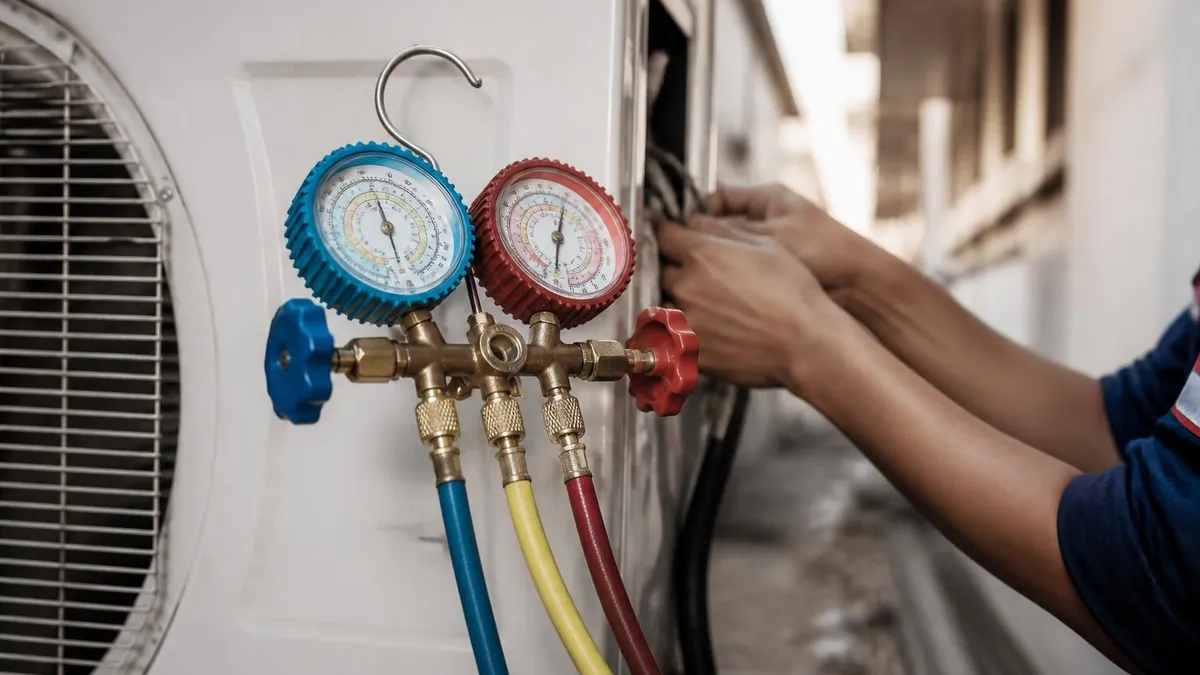
Under the Clean Air Act, knowingly venting refrigerants is a federal violation that can result in fines of up to $44,539 per day per violation. Any technician who purchases refrigerants in containers larger than two pounds must hold a valid EPA Section 608 certification — and enforcement actions have increased as the EPA intensifies refrigerant phasedown oversight. Before performing any service work involving refrigerant, verify your certification is current and that your recovery equipment meets current standards.
Long-term success in the HVAC trade requires deliberate attention to professional reputation, technical currency, and physical sustainability. The technicians who thrive for decades in this field share several common traits: they invest continuously in training, they build genuine relationships with customers and employers, and they manage their physical health with the same discipline they bring to their diagnostic work. Understanding these dimensions early in a career can prevent the burnout and stagnation that limits the trajectory of many talented technicians.
Customer trust is the most valuable intangible asset a residential HVAC technician can build. Homeowners who trust their technician call back year after year, refer friends and neighbors, and accept maintenance agreement proposals without significant sales resistance. Building this trust requires consistent honesty — accurately diagnosing problems, providing fair estimates, and never recommending unnecessary repairs. Technicians known for integrity frequently develop loyal customer bases that follow them if they change companies or start their own business, providing a stable foundation that makes every career transition easier.
Technical currency — staying up to date with new equipment, refrigerants, and diagnostic techniques — is essential in a field that evolves as rapidly as HVAC. Manufacturers release new product lines every two to three years, efficiency standards are updated by ASHRAE and the Department of Energy on rolling cycles, and refrigerant regulations shift the chemical landscape on a decade-scale basis. Technicians who read industry publications, attend manufacturer training seminars, and actively seek exposure to unfamiliar equipment categories keep their knowledge fresh and maintain the diagnostic confidence that makes them genuinely valuable in any service situation.
Physical health management is a topic rarely discussed in HVAC trade training but critically important over a long career. The combination of heavy lifting, repetitive overhead work, confined space entry, and temperature extremes creates real injury risk for technicians who ignore ergonomic principles and recovery practices.
Using proper lifting mechanics, investing in quality knee pads and support equipment, maintaining a healthy body weight, and taking regeneration seriously during off-peak seasons all contribute to career longevity. Many experienced technicians who neglected physical conditioning in their twenties and thirties find themselves managing chronic back, knee, or shoulder problems that limit their capability in their forties and fifties.
Mentorship — both receiving it and providing it — accelerates career development in the HVAC trade. New technicians who attach themselves to an experienced mentor gain access to practical diagnostic wisdom, customer management techniques, and shortcut knowledge about specific equipment behaviors that can take years to accumulate independently.
Experienced technicians who mentor apprentices reinforce their own knowledge, develop leadership skills that qualify them for supervisory roles, and build a professional reputation within their company and community. Mentorship relationships in the trades are among the most efficient knowledge transfer mechanisms available, and actively seeking or providing them is a high-return career investment.
Networking within the local HVAC community opens doors that technical skill alone cannot unlock. Relationships with equipment distributors, building inspectors, property managers, and other trade contractors create referral networks that feed a steady stream of work opportunities. Industry association membership — through organizations like ACCA (Air Conditioning Contractors of America) or state-level mechanical contractors associations — provides access to technical resources, legislative advocacy on licensing issues, and peer relationships that can be invaluable when navigating complex compliance questions or seeking business expansion opportunities. The HVAC trade, like most skilled trades, rewards those who invest in community as well as competency.
Finally, financial literacy separates technicians who build lasting economic security from those who trade labor for wages without accumulating wealth. Understanding how to evaluate job offers for total compensation, how to manage tax obligations as a self-employed contractor, how to structure a maintenance agreement business for recurring revenue, and how to leverage equipment manufacturer financing programs for customer sales are all skills that compound over a career.
The HVAC trade provides exceptional earning opportunities — maximizing those opportunities requires not just technical mastery but also the business and financial intelligence to convert skilled labor into lasting financial security for yourself and your family.
Preparing for HVAC licensing exams and industry certifications requires a structured study approach that combines theoretical review with hands-on application practice. Many candidates underestimate the breadth of the exam content — state contractor exams routinely cover load calculation methodology, duct design principles, electrical code compliance, refrigerant regulations, and business law in addition to core mechanical system knowledge. Building a study plan that allocates time to each domain, rather than focusing only on familiar topics, is the key to first-attempt exam success.
Practice testing is the most effective single study technique for HVAC certification exams. Research on exam performance consistently shows that students who regularly answer practice questions outperform those who only review notes and textbooks, because active retrieval strengthens memory and exposes knowledge gaps while there is still time to address them. Free and paid HVAC practice tests are available online for EPA 608, NATE, and many state licensing exams. Committing to a minimum of 100 practice questions per week in the month before an exam is a reasonable target for most candidates working full-time.
Understanding why incorrect answers are wrong is as important as memorizing correct answers. When you miss a practice question, trace the error back to its root cause: Was it a conceptual misunderstanding about how a refrigerant cycle behaves? A gap in electrical code knowledge? A miscalculation in an airflow problem?
Each missed question is a targeted diagnostic of where additional study time will generate the highest return. Building a personal error log during practice test sessions — noting the topic, question type, and your mistake — helps focus review sessions on real weaknesses rather than comfortable material you already know well.
Time management during the actual exam is a skill that practice testing also develops. State contractor exams often allow three to four hours for 100 to 150 questions, which seems generous until candidates encounter calculation-heavy sections requiring Manual J or Manual D methodology. Working through practice exams under timed conditions trains your pacing instincts, helps you identify which question types to attempt first, and reduces the test-day anxiety that degrades performance for many candidates. Aim to simulate actual exam conditions during at least two or three of your full practice sessions — same time limit, no notes, no interruptions.
Study groups are underutilized by HVAC technicians preparing for licensing exams. Reviewing material with two or three peers preparing for the same exam surfaces gaps in your understanding that solo study misses — when you have to explain a concept to someone else, you quickly discover whether you truly understand it or have only surface familiarity. Many community college HVAC programs and local contractor associations facilitate informal study groups, and connecting with other exam candidates through online HVAC forums and trade association social media groups can help you build one independently.
Physical and mental preparation for exam day matters more than most candidates realize. Arriving well-rested, adequately fed, and emotionally calm significantly outperforms arriving exhausted from last-minute cramming. Research on test performance shows that sleep deprivation of even two to three hours substantially impairs working memory and problem-solving ability — exactly the cognitive capacities most tested by technical licensing exams. In the final week before your exam, prioritize sleep and light review over marathon study sessions, trust the preparation you have completed, and approach the test with the calm confidence of a technician who has put in the work.
After passing your licensing exam, the learning never really stops in the HVAC trade. The professionals who remain at the top of their field treat every service call as a learning opportunity, every manufacturer training seminar as a chance to deepen expertise, and every interaction with a peer or mentor as a window into knowledge they have not yet acquired.
The HVAC trade rewards those who combine technical excellence with continuous growth, customer integrity, and professional community engagement. Whether you are just beginning your journey or looking to advance to a new level, the investment you make in mastering this trade will pay dividends for the entire arc of your career.
HVAC Questions and Answers

Ameristar HVAC: Complete Guide to Units, Reliability, Costs, and Buyer Considerations
Residential HVAC: Systems, Selection, and Maintenance Basics
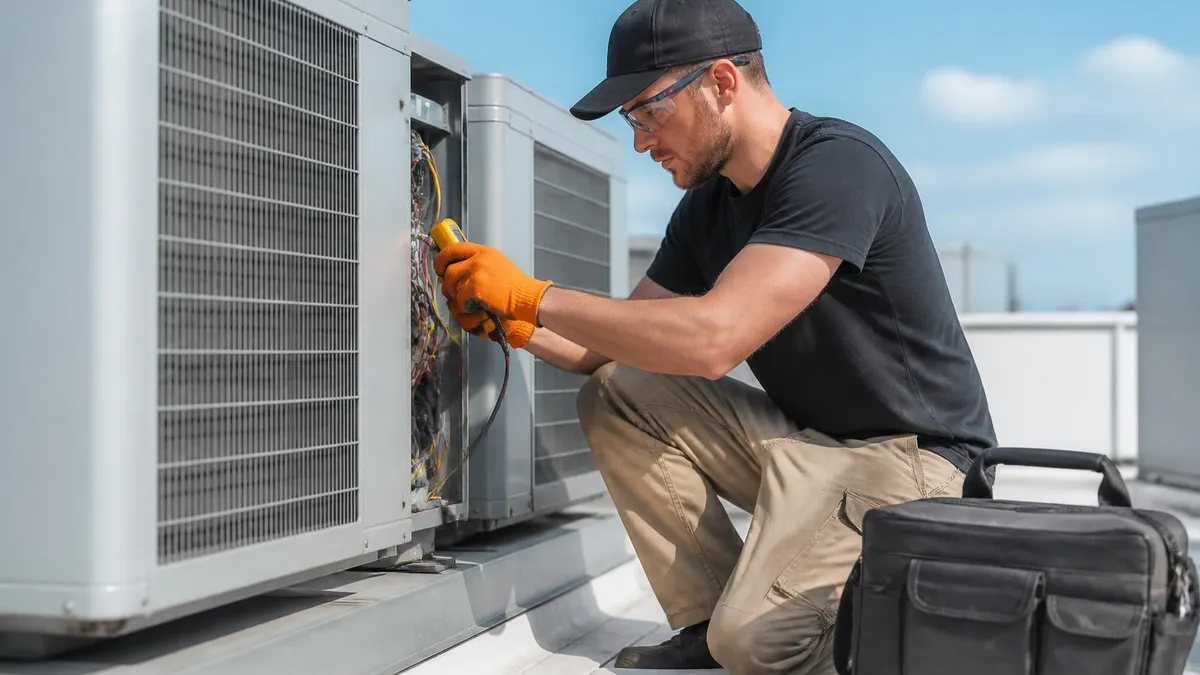
HVAC Industry Trends 2026: The Complete Guide to Heat Pumps, Refrigerant Changes, Smart Controls, and Workforce Shifts Reshaping Heating and Cooling
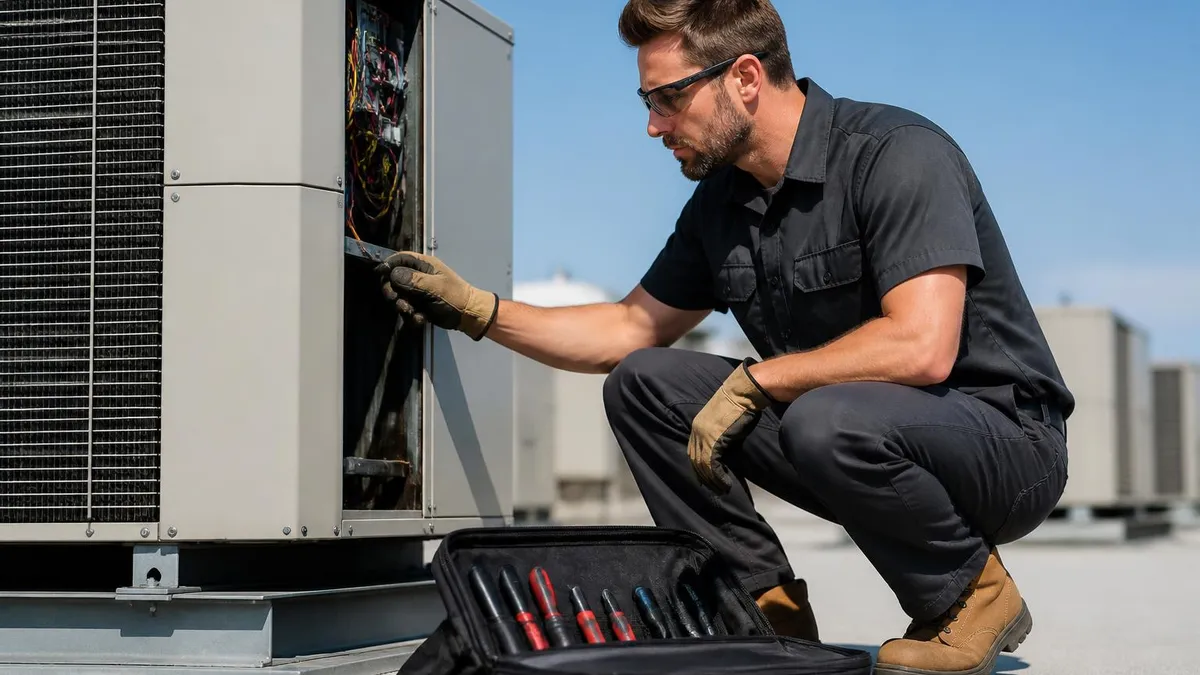
HVAC Advertising: The Complete Playbook for Generating Leads, Booking Calls, and Growing Your Heating and Cooling Business

HVAC License: State Requirements, EPA 608 and Career Path Guide
About the Author

NATE Certified HVAC Technician & Licensing Exam Trainer
Universal Technical InstituteMike Johnson is a NATE-certified HVAC technician and EPA 608 universal-certified refrigerant handler with a Bachelor of Science in HVAC/R Technology. He has 19 years of commercial and residential HVAC installation and service experience and specializes in preparing technicians for NATE certification, EPA 608, A2L refrigerant safety, and state HVAC contractor licensing examinations.