
Heat Pumps vs HVAC: What's the Difference and Which System Is Right for Your Home?
Heat pumps vs HVAC systems explained — costs, efficiency, climate fit, and which to choose in 2026 October. 💡 Make the right call before you buy.

When homeowners start shopping for a new comfort system, the debate over heat pumps vs HVAC quickly becomes one of the most confusing decisions they face. Both systems control indoor temperature, both can heat and cool, and both come in a wide range of price points — yet they work on fundamentally different principles, suit different climates, and carry very different long-term costs. Understanding the distinction between these two categories is the single most important step before spending thousands of dollars on equipment that will run in your home for fifteen years or more.
Traditional HVAC systems — which stands for Heating, Ventilation, and Air Conditioning — typically pair a gas furnace with a central air conditioner. The furnace burns natural gas or propane to generate heat during winter months, while a separate refrigerant-based air conditioner handles cooling in summer. These two-component setups are what most American homes built before 2010 rely on, and they represent the dominant system type across the Midwest, Northeast, and mountain regions where winters are cold and heating loads are heavy.
A heat pump, by contrast, is a single all-electric device that moves heat rather than generating it. In winter it extracts thermal energy from outdoor air — even at temperatures well below freezing — and pumps that energy indoors. In summer the process reverses, pulling heat from inside the home and releasing it outdoors, exactly like a standard air conditioner. This ability to do both jobs with one piece of equipment is why heat pumps have surged in popularity and why federal incentives under the Inflation Reduction Act now offer up to $2,000 in tax credits for qualifying installations.
Efficiency is where heat pumps really shine. A gas furnace, no matter how well engineered, converts fuel to heat at 80–98% efficiency — meaning some energy is always lost in combustion. A heat pump moves three to five units of heat energy for every one unit of electrical energy it consumes, producing effective efficiency ratings of 200–500%. This coefficient of performance advantage translates directly into lower monthly utility bills in mild to moderate climates, which is one reason states like California, the Pacific Northwest, and the Southeast have seen adoption rates climb sharply over the past five years.
That said, heat pumps are not universally better than conventional HVAC. In regions where winter temperatures regularly drop below 15°F — think Minnesota, Wisconsin, upstate New York, and the high-altitude West — older heat pump technology struggled to keep up with heating demand without expensive supplemental electric resistance strips. Cold-climate heat pumps introduced after 2018 have dramatically improved performance at low temperatures, with some models rated to -22°F, but the installed cost premium and the local electricity rate structure still matter enormously for the total-cost-of-ownership calculation.
For a deeper look at how fan coil units integrate with both heat pump and traditional HVAC configurations, see our guide on heat pump vs hvac system architectures, which covers zoning, duct requirements, and hydronic versus forced-air delivery methods in practical detail.
This article breaks down every major dimension of the heat pump versus HVAC comparison: how each system works mechanically, what they cost to install and operate, which climates favor each option, how they interact with solar panels and smart thermostats, and what questions to ask a contractor before signing any proposal. By the end, you will have a clear framework for making the choice that fits your home, your budget, and your long-term energy goals.
Heat Pumps vs HVAC by the Numbers
How Heat Pumps and Traditional HVAC Systems Work
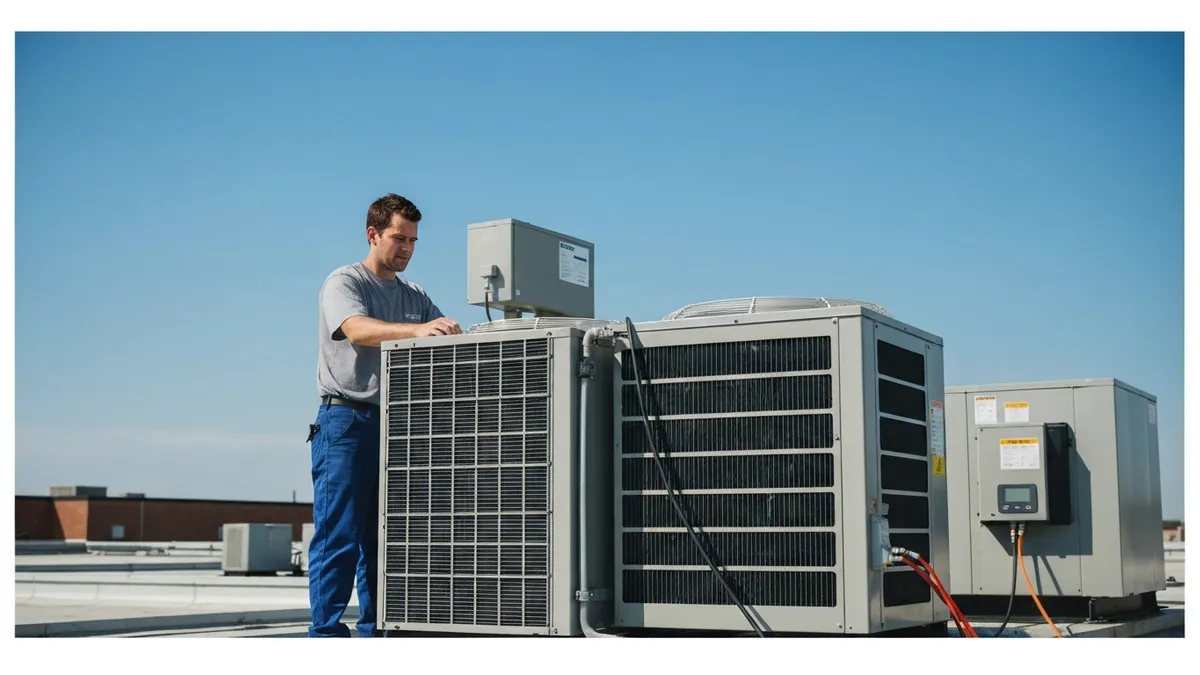
Extracts heat from outdoor air using a refrigerant cycle and moves it indoors in winter, reversing the process in summer. A single outdoor unit and air handler handle both heating and cooling with no combustion involved.
The classic American HVAC setup pairs a gas or propane furnace for winter heat with a separate central air conditioner for cooling. Two distinct systems share ductwork but operate independently on different energy sources.
Uses buried ground loops to exchange heat with the stable 50–55°F soil temperature year-round. Highest efficiency of any system type but requires significant excavation and upfront investment, typically $15,000–$30,000 installed.
Ductless variant with one outdoor compressor serving one to eight indoor air handlers. Ideal for additions, garages, older homes without ducts, or zoning flexibility. Allows room-by-room temperature control.
Combines an electric heat pump with a gas furnace backup. The heat pump handles mild weather efficiently; the furnace kicks in below a set outdoor temperature threshold, balancing efficiency with cold-weather reliability.
Installation costs are one of the first numbers homeowners compare when evaluating any HVAC upgrade, and the spread between system types can be significant. A ducted air-source heat pump installed in a home that already has ductwork typically runs between $3,500 and $7,500 for equipment and labor combined, depending on the unit's capacity, efficiency rating (SEER2/HSPF2 ratings), and local labor rates. If ductwork needs to be added or substantially repaired, costs climb by $2,000–$6,000 more, which is a critical variable many online calculators fail to account for properly.
A traditional split system — gas furnace plus central AC — usually runs $5,000–$12,000 installed for a full replacement, but this wide range reflects meaningful differences in furnace efficiency tier (80% AFUE vs. 96% AFUE), air conditioner SEER2 rating, and whether the job requires electrical panel work, gas line upgrades, or new refrigerant line sets. Homeowners replacing only a failed component rather than the full system can spend significantly less, but HVAC technicians generally recommend matching equipment ages to avoid efficiency and warranty complications.
Operating costs present a more nuanced picture that depends heavily on local utility rates. Natural gas in the United States averages roughly $1.20 per therm as of early 2026, while electricity averages about $0.16 per kilowatt-hour nationally — though both figures vary enormously by region.
A household that heats primarily with gas at low rates per BTU may find that a high-efficiency gas furnace actually costs less to operate per winter than a heat pump running on expensive electricity, even accounting for the pump's superior COP. Running detailed energy models with local utility rates is essential before declaring either option the clear economic winner.
Maintenance costs tend to favor heat pumps slightly over the long term. Gas furnaces require annual combustion inspections, heat exchanger checks, and occasional burner cleaning — tasks best performed by licensed technicians and costing $80–$150 per visit. Heat pumps need twice-yearly tune-ups (one before heating season, one before cooling season) at similar per-visit prices, but they eliminate the combustion components that most commonly fail: heat exchangers, ignitors, gas valves, and flue systems. The absence of a flame also removes carbon monoxide risk, which is a meaningful safety benefit in tightly sealed modern homes.
Federal, state, and utility incentives have shifted the cost calculus substantially since 2022. The Inflation Reduction Act's Section 25C tax credit covers 30% of heat pump installation costs up to $2,000 per year. The separate Section 179D and High-Efficiency Electric Home Rebate Act (HEEHRA) programs add point-of-sale rebates of up to $8,000 for qualifying low- and moderate-income households.
State programs stack on top of federal credits in many cases — New York, California, Massachusetts, and Colorado each offer additional rebates that can push total incentive values above $10,000 for eligible installations. Gas equipment does not qualify for most of these programs.
Financing matters too, especially for homeowners who do not have $5,000–$10,000 in liquid savings for a system upgrade. Most major HVAC manufacturers offer 12- to 60-month promotional financing, and specialized green energy lenders like Mosaic and Dividend Finance offer longer-term loans at competitive rates specifically for heat pump projects.
Some utilities run on-bill financing programs that repay the cost through monthly energy savings, making upfront capital a non-issue for qualifying customers. Understanding the full financing landscape is covered in more depth in our guide to options for homeowners looking to Finance a New HVAC System: 2026 Loans, 0% APR, and Rebates.
One cost category that surprises many homeowners is the electrical infrastructure upgrade sometimes required for heat pump installations. Standard heat pumps for a 2,000-square-foot home typically require a 240-volt, 30–50 amp dedicated circuit. Homes with older 100-amp electrical panels — common in houses built before 1980 — may need a panel upgrade to 200 amps before a heat pump can be added, adding $1,500–$3,000 to the total project cost. This is a legitimate expense to factor into any comparison with gas equipment, which generally does not require electrical panel changes.
Climate Considerations: Where Heat Pumps and HVAC Excel
In the Southeast, Pacific Coast, and parts of the Southwest where winter temperatures rarely fall below 25°F, heat pumps are the clear efficiency winner. The mild heating load means the system spends most of its operating hours in a range where COP values of 3.0–4.5 are easily achieved, dramatically undercutting what a gas furnace costs per BTU delivered. States like Florida, Georgia, and the Carolinas have seen heat pump adoption exceed 60% of new residential installations precisely because the climate suits the technology so well.
In these same mild regions, cooling season dominates the annual energy budget — often six to eight months of meaningful AC demand. Because a heat pump is simply a reversible air conditioner, it handles summer cooling at efficiency ratings comparable to or better than the best dedicated central AC units on the market. Homeowners in mild climates who choose a heat pump over a split gas-plus-AC system are essentially getting equivalent cooling performance while also eliminating their gas heating costs and qualifying for federal tax credits — a straightforward win in most financial scenarios.
Heat Pump vs Traditional HVAC: Pros and Cons
- +Heat pumps deliver 300–500% efficiency, dramatically cutting heating energy costs in moderate climates
- +Single system handles both heating and cooling, reducing equipment, maintenance, and replacement costs
- +No combustion means zero carbon monoxide risk and no gas line required — safer for tightly sealed homes
- +Qualifies for up to $2,000 federal tax credit plus state and utility rebates under current IRA rules
- +Compatible with solar PV systems, enabling near-zero net energy heating and cooling in many climates
- +Cold-climate models now operate reliably down to -22°F, expanding the viable geography significantly
- −Higher upfront equipment cost than a standalone air conditioner, especially for whole-home ducted systems
- −May require electrical panel upgrade to 200 amps in older homes, adding $1,500–$3,000 to project cost
- −Efficiency drops significantly at extreme outdoor temperatures, raising operating costs in harsh winters
- −All-electric operation exposes homeowners to electricity price volatility and grid outage risk without backup
- −Gas furnaces heat air faster and deliver higher supply temperatures, which some occupants prefer in cold climates
- −Contractor experience varies widely — poor installation of refrigerant charge or airflow degrades performance significantly
Pros and Cons at a Glance
| Pros | Cons |
|---|---|
| Single system handles both heating and cooling, reducing equipment, maintenance, and replacement costs | Higher upfront equipment cost than a standalone air conditioner, especially for whole-home ducted systems |
| No combustion means zero carbon monoxide risk and no gas line required — safer for tightly sealed homes | Efficiency drops significantly at extreme outdoor temperatures, raising operating costs in harsh winters |
| Compatible with solar PV systems, enabling near-zero net energy heating and cooling in many climates | All-electric operation exposes homeowners to electricity price volatility and grid outage risk without backup |
Decision Checklist Before Choosing a Heat Pump or HVAC System
- ✓Determine your climate zone (IECC climate zones 1–4 generally favor heat pumps; zones 5–7 require careful analysis).
- ✓Get current natural gas and electricity rates from your utility bills and calculate cost per BTU for each fuel.
- ✓Inspect your electrical panel to confirm 200-amp service or budget for an upgrade if it is 100 amps.
- ✓Assess your existing ductwork condition — leaky or undersized ducts reduce efficiency for both system types.
- ✓Research current federal, state, and utility rebates available in your ZIP code before requesting contractor quotes.
- ✓Ask contractors to perform a Manual J load calculation rather than sizing by square footage rules of thumb.
- ✓Compare at least three bids and verify each contractor is NATE-certified and licensed in your state.
- ✓Evaluate whether a dual-fuel hybrid system makes sense given your local electricity-to-gas price ratio.
- ✓Confirm your home's insulation and air sealing level — poor building envelope makes any system less effective.
- ✓Ask about the manufacturer's warranty terms: most heat pumps carry 10-year parts warranties on compressors.
Calculate Your Local Electricity-to-Gas Ratio Before Choosing
Divide your electricity cost per kWh by your gas cost per therm, then divide by 29.3 (therms to kWh conversion). If the result is below 3.0, a heat pump is almost certainly cheaper to operate than a gas furnace at equal efficiency ratings. Above 4.0, gas may retain an operating cost edge in cold climates. Most US households currently fall below 3.5, making heat pumps economically competitive for the majority of American homes when federal incentives are factored in.
The integration of heat pumps with solar photovoltaic systems represents one of the most compelling arguments for choosing an all-electric heat pump over a hybrid or gas-based HVAC setup. When a home generates its own electricity from rooftop solar panels, every unit of that clean energy can offset heat pump operating costs directly — in effect making heating and cooling free during daylight hours and dramatically reducing nighttime grid consumption. Homes with solar-plus-heat-pump combinations in states like California, Colorado, and Massachusetts regularly achieve net energy costs for heating and cooling that approach zero on an annual basis.
Smart thermostat compatibility is excellent for both system types, but heat pumps offer some unique optimization opportunities that traditional HVAC systems cannot match. Because heat pumps operate most efficiently at moderate outdoor temperatures, smart systems can pre-condition a home during midday hours — when solar production peaks and grid electricity is often cheapest under time-of-use rate plans — and then coast through evening peak pricing hours with minimal equipment runtime. Some advanced systems like the Ecobee Premium and Google Nest Learning Thermostat support heat pump-specific algorithms that factor in outdoor temperature, indoor thermal mass, and utility rate schedules simultaneously.
Zoning capabilities also differ between system types in ways that matter for comfort and efficiency. Traditional ducted systems can be zoned with damper systems that direct airflow to different parts of the home, but these systems add complexity and can create static pressure problems if not designed carefully. Mini-split heat pumps offer inherent room-by-room zoning because each indoor unit operates independently under its own thermostat, allowing different temperatures in different zones without duct modification. For homes with varying occupancy patterns — bedrooms used only at night, home offices occupied during day — this zoning flexibility translates into meaningful energy savings.
Air quality and humidity control represent another dimension where the two system types behave differently. Heat pumps in cooling mode dehumidify indoor air through the refrigerant cycle exactly like a standard air conditioner, typically achieving 30–50% relative humidity in summer — the comfortable range most occupants prefer.
In heating mode, however, heat pumps distribute warm air without adding moisture, which can make indoor air feel dry during winter in very cold climates. Traditional gas furnaces have the same limitation in heating mode, so neither system type inherently solves winter humidity issues; both may benefit from a whole-home humidifier in dry climates or older leaky homes.
Noise levels are a legitimate comfort consideration that contractor proposals rarely highlight. Standard single-stage heat pumps and air conditioners cycle on and off at full capacity, creating noticeable noise surges each time the compressor starts. Modern variable-speed (inverter-driven) heat pumps modulate compressor speed continuously, maintaining near-constant comfort while operating much more quietly — often as low as 57–62 decibels at the outdoor unit, comparable to a normal conversation. The premium for variable-speed equipment is typically $500–$1,500 but pays back through efficiency gains and reduced wear on compressor components over time.
Refrigerant type is an emerging consideration as the HVAC industry transitions away from R-410A — the dominant refrigerant since the early 2000s — toward lower-global-warming-potential alternatives like R-32 and R-454B under EPA Section 608 regulations taking effect in 2025 and 2026. Systems using the new refrigerants are becoming standard in new equipment, but technicians must be trained and certified to handle them, and service costs may be higher in the near term as the industry transitions. When comparing system quotes, verify what refrigerant the proposed equipment uses and confirm your contractor is certified for that refrigerant type.
Indoor air handler placement and duct design affect performance significantly for both system types, but heat pumps have a specific sensitivity: undersized or leaky ductwork causes heat pumps to cycle more frequently and achieve lower effective COP than their rating would suggest. The National Comfort Institute recommends duct systems deliver at least 400 cubic feet per minute of airflow per ton of equipment capacity for optimal heat pump performance. If your contractor does not mention duct testing or airflow measurement during the proposal process, consider that a red flag worth addressing before any equipment is installed.
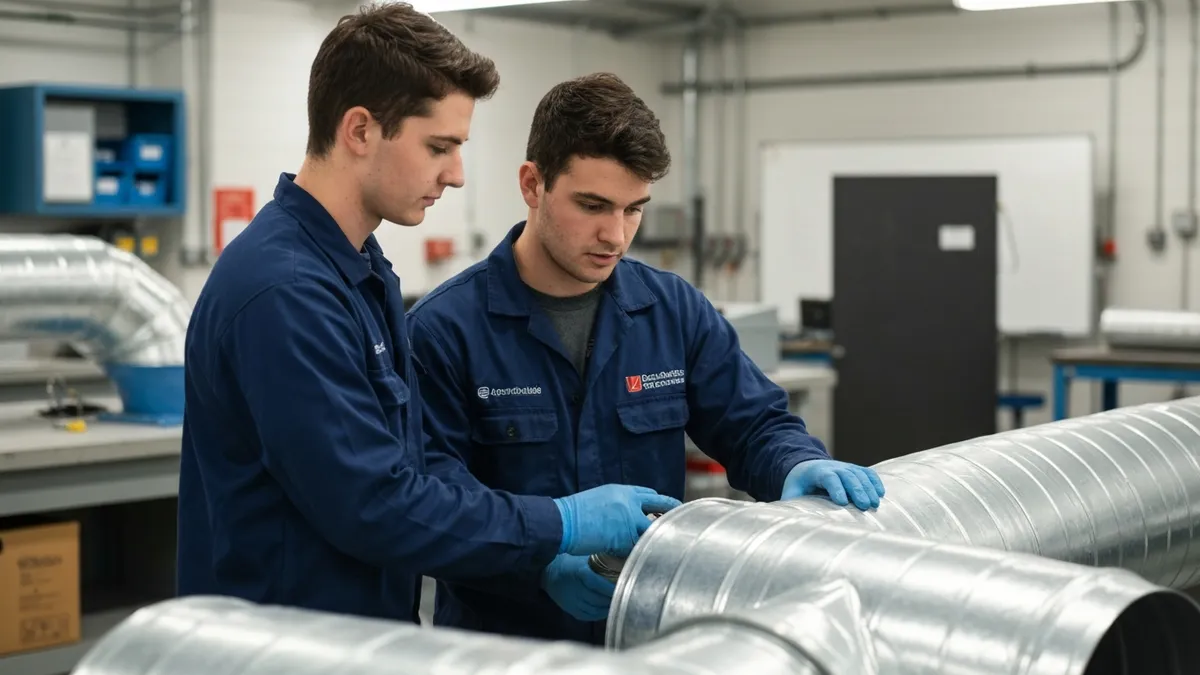
Many states require HVAC contractors to hold specific licenses for refrigerant handling (EPA Section 608 certification) and for gas work (separate gas fitter or plumber license in many jurisdictions). Heat pump installation quality is highly dependent on correct refrigerant charge, airflow, and electrical connections — errors in any of these reduce efficiency and shorten equipment life. Always verify NATE certification, state license number, and current insurance before authorizing any work, and request a copy of the load calculation the contractor used to size the equipment.
Choosing between a heat pump and a traditional HVAC system ultimately comes down to a clear-eyed evaluation of five variables: your local climate, your local utility rates, your home's existing infrastructure, the incentives available in your area, and your long-term energy goals. No single system type is universally superior — the right answer depends on how these five factors interact in your specific situation, which is why generic online calculators often produce misleading conclusions when local conditions diverge from national averages.
For homeowners in IECC climate zones 1 through 4 — roughly the southern half of the United States plus the Pacific Coast — an all-electric heat pump is almost always the economically optimal choice when federal and state incentives are factored in. The heating load is modest, the efficiency advantage is substantial, the infrastructure requirements are manageable, and the cooling performance is equal to or better than the alternatives. The remaining question in these zones is typically which heat pump configuration makes sense: ducted central system, ductless mini-split, or a hybrid approach using existing gas backup infrastructure.
For homeowners in climate zones 5 through 7 — the Upper Midwest, Northeast, mountain West, and most of Canada — the analysis is more nuanced. A well-selected cold-climate heat pump from a manufacturer like Mitsubishi, Bosch, Carrier, or Daikin can still be the right choice, but the equipment selection and installation quality matter far more than in milder climates.
The dual-fuel hybrid configuration often makes the most sense financially: capture heat pump efficiency for 70–80% of annual heating hours while retaining gas reliability for the coldest days. Working with a contractor who has specific cold-climate heat pump installation experience is particularly important in these regions.
Whole-home versus partial-home electrification is a question that applies specifically to homeowners who have existing gas HVAC and are considering whether to convert fully to electric or keep some gas appliances. HVAC represents the largest portion of residential energy consumption — typically 45–55% of total energy use — so electrifying the heating and cooling system first makes the most sense from an environmental and economic standpoint. Gas water heaters (the second-largest load) and gas cooking appliances are separate decisions that do not need to be resolved simultaneously with the HVAC choice.
Contractor selection is arguably the single most impactful decision in the entire process. Equipment quality matters, but a well-designed installation of a mid-tier heat pump will consistently outperform a poorly installed premium unit. Key signs of a high-quality HVAC contractor include: performing a full Manual J load calculation before quoting equipment size, testing existing duct system airflow and leakage, discussing refrigerant type and demonstrating EPA certification, providing detailed written proposals that specify equipment model numbers and efficiency ratings, and offering a multi-year labor warranty in addition to the manufacturer's parts warranty.
Asking the right questions during the contractor selection process is covered in detail in our resource on HVAC School — Programs, Costs, and Career Paths in 2026, which explains what licensed HVAC technicians are trained to do and what technical competencies to look for when evaluating contractor credentials. Understanding the training and certification standards in your state helps you ask better questions and recognize quality proposals more confidently.
The environmental argument for heat pumps is strong and growing stronger as the US electrical grid decarbonizes. The EPA's eGRID database shows the national average grid emission factor falling steadily as coal retires and wind, solar, and battery storage capacity grows.
In states where the grid is already more than 50% renewable — California, New York, Washington, Oregon, New Mexico — an electric heat pump produces substantially lower lifecycle carbon emissions than even a high-efficiency gas furnace from day one of installation. In Midwest states still heavily dependent on coal generation, the carbon advantage narrows but does not disappear entirely when accounting for heat pump efficiency multipliers.
Before requesting any contractor quotes, gather the information that will make those conversations faster and more productive. Pull your last 12 months of utility bills and calculate average monthly energy costs for heating season versus cooling season. This baseline tells you how much you currently spend and gives you a realistic benchmark for evaluating contractor claims about projected savings. Contractors who cite percentage savings without knowing your actual baseline are speculating, not calculating.
Measure your home's square footage on each floor and note where rooms feel consistently uncomfortable — too hot in summer, too cold in winter, or poorly distributed airflow. These are symptoms of either undersized equipment, poor duct design, or building envelope issues, and they will affect which system and configuration a contractor should recommend. A contractor who does not ask about comfort complaints before recommending equipment may be prioritizing simplicity over accuracy in the proposal.
Check your attic insulation level and look for obvious air sealing gaps around electrical penetrations, plumbing vents, and recessed lighting fixtures. The Department of Energy recommends R-38 to R-60 insulation in most US climate zones — attics under R-19 are significantly under-insulated and will cause any HVAC system to work harder than necessary. Addressing insulation before or concurrent with an HVAC upgrade maximizes the efficiency gain and may allow a smaller, less expensive system to be installed than a poorly insulated home would require.
Understand what permits your jurisdiction requires for HVAC work and insist that your contractor pull them. Permitted work requires inspection, which provides independent verification that the installation meets code minimum standards. Unpermitted HVAC work can create problems when selling a home, complicate insurance claims, and — in the case of gas work — create genuine safety risks. Any contractor who suggests skipping the permit process to save time or money should be viewed with serious skepticism regardless of how low their quoted price is.
Consider the timing of your purchase relative to both equipment availability and incentive program funding. Federal tax credits under the IRA do not have expiration dates as currently structured, but state and utility rebate programs often run out of funding before year end. If your local utility offers a point-of-sale rebate for heat pump installations, check the program's funding status before summer peak season when demand for HVAC equipment and rebates simultaneously spikes. Early spring and late fall typically offer both better contractor availability and faster rebate processing.
If you are replacing a failed system under emergency conditions — the heat is out in January or the AC failed in August — resist the pressure to accept the first available equipment without comparison.
Many HVAC failures are not as urgent as they feel in the moment: an interim portable unit or electric space heater can provide temporary comfort while you spend one to two days getting multiple quotes and verifying the proposed equipment is the right match for your home. Emergency decisions made under physical discomfort pressure account for a significant share of poor system selections and overpayments in the HVAC industry.
Finally, plan for the long term by registering your equipment warranty immediately after installation, scheduling your first maintenance visit at 12 months, and keeping records of every service call and repair. A well-documented maintenance history improves the system's resale value as a home feature and provides essential context if a warranty claim ever becomes necessary.
Set a calendar reminder to replace or clean filters on the manufacturer's recommended schedule — typically every 30–90 days depending on filter MERV rating and household pet and dust levels — since clogged filters are the single most common cause of unnecessary efficiency loss and equipment stress in residential HVAC systems.
Sample HVAC Practice Questions
Try these questions from our free HVAC practice tests. The correct answer and an explanation follow each question.
What is the primary difference between a two-pipe and a four-pipe fan coil heat pump system in commercial applications?
- A. Two-pipe systems use refrigerant while four-pipe systems use water
- B. Two-pipe systems provide either heating or cooling at one time; four-pipe systems can provide both simultaneously to different zones
- C. Two-pipe systems are only used for cooling; four-pipe systems are only used for heating
- D. Two-pipe systems require a reversing valve; four-pipe systems do not
Answer: B. Two-pipe systems provide either heating or cooling at one time; four-pipe systems can provide both simultaneously to different zones
Four-pipe systems have separate supply and return lines for both hot and chilled water, allowing simultaneous heating and cooling in different zones, while two-pipe systems switch seasonally.
In a forced-air system, what is 'heat rise' and why does it matter?
- A. The rate at which outdoor temperature drops during a cold snap
- B. The temperature difference between supply air and return air across the heat exchanger
- C. The increase in static pressure as filters become dirty
- D. The thermal expansion rate of the heat exchanger metal
Answer: B. The temperature difference between supply air and return air across the heat exchanger
Heat rise is the supply air temperature minus the return air temperature; it must stay within the furnace manufacturer's specified range to prevent overheating and damage.
Which thermodynamic property measures the total heat content of a substance, including both sensible and latent heat?
- A. Entropy
- B. Enthalpy
- C. Specific volume
- D. Internal energy
Answer: B. Enthalpy
Enthalpy (H) represents the total heat content and is used on pressure-enthalpy (P-H) diagrams to analyze refrigeration cycles.
What is the difference between an HRV (Heat Recovery Ventilator) and an ERV (Energy Recovery Ventilator)?
- A. HRV transfers only sensible heat; ERV transfers both sensible heat and moisture (latent energy)
- B. HRV is for commercial use; ERV is for residential use only
- C. HRV uses refrigerant; ERV uses thermal wheels
- D. HRV improves IAQ; ERV improves energy efficiency only
Answer: A. HRV transfers only sensible heat; ERV transfers both sensible heat and moisture (latent energy)
An HRV transfers only sensible heat (temperature) between outgoing and incoming air streams. An ERV transfers both sensible heat and latent heat (moisture), making it more appropriate for climates where humidity control matters.
HVAC Questions and Answers
FCU HVAC: The Complete Guide to Fan Coil Units, How They Work, Where They Excel, and How to Choose the Right System
Finance a New HVAC System: 2026 Loans, 0% APR, and Rebates

HVAC Duct Repair: Common Issues, Costs, and DIY vs Professional

HVAC School -- Programs, Costs, and Career Paths in 2026
HVAC Advertising: The Complete Playbook for Generating Leads, Booking Calls, and Growing Your Heating and Cooling Business
About the Author

NATE Certified HVAC Technician & Licensing Exam Trainer
Universal Technical InstituteMike Johnson is a NATE-certified HVAC technician and EPA 608 universal-certified refrigerant handler with a Bachelor of Science in HVAC/R Technology. He has 19 years of commercial and residential HVAC installation and service experience and specializes in preparing technicians for NATE certification, EPA 608, A2L refrigerant safety, and state HVAC contractor licensing examinations.