
HVAC Replacement Services: Complete Guide to System Replacement, Costs, and What to Expect
🔎 HVAC replacement services guide: costs, timing, sizing, permits, and what to expect from professional installers. Complete 2026 October homeowner roadmap.

hvac replacement leeds services represent one of the largest home investments most owners ever make, with full system swaps regularly ranging from $7,000 on the low end to well beyond $20,000 for high-efficiency setups with new ductwork. Unlike a quick repair call, a replacement is a planned project that touches refrigerant lines, electrical service, ductwork, drainage, and even building permits. Understanding what a real replacement looks like helps you avoid overpaying, dodge undersized equipment, and choose a contractor who treats the job as engineering rather than a parts swap.
The average residential HVAC system in the United States lasts 12 to 18 years for an air conditioner or heat pump and 15 to 25 years for a gas furnace. When systems creep past those windows, repairs stack up quickly and efficiency drops sharply. A 14-year-old air conditioner often runs at 60 to 70 percent of its original SEER rating because coils foul, compressors slow, and refrigerant charge drifts. At that point, replacement frequently pays for itself faster than another round of repairs.
Modern replacement projects also involve more decisions than systems sold a decade ago. Homeowners must weigh single-stage versus two-stage versus variable-speed compressors, R-410A phaseout and the shift to A2L refrigerants like R-454B, heat pump versus straight cooling, smart thermostats, and zoning. Federal tax credits under the Inflation Reduction Act and utility rebates also reshape the math, sometimes shaving $2,000 to $8,000 off the net cost when households qualify. Smart buyers map out incentives before signing.
Sizing is the single biggest technical variable on any replacement. Contractors who quote based on the existing system size alone often perpetuate the original mistake — research shows roughly half of U.S. homes have oversized cooling equipment. A proper Manual J load calculation accounts for insulation upgrades, window replacements, duct leakage, infiltration, and orientation. An oversized system short-cycles, fails to dehumidify, and wears out compressors years early. Right-sized equipment runs longer, quieter cycles and feels noticeably more comfortable.
Beyond the equipment itself, a replacement is also the only realistic chance to fix duct problems, add return grilles, seal supply boots, and upgrade refrigerant line sets. Studies by the U.S. Department of Energy estimate that 25 to 40 percent of conditioned air leaks out of typical duct systems, so installing premium equipment on broken ducts wastes a lot of money. Treat your replacement as a system project, not a box swap. You can dig deeper into duct work with our HVAC Duct Installation: Materials, Sizing, Sealing and Best Practice guide.
Permits and inspections matter even though some installers downplay them. Most U.S. jurisdictions require a mechanical permit for equipment changeouts, an electrical permit for new disconnects or service upgrades, and sometimes a separate gas permit. Skipping the permit can void manufacturer warranties, complicate home sales, and leave you holding the bag if a future leak or fire is tied back to an unpermitted install. A reputable contractor handles permitting as part of the project price.
This guide walks through everything that goes into a professional replacement: timing signals, sizing, equipment selection, the day-of-installation process, costs, warranties, rebates, common red flags, and a final checklist you can hand to bidders. Whether you are replacing a 20-year-old gas furnace, swapping a dying central air conditioner, or making the jump to a heat pump, the framework below will help you buy smarter and live more comfortably for the next 15 to 20 years.
HVAC Replacement by the Numbers
Clear Signals It Is Time to Replace
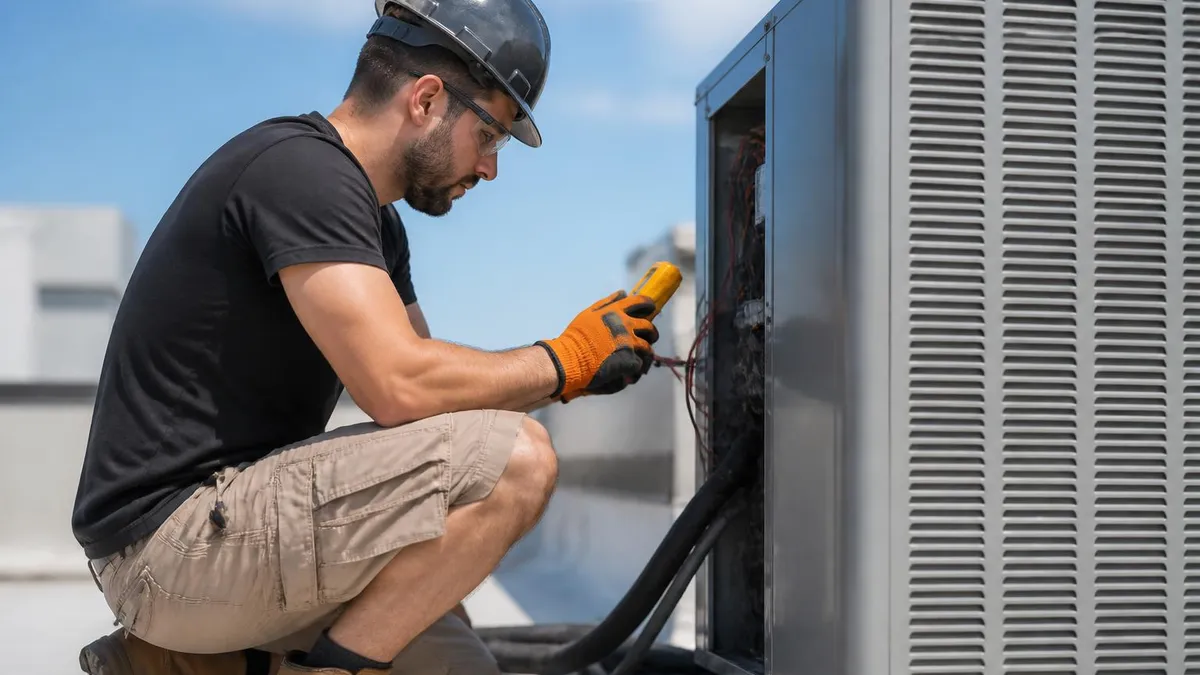
Air conditioners and heat pumps older than 12-15 years and furnaces older than 15-20 years usually cost more in repairs and lost efficiency than a planned replacement project would.
If a single repair costs more than half the price of a new system, or annual repairs hit $500 plus, replacement almost always wins on total cost of ownership over five years.
Older units still running R-22 face crippling refrigerant costs since the 2020 phaseout. Topping off a small leak can now cost $1,500 or more, making replacement the smarter long term call.
Hot and cold rooms, sticky summer air, constant cycling, or a system that runs nonstop on mild days all suggest the equipment is oversized, undersized, or simply worn beyond practical repair.
When your electric or gas bills climb 20 to 30 percent year over year without behavior changes, the system is losing efficiency. New equipment with proper sealing and sizing typically reverses the trend.
Sizing is where great HVAC replacement services separate themselves from box-swap installers. The industry standard is the ACCA Manual J load calculation, which uses your home's square footage, insulation R-values, window types, orientation, infiltration rate, occupancy, and climate zone to produce a precise BTU requirement. Manual S then matches that load to equipment specifications, and Manual D verifies duct capacity. Any contractor who skips these calculations is guessing, and guesses tend to favor oversized units because oversizing rarely produces obvious complaints — just hidden ones.
The general rule of thumb of 400 to 600 square feet per ton of cooling is only a starting point. A tight, well-insulated 2,400-square-foot home in a mild climate might need only 2.5 tons, while a leaky 1,800-square-foot home in Phoenix could need 4 tons. Replacing a 4-ton unit with another 4-ton unit "because that's what was there" perpetuates the original error and locks you into 15 more years of short-cycling, poor dehumidification, and higher bills. Always demand the load calculation in writing.
System efficiency ratings have also evolved. As of 2023, the Department of Energy uses SEER2, EER2, and HSPF2 ratings that better reflect real-world ductwork pressures. Minimum SEER2 for new central air in the southern U.S. is 14.3, and 13.4 in the northern region. High-efficiency systems now reach SEER2 22 or higher with variable-speed compressors. Each step up in efficiency adds cost but reduces annual operating expenses, and rebates often close the gap meaningfully for ratings of SEER2 16 and above.
Heat pump replacements deserve special attention in 2026. Cold-climate heat pumps now operate efficiently down to minus 13 degrees Fahrenheit, making them viable replacements for gas furnaces across much of the United States. The Inflation Reduction Act's 25C tax credit covers 30 percent of installation costs up to $2,000 for qualifying heat pumps, and the High-Efficiency Electric Home Rebate Act adds another $8,000 for eligible households. Combined with lower fuel costs, heat pumps often beat gas furnaces on total cost of ownership.
Variable-speed equipment is another decision point. Single-stage systems run at 100 percent or off, while two-stage systems offer roughly 65 percent and 100 percent. Variable-speed inverter compressors modulate between 25 and 100 percent in fine increments, matching output to actual load. The result is quieter operation, better humidity control, and 20 to 40 percent lower energy use. The premium is usually $1,500 to $3,500, but it pays back in three to seven years depending on climate and use patterns.
Do not overlook the indoor coil and blower. A new outdoor condenser matched to a 15-year-old indoor coil creates a mismatch that voids manufacturer warranties and undercuts efficiency. AHRI certification confirms that the matched system actually delivers its rated performance. Always ask for the AHRI certificate number and verify it on the AHRI directory before paying the deposit. Mixing brands or skipping coil replacement is a classic shortcut that costs homeowners thousands in future repairs and lost rebates.
Finally, plan ductwork as part of the replacement scope. Even the best $15,000 system performs like a $5,000 system on leaky, undersized ducts. Pressure tests, mastic sealing, R-8 insulation on attic runs, and proper return-air sizing make a measurable difference. Routine upkeep matters too — our hvac maintenance leeds overview explains how to protect your new investment from day one with simple seasonal practices.
HVAC Practice Test Questions
Prepare for the HVAC - Heating Ventilation and Air Conditioning exam with our free practice test modules. Each quiz covers key topics to help you pass on your first try.
HVAC Air Conditioning
HVAC Exam Questions covering Air Conditioning. Master HVAC Test concepts for certification prep.
HVAC Code Compliance
Free HVAC Practice Test featuring Code Compliance. Improve your HVAC Exam score with mock test prep.
HVAC Electrical Controls
HVAC Test Prep for Electrical Controls. Practice HVAC Quiz questions and boost your score.
HVAC Energy Efficiency
HVAC Questions and Answers on Energy Efficiency. Free HVAC practice for exam readiness.
HVAC Heating Systems
HVAC Mock Test covering Heating Systems. Online HVAC Test practice with instant feedback.
HVAC Load Calculations
Free HVAC Quiz on HVAC Load Calculations. HVAC Exam prep questions with detailed explanations.
HVAC Tools and Equipment
HVAC Practice Questions for HVAC Tools and Equipment. Build confidence for your HVAC certification exam.
HVAC Refrigeration
HVAC Test Online for Refrigeration. Free practice with instant results and feedback.
HVAC Safety Practices
HVAC Study Material on Safety Practices. Prepare effectively with real exam-style questions.
HVAC System Design
Free HVAC Test covering System Design. Practice and track your HVAC exam readiness.
HVAC Thermodynamics
HVAC Exam Questions covering Thermodynamics. Master HVAC Test concepts for certification prep.
HVAC Replacement Equipment Types Compared
The traditional split system pairs an outdoor condenser with an indoor gas furnace and evaporator coil. It remains the most common U.S. setup because installed costs are competitive, fuel is plentiful in most regions, and repair networks are deep. A modern 96 percent AFUE furnace combined with a SEER2 16 air conditioner is a solid baseline for cold and mixed climates where natural gas prices stay reasonable.
Replacement costs typically run $8,000 to $14,000 installed, depending on tonnage, efficiency, and duct condition. Lifespans average 15 to 20 years for the furnace and 12 to 15 for the AC. The tradeoff is that you operate two combustion and electrical systems, neither benefits from federal heat-pump incentives, and you still depend on fossil fuel pricing that has trended upward over the last decade in many markets.
Replacing Now vs Repairing One More Time
- +Lower monthly utility bills, often 20 to 40 percent immediately
- +Eligible for federal tax credits and utility rebates
- +10-year parts warranty resets the clock on major component risk
- +Modern variable-speed comfort and humidity control
- +Quieter operation indoors and outdoors
- +Smart thermostat and zoning compatibility
- +Higher resale value at the time of home sale
- −Large upfront capital outlay of $7,000 to $20,000
- −Several days of disruption during installation
- −Permit and inspection delays in some jurisdictions
- −Potential electrical panel upgrade for heat pump conversions
- −Refrigerant transition risks with new A2L systems
- −Possible duct or line-set rework adds scope
Pros and Cons at a Glance
| Pros | Cons |
|---|---|
| Eligible for federal tax credits and utility rebates | Several days of disruption during installation |
| Modern variable-speed comfort and humidity control | Permit and inspection delays in some jurisdictions |
| Quieter operation indoors and outdoors | Potential electrical panel upgrade for heat pump conversions |
| Smart thermostat and zoning compatibility | Possible duct or line-set rework adds scope |
Pre-Installation Checklist for HVAC Replacement Services
- ✓Collect three written bids from licensed, insured HVAC contractors
- ✓Verify each contractor's state license number and active liability insurance
- ✓Require a Manual J load calculation in writing for every bid
- ✓Confirm AHRI-matched indoor and outdoor components by certificate number
- ✓Ask for the exact model numbers and efficiency ratings on each quote
- ✓Confirm permits are pulled by the contractor, not the homeowner
- ✓Request pre-install duct inspection and pressure test results
- ✓Review warranty terms for parts, labor, and compressor separately
- ✓Document existing thermostat and electrical service capacity
- ✓Lock in financing or rebates in writing before signing the contract
Bigger is not better in HVAC
An oversized air conditioner cools the air quickly but never runs long enough to remove humidity, leaving the home cold and clammy. It also short-cycles, wearing out the compressor in 8 to 10 years instead of 15. A properly sized system runs longer, quieter cycles, holds humidity below 55 percent, and delivers the comfort homeowners actually paid for.
Cost is the most common starting question for HVAC replacement services, and the honest answer is that prices vary widely by region, equipment tier, and scope. A baseline 3-ton 14.3 SEER2 split system with an 80 percent AFUE furnace might land at $8,500 to $11,000 fully installed in most U.S. metros. The same home with a 96 percent AFUE furnace, SEER2 18 condenser, variable-speed blower, and modest duct improvements typically climbs to $13,000 to $16,500. Heat pump conversions with panel upgrades can reach $18,000 to $22,000 before incentives.
Labor accounts for roughly 30 to 50 percent of the total project cost. Equipment alone runs $3,500 to $9,000 wholesale, but installation includes refrigerant line set replacement, new pads, condensate management, electrical disconnects, thermostat wiring, sometimes a new condensate pump, and the time to commission the system properly. Cheap bids often skip commissioning steps like static pressure measurement, subcooling and superheat verification, and airflow balancing — steps that determine whether your new system actually performs to its rating.
Rebates and tax credits change the math significantly in 2026. The federal 25C credit gives 30 percent back, up to $2,000 for heat pumps and $600 for high-efficiency central AC. The HEEHRA program offers point-of-sale rebates up to $8,000 for heat pumps for income-qualified households. Most large utilities add another $300 to $2,500 in rebates for SEER2 16 and above. Stacking federal, state, and utility incentives can knock $4,000 to $10,000 off a heat pump install for eligible families.
Financing options have also expanded. Manufacturer financing through Carrier, Trane, Lennox, and others frequently offers 0 percent interest for 12 to 24 months for qualified buyers, or extended 60 to 120 month terms at moderate rates. State energy efficiency loans, PACE financing in select markets, and home equity lines all compete on rate and flexibility. Run the numbers on monthly payment versus monthly utility savings — a well-priced replacement often improves your monthly cash flow from day one.
Beware of the lowest bid. The HVAC industry has a wide range of installer quality, and the cheapest quote almost always cuts corners somewhere — undersized return ducts, missing permits, no Manual J, generic equipment, or a 1-year labor warranty instead of 5 or 10. A bid that comes in 25 percent below the others should raise red flags, not excitement. Ask the low bidder exactly what they are omitting, and compare line by line against the higher bids.
Maintenance plans bundled with replacements deserve scrutiny too. Some are excellent — two tune-ups per year, priority service, discounted parts — while others lock you into mediocre service at premium prices. Read the contract carefully, especially the cancellation clause. A separately purchased maintenance plan from a reputable local company is often more flexible than the one bundled with your installation. Either way, regular maintenance protects the warranty and extends system life by years.
Finally, think about resale value. Real estate data consistently shows that a new high-efficiency HVAC system recovers 50 to 80 percent of its cost at sale and accelerates time-on-market. Buyers in 2026 increasingly ask about heat pumps, smart thermostats, and energy bills before making offers. Even if you plan to stay in your home another 5 to 10 years, the resale boost partially offsets the cost. Treat replacement as a long-horizon investment, not just an emergency purchase.
As of January 1, 2025, new residential systems must use low-GWP refrigerants such as R-454B or R-32. R-410A units can no longer be manufactured, and supply will tighten for repairs. Confirm that any replacement quote specifies the new refrigerant and that the installer is certified to work with mildly flammable A2L refrigerants under current EPA Section 608 rules.
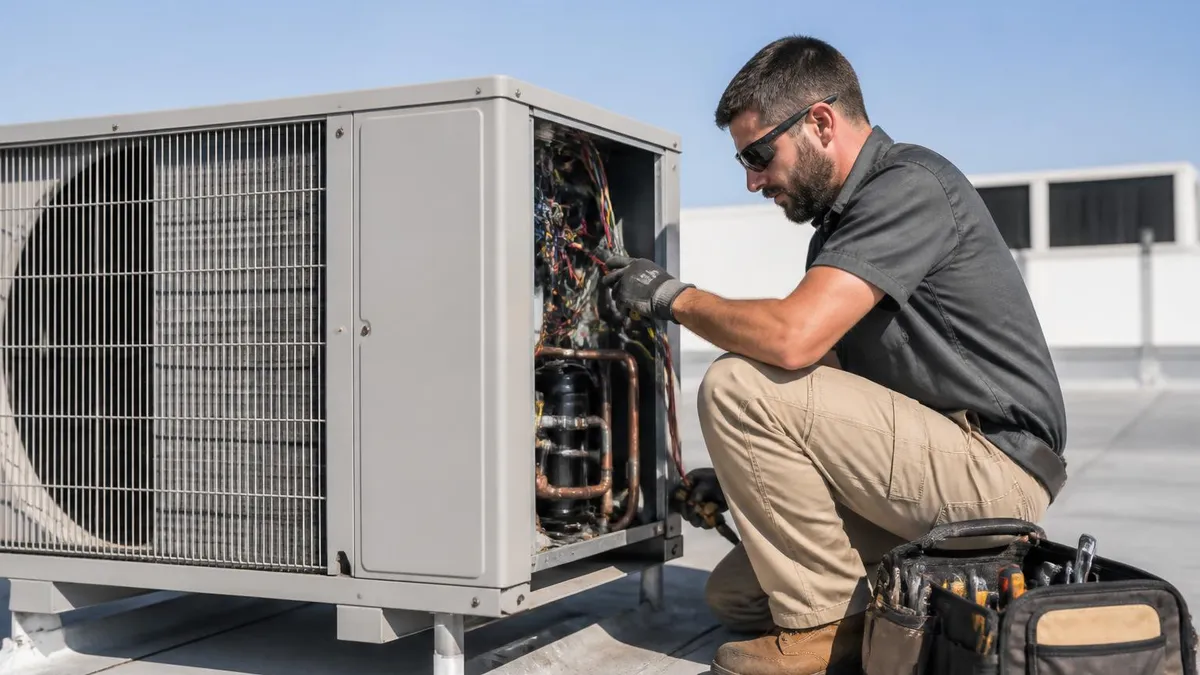
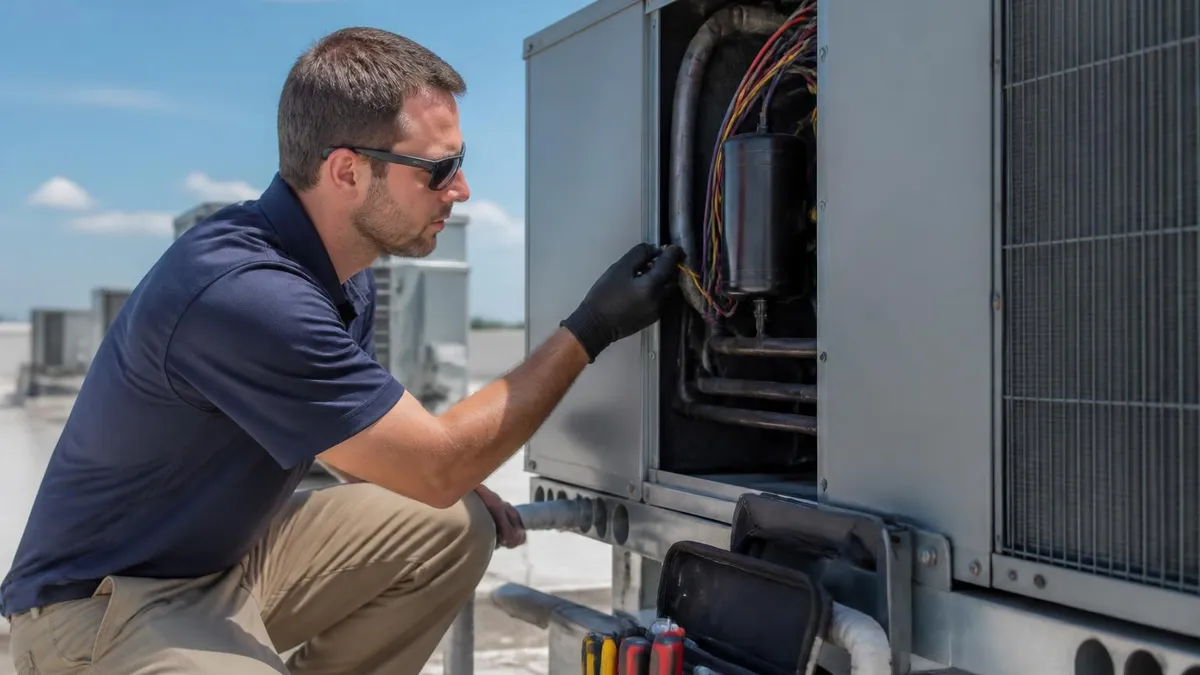
Installation day itself usually runs one to three days for a standard residential replacement. Day one typically begins with the crew protecting floors and walls, recovering refrigerant from the old system per EPA rules, and disconnecting electrical and gas service. The outdoor condenser and indoor air handler or furnace are removed, often within the first two hours. The pad is leveled or replaced, line set is inspected for reuse or replaced with new copper, and the new equipment is set into place.
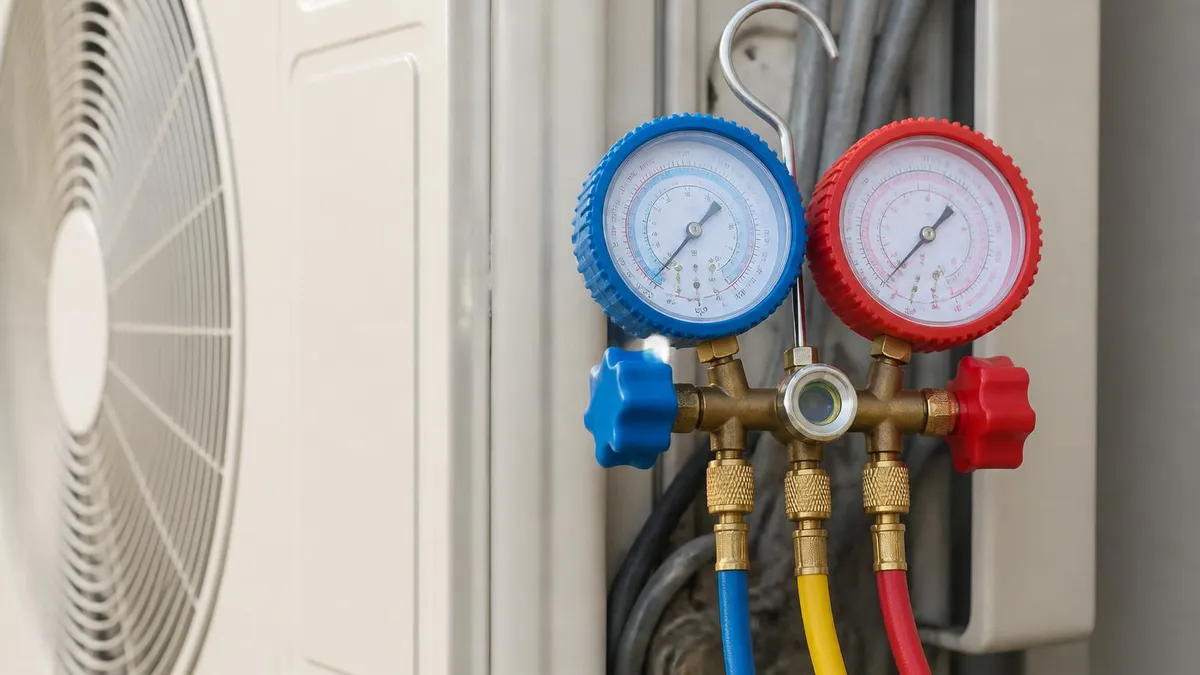
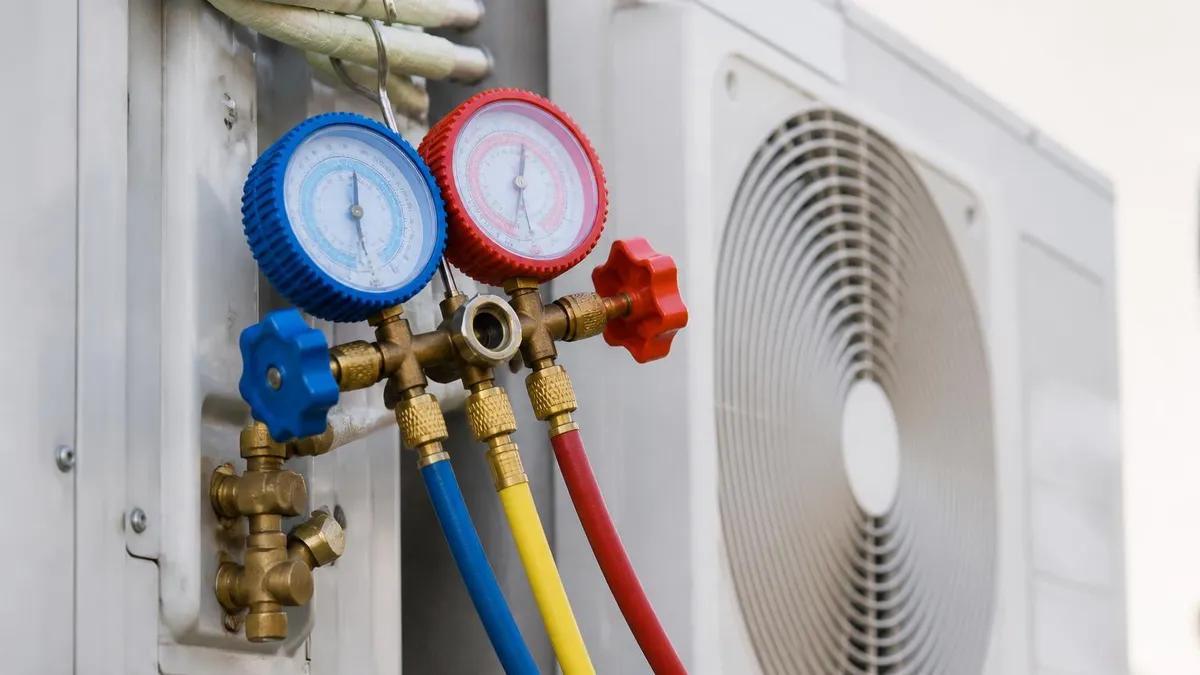
Brazing the refrigerant lines, pulling a deep vacuum to at least 500 microns, and weighing in the factory charge come next. Skipping the deep vacuum is a common shortcut that leaves moisture in the lines and damages the new compressor within years. Quality installers document the vacuum reading, the subcooling and superheat values, the static pressure, and the temperature split across the coil. Ask for a copy of the commissioning report — it is your proof the system was installed correctly.
Electrical work includes new disconnects, properly sized breakers, surge protection in many cases, and updated thermostat wiring for variable-speed and communicating systems. If a heat pump conversion is in play, the electrical panel may need a load calculation and possibly an upgrade from 100 amp to 200 amp service. This is also the right moment to add a smart thermostat and verify the home's Wi-Fi reaches the equipment for remote diagnostics and updates over the system's lifespan.
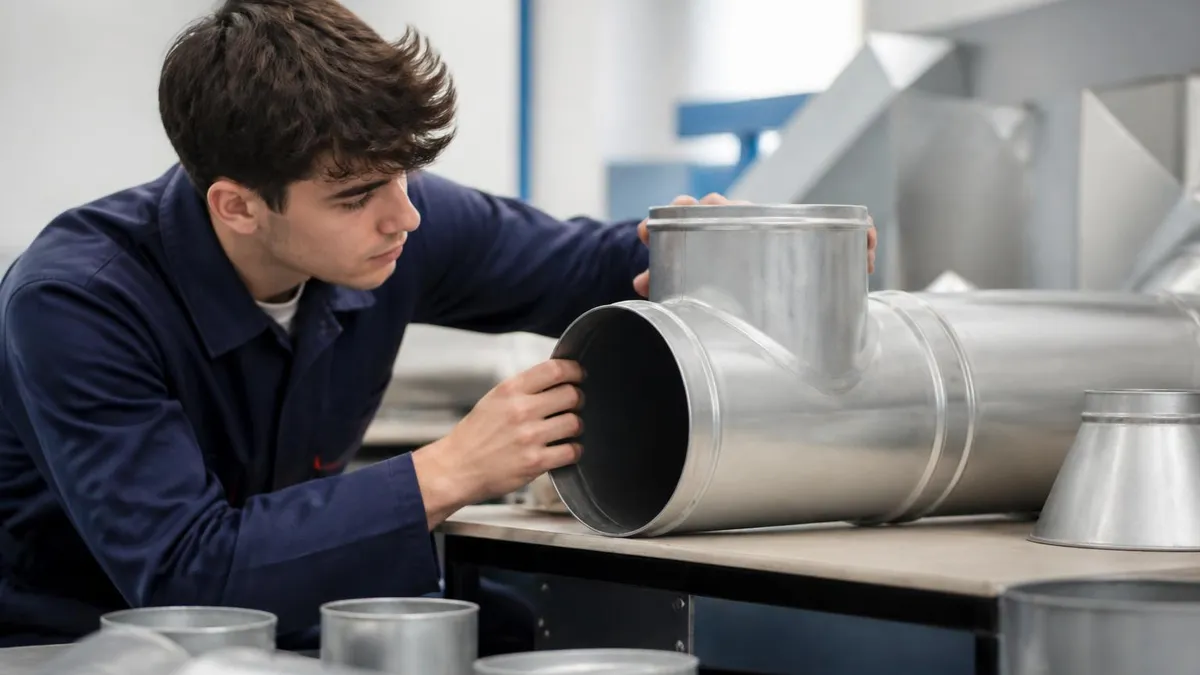
Ductwork modifications are best done during the install window. Adding a missing return, sealing supply boots with mastic, upgrading attic ducts to R-8 insulation, and replacing crushed flex runs all dramatically improve comfort and efficiency. If the contractor recommends new ducts and the budget allows, this is the right time. Tearing into ducts after a system is installed costs more and risks contaminating the new evaporator coil with debris and insulation fibers.
Permits and inspections close out the project in most U.S. jurisdictions. The mechanical inspector verifies clearances, refrigerant line protection, condensate routing, gas line integrity if applicable, and combustion air for any gas appliance. The electrical inspector confirms breaker sizing, disconnect placement, and proper grounding. Inspections protect you legally and confirm that workmanship meets the code that applied at the time of installation — important for insurance claims and resale due diligence years later.
After commissioning, the contractor should walk you through the new thermostat, filter location and size, breaker locations, and seasonal maintenance reminders. A good handoff includes the AHRI certificate, warranty registration confirmation, permit and inspection paperwork, and the start-up report with measured values. Keep these in a digital folder along with model and serial numbers. If you ever need warranty service or sell the home, this documentation is gold.
Finally, plan for the first season of fine-tuning. A new system may need a thermostat schedule adjustment, a return airflow tweak, or a small refrigerant adjustment after settling. Reputable installers include a 30-day follow-up visit at no charge. For deeper troubleshooting later in the system's life, see our HVAC Rancho Cucamonga CA: Complete Guide to Repair, Service, and System Care for a city-level look at how service providers structure ongoing repairs and maintenance.
Choosing a contractor is the most consequential decision in any replacement project. The equipment brand matters less than the installer's craftsmanship. A perfectly installed mid-tier system will outperform a sloppily installed premium one almost every time. Start by verifying state licensing on your jurisdiction's contractor lookup, confirming active general liability and workers compensation insurance, and reading at least 20 recent online reviews across Google, BBB, and Angi. Patterns matter more than any single review.
Ask each bidder how many replacement projects they completed last year, who specifically will run the install crew, and whether subcontractors handle electrical or sheet metal. Continuity matters — the same lead installer should be on your job from start to commissioning. NATE-certified technicians and EPA Section 608 universal certifications are baseline credentials, and many top installers also hold manufacturer certifications such as Carrier Factory Authorized Dealer or Trane Comfort Specialist that include warranty and training advantages.
Get a written, line-item proposal — not a one-page quote. It should list the indoor unit, outdoor unit, coil, line set, thermostat, electrical work, duct modifications, permits, refrigerant, and labor warranty as separate items. Pricing transparency makes it possible to compare bids apples to apples and to negotiate intelligently. Vague proposals that just say "complete system replacement" hide where corners may be cut. If a contractor refuses to itemize, move on to one who will.
Timing affects pricing too. Spring and fall are shoulder seasons when installers have more capacity and often offer modest discounts. Mid-summer and mid-winter are peak emergency replacement windows when prices climb and lead times stretch. If your system is showing late-life signs, planning a proactive replacement in March or October typically saves money and stress compared to an emergency call in July. Some manufacturers also run rebates in shoulder seasons.
Document everything as the project progresses. Take date-stamped photos of the existing system before demo, the new equipment plate after install, and any duct work performed. Save the commissioning report, the AHRI certificate, the permit final inspection card, and the warranty registration confirmation in a single folder. If a manufacturer warranty claim arises in year 7, this paperwork is the difference between a covered repair and a $2,000 out-of-pocket surprise.
Plan for ongoing maintenance from day one. Schedule a spring cooling tune-up and a fall heating tune-up annually, change filters on the cadence your installer recommends — typically every one to three months depending on filter type and household conditions — and keep two feet of clearance around the outdoor condenser. Skipping maintenance is the fastest way to void manufacturer parts warranties on premium equipment. Most warranties explicitly require documented annual professional service.
For homeowners considering the trades themselves, replacement projects are also a window into a rewarding career field. Demand for skilled HVAC installers continues to grow with the heat pump transition, and BLS projects faster-than-average growth through 2032. If you have ever been curious, our HVAC Trade School: How to Choose the Right Program guide breaks down training paths, costs, and certifications that turn an interest in mechanical systems into a six-figure career.
Sample HVAC Practice Questions
Try these questions from our free HVAC practice tests. The correct answer and an explanation follow each question.
What is a 'Variable Air Volume' (VAV) system and how does it differ from a 'Constant Volume' (CAV) system?
- A. VAV varies supply air temperature; CAV varies supply air volume
- B. VAV varies supply air volume to each zone while maintaining constant supply temperature; CAV delivers constant air volume at varying temperatures
- C. VAV uses variable speed drives on chillers; CAV uses fixed-speed chiller compressors
- D. VAV serves commercial buildings; CAV serves residential buildings only
Answer: B. VAV varies supply air volume to each zone while maintaining constant supply temperature; CAV delivers constant air volume at varying temperatures
A VAV system delivers conditioned air at constant supply temperature but modulates the volume delivered to each zone using VAV terminal boxes, matching supply to actual demand.
What is a 'dedicated outdoor air system' (DOAS) and what are its advantages?
- A. A separate exhaust-only system for chemical storage rooms
- B. A system that handles only 100% outdoor air ventilation separately from the space conditioning system, often with energy recovery
- C. An outdoor condensing unit dedicated to a specific zone
- D. A backup ventilation system that operates only when primary HVAC fails
Answer: B. A system that handles only 100% outdoor air ventilation separately from the space conditioning system, often with energy recovery
A DOAS handles 100% outdoor air ventilation with energy recovery and pre-conditioning, delivered to zone equipment—this separation improves humidity control, energy efficiency, and ventilation accuracy.
In a commercial Variable Refrigerant Flow (VRF) system, what distinguishes a 'heat recovery' system from a 'heat pump' system?
- A. Heat recovery uses a cooling tower; heat pump is air-cooled
- B. Heat recovery allows simultaneous heating and cooling in different zones; heat pump can only heat or cool the entire system at once
- C. Heat recovery uses two compressors; heat pump uses one
- D. Heat recovery operates on R-410A; heat pump on R-22
Answer: B. Heat recovery allows simultaneous heating and cooling in different zones; heat pump can only heat or cool the entire system at once
VRF heat recovery systems use a branch circuit controller to simultaneously deliver heating refrigerant to some indoor units and cooling to others, maximizing efficiency.
In a commercial HVAC system, what does 'DOAS' stand for and what is its primary purpose?
- A. Dual Output Air System — splits heating and cooling
- B. Dedicated Outdoor Air System — provides ventilation air separately from sensible cooling
- C. Direct Outdoor Air Supply — bypasses air handlers in summer
- D. Distributed Output Air System — serves multiple zones from one unit
Answer: B. Dedicated Outdoor Air System — provides ventilation air separately from sensible cooling
A DOAS handles ventilation (outdoor air) requirements separately, allowing zone equipment to focus on sensible load control.
HVAC Questions and Answers

About the Author

NATE Certified HVAC Technician & Licensing Exam Trainer
Universal Technical InstituteMike Johnson is a NATE-certified HVAC technician and EPA 608 universal-certified refrigerant handler with a Bachelor of Science in HVAC/R Technology. He has 19 years of commercial and residential HVAC installation and service experience and specializes in preparing technicians for NATE certification, EPA 608, A2L refrigerant safety, and state HVAC contractor licensing examinations.