
Are Forklifts Heavier Than Cars? Complete Weight Comparison Guide for Operators and Buyers
💯 Are forklifts heavier than cars? Compare forklift vs car weight, learn why it matters for rental, training, and safety. Complete 2026 October guide.
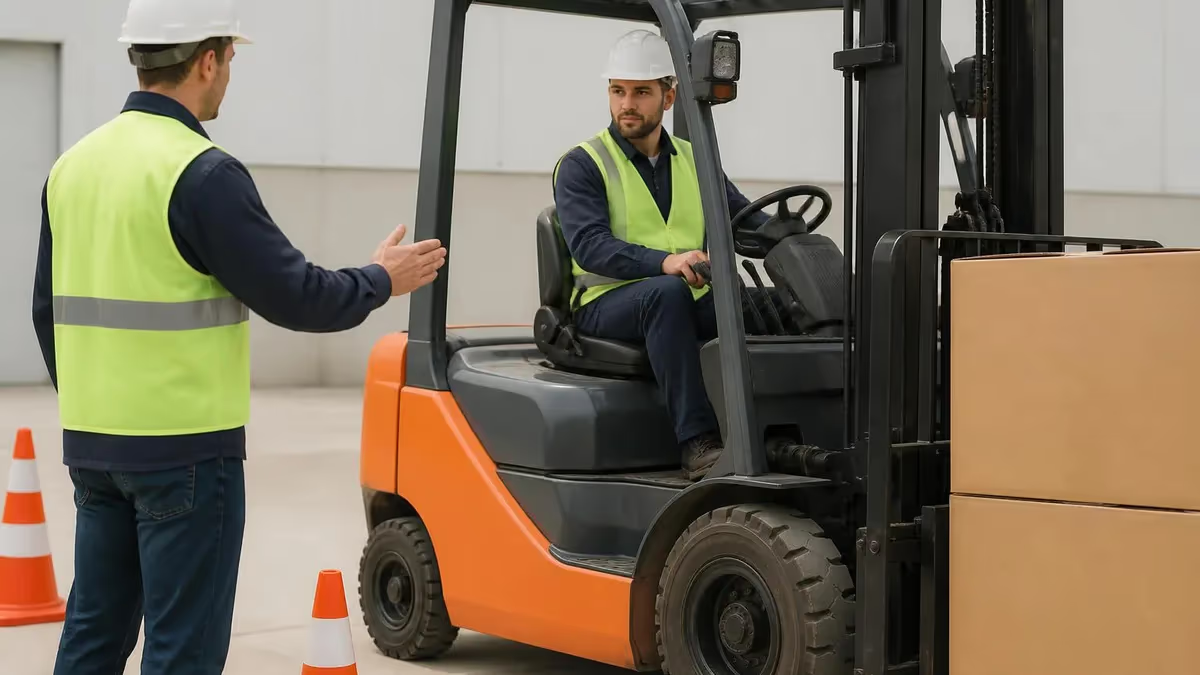
If you have ever wondered are forklifts heavier than cars, the short answer is yes — and often by a surprising margin. A typical 5,000-pound capacity warehouse forklift weighs around 9,000 pounds empty, while the average American sedan weighs roughly 3,500 pounds. That means even a small forklift outweighs most cars by a factor of two or three, and larger industrial lifts can tip the scales at 30,000 pounds or more. This weight difference is the single most important physical fact that shapes how forklifts are designed, driven, parked, and certified.
The reason forklifts are so heavy is rooted in physics. A forklift is essentially a rolling counterweight machine. To safely lift a 5,000-pound pallet on its forks without tipping forward, the rear of the truck must contain enough mass to balance that load around the front axle fulcrum. Engineers add solid cast iron or steel counterweights, dense battery packs in electric forklift models, and reinforced frames. The result is a compact vehicle that punches far above its visual footprint in raw weight and momentum.
Understanding weight is not academic trivia — it directly affects warehouse floor ratings, trailer ramp limits, freight elevator capacities, and the kind of insurance coverage a fleet manager needs. A standard concrete warehouse slab rated for 250 pounds per square foot can handle most sit-down trucks, but a 15,000-pound capacity machine concentrating force through small load wheels can crack unrated floors. This is one of the first concepts covered in proper forklift safety training programs across the United States.
The weight gap also explains why OSHA requires formal forklift training and certification while no comparable federal mandate exists for ordinary cars. A forklift moving at 8 miles per hour carries more kinetic energy than a small sedan at the same speed because kinetic energy scales with mass. Stopping distances are longer, turning behavior is sharper at the rear, and a pedestrian struck by a tipping forklift faces forces no automobile crash test ever simulates. These dynamics are why certification of forklift operators is non-negotiable.
For anyone shopping for forklift rental, browsing a forklift for sale listing, or arranging forklift rentals near me searches, weight specifications appear on every spec sheet for good reason. Rental companies need to know if your loading dock can support delivery, whether your freight elevator will hold the machine, and if your jobsite ground conditions are firm enough. A muddy construction site that swallows a pickup truck will swallow a 12,000-pound rough terrain forklift even faster.
This complete guide breaks down forklift weights by class, compares them directly to common cars, explains why the difference matters for safety and logistics, and gives forklift operator candidates the practical knowledge needed to pass written certification exams. Whether you are a new hire studying for your card, a warehouse manager budgeting a stand up forklift purchase, or a small business owner pricing rentals, the weight data here will shape every decision you make.
By the end of this article you will know exactly how forklifts compare to cars pound for pound, why electric forklift models weigh more than their propane cousins, how counterweight engineering works, and how weight ties into OSHA-mandated training. We will also walk through the most common written exam questions about forklift dimensions and load capacities so you can study smarter, not longer, for your operator certification test.
Forklift Weight by the Numbers

Forklift vs Car Weight: Class-by-Class Comparison
An electric walkie pallet jack weighs roughly 800-1,200 pounds, lighter than even a Mitsubishi Mirage at 2,100 pounds. This is the only common material handler that loses the weight contest against a car.
A typical stand up forklift weighs 7,000-8,500 pounds with battery, more than double a Honda Civic at 2,900 pounds. The high battery weight is engineered to balance reach mast loads safely.
A 5,000-pound capacity counterbalance forklift weighs around 9,000 pounds — about 4,500 pounds for an F-150 SuperCrew. The forklift is twice as heavy in a much smaller footprint.
A 15,000-pound capacity forklift can weigh 28,000-32,000 pounds, roughly the same as a fully loaded Class 7 box truck. These machines require dedicated trailers for transport.
Loaded container handlers and reach stackers can exceed 180,000 pounds — heavier than a fully loaded semi-truck. These port-class machines are in a different universe from passenger vehicles entirely.
To really understand why forklifts are heavier than cars, you have to look at the engineering problem they solve. A forklift must safely lift a load that often weighs more than the truck itself was originally rated to carry, hold that load several feet in the air, and travel with it across uneven warehouse floors. None of that is possible without a massive counterweight at the rear of the machine, and that counterweight is the single biggest contributor to total vehicle mass.
The fulcrum principle is simple. Imagine a seesaw with the front wheels as the pivot point. The load on the forks pushes down on the front side; the counterweight pushes down on the rear side. If the load wins, the truck tips forward — the textbook nightmare scenario every forklift operator trains to avoid. Engineers therefore size the counterweight to handle the rated capacity at the rated load center, usually 24 inches from the heel of the forks, with a generous safety margin built in.
Electric forklift designs cleverly use the battery itself as the counterweight. A lead-acid traction battery for a 5,000-pound electric truck can weigh 2,000-3,000 pounds on its own, eliminating the need for separate iron blocks. This is one reason electric models are popular for indoor warehouse work despite higher upfront cost — the dense battery serves two jobs at once. Lithium-ion batteries weigh less, so manufacturers must add ballast back in to maintain stability.
Internal combustion forklifts running on propane, diesel, or gasoline use solid cast iron counterweights bolted to the rear frame. These weights are often visible as the broad rounded hood behind the operator seat. The denser the material, the smaller the counterweight can be for a given mass, which is why cast iron remains the industry standard — it offers an excellent ratio of weight to volume at a reasonable cost.
The chassis itself is also built heavier than a car chassis because it must withstand cyclic stress that no passenger vehicle ever experiences. Picking up and setting down 5,000-pound loads thousands of times per shift puts enormous fatigue loads on the frame, mast, and forks. Reinforcement plates, thick steel mast channels, and heavy-duty axles all add pounds. The mast assembly alone on a triple-stage truck can weigh 1,500 pounds.
Tires and wheels contribute too. Solid pneumatic tires used on most warehouse trucks are dense rubber compounds, much heavier per unit than air-filled car tires. Cushion tires on smooth-floor models are essentially solid rubber discs. This unsprung weight provides stability and puncture resistance but adds hundreds of pounds compared to a comparable car wheel and tire package. For deeper coverage of tire choices, see our guide to forklift tires.
Finally, safety systems add weight. Roll cages (overhead guards), load backrests, operator restraint systems, and reinforced floor pans are all engineered to protect the driver in a tip-over event. Modern forklift cabs designed for outdoor or cold-storage use include weather enclosures, heating, and sometimes air conditioning — all features that add 200-500 pounds. Every regulatory and safety improvement over the past 40 years has nudged forklift weights upward, never downward.
Forklift certification Practice Test Questions
Prepare for the Forklift certification Certification exam with our free practice test modules. Each quiz covers key topics to help you pass on your first try.
Forklift certification Certification Forkl...
Forklift certification Exam Questions covering Certification Forklift certification Maintenance and Repairs. Master Forklift certification Test concepts for certification prep.
Forklift certification Certification Forkl...
Free Forklift certification Practice Test featuring Certification Forklift certification Maintenance and Repairs Questions and Answers. Improve your Forklift certification Exam score with mock test prep.
Forklift certification Certification Forkl...
Forklift certification Mock Exam on Certification Forklift certification Operator Training and Certification Requirements. Forklift certification Study Guide questions to pass on your first try.
Forklift certification Certification Forkl...
Forklift certification Test Prep for Certification Forklift certification Operator Training and Certification Requirements Questions and Answers. Practice Forklift certification Quiz questions and boost your score.
Forklift certification Load Handling and S...
Forklift certification Questions and Answers on Load Handling and Stability. Free Forklift certification practice for exam readiness.
Forklift certification OSHA Regulations an...
Forklift certification Mock Test covering OSHA Regulations and Compliance. Online Forklift certification Test practice with instant feedback.
Forklift certification Pre-Operation Inspe...
Free Forklift certification Quiz on Pre-Operation Inspections. Forklift certification Exam prep questions with detailed explanations.
Forklift certification Refueling and Recha...
Forklift certification Practice Questions for Refueling and Recharging Procedures. Build confidence for your Forklift certification certification exam.
Forklift certification Safe Driving and Ma...
Forklift certification Test Online for Safe Driving and Maneuvering. Free practice with instant results and feedback.
Forklift certification Workplace Hazard Id...
Forklift certification Study Material on Workplace Hazard Identification. Prepare effectively with real exam-style questions.
Forklift certification Forklift Instructions
Free Forklift certification Test covering Forklift Instructions. Practice and track your Forklift certification exam readiness.
Forklift certification Forklift MCQ
Forklift certification Exam Questions covering Forklift MCQ. Master Forklift certification Test concepts for certification prep.
Forklift certification Forklift Employer R...
Free Forklift certification Practice Test featuring Forklift Employer Responsibilities. Improve your Forklift certification Exam score with mock test prep.
Forklift certification Forklift Penalties ...
Forklift certification Mock Exam on Forklift Penalties for Non-Compliance. Forklift certification Study Guide questions to pass on your first try.
Forklift Training: Weight Concepts You Must Know
The load center is the horizontal distance from the heel of the fork to the center of gravity of the load. The industry standard rating point is 24 inches for most warehouse trucks. If your load extends further out, the effective capacity of the forklift drops sharply — sometimes by 30 percent or more for a 36-inch load center.
Forklift training programs hammer this concept because it ties directly to tip-over risk. A 5,000-pound capacity truck does not safely lift 5,000 pounds at any distance. It safely lifts 5,000 pounds only at the rated load center. Misunderstanding this principle is the root cause of many warehouse incidents, and OSHA inspectors routinely quiz operators on it during compliance audits.

Heavier Forklift vs Lighter Forklift: Trade-Offs for Buyers
- +Higher load capacity and lifting stability for heavy pallets
- +Better traction on slick warehouse floors and outdoor surfaces
- +More forgiving handling when carrying off-center or shifting loads
- +Larger battery or fuel tank means longer shifts between recharges
- +Reinforced frames last longer under heavy daily duty cycles
- +Higher resale value because heavy-duty trucks hold market demand
- −Higher floor-loading requirements may exceed older warehouse slabs
- −More expensive freight when transported on trailers across states
- −Tires wear faster from concentrated weight at the contact patch
- −Tighter aisles become impossible — larger turning radius required
- −Initial purchase cost is significantly higher than light-duty models
- −Fuel or electricity consumption increases with vehicle mass
Pros and Cons at a Glance
| Pros | Cons |
|---|---|
| Higher load capacity and lifting stability for heavy pallets | Higher floor-loading requirements may exceed older warehouse slabs |
| Better traction on slick warehouse floors and outdoor surfaces | More expensive freight when transported on trailers across states |
| More forgiving handling when carrying off-center or shifting loads | Tires wear faster from concentrated weight at the contact patch |
| Larger battery or fuel tank means longer shifts between recharges | Tighter aisles become impossible — larger turning radius required |
| Reinforced frames last longer under heavy daily duty cycles | Initial purchase cost is significantly higher than light-duty models |
| Higher resale value because heavy-duty trucks hold market demand | Fuel or electricity consumption increases with vehicle mass |
Pre-Operation Forklift Weight and Safety Checklist
- ✓Locate the data plate and confirm rated capacity at standard load center
- ✓Compare load weight to capacity before attempting any lift
- ✓Inspect counterweight bolts for cracks, looseness, or missing hardware
- ✓Verify floor rating for the route you plan to drive the truck across
- ✓Check trailer ramp capacity before driving onto any delivery truck
- ✓Confirm freight elevator weight limit before entering with forklift
- ✓Test brakes immediately — heavy forklifts need longer stopping distance
- ✓Inspect tires for chunking, dry rot, or uneven wear from overweight loads
- ✓Confirm seat belt or operator restraint is functional before driving
- ✓Verify horn, lights, and backup alarm work for pedestrian safety
- ✓Check fluid levels including hydraulic oil, brake fluid, and coolant
- ✓Report any unusual mast drift or hydraulic leak before starting work
Weight knowledge appears on every certification test
OSHA-aligned written exams consistently ask operators to identify rated capacity from a data plate, calculate effective capacity at non-standard load centers, and explain the stability triangle. Memorize these three concepts and you will answer roughly 25 percent of the typical written test correctly before reading the rest of the questions.
Weight is not just an engineering specification — it is a regulatory factor that shapes how OSHA, ANSI, and insurance carriers evaluate forklift operations. The Occupational Safety and Health Administration enforces 29 CFR 1910.178, which governs powered industrial trucks. Many provisions in that standard exist specifically because forklifts are heavy enough to cause catastrophic injuries when mishandled. A forklift fatality typically involves crushing, tip-over, or pedestrian strike — all amplified by mass.
The infamous statistic in the industry is that roughly 85 forklift-related deaths occur in the United States each year, with thousands more serious injuries. Crushing under a tipped forklift accounts for the largest share. A 9,000-pound vehicle landing on a person delivers force well beyond what the human skeleton can withstand. This is why operator restraint systems — seat belts and rigid overhead guards — became mandatory equipment. The driver is far safer remaining inside the cab during a tip-over than attempting to jump clear.
Weight also affects floor and ramp design. Industrial concrete slabs are rated in pounds per square foot. A standard warehouse floor might be rated at 250 PSF, while a freezer floor or mezzanine might be only 100 PSF. A 9,000-pound forklift with a 5,000-pound load concentrates 14,000 pounds across four small contact patches. Engineers calculate this point load against the slab rating to ensure the floor will not crack or punch through over time.
Loading dock plate ratings follow the same logic. A dock plate or leveler must support the combined weight of the truck and its heaviest expected load with a safety factor. Operators must know the rating of every dock plate they cross and never assume a generic plate can handle a heavy industrial lift. Dock plate failure under a forklift is a leading cause of serious injury in warehouse environments and triggers OSHA citations every year.
Trailer entry adds another layer of weight concern. When a forklift drives into a parked semi-trailer to unload, the trailer must be wheel-chocked and supported by trailer jacks rated for the combined forklift and load weight. Trailer creep — the slow forward motion of a trailer as the forklift drives in and out — has caused operators to fall into the dock gap with deadly results. Heavier forklifts increase the risk of creep dramatically.
Insurance companies also pay close attention to forklift weights when underwriting policies. A facility running 30,000-pound industrial forklifts pays more for general liability and workers compensation than one using only walkie pallet jacks, because the severity of potential incidents is so much higher. Detailed records of operator certification, maintenance, and inspections directly reduce premium costs — proof that paperwork and weight management go hand in hand.
Finally, transportation rules come into play. Heavy forklifts traveling on public roads on flatbed trailers must comply with Department of Transportation weight limits and may require oversized load permits. A 30,000-pound forklift on a 12,000-pound trailer behind a 20,000-pound tractor totals 62,000 pounds — well within standard limits, but exceeding them by adding accessories can trigger permit requirements. Rental delivery quotes always account for these factors.

Driving a heavy forklift across an under-rated floor, mezzanine, or dock plate is one of the most common causes of catastrophic collapse incidents in warehouses. Always verify load ratings posted by the facility before transit. If no rating is posted, ask a supervisor — do not guess. OSHA citations and injury liability follow predictable patterns when weight limits are ignored.
Earning a forklift operator credential in the United States means satisfying OSHA's three-part requirement: formal instruction, practical evaluation, and workplace-specific orientation. The certification of forklift operators is the employer's legal responsibility, not the trainee's, but smart candidates take the lead by studying ahead. Knowing forklift weights, capacities, and stability principles before walking into class makes the written exam dramatically easier, and demonstrating that knowledge to a trainer accelerates approval on the practical drive test.
Forklift training typically takes one to two days for new operators with no prior experience. The first half is classroom instruction covering OSHA standards, truck classification, stability, load handling, fueling and charging, and pedestrian safety. The second half is hands-on practice in a controlled area before moving to the actual workplace. Weight-related topics — counterweight, load center, data plate reading — recur throughout both halves because they tie into nearly every safety decision.
The classroom portion ends with a written exam, typically 20-40 multiple choice questions. Pass rates are high among trainees who study, but employers cannot legally skip the test. Many programs use online practice quizzes to build familiarity with question style. Working through a few forklift operator duties practice sets before exam day pays off — the question patterns and terminology become second nature.
Practical evaluation involves driving the truck through a marked course, picking up and stacking pallets, and demonstrating safe travel with both empty and loaded forks. Evaluators specifically watch for raised-load travel, sharp turns with loads, and signs that the operator understands stability. Anyone who has thoroughly studied the weight and balance material in classroom segments performs noticeably better here.
OSHA-issued certifications are valid for three years from the evaluation date. Recertification requires another evaluation but not a full retraining unless an incident, observed unsafe behavior, or assignment to a new truck class triggers it. Operators changing employers must be re-evaluated at the new site, even with a current card, because OSHA considers each workplace unique. Our deep dive on this topic lives at our forklift license renewal guide.
Cost varies widely. In-house corporate training programs cost nothing to the trainee. Community college and private training center fees range from $100 to $250 for entry-level certification, with rough-terrain and reach truck endorsements adding $50-$150. Some forklift rental companies bundle operator training with extended rental contracts, which can be a smart bundle for small businesses bringing in a forklift for sale or rent for the first time.
Stand up forklift, narrow aisle, and order picker classes each require separate evaluations because their stability characteristics differ from sit-down counterbalance trucks. A reach truck shifts its weight pattern dramatically when the mast extends, while an order picker raises the operator with the load — a unique stability profile not found on conventional trucks. Each requires its own training segment under OSHA rules, with weight and stability principles taught from scratch for the new class.
Putting all of this knowledge to work on exam day comes down to disciplined study habits and realistic practice. Start by reading the OSHA 1910.178 standard end to end. It is shorter than most operators expect and reads in about 45 minutes. The standard cross-references many of the weight, capacity, and certification concepts your written test will cover, and reading it once gives you the regulatory vocabulary that examiners use in their question wording.
Next, study the data plate on the actual machine you will be tested on. Memorize the rated capacity, load center, truck weight, and mast height. Practical evaluators often ask trainees to recite these values from memory or locate them under time pressure. Familiarity with the specific truck you will drive removes a layer of test anxiety and demonstrates the kind of pre-shift discipline employers want to see in new hires.
Take practice quizzes repeatedly. The same question patterns recur across most certification programs because OSHA's core requirements never change. Quiz banks that focus on maintenance, operator duties, and pre-operation inspections cover roughly 60 percent of typical exam content. Doing 100 practice questions before exam day is a small time investment that consistently boosts first-attempt pass rates by double digits in tracked training programs.
Practice estimating load weights by eye. Walk through your warehouse and try to guess the weight of a pallet, then check the manifest or shipping label. Skilled operators develop reliable weight intuition over time. New operators who practice this skill avoid one of the most common rookie mistakes: lifting a load that exceeds capacity because the box looked smaller than it actually was. This skill complements but never replaces reading the data plate.
Brush up on hand signals and pedestrian protocols. Many practical evaluations include a segment where the trainee must coordinate with a spotter or yield to a foot-traffic crossing. These are easy points to earn or lose. Knowing the standard hand signals — stop, raise, lower, slow down — and demonstrating consistent horn use at intersections shows the trainer you take pedestrian safety seriously, which matters more in scoring than raw driving speed.
Get comfortable with maintenance terminology. The data plate, hydraulic reservoir, mast channel, lift chain, load backrest, counterweight, drive tire, and steer tire are all components you should be able to identify and discuss. A working maintenance vocabulary helps you complete the pre-shift inspection accurately and report problems clearly to supervisors or technicians. Detailed coverage lives in our forklift repair service guide.
Finally, plan for renewal early. Your three-year recertification window passes faster than you expect. Track your card expiration date and schedule re-evaluation at least two months before it lapses. Employers cannot legally allow you to operate with an expired card, and a lapsed certification can pull you off the floor mid-shift with no notice. Stay ahead of the calendar and your career as a forklift operator stays uninterrupted.
Sample Forklift certification Practice Questions
Try these questions from our free Forklift certification practice tests. The correct answer and an explanation follow each question.
Who is ultimately responsible for ensuring only trained and authorized operators use forklifts?
- A. The employer
- B. The forklift dealer
- C. The insurance company
- D. Fellow employees
Answer: A. The employer
The employer must ensure that only trained and authorized personnel operate powered industrial trucks.
Who is responsible under OSHA for ensuring forklift operators are properly trained?
- A. The employee alone
- B. The employer
- C. The forklift manufacturer
- D. The insurance company
Answer: B. The employer
OSHA places responsibility on the employer to ensure operators are trained and certified.
In serious injury or fatality cases involving forklifts, what can result beyond monetary fines?
- A. Only a verbal warning
- B. Possible criminal prosecution
- C. Automatic license upgrade
- D. Guaranteed civil immunity
Answer: B. Possible criminal prosecution
Willful violations that cause a worker's death can lead to criminal prosecution in addition to civil penalties.
Why are there counterweights on forklifts?
- A. To ensure the vehicle does not overheat
- B. To ensure the vehicle does not cause damage to surrounding structures
- C. To ensure the fuel levels in the tank remain stable
- D. To ensure the vehicle remains stable whilst lifting loads
Answer: D. To ensure the vehicle remains stable whilst lifting loads
Counterweights are heavy masses strategically placed at the rear of a forklift, opposite the forks. Their primary purpose is to counterbalance the weight of the load being lifted at the front of the machine. This design ensures the forklift remains stable and prevents it from tipping forward, especially when handling heavy loads at height, thereby maintaining operational safety.
Forklift Questions and Answers
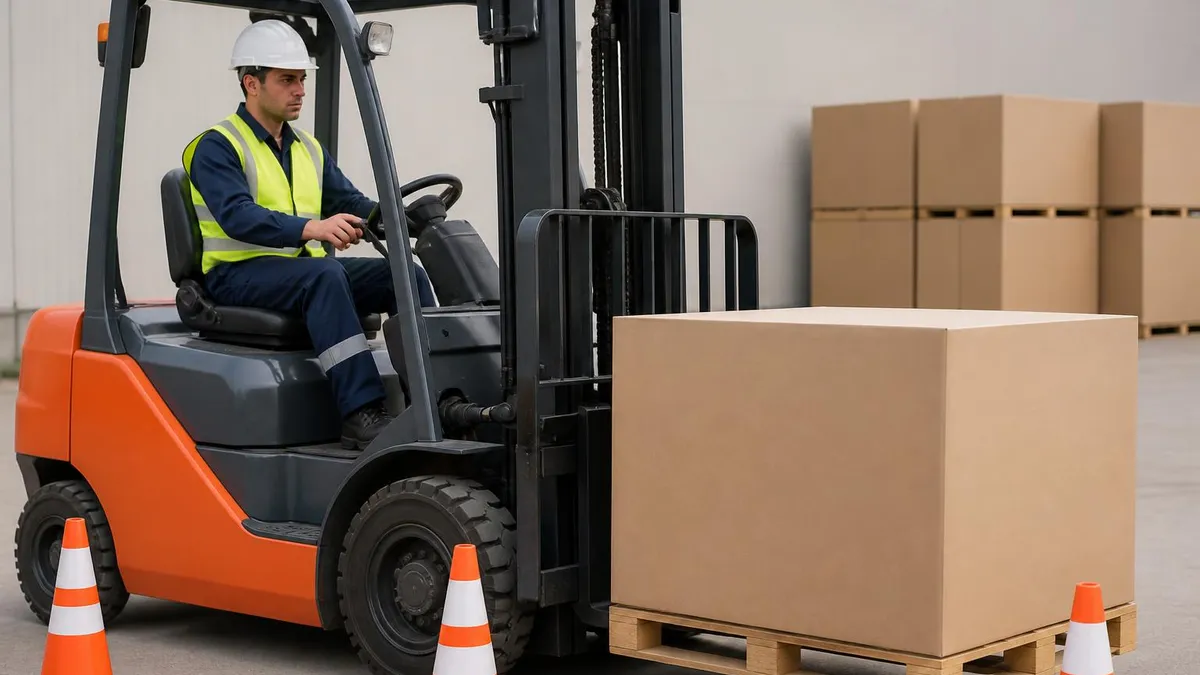
Forklift Tires: Complete Guide to Types, Sizing, Wear Patterns, and Replacement Costs
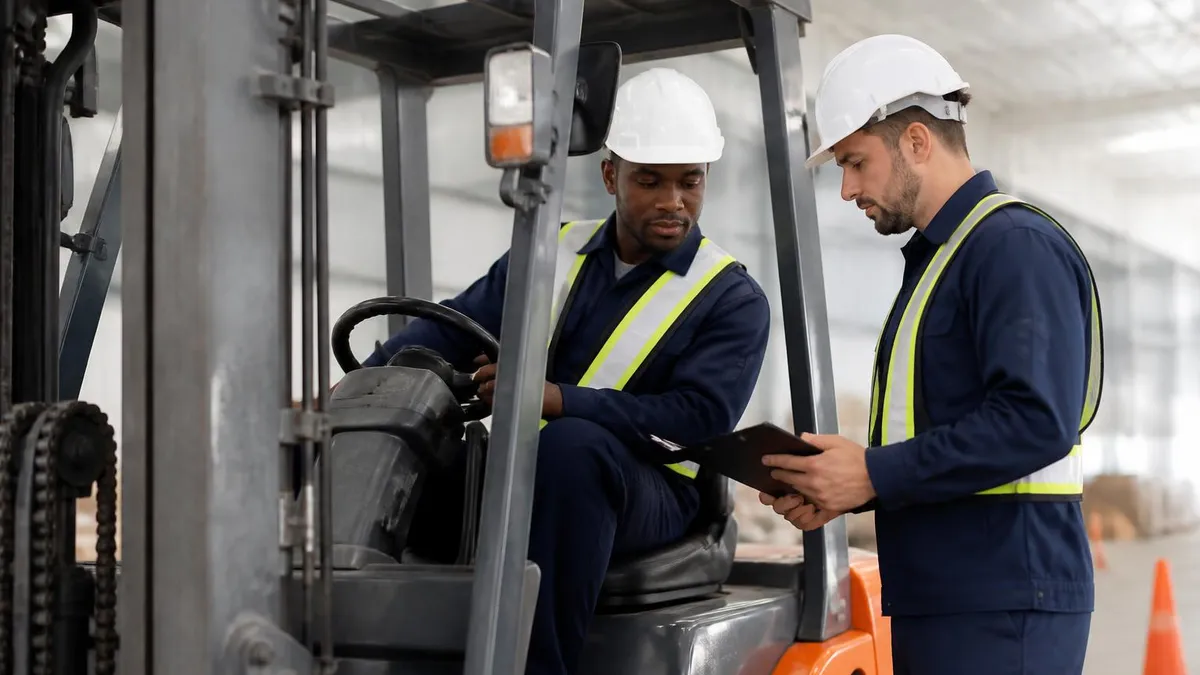
Forklift Operator Duties: Complete Guide to Daily Responsibilities, Safety Tasks, and Career Path for 2026
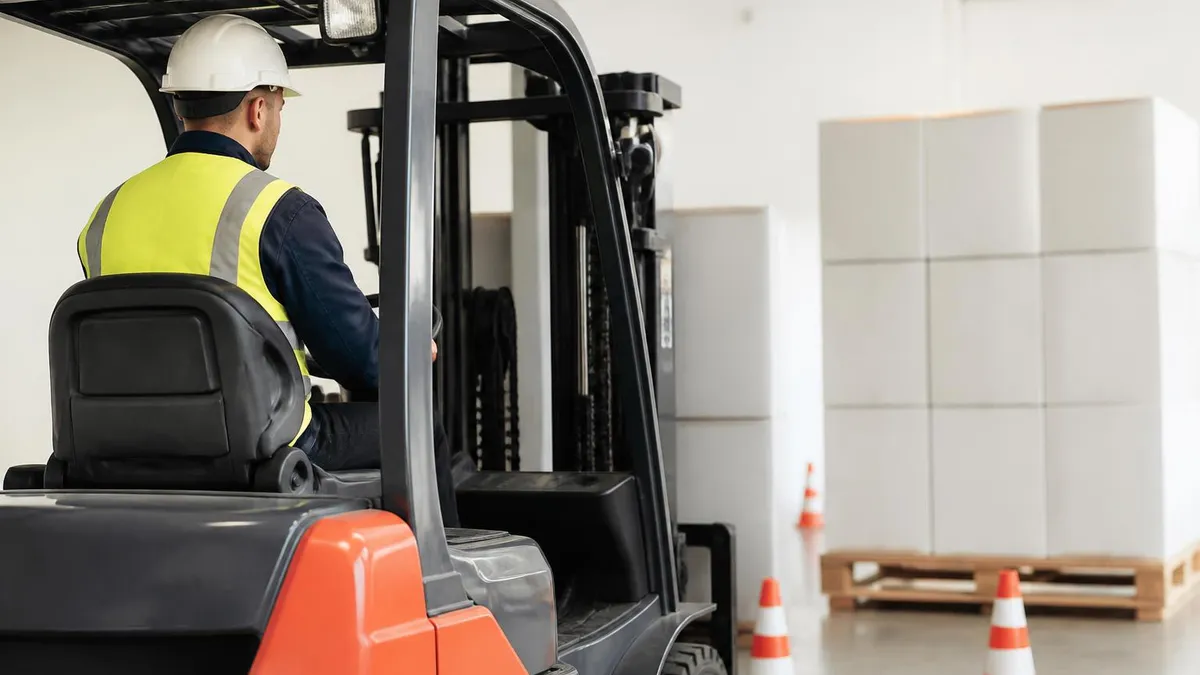
Forklift License Renewal: Complete Guide to Forklift License Expiry, OSHA Recertification, and Operator Requirements for 2026
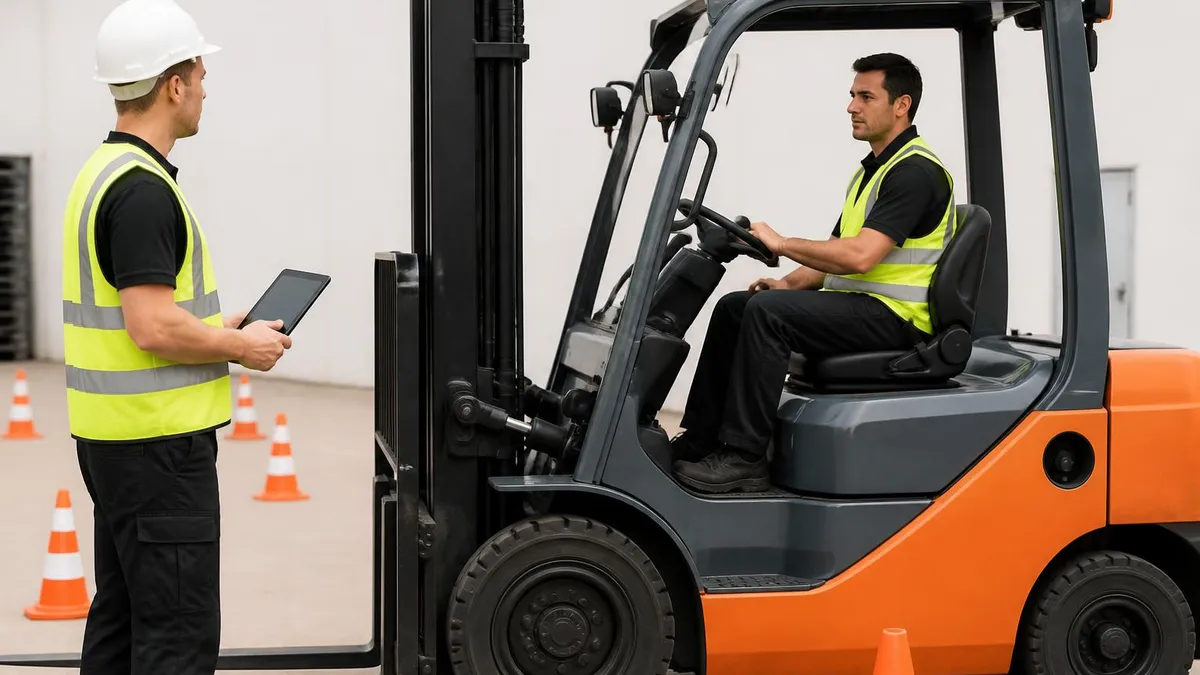
Forklift Safety Training: Complete OSHA Compliance Guide for Operators and Employers
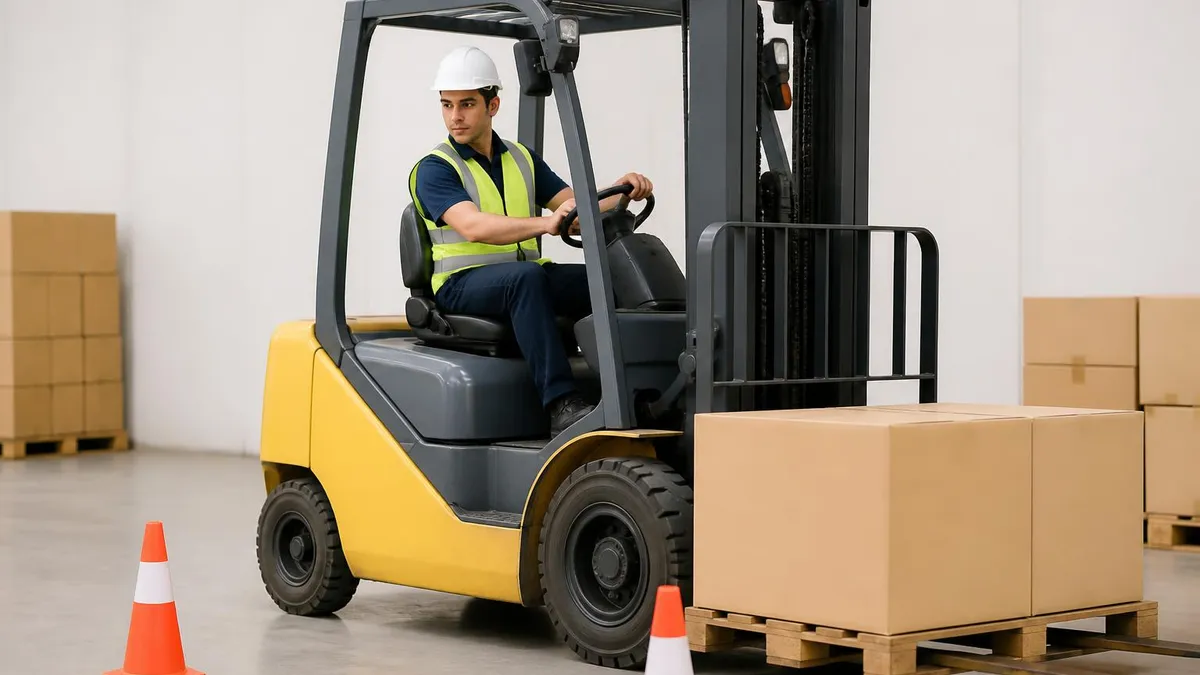
Forklift Repair Service: Complete Guide to Costs, Common Repairs, and Choosing the Right Technician
About the Author

Certified Crane Operator & Skilled Trades Exam Specialist
Ferris State UniversityRobert Martinez is a Journeyman Ironworker, NCCCO-certified crane operator, and forklift trainer with a Bachelor of Science in Construction Technology from Ferris State University. He has 21 years of ironworking, rigging, and heavy equipment operation experience across high-rise and industrial construction sites. Robert prepares candidates for crane operator, rigger, forklift, and skilled trades certification examinations.