
CPR vs First Aid: Is CPR and First Aid the Same? Complete 2026 October Comparison Guide
Is CPR and first aid the same? Learn key differences, 📗 certifications, when to use each, and why combined training saves lives in emergencies.
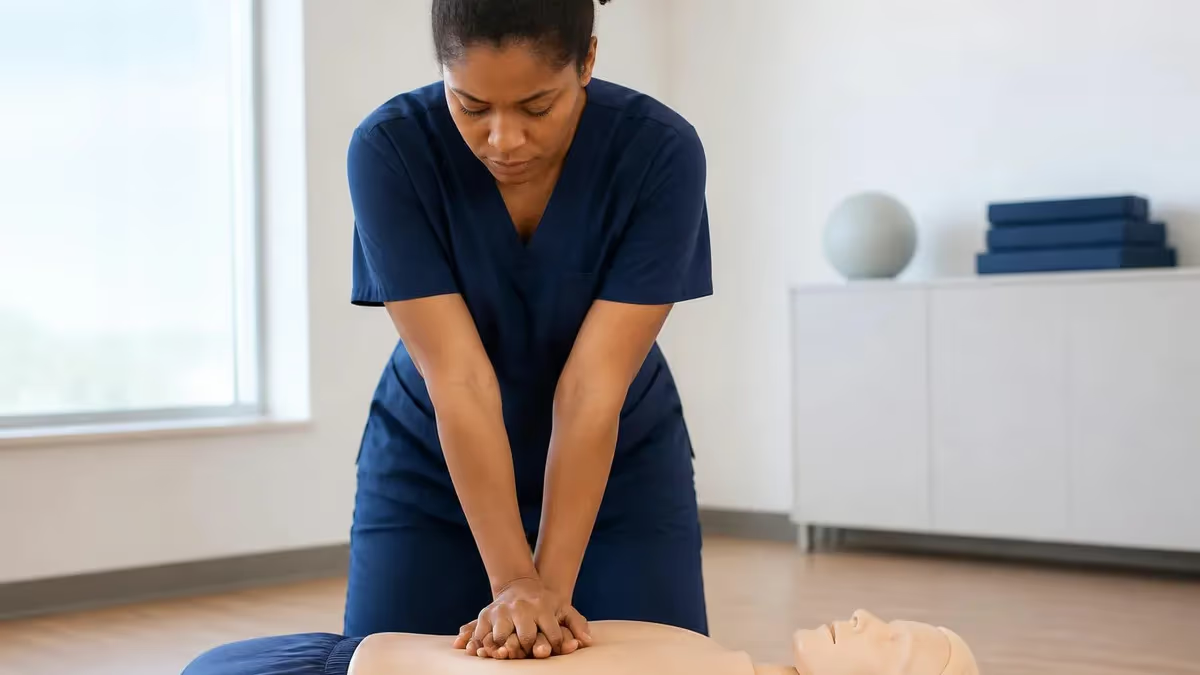
If you have ever wondered, is CPR and first aid the same, the short answer is no — they are closely related but address different emergencies. CPR (cardiopulmonary resuscitation) is a specific life-saving technique used when someone's heart has stopped beating or they have stopped breathing effectively. First aid, by contrast, is a much broader umbrella of immediate care given for injuries and illnesses ranging from minor cuts and burns to severe bleeding, fractures, and shock. They overlap in emergency response, but they are not interchangeable skills.
Confusion is understandable because most modern certification courses bundle CPR and first aid together. The American Heart Association, the Red Cross, and the national cpr foundation all offer combined classes, and many employers require both. However, the techniques taught, the equipment used, and the situations they address are distinct. A bystander who only knows first aid may struggle in a sudden cardiac arrest, and someone trained only in CPR may not know how to manage a deep laceration or anaphylaxis effectively while waiting for paramedics.
Think of CPR as a precision tool inside the larger toolbox of first aid. CPR follows a defined algorithm — check responsiveness, call 911, compress the chest at 100 to 120 beats per minute, and use an AED as soon as possible. First aid covers everything else a layperson might encounter: choking relief, controlling bleeding, splinting a broken arm, recognizing stroke or heart attack symptoms, and responding to diabetic emergencies. Both disciplines emphasize calling for professional help and minimizing harm until life support arrives.
The training timelines also differ. A pure CPR course typically takes two to three hours, while a comprehensive first aid course can stretch to six or eight hours. Combined CPR and first aid courses generally run four to seven hours and cost between $60 and $120 depending on the provider. Renewals are required every two years for most certifications, and increasingly, hybrid online plus in-person formats are accepted by employers in healthcare, childcare, education, and fitness industries across the United States.
The legal landscape matters too. Good Samaritan laws in all 50 states protect bystanders who attempt CPR or first aid in good faith from civil liability, provided they act within their training. This protection exists because hesitation kills. Sudden cardiac arrest survival drops roughly 10 percent for every minute without compressions and defibrillation. Bleeding from a major artery can be fatal in under five minutes. Knowing which intervention applies — and acting quickly — is the difference between a tragedy and a recovery story.
This guide breaks down exactly how CPR and first aid differ, where they overlap, who needs which certification, and how to choose a course that fits your job, family, or volunteer role. We will also cover infant cpr, AED use, the recovery position, and how modern courses prepare you to respond confidently to real emergencies. Whether you are a parent, teacher, coach, lifeguard, or simply someone who wants to be useful in a crisis, understanding both disciplines is one of the most valuable investments you can make.
By the end of this article you will know how to evaluate certification options, recognize the moments when CPR alone is enough versus when broader first aid skills are required, and understand the science behind why early intervention works. We will also clear up common myths — including why CPR rarely looks like it does on television and why hands-only compressions are often safer for untrained responders than attempting rescue breaths.
CPR and First Aid by the Numbers

Core Differences Between CPR and First Aid
CPR addresses one critical event: cardiac or respiratory arrest. First aid covers dozens of injuries and illnesses, from sprains and burns to severe bleeding, allergic reactions, seizures, heat stroke, and poisoning emergencies.
CPR primarily relies on your hands and an AED if available. First aid uses bandages, tourniquets, splints, epinephrine auto-injectors, cold packs, and a variety of supplies kept in a standard first aid kit.
CPR follows a single repeatable algorithm focused on compressions and breaths. First aid requires recognizing many conditions and choosing the correct response — making it broader but less procedurally rigid than CPR.
Standalone CPR runs 2-3 hours. Standalone first aid runs 4-6 hours. Combined certification typically takes 4-7 hours and is the most cost-effective option for most workplaces and parents.
Both are protected under Good Samaritan laws in all 50 states when performed in good faith. However, professional rescuers and licensed providers may face higher duty-of-care standards than untrained bystanders.
CPR becomes the right intervention the moment someone is unresponsive and not breathing normally. The acls algorithm used by paramedics and hospital teams begins with the same basic steps a layperson performs: check for response, activate emergency services, and start compressions. For untrained bystanders, hands-only CPR — continuous chest compressions at 100 to 120 per minute without rescue breaths — is the recommended approach because it is easier to remember and just as effective in the first several minutes of an adult cardiac arrest event.
Recognizing cardiac arrest quickly is the single most important skill. Look for two signs: the person does not respond when you tap their shoulders and shout, and they are not breathing or only gasping irregularly. Agonal gasps — slow, shallow, snoring-like breaths — are often mistaken for normal breathing, and they delay CPR initiation by precious seconds. If you see these gasps in an unresponsive person, start compressions immediately. They are a sign of a dying brain, not adequate breathing.
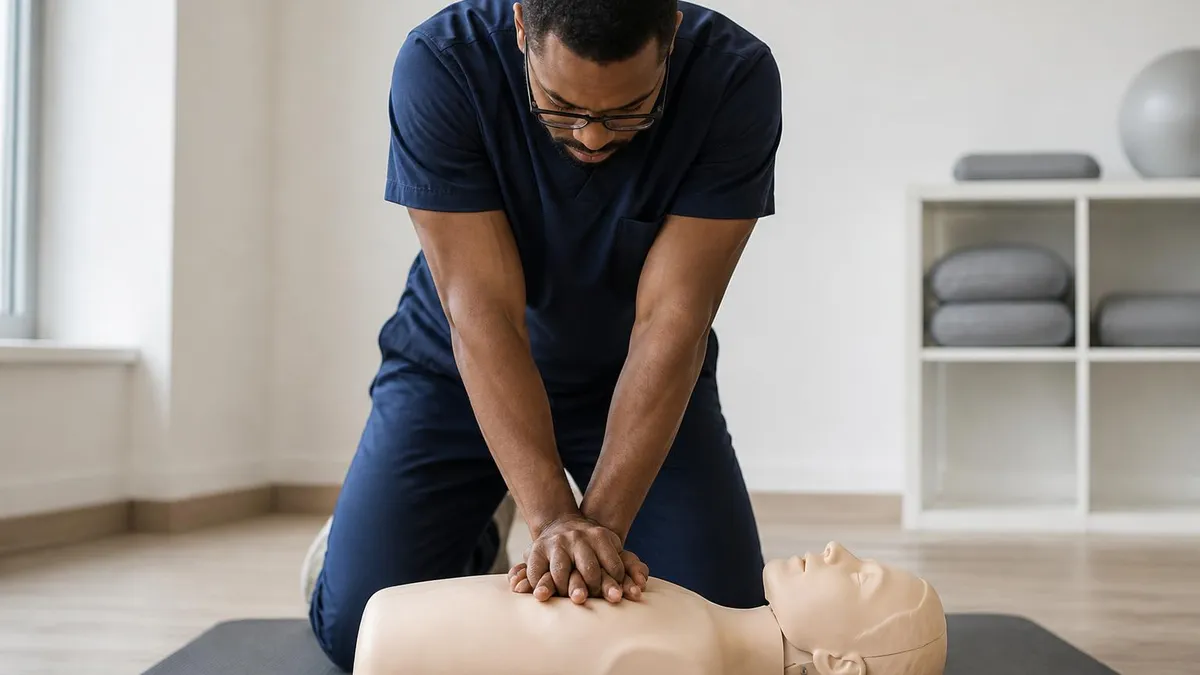
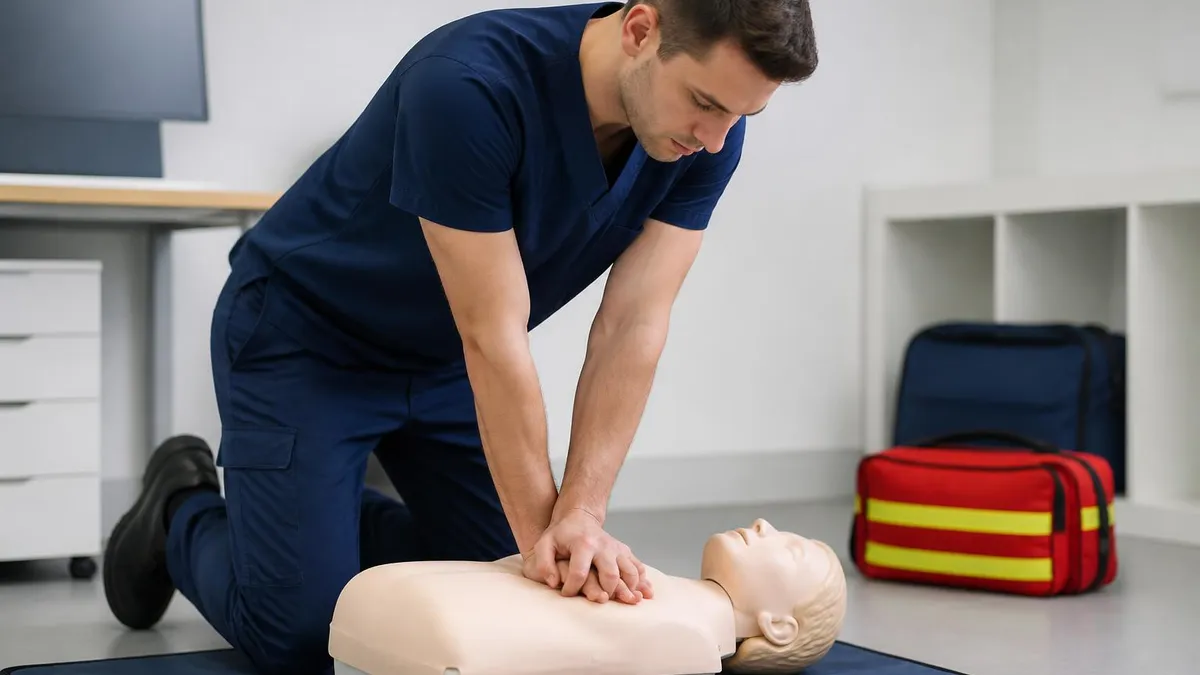
The compression technique itself is precise. Place the heel of one hand on the center of the chest, lock the other hand on top, keep your arms straight, and push down at least two inches for adults at a rate of 100 to 120 per minute. Allow full chest recoil between compressions — this is when blood actually fills the heart. The Bee Gees song "Stayin' Alive" famously sits at 103 BPM, which is why it became the cultural shorthand for CPR timing in training classes nationwide.
What does aed stand for? Automated External Defibrillator. This device is the second half of the survival equation. An AED analyzes the heart rhythm and delivers a shock only if a shockable rhythm — ventricular fibrillation or pulseless ventricular tachycardia — is detected. You cannot accidentally shock someone who does not need it. Modern AEDs are found in airports, schools, gyms, and offices, and they walk you through every step with voice prompts. Combined with high-quality CPR, an AED can triple or quadruple survival odds.
First aid takes over when the emergency is not cardiac arrest. A teenager collapses from heat stroke — first aid. A coworker slices their arm on broken glass — first aid. A child has a severe peanut allergy reaction — first aid (with epinephrine if available). A neighbor shows stroke symptoms — first aid means calling 911, noting the time symptoms started, and keeping them comfortable until paramedics arrive. The principle is the same across both disciplines: stabilize, do no further harm, and get professional help fast.
The respiratory rate is one diagnostic clue that bridges CPR and first aid. A normal adult breathes 12 to 20 times per minute at rest. Rates above 24 may indicate shock, infection, or asthma exacerbation. Rates below 10 are concerning and may precede respiratory arrest. Children and infants breathe faster — up to 40 breaths per minute for newborns. Counting breaths for 30 seconds and doubling the number gives you a usable rate, and the information helps 911 dispatchers prioritize the call appropriately.
If you landed here looking for device repair, this article is about cardiopulmonary resuscitation specifically. If you want to verify a real CPR certification card, use a CPR card lookup tool offered by your training provider to confirm validity before relying on a credential for employment or volunteer work.
CPR Practice Test Questions
Prepare for the CPR Cardiopulmonary Resuscitation Practice exam with our free practice test modules. Each quiz covers key topics to help you pass on your first try.
CPR Basic CPR
CPR Exam Questions covering Basic CPR. Master CPR Test concepts for certification prep.
CPR and First Aid
Free CPR Practice Test featuring and First Aid. Improve your CPR Exam score with mock test prep.
CPR (Cardiopulmonary Resuscitation) Adult ...
CPR Mock Exam on (Cardiopulmonary Resuscitation) Adult CPR and AED Usage. CPR Study Guide questions to pass on your first try.
CPR (Cardiopulmonary Resuscitation) Airway...
CPR Test Prep for (Cardiopulmonary Resuscitation) Airway Obstruction and Choking. Practice CPR Quiz questions and boost your score.
CPR (Cardiopulmonary Resuscitation) Cardio...
CPR Questions and Answers on (Cardiopulmonary Resuscitation) Cardiopulmonary Emergency Recognition. Free CPR practice for exam readiness.
CPR (Cardiopulmonary Resuscitation) Child ...
CPR Mock Test covering (Cardiopulmonary Resuscitation) Child and Infant CPR. Online CPR Test practice with instant feedback.
CPR (Cardiopulmonary Resuscitation) High-P...
Free CPR Quiz on (Cardiopulmonary Resuscitation) High-Performance Team Dynamics. CPR Exam prep questions with detailed explanations.
CPR (Cardiopulmonary Resuscitation) Legal ...
CPR Practice Questions for (Cardiopulmonary Resuscitation) Legal and Ethical Considerations. Build confidence for your CPR certification exam.
CPR for Specific Populations
CPR Test Online for for Specific Populations. Free practice with instant results and feedback.
CPR Airway & Breathing Management
CPR Exam Questions covering Airway & Breathing Management. Master CPR Test concepts for certification prep.
CPR Assessment & Recognition of Cardiac Ar...
Free CPR Practice Test featuring Assessment & Recognition of Cardiac Arrest. Improve your CPR Exam score with mock test prep.
CPR Chest Compressions & Defibrillation
CPR Mock Exam on Chest Compressions & Defibrillation. CPR Study Guide questions to pass on your first try.
CPR Post-Resuscitation Care & Recovery
CPR Test Prep for Post-Resuscitation Care & Recovery. Practice CPR Quiz questions and boost your score.
Certification Pathways: ACLS Algorithm, PALS Certification, and Basic Life Support
BLS is the foundational certification for healthcare workers, EMTs, and many fitness instructors. It teaches one-rescuer and two-rescuer CPR for adults, children, and infants, plus AED use and basic airway management with a bag-valve mask. Courses are typically four to six hours and certify you for two years through the American Heart Association, Red Cross, or national cpr foundation.
BLS is the prerequisite for most clinical roles in hospitals, urgent care centers, and dental offices. Renewal can often be done online via a blended learning model with a brief skills check-off in person. Expect to pay $60 to $90 for an initial BLS course and slightly less for renewal, depending on whether your employer covers the cost or reimburses you afterward.

Should You Take CPR Only or Combined CPR and First Aid?
- +Combined training costs only slightly more than CPR alone
- +One certification card covers both skills for two years
- +Most employers in childcare, fitness, and healthcare require both
- +Covers a far wider range of real-world emergencies
- +Teaches assessment skills useful in non-life-threatening situations
- +Saves a separate scheduling and travel commitment later
- +Often includes bloodborne pathogens module at no extra cost
- −Course is longer — 6 to 7 hours versus 2 to 3 for CPR only
- −Higher upfront cost, typically $90 to $120 versus $50 to $70
- −More material to retain may overwhelm first-time learners
- −Some workplaces only reimburse the specific certification required
- −Online-only versions may not be accepted by certain employers
- −Renewal still requires the full combined course every two years
Combined CPR and First Aid Training Checklist
- ✓Confirm the certifying body is AHA, Red Cross, ASHI, or national cpr foundation
- ✓Verify the course meets your specific workplace or licensing requirements
- ✓Choose between in-person, blended, or fully online based on employer acceptance
- ✓Schedule at least one full day or two evenings for the course
- ✓Bring photo ID and any prerequisite materials sent by the provider
- ✓Practice hands-only CPR on a manikin until rate and depth feel automatic
- ✓Learn AED pad placement for adults, children, and infants
- ✓Memorize the recovery position for unconscious but breathing patients
- ✓Practice the Heimlich maneuver on adults and back blows on infants
- ✓Review respiratory rate ranges by age group before testing
- ✓Complete the bloodborne pathogens module if your job requires it
- ✓Save a digital copy of your certification card to your phone immediately
Survival doubles when bystanders act
According to the American Heart Association, sudden cardiac arrest survival rates more than double when bystanders perform CPR before paramedics arrive. Yet only about 40 percent of victims receive bystander CPR. The single best predictor of survival is not paramedic response time — it is whether someone nearby was willing to start compressions immediately. Your hands, in the first three minutes, matter more than any hospital intervention that comes later.
CPR techniques vary significantly by age, and this is where combined training pays off. Adult CPR uses two hands and at least two inches of compression depth. Child CPR (age 1 to puberty) often uses one hand and about two inches of depth, adjusted for body size. Infant cpr — for babies under one year — uses two fingers or two thumbs encircling the chest, with a compression depth of about 1.5 inches. The compression rate stays the same across all ages: 100 to 120 per minute.
Rescue breaths also differ by age. For adults, you give breaths only if trained, and the ratio is 30 compressions to 2 breaths. For children and infants, breaths are more important because pediatric arrest is more often caused by respiratory failure than primary cardiac events. The standard ratio with one rescuer is still 30:2, but with two trained rescuers for children and infants, it shifts to 15:2. Each breath should make the chest visibly rise — no more, no less.
First aid responses also adjust for age. A choking infant gets five back blows followed by five chest thrusts, not the Heimlich maneuver used on older children and adults. A burn on a small child requires careful cooling because their thinner skin loses heat rapidly. Allergic reactions in children may progress faster than in adults, and epinephrine auto-injectors come in junior doses for kids under 66 pounds. Knowing these age-specific protocols is what separates well-rounded responders from those who only know one algorithm.
The position recovery — often called the recovery position — is taught in every first aid course and applies any time you have an unconscious but breathing person who is not suspected of spinal injury. Roll them onto their side with the upper leg bent for stability, tilt the head slightly back, and ensure the airway stays open. This prevents aspiration if they vomit and keeps the tongue from falling backward. It is one of the simplest, highest-impact skills you can learn, and it is not part of CPR training alone.
Life support is a phrase that gets used loosely, but it has specific tiers. Basic Life Support is what bystanders and BLS-certified providers deliver: compressions, breaths, AED. Advanced Life Support involves medications, advanced airways like endotracheal tubes, and rhythm interpretation. Pediatric Advanced Life Support adds child-specific drugs and assessment frameworks. Knowing where your training fits in this ladder helps you communicate clearly with arriving paramedics and avoids overstepping your scope during a real event.
Special populations need special attention. Pregnant women in cardiac arrest require manual displacement of the uterus to the left side during compressions to relieve pressure on the inferior vena cava. Drowning victims should receive rescue breaths first if you are trained, because their arrest is hypoxic in origin. Drug overdose victims may benefit from naloxone alongside CPR — many states now allow laypeople to carry and administer it. Combined CPR and first aid courses increasingly cover these scenarios in their updated 2025 and 2026 curriculums.
For families, choosing the right level of training depends on who you live with and what risks you face. Parents of infants should prioritize courses with strong infant cpr content. Caregivers for elderly relatives benefit from training that covers falls, strokes, and medication-related emergencies. Coaches and teachers need certifications recognized by their state licensing boards. There is no single right answer, but there is always a wrong one: skipping training entirely because you assume you will never need it.
Many employers and licensing boards reject CPR cards from unaccredited providers, even if the course was taken in good faith. Before paying for a course, confirm the issuing organization is recognized by your workplace. Major accepted providers include the American Heart Association, American Red Cross, ASHI, and the national cpr foundation. A card from an obscure vendor may force you to retake the course at full cost.
The most common CPR mistakes are simple but costly. The first is hesitation — bystanders freeze, fearing they will hurt the person or do it wrong. The truth is that any CPR is better than no CPR, and broken ribs heal but brains starved of oxygen do not. The second mistake is compressing too shallow. Adequate depth — at least two inches in adults — is essential to circulate blood. Push hard. The third mistake is interrupting compressions for more than ten seconds, even to check a pulse or move the patient.
First aid mistakes often involve well-intentioned but harmful interventions. Putting butter or ice directly on a burn worsens tissue damage; cool running water for 10 to 20 minutes is correct. Tilting the head back during a nosebleed sends blood down the throat; lean forward instead. Removing an embedded object from a wound can cause massive bleeding; stabilize it in place and let paramedics extract it surgically. Knowing what not to do is often as valuable as knowing what to do.
Legal protection through Good Samaritan laws covers laypeople acting in good faith within their training. However, you can lose this protection if you provide care recklessly, demand payment for help, or perform procedures clearly outside your training scope. Stay within what your certification covers, call 911 early, and document what you did once paramedics take over. Most rescuers never face legal consequences for trying to help — the law strongly favors action over inaction.
Workplace certification compliance is increasingly strict. OSHA requires certain industries to have trained first aid responders on-site, and childcare licensing in nearly every state mandates CPR and first aid certification for all staff. Healthcare facilities verify BLS, ACLS, or PALS cards annually. School districts often require coaches and bus drivers to maintain current certifications. Letting yours expire can mean losing your job temporarily until you recertify, so set a calendar reminder 90 days before your expiration date.
Online and blended learning have transformed certification access. The AHA, Red Cross, and national cpr foundation all offer hybrid options where you complete cognitive learning online, then attend a brief in-person skills session. Fully online certifications exist but are not universally accepted — fitness, healthcare, and childcare employers typically require some hands-on component. Always confirm acceptance with your employer or licensing board before enrolling in an online-only course.
Refresher practice between renewals keeps skills sharp. Studies show CPR skills degrade significantly within three to six months of a course. Practice on a manikin at your gym, watch refresher videos quarterly, or take a brief skills check at a local Red Cross chapter. Some employers now offer micro-training sessions every quarter to maintain readiness. The two-year renewal cycle is a minimum, not an ideal — frequent practice is what actually saves lives when the moment comes.
Finally, remember that the goal of both CPR and first aid is the same: buy time until definitive medical care arrives. You are not trying to cure the patient. You are trying to keep oxygen flowing to the brain, control catastrophic bleeding, or prevent further injury during the critical first minutes. Paramedics, ER physicians, and surgeons will take over. Your job is simply to make sure they have a patient to treat — and that mindset shift makes both skills feel far more manageable in a real emergency.
Practical preparation starts long before an emergency. Keep a well-stocked first aid kit in your home, car, and workplace. Standard contents include adhesive bandages of various sizes, sterile gauze pads, medical tape, antiseptic wipes, scissors, tweezers, gloves, a CPR face shield, instant cold packs, an elastic bandage, and a tourniquet for severe extremity bleeding. Check expiration dates every six months and replace anything used or aged out. A kit is useless if the contents have crumbled or the antiseptic has evaporated.
Know the locations of AEDs in places you frequent. Federal law requires AEDs in many federal buildings, and most states require them in schools, gyms, and large workplaces. The PulsePoint AED app lets you register and locate nearby devices, and many municipalities maintain public AED registries. When seconds matter, knowing exactly where the nearest device is — and that it is checked and maintained — can determine whether a coworker or family member walks out of the hospital.
Run drills with your family or team. Walk through what each person would do if a coworker collapsed at a meeting or a child choked at the dinner table. Assign roles: one person calls 911, one starts compressions, one retrieves the AED, one clears the area. Drills feel awkward at first, but they convert knowledge into instinct. The military, fire services, and elite medical teams drill relentlessly for one reason — under stress, you do not rise to the occasion, you fall to your level of training.
Phones can help in real emergencies if used wisely. Put 911 dispatch on speaker so both hands stay free for compressions. Modern smartphones have emergency SOS features that share your location automatically. The PulsePoint Respond app alerts CPR-trained citizens to nearby cardiac arrests in public places. Apple Watches and other wearables can detect falls and irregular heart rhythms, sometimes prompting users to seek care before a full arrest occurs. Use technology as a force multiplier, not a substitute for hands-on skills.
Mental preparation matters as much as physical training. Visualize yourself responding calmly. Read survivor stories from organizations like the Sudden Cardiac Arrest Foundation. Talk to people who have performed CPR successfully — they will tell you it was scary, that they made small mistakes, and that acting anyway was the most important decision they ever made. Confidence comes from training plus mindset, and you build mindset deliberately by rehearsing your response in your head.
For parents, prioritize courses that include infant cpr, choking response for children, allergic reaction management, and febrile seizure recognition. Pediatric emergencies feel especially terrifying because of the emotional weight, and parents who have trained tend to respond more decisively. Many hospitals offer free or discounted infant CPR sessions for expectant parents — take advantage of these before your baby arrives, and refresh annually as your child grows into different age brackets with different first aid needs.
For workplaces, invest in scenario-based training rather than just lecture-style certification. A facilitator running mock cardiac arrest drills in your actual office, with your actual AED, builds team coordination that traditional classroom training cannot match. Companies like Stryker, ZOLL, and Cardiac Science offer corporate training packages that include equipment, training, and ongoing readiness audits. The return on investment is measured not in dollars but in the life of an employee, customer, or visitor who would otherwise not survive.
CPR Questions and Answers
CPR Card Lookup: How to Verify, Replace, and Access Your CPR Certification in 2026
Adult CPR: Complete Step-by-Step Guide to Hands-Only and Standard CPR in 2026
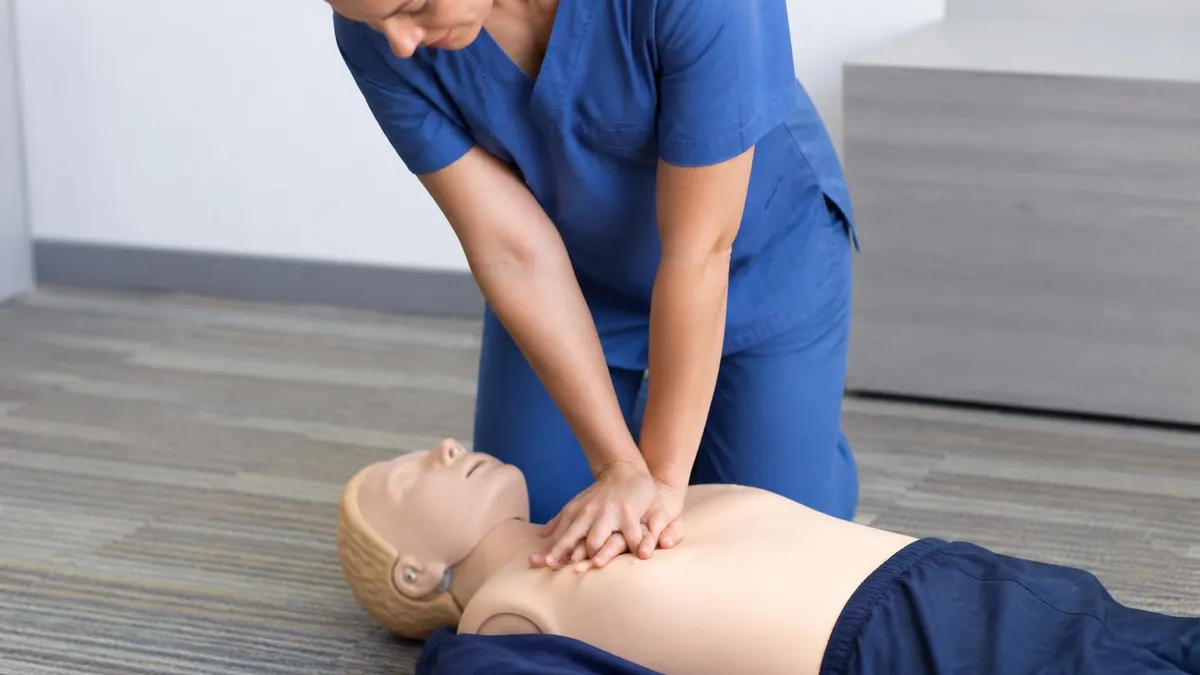
CPR - Cardiopulmonary Resuscitation: Complete Study Guide 2026
Inappropriate CPR Songs: What Not to Play, Why It Matters, and Better Beat-Per-Minute Alternatives
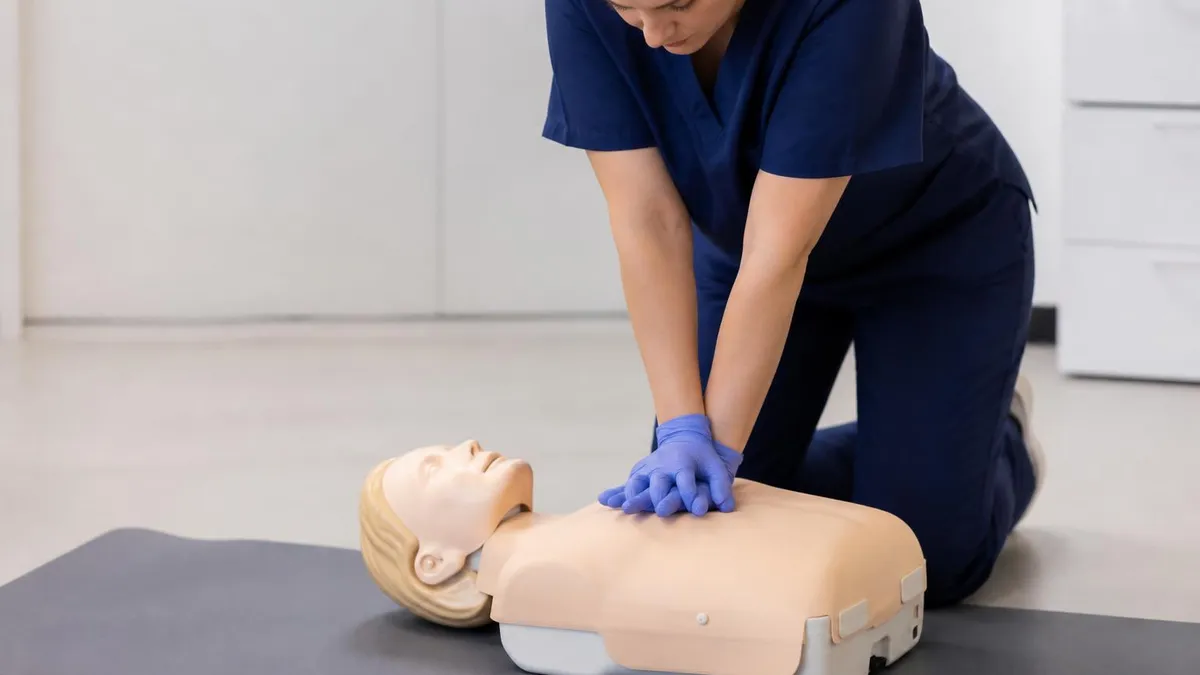
AHA CPR Recertification: How to Recertify CPR Online with the American Heart Association in 2026
About the Author

Registered Nurse & Healthcare Educator
Johns Hopkins University School of NursingDr. Sarah Mitchell is a board-certified registered nurse with over 15 years of clinical and academic experience. She completed her PhD in Nursing Science at Johns Hopkins University and has taught NCLEX preparation and clinical skills courses for nursing students across the United States. Her research focuses on evidence-based exam preparation strategies for healthcare certification candidates.
Join the Discussion
Connect with other students preparing for this exam. Share tips, ask questions, and get advice from people who have been there.
View discussion (5 replies)