
CPR Equipment and Supplies: Complete Guide to Face Shields, AEDs, and Rescue Gear in 2026 October
CPR faceshield, AED, pocket masks, and rescue supplies explained. 🔎 Complete 2026 October guide to CPR equipment for responders, workplaces, and home kits.
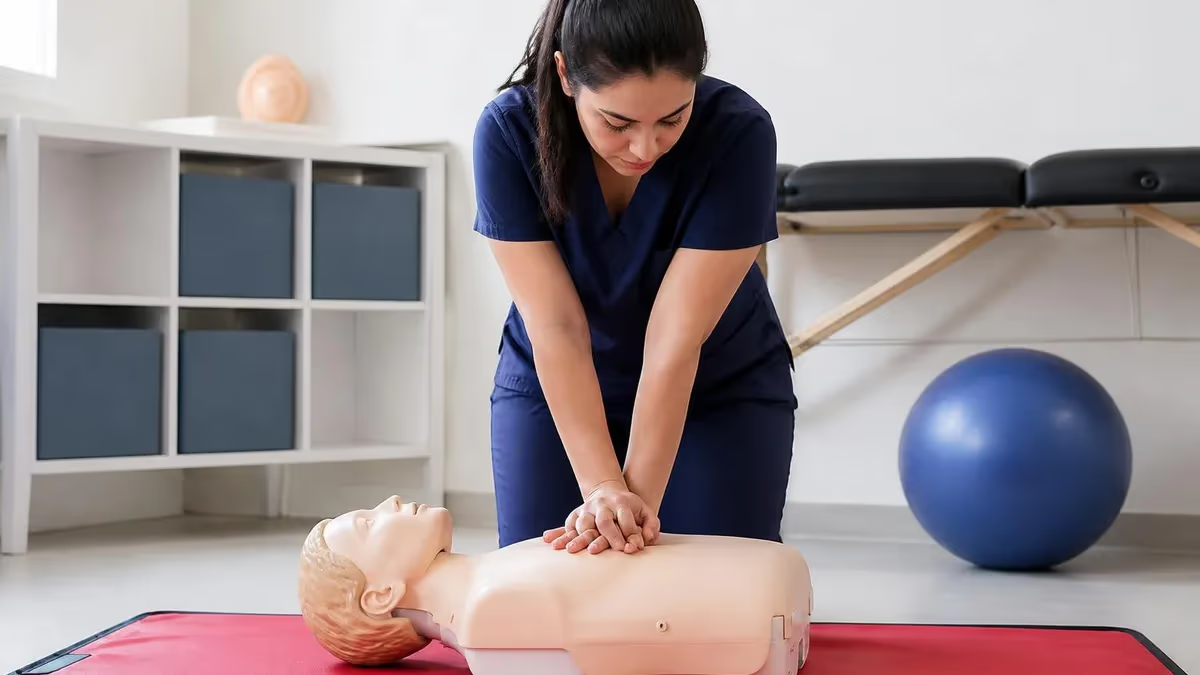
A reliable cpr faceshield is the single most important barrier device a lay rescuer can carry, and it has become a fixture in modern first-aid kits, glove compartments, and workplace AED cabinets across the United States. When sudden cardiac arrest strikes outside a hospital, the bystander who acts within the first two minutes can double or triple survival odds, and the right equipment removes the hesitation that delays compressions. This guide walks through every piece of CPR gear you need in 2026.
Whether you are a workplace safety officer stocking a clinic, a parent assembling a home kit, or a healthcare student preparing for pals certification, the equipment landscape can feel overwhelming. Manufacturers now sell everything from disposable keychain shields to professional-grade bag-valve masks with PEEP valves, oxygen reservoirs, and pediatric inserts. Knowing which items genuinely improve outcomes and which are marketing fluff separates a capable responder from one carrying expensive clutter.
The acls algorithm assumes responders have specific tools on hand, including supraglottic airways, suction units, capnography sensors, and defibrillator pads sized for the patient. For lay rescuers, the kit is simpler but no less critical: a barrier device, gloves, an automated external defibrillator, scissors, and a razor. Each item solves a specific problem that arises during a real resuscitation, and skipping any one of them slows the chain of survival measurably.
Equipment alone does not save lives, however. Studies from the national cpr foundation and the American Heart Association consistently show that confident, well-trained rescuers with basic gear outperform untrained bystanders armed with the most advanced kits. That means investing in training alongside supplies, refreshing skills annually, and physically practicing with the exact face shield or pocket mask you plan to carry. Muscle memory matters when adrenaline floods the scene.
This guide covers consumer-grade barrier devices, AED selection, workplace stocking standards, pediatric and infant cpr accessories, oxygen delivery, and the documentation needed to prove your supplies meet OSHA, ANSI, and Joint Commission standards. We compare price points, expiration concerns, storage best practices, and the most common mistakes responders make when they finally open a kit they bought years ago and never inspected.
You will also find practical guidance on building a layered equipment program: what belongs in a personal carry pouch, what goes in a vehicle, what stocks a break room AED cabinet, and what an industrial site needs near high-risk zones. The right layering ensures that no matter where an arrest occurs, the closest responder reaches usable gear within thirty seconds, the threshold most cardiology researchers consider essential for meaningful neurological outcomes.
By the end of this article you will know how to audit an existing kit, replace expired components, train coworkers on use, and document compliance for inspections. Use the table of contents on the right to jump to a specific section, or read through to build a complete mental model of modern CPR supply management.
CPR Equipment by the Numbers

Core Categories of CPR Equipment
Face shields, pocket masks with one-way valves, and bag-valve masks that protect rescuers from bodily fluids while delivering effective rescue breaths. Required for any kit beyond hands-only protocols.
Automated external defibrillators (AEDs), adult and pediatric pad sets, replacement batteries, and rescue-ready cabinets with audible alarms. The most decisive equipment in the chain of survival.
Oropharyngeal airways, nasopharyngeal airways, suction units, and supraglottic devices used by trained professionals to maintain a patent airway during prolonged resuscitation efforts.
Trauma shears, disposable razors, alcohol prep pads, gloves, CPR feedback devices, and timing metronomes that support every other component of a complete response kit.
Inspection logs, expiration trackers, training records, and incident report forms required by OSHA, ANSI Z308.1, and Joint Commission for workplace and clinical compliance audits.
Face shields and pocket masks form the foundation of every lay rescuer's CPR kit because they remove the single biggest psychological barrier to delivering rescue breaths: direct mouth-to-mouth contact with a stranger. The cheapest disposable shield costs under five dollars and folds into a credit-card-sized pouch, while professional pocket masks with oxygen inlets run thirty to sixty dollars and last for years with proper cleaning. Both categories are valid, but they serve different responder profiles and training levels.
A disposable cpr faceshield typically consists of a clear polyethylene sheet with a central one-way valve and a non-woven filter pad. The rescuer places the shield over the patient's mouth and nose, pinches the nose closed through the plastic, and delivers breaths through the valve. Air flows in one direction only, preventing exhaled gases, blood, or vomit from reaching the rescuer. These shields are single-use, lightweight, and ideal for keychain carry, glove boxes, and home kits where storage space is limited.
Pocket masks, by contrast, are reusable hard-shell devices with a soft inflatable cuff that creates a tight seal around the patient's mouth and nose. They include a one-way valve, an optional oxygen inlet port, and often a head strap that frees the rescuer's hands. Brands like Laerdal, Ambu, and ResQ-Cor dominate the professional market, and most workplaces with first-response teams standardize on a single model so training transfers smoothly between shifts and locations.
The seal quality matters more than most buyers realize. A poor seal means tidal volume drops below the 500 to 600 milliliters needed to lift the chest visibly, which is the only feedback most lay rescuers have during a real event. Practice with your specific device on a manikin before you ever need it, because the angle, pressure, and hand position differ noticeably between brands. Many CPR instructors recommend buying two identical shields so you can train with one and carry the other.
Hygiene and storage drive longevity. Disposable shields expire after roughly five years even unopened, because the valve membrane stiffens and the plastic yellows. Pocket masks should be disinfected with a 10 percent bleach solution or hospital-grade wipes after every use, dried completely, and stored in their hard case away from direct sunlight. Heat is the enemy of every silicone and plastic component in your kit, so a hot car in summer cuts the useful life of a shield in half.
For families with young children, consider the differences in mask sizing required for infant cpr. A pediatric pocket mask is roughly half the diameter of the adult version and uses a lower-volume valve to prevent over-inflation. Many manufacturers sell combo kits that include an adult mask, a pediatric mask, and a pair of nitrile gloves in a single zip pouch. These combo kits are the most cost-effective option for a home that includes both adults and children, and they fit easily in a kitchen drawer or diaper bag.
Finally, train every member of your household or team on how to deploy a barrier device under stress. Open the pouch, identify which side faces the patient, and rehearse the motion of placing, sealing, and breathing through it. The shield only works if it reaches the patient's face within the first minute, and that requires familiarity born from repetition, not just ownership.

CPR Practice Test Questions
Prepare for the CPR Cardiopulmonary Resuscitation Practice exam with our free practice test modules. Each quiz covers key topics to help you pass on your first try.
CPR Basic CPR
CPR Exam Questions covering Basic CPR. Master CPR Test concepts for certification prep.
CPR and First Aid
Free CPR Practice Test featuring and First Aid. Improve your CPR Exam score with mock test prep.
CPR (Cardiopulmonary Resuscitation) Adult ...
CPR Mock Exam on (Cardiopulmonary Resuscitation) Adult CPR and AED Usage. CPR Study Guide questions to pass on your first try.
CPR (Cardiopulmonary Resuscitation) Airway...
CPR Test Prep for (Cardiopulmonary Resuscitation) Airway Obstruction and Choking. Practice CPR Quiz questions and boost your score.
CPR (Cardiopulmonary Resuscitation) Cardio...
CPR Questions and Answers on (Cardiopulmonary Resuscitation) Cardiopulmonary Emergency Recognition. Free CPR practice for exam readiness.
CPR (Cardiopulmonary Resuscitation) Child ...
CPR Mock Test covering (Cardiopulmonary Resuscitation) Child and Infant CPR. Online CPR Test practice with instant feedback.
CPR (Cardiopulmonary Resuscitation) High-P...
Free CPR Quiz on (Cardiopulmonary Resuscitation) High-Performance Team Dynamics. CPR Exam prep questions with detailed explanations.
CPR (Cardiopulmonary Resuscitation) Legal ...
CPR Practice Questions for (Cardiopulmonary Resuscitation) Legal and Ethical Considerations. Build confidence for your CPR certification exam.
CPR for Specific Populations
CPR Test Online for for Specific Populations. Free practice with instant results and feedback.
CPR Airway & Breathing Management
CPR Exam Questions covering Airway & Breathing Management. Master CPR Test concepts for certification prep.
CPR Assessment & Recognition of Cardiac Ar...
Free CPR Practice Test featuring Assessment & Recognition of Cardiac Arrest. Improve your CPR Exam score with mock test prep.
CPR Chest Compressions & Defibrillation
CPR Mock Exam on Chest Compressions & Defibrillation. CPR Study Guide questions to pass on your first try.
CPR Post-Resuscitation Care & Recovery
CPR Test Prep for Post-Resuscitation Care & Recovery. Practice CPR Quiz questions and boost your score.
AEDs and What Does AED Stand For
What does aed stand for? Automated External Defibrillator. The device analyzes a patient's heart rhythm and delivers a calibrated electrical shock if it detects ventricular fibrillation or pulseless ventricular tachycardia. Modern AEDs guide the rescuer with voice prompts, visual indicators, and built-in metronomes that count compression depth and respiratory rate cues during the cycle.
Public-access AEDs are now legally required in airports, schools, gyms, and many state-regulated workplaces. The Cardiac Arrest Survival Act provides Good Samaritan immunity to anyone who uses one in good faith. Pricing ranges from about $1,200 for a basic semi-automatic model to $2,800 for a full-featured unit with pediatric capability, Wi-Fi diagnostics, and a backup battery rated for ten-year shelf life.
Disposable Face Shields vs Reusable Pocket Masks
- +Pocket masks deliver superior seal quality and higher tidal volumes
- +Reusable masks include oxygen inlet ports for advanced responders
- +Hard-shell cases protect the valve from damage in storage
- +Pediatric inserts allow one device to serve all ages
- +Head straps free both rescuer hands for two-person CPR
- +Professional masks meet AHA and Red Cross instructor standards
- +Longer service life lowers cost per use over a decade
- −Disposable shields cost a fraction of pocket mask prices
- −Single-use shields eliminate disinfection requirements entirely
- −Keychain shields fit pockets where pocket masks cannot
- −Lay rescuers find shields less intimidating to deploy
- −Pocket masks require cleaning protocols and training
- −Reusable masks demand documented inspection logs
- −Pediatric pocket masks add cost and storage complexity
Pros and Cons at a Glance
| Pros | Cons |
|---|---|
| Pocket masks deliver superior seal quality and higher tidal volumes | Disposable shields cost a fraction of pocket mask prices |
| Reusable masks include oxygen inlet ports for advanced responders | Single-use shields eliminate disinfection requirements entirely |
| Hard-shell cases protect the valve from damage in storage | Keychain shields fit pockets where pocket masks cannot |
| Pediatric inserts allow one device to serve all ages | Lay rescuers find shields less intimidating to deploy |
| Head straps free both rescuer hands for two-person CPR | Pocket masks require cleaning protocols and training |
| Professional masks meet AHA and Red Cross instructor standards | Reusable masks demand documented inspection logs |

Workplace CPR Equipment Stocking Checklist
- ✓One AED per 30,000 square feet or per floor, whichever is more restrictive
- ✓Adult and pediatric AED pads, with at least one spare set per device
- ✓CPR face shields stocked in every first-aid kit and AED cabinet
- ✓Pocket mask with oxygen inlet at each designated response station
- ✓Nitrile gloves in small, medium, large, and extra-large sizes
- ✓Trauma shears and a disposable razor for chest hair removal
- ✓Bag-valve mask with adult, child, and infant size options for trained staff
- ✓Portable suction unit for facilities with industrial or food service operations
- ✓Inspection log with monthly check dates and responder initials
- ✓Posted location map showing AED placement on every floor
Time from collapse to first shock determines survival
Every minute without defibrillation drops the survival rate of a witnessed cardiac arrest by approximately ten percent. Position AEDs so the round-trip retrieval time from any work zone is under 90 seconds, and rehearse the route quarterly. A perfectly stocked kit two minutes away saves fewer lives than a basic kit thirty seconds away.
Pediatric and infant CPR equipment differs from adult gear in three measurable ways: mask size, shock energy, and compression depth feedback. An infant pocket mask uses a circular cuff roughly two inches in diameter, designed to cover both the mouth and nose simultaneously without obstructing the airway. The valve assembly is calibrated to deliver smaller breath volumes, typically 25 to 50 milliliters per breath, which matches the lung capacity of a child under one year old and prevents barotrauma.
For infant cpr, the compression technique itself dictates equipment choices. The two-finger or two-thumb encircling technique requires no mechanical assist device, but feedback tools like Laerdal's CPRmeter or Philips's HeartStart trainer pads can dramatically improve depth accuracy during practice. Real-time depth coaching is especially valuable for daycare staff, pediatric nurses, and parents who rarely encounter pediatric arrest and have little muscle memory to draw from in a real emergency.
AED pediatric pads are the most commonly forgotten item in a workplace kit. Many facilities purchase only adult pads to save money, then discover during a real event that they have a four-year-old patient and no appropriate energy attenuation. Always stock pediatric pads alongside adult pads, and ensure staff know the visual difference between the two pouches. Some newer AEDs include a single switch or key that automatically selects pediatric energy levels without requiring a different pad set.
Position recovery for pediatric patients also influences equipment selection. After return of spontaneous circulation, infants and small children should be placed on their side with gentle support to maintain airway patency. A small rolled towel or pediatric positioning wedge in your kit can stabilize the patient during EMS transport. These wedges are inexpensive, weigh almost nothing, and prevent the common mistake of laying a child flat on their back during the post-arrest period when vomiting risk is highest.
Choking response equipment for children deserves dedicated attention. Anti-choking devices like LifeVac and Dechoker have entered the consumer market with mixed evidence on their efficacy. Major organizations including the AHA and Red Cross still recommend back blows and abdominal thrusts as the primary intervention, with suction devices reserved as a last resort after standard maneuvers fail. If you choose to stock an anti-choking device, treat it as a supplement to training, not a replacement.
Schools and daycare centers face specific stocking requirements that vary by state. California, for example, mandates AED placement in all public schools with more than 250 students, while Florida requires pediatric-capable AEDs in every licensed childcare facility. Check your state department of health regulations annually because requirements change frequently, and non-compliance can result in significant fines and liability exposure during licensing inspections.
Finally, train parents and caregivers separately from professional staff. Pediatric CPR courses through the national cpr foundation, American Heart Association, and Red Cross now include equipment-specific modules that walk participants through deploying actual face shields, AED pediatric pads, and bag-valve masks on infant manikins. Hands-on practice with the exact gear stocked in your facility builds the confidence needed when a real pediatric emergency occurs.
An expired AED pad, dried-out face shield, or dead battery gives responders false confidence and delays the decision to seek alternative care. Audit every piece of equipment quarterly, log inspection dates publicly, and replace any item within 30 days of its expiration date to maintain a defensible compliance record.
Maintenance and compliance separate kits that save lives from kits that sit decoratively on walls until they are needed and fail. The maintenance program for CPR equipment rests on three pillars: scheduled inspection, documented replacement, and ongoing training. Skipping any one of these creates a measurable liability gap that OSHA inspectors, Joint Commission surveyors, and plaintiff attorneys all know how to identify after an adverse event.
Monthly inspections should follow a written checklist posted near each AED cabinet. The inspector confirms the status indicator, verifies pad and battery expiration dates, checks the carrying case for damage, and signs a log with the date and time. This takes about three minutes per device. Many facilities assign the task to a rotating safety committee member to spread the workload and build broader familiarity with the equipment across the team.
Annual deep maintenance requires running the AED's full self-diagnostic, measuring battery voltage if the model supports it, and reviewing any stored ECG event data. If the device has been used during the year, the manufacturer typically provides free data retrieval and a written report that becomes part of the patient's medical record. Many newer AEDs upload these reports automatically via cellular or Wi-Fi connections, eliminating the manual extraction step entirely.
Training documentation is the often-overlooked third pillar. Every employee designated as a responder should have a current CPR card on file, and the card should reference the specific equipment they trained on. A responder certified on a manual pocket mask in 2022 who is now expected to use a bag-valve mask in 2026 has a gap that needs documented refresher training.
Compliance documentation must be organized so that an inspector can verify your program within fifteen minutes. The recommended structure is a three-ring binder or digital folder with sections for equipment inventory, inspection logs, training rosters, vendor invoices, and incident reports. Date every page, include the responsible person's signature, and store backup copies offsite or in cloud storage. Inspectors look for consistency more than perfection, so a regularly updated but imperfect log beats a pristine but sporadic one.
Vendor relationships also matter. Establish a relationship with one or two distributors who carry your exact models, and set up auto-replacement for pads, batteries, and disposable shields based on expiration dates. Many vendors now offer subscription services that ship replacement supplies 60 days before expiration, removing the manual tracking burden from your safety officer entirely. The annual cost runs roughly $150 to $300 per AED, which is a fraction of the liability exposure from a single missed replacement.
Finally, integrate equipment readiness into your broader life support program. Drill quarterly with realistic scenarios that require responders to grab the kit, deploy the AED, and coordinate with simulated EMS arrival. After-action reviews should identify equipment gaps, training shortfalls, and process bottlenecks. The teams that perform best in real arrests are invariably the ones that have rehearsed the full sequence many times in controlled conditions.
Practical purchasing advice helps you avoid the most common equipment mistakes responders make when stocking a new kit or upgrading an existing one. Start by defining the scope: who will use the kit, what is the worst-case scenario, and what does your jurisdiction require? A home kit for a family of four with no medical training looks very different from a kit serving a 200-employee manufacturing plant with a 24/7 response team.
Buy from established manufacturers with documented FDA clearance or CE marking. Laerdal, Philips, ZOLL, Cardiac Science, Defibtech, and Physio-Control dominate the AED market for good reason: their devices undergo rigorous testing, their supply chains are reliable, and their replacement parts are widely available. Off-brand AEDs sold through online marketplaces sometimes lack proper certification, and a non-certified device can void your Good Samaritan protection in some states.
Build kits in layers, not as a single monolithic purchase. The personal layer is what each trained responder carries on their person: a keychain face shield, gloves, and possibly a tourniquet. The vehicle layer adds a pocket mask, larger glove supply, trauma shears, and a small AED if budget allows. The facility layer includes the full AED cabinet, oxygen tank, suction unit, and supplemental airway adjuncts for trained users.
Train with the exact equipment you stock. This sounds obvious, but it is the most violated principle in workplace CPR programs. A team trained on a manual pocket mask in their certification class and then issued a different brand at work will fumble the unfamiliar valve assembly under stress. Order extra training units of your operational equipment and rotate them through quarterly drills so every responder handles the real gear multiple times per year.
Budget realistically. A complete workplace program for a mid-sized facility costs approximately $3,000 to $5,000 upfront for one AED, two pocket masks, twenty face shields, a stocked first-aid station, and initial training for ten employees. Annual recurring costs run $400 to $700 for pad replacement, battery rotation, training refreshers, and consumable restocking. These figures are small compared to the workers' compensation, OSHA penalties, and reputational damage that follow a preventable cardiac death.
Audit annually and after every use. Even if no equipment was deployed, an audit catches expired pads, missing gloves, and damaged cases before they become critical failures. Use a written checklist, photograph the kit contents, and store the photos with the inspection log. Visual documentation creates an unambiguous record that protects both the facility and the responders if the kit's adequacy is ever challenged in court.
Stay current with guidelines. The American Heart Association revises its CPR and ECC guidelines every five years, with the most recent major update in 2025. Equipment recommendations evolve along with the science, and a kit that was best-in-class in 2020 may be missing components that current guidelines now consider standard. Subscribe to AHA, Red Cross, and national cpr foundation newsletters so you hear about changes promptly and can update your program accordingly.
CPR Questions and Answers
CPR Card Lookup: How to Verify, Replace, and Access Your CPR Certification in 2026
Adult CPR: Complete Step-by-Step Guide to Hands-Only and Standard CPR in 2026
CPR - Cardiopulmonary Resuscitation: Complete Study Guide 2026
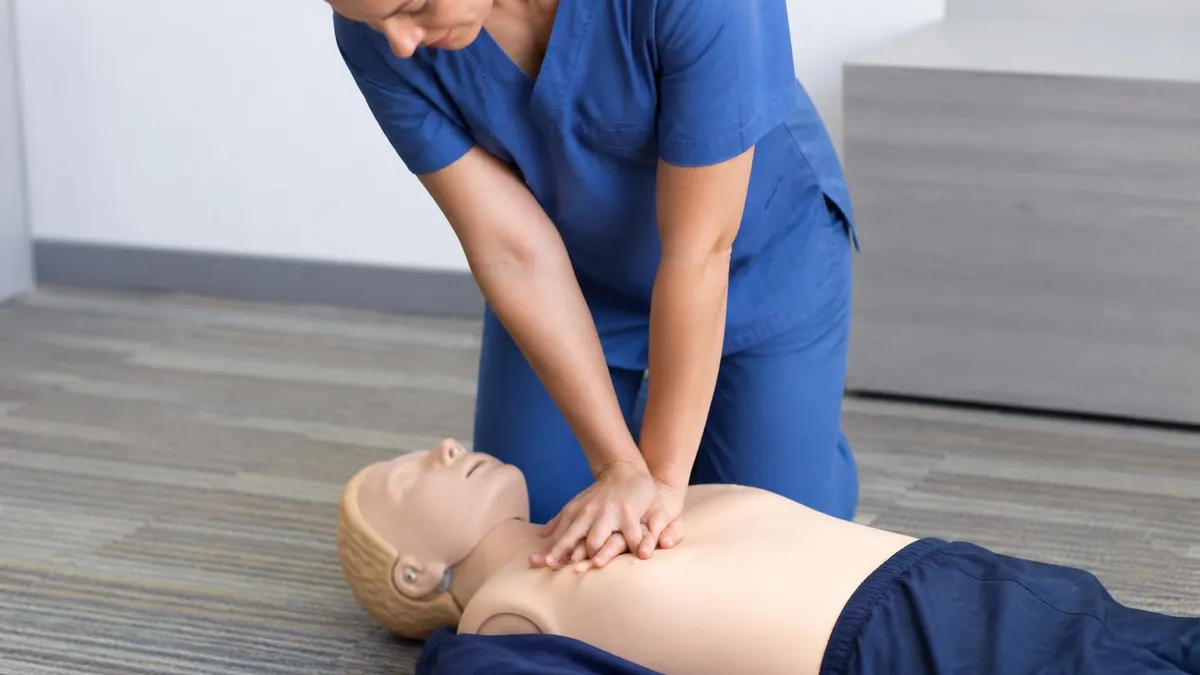
Inappropriate CPR Songs: What Not to Play, Why It Matters, and Better Beat-Per-Minute Alternatives
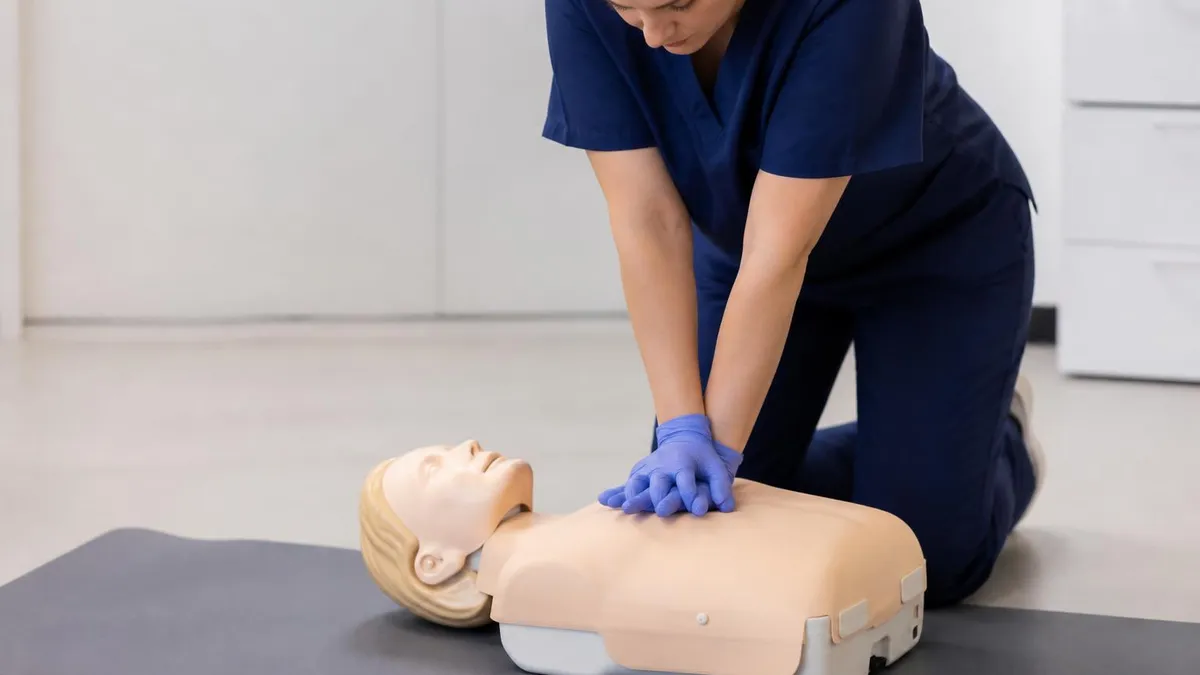
AHA CPR Recertification: How to Recertify CPR Online with the American Heart Association in 2026
About the Author

Registered Nurse & Healthcare Educator
Johns Hopkins University School of NursingDr. Sarah Mitchell is a board-certified registered nurse with over 15 years of clinical and academic experience. She completed her PhD in Nursing Science at Johns Hopkins University and has taught NCLEX preparation and clinical skills courses for nursing students across the United States. Her research focuses on evidence-based exam preparation strategies for healthcare certification candidates.
Join the Discussion
Connect with other students preparing for this exam. Share tips, ask questions, and get advice from people who have been there.
View discussion (5 replies)