
CPR Certification NYC: Complete Guide to Classes, Costs, and Requirements in 2026 September
CPR certification NYC guide: ❓ AHA classes, costs, BLS, ACLS algorithm prep, infant CPR, AED use, and how to get certified fast in 2026 September.
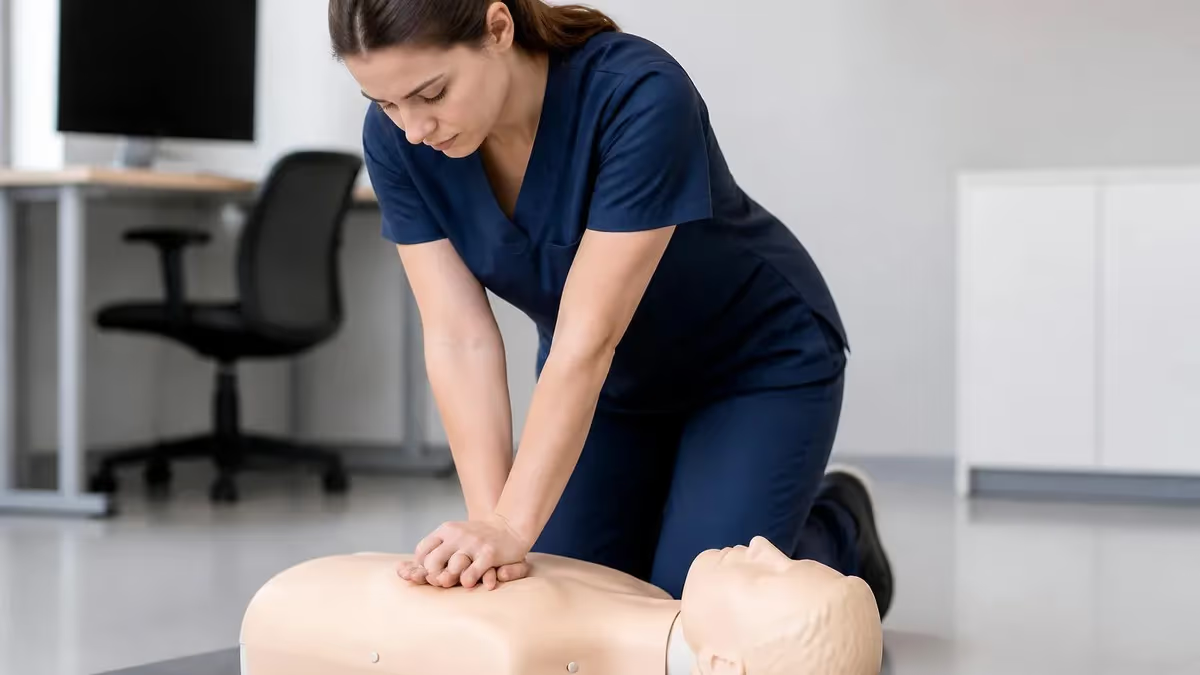
Getting CPR certification NYC residents can actually use on the job is more than just sitting through a four-hour class and walking out with a card. New York City is one of the most regulated training markets in the country, with Department of Health rules, hospital credentialing committees, FDNY EMS protocols, and employer-specific requirements that all shape which course you should take. Whether you are a nursing student in the Bronx, a personal trainer in Brooklyn, or a teacher in Queens, the right certification depends on your role.
This guide walks through every realistic option for CPR certification in the five boroughs, including American Heart Association (AHA) BLS Provider, American Red Cross Adult and Pediatric CPR/AED, the National CPR Foundation online pathway, and specialty courses like the ACLS algorithm course for nurses and PALS certification for pediatric providers. We will cover pricing, class length, renewal cycles, and which credentials hospitals like NYU Langone, Mount Sinai, and NewYork-Presbyterian actually accept at hire.
You will also learn the practical mechanics: how to find blended-learning skills sessions in Manhattan, what to expect on the hands-on test, how the AED component is scored, and why infant CPR is tested separately for childcare workers under New York State Office of Children and Family Services rules. We will demystify life support terminology, explain what does AED stand for, and clarify the difference between a BLS Provider card and a generic Heartsaver card.
One quick note before we dive in: this article is about CPR certification, not CPR cell phone repair or CPR phone repair shops. Those are unrelated retail brands that happen to share the acronym, and we mention them only because confused searchers sometimes land here looking for screen repair. If that is you, this guide will not help. If you are looking for hands-on lifesaving training in NYC, you are in exactly the right place.
By the end, you will know exactly which course fits your career path, how much to budget, where to register, and how to prepare so you pass the skills test on your first attempt. We will also cover what happens if you fail, how reciprocity works if you move from another state, and the renewal options that let busy professionals re-certify without losing a full Saturday.
NYC's training landscape changes faster than most cities because employers update credentialing requirements every fiscal year. The information below reflects 2026 standards, current AHA guidelines, and the latest New York State Education Department rules for licensed professionals. Bookmark this page, share it with coworkers, and use the table of contents to jump to the section that matters most for your situation.
If you want to test what you already know before paying for a class, take a few minutes with our free practice questions. Many learners discover they only need a refresher, not a full Provider course, which can save both time and money in a city where every hour counts.
CPR Certification NYC by the Numbers
Main CPR Course Types Offered in NYC
The Basic Life Support Provider course is required for nurses, EMTs, paramedics, dental staff, and medical students. It covers adult, child, and infant CPR, two-rescuer technique, bag-mask ventilation, and AED operation in clinical settings.
Designed for non-medical workers including teachers, gym staff, lifeguards, and corporate first responders. Covers adult CPR with the option to add child, infant, and basic first aid modules depending on workplace requirements.
Advanced Cardiovascular Life Support for ICU nurses, ER physicians, and critical care teams. Builds on BLS with the full ACLS algorithm for cardiac arrest, bradycardia, tachycardia, stroke, and post-arrest care management.
Pediatric Advanced Life Support for pediatricians, NICU staff, and pediatric ER teams. Focuses on systematic pediatric assessment, respiratory rate evaluation, shock recognition, and pediatric rhythm interpretation.
Free 30-60 minute awareness sessions offered by FDNY, NYC Health + Hospitals, and the American Heart Association. Not a certification, but teaches compression-only CPR to bystanders and family members of cardiac patients.
NYC learners typically choose between three major certifying bodies: the American Heart Association, the American Red Cross, and the National CPR Foundation. Each has a different reputation, price point, and acceptance rate among local employers. Knowing which one your job actually requires before you register can save you from re-taking the course at your own expense, which happens more often than people realize when HR rejects a card on the first day of orientation.
The American Heart Association is the gold standard for hospital systems in New York City. If you work for or plan to work for Mount Sinai, NYU Langone, NewYork-Presbyterian, Northwell, Montefiore, or any major academic medical center, AHA BLS Provider is almost certainly required. AHA cards are issued through authorized Training Centers, which means you must attend a class affiliated with an AHA-recognized site rather than a random online vendor. Skills must be verified in person by a certified instructor.
The American Red Cross is widely accepted by schools, daycares, summer camps, fitness clubs, and city agencies including the Department of Education and Parks and Recreation. Red Cross courses are often slightly cheaper than AHA and tend to be available at more community locations across the boroughs. The Red Cross also offers a digital certification card that integrates well with employer HR systems, making renewal documentation easier for non-clinical workplaces.
The National CPR Foundation is an entirely online certification widely used by personal trainers, yoga instructors, coaches, and self-employed wellness professionals. It is the fastest option, often completed in under two hours, and the cost is among the lowest available. However, it is generally not accepted by hospitals, nursing programs, or licensed healthcare employers in New York because skills are not verified in person. Always check with your employer before paying for any online-only course.
A common mistake is assuming that any CPR card will satisfy any employer. In NYC, credentialing committees are strict, and a Heartsaver card will not substitute for BLS Provider when the job description says BLS. Likewise, an online-only certificate may be perfectly fine for a SoulCycle instructor but rejected outright by a hospital nursing supervisor. Read your offer letter or job posting carefully before you book a class, and when in doubt, email HR and get the specific course name in writing.
Pricing in NYC runs higher than the national average because of real estate costs, instructor pay, and the density of healthcare workers needing fast turnaround. Expect $65 to $90 for a Heartsaver or Red Cross Adult CPR/AED class, $90 to $130 for AHA BLS Provider, $225 to $325 for ACLS, and $225 to $325 for PALS certification. Group rates and employer-sponsored sessions can lower these costs significantly, so always ask whether your workplace covers training before paying out of pocket.
Finally, watch out for unauthorized resellers. Several websites advertise AHA cards but route students to instructors who are not actually affiliated with a Training Center. If the card you receive cannot be verified through the AHA's eCard system, your employer will reject it. Always confirm the Training Center number and the issuing instructor's credentials before completing payment, and ask for a sample card image if you have any doubt about legitimacy.
CPR Practice Test Questions
Prepare for the CPR Cardiopulmonary Resuscitation Practice exam with our free practice test modules. Each quiz covers key topics to help you pass on your first try.
CPR Basic CPR
CPR Exam Questions covering Basic CPR. Master CPR Test concepts for certification prep.
CPR and First Aid
Free CPR Practice Test featuring and First Aid. Improve your CPR Exam score with mock test prep.
CPR (Cardiopulmonary Resuscitation) Adult ...
CPR Mock Exam on (Cardiopulmonary Resuscitation) Adult CPR and AED Usage. CPR Study Guide questions to pass on your first try.
CPR (Cardiopulmonary Resuscitation) Airway...
CPR Test Prep for (Cardiopulmonary Resuscitation) Airway Obstruction and Choking. Practice CPR Quiz questions and boost your score.
CPR (Cardiopulmonary Resuscitation) Cardio...
CPR Questions and Answers on (Cardiopulmonary Resuscitation) Cardiopulmonary Emergency Recognition. Free CPR practice for exam readiness.
CPR (Cardiopulmonary Resuscitation) Child ...
CPR Mock Test covering (Cardiopulmonary Resuscitation) Child and Infant CPR. Online CPR Test practice with instant feedback.
CPR (Cardiopulmonary Resuscitation) High-P...
Free CPR Quiz on (Cardiopulmonary Resuscitation) High-Performance Team Dynamics. CPR Exam prep questions with detailed explanations.
CPR (Cardiopulmonary Resuscitation) Legal ...
CPR Practice Questions for (Cardiopulmonary Resuscitation) Legal and Ethical Considerations. Build confidence for your CPR certification exam.
CPR for Specific Populations
CPR Test Online for for Specific Populations. Free practice with instant results and feedback.
CPR Airway & Breathing Management
CPR Exam Questions covering Airway & Breathing Management. Master CPR Test concepts for certification prep.
CPR Assessment & Recognition of Cardiac Ar...
Free CPR Practice Test featuring Assessment & Recognition of Cardiac Arrest. Improve your CPR Exam score with mock test prep.
CPR Chest Compressions & Defibrillation
CPR Mock Exam on Chest Compressions & Defibrillation. CPR Study Guide questions to pass on your first try.
CPR Post-Resuscitation Care & Recovery
CPR Test Prep for Post-Resuscitation Care & Recovery. Practice CPR Quiz questions and boost your score.
BLS, ACLS Algorithm, and PALS Certification Explained
Basic Life Support is the foundation course every healthcare worker in NYC must hold. The class covers high-quality compressions at 100-120 per minute, two inches deep for adults, with full chest recoil between pushes. Students also learn rescue breathing using a bag-mask, two-rescuer coordination, and AED use including pad placement for both adults and pediatric patients.
Most NYC programs use AHA blended learning, where you complete a two-hour online module first and then attend a 90-minute in-person skills session. The hands-on portion is tested using a manikin with real-time feedback, and you must pass both a written exam (around 25 questions) and a skills check to receive your card. Cards remain valid for two years from the issue date.

Pros and Cons of In-Person vs Blended CPR Classes in NYC
- +Blended learning cuts classroom time roughly in half
- +Online modules can be paused, replayed, and reviewed at your pace
- +In-person skills sessions are shorter and easier to schedule around shifts
- +AHA blended courses are accepted by every major NYC hospital
- +You still get hands-on manikin practice with instructor feedback
- +Digital eCards are issued instantly and easy to share with HR
- +Lower total cost than full-day classroom equivalents
- −Requires reliable internet and a quiet study space
- −Self-paced learners may procrastinate and miss skills appointments
- −Some employers still mandate traditional full-classroom format
- −Online portion lacks live questions and peer discussion
- −Tech issues with the AHA platform can delay your eCard issue
- −Not ideal for hands-on learners who need full-day immersion
- −Skills session must still be completed within 60 days of online module
CPR Certification NYC Pre-Class Checklist
- ✓Confirm the exact course name your employer requires in writing
- ✓Verify the Training Center is AHA, Red Cross, or NYC DOE-approved
- ✓Complete the online module at least 48 hours before your skills date
- ✓Print or download your online completion certificate to bring to class
- ✓Wear comfortable clothing — you will be kneeling on the floor
- ✓Bring a government-issued photo ID for instructor verification
- ✓Review compression depth (2 inches adult, 1.5 inches infant) and rate (100-120 bpm)
- ✓Memorize what does AED stand for: Automated External Defibrillator
- ✓Practice the recovery position transition for an unresponsive breathing victim
- ✓Arrive 15 minutes early to allow for sign-in and equipment setup
- ✓Bring a snack and water — minimal break time during the skills session
- ✓Save your digital eCard immediately to your phone and employer HR portal
Always Choose BLS Provider, Not Heartsaver, If You Plan to Work in Any Clinical Role
Every NYC hospital, urgent care, dialysis center, and surgical clinic requires the AHA BLS Provider course, not the Heartsaver CPR/AED course. The two look similar in length and price but carry very different credential weight. A Heartsaver card will be rejected at clinical orientation and force you to re-pay for a full BLS class on your own time. When in doubt, pay the extra $20 and take BLS Provider — it covers every workplace scenario that Heartsaver does, plus the clinical requirements you may need later.
Infant CPR is a separately tested skill set within most NYC certification courses, and it is the segment learners most often fail on the first attempt. The reason is that infant CPR uses a different compression depth, hand position, and ventilation strategy than adult CPR. Compressions are delivered with two fingers (single rescuer) or two thumbs encircling the chest (two rescuers) to a depth of approximately 1.5 inches, at a rate of 100 to 120 per minute, with a 30:2 compression-to-ventilation ratio for single-rescuer scenarios.
Childcare workers, nannies, pediatric nurses, postpartum doulas, and parents enrolled in family CPR programs all need to understand the infant chain of survival. In New York State, licensed family daycare providers and group daycare staff must hold current pediatric CPR certification under OCFS regulations, with renewal every two years. Many city employers go further and require Red Cross Pediatric CPR/AED or AHA BLS, which both include infant components. Always confirm with your specific licensor before booking.
Respiratory rate evaluation is critical in pediatric scenarios because children compensate for shock far longer than adults before crashing. Normal respiratory rate ranges vary dramatically by age: newborns breathe 30 to 60 times per minute, infants under one year 30 to 53, toddlers 22 to 37, and school-age children 18 to 25. Anything outside these ranges, or any sign of retractions, grunting, or nasal flaring, is a red flag that should prompt immediate escalation in a clinical setting.
One subtle but important point: infant CPR is for victims under one year of age, while child CPR techniques apply from age one to puberty. Once a victim shows signs of puberty, adult CPR is used. This matters because compression depth, AED pad selection, and rescue breath volume all change with age. In NYC schools, AED cabinets typically include both adult and pediatric pads, and staff must know how to identify the right pads under stress, often in seconds.
If a choking infant becomes unresponsive, the rescuer transitions immediately to CPR, beginning with 30 compressions followed by an airway check. Before each set of two rescue breaths, the rescuer looks inside the mouth and removes any visible object — but never performs a blind finger sweep, which can push the object deeper. This protocol is heavily tested on the skills exam, so practice it both verbally and physically before your test date.
AED use on infants follows a specific hierarchy. The preferred option is a pediatric attenuator or pediatric pads, but if only adult pads are available, the rescuer places one pad on the infant's chest and one on the back to prevent pad contact. This is a common test question and a frequent stumbling block on the BLS Provider written exam. Memorize the order: pediatric pads first, adult pads with anterior-posterior placement only if pediatric pads are unavailable.
NYC parents often ask whether home-only family CPR awareness sessions are enough. They are useful for confidence and basic awareness, but they do not produce a certification card and would not satisfy childcare licensing requirements. If you intend to babysit, nanny, or work with children professionally, take a card-issuing pediatric CPR course from AHA or Red Cross rather than a free community session.

NYC hospital HR departments require an unexpired CPR card on your first day of orientation, not your interview date. If your card expires between offer and start, you must renew before day one or your start date will be pushed back. Plan to renew at least 30 days before expiration to avoid emergency rebooking at premium rates.
Renewing your CPR certification in NYC is significantly faster than getting certified for the first time, but only if you renew before your card actually expires. Both AHA and Red Cross allow renewal courses at a reduced length — typically a 90-minute skills check after a refreshed online module — as long as you present an unexpired card or one that lapsed within the past 30 days. After that grace period, you generally must repeat the full Provider course at full price.
The AHA eCard system has made card verification dramatically easier than the old paper cards. Employers can scan a QR code or look up your card number on the AHA's verification portal, confirming the issue date, expiration date, Training Center, and instructor. NYC employers are increasingly skipping physical card collection in favor of a single screenshot of the digital eCard, which speeds up onboarding considerably. Save your eCard to your phone wallet for easy retrieval.
Reciprocity is straightforward when moving to NYC from another state. AHA, Red Cross, and ASHI cards are recognized nationwide, so a valid out-of-state card transfers without re-testing. National CPR Foundation cards may or may not transfer depending on employer policy — clinical employers usually require an AHA card regardless of any prior credential. If you are relocating for a clinical job, plan to take AHA BLS Provider in NYC immediately on arrival to avoid HR friction.
If you lose your physical card, replacement is generally free or a small fee from the issuing Training Center. AHA eCards never need to be replaced because they are stored permanently in your AHA account. You can also use a free national lookup service, like the resources covered in our CPR card lookup guide, to verify your status and request a duplicate if your original Training Center has closed.
Many NYC professionals confuse CPR certification with broader life support credentials. CPR certification is the foundational skill, BLS adds clinical context, ACLS layers on adult cardiac algorithms, and PALS layers on pediatric algorithms. You do not stack them in the same card — each is a separate course with its own certification cycle. For most non-clinical workers, a single CPR/AED card is all you will ever need; for healthcare workers, expect to maintain BLS continuously and add ACLS or PALS depending on your unit.
Cost-saving strategies for repeat renewals include employer-sponsored sessions, group bookings at gyms or daycares, and union-affiliated training sites. New York State Nurses Association members can often access free or discounted BLS classes, and FDNY runs free Hands-Only CPR awareness events year-round across the boroughs. Always check internal channels before paying retail at a commercial training center.
Finally, keep a record of your past certifications. Some employers ask for proof of continuous certification (no gaps) when applying for advanced positions or specialty units. A simple folder on your phone with each eCard PDF, organized by year, will satisfy most credentialing committees and save you scrambling during applications or unit transfers.
Passing your CPR certification skills test in NYC comes down to muscle memory and clean technique, not memorizing every page of the textbook. Instructors are watching for a handful of high-stakes performance markers, and if you nail those, the small mistakes get forgiven. Compression depth and rate are the top two — too shallow or too slow, and you will be asked to repeat the cycle. Use the rhythm of a familiar song around 110 beats per minute to stay locked in during the test, and let your body do the work rather than counting in your head.
Scene safety is a frequently missed first step, especially under exam pressure. Before you ever touch the manikin, say out loud that the scene is safe, then check responsiveness with a shoulder tap and shout. Direct someone specifically — point and name a bystander — to call 911 and bring an AED. Vague commands like "someone call 911" lose points; specific commands like "you in the blue shirt, call 911 and bring the AED" earn full credit and demonstrate leadership the AHA wants to see.
Hand placement matters more than people expect. For adults, place the heel of one hand on the lower half of the sternum, between the nipples, with the second hand on top and fingers interlaced. Keep your shoulders directly over your hands and your elbows locked. Compress straight down using your body weight rather than your arm strength — you will tire less and deliver more consistent depth. Allow full chest recoil between each compression; leaning on the chest is one of the most common deductions on skills tests.
Bag-mask ventilation, often tested in BLS Provider, requires two skills working in tandem: a tight mask seal and a calm one-second breath that produces visible chest rise. Use the E-C clamp technique with your dominant hand, forming a C with thumb and index finger around the mask and an E with your remaining three fingers along the jawline. Squeeze the bag slowly — fast or forceful squeezes push air into the stomach and increase vomiting risk in a real arrest.
AED use is straightforward but heavily scored on speed and verbal cues. As soon as the AED arrives, power it on, attach pads (one right of the sternum below the clavicle, one on the left lower ribs), and clear the patient verbally before analysis. Say "clear" and visually scan the body before shocking. Resume compressions immediately after the shock — do not pause to check a pulse. This single habit separates strong test-takers from average ones and is required by current AHA guidelines.
For the written portion, expect 25 to 35 multiple-choice questions covering compression rates, ventilation ratios, AED indications, choking algorithms, and special situations like pregnancy and drowning. The passing score is typically 84 percent for AHA exams. Most providers pass on the first try because the questions track directly to the textbook, but the few that fail usually missed the airway and choking section. Spend extra time on that material — our airway and choking practice quiz is a strong final review tool.
One last tip: do not skip the recovery position demonstration if your instructor asks for it. Many test sheets include a brief skills check for transitioning a breathing unresponsive victim into a stable side-lying position. It takes about 15 seconds, but instructors will dock points if you skip it or fumble through. Practice once or twice the day before your test, and you will glide through it without thinking.
CPR Questions and Answers
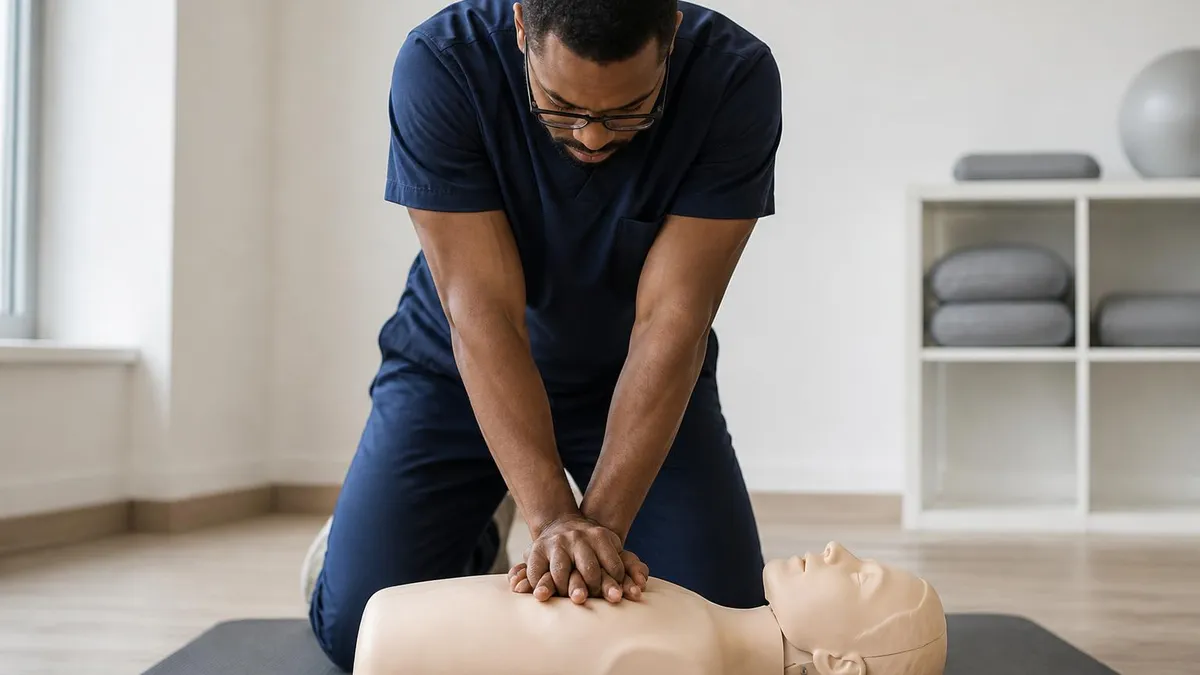
CPR Card Lookup: How to Verify, Replace, and Access Your CPR Certification in 2026
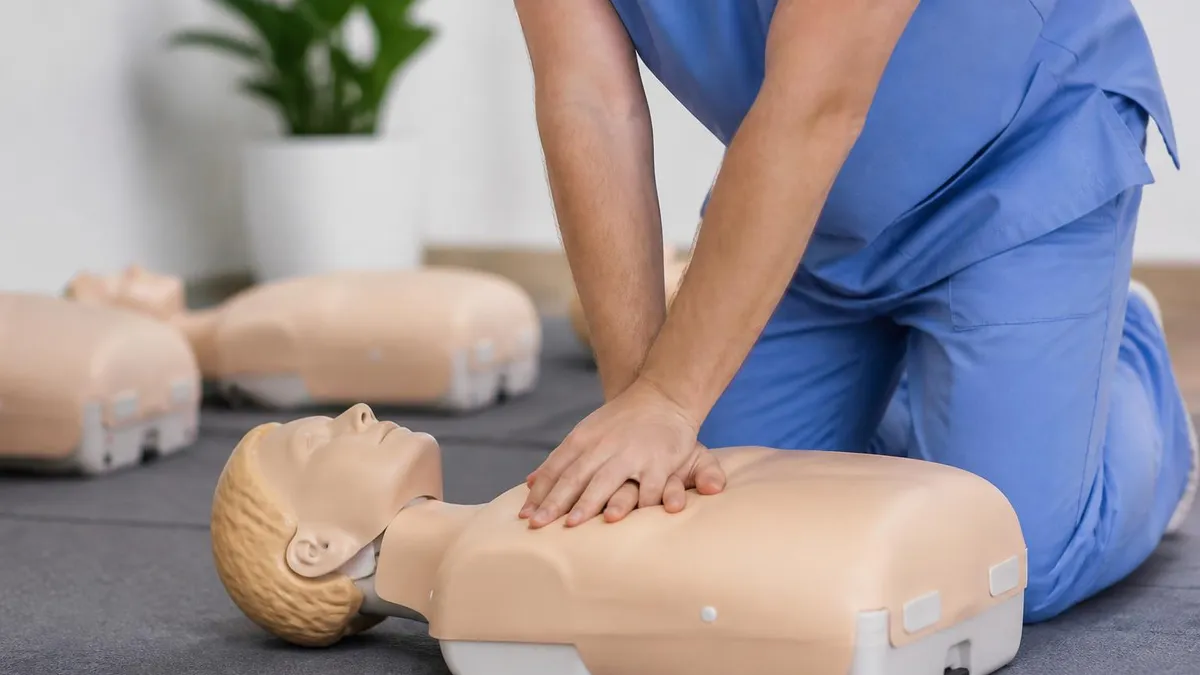
AHA CPR: What It Is, Which Course You Need, and How to Get Certified
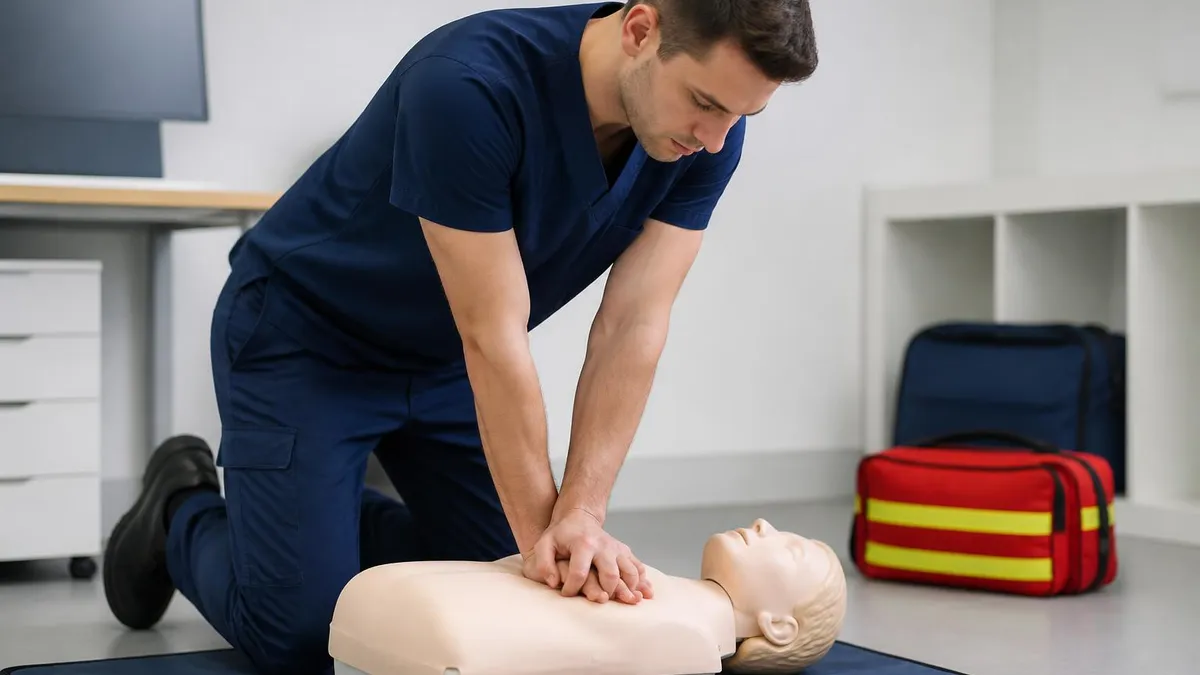
Adult CPR: Complete Step-by-Step Guide to Hands-Only and Standard CPR in 2026
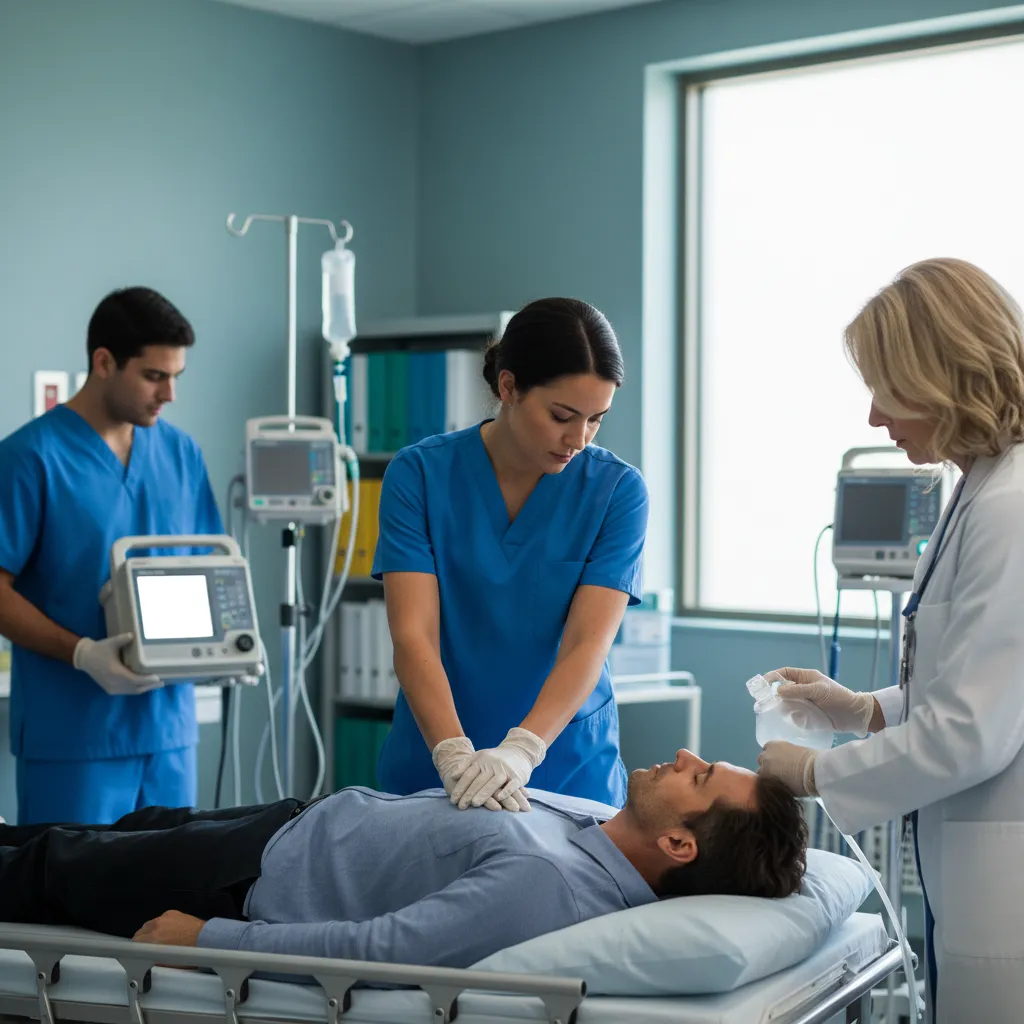
CPR - Cardiopulmonary Resuscitation: Complete Study Guide 2026
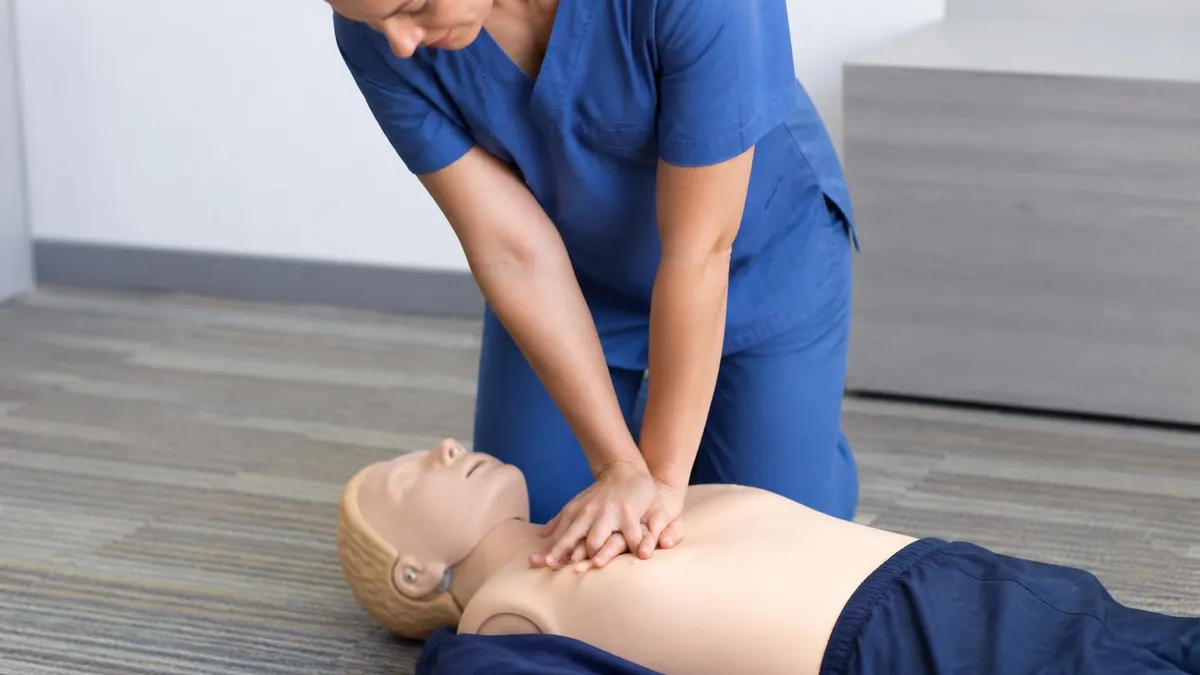
Inappropriate CPR Songs: What Not to Play, Why It Matters, and Better Beat-Per-Minute Alternatives
About the Author

Registered Nurse & Healthcare Educator
Johns Hopkins University School of NursingDr. Sarah Mitchell is a board-certified registered nurse with over 15 years of clinical and academic experience. She completed her PhD in Nursing Science at Johns Hopkins University and has taught NCLEX preparation and clinical skills courses for nursing students across the United States. Her research focuses on evidence-based exam preparation strategies for healthcare certification candidates.
Join the Discussion
Connect with other students preparing for this exam. Share tips, ask questions, and get advice from people who have been there.
View discussion (5 replies)