
CPR and Staying Alive: The Bee Gees Beat, Compression Rate, and Why This Song Saves Lives
💡 Learn why CPR and Staying Alive go together: the 100-120 BPM beat that matches compression rate, plus ACLS algorithm tips, infant CPR, and AED basics.
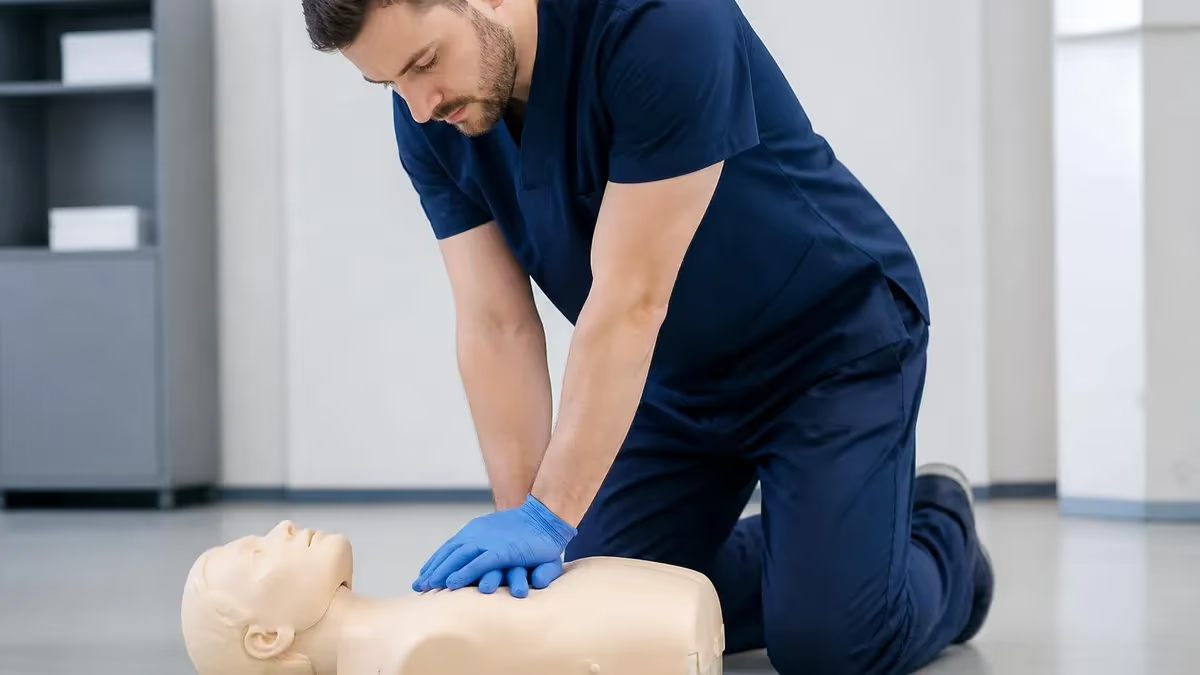
The connection between CPR and Staying Alive is one of the most useful memory tricks in emergency medicine, and it has saved real lives in real cardiac arrests. The 1977 Bee Gees disco hit clocks in at almost exactly 103 beats per minute, which falls squarely inside the 100 to 120 compressions-per-minute window that every modern acls algorithm and Basic Life Support guideline recommends. When a bystander hums the chorus and presses on the chest in time, they deliver compressions at the right speed without needing a metronome, a watch, or a paramedic shouting cadence. Practice with the free CPR (Cardiopulmonary Resuscitation) practice test on PracticeTestGeeks (650+ questions with answer explanations).
Researchers at the University of Illinois first popularized the pairing in 2008, after a small study showed that medical students performing chest compressions to Staying Alive maintained a far more consistent rate than those working in silence. The American Heart Association quickly folded the tip into community CPR campaigns, and it has since become a fixture in classrooms, hospital orientation videos, and YouTube tutorials produced by the national cpr foundation and other certification bodies.
What makes the song so effective is not just tempo but rhythm clarity. The bass line of Staying Alive is loud, repetitive, and almost impossible to misread, which means even untrained rescuers can lock onto the beat within two or three seconds. That matters because survival from out-of-hospital cardiac arrest drops by roughly seven to ten percent for every minute that effective CPR is delayed, and most bystanders hesitate because they do not feel confident about technique or speed.
This guide walks through everything the song does not teach you on its own: depth of compressions, hand placement, how to integrate an AED, how the pediatric and infant cpr sequences differ, and where the Staying Alive trick fits inside the larger chain of survival. We will also cover when to switch from hands-only CPR to full ventilations, how rescue breathing interacts with respiratory rate targets, and what a normal pulse and breathing pattern look like in someone who has just been resuscitated.
You will also learn the practical limits of the metaphor. Staying Alive is a starting point, not a complete curriculum. Real cardiac arrest scenes involve panicked bystanders, broken ribs, vomit, agonal gasps, and the constant question of when to stop. A song cannot replace a structured course, but it can lower the activation energy required to begin, and beginning is what determines whether someone walks out of the hospital neurologically intact two weeks later.
Before we dive into mechanics, it helps to set your expectations about what good CPR feels like. You should be checking the patient's normal breathing rate only briefly, no more than ten seconds, before committing to compressions if breathing is absent or only gasping. The goal is not perfection; it is continuous, deep, fast pressure that keeps oxygenated blood moving to the brain until advanced help arrives with a defibrillator and airway equipment.
By the end of this article you will know exactly why Staying Alive works, what its limits are, how to pair it with rescue breaths, and how to transition into the broader life support framework that paramedics and ER teams use. Whether you are a parent, teacher, lifeguard, or office first-aid responder, the song is the easiest on-ramp to a skill that almost every adult should carry.
CPR: upcoming dates and official changes
- Updated Oct 24, 2026: Delivery (AHA HeartCode BLS (blended)) is now Online part plus hands-on skills session (previously Online part plus hands-on skills session).
- Updated Oct 24, 2026: Delivery (Red Cross CPR) is now In-person, online or blended (previously In-person or blended, with a required in-person skills session).
- Updated Oct 24, 2026: Exam fee (AHA BLS Provider) is now $10.00 for the BLS online exam (previously $10.00 for the BLS online exam (instructor-led course)).
Facts verified Oct 24, 2026 against American Heart Association. Dates that have passed are removed automatically.
- To receive an AHA BLS Provider course completion card, students must pass both skills tests and the online exam with a score of at least 84%. (elearning.heart.org)
- The Red Cross online CPR course is completed by passing a learning assessment with a score of 80% or better. (American Heart Association)
- The AHA BLS online exam used after an instructor-led BLS Provider course costs $10.00. (elearning.heart.org)
- AHA HeartCode BLS online costs $38.00, and the required hands-on session is sold separately. (elearning.heart.org)
- An AHA BLS Provider course completion card (eCard) earned through HeartCode BLS is valid for two years. (elearning.heart.org)
- Red Cross CPR certification lasts 2 years after successful completion of training. (American Heart Association)
- Red Cross abbreviated CPR renewal courses let holders of still-valid certification maintain it for an additional two years. (American Heart Association)
- AHA HeartCode BLS is completed online and must be followed by a hands-on skills session with an AHA Training Center to earn a course completion card. (shopcpr.heart.org)
- Red Cross CPR certification courses are offered in in-person, online and blended learning formats, with blended courses including in-class skill sessions. (American Heart Association)
Facts verified Oct 24, 2026 against American Heart Association. Dates that have passed are removed automatically.
CPR Exam at a Glance
| Item | Detail | Official source |
|---|---|---|
| Passing score (AHA BLS Provider) | 84% minimum on the online exam, plus both skills tests | elearning.heart.org |
| Passing score (Red Cross CPR (online)) | 80% or better on the learning assessment | American Heart Association |
| Exam fee (AHA BLS Provider) | $10.00 for the BLS online exam | elearning.heart.org |
| Exam fee (AHA HeartCode BLS (blended)) | $38.00 for the online part; skills session sold separately | elearning.heart.org |
| Validity (AHA BLS Provider) | 2 years | elearning.heart.org |
| Validity (Red Cross CPR) | 2 years | American Heart Association |
| Renewal (Red Cross CPR) | Shorter renewal course adds 2 more years | American Heart Association |
| Delivery (AHA HeartCode BLS (blended)) | Online part plus hands-on skills session | shopcpr.heart.org |
| Delivery (Red Cross CPR) | In-person, online or blended | American Heart Association |
Facts verified Oct 24, 2026 against American Heart Association. Dates that have passed are removed automatically.
Free CPR (Cardiopulmonary Resuscitation) Study Tools
Interactive CPR (Cardiopulmonary Resuscitation) resources on PracticeTestGeeks, free to start:
- CPR (Cardiopulmonary Resuscitation) practice test — 650+ questions with instant scoring and answer explanations
- CPR (Cardiopulmonary Resuscitation) flashcards — review key terms and concepts card by card
- CPR (Cardiopulmonary Resuscitation) study guide — topic-by-topic overview of what the exam covers
- CPR (Cardiopulmonary Resuscitation) cheat sheet — one-page printable summary for last-minute review
CPR and Staying Alive by the Numbers
How the Staying Alive Method Works in Practice
Hum or play the chorus of Staying Alive aloud before you begin compressions. The bass line gives you a clear, repeating downbeat that lands almost exactly on the 100-120 BPM target the AHA recommends for high-quality CPR.
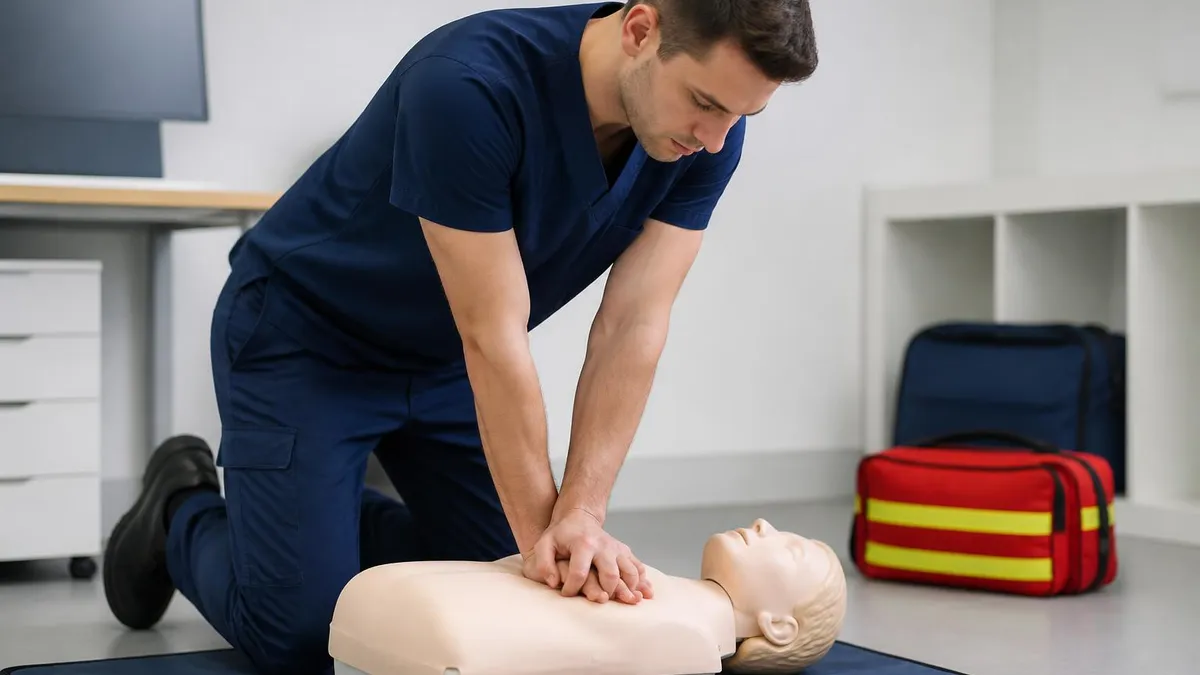
Place the heel of your dominant hand on the center of the chest, stack your other hand on top, and compress straight down with each beat. Each push should reach at least two inches deep in an adult patient.
Between beats, lift just enough pressure to let the chest spring back completely. Incomplete recoil reduces venous return to the heart and is one of the most common mistakes even trained rescuers make under stress.
Keep going through the song without pausing. The only acceptable interruptions are switching rescuers every two minutes, delivering rescue breaths if trained, or stepping clear for an AED shock.
Quality drops dramatically after about two minutes of continuous compressions. If a second rescuer is available, swap roles in under five seconds so the beat and depth never falter.
Compression rate is only half the equation; depth, recoil, and hand placement are the other half, and Staying Alive does nothing to enforce them. For an adult patient, the American Heart Association requires compressions at least two inches deep but not more than 2.4 inches. Anything shallower fails to squeeze enough blood out of the ventricles, and anything deeper risks fracturing the sternum, lacerating the liver, or causing pneumothorax that complicates post-resuscitation care.
Hand placement is straightforward but often done wrong under stress. Find the lower half of the sternum, roughly between the nipples on most adults, and plant the heel of one hand there. Stack the other hand on top, interlace your fingers, and lift them slightly off the ribs so you are not pressing on cartilage. Lock your elbows, position your shoulders directly above your hands, and use your body weight rather than your arm muscles to drive each compression.
Full chest recoil is non-negotiable. Many rescuers, especially those who are nervous about hurting the patient, lean on the chest between compressions and never let it rebound completely. This collapses the negative pressure that pulls blood back into the heart during diastole, and it can cut effective cardiac output in half. The fix is mental: between every beat of Staying Alive, consciously let your weight off the chest before driving the next push.
Compression fraction, the percentage of time during a resuscitation that someone is actually doing compressions, is one of the strongest predictors of survival. Modern guidelines target a fraction above 80 percent, which means pauses for breaths, pulse checks, or AED analysis should each last no more than ten seconds. The Staying Alive tempo helps you snap right back into rhythm after every interruption rather than restarting cold.
Rescue breathing, when you are trained and willing to provide it, follows a 30:2 ratio in adults. After every thirty compressions, deliver two breaths over about one second each, watching for visible chest rise. If the chest does not rise, reposition the airway using a head-tilt chin-lift, or in suspected trauma a jaw thrust maneuver, and try again. Do not waste more than ten seconds on breaths before returning to compressions.
For untrained bystanders, hands-only CPR is now the preferred default for adults who collapse suddenly in front of witnesses. Studies show neurologically intact survival is equivalent or better with continuous compressions than with stop-and-start ventilations performed poorly. The Staying Alive trick was designed specifically for this population: someone who has never taken a class but is willing to push hard and fast on the chest until help arrives.
The exception is asphyxial arrest, which includes drowning, drug overdose, choking, and almost all pediatric arrests. In these cases, the heart stops because oxygen ran out first, so ventilations matter enormously. If you are trained, deliver rescue breaths. If you are not, hands-only CPR is still better than nothing, but call for an AED and trained help immediately and do not be shy about attempting breaths if the patient is a child.

CPR Practice Test Questions
Prepare for the CPR Cardiopulmonary Resuscitation Practice exam with our free practice test modules. Each quiz covers key topics to help you pass on your first try.
CPR Basic CPR
CPR Exam Questions covering Basic CPR. Master CPR Test concepts for certification prep.
CPR and First Aid
Free CPR Practice Test featuring and First Aid. Improve your CPR Exam score with mock test prep.
CPR (Cardiopulmonary Resuscitation) Adult ...
CPR Mock Exam on (Cardiopulmonary Resuscitation) Adult CPR and AED Usage. CPR Study Guide questions to pass on your first try.
CPR (Cardiopulmonary Resuscitation) Airway...
CPR Test Prep for (Cardiopulmonary Resuscitation) Airway Obstruction and Choking. Practice CPR Quiz questions and boost your score.
CPR (Cardiopulmonary Resuscitation) Cardio...
CPR Questions and Answers on (Cardiopulmonary Resuscitation) Cardiopulmonary Emergency Recognition. Free CPR practice for exam readiness.
CPR (Cardiopulmonary Resuscitation) Child ...
CPR Mock Test covering (Cardiopulmonary Resuscitation) Child and Infant CPR. Online CPR Test practice with instant feedback.
CPR (Cardiopulmonary Resuscitation) High-P...
Free CPR Quiz on (Cardiopulmonary Resuscitation) High-Performance Team Dynamics. CPR Exam prep questions with detailed explanations.
CPR (Cardiopulmonary Resuscitation) Legal ...
CPR Practice Questions for (Cardiopulmonary Resuscitation) Legal and Ethical Considerations. Build confidence for your CPR certification exam.
CPR for Specific Populations
CPR Test Online for for Specific Populations. Free practice with instant results and feedback.
CPR Airway & Breathing Management
CPR Exam Questions covering Airway & Breathing Management. Master CPR Test concepts for certification prep.
CPR Assessment & Recognition of Cardiac Ar...
Free CPR Practice Test featuring Assessment & Recognition of Cardiac Arrest. Improve your CPR Exam score with mock test prep.
CPR Chest Compressions & Defibrillation
CPR Mock Exam on Chest Compressions & Defibrillation. CPR Study Guide questions to pass on your first try.
CPR Post-Resuscitation Care & Recovery
CPR Test Prep for Post-Resuscitation Care & Recovery. Practice CPR Quiz questions and boost your score.
Adult, Child, and Infant CPR Compared
For anyone past puberty, use two-handed compressions at least two inches deep, at 100-120 per minute, with a 30:2 ratio if you are providing breaths. Staying Alive works perfectly here because adult hearts are usually in ventricular fibrillation, a rhythm that responds to a combination of fast, deep compressions and timely defibrillation from an AED.
Most adult collapses witnessed in public spaces are sudden cardiac events, not respiratory failures, so hands-only CPR is the recommended default for untrained bystanders. Push hard, push fast, and do not stop until paramedics take over or an AED tells you to clear the patient. Survival in these cases can exceed forty percent when bystander CPR and early defibrillation happen within minutes.
Is the Staying Alive Method Right for Every Rescuer?
- +Tempo is almost exactly inside the recommended 100-120 compressions per minute range
- +Song is widely recognized across generations and easy to recall under stress
- +Encourages untrained bystanders to begin CPR who might otherwise freeze
- +Provides an audible, rhythmic anchor that survives panic and adrenaline
- +Works equally well for adult, child, and most infant compression rates
- +Reduces dependency on metronomes, watches, or counting out loud
- −Does not teach depth, hand placement, or full recoil
- −Some rescuers find the song culturally jarring during a real emergency
- −Tempo cue alone cannot replace a hands-on CPR class or certification
- −May lead to rushing if rescuer mentally sings the chorus too fast
- −Provides no guidance on when to stop compressions or check pulse
- −Does not address ventilation technique, airway, or AED integration
Pros and Cons at a Glance
| Pros | Cons |
|---|---|
| Song is widely recognized across generations and easy to recall under stress | Does not teach depth, hand placement, or full recoil |
| Encourages untrained bystanders to begin CPR who might otherwise freeze | Some rescuers find the song culturally jarring during a real emergency |
| Provides an audible, rhythmic anchor that survives panic and adrenaline | Tempo cue alone cannot replace a hands-on CPR class or certification |
| Works equally well for adult, child, and most infant compression rates | May lead to rushing if rescuer mentally sings the chorus too fast |
| Reduces dependency on metronomes, watches, or counting out loud | Provides no guidance on when to stop compressions or check pulse |

Complete CPR and Staying Alive Action Checklist
- ✓Confirm the scene is safe before approaching the patient
- ✓Tap the shoulders and shout to check responsiveness
- ✓Call 911 or shout for someone specific to call and to find an AED
- ✓Open the airway with head-tilt chin-lift and check breathing for no more than ten seconds
- ✓Begin compressions immediately if breathing is absent or only agonal gasps are present
- ✓Start humming Staying Alive and press at least two inches deep on every beat
- ✓Allow full chest recoil between every compression without leaning on the chest
- ✓Deliver thirty compressions, then two rescue breaths if you are trained and willing
- ✓Attach the AED as soon as it arrives and follow voice prompts exactly
- ✓Continue CPR until paramedics arrive, the patient moves, or you are physically unable to continue
Imperfect CPR Beats No CPR Every Time
Survey after survey shows that bystanders freeze because they fear hurting the patient or doing CPR incorrectly. The data is unambiguous: any compressions, even shallow ones at the wrong rate, dramatically improve survival compared with waiting for paramedics. Staying Alive exists to lower the activation energy needed to begin. If you remember nothing else, push hard, push fast on the center of the chest, and do not stop.
Once compressions are underway, the next critical link in the chain of survival is defibrillation. So what does aed stand for? AED stands for Automated External Defibrillator, a portable device that analyzes the heart's electrical rhythm and delivers a calibrated shock if it detects ventricular fibrillation or pulseless ventricular tachycardia. Every minute that defibrillation is delayed in shockable cardiac arrest reduces survival by about ten percent, which is why public AEDs in airports, gyms, and schools have become as common as fire extinguishers.
Using an AED is deliberately simple. Turn it on, follow the spoken prompts, and place the pads exactly where the diagrams show: one on the upper right chest and one on the lower left rib cage for adults. The machine will tell you to stop touching the patient while it analyzes, then either advise a shock or instruct you to resume CPR. You cannot accidentally shock a healthy heart; the AED refuses to deliver energy unless the rhythm meets shockable criteria.
Once paramedics arrive, the resuscitation transitions from Basic Life Support to Advanced Cardiac Life Support, which is governed by the acls algorithm. ACLS adds intravenous access, advanced airway placement, capnography to confirm ventilation, and medications such as epinephrine and amiodarone delivered on a timed schedule. The algorithm is structured around the same fundamental priority you already know: high-quality, uninterrupted compressions remain the single most important intervention.
Pediatric resuscitation has its own parallel structure called PALS, and pals certification is the standard credential for nurses, paramedics, and physicians who work with children. PALS uses age-adjusted drug doses, weight-based defibrillation energy, and a heavier emphasis on respiratory causes because pediatric arrests rarely begin with a primary cardiac rhythm. The same Staying Alive tempo still applies during PALS compressions, even though everything else around it changes.
Life support, in the broad sense, means any intervention that maintains oxygen delivery to vital organs when the body cannot do it alone. Basic Life Support is the bystander layer with compressions, breaths, and AED. Advanced Cardiac Life Support adds drugs, advanced airways, and rhythm interpretation. Post-resuscitation care, the often-overlooked third stage, includes targeted temperature management, hemodynamic support, and neurological monitoring to preserve brain function during the days that follow.
Knowing where Staying Alive fits in this larger system helps you understand why the trick matters so much. The song does not save lives by itself; it lengthens the window during which more advanced interventions can still work. A patient who receives effective bystander CPR for six minutes is a vastly different physiological case than one who receives no compressions during the same window, even if both eventually get the same paramedic care.
That window is the entire point of bystander training. Whether you call it CPR and Staying Alive, hands-only CPR, or compression-only resuscitation, the goal is identical: maintain forward blood flow to the brain and heart until someone with more tools takes over. Every additional minute of quality compressions buys time for the AED, the paramedics, the ER team, and the post-arrest specialists to finish what you started.
The Staying Alive tempo is a starting point, not a complete protocol. In drowning, drug overdose, choking-related arrest, and almost every pediatric or infant arrest, ventilations are as important as compressions. If you have never taken a hands-on CPR class, take one. Watching videos and humming a song will not teach you depth, recoil, or airway management.
Getting properly trained is the single best upgrade you can make on top of the Staying Alive trick. The two largest US providers are the American Heart Association and the American Red Cross, and both offer Basic Life Support, Heartsaver, and pediatric tracks. Smaller online providers such as the national cpr foundation issue printable cards that are accepted by some employers, although healthcare facilities almost always require AHA or Red Cross credentials for clinical roles.
For healthcare professionals, the credential ladder typically goes BLS first, then ACLS, then PALS if you work with children, then specialty courses such as NRP for neonatal resuscitation or TNCC for trauma nursing. Each course has a written exam, a hands-on megacode station, and a two-year renewal cycle. You can take initial courses in person over a single day, while renewals are often available as blended online plus skills check formats.
For lay rescuers, a four-hour Heartsaver CPR and AED class teaches everything Staying Alive cannot: realistic compression depth on a feedback manikin, airway management, two-rescuer coordination, AED operation, and choking response for adults, children, and infants. Most classes cost between fifty and one hundred and twenty dollars, and many employers reimburse the fee or even host group sessions on-site once a year.
If you search for CPR training online, you will run into a confusing mix of legitimate certification sites and unrelated businesses that share the acronym. Always confirm that the organization you pay is recognized by the employer or licensing board you are trying to satisfy before completing the purchase.
Beyond formal certification, recurrent practice is what keeps skills sharp. Studies show that compression quality begins to deteriorate measurably within three to six months of training, and most experts recommend brief skills refreshers every quarter. A two-minute compression drill on a manikin, ideally with audiovisual feedback, can restore proficiency far faster than retaking an entire course.
Family training matters too. If you have school-aged children, teach them the location of your home AED if you own one, how to call 911, and how to recognize agonal breathing. Children as young as nine can perform effective compressions on adults, and teenagers routinely save grandparents and parents during witnessed arrests at home. The Staying Alive song is an unusually effective teaching tool for this age group because the rhythm and the message of the chorus both reinforce the goal.
Finally, when someone you love returns to spontaneous circulation after CPR, remember that the work is not over. Place them on their side in the recovery position if they are breathing adequately but unresponsive, keep monitoring the respiratory rate, and stay with them until paramedics arrive. Post-arrest patients can deteriorate again within minutes, and your continued attention may be the difference between a survival statistic and a discharged patient who walks home.
A few practical refinements separate competent rescuers from great ones, and most of them are too subtle to fit into a song. The first is body position. Kneel close to the patient with your knees touching their side, so your shoulders are directly above your hands. Compressing from too far away forces you to push at an angle, which wastes energy and reduces depth. If you find your arms burning within a minute, your geometry is wrong, not your stamina.
The second refinement is breath quality. If you choose to provide ventilations, deliver them over about one second each and watch for visible chest rise. Do not hyperventilate the patient; over-aggressive breaths raise intrathoracic pressure, reduce venous return, and actually worsen outcomes. The target respiratory rate during CPR with an advanced airway in place is one breath every six seconds, or ten per minute, which is much slower than most untrained rescuers instinctively deliver.
The third refinement is teamwork. Whenever a second rescuer is present, assign roles immediately: one person on compressions, one on airway and AED, and ideally a third managing the timer and calling 911. Switch compressors every two minutes to maintain quality. Communicate out loud about what you are doing and what you need, because silent teams miss critical transitions and waste seconds that the patient cannot afford to lose.
The fourth refinement is post-arrest care. After return of spontaneous circulation, the patient is fragile. Keep them flat or in the recovery position, do not give food or water even if they ask, and continue to monitor breathing and pulse until paramedics take over. Many patients re-arrest within the first thirty minutes, and your continued vigilance is part of the resuscitation, not a separate event.
The fifth refinement is psychological. Performing CPR is exhausting, emotionally as well as physically. Even when you do everything right, the patient may not survive, because cardiac arrest outside a hospital still has overall survival rates below fifteen percent. Debrief afterward with the responding paramedics, your family, or a therapist if needed. Doing CPR on a stranger or, worse, on someone you love, leaves a real mark, and most healthcare systems now offer formal post-event support.
The sixth refinement is preparation. Learn where the AEDs are in the buildings where you spend the most time: your office, your gym, your child's school, your favorite restaurant. The PulsePoint app and similar tools map public AEDs in many US cities. Knowing the location in advance shaves seconds off the response in a real emergency, and seconds map directly to survival in cardiac arrest.
Finally, share what you know. Show your spouse, your kids, your roommates, and your coworkers the basics: how to recognize cardiac arrest, how to call 911, how to start compressions to the beat of Staying Alive, and where the nearest AED lives. A neighborhood where ten people can perform competent CPR is a neighborhood where cardiac arrest survival rates climb above twenty percent. That is the real promise of CPR and Staying Alive, and it is closer than most people realize.
CPR Questions and Answers
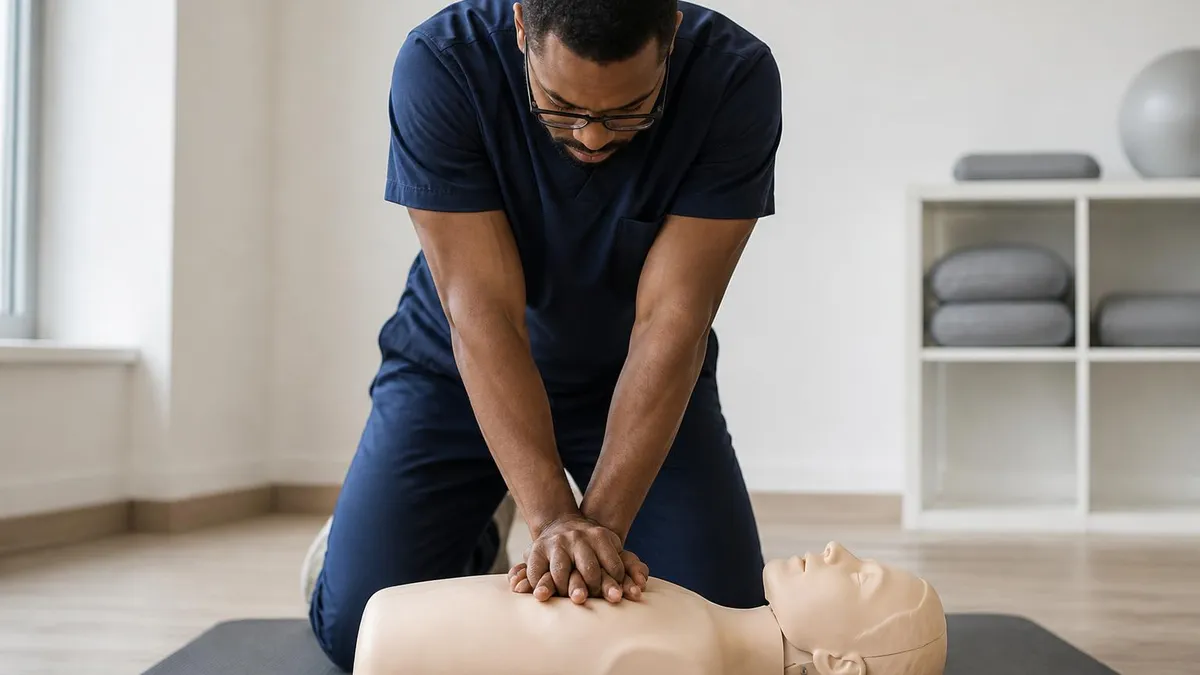
CPR Card Lookup: How to Verify, Replace, and Access Your CPR Certification in 2026
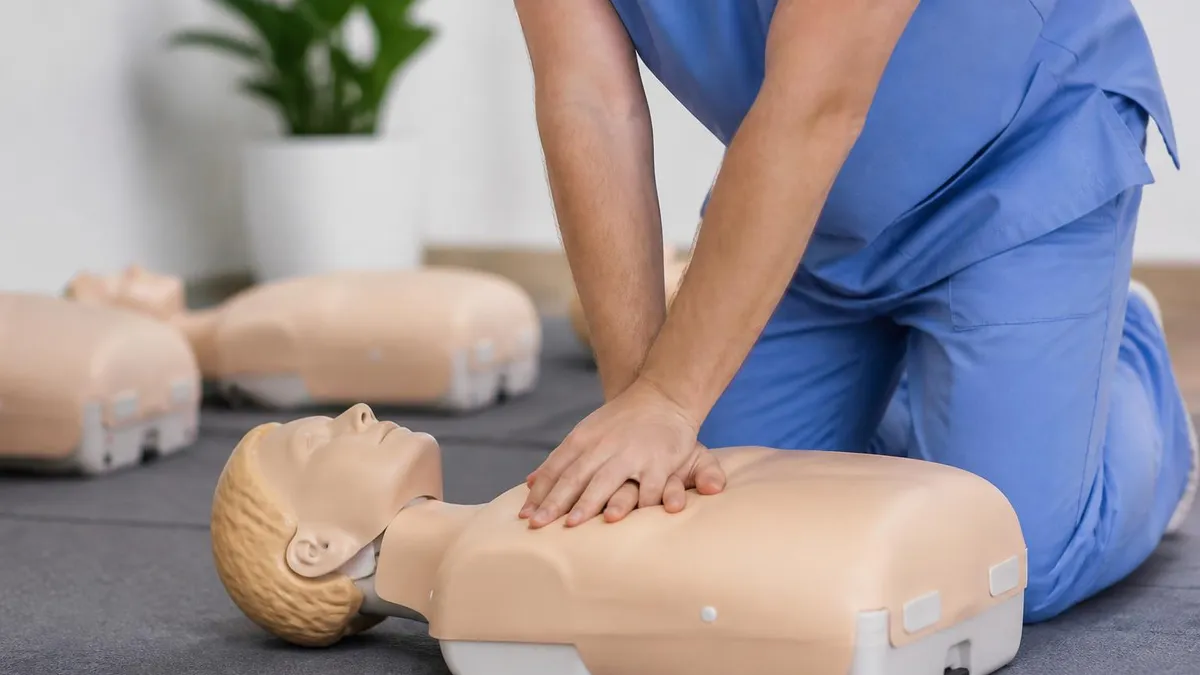
AHA CPR: What It Is, Which Course You Need, and How to Get Certified
Adult CPR: Complete Step-by-Step Guide to Hands-Only and Standard CPR in 2026

CPR - Cardiopulmonary Resuscitation: Complete Study Guide 2026
Inappropriate CPR Songs: What Not to Play, Why It Matters, and Better Beat-Per-Minute Alternatives
How this page was made: written with AI tools and published by Nathan Beja, founder of Practice Test Geeks, who is responsible for its content. Exam facts are checked against the official sources listed below. Not reviewed by a subject-matter expert. Editorial policy
Sources & references
Exam facts on this page (fees, format, dates, passing scores) are checked against these official sources; the date is our last check. Editorial policy
- redcross.org — Score validity, renewal, test delivery, passing score · verified Oct 2026
- elearning.heart.org — Fees, score validity, passing score · verified Oct 2026
- shopcpr.heart.org — Test delivery · verified Oct 2026