
CPR Abbreviation: What CPR Stands For, History, and Why Cardiopulmonary Resuscitation Saves Lives in 2026 October
🆕 The CPR abbreviation stands for Cardiopulmonary Resuscitation. Learn what each letter means, the history, related acronyms like AED, and how CPR
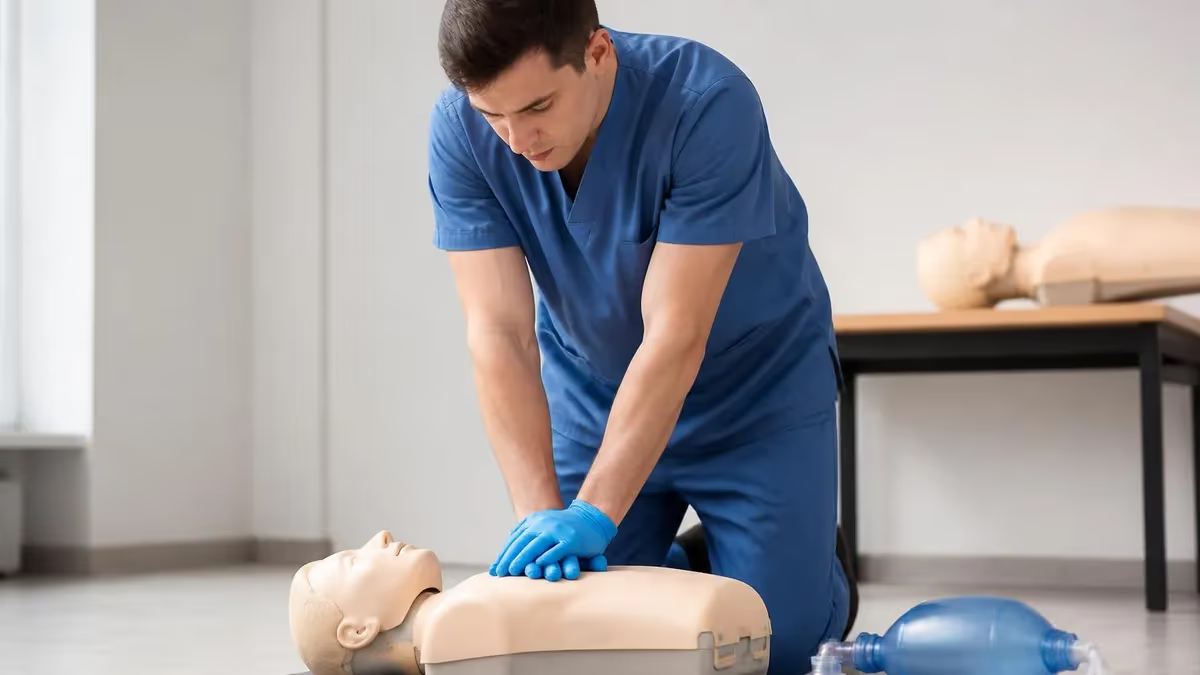
The CPR abbreviation stands for Cardiopulmonary Resuscitation, a life-saving emergency technique that combines chest compressions with rescue breathing to maintain blood flow and oxygen delivery when a person's heart stops beating. Breaking the acronym down further, "cardio" refers to the heart, "pulmonary" refers to the lungs, and "resuscitation" means to revive or bring back to consciousness. Together, these three components describe one of the most important medical skills any layperson, healthcare provider, or first responder can learn in 2026.
Understanding what CPR stands for is more than a vocabulary exercise — it is the foundation of recognizing why this intervention matters. When someone suffers sudden cardiac arrest, every minute without CPR reduces survival odds by roughly 10 percent. According to the American Heart Association, approximately 350,000 out-of-hospital cardiac arrests occur each year in the United States, and bystander CPR can double or even triple the chance of survival. Yet only about 40 percent of victims receive immediate help from a bystander.
In medical settings, however, CPR is unambiguously linked to cardiopulmonary care, and it forms the backbone of more advanced protocols including Basic Life Support (BLS), Advanced Cardiovascular Life Support (ACLS), and Pediatric Advanced Life Support (PALS). Each builds on the same core principle: push hard, push fast, and restore circulation.
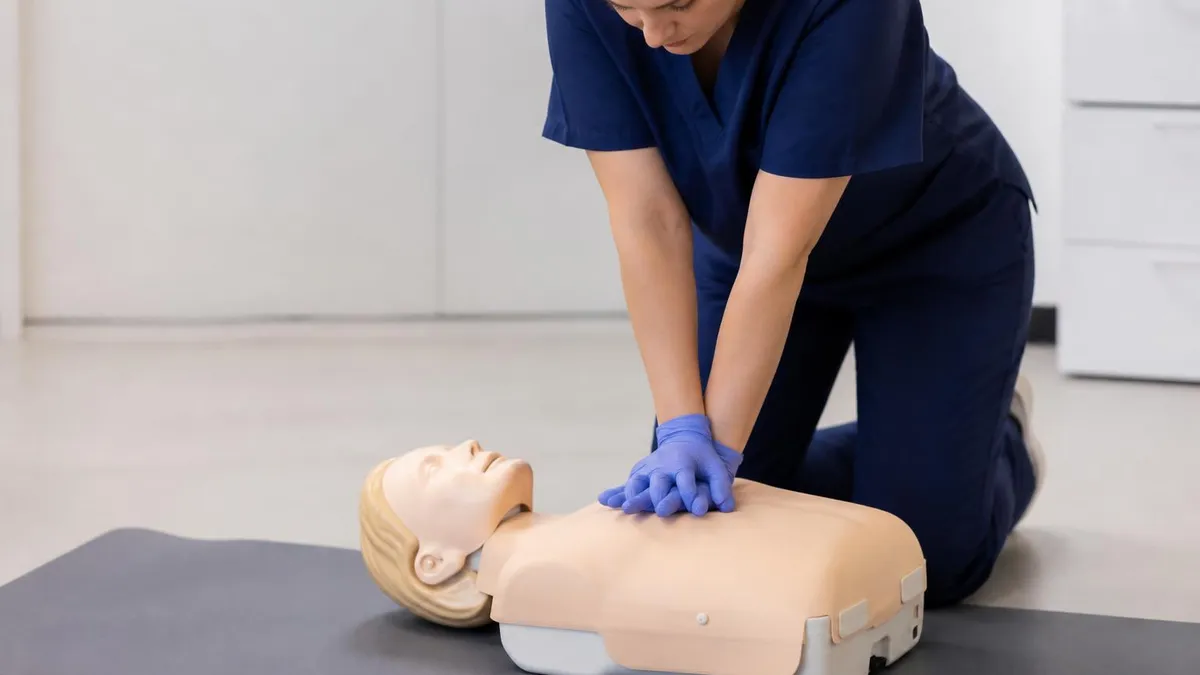
Most modern CPR guidelines emphasize hands-only CPR for untrained bystanders — continuous chest compressions at a rate of 100 to 120 per minute, delivered to a depth of at least two inches in adults. Trained rescuers add rescue breaths at a ratio of 30 compressions to 2 breaths. Infants and children follow slightly different mechanics, but the underlying logic is identical: keep oxygenated blood moving to the brain and vital organs until advanced help arrives or a shock from an AED restores a normal rhythm.
This article unpacks the CPR abbreviation from every relevant angle: what each letter means, where the technique came from, how it connects to related acronyms like AED and BLS, what the acls algorithm does in cardiac emergencies, why the national cpr foundation and other organizations standardize training, and how the abbreviation fits into pals certification, infant cpr, and adult resuscitation. By the end, you will not only know what CPR stands for — you will understand why those three letters represent the single most teachable life-saving intervention ever developed.
We will also clear up common confusion. Knowing the difference matters, especially during an emergency when seconds count and the wrong association can delay action. CPR - Cardiopulmonary Resuscitation: Complete Study Guide 2026 covers the full clinical picture in depth.
Whether you are a parent learning infant cpr, a nurse refreshing your ACLS card, a corporate safety officer arranging training, or simply a curious reader, understanding the CPR abbreviation is the entry point into a much larger world of emergency response. Let's start with the letters themselves, then move through the history, the science, the related acronyms, and the practical steps every American should know in 2026.
CPR by the Numbers in 2026

What Each Letter in CPR Stands For
Derived from the Greek word kardia meaning heart, "cardio" refers to the cardiovascular system. In CPR, this letter signals that chest compressions are designed to manually pump the heart when it has stopped beating effectively.
From the Latin pulmo meaning lung, "pulmonary" covers everything involving the respiratory system. Rescue breaths and oxygen delivery during CPR address the pulmonary half of the equation, keeping oxygen flowing to tissues.
From the Latin resuscitare meaning "to revive," resuscitation describes any action taken to restore consciousness or vital function. In CPR, this is the umbrella goal of compressions, breaths, and defibrillation combined.
Cardiopulmonary Resuscitation is the coordinated effort to manually circulate oxygenated blood when the heart and lungs have failed. The abbreviation captures the entire chain of survival in three short letters.
Excel
The CPR abbreviation as we know it today is surprisingly modern, dating only to the late 1950s and early 1960s when researchers combined three previously separate techniques — chest compressions, mouth-to-mouth ventilation, and defibrillation — into a single coordinated intervention. Before then, drowning victims were rolled over barrels, heart attack patients were given stimulants, and "resuscitation" meant whatever each physician improvised at the bedside. The acronym CPR standardized both the language and the procedure, allowing a shared vocabulary across hospitals, military units, and eventually the general public.
The story usually credits Dr. Peter Safar and Dr. James Elam for developing mouth-to-mouth resuscitation in 1956, and Dr. William Kouwenhoven, Dr. Guy Knickerbocker, and Dr. James Jude for proving the effectiveness of closed-chest compressions in 1960. When these two techniques were combined, the modern CPR abbreviation entered medical literature. By 1963, the American Heart Association formally endorsed CPR as a life-saving procedure that could be taught to physicians, nurses, and ultimately laypeople — a radical idea at the time.
Throughout the 1970s and 1980s, the CPR abbreviation became part of public consciousness through television, workplace training videos, and the rise of paramedic services. Organizations like the Red Cross, the American Heart Association, and later the national cpr foundation built curriculums around the acronym, making it one of the most recognized medical terms in the English language. Schools began teaching CPR in health class, and many states now require high school students to learn it before graduation.
Guidelines have evolved significantly since the 1960s. The original ABC sequence (Airway, Breathing, Circulation) was replaced in 2010 by CAB (Circulation, Airway, Breathing) because researchers found that starting compressions immediately produced better outcomes than pausing to check the airway first. Compression depth recommendations also increased, the compression-to-breath ratio standardized at 30:2 for adult rescuers, and the recommended respiratory rate during CPR settled at 10 breaths per minute when an advanced airway is in place.
The 2020 and 2025 AHA guideline updates further refined the picture by emphasizing high-quality chest compressions, minimal interruptions, and early defibrillation. Hands-only CPR — compressions without rescue breaths — was officially endorsed for untrained bystanders because studies showed it was nearly as effective as conventional CPR in the first few minutes of an adult cardiac arrest. The abbreviation stayed the same, but the procedure behind it became simpler, faster, and more accessible.
Internationally, the CPR abbreviation translates well across languages because medical Latin and Greek roots cross borders. In Spanish-speaking countries it is often called RCP (Reanimación Cardiopulmonar), in French RCR (Réanimation Cardio-Respiratoire), and in German HLW (Herz-Lungen-Wiederbelebung). The underlying procedure is virtually identical worldwide, governed by the International Liaison Committee on Resuscitation (ILCOR), which publishes consensus guidelines every five years.
For a deeper walk-through of how modern adult resuscitation builds on this history, see Adult CPR: Complete Step-by-Step Guide to Hands-Only and Standard CPR in 2026. The abbreviation may be short, but its history spans more than six decades of refinement, research, and millions of saved lives — a remarkable legacy for three little letters.

CPR Practice Test Questions
Prepare for the CPR Cardiopulmonary Resuscitation Practice exam with our free practice test modules. Each quiz covers key topics to help you pass on your first try.
CPR Basic CPR
CPR Exam Questions covering Basic CPR. Master CPR Test concepts for certification prep.
CPR and First Aid
Free CPR Practice Test featuring and First Aid. Improve your CPR Exam score with mock test prep.
CPR (Cardiopulmonary Resuscitation) Adult ...
CPR Mock Exam on (Cardiopulmonary Resuscitation) Adult CPR and AED Usage. CPR Study Guide questions to pass on your first try.
CPR (Cardiopulmonary Resuscitation) Airway...
CPR Test Prep for (Cardiopulmonary Resuscitation) Airway Obstruction and Choking. Practice CPR Quiz questions and boost your score.
CPR (Cardiopulmonary Resuscitation) Cardio...
CPR Questions and Answers on (Cardiopulmonary Resuscitation) Cardiopulmonary Emergency Recognition. Free CPR practice for exam readiness.
CPR (Cardiopulmonary Resuscitation) Child ...
CPR Mock Test covering (Cardiopulmonary Resuscitation) Child and Infant CPR. Online CPR Test practice with instant feedback.
CPR (Cardiopulmonary Resuscitation) High-P...
Free CPR Quiz on (Cardiopulmonary Resuscitation) High-Performance Team Dynamics. CPR Exam prep questions with detailed explanations.
CPR (Cardiopulmonary Resuscitation) Legal ...
CPR Practice Questions for (Cardiopulmonary Resuscitation) Legal and Ethical Considerations. Build confidence for your CPR certification exam.
CPR for Specific Populations
CPR Test Online for for Specific Populations. Free practice with instant results and feedback.
CPR Airway & Breathing Management
CPR Exam Questions covering Airway & Breathing Management. Master CPR Test concepts for certification prep.
CPR Assessment & Recognition of Cardiac Ar...
Free CPR Practice Test featuring Assessment & Recognition of Cardiac Arrest. Improve your CPR Exam score with mock test prep.
CPR Chest Compressions & Defibrillation
CPR Mock Exam on Chest Compressions & Defibrillation. CPR Study Guide questions to pass on your first try.
CPR Post-Resuscitation Care & Recovery
CPR Test Prep for Post-Resuscitation Care & Recovery. Practice CPR Quiz questions and boost your score.
Related Acronyms: AED, BLS, ACLS, and the ACLS Algorithm
AED stands for Automated External Defibrillator, a portable device that analyzes a victim's heart rhythm and delivers an electrical shock if needed to restore a normal beat. AEDs are now found in airports, gyms, schools, and offices because they dramatically increase survival when paired with CPR within the first few minutes of cardiac arrest.
The question "what does aed stand for" is one of the most common CPR-related searches because the two acronyms appear together on training posters and certification cards. Modern AEDs guide rescuers through voice prompts, making them safe for untrained bystanders to use during a sudden cardiac arrest event.
Knowing the CPR Abbreviation: Why It Matters
- +Faster recognition of emergencies and confident bystander response
- +Easier communication with 911 dispatchers and EMS crews on scene
- +Foundation for understanding related acronyms like AED, BLS, ACLS, and PALS
- +Builds confidence to take certification courses and refresh skills
- +Helps parents learn infant cpr terminology and child CPR mechanics
- +Improves workplace safety culture when staff understand the language
- −Knowing the abbreviation alone does not equal hands-on competence
- −Confusion with franchises can slow Google
- −Some assume CPR alone restarts a heart — defibrillation is often required
- −Acronym overload can intimidate first-time learners
- −Outdated guidelines from old courses may still be remembered incorrectly
- −Medical jargon can mask the simple action steps needed in an emergency

CPR Abbreviation and Core Skills Checklist
- ✓Know that CPR stands for Cardiopulmonary Resuscitation
- ✓Recognize cardiac arrest signs: unresponsive, no normal breathing
- ✓Call 911 or have someone else call immediately
- ✓Begin chest compressions at 100-120 per minute
- ✓Push to a depth of at least 2 inches for adults
- ✓Allow full chest recoil between each compression
- ✓Minimize interruptions in compressions to under 10 seconds
- ✓Use an AED as soon as one is available and follow voice prompts
- ✓For trained rescuers, deliver 30 compressions then 2 rescue breaths
- ✓Continue CPR until EMS arrives or the victim shows signs of life
Push hard, push fast — every second counts
Brain cells begin to die within 4-6 minutes without oxygenated blood. High-quality chest compressions at 100-120 per minute can maintain enough circulation to preserve brain function until defibrillation or advanced care arrives. The CPR abbreviation captures both heart and lung support, but in the first minutes, compressions matter most.
One of the most important refinements in modern CPR training is that the abbreviation applies differently depending on the patient's age. Adult CPR, child CPR, and infant cpr share the same core principles but differ in compression depth, hand placement, and the cause of cardiac arrest. Understanding these differences is critical because applying adult technique to an infant can cause serious injury, while applying infant technique to an adult will not generate enough circulation to maintain perfusion.
For adults, rescuers use two hands stacked on the lower half of the sternum, compress at least 2 inches deep at 100-120 per minute, and follow a 30:2 compression-to-ventilation ratio when trained. The cause is most often cardiac in origin — typically ventricular fibrillation from coronary artery disease — which is why early defibrillation with an AED is the single biggest predictor of survival in adult out-of-hospital cardiac arrest.
Child CPR, defined as ages 1 to puberty, uses one or two hands depending on the child's size. Compression depth is approximately 2 inches or about one-third the depth of the chest. The compression rate remains 100-120 per minute, but lone rescuers can use a 30:2 ratio while two-rescuer teams switch to 15:2 to deliver more frequent breaths. Pediatric arrests are more often respiratory in origin, so ventilations carry greater weight than in adult cases.
Infant cpr applies to children under 1 year of age, excluding newborns immediately after birth, who follow neonatal resuscitation protocols. For infants, rescuers use two fingers (single rescuer) or the two-thumb encircling hands technique (two rescuers) on the lower half of the sternum, just below the nipple line. Compression depth is about 1.5 inches or one-third the chest depth, with the same rate of 100-120 per minute and breath ratios identical to child CPR.
Respiratory considerations also vary by age. The normal respiratory rate for an adult is 12-20 breaths per minute, for a child 18-30, and for an infant 30-60. During CPR with an advanced airway in place, providers deliver one breath every 6 seconds, equating to about 10 breaths per minute, regardless of age. Avoiding hyperventilation is critical because excessive ventilation reduces venous return and lowers survival rates.
The recovery position recovery technique is used after return of spontaneous circulation when the victim is breathing normally but remains unresponsive. Rolling the patient onto their side keeps the airway open and prevents aspiration. This positioning is part of standard first aid training and complements CPR by maintaining safety during the recovery phase, especially when EMS transport is delayed.
For a focused tutorial on pediatric resuscitation including infant cpr step-by-step, the AHA and the Red Cross both offer hands-on courses tied to pals certification. Pediatric Advanced Life Support builds on basic CPR mechanics with rhythm recognition, weight-based medication dosing, and team-based simulation. It is required for emergency department staff, pediatric nurses, and many transport providers across the United States.
In a medical emergency, never let an unrelated brand search slow you down. Dial 911 immediately and begin chest compressions — the cpr abbreviation in healthcare always means Cardiopulmonary Resuscitation.
Certification is where the CPR abbreviation transforms from vocabulary into competence. In 2026, the two largest certifying bodies in the United States remain the American Heart Association and the American Red Cross, though several other organizations including the national cpr foundation, the National Safety Council, and ASHI also issue widely accepted credentials. Each course teaches the same core mechanics, but credential acceptance varies by employer, state licensing board, and clinical setting, so checking requirements before enrolling is essential.
The most common entry-level certification for the general public is Heartsaver CPR/AED, a 2-3 hour course that covers adult, child, and infant CPR, AED use, and basic choking response. It is ideal for teachers, coaches, parents, and corporate employees. Healthcare providers, by contrast, take Basic Life Support (BLS), which dives deeper into two-rescuer techniques, bag-valve-mask ventilation, and team dynamics. BLS is the prerequisite for ACLS and pals certification.
Pals certification — Pediatric Advanced Life Support — is required for clinicians who work with children in emergency departments, pediatric ICUs, and transport teams. The course typically runs 14 hours over two days and includes simulation-based learning, the pediatric assessment triangle, and pharmacology specific to children. ACLS, focused on adult cardiac emergencies, covers the acls algorithm, rhythm interpretation, and post-arrest care. Both ACLS and PALS require BLS as a foundation.
Costs vary considerably. Heartsaver courses typically run $60-$95, BLS $70-$120, and ACLS or PALS $200-$350 depending on location and instructor. Online-only courses are often cheaper but may not satisfy employer requirements, since most clinical settings require a hands-on skills check. Blended learning — online didactics plus an in-person skills session — has become the dominant format and balances flexibility with verified competence.
Renewal cycles are universally 2 years, after which the certification expires and must be refreshed. Letting a card lapse can delay employment, prevent license renewal, or even halt clinical privileges in hospital settings. Many providers set calendar reminders 90 days before expiration to allow time for scheduling. For a detailed look at renewing online, see AHA CPR Recertification: How to Recertify CPR Online with the American Heart Association in 2026.
Employers and licensing boards typically verify credentials through eCard systems or wallet cards. AHA-issued eCards include QR codes that link to a verification page, eliminating the need to mail paper certificates. The Red Cross uses a similar digital verification system. If you ever lose your card, most providers can recover it through the issuing organization's online portal within minutes.
Beyond clinical roles, many non-medical professions now require CPR certification: lifeguards, daycare workers, personal trainers, flight attendants, firefighters, police officers, and certain teaching positions. Knowing the CPR abbreviation, taking a certification course, and renewing every two years is a small investment with potentially life-saving returns — both for the certified individual and for anyone they might one day help.
Practical preparedness around the CPR abbreviation means more than memorizing what the letters stand for — it means rehearsing the response so that, in an emergency, you act without hesitation. Studies consistently show that bystanders who have taken a CPR course within the past two years are far more likely to step in and start compressions than those who learned years ago and never refreshed. Muscle memory and confidence matter just as much as theoretical knowledge.
Start by mapping your environment. Identify the AED locations at your workplace, gym, place of worship, and children's school. Many municipalities now publish AED registries through apps like PulsePoint, which can direct nearby trained citizens to a cardiac arrest in progress. Knowing where the nearest device is — and how to access it after hours — can shave critical minutes off the response timeline and dramatically improve survival odds.
Practice the rhythm. The widely cited tempo of 100-120 compressions per minute matches the beat of songs like "Stayin' Alive" by the Bee Gees, "Crazy in Love" by Beyoncé, and "Walk the Line" by Johnny Cash. Picking a song you know well and mentally rehearsing compressions to its beat builds an automatic cadence. For more on which tracks help and which to avoid, see Inappropriate CPR Songs: What Not to Play, Why It Matters, and Better Beat-Per-Minute Alternatives.
Rehearse the choking response. Abdominal thrusts (the Heimlich maneuver) for adults and children over 1, and back blows alternating with chest thrusts for infants, are skills that often get less attention than chest compressions but are equally life-saving. Many CPR courses now bundle choking response into the curriculum because the underlying recognition skill — distinguishing partial from complete obstruction — is similar to recognizing cardiac arrest.
Talk to your family. Make sure everyone in your household, especially older children and teenagers, knows the basics: how to recognize an emergency, how to call 911, how to start compressions, and where the home first aid kit is stored. Many cardiac arrests happen at home, and a family member trained in CPR is often the difference between survival and tragedy. Treat the conversation like a fire drill — repeat it annually.
Keep credentials current. Renewal is easy, costs are modest, and most courses now accept online didactics combined with brief in-person skills checks. Setting a calendar alert 90 days before your card expires prevents the scramble of last-minute renewals and ensures your skills are continuously fresh. Many employers will reimburse the cost, and some offer free on-site training as part of corporate wellness programs.
Finally, remember that imperfect CPR is always better than no CPR. Bystanders sometimes hesitate out of fear of breaking ribs, doing it wrong, or facing legal consequences. Every US state has Good Samaritan laws protecting lay rescuers acting in good faith, and the AHA repeatedly emphasizes that even hands-only compressions delivered imperfectly are vastly better than waiting passively for EMS to arrive. The CPR abbreviation is a call to action — when in doubt, push hard, push fast, and save a life.
CPR Questions and Answers
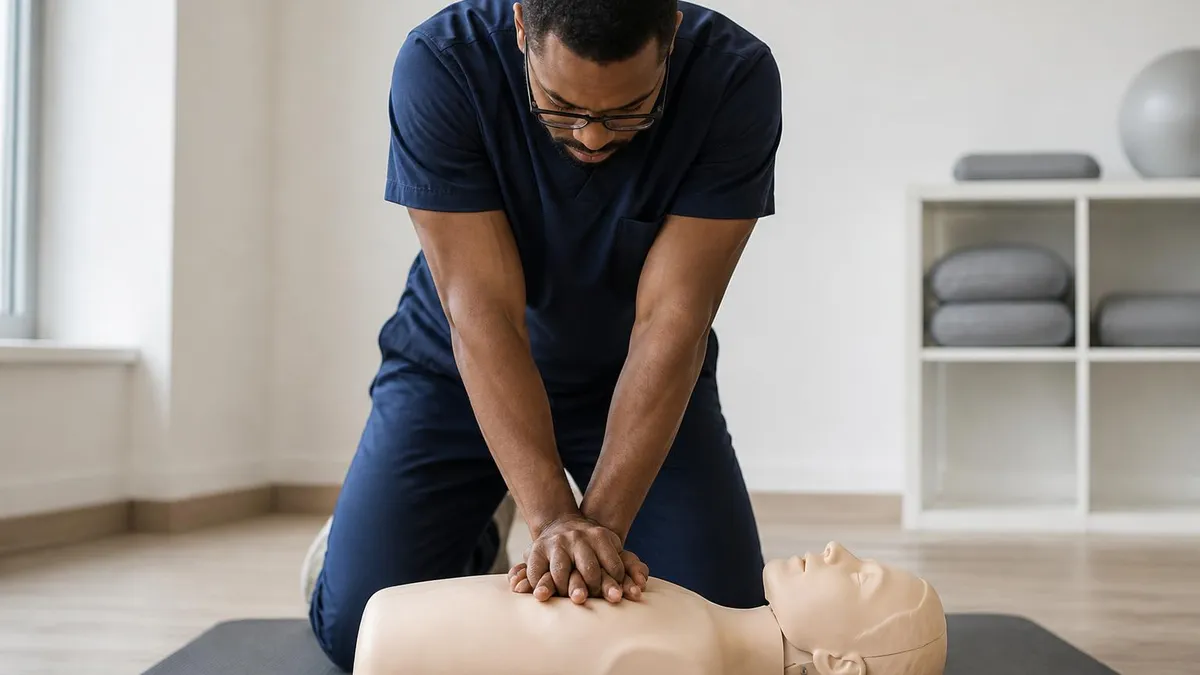
CPR Card Lookup: How to Verify, Replace, and Access Your CPR Certification in 2026
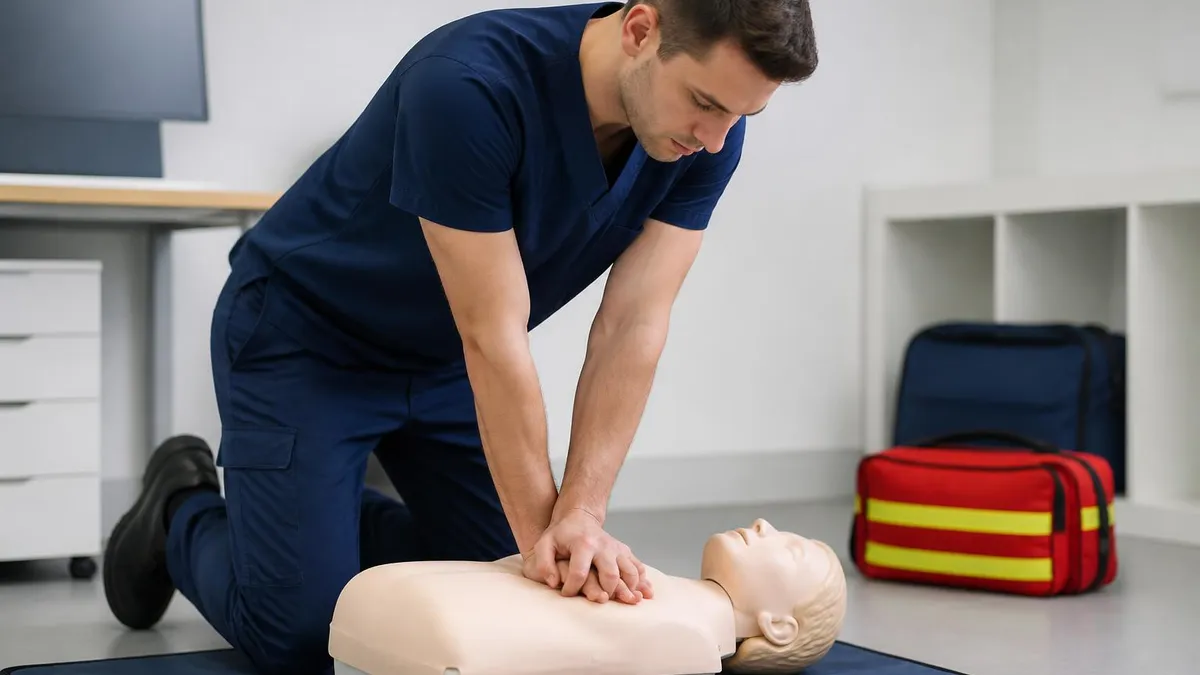
Adult CPR: Complete Step-by-Step Guide to Hands-Only and Standard CPR in 2026

CPR - Cardiopulmonary Resuscitation: Complete Study Guide 2026
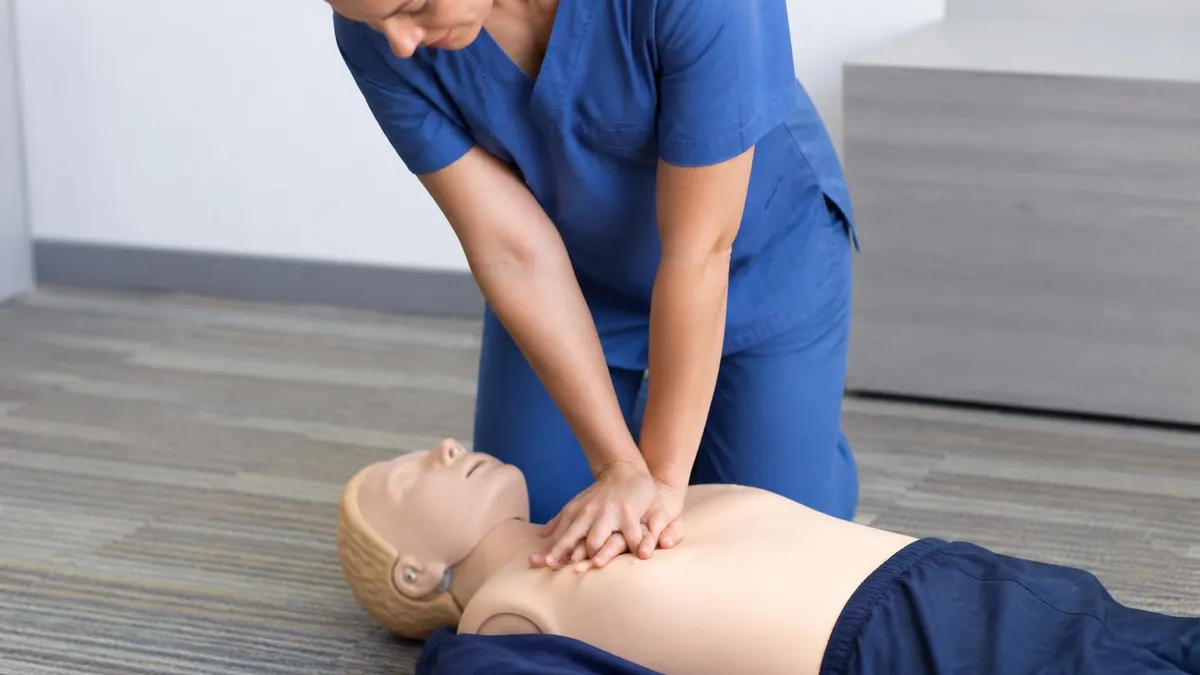
Inappropriate CPR Songs: What Not to Play, Why It Matters, and Better Beat-Per-Minute Alternatives
AHA CPR Recertification: How to Recertify CPR Online with the American Heart Association in 2026
About the Author

Registered Nurse & Healthcare Educator
Johns Hopkins University School of NursingDr. Sarah Mitchell is a board-certified registered nurse with over 15 years of clinical and academic experience. She completed her PhD in Nursing Science at Johns Hopkins University and has taught NCLEX preparation and clinical skills courses for nursing students across the United States. Her research focuses on evidence-based exam preparation strategies for healthcare certification candidates.
Join the Discussion
Connect with other students preparing for this exam. Share tips, ask questions, and get advice from people who have been there.
View discussion (5 replies)