
Is the American CPR Care Association Legit? Complete 2026 September Guide
Is the American CPR Care Association legit? 🎯 We cover accreditation, ACLS algorithm, infant CPR, AED training & how to choose a real CPR cert.

If you have been researching CPR training online, you have almost certainly encountered the American CPR Care Association (ACA) and asked yourself whether it is a credible provider. Questions about whether the american cpr care association legit status holds up in real workplace and clinical settings are among the most common we hear from nurses, teachers, gym trainers, and first-time certification seekers. The short answer is: yes, for most lay-rescuer and workplace applications the ANCA is a recognized provider — but the nuances matter enormously depending on your employer and role.
The American CPR Care Association was founded to provide affordable, accessible online CPR and first-aid education to the general public. Its courses follow guidelines aligned with the American Heart Association and the American Red Cross, and its certifications are accepted at thousands of workplaces, gyms, schools, and childcare facilities across the United States. However, it is not an AHA-authorized training center, which means hospitals, EMS agencies, and clinical settings that mandate AHA or equivalent accreditation may not accept its cards.
Understanding which certifications are accepted where requires knowing the difference between basic CPR training and advanced clinical protocols. The ACLS algorithm — the Advanced Cardiovascular Life Support protocol — is a clinical-grade curriculum that ANCA does not teach. If your employer requires ACLS certification, pals certification, or specific hospital-based BLS credentials, you will need a different provider. This distinction trips up thousands of applicants every year who assume all CPR cards are interchangeable.
Beyond ANCA, the CPR certification space includes major players like the national CPR foundation, the American Red Cross, the American Heart Association, and several online-only providers. Each occupies a different niche in terms of course rigor, accreditation, price, and acceptance. Knowing exactly what your employer requires — and getting that in writing if possible — is the single most important step before enrolling in any program.
This guide will walk you through everything you need to know about ANCA's legitimacy, how its courses compare to AHA and Red Cross offerings, what the ACLS algorithm and pals certification involve, how to understand what does AED stand for and how AEDs are used in CPR, and how to choose the right life support training for your specific situation. We will also cover infant CPR techniques, the recovery position, and how phone repair shops that use the CPR brand name differ from actual CPR training organizations.
One source of confusion worth addressing immediately is the existence of CPR cell phone repair shops — a national franchise chain that uses the CPR acronym purely as a brand name and has absolutely nothing to do with cardiopulmonary resuscitation training. Searches for cpr phone repair and cpr cell phone repair sometimes land people on these franchise sites when they are actually looking for life-saving certification courses. If you are looking for CPR training, make sure the site you land on is offering resuscitation education, not smartphone screen replacement.
Throughout this article we will give you concrete, practical guidance so you can walk away knowing exactly which provider to choose, what your certification will cover, how long it will remain valid, and how to prepare for any written or skills-based assessment that comes with your course. Let us start with the fundamentals of ANCA's accreditation and what that means in practical terms.
CPR Certification in the U.S. — by the Numbers

What ANCA Accreditation Actually Means
ANCA courses are designed to meet OSHA CPR training requirements for general industry workplaces. This makes them appropriate for schools, gyms, daycares, construction sites, and most corporate wellness programs where federal or state law mandates trained personnel on site.
ANCA is not an American Heart Association training site. Hospitals, clinical settings, and EMS agencies that require AHA BLS, ACLS, or PALS credentials specifically cannot substitute an ANCA card. Always verify with your employer before enrolling in any online-only program.
Many travel nurse staffing agencies and international healthcare facilities accept ANCA certification as supplemental documentation, but typically require a valid AHA BLS card as the primary clinical credential. ANCA cards work best as a secondary or workplace supplement.
ANCA curricula are updated to reflect the latest AHA and ILCOR resuscitation science guidelines, currently the 2020 Guidelines for CPR and Emergency Cardiovascular Care. Content covers adult, child, and infant CPR, AED use, and choking relief for all age groups.
Upon passing the online exam, students receive a digital certificate and wallet card immediately. Physical cards can be requested for an additional fee. Digital cards are accepted by most non-clinical employers and include a QR verification code that employers can scan to confirm authenticity.
Understanding the ACLS algorithm is essential context for anyone evaluating CPR certifications. ACLS — Advanced Cardiovascular Life Support — is a clinical protocol developed by the American Heart Association that guides healthcare providers through systematic responses to cardiac arrest, stroke, and other life-threatening cardiovascular emergencies. It is not a basic CPR course; it is an advanced credential that builds on BLS skills and requires hands-on simulation in a clinical environment. ANCA does not offer ACLS, and no legitimate online-only provider can grant a full ACLS credential.
The ACLS algorithm organizes the response to cardiac arrest into structured pathways: the cardiac arrest algorithm, the post-cardiac arrest care algorithm, the bradycardia with pulse algorithm, and the tachycardia with pulse algorithm, among others. Healthcare providers must memorize these pathways and demonstrate proficiency in a skills station. The algorithm covers rhythm recognition on a cardiac monitor, medication administration (epinephrine, amiodarone), advanced airway management, and team dynamics. This level of clinical specificity is why employers in hospital settings require AHA-certified ACLS and will not substitute a basic online card.
PALS certification — Pediatric Advanced Life Support — is similarly a clinical-grade credential from the AHA designed specifically for pediatric emergencies. It covers the recognition and management of respiratory distress, shock, and cardiac arrest in infants and children, using age-appropriate algorithms and drug dosing charts. Pediatric nurses, emergency physicians, and paramedics are typically required to maintain current PALS certification. Like ACLS, PALS cannot be completed entirely online through any provider; skills testing is mandatory.
For lay rescuers, bystanders, teachers, and non-clinical professionals, the distinction between ANCA and AHA is far less critical. What matters most for these populations is learning the correct chest compression technique, understanding what does AED stand for (Automated External Defibrillator) and how to use one, mastering rescue breathing ratios, and knowing when and how to call 911. ANCA covers all of these topics effectively and at a significantly lower price point than AHA courses delivered through authorized training centers.
The national CPR foundation is another online provider that operates in a similar space to ANCA. Like ANCA, the national CPR foundation offers online-only certification courses accepted at most non-clinical workplaces. Its pricing and course format are comparable, though ANCA has a longer track record and a somewhat larger network of accepting employers. Neither organization is affiliated with the AHA or the Red Cross, but both fill an important role in making basic CPR training accessible and affordable to millions of Americans who might otherwise forgo certification entirely.
One practical tip: if you are unsure whether your employer accepts ANCA or national CPR foundation cards, call your HR department or supervisor before you pay for any course. Ask specifically: "Do you require AHA, Red Cross, or any specific accrediting body for CPR certification?" Getting a clear answer takes five minutes and can save you from completing a course and then discovering the card is not accepted. Some employers explicitly list accepted providers in their onboarding documentation or employee handbooks, so checking there first is always a smart move.
For those in educational or childcare settings, state regulations occasionally specify which CPR providers are acceptable. For example, some state childcare licensing boards accept only AHA or Red Cross certification for lead teachers, while assistant teachers may use any recognized provider. Checking your specific state's department of education or childcare licensing website will give you the definitive answer for your jurisdiction. This is especially important in states with recently updated childcare regulations, where previously accepted providers may have been removed from the approved list.
CPR Course Types: ANCA vs. AHA vs. Red Cross
The American CPR Care Association offers fully online, self-paced courses that can be completed in as little as one to two hours. Courses cover adult, child, and infant CPR, AED operation, choking response, and basic first aid. The final exam is multiple choice, and students receive a digital certificate immediately upon passing. Prices range from approximately $19 for a basic CPR course to $75 for a comprehensive CPR, AED, and first-aid bundle, making ANCA one of the most affordable options available.
ANCA courses are best suited for teachers, fitness instructors, lifeguards at non-AHA-required facilities, childcare workers in states that accept non-AHA providers, and any professional who needs a workplace CPR card at low cost and on a flexible schedule. The course format is entirely video and text based with no in-person skills component, which is the primary limitation for clinical roles. Renewal is required every two years, consistent with AHA recommendations for the validity period of CPR training.

ANCA Certification: Pros and Cons
- +Extremely affordable — basic CPR course starts at $19, making certification accessible to everyone
- +100% online and self-paced — complete the course on any device, any time, in 1–2 hours
- +Instant digital certificate delivery upon passing the final exam
- +Accepted at thousands of non-clinical workplaces, schools, gyms, and childcare facilities
- +Course content aligned with current AHA and ILCOR resuscitation guidelines
- +Two-year certification validity consistent with industry standard renewal cycles
- −Not accepted at hospitals, EMS agencies, or clinical settings that require AHA or Red Cross credentials
- −No in-person skills component means no hands-on feedback on compression depth or rate
- −Cannot grant ACLS algorithm or PALS certification — advanced clinical credentials require AHA
- −Some state-licensed childcare and healthcare facilities specifically exclude online-only providers
- −No physical card included by default — must pay extra for mailed wallet card
- −Brand recognition is lower than AHA or Red Cross, which can create friction with some HR departments
How to Choose the Right CPR Certification for Your Needs
- ✓Confirm with your employer or licensing board which specific providers or accrediting bodies they accept before enrolling.
- ✓If you work in a hospital, clinic, or EMS setting, choose AHA BLS — do not substitute an online-only provider.
- ✓If your job requires ACLS algorithm knowledge, enroll in an AHA-authorized ACLS course with both online and skills components.
- ✓If you need pals certification for a pediatric clinical role, complete AHA PALS through an authorized training center.
- ✓For non-clinical roles such as teacher, lifeguard, or gym trainer, ANCA or national CPR foundation cards are typically sufficient.
- ✓Check your state's specific childcare or school licensing rules, which may mandate AHA or Red Cross over online-only providers.
- ✓Verify that your chosen provider's digital certificate includes a QR verification code that employers can scan for authenticity.
- ✓Budget for renewal every two years — set a calendar reminder 60 days before your card expires so you do not lapse.
- ✓If you need infant CPR skills specifically confirmed, choose a blended or in-person course that includes a hands-on infant manikin component.
- ✓Do not confuse CPR cell phone repair franchise locations with CPR training organizations — they share a brand name only.
The One Question That Determines Which CPR Cert You Need
Before spending a single dollar on CPR certification, ask your employer one question: "Do you require AHA, Red Cross, or a specific accrediting body?" If the answer is yes, get the required credential. If the answer is "any recognized provider," an ANCA or national CPR foundation card will save you time and money without sacrificing compliance.
Infant CPR is one of the most emotionally charged and technically distinct skills covered in any CPR course. Infants — defined in resuscitation guidelines as children under 12 months of age — require meaningfully different technique than adults or older children. The physiology of an infant's chest wall, rib cage, and airway demands a gentler but precisely calibrated approach, and knowing those differences can literally be the difference between life and death when a parent, daycare worker, or bystander faces an unresponsive infant.
For infant CPR, the recommended compression method uses two fingers placed on the center of the chest, just below the nipple line. Alternatively, the two-thumb encircling hands technique is preferred for trained healthcare providers because it generates more consistent compression depth. Compressions should be delivered at a rate of 100 to 120 per minute — the same rate as for adults — but depth should be approximately 1.5 inches, or one-third the depth of the infant's chest. Rescue breaths for infants cover both the mouth and nose simultaneously, with very small puffs of air that make the chest visibly rise.
Respiratory rate monitoring matters in infant resuscitation because respiratory failure is often the primary cause of cardiac arrest in children, unlike in adults where cardiac causes predominate. Normal respiratory rate for a resting infant is 30 to 60 breaths per minute; for older children it is 20 to 30. A significantly elevated or depressed respiratory rate is a red flag that warrants immediate assessment. In the absence of normal breathing, rescuers should begin CPR immediately rather than waiting for other signs. Every second of delayed compression reduces the likelihood of neurologically intact survival.
The recovery position is another technique that is covered in most comprehensive CPR courses, including those offered by ANCA, the AHA, and the Red Cross. The recovery position — placing an unconscious but breathing victim on their side with their airway open and protected — prevents aspiration of vomit or fluids while the rescuer waits for emergency services to arrive.
For adults and children, the standard lateral recovery position involves bending the top knee forward to stabilize the body and tilting the head back gently to maintain airway patency. Infants are held in a supported lateral position against the rescuer's body.
Understanding what does AED stand for — Automated External Defibrillator — is foundational to any CPR course. An AED is a portable electronic device that automatically analyzes the heart's rhythm and delivers an electric shock (defibrillation) if a shockable rhythm such as ventricular fibrillation or pulseless ventricular tachycardia is detected.
AEDs are designed to be used by untrained bystanders — the device provides clear audio and visual instructions at every step. The key rule is simple: attach the AED as quickly as possible and follow its instructions exactly, continuing CPR whenever the device is not actively analyzing or delivering a shock.
AED use in infants and small children requires pediatric-specific pads or an attenuator key if available. Standard adult pads can be used in a pinch if no pediatric pads are available, but they must be positioned anteriorly and posteriorly (one pad on the chest, one on the back) rather than the standard anterior-lateral placement to prevent the pads from touching each other on a small chest. Most modern AEDs sold in the United States are equipped with or compatible with pediatric attenuation accessories, and these should always be stored alongside the device in any facility that serves children.
Life support training is ultimately about building confidence and muscle memory so that in a genuine emergency, rescuers act rather than freeze. Research consistently shows that even basic CPR training — including online courses — meaningfully increases the likelihood that a bystander will intervene during a witnessed cardiac arrest.
The compression quality delivered by a trained bystander, even an imperfect one, is almost always better than no compressions at all. This is the practical argument for accessible, affordable training options like ANCA: more trained people in more places saves more lives, even if the training format is less rigorous than a full AHA course.

If you are a nurse, physician, EMT, paramedic, or any other licensed healthcare provider, do not assume that an online-only CPR certification will satisfy your employer or licensing board. Hospital credentialing departments and state EMS agencies frequently require AHA BLS, ACLS, or PALS specifically. Completing an ANCA or similar online course and then discovering it is not accepted can delay your start date or result in a lapsed clinical credential — always confirm requirements in writing before enrolling.
Preparing for a CPR written exam — whether for ANCA, AHA, Red Cross, or any other provider — involves understanding a core body of knowledge that is remarkably consistent across organizations. The underlying science is the same: guidelines published by the American Heart Association and the International Liaison Committee on Resuscitation establish the evidence base for compression ratios, depth, rate, ventilation technique, AED use, and special situations. If you master those fundamentals, you are well-prepared for any CPR written assessment regardless of provider.
The compression-to-ventilation ratio for adult CPR is 30 compressions to 2 rescue breaths for a single rescuer, or continuous compressions with asynchronous ventilation every 6 seconds once an advanced airway is placed. For child and infant CPR with two rescuers, the ratio changes to 15 compressions to 2 breaths. These ratios are among the most commonly tested items on CPR written exams and are worth memorizing precisely. A common mistake is confusing the adult single-rescuer ratio (30:2) with the pediatric two-rescuer ratio (15:2) — knowing which applies when is critical.
High-quality chest compressions require pushing hard (at least 2 inches deep for adults, 2 inches for children, 1.5 inches for infants), pushing fast (100–120 compressions per minute), allowing full chest recoil between compressions, minimizing interruptions to less than 10 seconds, and avoiding excessive ventilation. These five elements of high-quality CPR are the foundation of the current guidelines and are emphasized in every reputable course. The single biggest error bystanders make is compressing too shallowly — most untrained bystanders deliver compressions that are 1 to 1.5 inches deep, which is insufficient to generate meaningful cardiac output in an adult.
For those using our practice tests on PracticeTestGeeks to prepare for a CPR exam, we recommend working through the questions in multiple passes. On the first pass, answer every question without looking anything up — this establishes your baseline. On the second pass, look up the rationale for every question you missed or guessed on. On the third pass, revisit all questions within 24 to 48 hours to consolidate memory. This spaced repetition approach has been shown in educational research to significantly improve long-term retention of procedural knowledge, including emergency response protocols.
Understanding the ACLS algorithm is valuable even for people not pursuing ACLS certification, because it provides insight into how trained responders think during a cardiac arrest. The ACLS algorithm emphasizes systematic, non-interruptible CPR as the backbone of resuscitation, with defibrillation and medications layered on top. Knowing this context helps lay rescuers understand why starting CPR immediately — before AED arrival, before EMS, before anyone else arrives — is the single most impactful action a bystander can take. Even two minutes of delay in starting compressions measurably reduces survival rates.
If you are a fitness professional, teacher, childcare worker, or corporate employee seeking CPR certification primarily for workplace compliance, ANCA represents a reasonable and legitimate choice. The courses are affordable, convenient, scientifically grounded, and accepted at the vast majority of non-clinical workplaces. The key is verifying acceptance before you enroll rather than after. When in doubt, the AHA or Red Cross blended courses offer greater universal acceptance at a somewhat higher cost and time investment — a worthwhile trade-off for clinical roles or any situation where a specific accrediting body is required.
Finally, consider the broader value of CPR training beyond the certification card itself. Approximately 350,000 out-of-hospital cardiac arrests occur in the United States every year. Survival rates drop by 7 to 10 percent for every minute without defibrillation. Bystander CPR can double or even triple survival rates.
When you complete a CPR course — whether through ANCA, AHA, Red Cross, or any other legitimate provider — you are not just checking a compliance box. You are acquiring a skill that could save the life of a colleague, a family member, or a stranger. That is the real value of any CPR certification, regardless of who issued the card.
Practical preparation for your CPR course and exam begins well before you log in or walk into a classroom. Whether you are taking a course through ANCA, the AHA, the Red Cross, or another provider, the following strategies will help you get the most out of your training, perform well on any written assessment, and retain the skills you need in a real emergency. Start by reviewing the provider's study materials or course outline before beginning the formal course — familiarity with the structure reduces cognitive load during learning.
For online courses specifically, choose a distraction-free environment and a time of day when you are alert and focused. CPR content is not difficult, but it requires careful attention to numbers — compression rates, depths, ratios, and timing — that are easy to mix up if you are multitasking or fatigued. Watch all video demonstrations in full rather than skipping ahead, because technique cues are embedded in the visual demonstrations rather than the text alone. If a video shows the rescuer's hand position or the depth of chest depression, pay close attention to those visual details.
Practice the cognitive skills alongside the factual ones. For example, mentally walk through the CPR sequence for an unresponsive adult you encounter alone: check the scene for safety, tap and shout to check responsiveness, call 911 or direct a bystander to call, check for breathing (no more than 10 seconds), begin 30 chest compressions, deliver 2 rescue breaths, continue 30:2 until AED arrives or EMS takes over. Rehearsing this mental script repeatedly — even without a manikin — builds the procedural memory that makes you faster and more confident in an actual emergency.
For AED content specifically, remember the four universal steps: power on the AED, attach the pads following the diagrams on the pads themselves, allow the AED to analyze rhythm (do not touch the patient during analysis), and follow the shock delivery instructions (stand clear, deliver shock if advised, resume CPR immediately). These four steps are consistent across virtually all AED brands and models, and they are among the most tested items on written CPR exams.
Understanding what does AED stand for — Automated External Defibrillator — and how the device makes its shock decision (rhythm analysis) helps the steps make sense rather than just being memorized sequences.
Special situations are frequently covered in CPR exams and are worth studying carefully. These include CPR on a pregnant person (use a left lateral tilt to relieve aortic compression if possible, but do not delay compressions), CPR in a drowning victim (begin rescue breaths as soon as possible, prior to full CPR cycle), and CPR for opioid overdose (administer naloxone if available alongside CPR for victims of suspected overdose). Each of these scenarios has nuances that are regularly tested, and understanding the underlying physiology helps you reason through novel questions rather than purely relying on memorized answers.
After completing your CPR course and receiving your certification, do not let your skills atrophy. The research literature on CPR skill retention shows significant decay within three to six months of initial training, particularly for compression depth and rate. Refresher practice — even informal sessions with a CPR manikin at your workplace, gym, or community center — meaningfully slows this decay. Many workplaces with automated external defibrillators on site also offer periodic CPR refresher drills; participating in these is one of the simplest ways to maintain your readiness between formal renewal courses.
Whether you ultimately choose ANCA for its affordability and convenience, the AHA for its clinical gold-standard recognition, or the Red Cross for its blended format and broad acceptance, what matters most is that you complete your training, maintain your certification, and remain prepared to act.
CPR is one of the few skills where knowing it — and being willing to use it — can directly save a human life. The fifteen to thirty minutes you spend preparing for your CPR exam are an investment with potentially incalculable returns. Use our practice quizzes here at PracticeTestGeeks to sharpen your knowledge and walk into your certification with confidence.
CPR Questions and Answers
How Long Does CPR Certification Last? 2026 Renewal Guide
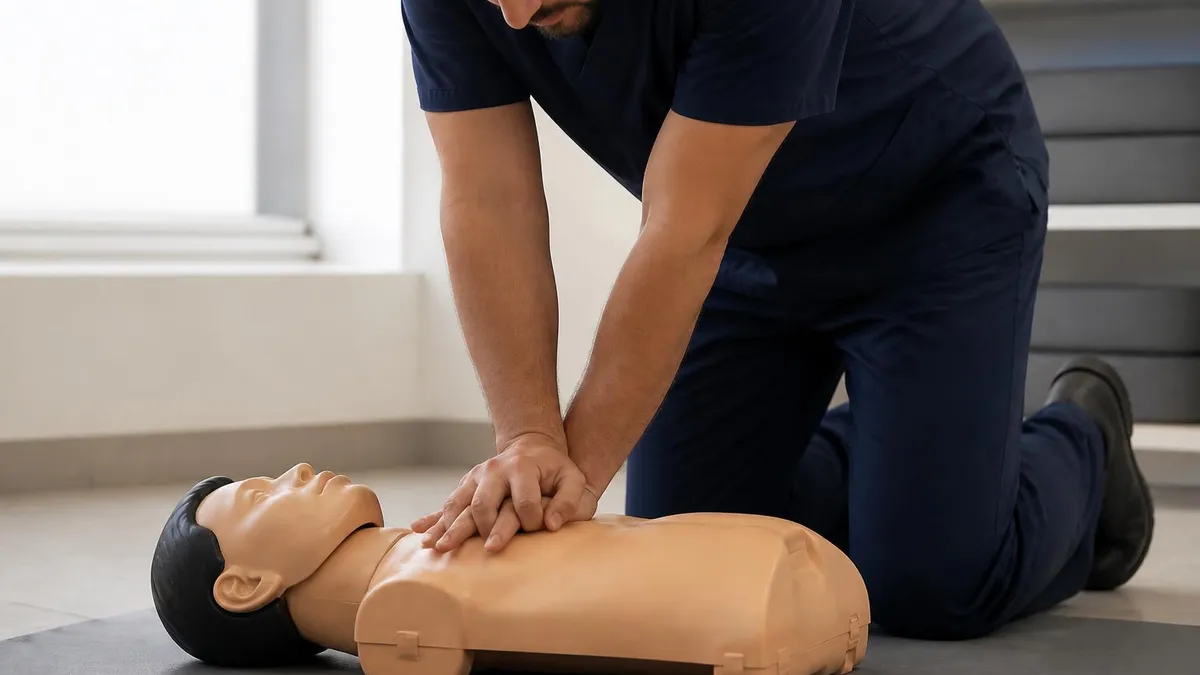
Extracorporeal CPR (ECPR): Complete Guide to Mechanical Circulatory Support During Cardiac Arrest in 2026
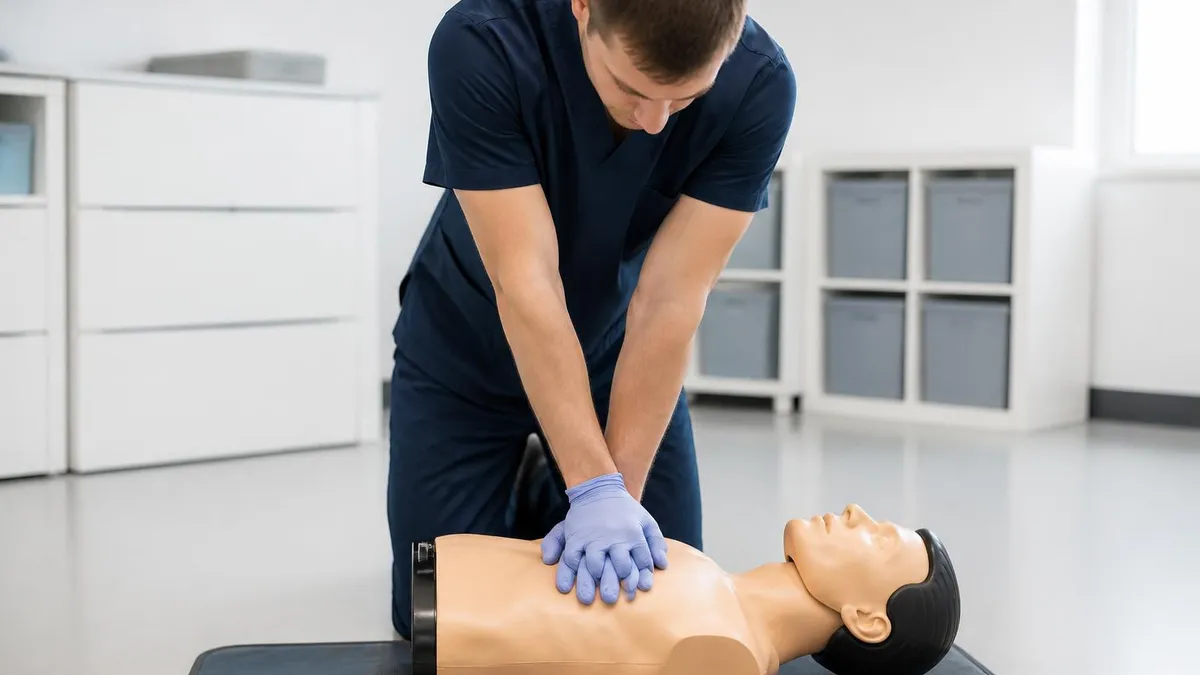
Free Online CPR Certification: Complete Guide to Legitimate Courses, Costs, and Workplace Acceptance in 2026
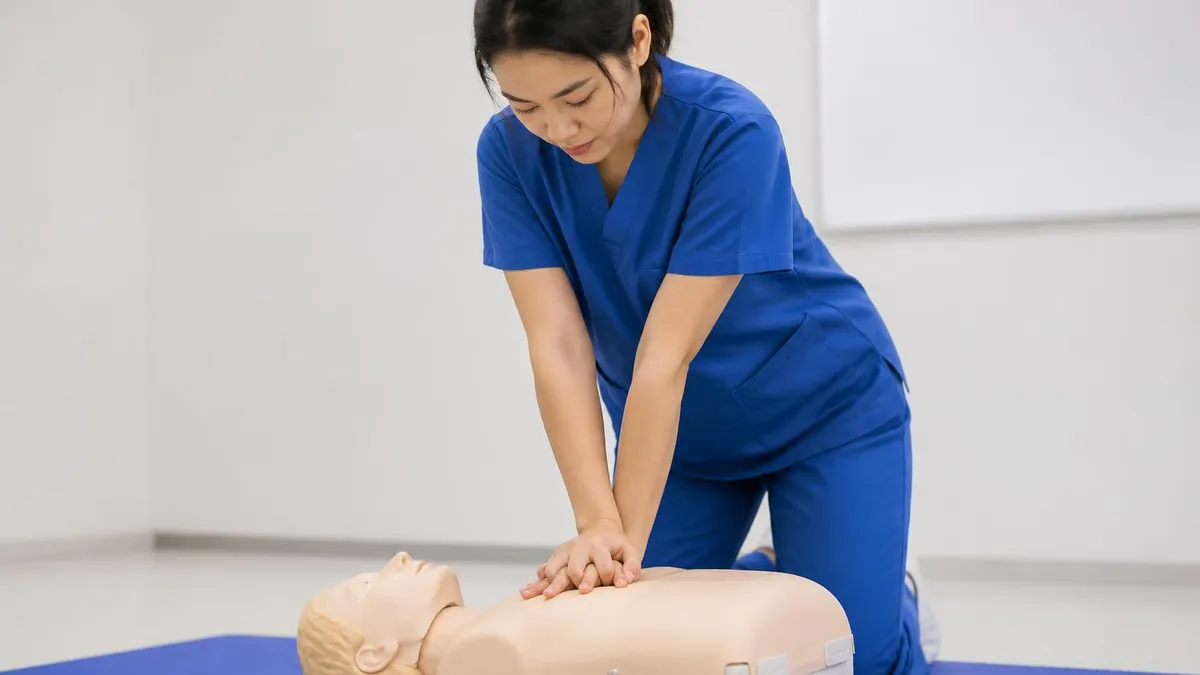
CPR Instructor Certification 2026: Complete Path to Teaching CPR

CPR AED Training Classes: Complete Guide to Certification, Courses, and Life-Saving Skills
About the Author

Registered Nurse & Healthcare Educator
Johns Hopkins University School of NursingDr. Sarah Mitchell is a board-certified registered nurse with over 15 years of clinical and academic experience. She completed her PhD in Nursing Science at Johns Hopkins University and has taught NCLEX preparation and clinical skills courses for nursing students across the United States. Her research focuses on evidence-based exam preparation strategies for healthcare certification candidates.
Join the Discussion
Connect with other students preparing for this exam. Share tips, ask questions, and get advice from people who have been there.
View discussion (5 replies)