
ACLS Exam Eligibility: Who Can Take ACLS, LPN Certification Rules, and Prerequisites Explained
ACLS certification for LPN and other clinicians: who's eligible, BLS and ECG prerequisites, precourse self-assessment, and how scope of practice fits in ✅
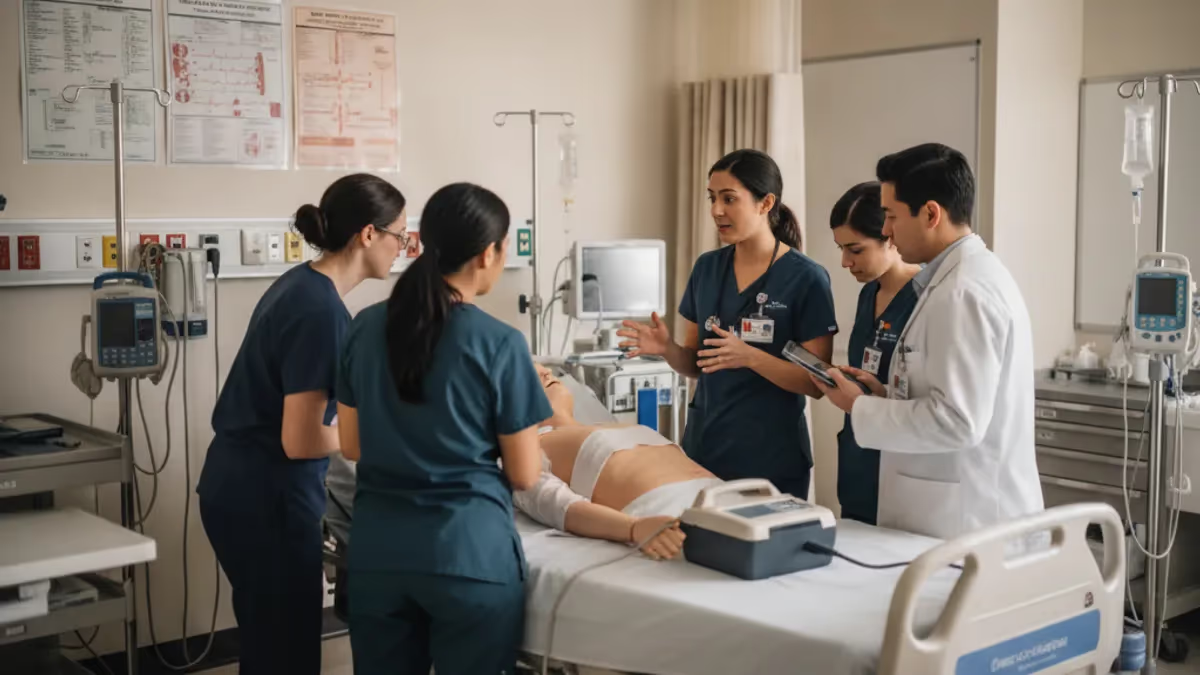
Here's the short version most people are looking for: the American Heart Association doesn't publish a license-based eligibility list for ACLS. There's no rule that says only RNs or physicians may sit the course. What the AHA does require is skill readiness. You need current BLS proficiency, you need to read basic ECG rhythms, and you need working knowledge of resuscitation drugs. That's the real gatekeeper, not your job title.
So yes, ACLS certification for LPN candidates is absolutely possible, and thousands of licensed practical nurses hold a valid card. The same goes for paramedics, respiratory therapists, dental anesthetists, and even medical students. Where it gets complicated is what you're allowed to do with that card once you're back on the floor. Certification proves competence. It doesn't rewrite your state scope of practice, and employers know the difference.
This guide walks through the actual prerequisites, the precourse self-assessment that quietly filters out unprepared students, the format of the written exam, and the specific questions LPNs ask before enrolling. If you'd rather start with the material itself, the acls course overview breaks down what a typical two-day class covers hour by hour. Read that alongside this page and you'll know exactly where you stand before you pay a registration fee.
ACLS Eligibility by the Numbers
Who Is Actually Eligible to Take ACLS?
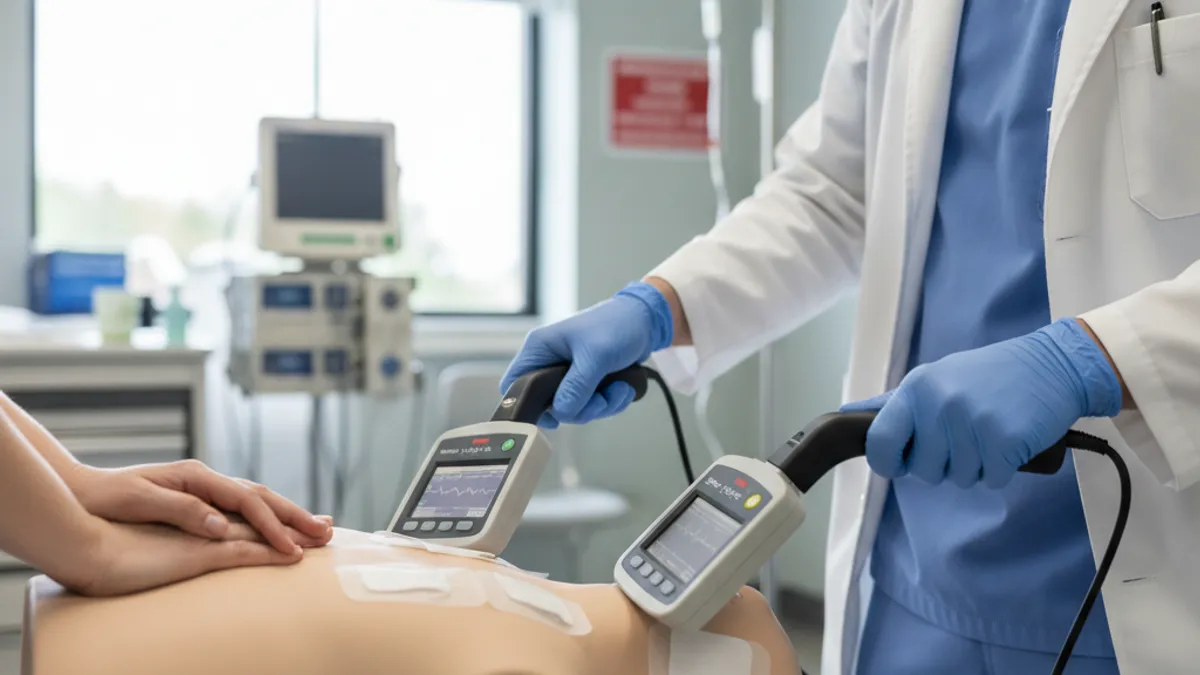
The AHA course description says ACLS is intended for healthcare professionals who direct or participate in the management of cardiopulmonary arrest or other cardiovascular emergencies. Notice the word "participate." That's deliberately broad. It covers emergency physicians, critical care nurses, paramedics, nurse anesthetists, respiratory therapists, and pharmacists. It also covers people further from the resuscitation cart, such as dental professionals who sedate patients and medical assistants working in cardiology clinics.
Training centers are permitted to set their own admission policies within the AHA framework, and most take a permissive approach. If you can pass the precourse work and you have a legitimate professional reason to hold the card, you're in. Some centers ask for proof of a BLS card at registration. Others verify it on the first morning. A handful will let you complete BLS the day before as a bundled package.
There's one group that gets turned away regularly: people with no clinical background at all. A fitness instructor or a school office worker who wants "advanced" CPR training will struggle with the pharmacology and won't be able to apply the acls algorithms in a code scenario. For them, BLS or Heartsaver is the correct fit. ACLS assumes you already know how to assess a patient and think in terms of differential diagnosis.
ACLS Certification for LPN and LVN Nurses
This is the question that drives most of the search traffic to this page, so let's be direct. An LPN or LVN can enroll in and pass an AHA ACLS course. Nothing in the AHA provider manual excludes practical nurses, and instructors treat you like any other student. You'll run the same megacode, take the same 50-question exam, and receive the same two-year card. Your license type doesn't appear anywhere on it.
What changes is what happens after. State nurse practice acts vary a lot. In several states an LPN cannot push IV medications independently, cannot initiate a drip, or cannot interpret a rhythm for the purpose of ordering a therapy. That means you might know the acls bradycardia algorithm cold and still not be the person who gives the atropine. You'd assist, document, run compressions, manage the airway with a bag-mask, and call out rhythm changes.
Why bother, then? Because employers in long-term acute care, dialysis, PACU, and rural emergency departments increasingly list ACLS as preferred or required for LPN roles. Holding the card makes you a stronger team member during a code and it's a common stepping stone for LPNs heading into an RN bridge program. Many hiring managers view it as evidence you can handle acuity. Just confirm your state's rules so you don't overstep.
ACLS Prerequisites Broken Down by Skill Area
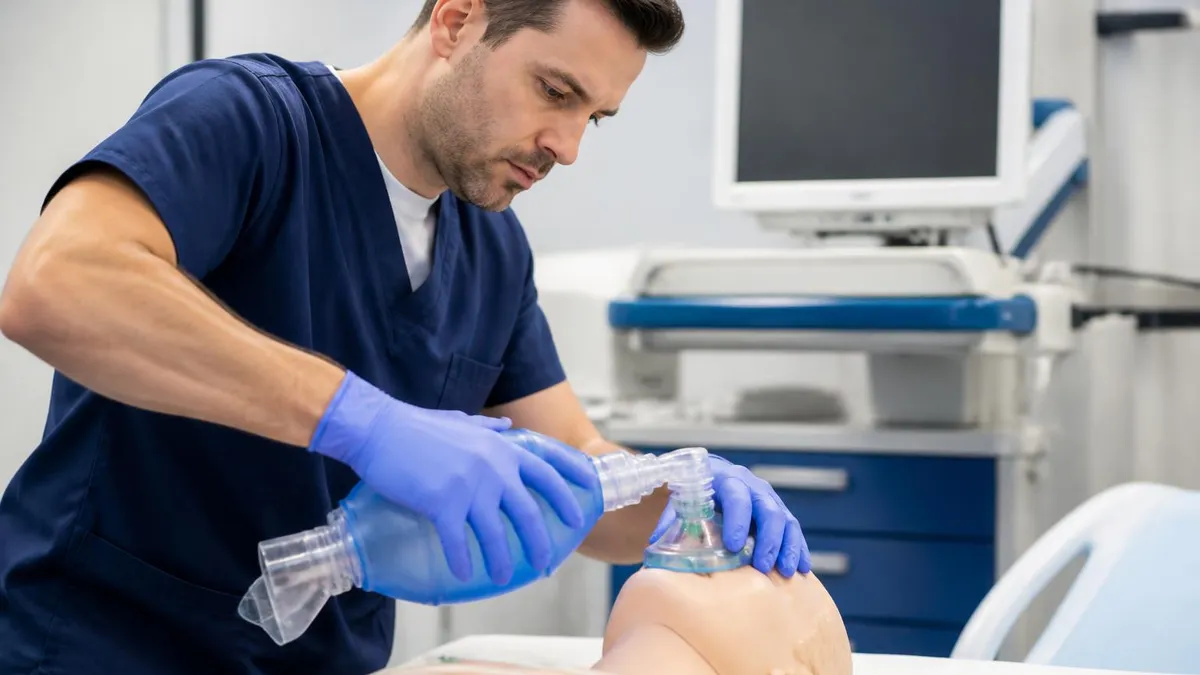
Every ACLS course assumes you can already perform high-quality CPR without coaching. That means compressions at 100 to 120 per minute, a depth of at least two inches in adults, full chest recoil, and switching compressors every two minutes. You also need to operate an AED and deliver two-rescuer bag-mask ventilation with a 30:2 ratio before an advanced airway is placed.
Most training centers want a current AHA BLS Provider card, though some accept equivalent cards from the Red Cross. If your BLS has lapsed, fix that first. Instructors will spot-check compressions during the first skills station and a weak performance there sets a bad tone for the rest of the class.
The Precourse Self-Assessment Is the Real Eligibility Test
Since the 2015 guidelines update, the AHA has required students to complete a precourse self-assessment and precourse work before attending an ACLS class. Your training center emails a code that unlocks the assessment on the AHA eLearning site. You must score at least 70 percent and print or save the certificate. Instructors are supposed to collect it on day one, and many won't let you sit without it.
The assessment has three sections: rhythm identification, pharmacology, and practical application. The rhythm section shows you strips and asks you to name them. Pharmacology tests indications and doses. The practical section presents short case vignettes and asks what you'd do next. You can retake it as many times as you want, so a low first score isn't a disaster. It's a signal that you need to review before spending two days in class.
Treat this as a diagnostic, not a hurdle. If you scored 90 percent on rhythms but 55 percent on drugs, you know precisely where the next few evenings should go. The acls drugs reference lists every medication with dose, route, and timing, and pairing it with a full-length acls practice test will show whether the numbers are actually sticking or just looking familiar.

How the ACLS Course Is Structured
Completed online before class. Includes the self-assessment, precourse videos on team dynamics and systematic approach, and a review of the BLS primary survey. Budget three to five hours. The certificate you print is your ticket in the door.
Small-group rotations through high-quality BLS, airway management, rhythm and electrical therapy, and the core case scenarios. Instructors coach and correct in real time. This is where most learning actually happens, so ask questions freely and volunteer to lead.
You lead a simulated cardiac arrest from start to ROSC or termination, directing a team through rhythm changes and drug decisions. You're graded on a checklist covering the systematic approach, correct algorithm choice, timing, and closed-loop communication.
Fifty multiple-choice questions drawn from all course content, open-resource in the current AHA format. You need 84 percent, which means missing no more than eight questions. A failed attempt can usually be remediated and retaken the same day.
What Happens on Exam Day: Written Test and Megacode
The written exam is fifty questions and you need 42 correct. Since the 2020 guidelines, the AHA allows the exam to be open-resource, meaning you can use the provider manual and your notes. Don't let that fool you into skipping preparation. The questions are scenario-based and time-limited, so flipping through pages hunting for an answer burns minutes you don't have. Students who fail almost always failed the pharmacology and rhythm questions, not the teamwork ones.
The megacode is where nerves show up. You'll be handed a patient who typically starts in one rhythm, deteriorates into another, arrests, and then achieves ROSC or doesn't. You have to call the rhythm, choose the right branch of the algorithm, order drugs by name and dose, direct defibrillation with correct energy, and keep the team cycling compressions every two minutes. Practicing with acls rhythm strips beforehand makes the transitions feel familiar instead of frightening.
Remediation exists for both parts. If you miss the written score, most instructors review the questions you got wrong and let you retest immediately. If the megacode goes badly, you get coaching and another attempt. Training centers want you to pass. The only people who leave without a card are those who arrived unprepared for the aha acls algorithms and couldn't recover with a second try.
Taking ACLS as an LPN: Advantages and Limitations
- +Opens LPN roles in PACU, dialysis, LTACH, and rural emergency departments that list ACLS as preferred
- +Makes you a far more useful team member during a code, even if you're not the one pushing drugs
- +Counts as continuing education in many states and often earns CE contact hours
- +Strong résumé signal when applying to LPN-to-RN bridge programs
- +Same card and same recognition as an RN or physician earns; no LPN designation on it
- +Employers frequently reimburse the course fee once you're hired
- −Certification does not expand your state scope of practice; IV push restrictions still apply
- −Course fee of $150 to $350 comes out of pocket if you're not yet employed in an eligible role
- −Pharmacology depth is heavier than most LPN programs cover, so expect extra study time
- −Some training centers require an RN or higher for HeartCode skills sessions; call ahead
- −Card expires every two years and renewal is on you to schedule
- −In outpatient or long-term care settings the card may never be used, making it hard to justify
Renewal Eligibility and What Happens If Your Card Lapses
An ACLS Provider card is valid for two years from the month of issue. To renew, you enroll in the shorter ACLS Update course, which runs five to six hours instead of the full two days. The catch is that you must hold a current, unexpired card to be eligible for the update. Show up with a card that expired last week and the training center will bounce you to the full provider course, at full price.
Some centers offer a grace period of about 30 days at their own discretion, but it's not an AHA rule and you shouldn't count on it. Set a calendar reminder for three months before expiration. That gives you time to book an acls recertification online option through HeartCode if your schedule is tight, or an in-person update if you prefer live practice. Either path ends with the same skills check and the same written exam.
If your card has genuinely lapsed by months or years, don't panic. You're simply back to initial course eligibility, which as we've covered is open to any clinician who can pass the precourse work. The acls renewal guide covers timing, cost differences, and how employers handle a gap in certification. Most facilities give you a short window to fix it before it affects scheduling.
ACLS Eligibility Checklist Before You Register
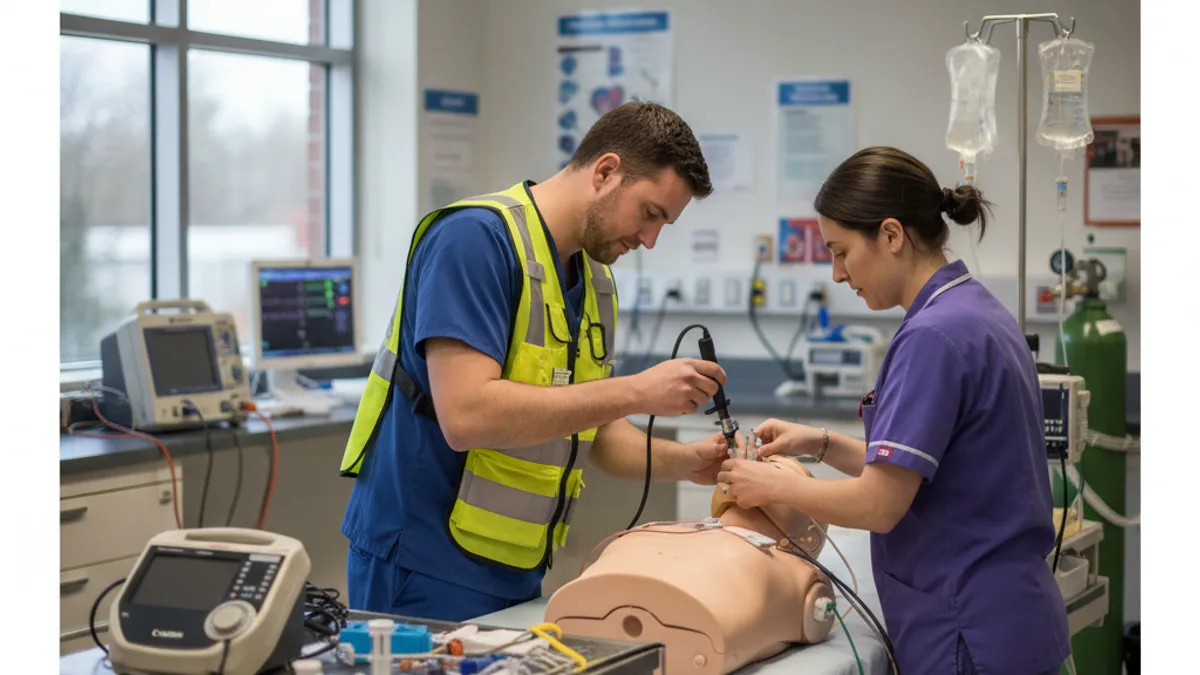
- ✓Current AHA BLS Provider card (or an accepted equivalent) that won't expire before your ACLS class
- ✓Confirm your training center's admission policy for your license type, especially if you're an LPN, MA, or dental professional
- ✓Register early enough to receive the precourse access code by email, usually one to two weeks out
- ✓Complete the precourse self-assessment with at least 70 percent and save the certificate
- ✓Watch all assigned precourse videos and note the systematic approach steps
- ✓Practice naming the twelve core rhythms in under three seconds each
- ✓Memorize doses for epinephrine, amiodarone, atropine, adenosine, and lidocaine
- ✓Read your state nurse practice act section on IV medication administration if you're an LPN or LVN
- ✓Bring photo ID, your BLS card, and the printed self-assessment certificate on day one
- ✓Ask whether the center offers same-day remediation for the written exam and megacode
How to Prepare If You're Borderline on the Prerequisites
Plenty of students meet the paper requirements but feel shaky on the content. That's normal, especially for LPNs whose programs spent a week on ECGs rather than a semester. The fix is structured, not heroic. Give yourself two weeks. Spend the first five days on rhythms only, using strips with the answers hidden. Spend the next five on drugs, writing each dose from memory every morning. Use the last four days on full case scenarios that combine both.
Don't study the algorithms as flowcharts to memorize. Study them as decisions. Ask yourself at every branch: is the patient stable or unstable, is the rhythm shockable or not, is there a pulse. Once those three questions become automatic, the rest of the acls protocol falls into place because every box is just an answer to one of them. Students who memorize boxes freeze when the megacode patient does something unexpected.
One more thing that trips people up: reading the question too fast. ACLS exam items often include a detail like "the patient is now unresponsive" buried in the second sentence, and that detail changes the whole answer. Practice reading each scenario twice before looking at options. It costs ten seconds and saves you from the most common wrong-answer pattern instructors see.
Certified is not the same as authorized
An ACLS card proves you can recognize rhythms, choose the right algorithm, and lead a resuscitation team. It does not grant permission to perform any specific intervention. Your license, your state practice act, and your facility policy decide that. LPNs in particular should confirm IV push and rhythm-interpretation rules with their board of nursing before assuming the card changes what they can do at the bedside.
Career Value of ACLS for LPNs, Medics, and Allied Health
For an LPN, the clearest payoff shows up in job postings. Search for LPN roles in PACU, cardiac cath lab recovery, dialysis, or LTACH and you'll see ACLS listed under preferred qualifications more often than not. Facilities hiring for those units want someone who won't hesitate during a code. Salaries in those settings typically sit above the median for practical nurses, partly because acuity is higher and partly because the applicant pool is smaller.
Paramedics generally need ACLS as a condition of licensure or employment, so eligibility questions rarely come up for them. Respiratory therapists, on the other hand, often get it as a career move into critical care or rapid response teams. Dental professionals who administer moderate sedation are required in many states to hold ACLS, and their training centers frequently run dedicated cohorts because the case discussions differ from a hospital-based class.
Beyond the immediate job, ACLS is a proving ground. Nurses who pass it tend to move more confidently into charge roles and precepting. Those weighing a bridge program find that admissions committees notice it. If you're deciding between ACLS and PALS, or wondering whether you'll eventually need both, the aha acls comparison spells out which units require which card and how the two courses overlap.
Nearly every AHA training center checks for a current BLS Provider card before letting you into ACLS, and an expired card is the single most common reason students get turned away on day one. Check the expiration date on your BLS card today. If it lapses within 60 days of your ACLS class, renew it first or book a bundled BLS-plus-ACLS weekend so both cards line up.
Finding a Course, Costs, and Online vs In-Person Options
You have two main formats. The traditional instructor-led course runs across two days at a training center, hospital education department, or community college. The blended HeartCode ACLS option moves the cognitive portion online, where you work through adaptive simulations at your own pace, then attend a shorter hands-on skills session for the megacode and skills checks. Both routes produce the identical AHA card. Neither is easier; they just distribute the effort differently.
Pricing varies by region. Expect $150 to $350 for an initial provider course and roughly $100 to $250 for a renewal. HeartCode adds a separate fee for the online module, usually around $150, plus whatever the skills session costs. Hospital employees often get it free or reimbursed. If you're paying yourself, use the acls classes near me finder to compare a few centers, because prices for the same course can differ by a hundred dollars across town.
Be cautious with fully online providers that promise an ACLS card with no skills session. Those aren't AHA courses and many employers reject them outright. If a website lets you earn acls certification online without ever touching a manikin, ask your manager whether it's accepted before you pay. The AHA's own site lists authorized training centers, and that's the safest place to start your search.
Your Next Steps Toward ACLS Eligibility
If you've read this far, you probably already meet the eligibility bar. You're a clinician, you have or can get a BLS card, and you're willing to put in the precourse work. That's the whole list. The AHA built ACLS to be accessible to anyone who participates in emergency cardiovascular care, and that includes LPNs, medics, therapists, and students. Don't let a forum post from 2012 convince you otherwise. Call a training center and ask directly.
Then commit to preparation rather than hoping the class will teach you everything. It won't. The two days are designed for practice and assessment, not for learning rhythms from scratch. Take the self-assessment early, find your weak section, and drill it. Learn what the acls medical abbreviation actually stands for and why each word in Advanced Cardiovascular Life Support maps to a course module. Know the first dose of amiodarone acls providers give without looking it up.
Finally, remember the card is a floor, not a ceiling. Passing ACLS means you can run a code competently under ideal simulated conditions. Real resuscitations are messier. The clinicians who make a difference are the ones who keep practicing after the class ends, review the american heart association acls updates when guidelines change, and treat every mock code as a chance to get faster. Start there, and eligibility will be the least of your concerns.
ACLS Eligibility Questions and Answers

ACLS Study Materials: Best Resources, Guides, and Practice Tests for 2026
ACLS Practice Tests and Precourse Self-Assessment Guide
ACLS Practice Test PDF 2026: Free Advanced Cardiovascular Life Support Questions

ACLS Precourse Self-Assessment Answers — Your Complete 2026 Study Resource
ACLS and PALS: Differences, Who Needs Both, and How to Get Certified
About the Author

Registered Nurse & Healthcare Educator
Johns Hopkins University School of NursingDr. Sarah Mitchell is a board-certified registered nurse with over 15 years of clinical and academic experience. She completed her PhD in Nursing Science at Johns Hopkins University and has taught NCLEX preparation and clinical skills courses for nursing students across the United States. Her research focuses on evidence-based exam preparation strategies for healthcare certification candidates.
Join the Discussion
Connect with other students preparing for this exam. Share tips, ask questions, and get advice from people who have been there.
View discussion (8 replies)