
American Heart Association ACLS: Certification, Course, and Renewal in 2026 September
American Heart Association ACLS explained: what the certification is, who needs it, the course and exam, the algorithms, and how renewal works every two years. 🎯
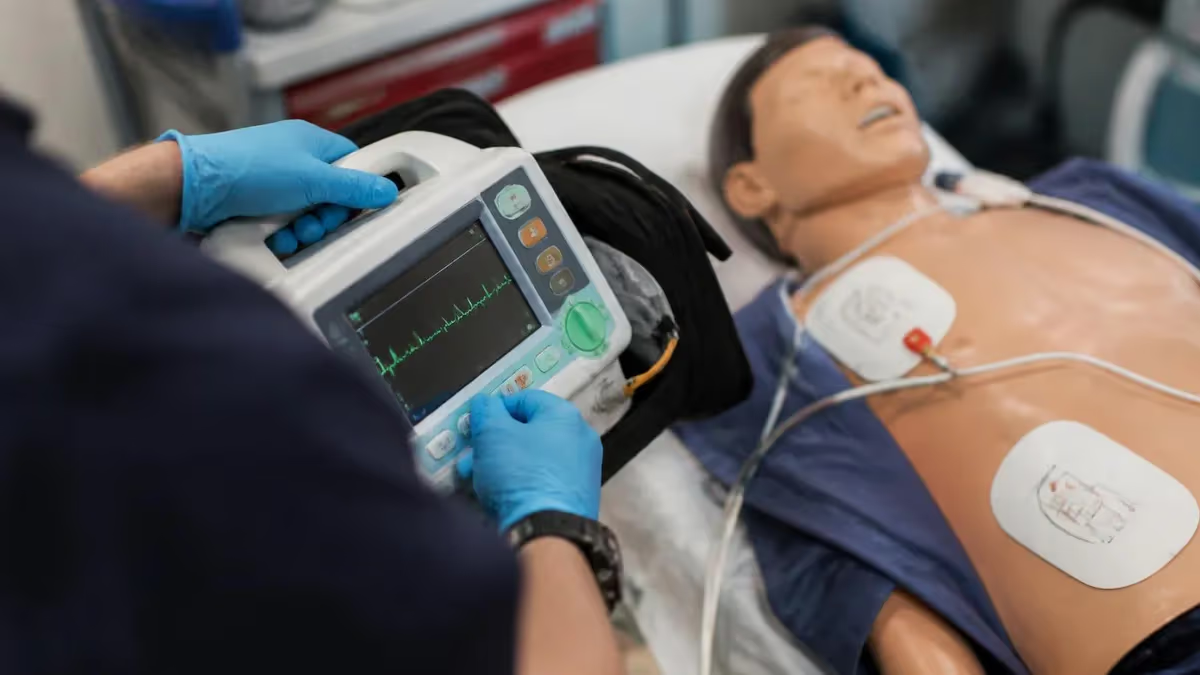
If you work in healthcare, the phrase "American Heart Association ACLS" probably shows up on your job requirements, and for good reason. ACLS—Advanced Cardiovascular Life Support—is the gold-standard certification for managing cardiac arrest and other life-threatening cardiovascular emergencies, and the American Heart Association, or AHA, is the organization whose ACLS program is the most widely recognized and required across the medical field.
The connection between the two is the key starting point. ACLS is the body of knowledge and skills; the American Heart Association is the leading organization that develops the guidelines, sets the curriculum, and issues the certification cards that hospitals and employers recognize. When a job posting says "AHA ACLS required," it specifically means certification through the American Heart Association's program, which is the standard most healthcare employers trust.
This guide explains what AHA ACLS certification involves—what the course covers, who needs it, how the exam and skills testing work, the core algorithms, and how renewal works every two years. Whether you're approaching it for the first time or renewing, understanding the structure of acls certification and mastering the acls algorithms are the two things that make the difference between stress and confidence.
One reassurance up front: while ACLS is genuinely demanding and the responsibility it represents is serious, it's a very achievable certification with proper preparation. Thousands of healthcare providers earn and renew it routinely. The course is built to teach you, not to fail you, and candidates who do the precourse work and learn the algorithms reliably pass. Knowing what to expect removes most of the anxiety people carry into it.
AHA ACLS by the Numbers

What AHA ACLS Certification Covers
The core of ACLS—running a resuscitation for cardiac arrest, including high-quality CPR, defibrillation, and the systematic team approach to bring a patient back. The algorithms organize this life-or-death sequence.
Reading and interpreting ECG rhythms—identifying ventricular fibrillation, tachycardias, bradycardias, and asystole—so you choose the correct intervention. ECG interpretation is a foundational ACLS skill.
Knowing the key ACLS medications—epinephrine, amiodarone, atropine, adenosine, and others—their doses, indications, and timing within the algorithms. Drug knowledge is heavily tested.
Leading or participating effectively in a resuscitation team, with clear communication and defined roles. ACLS emphasizes that outcomes depend on coordinated teamwork, not just individual knowledge.
Let's clarify exactly what AHA ACLS is. Advanced Cardiovascular Life Support is a set of clinical guidelines and skills for treating cardiac arrest, stroke, and other life-threatening cardiovascular emergencies. It builds on Basic Life Support (BLS, the CPR-level training) and adds advanced interventions: interpreting heart rhythms, administering emergency medications, managing airways, and leading a resuscitation team through standardized algorithms. It's the framework providers use when a patient's life hangs in the balance.
The American Heart Association's role is central. The AHA is a leading authority on cardiovascular care and resuscitation science, and it publishes the guidelines that the ACLS course is based on—guidelines updated periodically as research advances. When the AHA revises its recommendations, the ACLS curriculum follows. This is why "AHA ACLS" carries weight: it signals training aligned with the current, evidence-based standard of care that the broader medical community accepts.
It's worth noting the AHA isn't the only organization that offers ACLS-style certification, but it's the most widely recognized and the one most employers specifically require. Some providers obtain ACLS through other organizations, but candidates should always confirm what their employer accepts, because not every ACLS card is treated equally. When in doubt, the AHA's certification is the safest, most universally recognized choice in the United States.
The algorithms are the heart of ACLS and what most of the course revolves around. These are standardized, step-by-step decision pathways for specific emergencies—the cardiac arrest algorithm, the bradycardia and tachycardia algorithms, and others. They exist because in a real emergency, there's no time to improvise; the algorithms encode the evidence-based best response so a trained provider can act quickly and correctly under extreme pressure.
ECG rhythm recognition underpins the algorithms, since you can't choose the right pathway without correctly identifying the rhythm. ACLS requires you to distinguish shockable rhythms like ventricular fibrillation and pulseless ventricular tachycardia from non-shockable ones like asystole and pulseless electrical activity, plus recognize various tachycardias and bradycardias. This skill determines every downstream decision, which is why it's emphasized so heavily in training and testing.
Pharmacology rounds out the clinical core. ACLS providers must know the key emergency drugs—when to give epinephrine, amiodarone, atropine, adenosine, and others, at what doses, and at what point in the algorithm. Medication questions feature prominently on the exam, and in practice, knowing the right drug at the right moment is part of running a resuscitation competently. Mastering the meds is a non-negotiable part of earning the certification.
Finally, ACLS strongly emphasizes team dynamics and communication, reflecting how real resuscitations actually work. A code is run by a team, and outcomes depend on clear roles, closed-loop communication, and effective leadership as much as on clinical knowledge. The course teaches and tests your ability to function within—or lead—that team, because a brilliant clinician who can't coordinate a chaotic resuscitation isn't much use to the patient.
How AHA ACLS Certification Works
Complete the precourse work
Take the course
Pass the megacode
Pass the written exam
Get your card
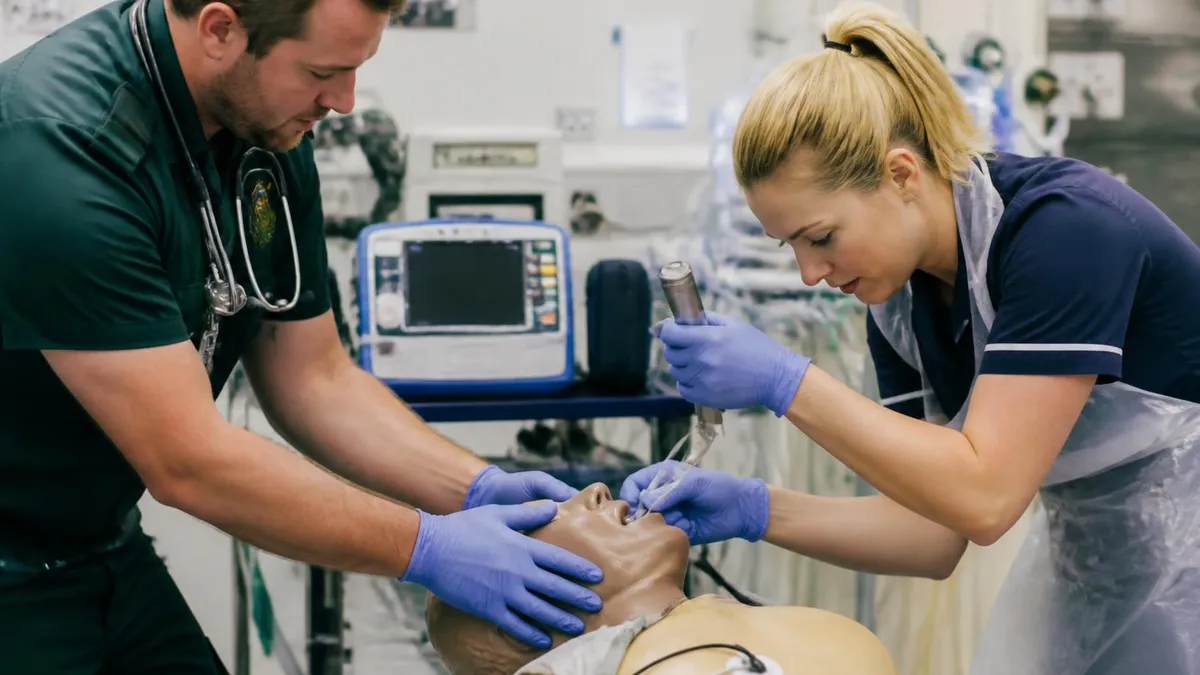
Who actually needs AHA ACLS? Broadly, healthcare providers who might be involved in managing cardiovascular emergencies. That includes physicians, nurses—especially in emergency, critical care, and cardiac units—paramedics, respiratory therapists, physician assistants, and others working in settings where cardiac arrest can occur. For many of these roles, ACLS certification isn't optional; it's a condition of employment that must be maintained throughout your career.
Emergency and critical care staff are the most obvious group. Nurses and physicians in emergency departments, intensive care units, cardiac catheterization labs, and similar high-acuity settings are expected to respond to codes, so ACLS is standard. Paramedics, who run resuscitations in the field, also rely on ACLS-level skills. If your work puts you near patients who could suddenly deteriorate, ACLS is almost certainly part of your requirements.
Beyond the obvious roles, many other providers obtain ACLS either because their employer requires it or to advance their careers. Operating room staff, telemetry and step-down nurses, dialysis nurses, and providers in procedural areas often need it. Some clinicians pursue ACLS proactively because it strengthens their résumé and qualifies them for more acute-care positions, even when their current role doesn't strictly demand it.
Students and new graduates frequently earn ACLS as they enter these fields. Many nursing programs, paramedic programs, and residencies build ACLS certification into their training or expect new hires to obtain it quickly. For someone breaking into emergency or critical care, having ACLS already in hand can be an advantage in hiring, signaling readiness to step into a code situation from day one.
It's important to distinguish ACLS from related certifications, since people often confuse them. BLS (Basic Life Support) is the foundational CPR certification and a prerequisite mindset for ACLS. PALS (Pediatric Advanced Life Support) is the pediatric counterpart for child and infant emergencies. Many providers hold several of these, and understanding how acls relates to BLS and PALS helps you know which certifications your specific role requires.
The practical takeaway is to confirm your specific requirements with your employer or program. Requirements vary by role, facility, and specialty, and the safest approach is to ask exactly which certifications you need, which issuing organization is accepted (usually the AHA), and the timeline for obtaining them. Walking in with clarity on these points prevents the common scramble of discovering a missing certification requirement at the worst possible moment.
For those required to maintain it, ACLS becomes a recurring part of professional life rather than a one-time hurdle. The two-year renewal cycle means it's a credential you'll refresh repeatedly over a career, and many providers come to see the periodic review as a genuine benefit—keeping life-saving skills sharp for emergencies that, thankfully, don't happen every day but demand flawless execution when they do.
AHA ACLS Essentials
AHA ACLS courses cover the algorithms, ECG rhythm recognition, pharmacology, airway management, and team dynamics through instruction and hands-on practice. They include the expectation that you've completed precourse self-assessment beforehand, since class time focuses on application and skills rather than teaching from scratch.
How to Prepare for AHA ACLS
- ✓Complete the AHA precourse self-assessment honestly before class.
- ✓Memorize the core algorithms—cardiac arrest, bradycardia, tachycardia.
- ✓Drill ECG rhythm recognition until it's fast and automatic.
- ✓Learn the key drugs, doses, and where they fit in each algorithm.
- ✓Practice the megacode scenario and leading a resuscitation team.
- ✓Use ACLS practice tests to find and fix your weak areas.
- ✓Confirm your employer accepts AHA certification and note your deadline.
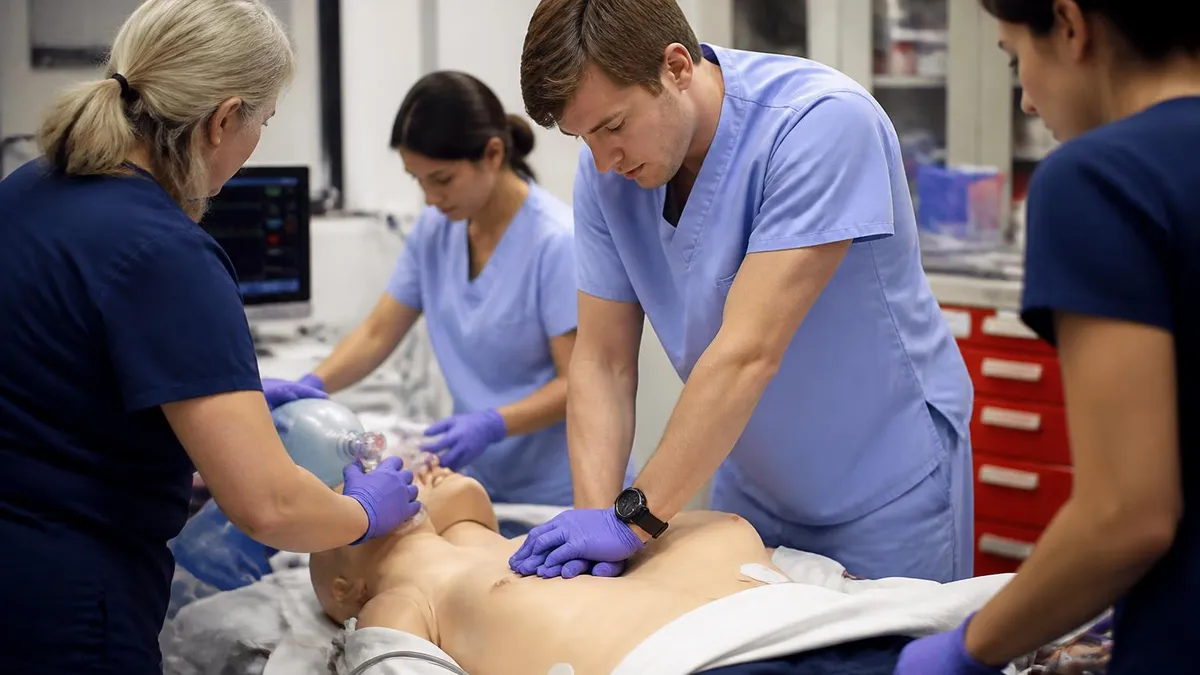
Preparation is what turns ACLS from intimidating into straightforward, and the most important step happens before you ever walk into class. The AHA expects you to complete a precourse self-assessment and review the material beforehand—the course is designed assuming you arrive already familiar with the basics. Skipping this is the single most common reason people struggle, because class time moves fast and focuses on applying knowledge you're supposed to already have.
The algorithms are your top priority, full stop. Memorizing the cardiac arrest algorithm, the bradycardia and tachycardia algorithms, and the others is the core of passing both the written exam and the megacode skills test. Don't just read them—internalize the sequences until you can run through them from memory under pressure. Most of what the certification tests flows directly from knowing these pathways cold, so this is where your study time pays off most.
ECG rhythm recognition deserves dedicated practice alongside the algorithms, since the two are inseparable. You need to instantly identify shockable versus non-shockable rhythms and recognize the various tachycardias and bradycardias, because rhythm identification drives every algorithm decision. Drilling rhythm strips until recognition is fast and automatic removes a major source of hesitation and error in both the exam and a real code.
Pharmacology is the other heavily tested area, so learn the key drugs thoroughly. Know epinephrine, amiodarone, atropine, adenosine, and the rest—their indications, doses, and exactly where they fit within each algorithm. Medication questions are common on the written exam, and drug knowledge is essential during the megacode. Flashcards and repetition work well here, since it's largely a matter of committing specific facts to memory.
The megacode—the hands-on test where you lead a simulated resuscitation—is where preparation visibly pays off. Practicing the scenario, ideally out loud and with others, builds the fluency to direct a team calmly and apply the right algorithm in real time. Many candidates find the megacode the most nerve-wracking part, but those who've rehearsed leading a code handle it confidently. Familiarity with the flow is the antidote to megacode anxiety.
Practice tests are invaluable for gauging readiness and targeting your weak spots. Working through realistic ACLS questions reveals which algorithms, rhythms, or drugs you haven't yet mastered, letting you focus your remaining study where it matters. Good acls practice resources mirror the real exam's style, so they double as both a study tool and a confidence-builder before the actual test.
Finally, prepare logistically as well as academically. Confirm your course format—in-person or blended—complete any online portions in advance, and make sure you understand the schedule. Arrive rested and bring the required materials. ACLS preparation rewards organized, deliberate effort, and candidates who handle both the studying and the logistics walk in calm and pass without drama, which is exactly the outcome thorough preparation is designed to produce.
Know the algorithms cold
If you master one thing for AHA ACLS, make it the algorithms—cardiac arrest, bradycardia, and tachycardia especially. Nearly everything the certification tests, on both the written exam and the hands-on megacode, flows from knowing these step-by-step pathways from memory. Combined with completing the precourse self-assessment, internalizing the algorithms is what reliably turns ACLS from stressful into very passable.
AHA ACLS: What to Know
- +The most widely recognized and employer-trusted ACLS certification
- +Based on current, evidence-based AHA resuscitation guidelines
- +Highly achievable with proper precourse preparation
- +Flexible blended formats fit busy provider schedules
- +Keeps life-saving skills sharp through two-year renewal
- −Requires real study—algorithms, rhythms, and drugs
- −The megacode skills test intimidates many candidates
- −Must be renewed every two years to stay valid
- −Course and renewal carry a cost in time and money
- −Not all non-AHA ACLS cards are accepted by every employer
AHA ACLS courses are designed assuming you've completed the precourse self-assessment and reviewed the algorithms beforehand. Class time moves quickly and focuses on application, not teaching the basics from scratch. Skipping the precourse work is the most common reason candidates struggle. Do it honestly, study the algorithms in advance, and you'll arrive ready to succeed rather than scrambling to catch up.
Renewal is a recurring reality of holding ACLS, so it's worth understanding clearly. AHA ACLS certification cards are valid for two years from the date of issue. Before that expiration, you must complete a renewal—often a somewhat shorter recertification course—to confirm your knowledge and skills remain current and to receive a new card. This two-year cycle continues for as long as your role requires the certification.
The renewal course is generally less involved than the initial certification, on the assumption that you already know the material and need to refresh and revalidate it. You'll still demonstrate your algorithms, rhythm recognition, and skills, and pass the required assessments, but the experience is usually streamlined for those recertifying. That said, don't treat it casually—guidelines update, and you still need to perform, so a quick review of the algorithms beforehand is wise.
Timing your renewal matters more than people realize. Letting your card lapse can create problems: an expired ACLS certification may affect your eligibility to work in roles that require it, and renewing a lapsed certification can be more involved than a timely renewal. Track your expiration date and schedule renewal comfortably before it, ideally a month or two ahead, to avoid any gap that could disrupt your work.
Online and blended renewal options have made staying current much more convenient. The AHA offers blended formats where you complete the knowledge portion online and then attend a brief in-person skills session, which suits busy working providers. Reviewing the convenient acls renewal options available helps you choose the format that fits your schedule while still meeting the AHA's standards and your employer's acceptance requirements.
A word of caution on renewal shortcuts: be wary of services promising ACLS cards with little or no real assessment. Legitimate AHA certification, even renewal, involves genuine knowledge and skills validation. Cards from non-credible sources may not be accepted by employers and don't reflect actual competence, which defeats the entire purpose. Stick to AHA-aligned, employer-accepted programs even when renewing, however tempting an easy shortcut might seem.
Stepping back, the overall picture of AHA ACLS is reassuring once you understand it. It's a rigorous but achievable certification, built on solid science, recognized everywhere, and maintainable through a predictable two-year cycle. For the healthcare providers who need it, it's simply part of professional life—and a genuinely valuable one, since the skills it certifies are exactly those that save lives in the most critical moments.
So whether you're certifying for the first time or renewing, the path is clear: do the precourse work, master the algorithms, drill rhythms and drugs, practice the megacode, and choose an AHA-recognized course in a format that fits your life. Confirm your employer's requirements, track your renewal date, and treat the credential as the meaningful skill set it represents. Do that, and AHA ACLS becomes a confident, manageable part of your healthcare career rather than a recurring source of stress.
Most importantly, never lose sight of why the certification exists. Behind the algorithms and exam questions is a real patient whose survival may depend on a provider executing this exact knowledge flawlessly under pressure. That's what makes ACLS worth taking seriously, and what makes earning it genuinely meaningful—you're not just collecting a card, you're proving you can help bring someone back from the brink when it matters most.
American Heart Association ACLS Questions and Answers

About the Author

Registered Nurse & Healthcare Educator
Johns Hopkins University School of NursingDr. Sarah Mitchell is a board-certified registered nurse with over 15 years of clinical and academic experience. She completed her PhD in Nursing Science at Johns Hopkins University and has taught NCLEX preparation and clinical skills courses for nursing students across the United States. Her research focuses on evidence-based exam preparation strategies for healthcare certification candidates.
Join the Discussion
Connect with other students preparing for this exam. Share tips, ask questions, and get advice from people who have been there.
View discussion (8 replies)