
How to Become a Paramedic: Step-by-Step Career Pathway (2026 September)
How to become a paramedic: 📗 6-step pathway covering EMT, field experience, paramedic program, NREMT exam, state license. Costs, timeline, requirements.
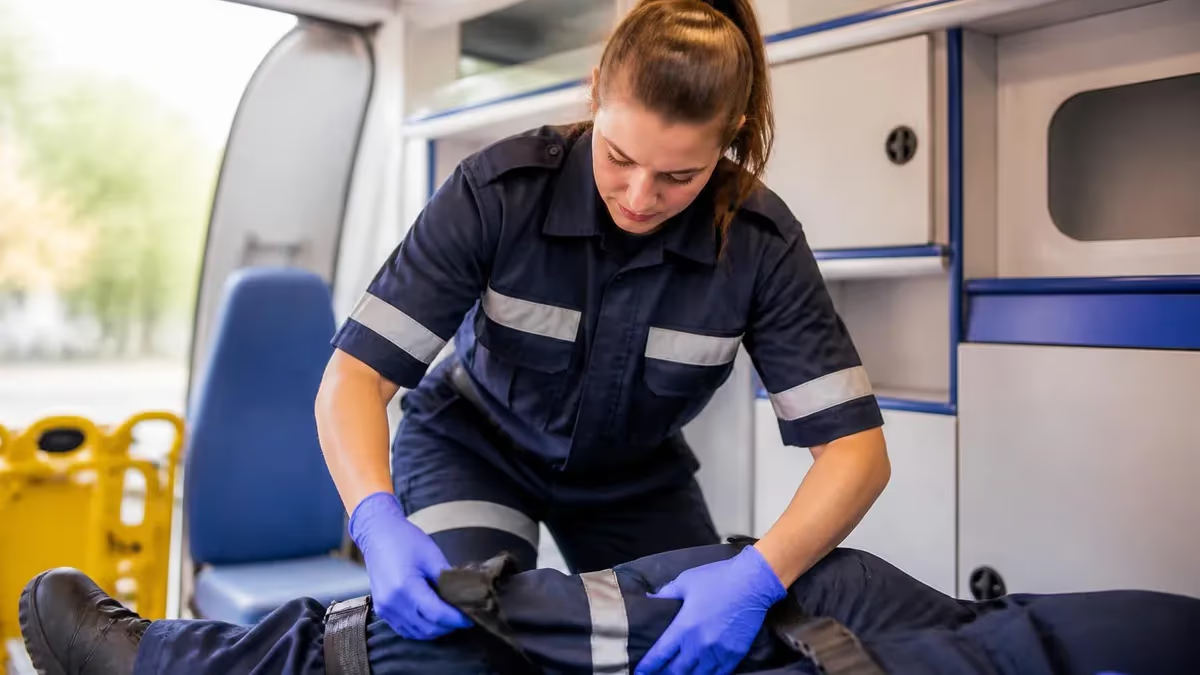
Becoming a paramedic in the United States is a structured career pathway that typically takes 1 to 3 years after high school. You will not jump straight from a classroom to driving an ambulance and pushing cardiac meds. The pathway is layered: high school diploma or GED, EMT certification, field experience, paramedic program, NREMT-Paramedic exam, and state licensure.
Total cost ranges from $3,000 to $15,000, depending on whether you choose a community college certificate, a fire academy track, or a full associate degree. Most paramedic students hold full-time jobs as EMTs while completing the program — earning while they train.
How to Become a Paramedic: Step-by-Step Career Pathway
If you have searched paramedic how to become, you are looking for a clear roadmap — not a list of vague "requirements." This guide walks through the exact sequence: what to study, what exams to pass, how long each stage takes, and what it costs. The career is not glamorous in a Hollywood way, but it is one of the most respected entry-level medical pathways in America, and the demand for licensed paramedics keeps climbing.
Before we map the steps, a quick clarification. A paramedic is not the same as an EMT. An EMT (Emergency Medical Technician) handles basic life support — bandaging, oxygen, CPR, basic airways. A paramedic handles advanced life support — IV lines, cardiac drugs, intubation, manual defibrillation, 12-lead ECG interpretation. To understand the gap between the two roles, read our deep dive on EMT vs paramedic, which explains scope of practice, salary, and training depth.
Who Can Become a Paramedic?
The basic eligibility list is short and almost universal across states. You need a high school diploma or GED, you must be at least 18 years old, and you need a valid driver's license. Most programs also require current CPR for the Healthcare Provider certification (often called BLS), a recent physical exam, immunization records, and a clean background check. Some employers tack on a drug screen and a driving record review before they hire you, even as a student rider.
You do not need a bachelor's degree before applying. You do not need prior healthcare experience for the EMT stage. What you do need is the willingness to study hard and work shifts that can stretch 12 to 24 hours. For a fuller breakdown of what the career involves once you finish, see what is a paramedic.
If you already know the destination and want to test your knowledge along the way, the paramedics exam hub gives you free practice questions across every NREMT domain.

Prerequisites Before You Start
Required by every accredited EMT and paramedic program in the United States. Some states accept homeschool transcripts with official documentation.
You must be 18 at the time of NREMT testing. Many EMT programs accept 17-year-olds, but you cannot certify until your 18th birthday.
You will operate an ambulance. A clean driving record is preferred. DUIs, reckless driving, and recent at-fault crashes can disqualify applicants.
Current Healthcare Provider CPR or AHA BLS card. Many EMT programs include this in the curriculum, but applying with it already speeds things up.
Hepatitis B series, MMR, varicella, Tdap, annual flu, TB screening, and a doctor's clearance for the physical demands of EMS work.
Felony convictions, violent crime, and recent drug offenses can block licensure. State EMS boards review every applicant individually.
The 6 Steps to Become a Paramedic
Step 1: Become an EMT First
Step 2: Gain EMT Field Experience
Step 3: Complete a Paramedic Program
Step 4: Pass the NREMT-Paramedic Exam
Step 5: Apply for State Paramedic License
Step 6: Maintain Through Continuing Education
Step 1 Deep Dive: The EMT Stage Is Non-Negotiable
Every accredited paramedic program in the U.S. requires current EMT certification as a prerequisite. There is no "paramedic from scratch" pathway, no zero-to-paramedic boot camp, no military shortcut that skips EMT. The reason is practical: paramedic-level decisions depend on baseline patient assessment skills that you can only build by running calls at the EMT level first. You learn to read a scene, talk to patients, manage a partner, drive code, and handle the chaos before anyone hands you a laryngoscope.
EMT courses run 120 to 150 hours of classroom and lab time, plus a clinical rotation in an emergency department and a ride-along requirement on an ambulance. Community colleges, technical schools, fire academies, hospital-based programs, and even some high schools offer the course. Tuition ranges from $800 at a community college to $2,500 at a private school. The NREMT cognitive exam costs $98. State licensure fees add another $50 to $150.
Step 2: Why Field Experience Comes Before Paramedic School
Most paramedic programs explicitly require 6 to 12 months of EMT field experience before they will accept your application. A handful of accelerated programs waive this for active military medics or for new graduates with strong references, but it is the exception. The hours matter — you cannot reach paramedic-level clinical reasoning without seeing real patients in uncontrolled environments.
This is also where you decide if EMS is for you. About 40 percent of EMTs leave the field within their first 2 years, often due to pay, shift hours, or the emotional toll of the work. Before sinking $10,000 into paramedic school, you want to know that you can handle a 2 a.m. cardiac arrest in someone's living room.
Step 3: Inside the Paramedic Program
Paramedic school is the most demanding stage. You will study cardiology, pharmacology, advanced airway management, trauma, obstetrics, pediatrics, behavioral emergencies, and EMS operations. You will spend hundreds of hours in hospital clinicals — emergency department, operating room, labor and delivery, ICU, psychiatric unit, and pediatric ED. You will run a field internship of 200 to 500 hours on an ALS unit, transitioning from observer to team leader on calls.
For a complete look at what the curriculum covers, see the paramedics exam complete study guide. To compare program lengths, salary expectations, and specialty paths, the paramedics exam career salary guide breaks down hospital paramedic, fire department paramedic, flight paramedic, and critical-care paramedic tracks.
If you want printed material to study offline before or during the program, the paramedic practice test PDF is free to download and covers all five NREMT domains.
What Becoming a Paramedic Costs

Picking the Right Paramedic Program
Accreditation matters more than anything else. Your program must be accredited by the Commission on Accreditation of Allied Health Education Programs (CAAHEP) upon recommendation of the Committee on Accreditation of Educational Programs for the EMS Professions (CoAEMSP). Without CoAEMSP accreditation, you cannot sit for the NREMT-Paramedic exam, no matter how good the program looks on paper.
Beyond accreditation, look at first-time NREMT pass rates (publicly posted by every accredited program), field internship affiliations, instructor-to-student ratios, simulation lab quality, and job placement. A program with a 90 percent first-time pass rate and a strong field internship contract at a busy 911 service is worth paying more for than a cheaper program with a 60 percent pass rate.
Program Format Options
Most paramedic programs run full-time, Monday to Friday during the day. Some programs offer evening and weekend tracks designed for working EMTs. A small but growing number run hybrid formats where didactic instruction is online but labs, clinicals, and the field internship remain in-person. Fully online paramedic programs do not exist — clinical and field hours cannot be remote.
How to Pay for Paramedic School
Financial aid is widely available for community college and university programs. Fill out the FAFSA early. Many states offer EMS workforce grants and forgivable loans for students who commit to serving in underserved rural areas after graduation. Veterans should explore VA education benefits — paramedic programs at accredited schools are usually GI Bill eligible. Active firefighters often have tuition reimbursement built into their department's training budget.
Private student loans should be a last resort. The average paramedic earns $50,000 to $65,000 a year, so taking on $30,000 in loans for an 18-month program is rarely a good return. If the math does not work at a private school, a community college certificate plus a year of EMT work is almost always the smarter financial path.
Specialty Paramedic Paths
Once you hold a paramedic license, you can build into specialties. Flight paramedics work on helicopter and fixed-wing critical-care transport teams. They typically require 3 to 5 years of busy 911 experience plus FP-C credentialing.
Critical care paramedics staff ground critical-care transport units between hospitals; CCP-C is the standard credential. Firefighter paramedics dual-role at fire departments, which usually pays the best and offers the most stable schedule.
Community paramedics handle non-emergency home visits, chronic-disease follow-up, and 911-diversion programs. It is the fastest-growing paramedic specialty in the United States today, and pays well in many regions.
Inside the Paramedic Curriculum
Body systems at a deeper level than EMT class. Cardiovascular, respiratory, nervous, endocrine, renal, gastrointestinal, integumentary, and reproductive systems. You learn how each system fails and how those failures present in the field. Typical hours: 60-90 lecture + lab.
Step 4 Deep Dive: Passing the NREMT-Paramedic Exam
The NREMT-Paramedic certification has two distinct components that you must pass to certify. The first is the cognitive exam, a computer-adaptive test delivered at Pearson VUE testing centers.
The exam pulls from a pool of 80 to 150 questions across six domains: airway, respiration and ventilation; cardiology and resuscitation; trauma; medical emergencies, obstetrics and gynecology; EMS operations; and special patient populations. Most candidates finish in 80 to 110 questions. You have up to 2 hours and 30 minutes to complete the test, though most finish faster than that.
The second component is the psychomotor exam, which is hands-on skill testing. Depending on your state, it may be administered by your paramedic program at the end of training or by your state EMS office directly through a regional skills examiner.
Stations typically include patient assessment trauma, patient assessment medical, dynamic cardiology (responding to an arrhythmia scenario), static cardiology (interpreting a strip), oral station, IV cannulation and bolus, IV piggyback, pediatric intraosseous infusion, pediatric ventilation, ventilation through an endotracheal tube, supraventricular dysrhythmia management, and random skills.
You pass or fail each station independently. If you fail one, you can usually retest that single station rather than the whole exam. Build muscle memory for the high-failure stations early.
Pass rates for first-time test takers from CoAEMSP-accredited programs average around 75 to 80 percent nationally. Strong programs post 90 percent or higher; weaker programs sometimes fall below 60 percent. If you fail, you can retest. The NREMT allows up to 6 attempts; after the third failure you must complete a remedial program before retesting. Most students who fail the first time pass on the second after focused study on the domain where they were weakest.
Step 5: State Licensure and Reciprocity
National Registry certification is not a license to practice in any state. Every state has its own EMS office that issues paramedic licenses. After you pass the NREMT, you submit your NREMT certificate, fingerprints, background check, fees, and any state-specific paperwork to your state office. Processing time varies — some states issue a license within days; others take 6 to 8 weeks.
If you move states, most states offer reciprocity for NREMT-certified paramedics. You submit your current state license, NREMT card, and the new state's application; in most cases the new state issues a license without retesting. A few states require additional jurisprudence exams or skills verification. Maintaining current NREMT certification makes interstate moves vastly easier than letting it lapse and trying to test back in.
Application Checklist for Paramedic School
- ✓Current state EMT license (or NREMT-EMT certification)
- ✓Minimum 6-12 months of documented EMT field experience
- ✓Official high school transcript or GED certificate
- ✓College transcripts (if you have any prior coursework)
- ✓Current Healthcare Provider CPR / BLS card
- ✓Recent physical examination and immunization records
- ✓Two or three professional references (preferred from EMS supervisors)
- ✓Background check and fingerprinting
- ✓Drug screen (program-specific)
- ✓Completed application and tuition deposit
- ✓Entrance exam (some programs require HOBET, TEAS, or program-specific test)
- ✓Interview with program director (most competitive programs)

Becoming a Paramedic: Real Trade-Offs
- +Meaningful work — you save lives, deliver babies, and stabilize the worst moments people experience
- +Fast entry — 1 to 3 years total, no four-year degree required
- +High job demand — Bureau of Labor Statistics projects 5 percent growth through 2032
- +Career flexibility — fire service, flight, critical care transport, community paramedicine, EMS education, hospital roles
- +Path to other careers — many paramedics bridge into RN, PA, or MD programs with strong clinical experience
- +Strong union representation in many regions, especially fire-based systems
- −Pay is modest for the responsibility — median around $52,000 in 2024, with private-sector EMS often paying less
- −Shift work is brutal — 24 on / 48 off, 48 on / 96 off, or rotating 12-hour shifts including nights, weekends, and holidays
- −High cumulative stress — PTSD rates among paramedics are several times higher than the general population
- −Physical demands — lifting, carrying, awkward extrications, exposure to weather and bodily fluids
- −Burnout is real — average career length in 911 EMS is 5 to 10 years before transitioning
- −Continuing education is mandatory and unpaid in many systems
Pros and Cons at a Glance
| Pros | Cons |
|---|---|
| Meaningful work — you save lives, deliver babies, and stabilize the worst moments people experience | High cumulative stress — PTSD rates among paramedics are several times higher than the general population |
| Career flexibility — fire service, flight, critical care transport, community paramedicine, EMS education, hospital roles | Physical demands — lifting, carrying, awkward extrications, exposure to weather and bodily fluids |
| Path to other careers — many paramedics bridge into RN, PA, or MD programs with strong clinical experience | Continuing education is mandatory and unpaid in many systems |
Paramedic Career Numbers (2024-2025)
Step 6: Recertification and Continuing Education
NREMT-Paramedic certification renews every 2 years on the same cycle. Certifications expire March 31 of even or odd years depending on your initial certification date.
To recertify under the National Continued Competency Program (NCCP), you need 60 hours of continuing education distributed across three components. 30 hours of National Component cover topics like cardiology, trauma, airway, and pediatrics. 15 hours of Local Component reflect your service's protocols and equipment. 15 hours of Individual Component cover topics you choose for your own professional development. The split keeps recert relevant.
Along with the CE hours, you need current employer-verified skills competencies. Your medical director or training officer signs off that you can still perform 12-lead ECG interpretation, advanced airway management, vascular access, medication administration, and the other paramedic-level skills. If you have not worked a shift in the past two years, most states require a refresher course before reactivating your license.
Paramedic Pay by Setting
Beyond Initial Licensure: Career Growth
The paramedic license is the start, not the end. Many paramedics layer on credentials over their first 5 years: CCP-C for ground critical care transport, FP-C for flight, TP-C for tactical paramedic roles supporting law enforcement, CCEMTP through the University of Maryland for advanced critical care, NRP and PALS for pediatric expertise, and AMLS for medical emergencies.
Many paramedics use the credential as a launchpad into nursing, physician assistant programs, or medical school. Paramedic clinical experience counts heavily on PA and medical school applications because admissions committees know the depth of patient contact involved.
Bridge programs from paramedic to RN exist in many states and shorten the typical nursing degree timeline. A handful of medical schools have a documented preference for paramedic applicants thanks to the autonomous decision-making and emergency exposure the role provides.
Common Mistakes That Delay or Block Licensure
Three issues delay paramedic licensure more than anything else. First, applicants underestimate background check requirements. Old drug convictions can require additional documentation or a state board hearing.
Second, applicants miss the field experience requirement and apply to paramedic school too early. Most are turned away and have to wait until they hit the 6 to 12 month mark of EMT field work.
Third, applicants take the NREMT cognitive exam without enough practice testing. Passing rates for candidates who take under 500 practice questions are notably lower than those who take 1,500 or more. Free practice questions can close that gap before you sit for the real cognitive exam.
Where Paramedics Actually Work
Paramedics are not employed only by ambulance companies. The career has expanded well beyond the traditional 911 box. Fire departments employ the largest single share of paramedics in the United States — most urban and suburban fire-based EMS systems require firefighters to dual-certify as paramedics. Private ambulance services run the bulk of interfacility transport and many 911 contracts in rural areas. Hospital-based EMS systems are common in major metropolitan areas with academic medical centers.
Outside the traditional ambulance, paramedics work in industrial settings — oil rigs, mining sites, large construction projects, and offshore platforms. Event medicine teams staff concerts, festivals, and motorsport series. Wilderness and tactical medicine programs train paramedics for backcountry rescue and SWAT support.
Hospitals increasingly hire paramedics for emergency department technician roles, critical care transport teams, and rapid response teams. The flexibility of the credential is part of why the career holds up financially even when individual employers do not pay well. You can pivot. You can move. You can specialize. Few entry-level medical credentials offer that range.
Military contracting overseas and cruise ship medical teams round out the unconventional paramedic jobs. These positions usually require several years of busy 911 experience plus additional certifications, but they pay considerably more than typical municipal EMS work.
The NREMT-Paramedic cognitive exam is computer-adaptive: the harder the question you answer correctly, the harder the next question gets. The test ends when the system is statistically confident you are above or below the passing threshold. Do not panic if your test ends after 80 questions — that often means you passed. Do not panic if it goes to 150 either; that means the system is still calibrating. Just focus on each question and take at least 1,000 practice questions before sitting for the real test.
Paramedic Questions and Answers


About the Author
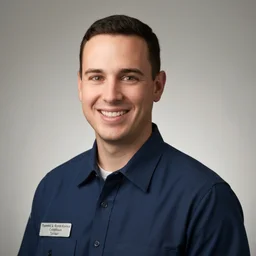
Paramedic & Emergency Services Certification Trainer
George Washington UniversityCaptain Ryan O'Brien is a licensed paramedic and NREMT-certified emergency medical professional with a Bachelor of Science in Emergency Medical Services from George Washington University. He has 15 years of field experience as a paramedic and firefighter, and has coached hundreds of EMT and paramedic candidates through their NREMT written and psychomotor licensing examinations.
Join the Discussion
Connect with other students preparing for this exam. Share tips, ask questions, and get advice from people who have been there.
View discussion (7 replies)