
Paramedic License: State Requirements, Renewal & Reciprocity (2026 September)
📗 Paramedic license guide: state EMS application steps, NREMT vs state credential, renewal cycles, reciprocity, REPLICA compact, and license lookup tools.
Paramedic License: State Requirements, Renewal & Reciprocity (2026)
A paramedic license is the legal credential a state issues that actually lets you work as a paramedic, run drugs, intubate, and operate under medical direction. It is not the same thing as a national registry card. The National Registry of EMTs (NREMT) is a certification body, while a state license is what your local EMS authority hands you.
You get that license after you finish school, pass the NREMT cognitive and psychomotor exams, and clear that state's background and jurisprudence requirements. Without a state license, an NREMT card alone won't get you on a truck.
This guide walks through exactly how state licensure works in 2026 — application steps, fees, renewal cycles, continuing education, reciprocity between states, the REPLICA interstate compact, and how to look up or verify a paramedic license. If you're moving from one state to another, recertifying, or coming out of paramedic school for the first time, this is the path. For the broader career picture see what is a paramedic and the full how to become a paramedic roadmap.
Every state is a little different, but the structure is the same everywhere: complete an accredited program, pass national exams, apply to the state EMS office, renew on a 2-3 year cycle with continuing education hours. The complications come from reciprocity (transferring your license), lapsed credentials, military-to-civilian transitions, and specialty endorsements like critical care or community paramedic. We'll cover all of it. Bookmark this — you'll come back when renewal time hits.
Why a State License Is Required (Even With NREMT)
Here's the thing most students don't realize until graduation. NREMT is a national testing organization. Forty-six states plus D.C. recognize the NREMT-Paramedic exam, but recognition doesn't equal authorization. To practice, you also need a state-issued license number, sometimes called a state paramedic certification or credential depending on the jurisdiction. The state license is what binds you to local protocols, medical direction, and disciplinary law.
NREMT-Paramedic = national exam and certification card. State paramedic license = legal authorization issued by your state EMS office (Board of EMS, DOH, EMSA, DSHS depending on state) that lets you work on an ambulance, administer medications, and operate under medical direction. You need both in most states. Two states (Wyoming, Pennsylvania historically) use slightly different paths, but the rule is: NREMT alone never lets you work — a state license always does.
The Five Steps to a Paramedic License
Every state license application follows roughly the same path. The order matters because you can't apply to the state until NREMT clears, and you can't sit for NREMT until your program signs you off. Skipping ahead causes weeks of delays.
Step 1: Complete a CoAEMSP-Accredited Paramedic Program
Forty-nine states require graduation from a program accredited by the Commission on Accreditation of Allied Health Education Programs (CAAHEP) through its CoAEMSP committee. Programs run 12-24 months and include didactic instruction, lab simulation, clinical hours, and a field internship. See the dedicated paramedic program guide for accreditation details and program length comparisons. Without a CAAHEP-accredited completion, NREMT won't let you sit for the cognitive exam.
Step 2: Pass the NREMT-Paramedic Cognitive and Psychomotor Exams
The cognitive exam is a computer-adaptive test of 80-150 questions covering airway, cardiology, trauma, medical, OB/peds, EMS operations. The psychomotor exam is hands-on scenarios — mega-code, dynamic cardiology, static cardiology, oral station, IV/medications, pediatric assessment, and trauma assessment. Many programs administer the psychomotor in-house during the final semester. Cognitive is taken at a Pearson VUE center after program completion.
Step 3: Apply to Your State EMS Office
Once NREMT clears, you submit a state application. This usually includes proof of program completion, NREMT certification number, fingerprints for an FBI background check, sometimes a state-specific jurisprudence test, and a fee ranging from $75-$300. Texas requires a separate Texas EMS jurisprudence exam. California requires an EMSA application with LiveScan fingerprinting. Florida processes through the DOH Bureau of EMS.
Step 4: Pass State-Specific Requirements
Some states layer extra requirements: state protocols exam, drug screening, a brief practical at a regional EMS office, or a written test on the state's scope of practice. Wisconsin requires a state-administered psychomotor in some regions. New York requires an REMAC (Regional Emergency Medical Advisory Committee) protocol exam in NYC and Long Island. Always pull up your state EMS office checklist before you start the application.
Step 5: Receive Your State License Number
Processing time ranges from 2-12 weeks depending on backlog and background check turnaround. You'll receive a state license number, an expiration date, and authorization to be hired. At this point you can apply to ambulance services, fire departments (see firefighter paramedic), hospitals, and air medical operators.

Paramedic License Timeline: School to First Shift
Month 0-2: Pre-Program
Month 3-15: Paramedic School
Month 16: Program Completion
Month 16-17: NREMT Exams
Month 17-18: State Application
Month 18-20: Background & Processing
Month 20+: First Job
State-by-State Paramedic License Overview
Every state runs its own EMS regulatory body, and the differences matter when you're applying or transferring. Below is a snapshot of the largest license-issuing states, but always check your state EMS office before mailing a check. Rules update yearly.
Texas (DSHS — Department of State Health Services)
Texas issues a Texas Paramedic Certification (functionally equivalent to a license) through DSHS. Required: current NREMT-Paramedic, Texas EMS jurisprudence exam, fingerprint background, $90 fee. Two-year renewal cycle, 72 hours of continuing education.
The Texas paramedic patch is awarded after state certification. For practice questions aligned to the Texas scope of practice, the paramedics practice test pdf covers the national content that overlaps with state material.
California (EMSA — Emergency Medical Services Authority)
California licensure is statewide but the local EMS agency (LEMSA) provides accreditation to practice in that county. Required: current NREMT-Paramedic, LiveScan fingerprinting (DOJ + FBI), $200 application fee, $200 biennial renewal. Continuing education: 48 hours every two years. California paramedic renewal must be completed before the expiration date — there's no grace period, and a lapsed license requires reapplication.
Florida (DOH Bureau of EMS)
Florida issues a state paramedic license through the Department of Health. Required: NREMT-Paramedic, criminal background, $50 application fee, $100 renewal every two years on December 1 of even-numbered years. Continuing education: 30 hours including 2 hours of medical errors, 2 hours of HIV/AIDS, and 2 hours of domestic violence.
New York (DOH Bureau of EMS & Trauma Systems)
New York issues an EMT-Paramedic certification (NY uses certification terminology but it functions as a license). Required: graduation from a NY-approved program, written and practical state exams (some regions accept NREMT), regional medical advisory committee (REMAC) protocol exam for NYC and Long Island. Three-year cycle, refresher course required for renewal.
Wisconsin (DHS Bureau of EMS)
Wisconsin paramedic license requires NREMT-Paramedic, state application, $75 fee. Two-year renewal cycle with 48 hours of continuing education. Wisconsin participates in the REPLICA compact, so paramedics licensed elsewhere in compact states can practice during day-to-day operations under interstate response rules.
Oregon (OHA — EMS & Trauma Systems Program)
Oregon paramedic license requires NREMT-Paramedic, application to OHA, criminal background, $150 fee. Two-year cycle with 48 continuing education hours including airway, cardiology, medical, trauma, and operations modules.
Top 5 States for Paramedic License Applications
- Issuing Body: DSHS
- Initial Fee: $90
- Renewal Cycle: Every 2 years
- CE Required: 72 hours
- Jurisprudence: Yes (state exam)
- Issuing Body: EMSA + LEMSA
- Initial Fee: $200
- Renewal Cycle: Every 2 years
- CE Required: 48 hours
- Jurisprudence: No, but LEMSA accreditation
- Issuing Body: DOH Bureau of EMS
- Initial Fee: $50
- Renewal Cycle: Every 2 years
- CE Required: 30 hours
- Jurisprudence: Medical errors + HIV mandatory
- Issuing Body: DOH Bureau of EMS
- Initial Fee: Free (state-funded)
- Renewal Cycle: Every 3 years
- CE Required: Refresher course
- Jurisprudence: REMAC protocol exam in NYC/LI
- Issuing Body: DHS Bureau of EMS
- Initial Fee: $75
- Renewal Cycle: Every 2 years
- CE Required: 48 hours
- Jurisprudence: No
Renewing Your Paramedic License
Renewal is where most paramedics get into trouble. Forget the date, miss a CE deadline, and you're suddenly unable to work. Most states run a 2-year cycle synced loosely to the NREMT National Continued Competency Program (NCCP), but the state requirements add layers on top.
NREMT Recertification (National)
NREMT recertifies every two years through 60 hours of NCCP content split into: 30 hours national component (airway, cardiology, trauma, medical, operations), 15 hours local component (state protocols), and 15 hours individual component (your choice). Many providers offer online paramedic recertification packages that bundle the 60 hours into one subscription. NREMT accepts CAPCE-accredited online courses for the full 60.
State Renewal (On Top of NREMT)
State renewal is separate and adds requirements. Texas adds 72 hours total. California adds 48 hours every two years. Florida adds 30 plus mandatory modules. The state cycle typically runs alongside but not identical to NREMT — pay attention to two expiration dates, not one. Most paramedics use a tracking app (CE Solutions, FF Notebook, EMS Manager) to log both simultaneously.
What Happens If Your License Lapses
Each state defines a grace period and a re-entry process. California allows zero grace — the day after expiration you're not authorized. Texas allows 30 days late renewal with penalty fee. After the grace, most states require: full reapplication, re-taking NREMT cognitive (if NREMT also lapsed), and sometimes a refresher course. Lapsed more than 2-4 years almost always means restarting at NREMT testing.
Reciprocity: Moving Between States
Reciprocity (also called endorsement or transfer) is the process of converting your current state license to a new state when you move. The good news: 46 states plus D.C. recognize NREMT-Paramedic certification, so the transfer is usually straightforward. The bad news: you still file a full state application, pay fees, complete jurisprudence, and wait for background checks.
Standard Reciprocity Process
Typical reciprocity steps: hold a current state license in good standing, hold current NREMT-Paramedic (renew before transferring if expired), submit a new state application with verification of license from your previous state, pay the new state fee, complete any state-specific exam, wait 2-8 weeks. Some states fast-track within 30 days if you arrive with current NREMT and a clean record. The paramedic certification texas reciprocity path is one of the more streamlined.
License Process by Phase
Application Steps (Every State):
- Graduate from CAAHEP/CoAEMSP-accredited paramedic program
- Pass NREMT-Paramedic cognitive exam at Pearson VUE
- Pass NREMT-Paramedic psychomotor exam (or state psychomotor)
- Submit state EMS office application + fee ($75-$300)
- Complete fingerprint background check (FBI + state)
- Pass state jurisprudence exam if required (TX, FL, NY)
- Wait 2-12 weeks for license issuance
- Receive state license number — eligible to work
Paramedic License Application Checklist
- ✓Current NREMT-Paramedic certification card
- ✓Official transcript or program completion letter from CAAHEP-accredited paramedic program
- ✓Government-issued photo ID (driver's license or passport)
- ✓Fingerprint card or LiveScan receipt (FBI + state background)
- ✓Current BLS for Healthcare Provider card
- ✓Current ACLS provider card
- ✓Current PALS provider card
- ✓ITLS or PHTLS card (state-dependent)
- ✓Application fee ($75-$300 — check exact amount with state)
- ✓Completed state-specific jurisprudence exam (TX, FL, NY, etc.)
- ✓Letter of good standing from previous state (if transferring)
- ✓Medical director attestation (if required by state)
- ✓Drug screening results (if required by state or employer)
- ✓Two professional references (some states)
- ✓Verification of completed psychomotor exam

Specialty Endorsements, License Lookup & REPLICA
REPLICA: The Interstate Compact Explained
REPLICA (Recognition of EMS Personnel Licensure Interstate CompAct) is the EMS profession's answer to the nursing compact. As of 2026, 24+ states are members. The compact gives qualifying paramedics privileges for interstate emergency response, transport across state lines, disaster mutual aid, and day-to-day border operations.
It does NOT eliminate the home-state license. Live in Wisconsin and work for a service that crosses into Iowa for transports — REPLICA covers you. Move from Wisconsin to Iowa and want a permanent job — you need an Iowa license. The compact is about response privileges, not relocation. Member states share an interstate database for disciplinary actions and a coordinated commission.
Specialty Endorsements and Advanced Credentials
Several specialty endorsements let you work in specific environments. Critical care paramedic certification (FP-C or CCP-C) is required for most flight and ground critical care transport roles. Community paramedic certification is a fast-growing credential for mobile integrated healthcare programs. Wilderness paramedic certification (through WMA or NOLS) lets you work in remote search-and-rescue and austere environments.
None of these credentials replace your state license — they sit on top of it. You can't be a flight paramedic without first being a state-licensed paramedic. Many paramedics use specialty paths to advance their careers and qualify for tactical, military contractor, or international roles. See paramedic career salary guide for how credentials affect compensation.
How to Look Up a Paramedic License by State
Every state EMS office maintains a public license lookup. Texas: DSHS at dshs.texas.gov. California: EMSA at emsa.ca.gov. Florida: DOH MQA at flhealthsource.gov. New York: NYS DOH BEMS at health.ny.gov. NREMT national verification: nremt.org. Most state databases show name, license number, status (active/expired/suspended/revoked), and expiration date. Some show disciplinary actions and restrictions.
NREMT National Registry Lookup
NREMT maintains a free public verification at nremt.org. Enter the registry number or first/last name to see current status. The national registry lookup is the fastest way to confirm anyone's NREMT-Paramedic standing, separate from state license verification. Hospitals and EMS services check both — state license for legal authorization, NREMT for national certification baseline.
Paramedic License Stats at a Glance
Key Facts at a Glance
| Item | Value | Details |
|---|---|---|
| Typical state license renewal cycle | 2 yrs | |
| NREMT NCCP recertification hours | 60 hrs | |
| Initial state application fee range | $75-$300 | |
| Typical state renewal fee range | $50-$200 | |
| License processing time after applying | 2-12 wks |
Military to civilian: Military paramedics, Navy corpsmen, Air Force PJs, and Army 68W combat medics can use the NREMT Military Paramedic to Civilian Paramedic bridge if they meet documented clinical hours and recent practice within 5 years. Required docs: DD214, official training records, proof of recent practice. Many community colleges offer 8-16 week bridge programs. Texas, Colorado, and California have streamlined paths for veterans.
License discipline: State EMS offices can suspend, revoke, restrict, or place a license on probation. Common grounds: DUI, drug diversion, patient abuse, falsified run reports, criminal conviction, license fraud, impaired practice. Disciplinary actions show in the REPLICA shared database — they follow you to other states. For exit routes when a paramedic license is no longer viable, see the paramedic to rn bridge guide.
NREMT Certification vs State License
- +NREMT-Paramedic: National recognition accepted by 46 states + DC
- +NREMT-Paramedic: Single test eliminates state-by-state cognitive testing
- +NREMT-Paramedic: Easy to transfer when moving between states
- +NREMT-Paramedic: Standardized 60-hour NCCP recertification cycle
- +State License: Legal authorization to actually work as a paramedic
- +State License: Defines scope of practice and medical direction
- +State License: Required for malpractice insurance and employment
- +State License: Provides legal protection under state EMS law
- −NREMT-Paramedic: Does NOT authorize practice without a state license
- −NREMT-Paramedic: Recertification adds complexity on top of state CE
- −NREMT-Paramedic: Two states have alternative paths (Wyoming historically)
- −NREMT-Paramedic: Lapse = retake cognitive exam from scratch
- −State License: Different rules in every state — no single standard
- −State License: Fees, jurisprudence, and CE vary widely
- −State License: Transfer requires full reapplication every move
- −State License: Lapse can mean reapplication or full retesting
Common Mistakes That Delay or Block Your License
After years of helping students navigate state applications, the same handful of mistakes keep killing timelines. Avoid these and you'll move from program graduation to first shift in 4-6 weeks instead of 4-6 months.
Mistake 1: Applying to state before NREMT clears. Most states require an active NREMT number on the application. Submitting prematurely gets your file rejected and you start the queue over. Wait until the NREMT certification posts to your account, then apply.
Mistake 2: Skipping the jurisprudence exam. Texas, Florida, and a handful of others bake jurisprudence into the application. Forgetting to schedule and pass the state ethics exam stalls your file. Schedule jurisprudence the same week you finish NREMT.
Mistake 3: Using out-of-state LiveScan or fingerprints. California requires CA-specific LiveScan. Most states won't accept fingerprints from another state's vendor. Use the state's approved fingerprint provider and confirm the ORI number is correct.
Mistake 4: Letting NREMT lapse before state license issues. If your NREMT expires while you wait for state processing, the state file fails. Recertify with NREMT first, then keep an eye on both expiration dates going forward.
Mistake 5: Wrong continuing education content. NREMT NCCP requires specific content distribution — 30 national, 15 local, 15 individual. Random CE doesn't count. Use CAPCE-accredited providers and verify the hours match NCCP requirements before submitting renewal. For overall study and exam preparation, the paramedics exam complete study guide covers what content matters for the cognitive recert.
Final Thoughts: Owning Your License
Your paramedic license is the legal contract that lets you do this work. Treat it like a professional asset. Track expiration dates in your phone calendar with 90-day, 60-day, and 30-day reminders. Save CE certificates the day you earn them — never trust the provider to keep them forever.
Keep a personal folder (digital and paper) with your NREMT card, state license, BLS/ACLS/PALS, fingerprint clearance, transcripts, and DD214 if applicable. The day a hospital, a flight program, or a fire department asks for documentation, you'll have it in 60 seconds, not 6 weeks.
Paramedic licensure is where careers get built and where careers get derailed. The paramedics who keep moving up — flight, critical care transport, community paramedic, supervisor, EMS director — are the ones who run their license paperwork the way they run a critical call: with a checklist, on time, every time. For an even broader look at the road ahead, see the EMT vs Paramedic career comparison.
Paramedic Questions and Answers
Related Paramedic Resources
What Is a Paramedic? Role, Training, and Career Path Explained
How to Become a Paramedic: Step-by-Step Career Pathway (2026)
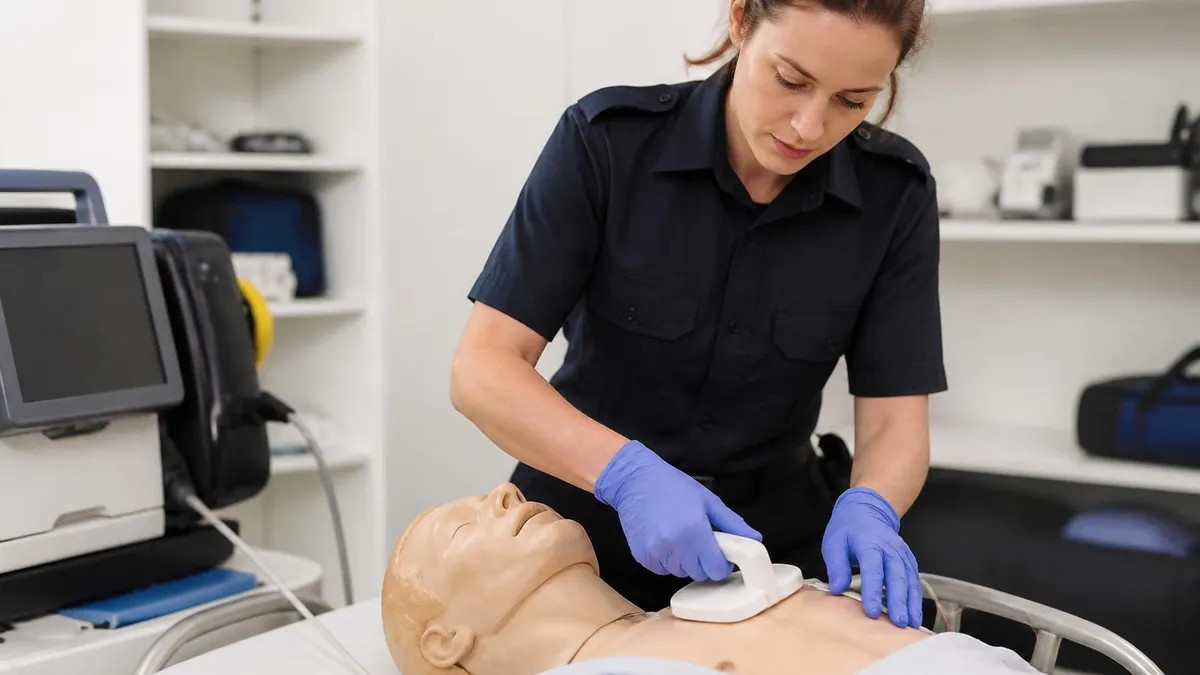
Paramedic Program: How to Choose an Accredited Program (2026)
Firefighter Paramedic: Dual-Role Career, Training & Salary Guide
Paramedic to RN Bridge Programs: 2026 Guide to Programs, Cost & Timeline
Paramedics Exam: Career Paths, Salary, and Requirements 2026
Paramedics Exam: Complete Study Guide 2026

EMT vs Paramedic: Which One Should You Choose?
About the Author
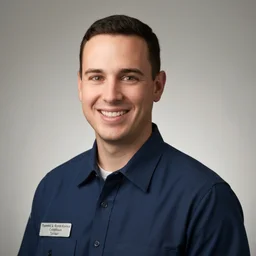
Paramedic & Emergency Services Certification Trainer
George Washington UniversityCaptain Ryan O'Brien is a licensed paramedic and NREMT-certified emergency medical professional with a Bachelor of Science in Emergency Medical Services from George Washington University. He has 15 years of field experience as a paramedic and firefighter, and has coached hundreds of EMT and paramedic candidates through their NREMT written and psychomotor licensing examinations.
Join the Discussion
Connect with other students preparing for this exam. Share tips, ask questions, and get advice from people who have been there.
View discussion (7 replies)