
Tactical Paramedic Course: Training, Requirements, and Career Guide 2026 October
Tactical paramedic course requirements, paramedic salary data, EMT vs paramedic comparisons, and how to become a paramedic. ✅ Full 2026 October guide.

A tactical paramedic course is one of the most demanding and rewarding advanced training paths available in emergency medical services today. Designed for working paramedics who want to operate in law enforcement, military, or special operations environments, this specialized curriculum combines traditional prehospital care with threat-environment medicine, ballistic wound management, and team-integrated protocols. If you are researching the paramedic salary ceiling and wondering how to push your earnings and expertise further, tactical EMS is one of the clearest accelerators available to credentialed providers across the United States.
The demand for tactical paramedics has grown sharply since the early 2000s, driven by the expansion of Special Weapons and Tactics teams in municipal police departments, federal law enforcement agencies, and National Guard units. Mass casualty incidents at schools, public venues, and critical infrastructure sites have forced emergency response planners to embed medical personnel directly inside the tactical perimeter rather than staging them blocks away. The result is a new class of provider who must be as comfortable applying a tourniquet under gunfire as they are managing a cardiac arrest in a hospital corridor.
Understanding the difference between standard paramedicine and tactical medicine begins with appreciating what changes when the scene is not yet safe. In conventional EMS, providers are trained to wait for law enforcement clearance before entering any potentially dangerous location.
Tactical paramedics, by contrast, operate in the warm zone alongside officers, providing care that is deliberately constrained to life-saving hemorrhage control and airway management until the patient can be moved to a safer extraction point. This tiered care model — sometimes called TECC, or Tactical Emergency Casualty Care — is the civilian adaptation of the military's Tactical Combat Casualty Care doctrine that has saved thousands of lives in combat theaters since the 1990s.
Most tactical paramedic course programs run between 40 and 80 hours of combined classroom instruction and practical field exercises. Some agencies require candidates to complete an 80-hour basic course before advancing to a 40-hour advanced module covering advanced airway management in austere conditions, needle thoracostomy, junctional hemorrhage control, and prolonged field care scenarios lasting six hours or more. Admission requirements typically include current National Registry of Emergency Medical Technicians (NREMT) paramedic certification, a minimum of two years of field experience, and physical fitness standards comparable to law enforcement academy benchmarks.
The financial investment in a tactical paramedic course varies considerably by provider. Non-profit organizations affiliated with law enforcement training academies often subsidize costs for officers and first responders, while private training companies charge anywhere from $800 to $2,500 for a comprehensive course package that includes equipment kits, range time, and scenario lane facilitation. Some employers reimburse the full cost as a condition of joining a tactical EMS team, making the out-of-pocket exposure minimal for candidates who secure a position before enrolling.
Career outcomes for certified tactical paramedics are measurably better than those for standard field providers, both in terms of assignment prestige and compensation. Tactical EMS positions frequently come with specialty pay differentials of $3,000 to $8,000 per year above base salary, and providers who cross-train as law enforcement officers can earn significantly more through overtime, callout pay, and hazard premiums. For anyone already holding NREMT-P certification and looking at how to become a paramedic who earns at the top of the salary band, the tactical pathway is one of the most efficient routes available.
This guide covers everything you need to know about tactical paramedic course prerequisites, the broader landscape of paramedic education, salary expectations at every career level, and the study strategies that will help you pass your certification exams on the first attempt. Whether you are an EMT considering the jump to paramedic school or a seasoned provider evaluating your next credential, the information below is organized to help you make a confident, well-informed decision.
Tactical Paramedic and EMS by the Numbers

How to Become a Tactical Paramedic: Step-by-Step Path
Earn EMT-Basic Certification
Gain Field Experience as an EMT
Complete an Accredited Paramedic School
Pass NREMT-P and Obtain State Licensure
Enroll in a Tactical EMS Course
Join or Affiliate with a Tactical EMS Team
Paramedic school is the cornerstone of any advanced EMS career, and understanding what the training involves is essential before committing to the time and financial investment required. Accredited programs in the United States must meet standards set by the Committee on Accreditation of Educational Programs for the Emergency Medical Services Professions (CoAEMSP), which ensures graduates are prepared to sit for the National Registry paramedic examination. Programs vary in format from traditional community college associate degree tracks to hospital-based certificate programs, but all must deliver a minimum threshold of didactic instruction, laboratory skills practice, and supervised clinical hours.
The didactic component of paramedic school covers an enormous range of clinical material. Students work through cardiovascular emergencies including 12-lead ECG interpretation, 15-lead acquisitions, and the pharmacological management of acute coronary syndromes. Airway management modules train providers in endotracheal intubation, supraglottic airway devices, and surgical cricothyrotomy. Toxicology, obstetrics, pediatric emergencies, behavioral health crises, and mass casualty incident management round out a curriculum that is deliberately comprehensive because paramedics function as independent practitioners in the field without immediate physician oversight.
Clinical rotations are where the knowledge transfers into practice. Students typically complete rotations in emergency departments, operating rooms, intensive care units, cardiac catheterization labs, and labor and delivery floors. The out-of-hospital component requires a set number of supervised ALS ambulance shifts during which students must document a minimum number of successful advanced interventions — IV starts, medication administrations, intubations, and 12-lead acquisitions — before they are eligible to graduate. The breadth of these requirements explains why paramedic school typically takes between 12 and 24 months even for students who attend full-time.
Choosing the right paramedic school involves evaluating several factors beyond cost and location. First-time NREMT-P pass rates for graduating cohorts are the most important data point available to prospective students, and programs with pass rates above 80% generally indicate strong instructional quality and strong test preparation support. Student-to-instructor ratios during skills labs, the quality of simulation equipment, the diversity of clinical rotation sites, and the program's relationships with local EMS agencies for field preceptorship all factor into the overall educational experience.
Working with a paramedic coach during your program is one of the most underutilized strategies for success in paramedic school. Coaches who are themselves experienced NRP-P providers can identify knowledge gaps early, help students develop systematic patient assessment frameworks, and guide exam preparation in a way that generic study materials cannot replicate. One-on-one coaching is particularly valuable for students who struggle with pharmacology or cardiac rhythm interpretation, two subjects that account for a disproportionate share of NREMT-P exam questions and field performance evaluations.
Financial aid is widely available for paramedic school through federal student loans, workforce development grants administered by state EMS offices, and employer tuition reimbursement programs offered by fire departments, hospital-based EMS systems, and private ambulance companies. Some agencies offer sponsorship arrangements in which the employer pays tuition costs in exchange for a multi-year service commitment after graduation, effectively eliminating the financial barrier to entry for candidates who are already working as EMTs within those systems.
Preparation for the NREMT-P cognitive exam should begin during the final months of paramedic school rather than after graduation. The exam uses computer-adaptive testing methodology, meaning the difficulty of each question adjusts in real time based on the candidate's performance on previous questions. This format rewards deep conceptual understanding over rote memorization, which is why integrated study approaches that combine practice question banks, scenario simulations, and systematic content review consistently outperform last-minute cramming strategies in producing first-time pass rates.
Paramedic Salary, Pay, and How Much Paramedics Make
Paramedic salary varies dramatically by geography, with the highest-paying states consistently including California ($83,000 median), Washington ($74,000), Hawaii ($72,000), and Alaska ($71,000). These figures reflect both cost-of-living adjustments and strong collective bargaining agreements in urban fire-based EMS systems. States in the South and Midwest typically report median salaries in the $48,000 to $58,000 range, though rural recruitment incentives can push individual offers above state medians.
Metropolitan areas with high call volumes and unionized workforces generally offer the best compensation packages for working paramedics. In Los Angeles, San Francisco, Seattle, and New York, total compensation including overtime, benefits, and pension contributions can push effective annual earnings well above $100,000 for senior providers. Understanding how geography influences how much do paramedics make is critical when evaluating job offers across different regions.

Tactical Paramedic Career: Advantages and Challenges
- +Specialty pay differentials of $3,000-$8,000 above base paramedic salary annually
- +Access to advanced equipment including JUNCTIONAL tourniquets, hemostatic dressings, and portable ultrasound
- +High professional prestige within both EMS and law enforcement communities
- +Unique clinical experiences managing penetrating trauma, blast injuries, and prolonged field care
- +Strong camaraderie and team cohesion within tactical EMS units
- +Direct pathway to federal law enforcement EMS positions with FBI, DEA, and DHS tactical teams
- −Physically demanding fitness standards must be maintained year-round for continued team eligibility
- −Callout requirements disrupt personal schedules and family time without predictable advance notice
- −Psychological burden of operating in violent, high-stress environments can contribute to cumulative stress injury
- −Limited patient care scope during warm-zone operations compared to standard prehospital practice
- −Tactical EMS positions are competitive and relatively few in number compared to standard paramedic roles
- −Ongoing training commitments of 40 or more hours per year required to maintain certification and team eligibility
Pros and Cons at a Glance
| Pros | Cons |
|---|---|
| Access to advanced equipment including JUNCTIONAL tourniquets, hemostatic dressings, and portable ultrasound | Physically demanding fitness standards must be maintained year-round for continued team eligibility |
| High professional prestige within both EMS and law enforcement communities | Callout requirements disrupt personal schedules and family time without predictable advance notice |
| Unique clinical experiences managing penetrating trauma, blast injuries, and prolonged field care | Psychological burden of operating in violent, high-stress environments can contribute to cumulative stress injury |
| Strong camaraderie and team cohesion within tactical EMS units | Limited patient care scope during warm-zone operations compared to standard prehospital practice |
| Direct pathway to federal law enforcement EMS positions with FBI, DEA, and DHS tactical teams | Tactical EMS positions are competitive and relatively few in number compared to standard paramedic roles |
Tactical Paramedic Course Preparation Checklist
- ✓Confirm your NREMT-P certification is current and not within six months of expiration before applying.
- ✓Document a minimum of two years and 500 patient contacts in your EMS field experience log.
- ✓Complete a basic TECC or Stop the Bleed instructor-level course before enrolling in advanced tactical training.
- ✓Pass a law enforcement-equivalent physical fitness assessment including timed run, push-ups, and sit-ups.
- ✓Obtain a letter of recommendation from your medical director supporting your tactical EMS application.
- ✓Review your state's scope of practice for tactical paramedics and confirm the course is approved by your state EMS office.
- ✓Secure employer support or written agency sponsorship before committing to a full-cost enrollment.
- ✓Purchase or verify access to required personal protective equipment including a ballistic vest rated NIJ Level IIIA or higher.
- ✓Complete a psychological evaluation if required by your agency or the employing law enforcement unit.
- ✓Register for NREMT continuing education credits embedded in your tactical course to maintain recertification hours.
TECC Training Is the National Standard — Not Optional
The Tactical Emergency Casualty Care (TECC) curriculum, developed by the Committee for Tactical Emergency Casualty Care (C-TECC), is the accepted national standard for civilian tactical medicine in the United States. Any tactical paramedic course that does not align with TECC guidelines is unlikely to be recognized by law enforcement agencies or accepted as meeting CoAEMSP or NAEMSP recommendations. Before enrolling, verify that your course is explicitly built on TECC or PHTLS Tactical principles and that the instructor cadre includes credentialed physicians or paramedics with verifiable tactical field experience.
The comparison between an EMT and a paramedic is one of the most frequently searched topics in emergency medical services, and for good reason — the two roles are often confused by the public and even by people considering a career in EMS. The core distinction is scope of practice.
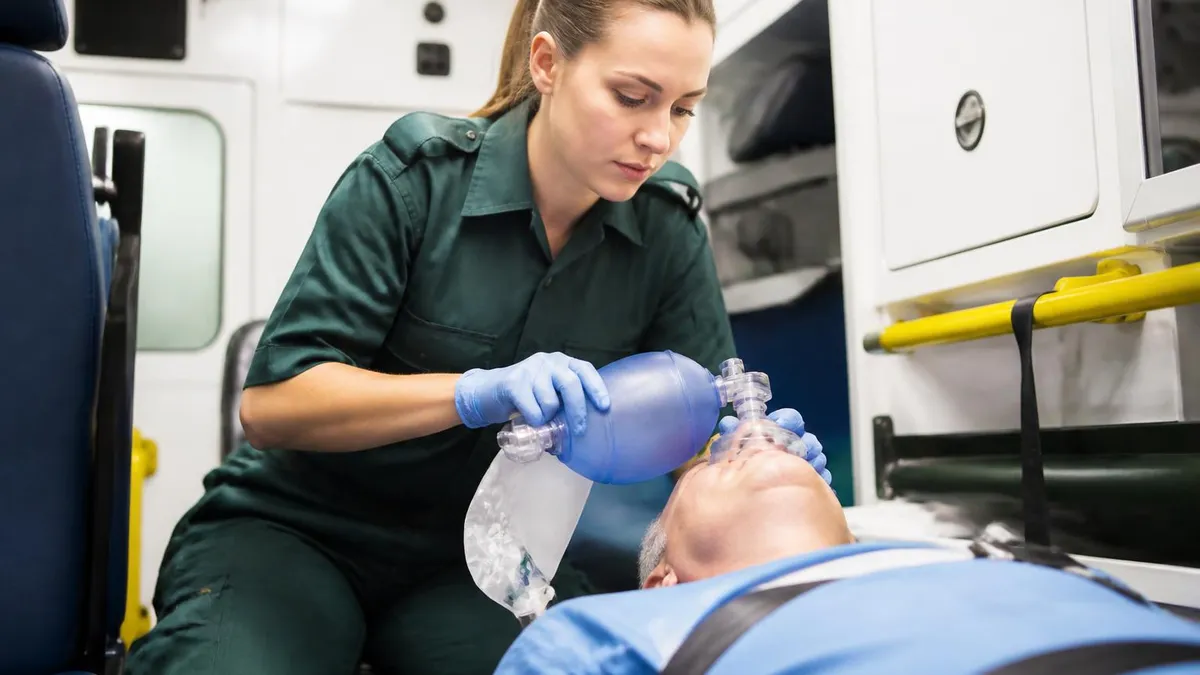
An EMT-Basic is trained to provide basic life support interventions including CPR, automated external defibrillator use, basic airway management, bleeding control, spinal motion restriction, and the administration of a limited set of medications such as epinephrine auto-injectors, aspirin, and patient-assisted nitroglycerin. A paramedic, by contrast, is an advanced life support provider authorized to perform invasive procedures and administer a broad pharmacological formulary independently in the field.
In practical terms, the emt vs paramedic distinction comes down to the ability to interpret cardiac rhythms and intervene with antiarrhythmics, perform rapid sequence intubation, establish intraosseous access, decompress tension pneumothorax, and administer controlled substances including opioid analgesics, benzodiazepines, and vasopressors. These capabilities fundamentally change patient outcomes in time-sensitive emergencies like STEMI, stroke, respiratory failure, and major trauma — which is why ALS-capable paramedic units are deployed as primary responders in most urban and suburban EMS systems in the United States.
The training time and educational depth required to reach paramedic certification is substantially greater than what EMT-Basic programs require. An EMT-Basic course typically runs 120 to 150 hours and can be completed in as little as eight weeks through an accelerated program. Paramedic school, as discussed above, requires a minimum of 1,200 hours and takes 12 to 24 months. The academic rigor is also significantly higher at the paramedic level, with coursework in anatomy, physiology, pathophysiology, pharmacokinetics, and clinical decision-making that approaches the depth of nursing or allied health degree programs in many respects.
Salary data makes the career investment argument clearly. The median annual wage for EMT-Basics in the United States is approximately $38,000 to $42,000, while the median for paramedics is approximately $58,000 to $65,000, representing a premium of roughly $20,000 per year for the additional training and scope of practice. Over a 20-year career, that differential compounds to $400,000 or more in cumulative additional earnings, easily justifying the 12 to 24 months of additional school required to reach paramedic certification from the EMT-Basic starting point.
For those comparing an ambulance technician vs paramedic in the context of the United Kingdom's NHS structure versus the American EMS model, it is important to note that the terminology diverges significantly across national systems. In the UK, an ambulance technician (AT) is roughly analogous to an American EMT-Basic in scope of practice, while a UK paramedic credentialed by the Health and Care Professions Council (HCPC) holds a degree-level qualification and practices at a level comparable to a senior American paramedic. Cross-credentialing between systems requires careful evaluation of scope equivalency and additional bridge training in most cases.
Career advancement from EMT to paramedic is the most common progression in American EMS, and most employers actively encourage and financially support EMTs who pursue paramedic school. The transition typically involves completing a paramedic bridge program that builds on existing EMT knowledge rather than repeating foundational content. Bridge programs are shorter than entry-level paramedic programs by design, though they still require the same NREMT-P examination and state licensure process upon completion. The bridge pathway is the most efficient route for experienced EMTs who want to advance their clinical capabilities and earnings without starting entirely from scratch.
The decision about whether to pursue EMT or paramedic training as an entry point depends heavily on individual circumstances. For someone who wants to begin working in EMS as quickly as possible while evaluating whether the career is the right fit, EMT-Basic certification is a sensible first step.
For someone who is certain that paramedicine is their long-term goal and who has the time and financial resources to commit to a full paramedic program immediately, some advisors recommend bypassing the EMT step and enrolling directly in a paramedic program, since most paramedic curricula include EMT-level content as a foundational component of the broader curriculum.

NREMT paramedic certification must be renewed every two years through the Recertification by Continuing Education (RCE) pathway, which requires 60 hours of approved continuing education including mandatory hours in specific topic categories. Allowing your certification to lapse requires you to retest at the NREMT-P cognitive examination level, which can delay employment, disqualify you from active tactical team assignments, and require additional fees. Set calendar reminders 90 days before your expiration date and track your CE hours in real time through the NREMT portal to avoid this entirely preventable problem.
Tactical EMS career advancement follows a structured progression that rewards both clinical excellence and physical readiness, and understanding that progression helps providers plan their professional development with greater intentionality. Most tactical paramedics begin their tactical career as probationary members of a SWAT team medical component, spending the first six to twelve months attending team callouts in an observer or support role before earning full deployment status. During this period, they are evaluated on their clinical judgment, ability to integrate seamlessly with law enforcement team dynamics, and capacity to perform under the physical and psychological stress of tactical operations.
After achieving full deployment status, tactical paramedics typically pursue additional certifications that broaden their clinical capabilities in austere environments. The Tactical Combat Casualty Care (TCCC) course, while designed originally for military medics, is widely completed by civilian tactical paramedics as a way to understand military trauma management doctrine and build credibility when working alongside National Guard or special operations military units in joint operations. The Wilderness EMT or Wilderness Paramedic certification is another complement to tactical training, addressing prolonged field care scenarios in remote or access-delayed environments with overlapping content.
Federal law enforcement agencies represent the apex of the tactical paramedic career ladder in terms of both compensation and operational exposure. The Federal Bureau of Investigation employs tactical paramedics within its Hostage Rescue Team and Evidence Response Team medical components.
The Drug Enforcement Administration, Bureau of Alcohol Tobacco and Firearms, and U.S. Marshals Service all maintain tactical medical capabilities staffed by cross-trained law enforcement personnel or civilian contractor paramedics. These positions are exceptionally competitive, typically requiring prior tactical EMS experience, federal law enforcement officer status, advanced firearms qualifications, and extensive background investigations that can take a year or more to complete.
Leadership roles within tactical EMS include positions such as tactical EMS coordinator, medical director liaison, and regional TEMS program manager. These roles shift the focus from direct patient care to program development, training curriculum design, protocol maintenance, and interagency coordination. They require strong administrative skills in addition to clinical excellence and are typically filled by paramedics who have combined 10 or more years of field experience with advanced education at the bachelor's or master's degree level. Many tactical EMS coordinators hold dual credentials as both a paramedic and a registered nurse, physician assistant, or physician.
The intersection of tactical medicine and technology is an area of rapid growth that is creating new opportunities for forward-thinking tactical paramedics. Point-of-care ultrasound, now compact enough to fit in a tactical kit bag, is being integrated into warm-zone protocols at some high-capability programs to guide decisions about pneumothorax decompression and internal hemorrhage estimation. Telemedicine connections between tactical paramedics and emergency physicians allow real-time consultation during prolonged field care scenarios, expanding the effective scope of practice for tactical providers working in remote or high-security environments where hospital transport times may exceed several hours.
Burnout and psychological injury are significant occupational health concerns in tactical EMS that deserve honest discussion in any career planning conversation. Providers who respond regularly to the most violent and traumatic incidents their communities generate — active shooter events, domestic violence fatalities, officer-involved shootings — accumulate an exposure burden that standard peer support models may not adequately address. Progressive tactical EMS programs are increasingly embedding mental health professionals into their teams, normalizing psychological support utilization, and incorporating resilience training into annual recertification curricula as a proactive response to what research consistently shows is a serious long-term retention and wellness challenge.
For paramedics evaluating whether tactical EMS is the right long-term path, honest self-assessment on three dimensions is essential. First, physical: can you realistically maintain law enforcement-level fitness standards for the duration of your intended tactical career? Second, operational: are you comfortable with the legal, ethical, and psychological dimensions of operating in environments where lethal force may be employed?
Third, logistical: does your family situation, geographic location, and employer relationship support the unpredictable scheduling demands that tactical team membership imposes? Providers who answer yes to all three are well-positioned to thrive in one of the most challenging and rewarding specialties in all of emergency medicine.
Study strategies for paramedic certification exams have evolved considerably as the NREMT has refined its computer-adaptive testing methodology over the past decade. The most important insight for exam candidates is that the NREMT-P cognitive exam does not simply test factual recall — it assesses clinical reasoning, prioritization under uncertainty, and the ability to identify the most appropriate intervention given a specific patient presentation and resource context. Questions are written at the analysis and synthesis levels of Bloom's taxonomy, meaning that candidates who have memorized protocols without understanding their underlying rationale will consistently underperform relative to their true knowledge level.
Effective exam preparation begins with a thorough content inventory. Most NREMT-P cognitive exam blueprints weight airway and respiration at approximately 18-22% of the total question pool, making it the single largest content domain on the examination. Cardiology and resuscitation follows at 16-20%, with trauma, medical emergencies, EMS operations, and special populations each contributing meaningful percentages. Candidates who ignore lower-weighted domains entirely risk failing on those questions in a way that cascades into extended exam duration and ultimate failure, since the CAT algorithm is unforgiving of sustained underperformance in any content area.
Practice question banks are the most efficient preparation tool when used correctly. The key distinction between high-value and low-value question practice is whether the candidate reviews rationales for every question — including questions answered correctly. Understanding why a correct answer is correct reinforces clinical reasoning frameworks. Understanding why incorrect answers are incorrect reveals common cognitive shortcuts and biases that test writers exploit to construct plausible distractors. Candidates who read rationales carefully and identify patterns in their wrong answers improve far faster than those who simply track their percentage score and move on.
Time management during active paramedic school is a frequently underestimated challenge. Paramedic students are simultaneously expected to absorb dense academic content, develop psychomotor skills to performance standards in lab sessions, complete clinical rotations in unpredictable hospital environments, and maintain whatever professional and personal obligations existed before enrollment. Successful students build highly structured weekly routines that allocate dedicated blocks of time to each component of the program, treat study sessions as non-negotiable commitments in the same way that clinical shifts are, and communicate proactively with instructors when they are falling behind in any content area.
Peer study groups are consistently reported by paramedic graduates as one of the most valuable learning tools in their programs, particularly for pharmacology and cardiac rhythm interpretation. Teaching material to a study partner is one of the most effective ways to identify gaps in your own understanding, since articulating a concept out loud forces a level of precision that silent review does not require.
Groups of three to five students with complementary strengths — one who excels at cardiology, another strong in pharmacology, a third who knows airway management cold — can collectively cover the entire curriculum more thoroughly than any individual studying in isolation.
The psychological dimension of exam preparation is real and worth addressing directly. Test anxiety affects a meaningful proportion of paramedic candidates, and its effects on cognitive performance during a high-stakes computer-adaptive test can be severe. Candidates who experience significant anxiety during practice exams benefit from systematic desensitization through repeated timed simulation, mindfulness techniques applied specifically to test-taking scenarios, and in some cases brief consultation with a counselor or psychologist who specializes in performance anxiety before their actual exam date. The investment in addressing exam anxiety directly yields returns that dwarf the cost in time and money.
Finally, physical preparation should not be neglected during the weeks immediately preceding your NREMT-P examination. Adequate sleep, regular moderate exercise, and consistent nutrition all contribute meaningfully to cognitive performance on test day. Candidates who pull all-nighters, skip meals, and eliminate exercise from their routine in the final weeks of preparation in an attempt to maximize study hours are trading long-term cognitive resources for short-term content exposure in a trade-off that research consistently shows does not pay off.
The brain consolidates learning most effectively during sleep, which means that a well-rested candidate who studied for six hours per day for three weeks will almost always outperform an exhausted candidate who crammed for twelve hours per day for one week with equivalent total study hours.
Paramedics Questions and Answers


About the Author
Paramedic & Emergency Services Certification Trainer
George Washington UniversityCaptain Ryan O'Brien is a licensed paramedic and NREMT-certified emergency medical professional with a Bachelor of Science in Emergency Medical Services from George Washington University. He has 15 years of field experience as a paramedic and firefighter, and has coached hundreds of EMT and paramedic candidates through their NREMT written and psychomotor licensing examinations.
Join the Discussion
Connect with other students preparing for this exam. Share tips, ask questions, and get advice from people who have been there.
View discussion (7 replies)