
How Much Do Paramedics Make? Salary by Experience, State, and Employer in 2026
How much paramedics make in 2026: average pay, salary by experience, state, and employer type, how it compares to EMTs, and proven ways to earn more. 🎓
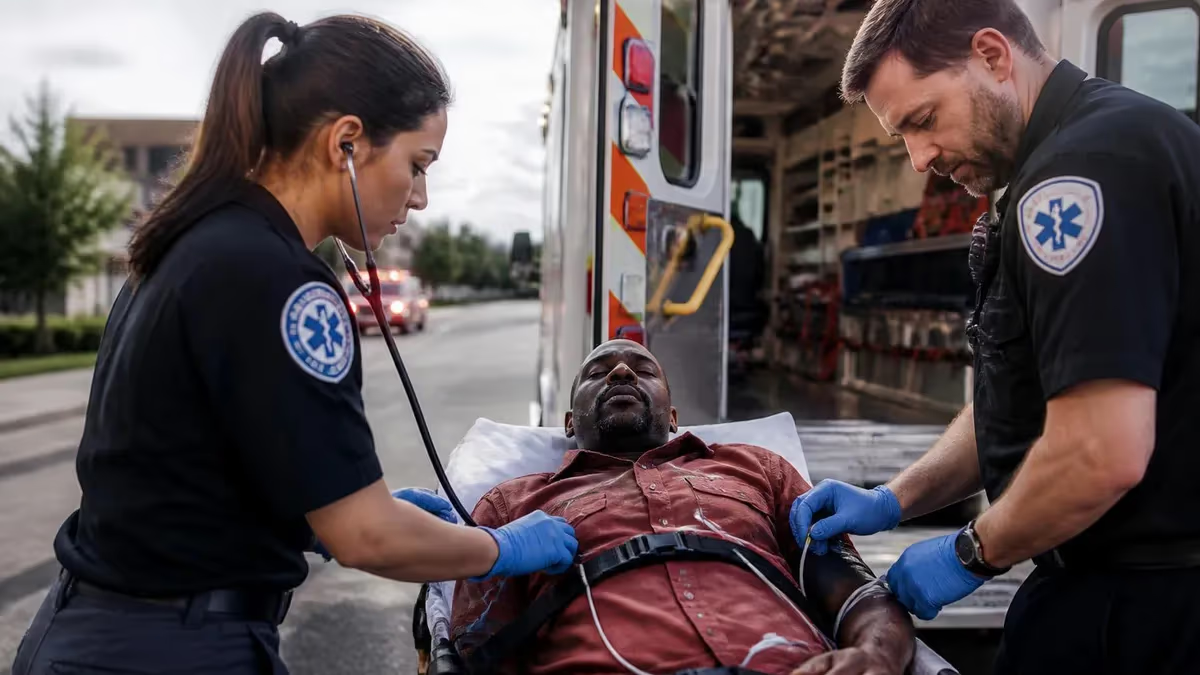
Paramedic pay is one of the most-searched questions in emergency medical services, and for good reason: the work is demanding, life-saving, and skilled, so people understandably want to know whether the paycheck matches the responsibility. The honest answer is that paramedics earn a solid, middle-range salary that varies enormously by where they work and for whom—and that the right moves can push it considerably higher.
The first thing to understand is that there's no single paramedic salary. A paramedic on a busy metropolitan fire department, stacking overtime, can earn double what a paramedic at a rural private ambulance company makes. Region, employer type, experience, certifications, and overtime all swing the number, sometimes by tens of thousands of dollars a year. Averages are a starting point, but your actual earnings depend heavily on choices within your control.
This guide breaks down what paramedics really earn—the national picture, pay by experience level, how state and employer change everything, how paramedic pay compares to an EMT's, and the concrete steps that raise it. Understanding the full paramedic salary landscape helps you plan a career, not just take the first offer, and pairing it with knowledge of paramedic school costs lets you judge the real return on the training.
One framing point: paramedic compensation isn't just the hourly wage. Benefits, pension or retirement plans, overtime availability, and the type of employer dramatically affect what the job is actually worth over a career. A slightly lower base at a fire department with a strong pension can far outvalue a higher hourly rate at a private company with thin benefits. Reading pay this way—total compensation, not just the headline—leads to far better career decisions.
- The NREMT Paramedic Certification Examination is a computer adaptive test with a minimum of 110 and a maximum of 150 items, including 20 unscored pilot items. (National Registry of Emergency Medical Technicians)
- The NREMT Paramedic Certification Examination application fee is $175, charged for each examination attempt. (National Registry of Emergency Medical Technicians)
- An NREMT Authorization to Test (ATT) for the Paramedic exam is valid for 90 days. (National Registry of Emergency Medical Technicians)
- The NREMT Paramedic Certification Examination is delivered on computer at Pearson VUE testing centers. (National Registry of Emergency Medical Technicians)
- NREMT paramedic certification candidates qualify through a full education program, a current state EMS license, or re-entry after a lapse. (National Registry of Emergency Medical Technicians)
Facts verified Oct 16, 2026 against National Registry of Emergency Medical Technicians. Dates that have passed are removed automatically.
Paramedics Exam Exam at a Glance
| Item | Detail | Official source |
|---|---|---|
| Number of questions | 110–150 items (20 unscored) | National Registry of Emergency Medical Technicians |
| Exam fee | $175 per attempt | National Registry of Emergency Medical Technicians |
| Validity (Authorization to Test) | 90 days | National Registry of Emergency Medical Technicians |
| Delivery | Pearson VUE test centers | National Registry of Emergency Medical Technicians |
| Eligibility | Education program, state license or re-entry | National Registry of Emergency Medical Technicians |
Facts verified Oct 16, 2026 against National Registry of Emergency Medical Technicians. Dates that have passed are removed automatically.
Paramedic Pay by the Numbers
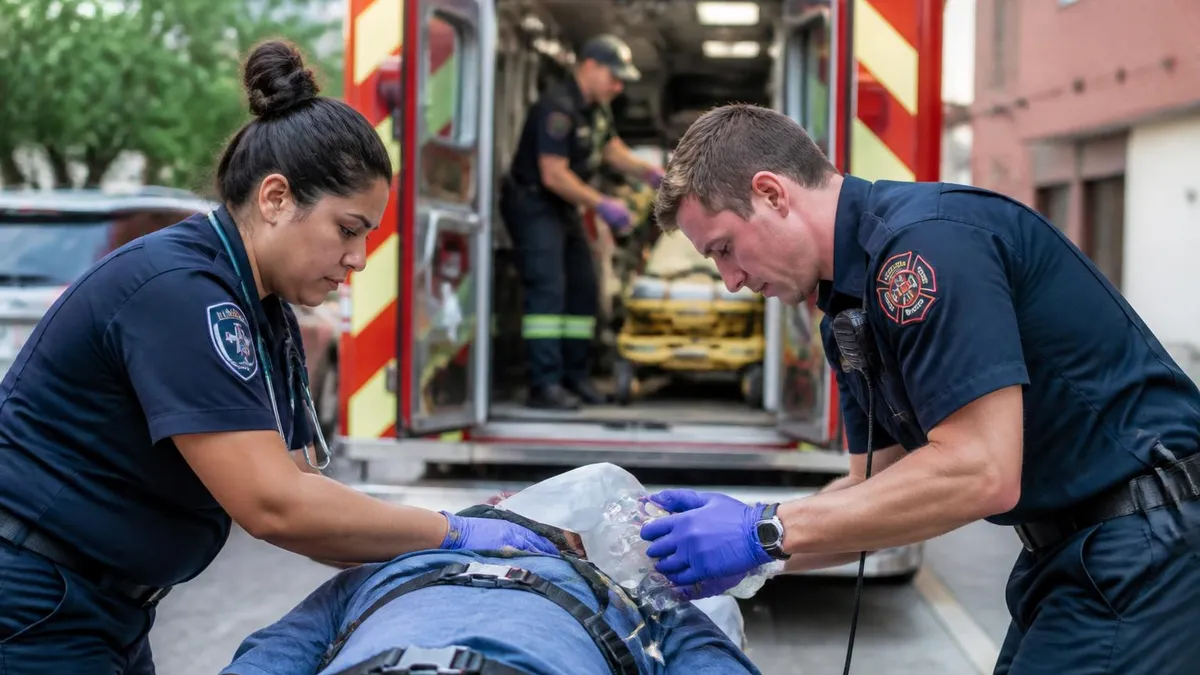
What Drives Paramedic Pay
The single biggest factor. Fire-based and hospital EMS systems generally pay more, with stronger benefits and pensions, than private ambulance companies. Where you work often matters more than how long you've worked.
Pay varies dramatically by state and metro area, partly tracking cost of living and partly local demand. A wage that's excellent in one region is merely average in another once you adjust for expenses.
Pay rises with years of service and with promotion to senior, supervisory, or specialized roles. A veteran paramedic earns well above a new graduate, and leadership roles add more.
Flight paramedics, critical-care transport, and tactical roles command premiums, and overtime—common in EMS—can add a large slice to base pay for those willing to work the hours.
Let's start with the national picture, with the honest caveat that any single average hides enormous spread. Paramedics in the United States generally earn a solid middle-income salary—more than EMTs, less than nurses—reflecting the advanced training and responsibility the role demands. But the range around that average is wide, and a paramedic's actual pay can land well below or well above it depending almost entirely on the factors this guide covers.
The reason averages mislead is that EMS is unusually fragmented. Paramedics work for fire departments, hospitals, private ambulance companies, government agencies, and air-medical services, and each pays differently. A national average blends a high-paid urban fire-department medic with a low-paid rural private-ambulance medic into one number that describes neither well. Treat any headline figure as a rough midpoint, not a prediction of what you'll personally earn.
It helps to think in terms of total compensation rather than hourly wage. Many EMS jobs, especially fire-based ones, come with substantial benefits—health insurance, retirement pensions, paid leave—that add major real value. Two jobs with the same hourly rate can differ dramatically in lifetime value once benefits and pensions are counted. When comparing offers or planning a career, always look past the wage to the whole package.
Overtime is a defining feature of paramedic pay that national figures often understate. EMS frequently involves long shifts, mandatory overtime, and opportunities to pick up extra hours, and many paramedics significantly boost their earnings this way. Someone willing to work overtime can earn well above their base salary, which is why two medics with identical base pay can take home very different amounts depending on the hours they work.
Compared to related healthcare roles, paramedics sit in a particular niche. They earn more than EMTs, reflecting their advanced scope, but typically less than registered nurses, whose education is longer. This positioning is part of why many paramedics eventually bridge to nursing for higher pay—a path so common there are dedicated programs for it. Understanding where paramedic pay sits in the broader healthcare landscape helps you plan your long-term trajectory.
The cost of becoming a paramedic factors into the value equation too. Paramedic training is far shorter and cheaper than a nursing or other healthcare degree, so the return on the investment can be strong even at a mid-range salary—you start earning relatively quickly. Weighing the modest training cost against the steady, benefit-backed income is what makes the paramedic path financially sensible for many people entering emergency medicine.
Finally, remember that pay is only part of why people choose this career. The work is meaningful, varied, and respected, and for many the sense of purpose and the adrenaline of emergency response matter as much as the paycheck. That said, being clear-eyed about the money—and how to improve it—lets you pursue a career you love without sacrificing financial stability, which is the balance most paramedics are trying to strike.
How Paramedic Pay Grows Over a Career
New graduate
A few years in
Add certifications
Specialize
Advance or bridge

Pay by experience follows a clear upward curve, though it starts modestly. New paramedics, especially at private ambulance companies, often begin at relatively low wages—sometimes a frustration in the field given the responsibility involved. This entry period is partly about gaining the field experience that makes you valuable, and the pay reflects that you're still building the seasoned judgment the job demands.
Within a few years, the picture improves meaningfully. Experienced paramedics earn more both through standard pay progression and through the ability to move to better-paying employers. A medic who started at a private company might, after gaining experience, land a fire-department or hospital position with substantially higher pay and far better benefits. Experience isn't just rewarded in place—it unlocks the option to move somewhere that pays more.
Certifications accelerate the climb. Earning credentials in critical-care transport or qualifying as a flight paramedic opens specialty roles that pay premiums over standard 911 work. These advanced certifications signal expertise and qualify you for the more demanding, higher-compensated corners of EMS. For paramedics focused on maximizing income, stacking the right certifications is one of the most reliable levers available.
Specialization is where some of the best EMS pay lives. Flight paramedics on air-medical helicopters, critical-care transport medics moving the sickest patients between facilities, and tactical paramedics supporting law enforcement all command higher pay than routine ambulance work. These roles are competitive and demanding, but for experienced medics willing to pursue them, they represent a clear path to the upper end of paramedic earnings.
Leadership and advancement add another tier. Paramedics can move into supervisory, training, and management roles—shift supervisor, field training officer, EMS coordinator, and beyond—each carrying higher pay and responsibility. For those who want to grow without leaving EMS, the management track offers a way to keep advancing financially. The clinical experience you build as a medic is the foundation these leadership roles are built on.
The most dramatic income jump, though, often comes from bridging to nursing. Because registered nurses generally out-earn paramedics, and because a paramedic's clinical background transfers well, paramedic-to-RN bridge programs are a hugely popular path to higher pay. Many medics use their EMS experience as a springboard into nursing or other advanced healthcare roles, substantially raising their lifetime earnings while staying in medicine. It's worth knowing this option exists from the start.
Throughout the progression, knowing how to become a paramedic efficiently—and planning your certifications and moves deliberately—turns a modest starting wage into a strong career income over time. Paramedics who treat their pay trajectory as something to actively manage, rather than passively accept, consistently end up earning more than those who stay put and wait for raises that come slowly in entry-level EMS jobs.
What Moves Paramedic Pay
The biggest single factor. Fire-based and hospital EMS generally pay more, with stronger benefits and pensions, than private ambulance companies. Government agencies vary. Where you work often matters more for your paycheck than how many years you've been a medic.
How to Increase Your Paramedic Salary
- ✓Target fire-based or hospital EMS over private ambulance companies.
- ✓Earn critical-care or flight paramedic certifications for premium roles.
- ✓Move to a higher-paying state or metro if you're geographically flexible.
- ✓Work available overtime strategically to boost total earnings.
- ✓Pursue supervisory and leadership roles as you gain experience.
- ✓Consider a paramedic-to-RN bridge program for a major pay jump.
- ✓Compare total compensation—benefits and pension—not just hourly wage.
- ✓Negotiate using your experience, certifications, and competing offers.

So how do you actually raise your paramedic income? The highest-use move is choosing the right employer. Shifting from a private ambulance company to a fire-based or hospital EMS system often delivers both a higher wage and dramatically better benefits, including pensions that add enormous lifetime value. If maximizing pay is a priority, targeting these employers—and gaining the experience needed to be competitive for them—is the most impactful single step.
Certifications are the next lever, and they compound with employer choice. Critical-care transport and flight paramedic credentials qualify you for specialty roles that pay premiums, and they make you more competitive for the best positions generally. Each advanced certification is concrete evidence of expertise that justifies higher pay, and many employers will support or fund the training, making it a low-cost, high-return investment in your earnings.
Geography is a powerful but underused lever for those able to relocate. Pay differences between states and metros are substantial, and a medic willing to move to a high-demand, higher-paying market—especially early in their career when they're most mobile—can accelerate their earnings significantly. Just weigh the higher pay against the local cost of living, since a big number in an expensive city may buy less than a smaller one elsewhere.
Overtime is the lever most within your immediate control. Because EMS offers frequent overtime, deliberately picking up extra shifts can add a large slice to your annual income. The trade-off is your time and energy—EMS overtime is demanding—so it's a personal balance. But for paramedics focused on maximizing earnings in the near term, strategic overtime is often the fastest way to a bigger paycheck without changing jobs or earning new credentials.
Advancement and the nursing bridge are the longer-term plays for the biggest gains. Moving into supervision and leadership raises pay while keeping you in EMS, and bridging to nursing through a paramedic salary pathway into an RN program can substantially lift your ceiling given that nurses generally out-earn medics. Mapping out which of these paths fits your goals—and pursuing it deliberately—is what turns a modest starting salary into a strong long-term income.
Negotiation matters too, even in structured pay systems. While many EMS employers use fixed scales, there's often room to negotiate starting step placement based on your experience and certifications, or to use a competing offer. Coming to the table with documented experience, current credentials, and market data gives you standing to ask for more. The medic who never asks almost always leaves money on the table that a brief, professional conversation could have captured.
Finally, always evaluate the whole package. A job's value isn't just its hourly rate—it's the wage plus benefits, pension, overtime availability, and schedule. A fire department offering a strong pension and good health coverage can be worth far more over a career than a private company offering a slightly higher wage with thin benefits. Training yourself to compare total compensation is what leads to the genuinely best financial decisions in an EMS career.
Your employer matters more than your tenure
The single most powerful factor in paramedic pay is where you work. Moving from a private ambulance company to a fire-based or hospital EMS system often raises both your wage and your benefits—especially pensions—more than years of seniority at a low-paying employer ever would. If you want to earn more, gaining the experience to land one of these positions is the highest-return move available.
The Paramedic Pay Picture
- +Solid mid-range income relative to short, affordable training
- +Pay rises clearly with experience, certifications, and rank
- +Fire and hospital employers offer strong benefits and pensions
- +Specialties like flight and critical care pay real premiums
- +Overtime and a nursing bridge offer paths to much higher earnings
- −Entry-level pay, especially at private companies, is modest
- −Earnings vary enormously by employer and region
- −Higher pay often means overtime, stress, and tough schedules
- −Paramedics generally earn less than registered nurses
- −The best-paying specialty and fire roles are competitive
Pros and Cons at a Glance
| Pros | Cons |
|---|---|
| Solid mid-range income relative to short, affordable training | Entry-level pay, especially at private companies, is modest |
| Pay rises clearly with experience, certifications, and rank | Earnings vary enormously by employer and region |
| Fire and hospital employers offer strong benefits and pensions | Higher pay often means overtime, stress, and tough schedules |
| Specialties like flight and critical care pay real premiums | Paramedics generally earn less than registered nurses |
| Overtime and a nursing bridge offer paths to much higher earnings | The best-paying specialty and fire roles are competitive |
Paramedic salary varies enormously by employer type, state, and metro area, and figures shift over time. The patterns in this guide are general; your actual pay depends on your specific market and employer. Always research current local data and compare total compensation—including benefits and pension—rather than anchoring on a single national average that may not reflect your situation at all.
How does paramedic pay compare to an EMT's? Significantly higher, and the gap reflects the difference in training and scope. An EMT completes a course of a few months and provides basic life support, while a paramedic completes one to two years of advanced training and delivers advanced life support—IVs, medications, cardiac monitoring, advanced airways. That expanded responsibility translates directly into a meaningfully higher wage, commonly a substantial annual difference.
This pay gap is exactly why so many EMTs invest in becoming paramedics. The additional schooling is demanding and costs time and money, but the resulting jump in earning power—plus access to better employers and specialty roles—usually makes it worthwhile for those committed to an EMS career. The EMT role is often a stepping stone, with the paramedic credential being where the pay becomes a genuine career income.
That said, the upgrade decision should weigh more than just the wage difference. Becoming a paramedic means one to two years of school on top of EMT certification, and the responsibility and stress increase along with the pay. For some, the EMT role suits their goals and lifestyle; for others, the paramedic jump is clearly worth it. Understanding both the pay gap and what it costs to bridge it lets you make the choice that fits your life.
Many employers will even help fund an EMT's paramedic education in exchange for a service commitment, which sweetens the economics considerably. Because EMS faces staffing shortages, agencies have real incentive to grow their own paramedics, and tuition support is among the more common and underused benefits in the field. An EMT eyeing the pay bump should always ask prospective employers whether they sponsor paramedic school before paying out of pocket.
Stepping back, the overall paramedic pay story is encouraging for those who plan deliberately. Yes, entry pay is modest and varies widely, but the career offers a clear progression, multiple levers to increase earnings, strong benefits at the right employers, and pathways—specialization, leadership, and nursing—to substantially higher income. The medics who do best treat their compensation as something to actively build over time, not a fixed number they're stuck with.
So if you're weighing the paramedic path, judge it honestly but optimistically. The training is short and affordable relative to the income it unlocks, the work is meaningful and secure, and your earning potential is far more in your control than the entry wage suggests. Choose your employer wisely, stack certifications, work strategically, and keep an eye on the longer-term paths, and a paramedic career can deliver both purpose and a genuinely solid, growing income.
The key takeaway is agency. Too many paramedics accept the modest entry wage as the whole story and never explore the levers that would raise it—a better employer, a flight certification, a strategic move, or a bridge to nursing. The medics who research their market, pursue credentials, and plan their next step deliberately consistently out-earn equally skilled peers who simply stay put. Your salary is something you build, not something handed to you.
Paramedic Salary Questions and Answers

About the Author

Paramedic & Emergency Services Certification Trainer
George Washington UniversityCaptain Ryan O'Brien is a licensed paramedic and NREMT-certified emergency medical professional with a Bachelor of Science in Emergency Medical Services from George Washington University. He has 15 years of field experience as a paramedic and firefighter, and has coached hundreds of EMT and paramedic candidates through their NREMT written and psychomotor licensing examinations.