
OSHA Forklift Regulations: Complete 2026 Guide to Compliance, Training, and Operator Requirements
Complete guide to OSHA forklift regulations covering 29 CFR 1910.178, operator training, certification, inspections, and employer compliance for 2026. 🏆

OSHA forklift regulations are codified primarily under 29 CFR 1910.178, the federal standard that governs every powered industrial truck used in American workplaces. Whether your facility runs a single electric forklift in a small warehouse or operates a fleet of fifty internal combustion lifts across multiple distribution centers, the same baseline rules apply. These regulations cover operator training, daily inspections, maintenance, refueling, load handling, pedestrian safety, and dozens of other operational details. Understanding them is the difference between a compliant operation and a citation that averages $16,131 per serious violation in 2026. Practice with the free Forklift certification practice test on PracticeTestGeeks (7 questions with answer explanations).
The standard was first published in 1969 and updated significantly in 1999 when OSHA added the operator training requirements that still form the backbone of modern compliance programs. Today, every forklift operator in general industry, construction, marine terminals, and longshoring must be trained, evaluated, and certified by their employer before operating a powered industrial truck unsupervised. This applies to full-time employees, temporary workers, contractors, and anyone else who climbs into the operator seat, regardless of how briefly they intend to use the machine.
For employers, the regulations create a clear chain of responsibility. You must develop a training program that includes formal instruction, practical hands-on exercises, and a workplace evaluation. You must document every operator's certification, including the date of training, the date of evaluation, and the identity of the trainer. You must reevaluate each operator at least once every three years and provide refresher training whenever an operator is observed using the truck unsafely, has an accident, or is assigned to a different type of vehicle.
The financial stakes have climbed steadily. OSHA inflation adjustments pushed maximum penalties past $161,000 for willful or repeat violations, and powered industrial truck citations consistently rank in the top ten most-cited standards across general industry. Many employers underestimate how often inspectors arrive after a near-miss complaint, a serious injury, or a fatality investigation, and discover that operator certifications were never updated or that daily inspection logs were never kept.
This guide walks through every major component of the federal standard, the documentation requirements, the practical day-to-day responsibilities of operators and supervisors, and the most common citation triggers. We cover training mandates, inspection protocols, maintenance obligations, classification of trucks by power source and tire type, pedestrian segregation rules, and what to expect during an unannounced OSHA inspection. We also explain how state-plan states like California, Michigan, and Washington layer additional requirements on top of the federal baseline.
If you are an operator, you will learn exactly what your employer owes you, what records you can request, and what behaviors put your certification and your safety at risk. If you are a supervisor, safety manager, or business owner, you will get a practical roadmap for building a defensible compliance program. The regulations are not optional, they are not negotiable during an inspection, and they apply equally to a brand-new forklift safety training graduate and a thirty-year veteran of the warehouse floor.
Throughout this article we reference the actual CFR sections so you can verify each requirement against the source text. OSHA publishes the full standard online for free, and we strongly recommend that every safety coordinator keep a bookmarked copy alongside the manufacturer's operating manual for each forklift model in service. Compliance is built on documentation, repetition, and a culture that takes the regulations seriously every single shift.
- OSHA requires forklift operators to undergo a performance evaluation at least once every three years. (Occupational Safety and Health Administration (OSHA), U.S. Department of Labor; employers certify operators)
- Forklift operator certification under OSHA requires formal and practical training and an employer evaluation of the operator's workplace performance. (Occupational Safety and Health Administration (OSHA), U.S. Department of Labor; employers certify operators)
- For forklift operator certification, the employer must evaluate the operator's performance and determine that the operator can operate safely before workplace operation. (Occupational Safety and Health Administration (OSHA), U.S. Department of Labor; employers certify operators)
Facts verified Oct 15, 2026 against Occupational Safety and Health Administration (OSHA), U.S. Department of Labor; employers certify operators. Dates that have passed are removed automatically.
Forklift certification Certification Exam at a Glance
| Item | Detail | Official source |
|---|---|---|
| Renewal | Performance evaluation at least every three years | Occupational Safety and Health Administration (OSHA), U.S. Department of Labor; employers certify operators |
| Delivery | Formal instruction, practical training and workplace evaluation | Occupational Safety and Health Administration (OSHA), U.S. Department of Labor; employers certify operators |
| Eligibility | Training and demonstrated competence before workplace operation | Occupational Safety and Health Administration (OSHA), U.S. Department of Labor; employers certify operators |
Facts verified Oct 15, 2026 against Occupational Safety and Health Administration (OSHA), U.S. Department of Labor; employers certify operators. Dates that have passed are removed automatically.
Free Forklift certification Study Tools
Interactive Forklift certification resources on PracticeTestGeeks, free to start:
- Forklift certification flashcards — review key terms and concepts card by card
- Forklift certification study guide — topic-by-topic overview of what the exam covers
- Forklift certification cheat sheet — one-page printable summary for last-minute review
OSHA Forklift Regulations by the Numbers

Key Sections of 29 CFR 1910.178
Defines the scope of powered industrial trucks, identifies which equipment falls under the standard, and prohibits modifications without manufacturer approval. Covers fork trucks, tractors, platform lifts, and motorized hand trucks across all eleven truck classifications.
The centerpiece of modern compliance. Requires formal instruction, practical training, and workplace evaluation before unsupervised operation. Mandates refresher training after accidents, observed unsafe operation, or assignment to a new truck type, with reevaluation every three years.
Requires examination of each truck before placement in service each shift, removal from service when defective, and use of only manufacturer-approved replacement parts. Repairs must be performed by authorized personnel using OEM-equivalent components and procedures.
Covers speed limits, intersection protocols, grade ascents and descents, load tilting, mast positioning, and the prohibition on riders. Establishes the foundational operating behaviors that prevent tip-overs, struck-by incidents, and pedestrian fatalities in mixed-traffic environments.
Designates requirements for charging stations including ventilation, eyewash facilities, fire protection, smoking prohibitions, and procedures for handling electrolyte spills. Particularly relevant for facilities running electric forklift fleets with overnight charging operations.
Operator training under 1910.178(l) is the most frequently cited subsection of the entire powered industrial truck standard. The certification of forklift operators is not a one-time event handled by an outside vendor and forgotten. It is an ongoing employer obligation that combines classroom-style formal instruction, hands-on practical training on the specific truck types in use, and a workplace evaluation conducted by a qualified person who has the knowledge, training, and experience to judge competence.
Formal instruction can take many forms. It may include lectures, written materials, video presentations, computer-based training modules, or interactive discussions. The topics OSHA requires are extensive: operating instructions, warnings, precautions for the specific truck type, differences between the truck and an automobile, controls and instrumentation, engine or motor operation, steering and maneuvering, visibility limitations, fork and attachment adaptation, vehicle capacity, vehicle stability, refueling or recharging procedures, and operating limitations specific to the workplace.
Practical training is where many programs fall short. OSHA expects operators to demonstrate hands-on competence on the actual truck they will use and in conditions that mirror their real work environment. Training a sit-down counterbalance operator does not certify them on a stand up forklift, an order picker, or a rough-terrain machine. Each truck type triggers its own training requirement, and shifting an operator from a Class IV cushion-tire lift to a Class V pneumatic-tire lift requires additional instruction on the differences in handling, visibility, and capacity.
Workplace evaluation is the final gate. A trainer or supervisor must observe the operator performing real or simulated tasks in the actual workplace, including the specific aisles, racks, dock plates, ramps, and pedestrian traffic patterns they will face daily. The evaluator signs off on a certification record that includes the operator's name, the date of training, the date of evaluation, and the identity of the person performing the evaluation. This document must be maintained as long as the operator is employed in that role.
Refresher training is triggered by specific events listed in the standard. If an operator is involved in an accident or near-miss, refresher training is mandatory. If an operator is observed operating the truck unsafely, refresher training is mandatory. If an evaluation reveals deficiencies, refresher training is required. If workplace conditions change in a way that affects safe operation, or if the operator is assigned to a different type of truck, additional training and a new evaluation must be conducted before unsupervised operation resumes.
The triennial evaluation requirement is often misunderstood. OSHA does not require a complete retraining every three years. It requires that the employer evaluate each operator's performance at least once every three years. If the evaluation reveals that the operator continues to perform safely and competently on the assigned truck types, no additional formal instruction is required. If deficiencies appear, targeted retraining must address them. Many employers conflate this with full recertification and waste resources, while others ignore it entirely and accumulate citations. Learn more about forklift license renewal requirements and how the triennial cycle works in practice.
Trainers themselves must be qualified. OSHA requires that the person delivering training has the knowledge, training, and experience to train operators and evaluate their competence. There is no federal trainer certification, no required credential, and no licensing body. However, an employer who designates an unqualified trainer and then has an accident will face serious questions about how that designation was made. Many companies use third-party trainers, manufacturer-provided programs, or internal staff who have completed train-the-trainer courses to establish defensible qualifications.
Many readers pair this guide with the lift forklift to check their readiness before exam day.
Many readers pair this guide with the forklift accident attorney to check their readiness before exam day.

Forklift certification Practice Test Questions
Prepare for the Forklift certification Certification exam with our free practice test modules. Each quiz covers key topics to help you pass on your first try.
Forklift certification Certification Forkl...
Forklift certification Exam Questions covering Certification Forklift certification Maintenance and Repairs. Master Forklift certification Test concepts for certification prep.
Forklift certification Certification Forkl...
Forklift certification Mock Exam on Certification Forklift certification Operator Training and Certification Requirements. Forklift certification Study Guide questions to pass on your first try.
Forklift certification Load Handling and S...
Forklift certification Questions and Answers on Load Handling and Stability. Free Forklift certification practice for exam readiness.
Forklift certification OSHA Regulations an...
Forklift certification Mock Test covering OSHA Regulations and Compliance. Online Forklift certification Test practice with instant feedback.
Forklift certification Pre-Operation Inspe...
Free Forklift certification Quiz on Pre-Operation Inspections. Forklift certification Exam prep questions with detailed explanations.
Forklift certification Refueling and Recha...
Forklift certification Practice Questions for Refueling and Recharging Procedures. Build confidence for your Forklift certification certification exam.
Forklift certification Safe Driving and Ma...
Forklift certification Test Online for Safe Driving and Maneuvering. Free practice with instant results and feedback.
Forklift certification Workplace Hazard Id...
Forklift certification Study Material on Workplace Hazard Identification. Prepare effectively with real exam-style questions.
Forklift certification Forklift Instructions
Free Forklift certification Test covering Forklift Instructions. Practice and track your Forklift certification exam readiness.
Forklift certification Forklift MCQ
Forklift certification Exam Questions covering Forklift MCQ. Master Forklift certification Test concepts for certification prep.
Forklift certification Forklift Employer R...
Free Forklift certification Practice Test featuring Forklift Employer Responsibilities. Improve your Forklift certification Exam score with mock test prep.
Forklift certification Forklift Penalties ...
Forklift certification Mock Exam on Forklift Penalties for Non-Compliance. Forklift certification Study Guide questions to pass on your first try.
Inspection Requirements for Every Forklift Operator
OSHA 1910.178(q)(7) requires that powered industrial trucks be examined before being placed in service. This examination must occur at the beginning of each shift when the truck is used on a round-the-clock basis. The pre-shift inspection covers both visual checks performed with the engine off and operational checks performed with the engine running, ensuring every component is verified before any load is handled.
Visual checks include tires, forks, mast chains, hydraulic hoses, overhead guard, load backrest extension, fuel or battery level, and any visible leaks or damage. Operational checks include horn, lights, brakes, steering, hydraulic controls, tilt mechanism, and the parking brake. Defects must be documented immediately, and any truck found unsafe must be removed from service until repairs are completed by an authorized technician using approved parts.
In-House Training vs Third-Party Forklift Certification Programs
- +Lower per-operator cost when training large groups internally on a recurring basis
- +Training can be tailored to your specific facility layout, traffic patterns, and truck models
- +Internal trainers know the actual work environment and can address site-specific hazards
- +Scheduling flexibility allows you to certify new hires immediately upon employment
- +Workplace evaluation component is naturally integrated since the trainer works on-site daily
- +Refresher training and reevaluations can happen at no incremental vendor cost
- −Trainer qualifications must be defensible if challenged during an OSHA investigation
- −Initial setup requires curriculum development, materials, and train-the-trainer investment
- −Risk of complacency or shortcuts when the trainer reports to the same supervisor as operators
- −Less perceived credibility than nationally recognized third-party certification programs
- −Updating curriculum when OSHA standards change requires dedicated internal resources
- −Smaller facilities may not have enough operators to justify the fixed cost of an internal program
Pros and Cons at a Glance
| Pros | Cons |
|---|---|
| Lower per-operator cost when training large groups internally on a recurring basis | Trainer qualifications must be defensible if challenged during an OSHA investigation |
| Training can be tailored to your specific facility layout, traffic patterns, and truck models | Initial setup requires curriculum development, materials, and train-the-trainer investment |
| Internal trainers know the actual work environment and can address site-specific hazards | Risk of complacency or shortcuts when the trainer reports to the same supervisor as operators |
| Scheduling flexibility allows you to certify new hires immediately upon employment | Less perceived credibility than nationally recognized third-party certification programs |
| Workplace evaluation component is naturally integrated since the trainer works on-site daily | Updating curriculum when OSHA standards change requires dedicated internal resources |
| Refresher training and reevaluations can happen at no incremental vendor cost | Smaller facilities may not have enough operators to justify the fixed cost of an internal program |

Employer Compliance Checklist for OSHA Forklift Regulations
- ✓Develop a written forklift training program covering all truck types used at your facility
- ✓Maintain certification records for every operator including name, training date, evaluation date, and evaluator
- ✓Conduct daily pre-shift inspections with documented checklists retained for at least 12 months
- ✓Reevaluate each operator at least once every three years and document the outcome
- ✓Provide refresher training after any accident, near-miss, or observed unsafe operation
- ✓Ensure trainers have demonstrable knowledge, training, and experience for their assigned role
- ✓Use only OEM or OEM-equivalent replacement parts for all repairs affecting safety or capacity
- ✓Maintain manufacturer-approved data plates and never exceed posted load capacity ratings
- ✓Designate ventilated charging or refueling areas with appropriate fire protection and eyewash stations
- ✓Separate pedestrian traffic from forklift traffic with marked aisles, mirrors, and protective barriers
OSHA Does Not Require Full Retraining Every Three Years
The standard requires evaluation of each operator at least once every three years, not a complete retraining course. If the evaluation confirms competence, no formal instruction is needed. Refresher training is only triggered by accidents, observed unsafe operation, new truck assignments, or workplace condition changes that affect safe operation.
OSHA penalties for forklift violations climbed significantly under the inflation adjustments published in January 2026. The maximum penalty for a serious violation is now $16,131 per instance, and willful or repeat violations can reach $161,323 each. Other-than-serious violations carry the same $16,131 ceiling. These figures are not negotiated downward in most cases, although informal settlement conferences sometimes produce modest reductions in exchange for accelerated abatement and program improvements.
The most commonly cited subsections of 1910.178 paint a clear picture of where employers fall short. Operator training violations under 1910.178(l) consistently top the list. Inspectors find expired certifications, missing evaluation dates, and operators running truck types they were never trained on. Maintenance violations under 1910.178(p) and (q) are second most common, typically involving trucks operated with known defects, unauthorized modifications, or non-OEM parts installed in safety-critical systems.
Citations for inadequate inspections frequently appear after an accident investigation. When a forklift tips over or strikes a pedestrian, the inspector immediately asks for the pre-shift inspection log from that day. If the log is missing, incomplete, or shows that the truck was operated despite documented defects, the citation severity escalates from serious to willful. Willful classification often triggers criminal referral when a fatality is involved, particularly when the employer had prior knowledge of the hazard.
Repeat violations carry an additional sting because OSHA looks back five years for the same standard at the same establishment or related establishments under common ownership. An employer who received a citation for inadequate operator training in 2022 and is cited again in 2026 will face the repeat penalty multiplier, potentially turning a routine $16,000 fine into a $161,000 financial event. Insurance carriers also use citation history when underwriting workers' compensation coverage, and citation records appear in OSHA's public enforcement database.
State-plan states add their own layer of complexity. California, through Cal/OSHA, enforces additional requirements including more frequent operator evaluations in some industries, stricter charging area ventilation standards, and more aggressive penalty assessments. Michigan, Washington, Oregon, and Nevada operate similar state plans with their own enhancements. Employers operating in multiple states must comply with the most stringent applicable standard, not just the federal baseline.
Beyond direct penalties, the indirect costs of a forklift incident dwarf the OSHA fine. The average forklift accident costs employers $135,000 when you include medical expenses, workers' compensation premium increases, OSHA penalties, legal defense, equipment damage, lost productivity, and the cost of replacing or retraining an injured operator. Fatalities push the total economic cost well past $1.4 million per incident according to National Safety Council estimates updated for 2026.
Insurance implications extend beyond workers' compensation. General liability carriers underwriting warehouse operations review OSHA citation history when setting renewal premiums, and serious violations can trigger non-renewal notices that force the employer into the assigned-risk pool at substantially higher rates. Commercial auto policies covering yard tractors and over-the-road trucks at the same facility may also see premium impacts when an OSHA-cited incident appears on the loss run.
When a forklift fatality occurs and OSHA determines the employer willfully violated training or maintenance standards, the case can be referred to the Department of Justice for criminal prosecution. Convictions carry potential prison time for responsible managers and corporate criminal liability for the business. Documentation of compliance is your strongest defense against escalation.
Beyond the regulatory text, OSHA forklift compliance is built through daily workplace practices that become muscle memory for operators and supervisors. The most effective programs separate pedestrian traffic from forklift traffic using marked aisles, physical barriers, mirrors at blind intersections, and audible alarms on the trucks themselves. Many warehouses now deploy proximity detection systems that automatically slow or stop a forklift when a pedestrian enters a defined safety zone, reducing struck-by incidents that account for nearly forty percent of forklift fatalities.
Load handling discipline is another cornerstone. Operators must verify load weights against the truck's data plate before lifting, tilt the mast back when traveling, lower forks to four to six inches above the floor for travel, and never lift or transport unsecured or unstable loads. Stacking practices matter as well. Pallets damaged beyond use must be removed from rotation immediately, since broken stringers and split deck boards are responsible for a disproportionate share of dropped-load incidents on receiving docks.
Refueling and recharging procedures deserve dedicated attention. Liquid propane trucks must be refueled outdoors or in well-ventilated designated areas with no ignition sources within twenty-five feet. Electric forklift batteries must be charged in designated areas with adequate ventilation to dissipate hydrogen gas, eyewash stations within ten seconds of travel, fire extinguishers rated for electrical fires, and signage prohibiting smoking and open flames. Battery changes require lift assists or compatible equipment to prevent the back injuries that plague facilities still using manual battery handling. Review detailed forklift operator duties to understand how these practices integrate into daily routines.
Speed control is more than a posted sign. OSHA does not specify a maximum forklift speed, but the standard requires that speeds be safe for the conditions including floor surface, visibility, load size, pedestrian density, and operator skill. Most facilities establish internal limits of five miles per hour indoors and eight miles per hour outdoors, enforced through governor settings, telematics systems, or supervisor observation. Speed-related incidents climb sharply when production pressure pushes operators to take corners faster than conditions allow.
Mixed-fleet facilities face additional complexity. A warehouse running a stand up forklift in narrow aisles, sit-down counterbalance trucks at the dock, and order pickers in the racks must train each operator separately on each truck type. Cross-utilization without documented training is a frequent citation trigger. The same applies to rental equipment. A temporary forklift rental brought in during a peak season requires operator training specific to that model, even if your in-house operators are certified on similar trucks.
Pedestrian awareness programs reduce struck-by incidents more effectively than any single piece of technology. The most successful programs require pedestrians to wear high-visibility vests in forklift zones, prohibit cell phone use in operating areas, mandate three-second eye contact between operators and pedestrians before either party moves, and establish designated walkways painted on the floor. Training non-operators about forklift visibility limitations, particularly the rear blind spot when a load obscures the front view, prevents the most common pedestrian fatality scenarios.
Finally, building a culture where operators feel empowered to remove unsafe trucks from service is the single most important investment any employer can make. When operators fear retaliation for tagging out a damaged forklift, they continue operating it, and incidents follow. When supervisors visibly support the inspection process, document defects without blame, and prioritize repairs over production, compliance becomes automatic and citation risk plummets.
Preparing for an OSHA inspection requires the same discipline whether the visit is scheduled, complaint-driven, or follow-up after an incident. Compliance officers typically open the inspection with a credentials review, an opening conference explaining the scope, a document request covering training records and inspection logs for the past twelve months, and a walk-around of operating areas with management and an employee representative present. Being able to produce certification records within minutes signals a mature compliance program and often shortens the inspection significantly.
The document request usually includes operator certification records, daily inspection logs, maintenance records, training program curriculum, written safety policies, hazard assessments, and any prior OSHA correspondence. If records are stored electronically, ensure that the system can produce printed copies on demand. Inspectors are not impressed by promises to send documents later, and missing documentation during the walk-around often results in a citation regardless of whether the underlying compliance actually exists.
During the walk-around, the inspector will observe operators at work, examine trucks for visible defects, check data plates for capacity ratings, verify that load weights match what is being lifted, watch refueling and battery charging procedures, and interview operators privately about training and safety culture. Operators who cannot describe their last training session, who do not know the truck's capacity, or who admit to skipping pre-shift inspections create immediate citation risk. Brief every operator before any anticipated inspection about their rights and the importance of honest, complete answers.
Closing conferences happen the same day in most cases. The inspector summarizes apparent violations, discusses proposed classifications and penalty ranges, and explains the citation timeline. Employers have fifteen working days from receipt of formal citations to file a Notice of Contest, which preserves the right to challenge any or all findings before an administrative law judge. Informal settlement conferences before contest deadlines often produce reduced penalties in exchange for accelerated abatement and documented program improvements.
Building a sustainable compliance program means going beyond minimum requirements. Top-performing facilities conduct internal audits quarterly using OSHA's published inspection guidance, rotate qualified trainers to prevent single-point-of-failure scenarios, integrate forklift safety metrics into supervisor performance reviews, and use telematics data to identify operators showing early signs of unsafe behavior before incidents occur. The investment pays back through lower workers' compensation premiums, reduced equipment damage, and avoided OSHA penalties.
Documentation discipline is the single most important habit. Every training event, every evaluation, every inspection, every defect, every repair, and every operator conversation should be documented and retained. Digital systems with timestamped entries, photo attachments, and search capability make compliance defensible and reduce administrative burden. Paper systems work too, provided they are organized, retained for the required periods, and available immediately when an inspector arrives unannounced.
Finally, stay current on regulatory changes. OSHA publishes proposed rule changes in the Federal Register, hosts stakeholder meetings, and issues interpretation letters that clarify how the standard applies in specific situations. Subscribe to OSHA's QuickTakes newsletter, monitor the Bureau of Labor Statistics injury data for industry trends, and review your training curriculum at least annually against the latest published guidance. A program that was compliant in 2022 may have gaps in 2026 if the curriculum has not been updated to reflect new equipment, new workplace conditions, or new interpretive guidance from federal or state regulators.
Sample Forklift certification Practice Questions
Try these questions from our free Forklift certification practice tests. The correct answer and an explanation follow each question.
An operator must leave a forklift to speak with a supervisor who is 30 feet away, but the forklift remains in the operator's direct line of sight. According to OSHA 29 CFR 1910.178(m)(5), the forklift is considered 'unattended'. What specific actions must the operator take?
- A. Lower the forks, set the parking brake, and keep the engine running.
- B. Set the parking brake and turn on the hazard lights.
- C. Neutralize controls, lower the forks, set the brake, and shut off the power.
- D. Lower the forks to the ground and place the controls in neutral.
Answer: C. Neutralize controls, lower the forks, set the brake, and shut off the power.
OSHA defines a forklift as 'unattended' when the operator is 25 feet or more away, or out of sight. The regulations require that when a truck is left unattended, the load engaging means (forks) must be fully lowered, controls neutralized, power shut off, and brakes set.
An operator is maneuvering a forklift in a warehouse and notices a pedestrian walking near their path. According to safety regulations, what is the operator's primary responsibility?
- A. Sound the horn to warn the pedestrian to get out of the way.
- B. Continue driving but slow down significantly.
- C. Stop the forklift and wait for the pedestrian to clear the area.
- D. Yield the right of way to the pedestrian.
Answer: D. Yield the right of way to the pedestrian.
OSHA regulations state that forklift operators must yield the right of way to pedestrians. While sounding the horn and slowing down are important actions, the fundamental rule is that pedestrians have priority in any interaction to prevent accidents.
What three components must be included in a complete forklift operator training program?
- A. Written test, speed trial, and physical fitness evaluation
- B. Formal instruction, practical training, and a performance evaluation
- C. Online video, supervisor observation, and salary review
- D. Safety briefing, maintenance class, and route planning
Answer: B. Formal instruction, practical training, and a performance evaluation
OSHA requires formal instruction (lecture or video), hands-on practical training, and a performance evaluation in the actual work environment.
Can a new forklift operator trainee operate a forklift before completing training?
- A. No, trainees must complete all training before any operation
- B. Yes, but only if they have a driver's license
- C. Yes, with direct supervision by a qualified trainer
- D. Only in storage areas away from other workers
Answer: C. Yes, with direct supervision by a qualified trainer
OSHA allows trainees to operate a forklift during training only under the direct supervision of a qualified trainer.
Forklift Questions and Answers
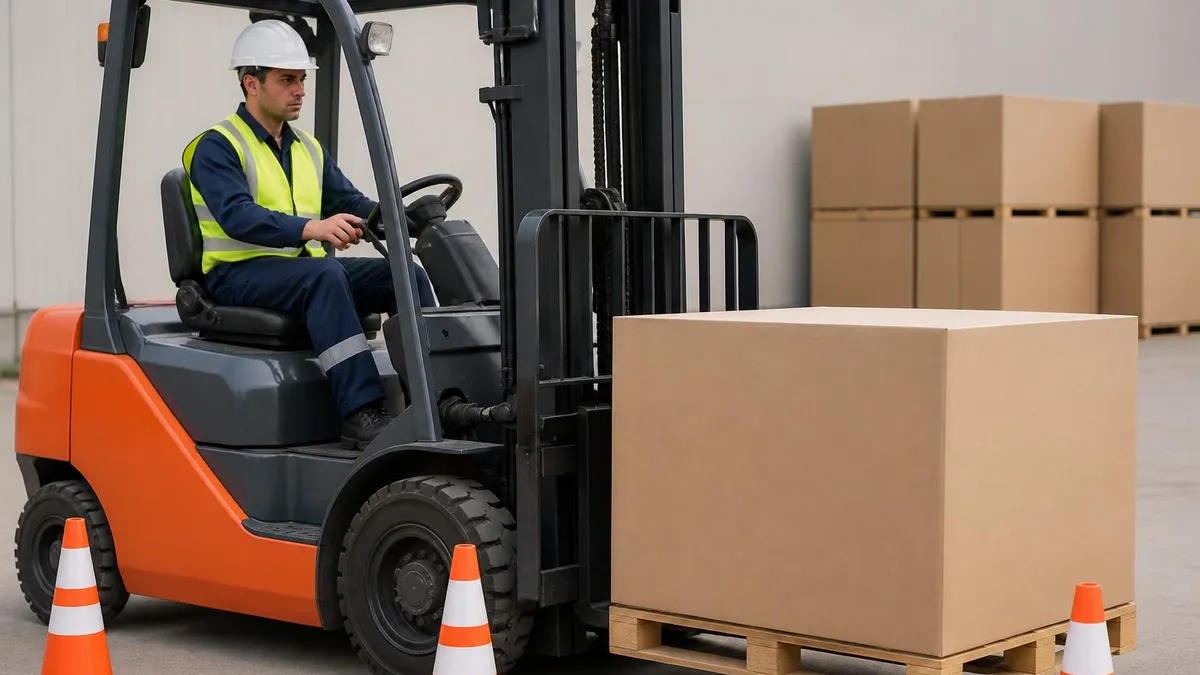
Forklift Tires: Complete Guide to Types, Sizing, Wear Patterns, and Replacement Costs
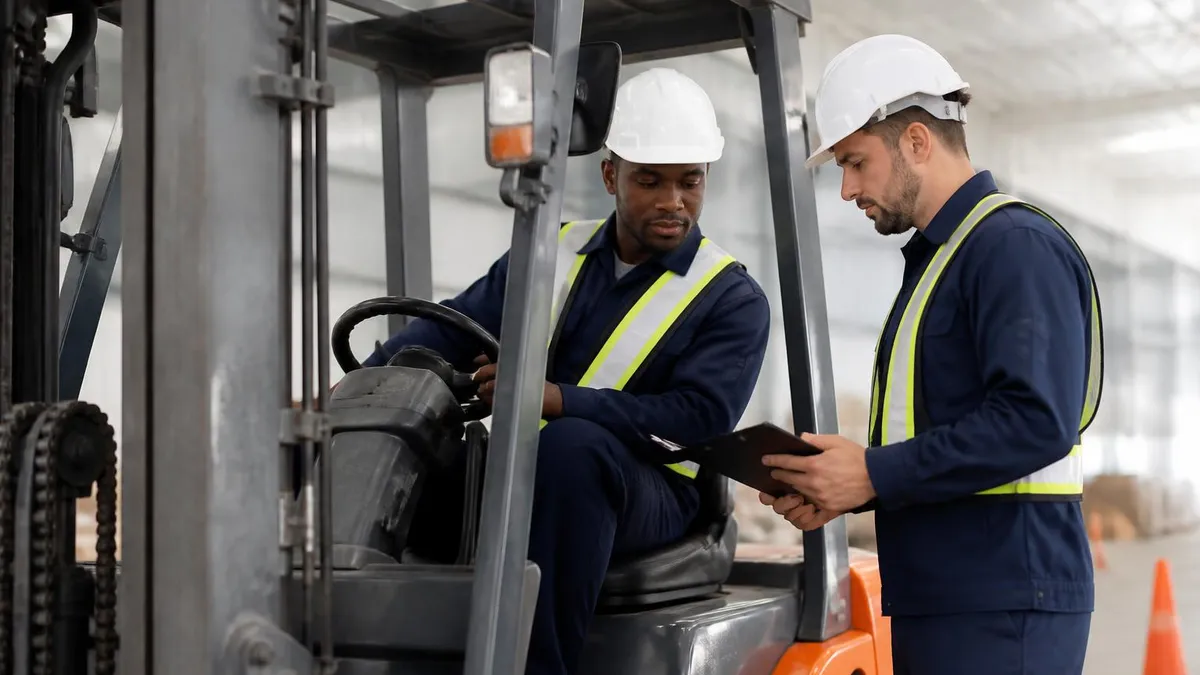
Forklift Operator Duties: Complete Guide to Daily Responsibilities, Safety Tasks, and Career Path for 2026
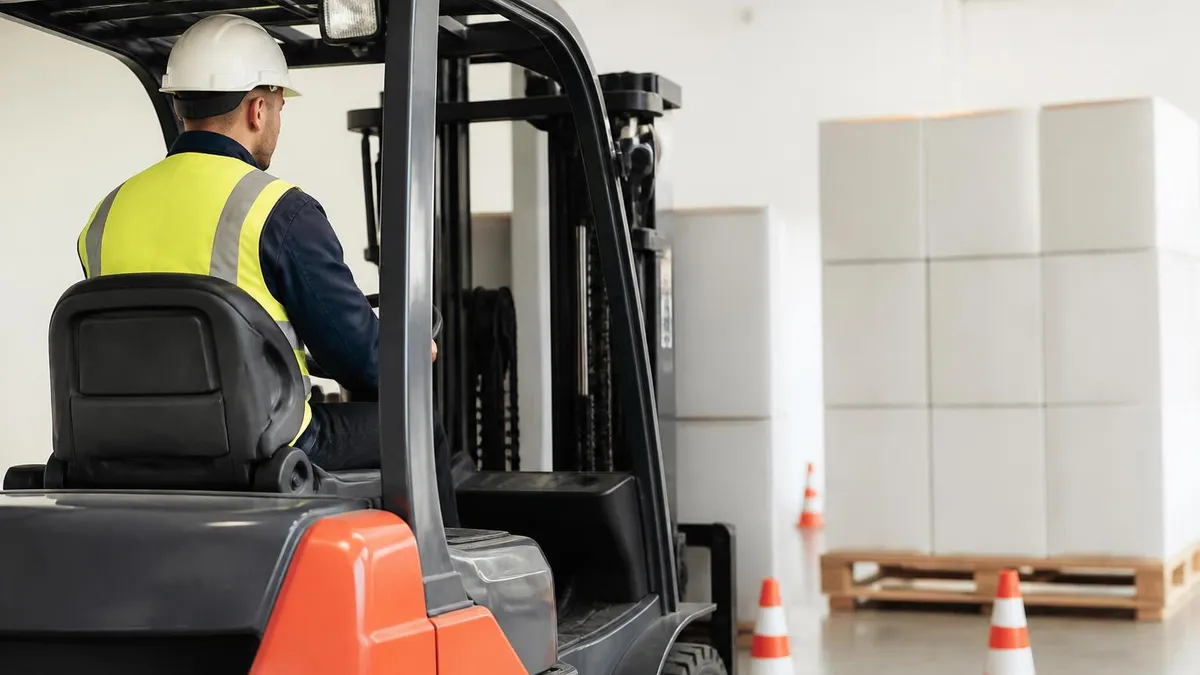
Forklift License Renewal: Complete Guide to Forklift License Expiry, OSHA Recertification, and Operator Requirements for 2026
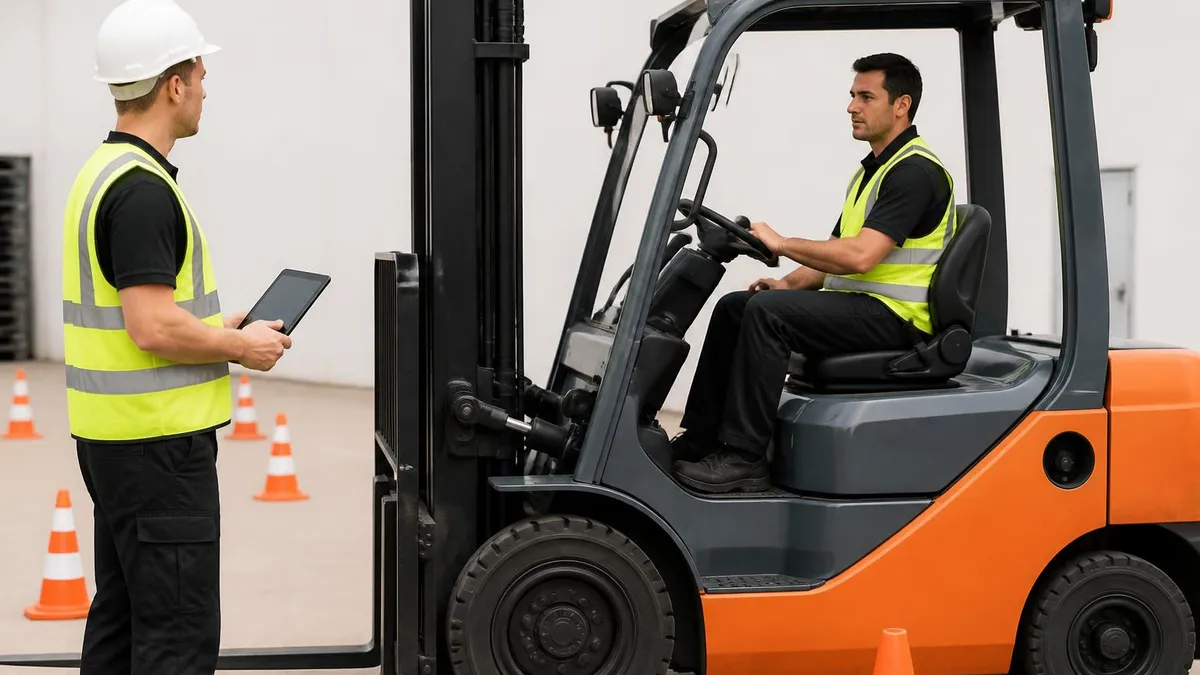
Forklift Safety Training: Complete OSHA Compliance Guide for Operators and Employers
Forklift Repair Service: Complete Guide to Costs, Common Repairs, and Choosing the Right Technician
How this page was made: written with AI tools and published by Nathan Beja, founder of Practice Test Geeks, who is responsible for its content. Exam facts are checked against the official sources listed below. Not reviewed by a subject-matter expert. Editorial policy
Sources & references
Exam facts on this page (fees, format, dates, passing scores) are checked against these official sources; the date is our last check. Editorial policy
- osha.gov — Test delivery, eligibility, renewal · verified Oct 2026