
Forklift Speed and Forklift Operation Knowledge: Safe Limits, Training, Rentals, and Exam Prep
🎯 Forklift speed limits, operator rules, electric forklift basics, training and rental tips: the forklift operation knowledge every operator needs.

Forklift rental is often the first step for businesses that need to move pallets without buying equipment, but renting a machine does not remove the responsibility for operating it safely. Forklift speed is the single factor that quietly shapes almost every incident, from tipped loads to struck pedestrians. This guide pulls together the forklift operation knowledge that new and experienced operators need: how fast to drive, how loads change handling, how training works, and how to choose between available machines.
Here is the plain truth about speed: OSHA's powered industrial truck standard, 29 CFR 1910.178, does not publish a single mph number. Instead it requires operators to drive at a speed that lets them stop safely, slow down at corners, and sound the horn at blind intersections. Most employers translate that flexible wording into a written site limit, usually 5 mph in open aisles and walking pace near pedestrians. Knowing the rule behind the number helps you defend it when deadlines push you to hurry.
A typical electric or propane sit-down truck can reach 8 to 12 mph on flat concrete, which is far faster than most people expect from something so heavy. A 5,000-pound lift truck carrying a 3,000-pound load weighs over four tons in motion, and that mass needs real distance to stop. Wet floors, ramps, and a raised mast stretch stopping distance even further. Treat the top speed printed in a brochure as a mechanical ability, never as a target for daily driving.
Speed also interacts with the way a forklift is built. Steering happens through the rear wheels, so the back end swings wide and the machine can tip sideways if you turn sharply at pace. The stability triangle formed by the two front wheels and the pivot point of the rear axle is surprisingly small. Combine a quick turn with a load carried high, and the combined center of gravity can slip outside that triangle in under a second, with little warning.
Anyone planning forklift training or a certification of forklift skills should expect speed control to be evaluated directly. Evaluators watch whether you slow before turning, keep the forks low while traveling, look in the direction of travel, and stop completely before changing direction. These behaviors are scored because they are habits, not trivia. You cannot memorize your way into smooth braking, so practice at low speed until stopping gently feels automatic rather than something you must consciously remember.
The sections ahead cover the numbers behind safe travel, the differences among machine types, rental and purchase decisions, and a practical prep plan. Whether you are a first-time forklift operator, a supervisor writing site rules, or a business owner comparing forklifts for sale against rentals, the same principle applies throughout: control comes before productivity. Work through the free practice questions as you read, because testing yourself exposes weak spots faster than rereading ever will.
Forklift Operation by the Numbers
Core Forklift Speed Rules Every Operator Should Know
Because OSHA sets no numeric limit, your employer's written rule controls. Most warehouses post 5 mph or less in aisles and slower speeds in congested zones. Know the number for your building, obey it every shift, and never assume an empty truck is allowed to go faster.
Reduce speed at corners, doorways, cross aisles, wet spots, dock plates, and ramps. Sound the horn where vision is blocked. A good habit is to cover the brake pedal before every intersection so that stopping is a small movement instead of an emergency.
Pedestrians always have the right of way. Make eye contact, stop completely if someone enters your path, and never drive toward a person standing in front of a fixed object. Treat quiet electric trucks with extra caution because people cannot hear them approach.
Carry loads a few inches off the floor with the mast tilted back slightly. A low load keeps the center of gravity inside the stability triangle, which lets you brake and turn without tipping. Raise the forks only when you are at the rack or stack.
Stopping Distance, Turns, and Ramps: Why Forklift Speed Matters
The physics are unforgiving. Kinetic energy rises with the square of speed, so doubling your travel speed from 4 mph to 8 mph quadruples the energy your brakes must absorb. That is why a truck that feels easy to stop at a walking pace can slide well past the spot you aimed for when you hurry. Every extra mile per hour costs distance, and distance is exactly what a crowded warehouse lacks.
Reaction time adds to braking distance before the brakes even engage. An alert operator needs roughly one and a half seconds to notice a hazard and move a foot to the pedal. At 5 mph, a forklift covers about 7.3 feet every second, so you travel around 11 feet before braking starts. At 10 mph that figure doubles to 22 feet. Fatigue, distraction, or a phone in the cab makes those numbers worse.
Load position changes your view and your stopping ability. When a stacked load blocks forward vision, OSHA expects you to travel in reverse unless doing so creates a greater hazard, and to use a spotter if you cannot see. Reversing at the same speed feels slower, but your head is turned and your depth perception suffers. Cut speed further whenever you look over a shoulder, because visibility and control are linked directly.
Turning is where many tip-overs begin. Rear-wheel steering means the tail swings outward, and the inside front wheel unloads as you rotate the wheel. Approach corners slowly, begin turning only after the speed has dropped, and keep the arc wide enough to clear racking with the swing of the rear end. Never turn sharply while the forks are elevated, because the mast raises the center of gravity dramatically.
Ramps and grades demand their own rules. With a load, drive with the load facing uphill, whether that means going forward up the slope or in reverse down it. Without a load, point the forks downhill. Do not turn on an incline, and do not change speed suddenly while on one. Keep the load tilted back, travel at the slowest practical pace, and stop completely before entering a trailer or dock plate.
Surface and equipment conditions also change what a safe speed means. Cushion tires grip dry concrete well but slide on wet or oily floors, while pneumatic tires handle gravel and outdoor yards better. Cold weather stiffens hydraulic fluid and brakes feel different. Many fleets now install speed limiters or telematics that cap travel speed and log impacts. Even with those tools, the operator's judgment about conditions remains the final safeguard on every shift.
Electric Forklift, Forklift Rental Fleets, and Cherry Picker Forklift Options
An electric forklift runs on a lead-acid or lithium-ion battery, produces no exhaust, and is the standard choice for indoor warehouses, food storage, and retail backrooms. Acceleration is smooth, noise is low, and maintenance is simpler than with combustion engines. Many electric trucks include programmable speed settings, so a fleet manager can cap travel speed for new operators and raise it only for experienced, evaluated drivers.
Electric does not mean risk-free. Lead-acid batteries need roughly eight hours of charging plus a cooling period, and charging areas require ventilation, eye protection, and acid-handling training. Lithium-ion packs allow opportunity charging during breaks. Because these trucks are nearly silent, pedestrians often fail to notice them, so use the horn, keep speed low near foot traffic, and rely on lights or blue-spot warning devices where available.
Is Forklift Rental Better Than Buying a Forklift?
- +No large upfront purchase, which protects cash flow for seasonal or startup businesses
- +Maintenance and breakdown repairs are typically handled by the rental company
- +You can match the truck type, capacity, and mast height to each specific project
- +Newer rental fleets often include current safety features and speed controls
- +Rental terms can be extended or ended as demand changes
- +Delivery and pickup remove the need to transport heavy equipment yourself
- −Long-term rental costs can exceed the price of a used forklift for sale
- −Availability can be limited during peak seasons and construction booms
- −Damage waivers, delivery fees, and fuel charges raise the real monthly cost
- −Renting does not remove your duty to train and evaluate every operator
- −You cannot permanently customize the truck with attachments or settings
- −Hours-based limits may add overage charges for heavy daily use
Pre-Shift Forklift Operator Checklist
- ✓Confirm you are trained and evaluated on this specific truck type.
- ✓Check the data plate for rated capacity and attachments.
- ✓Walk around the truck and look for leaks, damage, and tire wear.
- ✓Inspect forks for cracks, bends, and uneven wear.
- ✓Test the horn, lights, backup alarm, and seat belt.
- ✓Test service brakes and the parking brake before moving.
- ✓Verify steering feels smooth with no excess play.
- ✓Check battery charge, fuel level, and hydraulic fluid.
- ✓Tag out and report any defect instead of driving the truck.
- ✓Review your site speed limit and pedestrian routes before starting.
If You Cannot Stop Within Your Sight Distance, You Are Going Too Fast
Judge speed by what you can see, not by the number on a sign. If a pedestrian or pallet could appear beyond your clear view and you could not stop in time, slow down. At 5 mph you still cover about 11 feet before the brakes even start working.
Load Handling, Stability, and Certification of Forklift Operators
Stability starts with the stability triangle. Picture lines connecting the two front wheels to the pivot point at the center of the rear axle. As long as the combined center of gravity of the truck and load stays inside that triangle, the forklift stays upright. A heavy load held high, a sharp turn, or a sudden stop can push the center of gravity outside it, and then a tip-over happens faster than anyone can react.
The data plate on every truck states its rated capacity at a given load center, commonly 24 inches. That figure assumes the load's center of gravity sits 24 inches from the fork face. Longer or unevenly loaded pallets shift the center outward and reduce safe capacity. As a rough example, a truck rated for 5,000 pounds at 24 inches handles only about 3,300 pounds if the load center is 36 inches. Attachments reduce capacity further.
Good load handling is mostly about preparation. Center the forks under the pallet, spread them as wide as the load allows, and insert them fully so that the load rests against the backrest. Tilt the mast back slightly, then lift only high enough to clear the floor, typically four to six inches. Never carry unstable stacks, never overload, and never add counterweight to a truck. Inspect the load for loose wrap and damaged pallets first.
Training and certification are governed by OSHA 1910.178(l). Operators must complete formal instruction, such as a lecture or online module, plus supervised hands-on practice, and then be evaluated while operating at the actual workplace. The employer issues the certification, so it is not portable between jobs. Operators must be at least 18, and their performance must be re-evaluated at least once every three years.
Refresher training is required sooner when circumstances change. An operator who is observed driving unsafely, involved in an accident or near miss, assigned to a different type of truck, or working in a changed environment needs retraining before continuing. This is why a certification of forklift skills is better treated as a living record than a one-time card. Employers keep documentation of the training date, the trainer's name, and the evaluation results on file.
Tip-overs deserve special attention because they cause roughly one in four forklift fatalities. If the truck starts to tip, do not jump. Stay in the seat, keep the seat belt fastened, grip the wheel firmly, brace both feet, and lean away from the direction of the fall. The overhead guard and restraint system are designed to protect an operator who stays inside the cab. Most deaths in overturns happen to people who tried to escape.
Pedestrian and environmental awareness completes the picture. Keep everyone out from under raised forks, never allow riders on the truck, and never lift people on forks unless an approved safety platform is secured. Watch for overhead lights, sprinkler lines, and low doorways when the mast is up. Stay alert for blind corners, dock edges, and uneven floors. Each of these hazards becomes more dangerous the faster you drive, so speed discipline supports every other skill.
A rental company can hand you the keys, but OSHA still expects your employer to train and evaluate every operator on that truck type. Certification from a previous employer is not accepted as a substitute. Verify documentation before anyone drives the rented machine.
Forklift Rental Near Me, Forklifts for Sale, and Cost Basics
Deciding between forklift rental and ownership is mostly a question of utilization. Renting suits short projects, seasonal peaks, and trial periods when you are not sure which capacity or mast you need. Buying suits steady daily use. A rough rule many fleet managers use is that if a rented truck will be needed more than six to eight months a year, a purchase deserves a serious look at the numbers.
Typical rental pricing varies by region, capacity, and fuel type, but a standard 5,000-pound warehouse truck often rents for roughly $200 to $400 per day, around $600 to $1,200 per week, and about $1,000 to $2,500 per month. Rough Terrain and high-capacity trucks cost more. Delivery fees, damage waivers, fuel, and sales tax can add noticeably to the quoted rate, so ask for an itemized estimate before signing anything.
When you search for forklift rental near me, local dealers usually beat national brokers on response time. A truck that breaks down at 10 a.m. can halt a loading dock, so ask how quickly a technician arrives and whether a replacement unit is guaranteed. Compare forklift rentals by asking about fleet age, hours on the machine, and battery condition for electric models. A slightly higher daily rate with reliable service often costs less overall.
Shoppers looking at forklifts for sale face a wide price range. A used standard electric or propane unit often runs between $8,000 and $25,000 depending on age and hours, while new trucks commonly start near $25,000 and climb past $50,000 for lithium-ion or high-capacity models. Lithium batteries cost more upfront but remove watering and often reduce charging downtime. Include battery replacement, tires, and annual service in the lifetime cost.
Inspecting a used forklift for sale takes more than a test drive. Review the data plate, serial number, and maintenance records, then look for hydraulic leaks, worn mast chains, cracked forks, and uneven tire wear. A truck with 10,000 or more hours may still be sound, but expect repairs. Check that the horn, lights, and safety devices work, and confirm that the machine meets ANSI and ITSDF standards before it leaves the seller's lot.
Whichever route you choose, match the machine to the job instead of the price tag. Consider the aisle width, the lift height, the weight of the heaviest pallet, and whether the work is indoors or outdoors. Indoor warehouses favor electric forklift models, while yards and lumber operations favor pneumatic tires and larger engines. A truck that is too big for the aisles encourages sloppy maneuvering, and a truck that is too small encourages overloading. Both lead to accidents.
Practical Tips and Final Prep for Forklift Operators
Build your study plan around short, frequent sessions. Thirty minutes a day for two weeks sticks better than one long weekend. Start with the rules most likely to appear on a test and on the job: inspection steps, stability triangle, load center, travel speed, pedestrian rules, and refueling or battery charging procedures. After each session, close the book and explain one concept aloud in your own words, because teaching yourself reveals gaps quickly.
Practice questions are the fastest way to find weak spots. Take a set, review every wrong answer, and write the reason it is wrong, not just the correct choice. Pay special attention to scenario questions that ask what to do first, such as how to respond when you find a leaking hose or notice a damaged fork. The safest answer usually removes the truck from service and reports the problem.
Make speed control a deliberate habit. In the first weeks on any truck, drive slower than you think necessary and focus on smooth acceleration and braking. Practice stopping with the load just kissing the rack face instead of bumping it. Smooth driving protects product, tires, and spines, and it makes your evaluation easier because the trainer sees consistent, predictable behavior. Speed will come naturally once control is automatic.
Treat the walkaround inspection as part of the work, not a delay. Operators who skip it often discover problems only after a brake fails or a hydraulic line bursts. Use the same sequence every time, starting at the forks and moving around the truck so that nothing is skipped. Write down defects and tag the truck. A habit of thirty seconds of checking prevents downtime that can cost hours and sometimes lives.
On evaluation day, narrate your actions if the trainer permits it. Saying that you are sounding the horn, checking behind you, or lowering the forks shows that your habits are conscious rather than lucky. Stay calm if you make a mistake and correct it immediately, since recovery is part of safe operation. Arrive rested, wear the required personal protective equipment, and keep your seat belt fastened from the moment the truck starts.
Finally, keep learning after the card is in your wallet. Review near-miss reports, ask experienced operators about site-specific hazards, and request refresher training whenever you change trucks or workplaces. If you are searching for work, remember that employers value a clean record and a calm attitude as much as a certificate. Combine your practical skills with the knowledge you have built here, and you will be a safer, more employable forklift operator.
Forklift Questions and Answers
Forklift Jobs Near Me: Complete Guide to Finding Best Opportunities
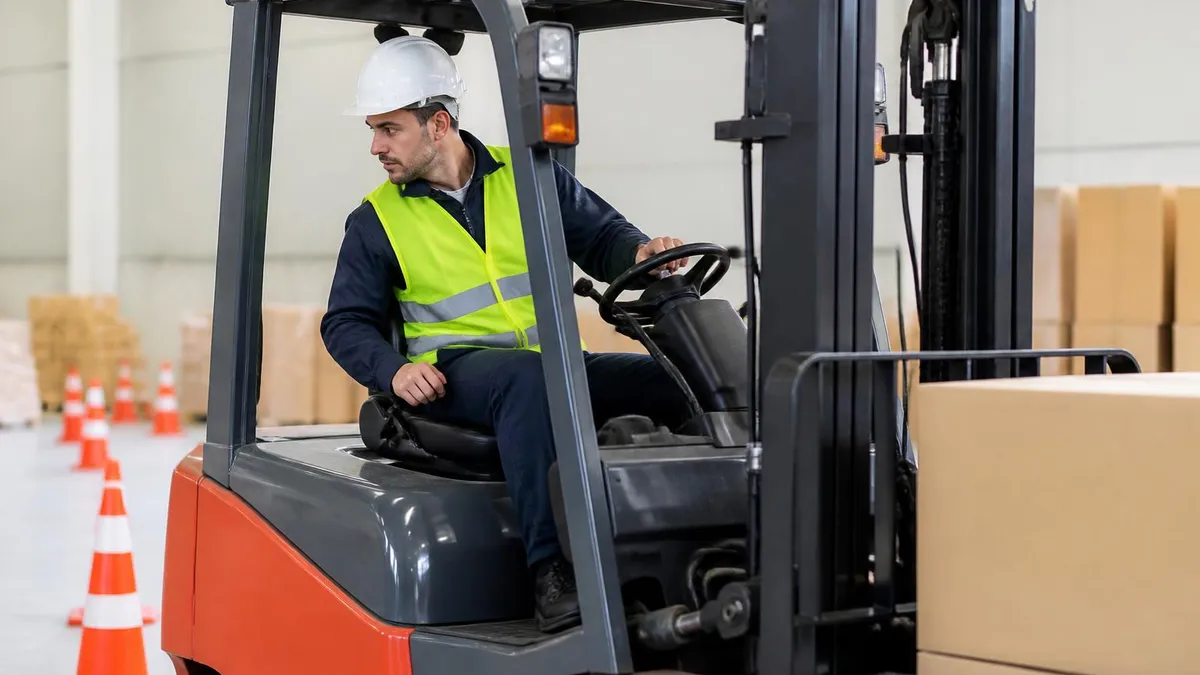
Best Forklift Simulator 2026: Complete Guide to VR Training, Operator Certification Prep, and ROI for Warehouse Safety Programs
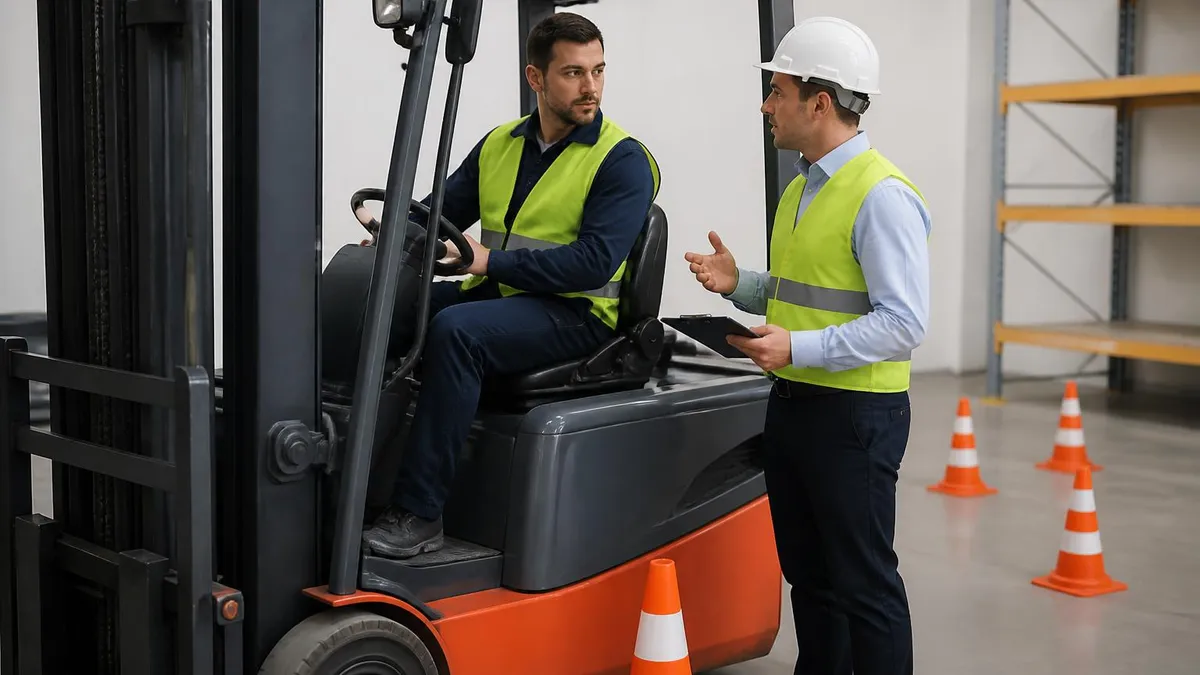
Forklift Rental Cost: Complete 2026 Pricing Guide for Daily, Weekly, and Monthly Rates
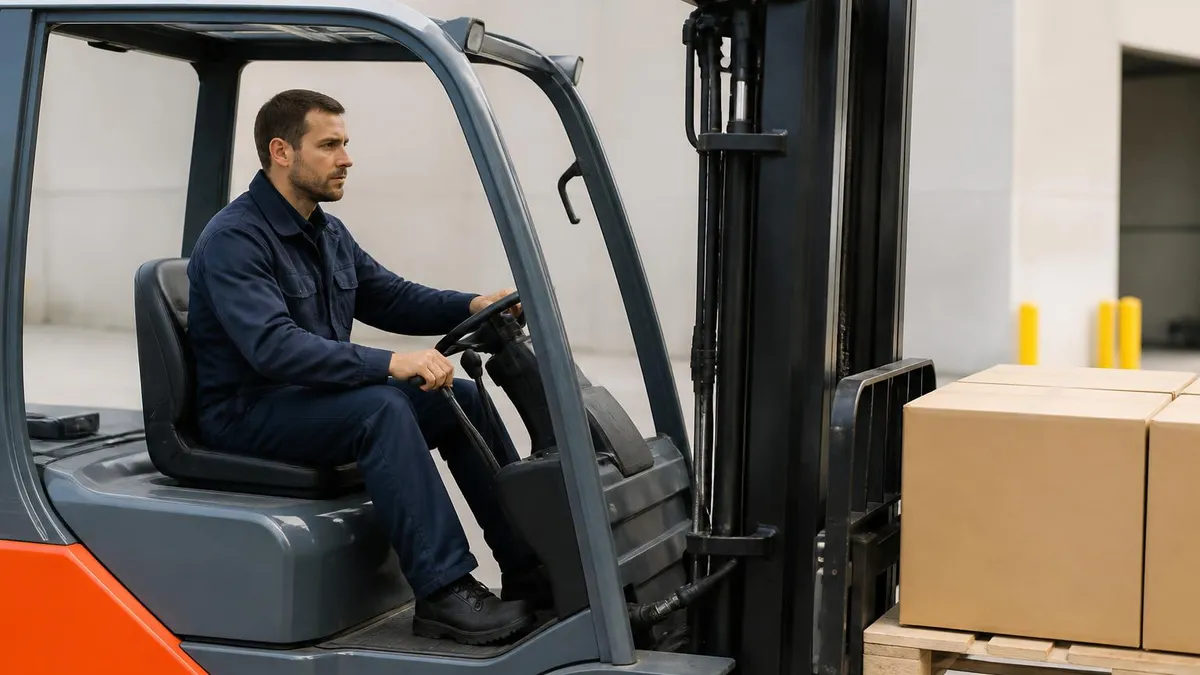
How to Operate a Forklift: Complete Step-by-Step Guide for New and Experienced Operators
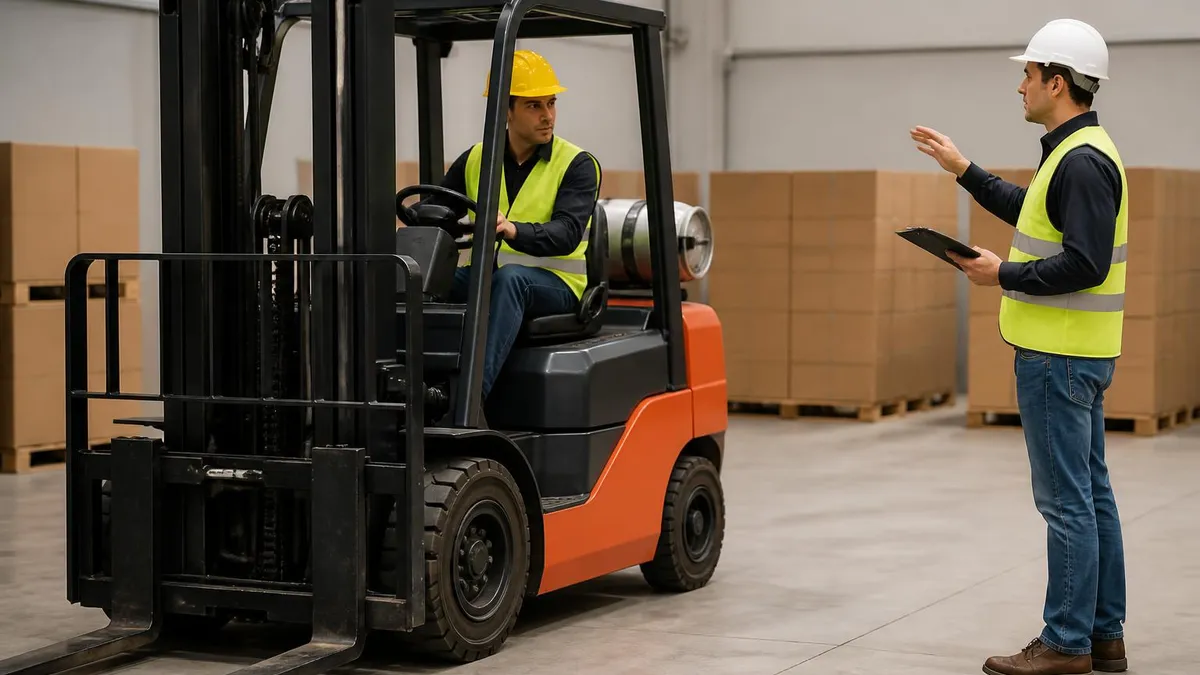
Online Forklift Certification: Complete Training Guide and Requirements for 2026
How this page was made: written with AI tools and published by Nathan Beja, founder of Practice Test Geeks, who is responsible for its content. Exam facts are checked against the official sources listed below. Not reviewed by a subject-matter expert. Editorial policy
Sources & references
Exam facts on this page (fees, format, dates, passing scores) are checked against these official sources; the date is our last check. Editorial policy
- osha.gov — Test delivery, eligibility, renewal · verified Oct 2026