
How to Operate a Forklift: Complete Step-by-Step Guide for New and Experienced Operators
🔎 Learn how to operate a forklift safely with our step-by-step guide covering controls, inspections, load handling, OSHA training, and certification basics.
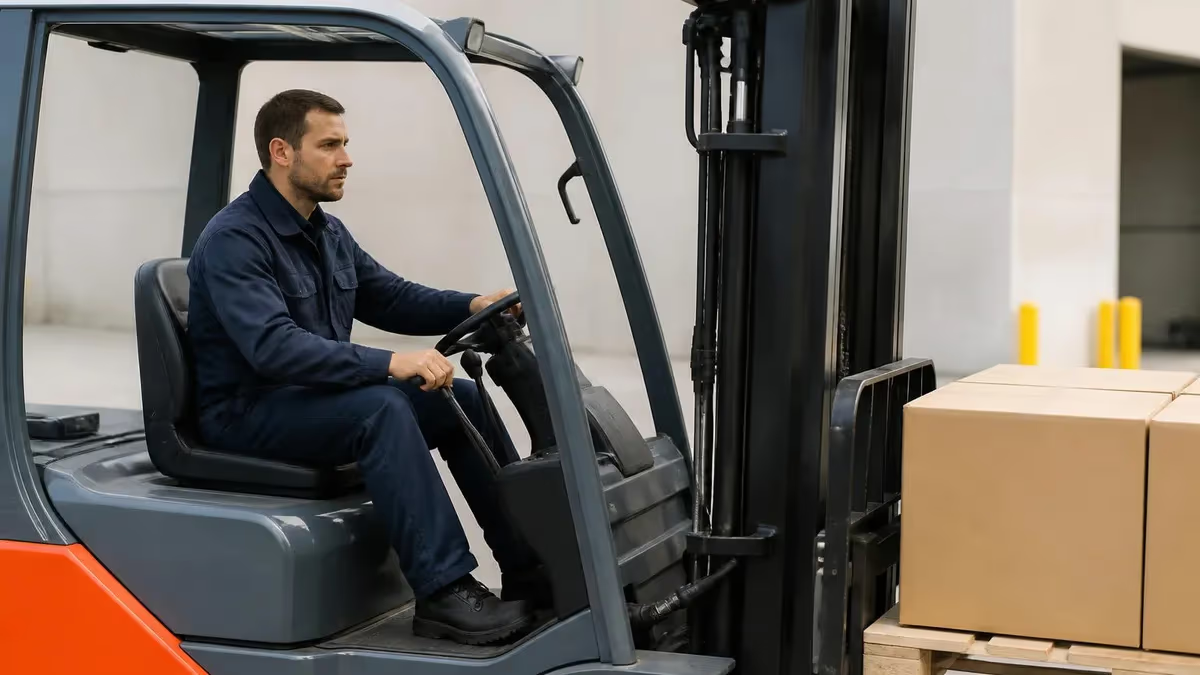
Learning how to operate a forklift is one of the most marketable warehouse skills you can earn in under a week, and demand is climbing fast as e-commerce fulfillment centers, construction yards, and manufacturing plants expand across the United States. Whether you plan to rent a unit for a single weekend job, run a stand up forklift on a third shift, or build a long career as a certified forklift operator, the fundamentals are the same: inspect the machine, understand the controls, respect the load center, and never compromise on stability or visibility.
A forklift is not just a small tractor with forks. It is a counterbalanced industrial truck capable of lifting thousands of pounds twenty feet in the air, and OSHA treats it with the same seriousness as a crane. Roughly 85 fatalities and 34,900 serious injuries occur every year from forklift incidents, and 70% of those events are preventable with proper training. That is why federal law under 29 CFR 1910.178 requires every operator to be trained, evaluated, and authorized before touching the controls.
This guide walks you through everything a new operator needs: pre-shift inspections, mounting and dismounting, steering geometry, load handling, stacking, traveling on grades, refueling or recharging, and the paperwork that proves you are forklift certified. We also cover the differences between sit-down counterbalance trucks, electric forklifts, rough terrain machines, and reach trucks, because the technique that keeps you safe on one class can get you hurt on another.
You will see references throughout to forklift rental scenarios, because many new operators learn on rented equipment before their employer commits to a purchase. Rental yards typically require you to show proof of training before they release a unit, so understanding the certification of forklift requirements is not optional even if you only plan to use the truck for a weekend renovation or a one-off pallet move at a job site.
We have written this article for two audiences. The first is the brand-new operator who has never touched a hydraulic lever and needs to understand the basic sequence of operation. The second is the experienced operator returning after a few years away who needs a refresher on current OSHA expectations, modern lithium electric forklift behavior, and the way reach trucks and order pickers differ from the trucks they learned on a decade ago.
By the end, you will know exactly what a daily inspection looks like, how to read a load capacity plate, why the stability triangle matters more than horsepower, how forklift training programs are structured, and what to expect when you sit down for the practical evaluation that finalizes your certification. We will close with a frequently asked questions section and direct you to practice quizzes so you can test your knowledge before the real exam.
Treat this as a study companion, not a substitute for hands-on instruction. Reading about forklifts builds vocabulary and judgment, but only supervised seat time builds muscle memory. Pair this guide with a formal program, and you will pass your evaluation on the first attempt.
Forklift Operation by the Numbers

Pre-Operation Inspection Steps
Walk-Around Visual Check
Fluid and Battery Check
Mast and Fork Inspection
Operational Controls Test
Brake and Steering Test
Document and Report
Once your inspection is clean, mounting the forklift correctly is the next step. Use the three-point contact rule: two hands and one foot, or two feet and one hand, in contact with the truck at all times while climbing on or off. Grip the assist handle, never the steering wheel, because turning the wheel as you mount can swing the rear end and crush a foot. Settle into the seat, adjust it so you can fully depress the brake pedal with your back against the seat, and fasten the seat belt before doing anything else.
Familiarize yourself with the control layout. Most sit-down counterbalance trucks place the directional selector on the steering column, the parking brake to the left, and three hydraulic levers on the right: hoist, tilt, and side-shift or auxiliary. A cherry picker forklift or order picker adds a platform-up control and a deadman pedal, while a stand up forklift replaces the seat with a padded back rest and the foot pedals with a single brake pedal and a thumb-controlled accelerator on the handle.
Forklift steering is rear-wheel steering, which is the single most counter-intuitive thing for new operators coming from cars or pickup trucks. When you turn the wheel, the back of the truck swings wide while the front pivots tightly. This means you must look behind you before turning, give wide clearance on the outside of every corner, and never trust that the path behind your shoulder is clear without a glance.
Visibility is your second priority. Always travel in the direction of best visibility. If a load blocks your forward view, you must travel in reverse, looking over your shoulder in the direction of travel. The only exception is climbing a grade with a load, which is covered in a later section. Use the horn at every intersection, blind corner, and pedestrian crossing, and slow to a walking pace whenever workers are within ten feet.
Speed control matters more than raw speed. Most warehouse forklifts top out around 10 to 12 mph, but you should rarely exceed 5 mph indoors and never exceed a brisk walking pace within 25 feet of pedestrians. Sudden stops shift load weight forward and can tip the truck or eject the load, so plan your stops well in advance and decelerate smoothly with the service brake.
The stability triangle is the foundation of every operating decision you make. The triangle runs from the front axle's two contact points to the center pivot of the rear axle. As long as the combined center of gravity of the truck plus load stays inside this triangle, the truck remains stable. Tilting the mast forward, lifting a heavy load high, or turning sharply at speed can push the center of gravity outside the triangle, and the truck tips over.
If you ever feel a tip-over begin, do not jump out. Stay seated, brace your feet, grip the steering wheel, and lean away from the direction of the fall. Operators who jump are crushed by the overhead guard far more often than operators who stay belted in. Reviewing cherry picker forklift training resources can reinforce these reflexes before you ever face a real tip-over scenario.

Forklift certification Practice Test Questions
Prepare for the Forklift certification Certification exam with our free practice test modules. Each quiz covers key topics to help you pass on your first try.
Forklift certification Certification Forkl...
Forklift certification Exam Questions covering Certification Forklift certification Maintenance and Repairs. Master Forklift certification Test concepts for certification prep.
Forklift certification Certification Forkl...
Free Forklift certification Practice Test featuring Certification Forklift certification Maintenance and Repairs Questions and Answers. Improve your Forklift certification Exam score with mock test prep.
Forklift certification Certification Forkl...
Forklift certification Mock Exam on Certification Forklift certification Operator Training and Certification Requirements. Forklift certification Study Guide questions to pass on your first try.
Forklift certification Certification Forkl...
Forklift certification Test Prep for Certification Forklift certification Operator Training and Certification Requirements Questions and Answers. Practice Forklift certification Quiz questions and boost your score.
Forklift certification Load Handling and S...
Forklift certification Questions and Answers on Load Handling and Stability. Free Forklift certification practice for exam readiness.
Forklift certification OSHA Regulations an...
Forklift certification Mock Test covering OSHA Regulations and Compliance. Online Forklift certification Test practice with instant feedback.
Forklift certification Pre-Operation Inspe...
Free Forklift certification Quiz on Pre-Operation Inspections. Forklift certification Exam prep questions with detailed explanations.
Forklift certification Refueling and Recha...
Forklift certification Practice Questions for Refueling and Recharging Procedures. Build confidence for your Forklift certification certification exam.
Forklift certification Safe Driving and Ma...
Forklift certification Test Online for Safe Driving and Maneuvering. Free practice with instant results and feedback.
Forklift certification Workplace Hazard Id...
Forklift certification Study Material on Workplace Hazard Identification. Prepare effectively with real exam-style questions.
Forklift certification Forklift Instructions
Free Forklift certification Test covering Forklift Instructions. Practice and track your Forklift certification exam readiness.
Forklift certification Forklift MCQ
Forklift certification Exam Questions covering Forklift MCQ. Master Forklift certification Test concepts for certification prep.
Forklift certification Forklift Employer R...
Free Forklift certification Practice Test featuring Forklift Employer Responsibilities. Improve your Forklift certification Exam score with mock test prep.
Forklift certification Forklift Penalties ...
Forklift certification Mock Exam on Forklift Penalties for Non-Compliance. Forklift certification Study Guide questions to pass on your first try.
Electric Forklift vs Propane vs Diesel Power
An electric forklift uses a sealed lead-acid or lithium-ion battery to power a traction motor and hydraulic pump. These trucks dominate indoor warehouses because they produce zero exhaust emissions, run quietly, and have far lower maintenance costs than combustion units. Lithium models can opportunity-charge during breaks, eliminating the dedicated battery-change room that lead-acid fleets require, and they hold full voltage until nearly depleted.
Operating technique differs subtly. Electric trucks deliver instant torque, so feathering the accelerator is critical to avoid jerky starts that shift loads. Regenerative braking means lifting your foot off the accelerator slows the truck noticeably even before you touch the brake. Always confirm the battery indicator before starting a long picking run, because running a lead-acid battery below 20% damages the cells and shortens its service life dramatically.
Becoming a Forklift Operator: Pros and Cons
- +Entry-level positions require no degree and pay $18 to $24 per hour starting
- +Training and certification of forklift can be completed in under a week
- +Strong job demand in logistics, manufacturing, and construction nationwide
- +Overtime and night-shift differentials commonly add 25% to base pay
- +Skills transfer across industries and states with simple recertification
- +Pathway to higher-paying roles like lead operator, supervisor, or trainer
- +Many employers reimburse the cost of certification and renewal training
- −Physically demanding with long shifts of constant attention and vibration
- −Injury risk remains real even with strict OSHA compliance
- −Shift work, weekends, and rotating schedules are common in warehousing
- −Cold-storage and outdoor yards expose operators to harsh conditions
- −Recertification every three years and after any incident is mandatory
- −Limited upward mobility without additional certifications or education
Pros and Cons at a Glance
| Pros | Cons |
|---|---|
| Training and certification of forklift can be completed in under a week | Physically demanding with long shifts of constant attention and vibration |
| Strong job demand in logistics, manufacturing, and construction nationwide | Injury risk remains real even with strict OSHA compliance |
| Skills transfer across industries and states with simple recertification | Shift work, weekends, and rotating schedules are common in warehousing |
| Pathway to higher-paying roles like lead operator, supervisor, or trainer | Cold-storage and outdoor yards expose operators to harsh conditions |
| Many employers reimburse the cost of certification and renewal training | Recertification every three years and after any incident is mandatory |

Daily Forklift Operator Safety Checklist
- ✓Inspect tires, forks, chains, mast, hoses, and the overhead guard before starting the truck
- ✓Confirm horn, lights, backup alarm, seat belt, and parking brake function correctly
- ✓Verify fluid levels or battery state of charge meets shift requirements
- ✓Read the load capacity plate and never exceed rated capacity at the rated load center
- ✓Fasten the seat belt before moving and keep it fastened until parking
- ✓Travel with forks 4 to 6 inches off the floor and the mast tilted slightly back
- ✓Sound the horn at every intersection, blind corner, and pedestrian crossing
- ✓Keep all body parts inside the operator compartment at all times while moving
- ✓Lower forks fully, set the parking brake, and remove the key when leaving the truck unattended
- ✓Report any defect, near-miss, or incident to your supervisor before the shift ends
Keep the combined center of gravity inside the triangle
The stability triangle runs from the two front-wheel contact points to the pivot of the rear axle. Every tip-over happens because the combined center of gravity of the truck plus load left that triangle. Lift loads low, tilt the mast back when traveling, slow down before turning, and never turn on a grade with a raised load.
Picking up a load correctly is the heart of forklift operation. Approach the pallet square-on, stopping about 12 inches short with the forks level and the mast vertical. Lower or raise the forks so the tines will enter the pallet slots with at least one inch of clearance above and below. Drive forward smoothly until the heels of the forks contact the pallet face, then stop and tilt the mast back slightly to cradle the load. This tilt locks the load against the carriage and prevents forward slide during transport.
Once the load is cradled, lift it just high enough to clear the floor, typically four to six inches, and back straight out of the rack or stack before turning. Never turn a forklift while the forks are still inside a pallet pocket or rack opening. The rear-wheel steering geometry will twist the forks against the pallet and either damage the load or stress the carriage. Back out fully, stop, and then begin your turn in open aisle space.
Load capacity is governed by the data plate, which lists rated capacity at a specific load center, usually 24 inches measured from the fork face to the load's center of gravity. A truck rated for 5,000 pounds at 24 inches may only safely handle 3,500 pounds at 36 inches because the use doubles the effective weight on the front axle. Always read the plate before lifting any unfamiliar load, and never modify the truck or add counterweight without manufacturer approval.
Stacking loads requires careful judgment. Approach the stack square, raise the load to clearance height plus six inches, drive forward until the load is directly above the stack, then lower smoothly until the pallet rests on the stack below. Tilt the mast forward just enough to release the load from the forks, then back out slowly while lowering the forks to travel height. Never raise a load above your eye level until you are positioned directly in front of the destination.
Traveling with a load on a ramp or grade reverses the rules. With a load, always drive forward up the grade and reverse down the grade, keeping the load on the uphill side. Without a load, drive in reverse up the grade and forward down. This keeps the heaviest weight on the uphill end of the truck, preserving the stability triangle. Never turn on a grade, and never travel a grade with a raised load.
Long, awkward, or unstable loads require extra preparation. Use load extensions or attachments designed for the specific shape, and recalculate the effective load center because extensions reduce rated capacity. Wrap or strap loose items to the pallet before lifting, and if visibility is compromised by the load itself, use a spotter or travel in reverse. A spotter must remain visible to the operator at all times and signal with standardized hand gestures.
Finally, watch for floor conditions. Wet floors, loose debris, oil spills, expansion joints, and dock plates all change traction and stability. Slow down or stop completely until conditions are safe. A dock plate must be rated for the combined weight of truck plus load, and you should always make a slow first crossing to confirm it is seated and locked before committing to repeated trips.
Under 29 CFR 1910.178(l)(4), every forklift operator must be reevaluated at least every three years, and immediately after any accident, near-miss, observed unsafe operation, change in equipment type, or change in workplace conditions. Operating with expired certification exposes both you and your employer to fines exceeding $15,000 per violation.
Becoming a fully certified forklift operator follows a clear path that OSHA codifies in 29 CFR 1910.178(l). The process has three required components: formal instruction, practical hands-on training, and an evaluation by a qualified person. You cannot legally operate a powered industrial truck in the workplace without all three, regardless of how many hours of experience you have on a family farm or a friend's job site.
Formal instruction covers OSHA regulations, truck-specific operating instructions, warnings, and precautions for the class of truck you will operate, differences between the truck and an automobile, controls and instrumentation, engine or motor operation, steering and maneuvering, visibility restrictions, fork and attachment use, vehicle stability, capacity limits, refueling or recharging, and any workplace-specific topics. This usually takes four to six hours in a classroom or online module.
Practical training puts you on the actual truck in the actual workplace where you will operate. A trainer demonstrates each maneuver, then watches you replicate it. You will practice mounting and dismounting, starting and stopping, traveling forward and reverse, turning in tight spaces, picking up and placing loads at floor level, stacking and unstacking at height, and traveling on grades. Expect two to four hours of seat time before evaluation.
Evaluation is performed by a person who has the knowledge, training, and experience to judge operator competency. The evaluator watches you perform a standardized course of maneuvers and scores you against a written checklist. Common pass standards require zero critical errors such as exceeding capacity, traveling with a raised load, or failing to wear a seat belt, plus 80% or higher on minor scoring items.
Once you pass, your employer issues written certification listing your name, the date of training, the date of evaluation, and the name of the evaluator. This document is your proof of forklift certification near me compliance for OSHA audits, insurance verification, and rental yard requirements. Many operators carry a wallet card or a digital copy on their phone, but the legal record lives in your employer's personnel files.
Recertification every three years requires you to demonstrate continued competency, typically through a refresher classroom session and a repeat practical evaluation. Switching truck classes also requires new training. If you certified on a sit-down counterbalance and your new employer puts you on a stand up forklift or reach truck, you legally must complete additional instruction and evaluation before operating that new class, even if the operational principles seem similar.
Forklift training programs vary in cost. Employer-sponsored training is usually free to the worker. Public courses through community colleges, trade schools, and private trainers run from $75 for a one-day online plus evaluation to $300 for a full classroom-plus-practical program. Many rental yards offer training included with longer-term forklift rentals, which can be a cost-effective option for small contractors who need occasional lift capability.
Practical experience separates a certified operator from a confident one, and the gap closes faster when you focus on a handful of habits that experienced operators share. The first habit is the deliberate pause. Before every lift, every backup, and every turn, pause for one second to verify your path, your load, and your surroundings. That single second prevents the vast majority of contact incidents in warehouses, and it costs almost no productivity over a full shift.
The second habit is mirror and spotter discipline. New operators rely on the rear-view mirror as if it were a car's mirror, but the wide blind spot behind a forklift requires you to turn your shoulders and look directly. When a permanent obstacle blocks visibility, request a spotter and confirm hand signals before you start moving. A spotter who cannot see your face cannot signal you safely, so always position them in your line of sight.
Maintenance awareness is the third habit. You are the first line of defense against equipment failure, and small symptoms like a slight hydraulic drift, a soft brake pedal, or a hesitant lift cylinder almost always grow into a major failure if ignored. Report symptoms in writing the same day you notice them. A well-maintained truck lasts 15,000 to 20,000 hours, while a neglected truck rarely sees 8,000 before catastrophic failure that risks the operator and the load.
Pedestrian awareness is a fourth habit that separates professionals from amateurs. Assume every pedestrian in the warehouse has earbuds in, is looking at a tablet, and does not see you. Make eye contact before every pass, sound the horn at every blind corner, and never assume a worker who waved you through is still paying attention five seconds later. The most experienced operators reduce speed automatically the moment any pedestrian enters a 25-foot radius.
Battery and fuel discipline keeps you productive and protects expensive equipment. For an electric forklift, plug in during every break of more than 15 minutes if you have lithium chemistry, or change batteries at the manufacturer-recommended discharge point for lead-acid. For propane and diesel, refuel at the start of every shift so you never run dry in the middle of a complex move. Running out of fuel mid-lift is dangerous and embarrassing.
Documentation discipline closes the loop. Every shift starts with a signed inspection, every defect is logged, every incident is reported, and every recertification date is tracked on your calendar 60 days before expiration. Operators who take documentation seriously rarely face surprise compliance issues, and they advance faster into lead, supervisor, and trainer roles where strong recordkeeping is a baseline expectation. Many companies that operate large fleets also coordinate forklift rental and stand up forklift service contracts through these same documentation systems.
The last habit is continuous learning. OSHA standards evolve, new lithium chemistries change operating practice, and modern reach trucks introduce telemetry that older operators have never seen. Read manufacturer updates, attend refresher classes more often than the mandatory three-year window, and treat every near-miss as a free lesson. Operators who treat the trade as a craft rather than a clock-punch job earn higher pay, safer records, and longer careers than peers who stop learning the day they pass their first evaluation.
Sample Forklift certification Practice Questions
Try these questions from our free Forklift certification practice tests. The correct answer and an explanation follow each question.
In which situation must an operator be retrained BEFORE continuing to operate a forklift?
- A. When the operator receives a pay raise
- B. When the operator is observed operating in an unsafe manner
- C. When a new employee joins the warehouse team
- D. When the forklift is repainted
Answer: B. When the operator is observed operating in an unsafe manner
OSHA mandates retraining when an operator is observed operating unsafely, involved in an accident, or assigned to a different type of forklift.
Who is responsible under OSHA for ensuring forklift operators are properly trained?
- A. The employee alone
- B. The employer
- C. The forklift manufacturer
- D. The insurance company
Answer: B. The employer
OSHA places responsibility on the employer to ensure operators are trained and certified.
What must an employer do when an operator is assigned to operate a different type of forklift than they were originally trained on?
- A. No action required if the operator has prior experience
- B. The operator must receive training on the new type before operating it
- C. The operator can learn on the job without additional training
- D. Only a brief verbal briefing is needed
Answer: B. The operator must receive training on the new type before operating it
Each forklift type has unique operating characteristics, so OSHA requires operators to be trained specifically on any new type before operating it.
What is the first step in a forklift pre-operational inspection?
- A. Check the forklift's fluids (oil, fuel, and coolant)
- B. Inspect the exterior for visible damage
- C. Start the forklift and test the horn
- D. Check for obstructions in the work area
Answer: B. Inspect the exterior for visible damage
The first step in a thorough forklift pre-operational inspection is to conduct a visual check of the exterior. This involves looking for any obvious signs of damage, leaks, or missing parts before even starting the engine. Identifying visible issues early can prevent further damage or unsafe operation, ensuring a foundational level of safety before proceeding.
Forklift Questions and Answers
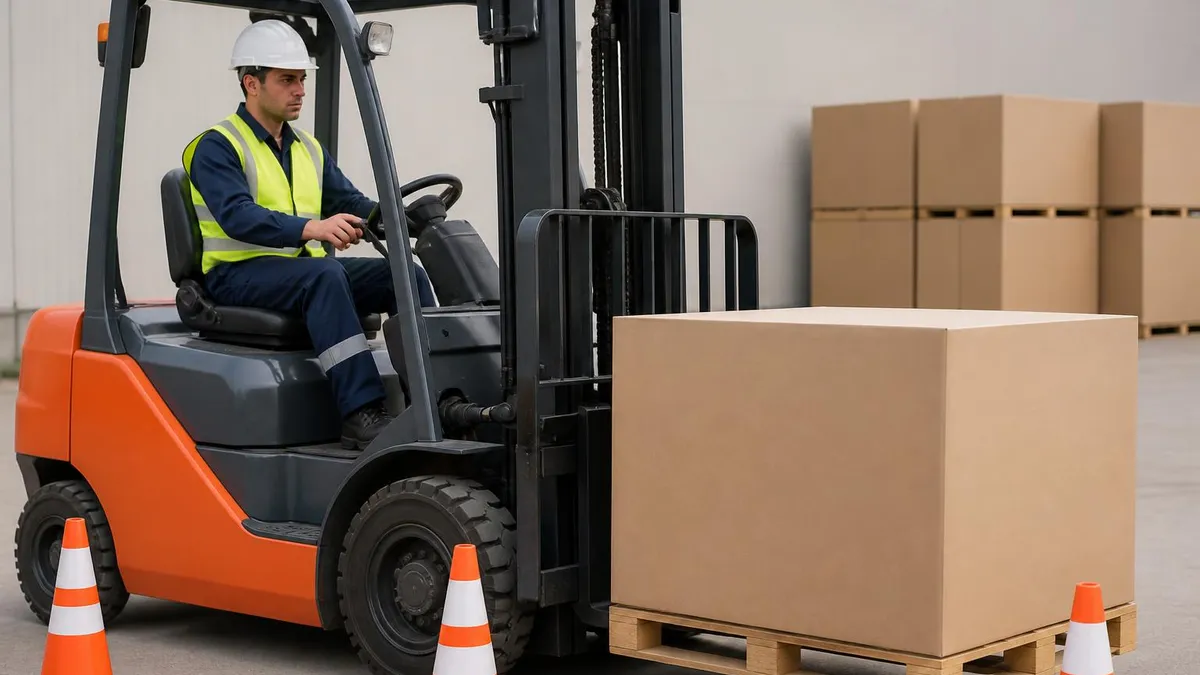
Forklift Tires: Complete Guide to Types, Sizing, Wear Patterns, and Replacement Costs
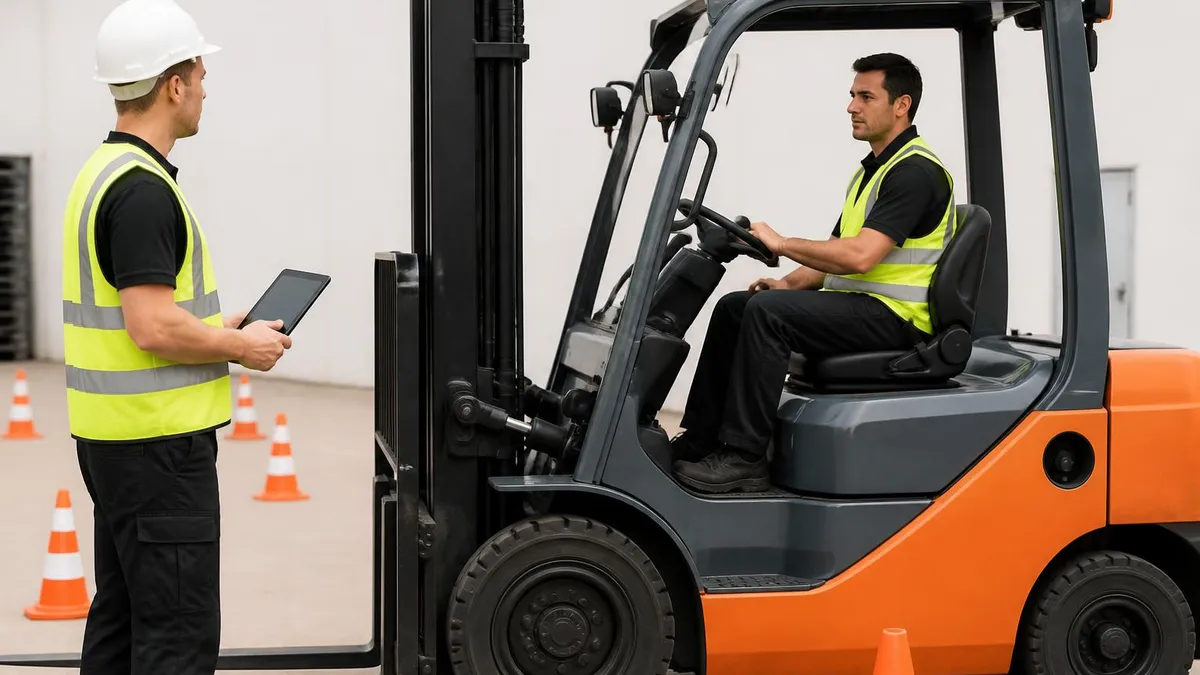
Forklift Safety Training: Complete OSHA Compliance Guide for Operators and Employers
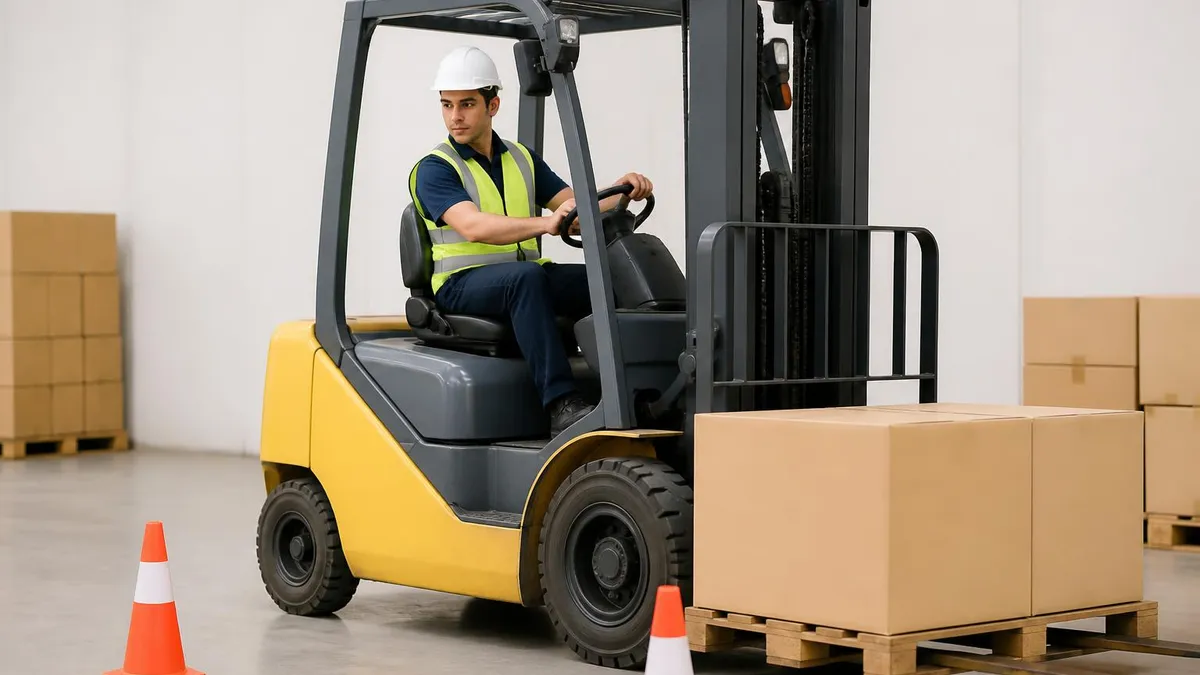
Forklift Repair Service: Complete Guide to Costs, Common Repairs, and Choosing the Right Technician
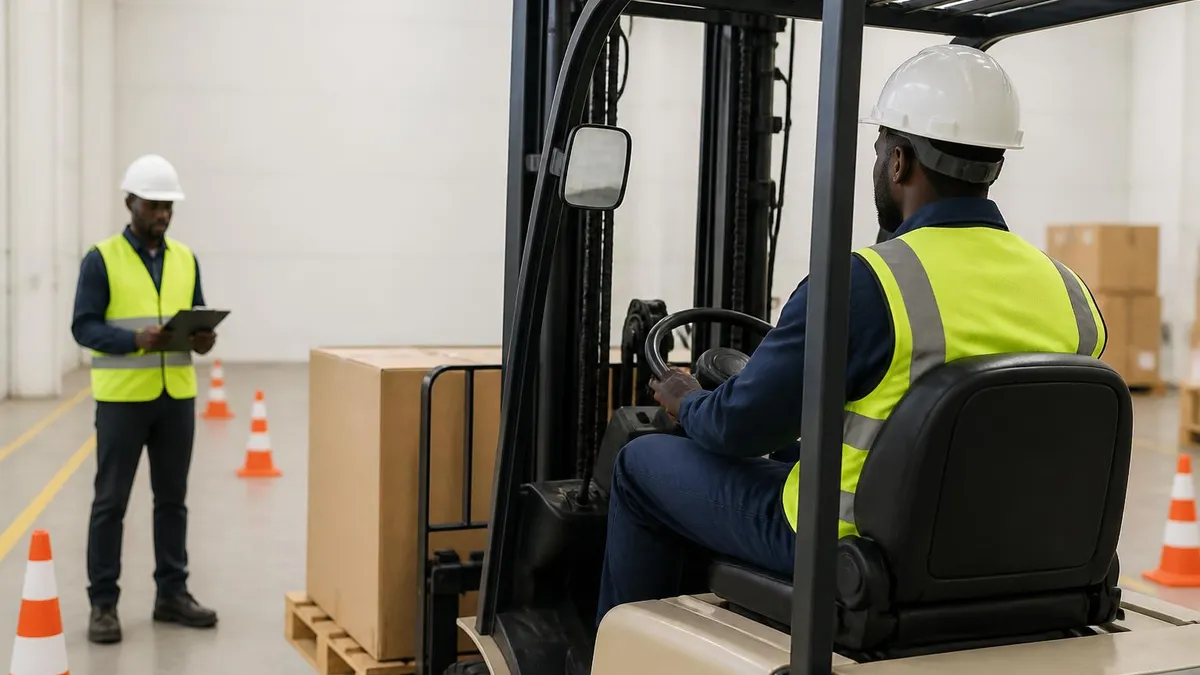
Forklift Certification by State: Complete 50-State Guide to OSHA-Compliant Operator Training, Costs, and Renewal Requirements
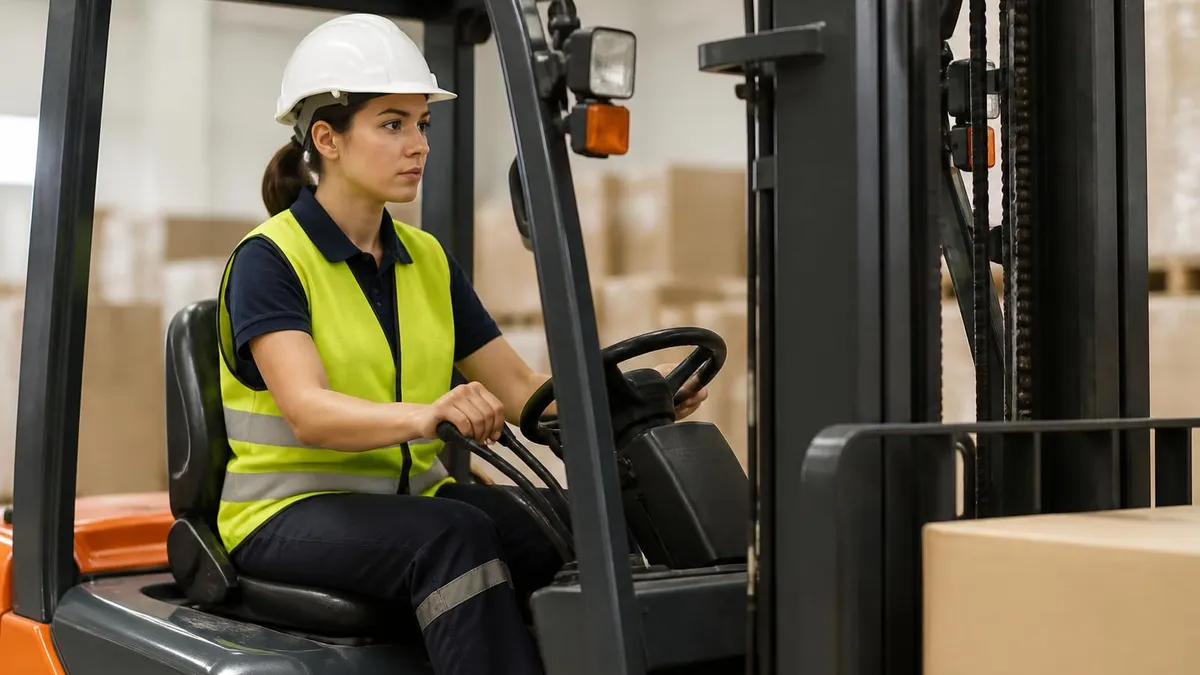
Forklift Price Guide 2026: New, Used, Rental, and Total Cost of Ownership Breakdown
About the Author

Certified Crane Operator & Skilled Trades Exam Specialist
Ferris State UniversityRobert Martinez is a Journeyman Ironworker, NCCCO-certified crane operator, and forklift trainer with a Bachelor of Science in Construction Technology from Ferris State University. He has 21 years of ironworking, rigging, and heavy equipment operation experience across high-rise and industrial construction sites. Robert prepares candidates for crane operator, rigger, forklift, and skilled trades certification examinations.