
How Hard Is It to Get Forklift Certified? Complete Study Guide for 2026 September
How hard is it to get forklift certified? 🎓 Complete 2026 September guide covering training, exam difficulty, costs, and tips to pass on your first attempt.

If you've been asking yourself how hard is it to get forklift certified, the honest answer is: it's more manageable than most people expect, but it demands genuine preparation. Forklift certification combines a written knowledge exam with a hands-on practical evaluation, and both portions must be passed before an employer or third-party trainer can legally declare you a qualified forklift operator under OSHA's 1910.178(l) standard. Most candidates who study consistently for one to two weeks pass on their first attempt, making this one of the more accessible skilled-trade credentials available in the United States today.
The written portion of forklift training covers a surprisingly broad range of topics. You'll need to understand load capacity principles, stability triangles, pre-operation inspection checklists, refueling and battery-charging procedures, pedestrian safety protocols, and the specific hazards associated with the type of equipment you'll be operating — whether that's a counterbalanced sit-down unit, a stand up forklift, a reach truck, or an electric forklift. The written exam typically runs 30 to 50 questions and is administered by your employer or training provider. Scores of 70–80% or higher are usually required to proceed to the practical evaluation.
The practical skills component is where many candidates feel the most nervous, but it's also where hands-on practice makes the biggest difference. Evaluators look for smooth load handling, proper mast tilt usage, safe travel speeds, correct turning radius management, and consistent pre-shift inspection habits. Operators who spend several hours in the seat before their evaluation — even on a forklift rental unit or a training simulator — dramatically outperform those who try to wing it. Seat time is not optional; it's the most direct predictor of practical exam success.
Cost is another factor people weigh when deciding whether to pursue certification of forklift. Employer-sponsored training is free to the employee in most cases, though you sacrifice some scheduling flexibility. Third-party forklift training programs typically run $150 to $400 per person for a full-day course that includes both the written exam and the practical evaluation. Online knowledge-only courses are cheaper — sometimes under $100 — but they must still be paired with a hands-on skills assessment conducted by a qualified evaluator at your worksite.
One important distinction that surprises many first-timers: OSHA does not issue a universal forklift license or a wallet card that works everywhere. Certification is site-specific and equipment-specific. That means if you're certified on a counterbalanced propane forklift at one warehouse, you'll need a separate evaluation before operating a different class of equipment or working at a new facility. This site-specific model keeps safety standards high but also means experienced operators sometimes go through refresher evaluations more often than they anticipate.
Understanding the landscape — from forklift rentals and ownership options to the specifics of how certification works across equipment classes — can help you plan your training path far more effectively. Whether you're a first-time candidate trying to break into warehouse logistics or an experienced operator brushing up on regulations, knowing what to expect at each stage removes the guesswork and lets you focus your study time where it counts. The sections below walk through every phase of the process in detail, with study tips, cost breakdowns, and practice strategies drawn from real certification programs across the country.
For a broader look at the equipment side of things, including what operators typically encounter in the field, our guide on how hard is forklift certification covers rental options and operator requirements side by side, giving you useful context before your training begins.
Forklift Certification by the Numbers

Forklift Certification Study Schedule
- ▸Read OSHA 29 CFR 1910.178(l) — the governing standard for powered industrial trucks
- ▸Study the seven OSHA forklift classes (Class I–VII) and identify which class you'll be operating
- ▸Learn the stability triangle concept and how load weight, height, and mast tilt affect tip-over risk
- ▸Memorize the components of a pre-operation inspection: fluid levels, forks, mast, tires, lights, horn, and safety devices
- ▸Take one full practice exam to establish your baseline score
- ▸Study refueling and battery-charging safety procedures for propane, diesel, and electric forklifts
- ▸Review pedestrian safety rules: speed limits, blind corners, loading dock protocols, and floor marking systems
- ▸Practice identifying overloading scenarios using sample capacity plates and load charts
- ▸Log at least 4–6 hours of supervised seat time on the equipment type you'll be evaluated on
- ▸Complete two full timed practice exams and review every wrong answer
- ▸Run through the practical skills checklist with a qualified trainer or supervisor the day before your evaluation
The written portion of the forklift operator exam is the first formal hurdle most candidates face, and understanding exactly what it tests is the fastest way to cut your study time without sacrificing your score. Across virtually every accredited forklift training program in the United States, the knowledge exam is organized around a consistent set of topic categories that mirror the requirements spelled out in OSHA's powered industrial truck standard. Knowing those categories in advance lets you allocate your preparation hours strategically rather than reading everything and hoping for the best.
Load handling principles make up one of the largest portions of the written exam. You'll be expected to understand how to read a capacity plate, which specifies the maximum weight a forklift can safely carry at a given load center distance — typically 24 inches from the face of the forks.
Many exam questions present scenarios where the load center shifts due to an unusually long, wide, or unevenly distributed load, and you must determine whether the lift remains within safe operating limits. Getting comfortable with these calculations is essential because OSHA inspectors and evaluators frequently probe this area during both written and practical assessments.
Pre-operation inspection procedures form another significant exam topic. OSHA requires operators to conduct a documented inspection before each shift, checking items including hydraulic fluid levels, tire condition, fork wear and bending, mast chain lubrication, brake function, horn operability, and all safety devices such as overhead guards and load backrest extensions.
Exam questions in this area often present a list of inspection findings and ask candidates to identify which conditions require the forklift to be removed from service before operation. Learning the threshold conditions — when a crack in a fork, a low fluid reading, or a worn tire crosses the line from a monitor-and-report issue to a pull-from-service requirement — is where many candidates gain or lose critical points.
Hazard recognition questions test whether candidates can identify unsafe operating conditions in realistic warehouse and industrial settings. These scenarios commonly involve pedestrian traffic management, spotting blind corners, negotiating ramps and dock plates, operating in areas with overhead obstructions, and recognizing floor surface hazards such as oil spills or soft ground.
Questions about traveling with an elevated load — a surprisingly common violation in real-world settings — appear on nearly every practice exam. OSHA is explicit: forks must be lowered to travel position (6–10 inches above the ground) and the mast tilted back before moving, whether the forks are loaded or empty.
Electric forklifts and alternative power systems get increasing attention on modern forklift training exams as warehouses shift away from internal combustion equipment. Battery-powered forklifts have different refueling procedures than propane or diesel units, and exam questions reflect that difference.
Candidates need to know safe battery changing procedures, proper charging area ventilation requirements (hydrogen gas vents during charging), watering schedules for flooded lead-acid batteries, and the meaning of battery state-of-charge indicators. Many facilities that use electric forklifts now also have stand up forklift models — reach trucks, order pickers, and turret trucks — and each class has its own handling characteristics that may appear in written questions.
Regulatory and documentation questions round out most written exams. These cover operator training record requirements (OSHA mandates that training records be maintained for each certified operator), the employer's responsibility to evaluate each operator's performance at least every three years, and the conditions under which refresher training is required immediately — such as after an accident, a near-miss, an unsafe operation observation, or a change in work conditions or equipment. Candidates sometimes underestimate this section, but it's heavily weighted because regulatory compliance is exactly the domain where employers face OSHA citations and fines.
One practical study strategy that works exceptionally well for the written exam is focusing on the WHY behind each rule rather than rote memorization of the rule itself. When you understand that the mast must be tilted back and forks lowered during travel because a raised load raises the forklift's center of gravity and dramatically reduces stability, the rule becomes intuitive rather than arbitrary.
This understanding also makes it easier to answer scenario-based questions you've never seen before, because you can reason from principles rather than pattern-matching to a memorized answer. Combine conceptual understanding with consistent practice testing, and the written exam becomes far more straightforward than most candidates initially fear.
Forklift Training by Equipment Type
Counterbalanced sit-down forklifts — the classic three- and four-wheel propane, diesel, or electric models most people picture when they think of forklifts — are the most common type you'll encounter in warehouses, manufacturing plants, and lumber yards. Certification training for this class focuses on load capacity calculations using standard 24-inch load centers, proper mast tilt technique, turning radius awareness in tight spaces, and dock loading procedures. Most entry-level forklift operator jobs use Class I or Class IV/V equipment, so this is often the best starting point for new candidates.
Practical evaluation on counterbalanced equipment typically involves a course that tests your ability to pick up a loaded pallet from floor level, transport it through a simulated aisle, place it on a rack at a specified height, retrieve it, and return to the starting position — all while demonstrating safe speeds, proper horn usage at intersections, and correct travel posture with forks lowered. Evaluators mark you on smooth hydraulic control, accurate placement within rack tolerances (usually within 2–3 inches), and the absence of unsafe behaviors like sudden stops with elevated loads.

Is Forklift Certification Worth the Effort?
- +Median forklift operator wages exceed $20/hour nationally, with experienced operators in distribution centers earning $25–$30/hour
- +Certification opens doors across multiple industries including warehousing, manufacturing, construction, retail, and agriculture
- +OSHA-compliant training is often employer-sponsored and costs the employee nothing out of pocket
- +The credential can be earned in as little as one full training day, making it one of the fastest skilled-trade certifications available
- +Certified operators face far lower risk of workplace injury, reducing lost-time incidents that derail careers and income
- +Forklift skills transfer broadly — a certified operator can pursue roles involving forklift rental fleet management, training coordination, or safety supervision
- −Certification is site-specific and equipment-specific under OSHA rules, requiring re-evaluation when changing employers or equipment classes
- −Recertification every three years (or sooner after incidents) adds recurring time and cost commitments throughout your career
- −Physical demands are real — long shifts in the seat, vibration exposure, and repetitive load movements can cause cumulative strain injuries
- −Employers in some sectors pay only marginally more for certified operators compared to general warehouse roles, limiting wage upside in certain markets
- −Access to hands-on practice equipment for self-directed learners can be difficult without employer support or enrollment in a formal program
- −Outdoor and rough-terrain roles may require additional class certifications beyond the standard counterbalanced endorsement, adding time and cost
Forklift Operator Certification Prep Checklist
- ✓Confirm which OSHA equipment class (I–VII) applies to the forklift you'll be evaluated on
- ✓Obtain and read your employer's or training provider's specific written exam topic list before studying
- ✓Complete at least two full-length forklift practice exams under timed conditions and review every incorrect answer
- ✓Memorize the capacity plate reading process — load weight, load center, and attachment derating factors
- ✓Practice the full pre-operation inspection sequence until you can complete it from memory without a checklist
- ✓Log a minimum of 4 hours of supervised hands-on seat time on the specific equipment type before your practical evaluation
- ✓Review pedestrian right-of-way rules and learn your facility's specific floor marking and signal systems
- ✓Study battery and refueling safety for the power type (propane, diesel, or electric) on your equipment
- ✓Confirm your training records will be properly documented and retained by your employer or training provider
- ✓Schedule your practical evaluation only after your trainer confirms you're consistently passing the pre-evaluation skills walkthrough

Site-Specific Rules Change Everything
OSHA does not issue a universal forklift license. Every certification is tied to a specific employer, a specific worksite, and a specific class of equipment. If you change jobs or start operating a different forklift class, your existing certification does not automatically transfer — you must complete a new practical evaluation. Plan accordingly whenever you change roles or facilities.
Understanding the full cost picture of forklift certification helps candidates and employers plan budgets realistically and avoid surprises. The total investment varies significantly depending on whether training is employer-sponsored, delivered through a third-party provider, or self-directed through an online platform — but every legitimate path must include both a knowledge component and a hands-on practical evaluation conducted at the worksite by a qualified trainer. No online-only course, regardless of price or branding, satisfies OSHA's full certification requirement on its own.
Employer-sponsored forklift training is the most common and most cost-effective route for candidates already working in warehousing, manufacturing, or logistics. Under this model, the employer designs or purchases a training program, schedules sessions during work hours, and uses existing equipment for the practical evaluation. The total out-of-pocket cost to the employee is typically zero, though candidates may be asked to complete pre-reading or online modules on their own time before the in-person session. Employers benefit because they control the program content, can tailor scenarios to their specific equipment and site hazards, and maintain complete documentation for OSHA compliance purposes.
Third-party forklift training providers charge $150 to $400 per person for a full-day course that covers written instruction, a knowledge exam, and a practical skills evaluation. Group rates are often available when an employer sends multiple employees at once — some providers offer per-person discounts of 20–30% for groups of five or more. These courses are particularly useful for small businesses that lack the internal training infrastructure to run compliant programs independently, as well as for job seekers who want to arrive at an interview already certified rather than depending on employer-sponsored training after hire.
Online knowledge-only courses represent the budget end of the market, with prices ranging from $49 to $150. These platforms deliver video instruction, written content, and multiple-choice exams that candidates complete at their own pace from any device.
The certificate of completion you receive from an online provider is a documentation tool, not a standalone OSHA certification — it must be paired with a hands-on practical evaluation conducted by a qualified person at your actual worksite. Employers who use online knowledge courses for the written component still need an on-site trainer to administer the practical skills assessment and sign off on the final certification paperwork.
Renewal and recertification timelines add an ongoing cost consideration that many first-time candidates overlook. OSHA requires operators to be re-evaluated at least every three years under normal circumstances, and more frequently if an operator is observed operating unsafely, is involved in an accident or near-miss, receives an assignment involving different equipment or operating conditions, or if a supervisor determines that retraining is needed.
Renewal programs are typically shorter and less expensive than initial certification — often half a day and $75 to $150 — but they must still include both a knowledge review and a practical evaluation component to remain compliant.
Forklift for sale listings and forklift rental near me searches often surface equipment prices that influence training decisions for small businesses. A new counterbalanced forklift runs $20,000 to $50,000 new, while used units can be found for $5,000 to $15,000. Businesses that use a forklift rental or forklifts on short-term leases sometimes underestimate the training costs associated with renting, since rental agreements don't always include operator certification — the renting company must ensure all operators are certified before using the rented equipment, which may require last-minute third-party training scheduling at premium rates.
For operators pursuing careers across multiple facilities or equipment types, the cumulative training investment over a five-year period can reach $500 to $1,500 when all initial training, renewals, and equipment-class endorsements are counted. That figure looks different when compared against the wage premium certified operators command — often $3 to $7 per hour more than uncertified warehouse workers in the same facility. At 40 hours per week, a $4/hour wage premium generates over $8,000 in additional annual income, making even the highest-end training investment pay back within the first month of employment.
Many online platforms sell forklift training certificates that look official but do not satisfy OSHA's full certification requirement. A valid OSHA-compliant certification must include a hands-on practical evaluation conducted at your actual worksite on the specific equipment you'll operate. If your training provider cannot offer or facilitate that practical evaluation, you are not fully certified — and operating a forklift without valid certification exposes both you and your employer to serious legal and financial consequences.
The practical skills evaluation is where forklift certification becomes real, and many candidates who breeze through the written exam find themselves more challenged by the hands-on component than they expected. The evaluation is designed not just to confirm that you can move a forklift without crashing into anything, but to verify that your operating habits are consistently safe under realistic conditions — including situations where taking a shortcut might seem tempting.
Evaluators are specifically trained to watch for the subtle unsafe behaviors that experienced operators sometimes develop over time, and they're just as likely to dock points for skipping a horn signal at a blind corner as for a dramatic near-miss.
A typical practical evaluation course involves a series of tasks that simulate real warehouse or industrial operations. You'll usually be asked to perform a complete pre-operation inspection of the forklift before the evaluation formally begins — evaluators who see a candidate skip this step or rush through it know immediately that reinforcement training is needed.
After the inspection, the evaluation moves through a sequence that commonly includes picking a loaded pallet from a designated floor position, transporting it through a simulated aisle that may include turns, a narrowed section, and a simulated pedestrian crossing, and placing the pallet at a specified rack location at a height determined by the evaluator.
Load placement accuracy is evaluated against specific tolerances. At floor level, most programs require you to place the pallet within 6 inches of a target marker. At elevated positions — particularly above 8 feet — the tolerance often tightens to 2–3 inches, because imprecise placement at height creates fall hazards for stored product and personnel below. Candidates who develop the habit of using the mast tilt indicator and fork height indicator together, rather than relying purely on visual estimation, consistently achieve better placement accuracy across all height ranges during their evaluations.
Travel habits are continuously observed throughout the practical course, not just during the formal load-moving sequences. Evaluators watch whether you automatically lower the forks to travel position after every load placement, whether you sound the horn at every marked intersection regardless of whether anyone appears to be present, whether you look in the direction of travel when reversing (which means looking over your shoulder, not into the rearview mirror alone), and whether you come to a complete stop before changing direction between forward and reverse.
These small procedural habits are the difference between operators who eventually cause incidents and those who accumulate years of safe operation.
One of the most common reasons candidates fail the practical evaluation is attempting to operate at a pace they're not yet comfortable controlling. The practical evaluation is not timed in most programs — there's no bonus for finishing the course in fewer minutes.
Evaluators consistently report that candidates who rush load placements to demonstrate confidence end up making positioning errors, knocking over rack markers, or performing unstable turns that would be unsafe with real racking and real inventory. Operating smoothly and safely at a moderate pace always scores better than fast-and-sloppy, and evaluators can tell within the first few minutes of observation which candidates genuinely internalized that principle during training.
Post-evaluation documentation is the final step of the certification process and is often handled entirely by the training provider or employer, but candidates should understand what should be in their file. OSHA requires that training records include the operator's name, the date of training and evaluation, the name of the person who performed the evaluation, and the type of equipment covered by the certification.
These records must be retained by the employer and made available for OSHA inspection upon request. If you're getting certified through a third-party provider, ask for a copy of your evaluation record for your own files — it's a useful document to present to future employers who may want to confirm your certification history before scheduling their own site-specific evaluation.
Candidates who treat the practical evaluation as a performance rather than a demonstration of ingrained habits tend to underperform, because they're consciously thinking through each step rather than executing from muscle memory. The goal of your hands-on practice sessions in the week before your evaluation should be to make safe operating habits feel automatic — so that when you're being watched, your default behavior is already compliant. That's the preparation mindset that consistently produces first-attempt passes, and it's the same principle that separates operators with excellent long-term safety records from those who eventually have an incident.
Building a practical preparation strategy for forklift certification requires thinking about both the knowledge side and the physical side of the credential simultaneously, rather than treating them as separate tasks you'll address one after the other. The most successful candidates integrate written study and hands-on practice throughout their preparation period, using each to reinforce the other.
When you read about the stability triangle in your study materials, you'll understand it more deeply if you've already felt what happens to the forklift's handling when you raise a load on a slight grade. When you practice emergency stops during seat time, you'll retain the stopping-distance guidelines from your written materials more vividly.
Practice testing is the single most reliable written exam preparation tool available to forklift candidates. Multiple studies of professional certification programs across industries consistently show that candidates who complete five or more full-length practice exams before their actual test score significantly higher than those who rely on passive reading alone.
Practice exams work because they force active recall — retrieving information from memory rather than re-reading it — which builds stronger retention and makes it easier to recognize correct answers under timed exam conditions. The practice questions available on platforms like PracticeTestGeeks are built specifically around the topics that appear most frequently on real forklift certification exams, including load capacity scenarios, inspection checklists, and hazard recognition situations.
On the day of your practical evaluation, arrive early enough to walk the course before you operate on it. Many training programs allow candidates to observe the evaluation course or walk it on foot before the session formally begins, and this opportunity is worth taking.
Walking the course lets you identify tight turns, narrow sections, and any unmarked hazards that might catch you off guard during operation. It also gives you a chance to confirm where the pedestrian crossing markers, intersection horn-signal points, and rack placement targets are located — so during the evaluation itself, you can focus entirely on operating technique rather than navigation.
Managing evaluator communication is a skill that candidates sometimes overlook. If you're uncertain about a task instruction during your practical evaluation — for example, if you're not sure whether the evaluator wants the pallet placed at the second or third beam level — ask for clarification before you make a move you might need to reverse.
Evaluators consistently report that candidates who ask clear, concise questions before acting score better than candidates who guess and commit to a wrong position. Requesting clarification demonstrates situational awareness and communication skills, both of which are genuine markers of a safe and professional forklift operator.
After you pass your certification evaluation, invest ten minutes reviewing your evaluator's feedback regardless of your score. Evaluators typically note the areas where your technique was strong and the areas where they'd recommend continued practice. Even if you passed comfortably, those notes tell you where your habits are least consistent — and those are the areas where future incidents are most likely to originate.
Treating your evaluation feedback as a professional development tool rather than just a pass-fail verdict is a habit that distinguishes operators who maintain excellent safety records over multi-year careers from those who pass the initial certification and then gradually let safety habits slip.
If you're planning to pursue certification across multiple equipment classes — for example, starting with a counterbalanced sit-down unit and adding a stand up forklift endorsement later — build your class sequence logically. Start with the class you'll use most frequently in your immediate job role, get comfortable with it, and then expand.
Trying to learn multiple equipment types simultaneously during initial training overloads your cognitive bandwidth and often results in weaker practical skills on all classes compared to focusing on one class first. The sequential approach also gives you a stronger foundation of core forklift principles before you encounter the more class-specific handling characteristics of specialty equipment.
Finally, remember that forklift certification is not a one-and-done event but an ongoing professional responsibility. Build your recertification schedule into your career planning from day one — set a calendar reminder 90 days before your three-year renewal date so you have time to schedule training without rushing.
Operators who approach certification as a living professional credential, rather than a box to check once and forget, consistently report higher job satisfaction, stronger employer relationships, and better long-term safety records. That mindset shift — from certification as a hurdle to certification as a professional standard — is perhaps the most important preparation insight of all.
Forklift Questions and Answers
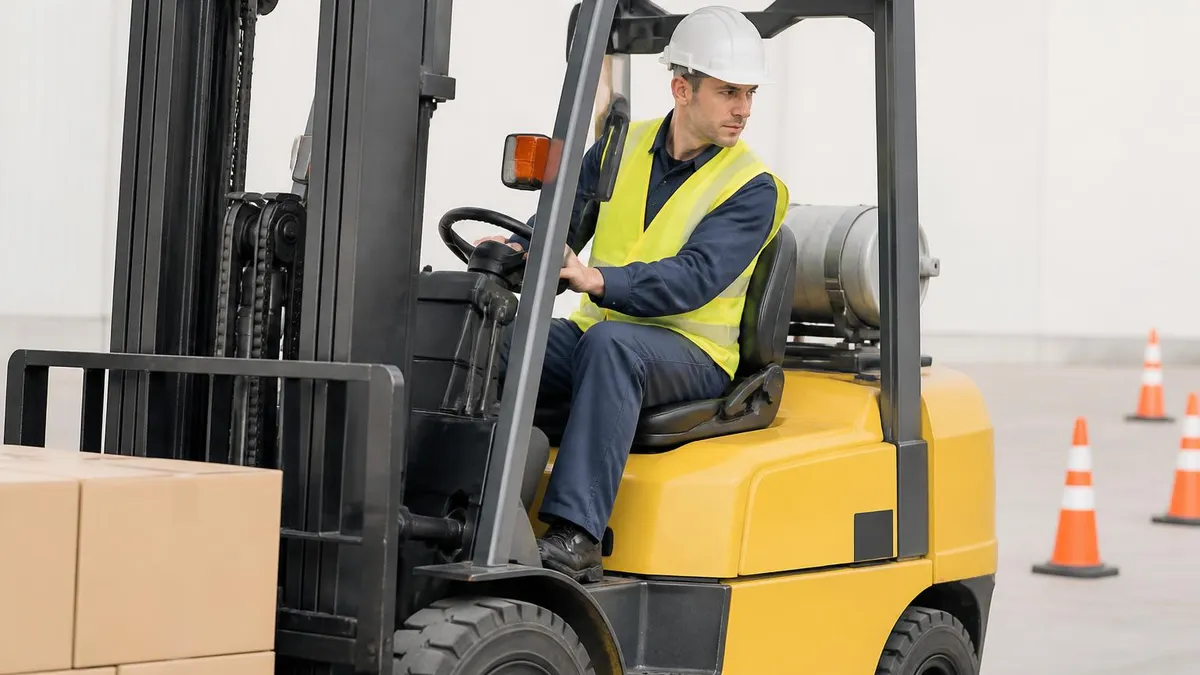
Forklift Rentals: Complete Guide to Pricing, Types, and Operator Requirements
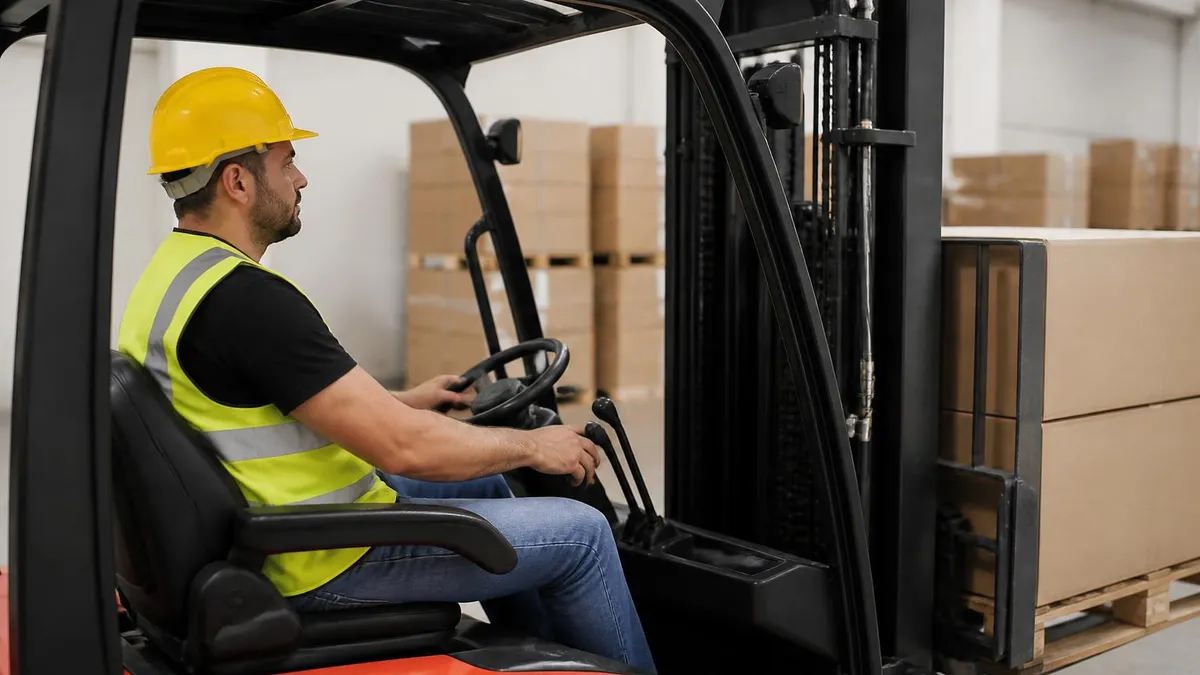
Forklift Hydraulic Fluid: Complete Guide to Types, Specifications, Change Intervals, and Troubleshooting for 2026
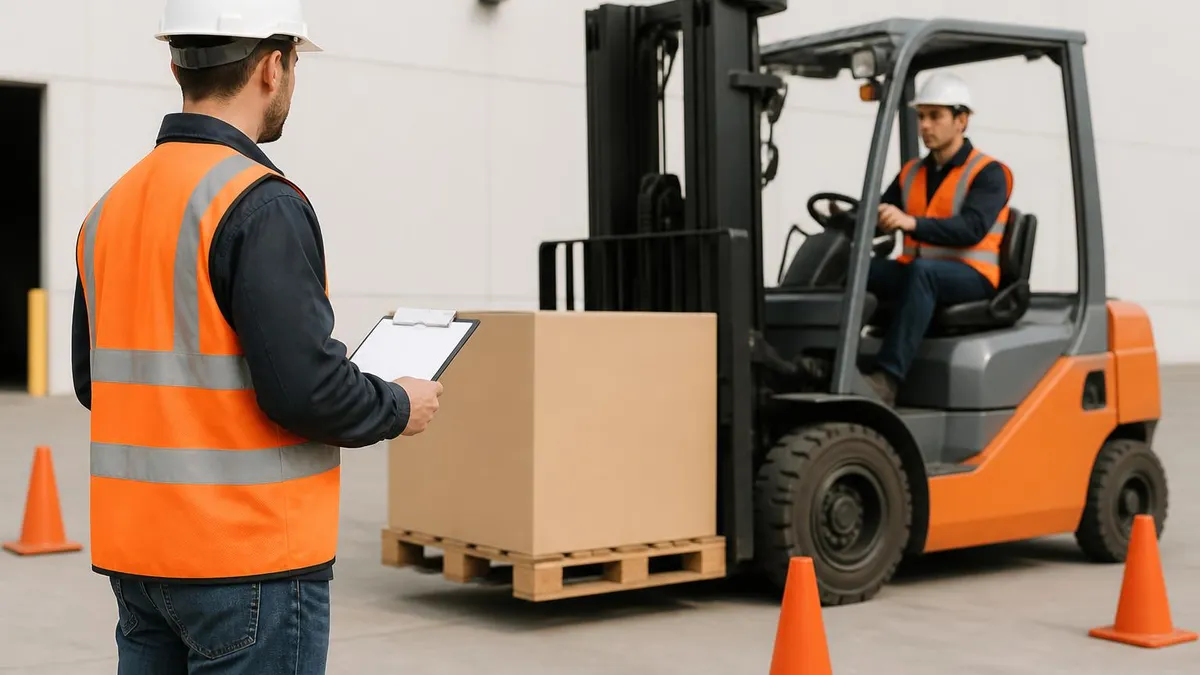
Forklift Parts and Maintenance: Complete Guide to Batteries, Chargers, and Replacement Components
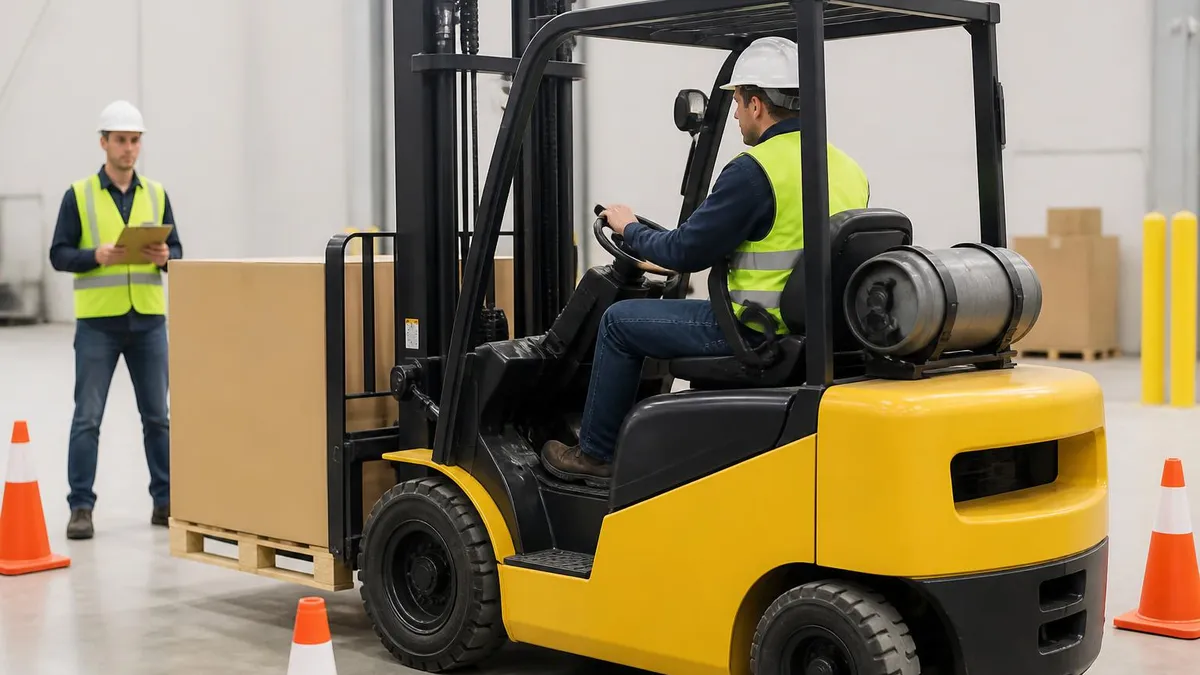
Big Forklift Guide: Heavy-Duty Lift Trucks, Capacity Classes, Rental Costs, and Operator Requirements
Forklift License Renewal: Complete Guide to Forklift License Expiry, OSHA Recertification, and Operator Requirements for 2026
About the Author

Certified Crane Operator & Skilled Trades Exam Specialist
Ferris State UniversityRobert Martinez is a Journeyman Ironworker, NCCCO-certified crane operator, and forklift trainer with a Bachelor of Science in Construction Technology from Ferris State University. He has 21 years of ironworking, rigging, and heavy equipment operation experience across high-rise and industrial construction sites. Robert prepares candidates for crane operator, rigger, forklift, and skilled trades certification examinations.