
ECMO Pump: How the Extracorporeal Membrane Oxygenation Circuit Works
Learn how the ECMO pump works, extracorporeal membrane oxygenation in neonates, adults, and COVID-19. Circuit, costs, and clinical uses explained. ✅

The ecmo pump is the mechanical heart of a life-support system that has saved tens of thousands of critically ill patients who would otherwise have had no remaining treatment options. Extracorporeal membrane oxygenation in neonates and adults relies on a precisely engineered circuit that removes blood from the body, adds oxygen, removes carbon dioxide, and returns the blood — all while the patient's own heart and lungs rest and recover. Understanding how this pump works is essential for nurses, respiratory therapists, perfusionists, and anyone pursuing ECMO certification.
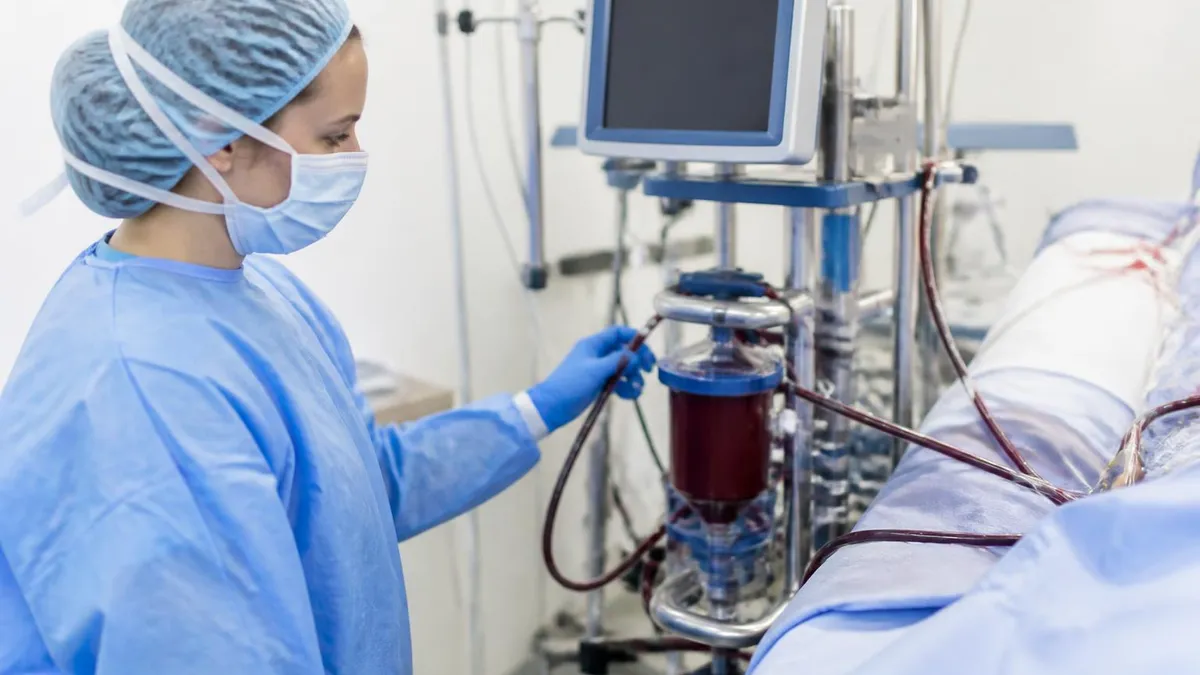
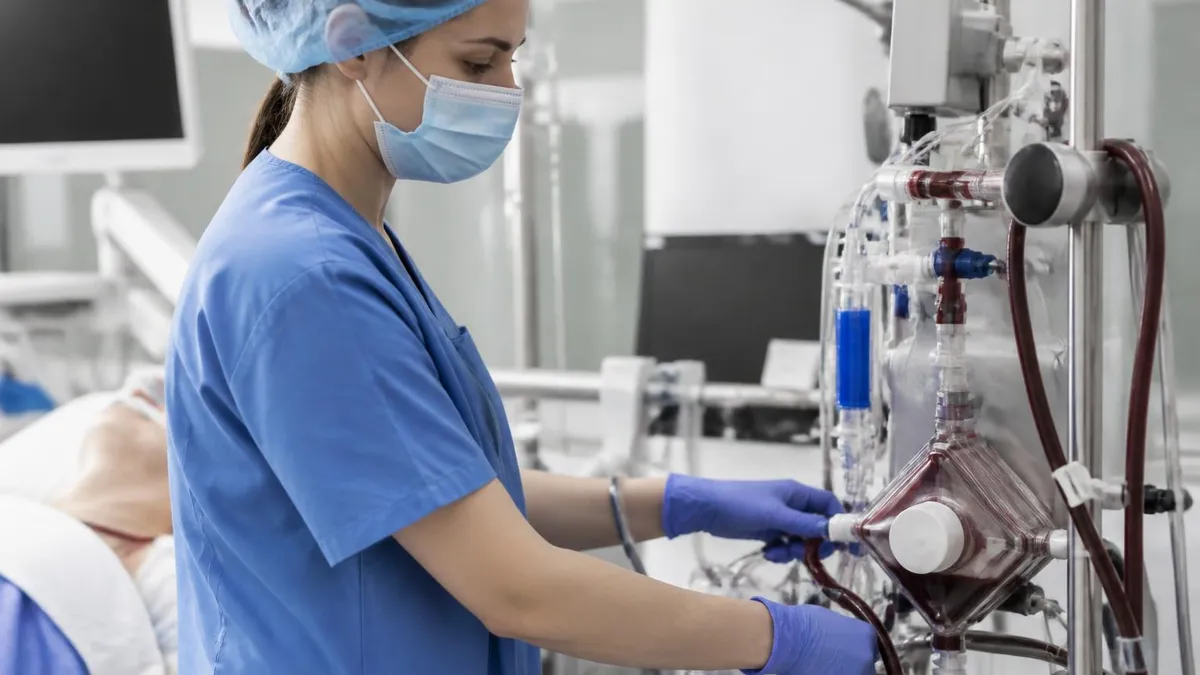
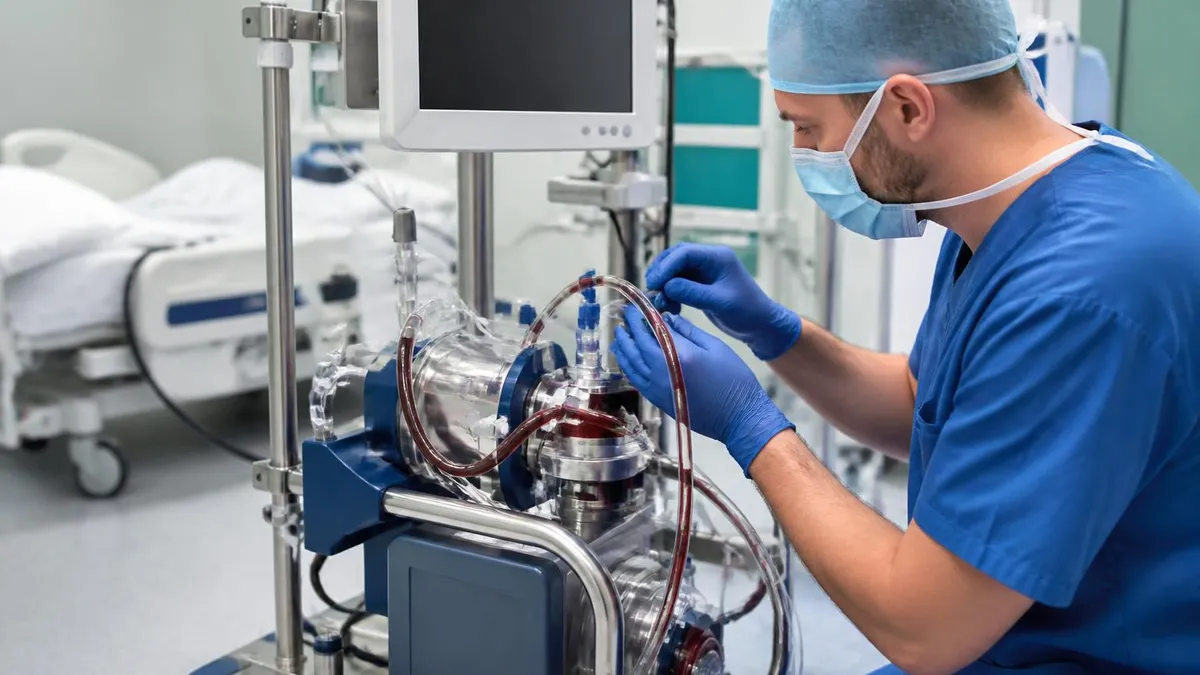
The ECMO pump itself is typically a centrifugal or roller device that generates continuous flow through the extracorporeal circuit. Centrifugal pumps have largely replaced roller pumps in modern ECMO programs because they generate less hemolysis, respond more safely to circuit occlusions, and produce smoother flow patterns at typical clinical flow rates between 1 and 7 liters per minute. The choice of pump type affects virtually every other clinical decision, from anticoagulation targets to circuit monitoring frequency.
Extracorporeal membrane oxygenation treatment is delivered through two primary circuit configurations. Venovenous extracorporeal membrane oxygenation, commonly called VV ECMO, supports only respiratory function and is widely used for severe ARDS, COVID-19, and neonatal respiratory distress syndrome. Venoarterial ECMO, or VA ECMO, supports both cardiac and pulmonary function and is reserved for cardiogenic shock, cardiac arrest, and myocarditis. Selecting the correct configuration at the bedside is one of the most critical clinical decisions an ECMO team makes.
The extracorporeal membrane oxygenation circuit includes several interconnected components beyond the pump itself. These include drainage and return cannulas, tubing made from biocompatible polymers, a membrane oxygenator that performs the gas exchange function, a heat exchanger to maintain normothermia, flow probes, pressure monitors, and various clamps, connectors, and sampling ports. Each component must be primed, inspected, and monitored continuously throughout the ECMO run, which can last anywhere from hours to weeks depending on the indication.
Extracorporeal membrane oxygenation in neonates is one of the oldest established ECMO indications. The technique was pioneered in the 1970s and 1980s for neonates with persistent pulmonary hypertension of the newborn, meconium aspiration syndrome, congenital diaphragmatic hernia, and respiratory distress syndrome unresponsive to conventional ventilation. Neonatal ECMO runs are typically venoarterial, use smaller cannulas, and require careful attention to flow rates calibrated to the infant's size and weight, often calculated at 100–150 mL per kilogram per minute.
The clinical indications for extracorporeal membrane oxygenation have expanded dramatically over the past two decades. Respiratory ECMO has been used for influenza-related ARDS, smoke inhalation injuries, pulmonary embolism, and most recently during the COVID-19 pandemic when a subset of patients developed refractory hypoxemia despite prone positioning and lung-protective ventilation. Cardiac ECMO indications include decompensated cardiomyopathy, post-cardiotomy shock, and as a bridge to heart transplantation or implantable ventricular assist devices.
For healthcare professionals preparing for the ECMO Specialist certification examination administered by the Extracorporeal Life Support Organization (ELSO), mastery of pump mechanics, circuit troubleshooting, anticoagulation management, and patient monitoring is non-negotiable. The exam draws heavily from the ELSO Red Book guidelines and tests knowledge across neonatal, pediatric, and adult ECMO applications. This article explores each key aspect of the ECMO pump and extracorporeal membrane oxygenation procedure to help clinicians build a solid foundation of knowledge.
ECMO by the Numbers

How the ECMO Circuit Works: Step-by-Step
Blood Drainage via Venous Cannula
Pump Generates Continuous Flow
Membrane Oxygenator Performs Gas Exchange
Heat Exchanger Maintains Temperature
Oxygenated Blood Returns to Patient
Continuous Monitoring and Titration
Venovenous extracorporeal membrane oxygenation is the configuration most commonly used for isolated respiratory failure. In VV ECMO, both the drainage and return cannulas are placed in the venous system — most often the right internal jugular vein for return and the right femoral vein for drainage, or a dual-lumen single cannula placed in the right internal jugular vein. Because VV ECMO does not provide direct cardiac support, it is appropriate only for patients who retain meaningful native cardiac output. When cardiac function is inadequate, VA ECMO or additional mechanical circulatory support is required.
The extracorporeal membrane oxygenation circuit in VV ECMO works by recirculating a portion of venous blood through the oxygenator and returning it to the right atrium or superior vena cava, where it mixes with deoxygenated blood from the patient's venous return before entering the right ventricle. This mixing phenomenon, known as recirculation, is a key concept for ECMO specialists to master. Recirculation reduces the effective oxygenation efficiency of the circuit and can be minimized by optimizing cannula positioning, maintaining adequate distance between drainage and return cannula tips, and managing the patient's volume status carefully.
Venoarterial ECMO is more complex and carries higher procedural risk, but it provides both respiratory and hemodynamic support simultaneously. In central VA ECMO, cannulas are placed directly into the right atrium and aorta, typically in the operating room during cardiac surgery.
In peripheral VA ECMO, which is more commonly placed at the bedside or in the catheterization laboratory, the femoral vein is used for drainage and the femoral artery for return. Peripheral femoral-femoral VA ECMO carries risks of limb ischemia, retrograde aortic perfusion, and the north-south or Harlequin syndrome, in which the upper body receives poorly oxygenated native cardiac output while the lower body receives oxygenated ECMO blood.
Extracorporeal membrane oxygenation for adults with refractory cardiogenic shock has become more common as ECMO technology has improved and more centers have developed the multidisciplinary expertise to manage it safely. Adult patients on ECMO are typically managed by teams that include cardiac intensivists, perfusionists, cardiac surgeons, and ECMO-trained nurses and respiratory therapists. The decision to initiate VA ECMO in cardiogenic shock requires careful assessment of reversibility, the patient's functional status, and available downstream options such as cardiac transplantation or long-term ventricular assist devices.
Transition between ECMO configurations is sometimes necessary. A patient initially placed on VV ECMO for respiratory failure may develop cardiogenic shock and require conversion to VA ECMO or the addition of a second arterial return cannula to create a VVA configuration. Conversely, a patient on VA ECMO who recovers cardiac function but still has pulmonary failure may be transitioned to VV ECMO to reduce the risk of arterial complications. These transitions require careful hemodynamic planning, often performed in a hybrid operating room or interventional suite.
Weaning from the ECMO circuit is a gradual process that requires objective assessment of native organ recovery. For VV ECMO, weaning trials involve reducing sweep gas flow to assess the lungs' ability to maintain adequate gas exchange on conventional ventilator settings. For VA ECMO, cardiac recovery is assessed by gradually reducing pump flow while monitoring echocardiographic parameters such as left ventricular ejection fraction, aortic valve opening, and pulmonary artery pressures. Decannulation is performed when the patient demonstrates stable hemodynamics and gas exchange off or at minimal ECMO support.
Understanding the physiological differences between VV and VA configurations is critical for clinical decision-making and is heavily tested on the ECMO Specialist examination. The extracorporeal membrane oxygenation procedure differs significantly between these two modes in terms of cannulation technique, circuit management, anticoagulation targets, and potential complications. Candidates preparing for ELSO certification must be able to describe both configurations in detail, including the hemodynamic consequences of cannula malposition, recirculation, and unexpected changes in native cardiac output during a VV ECMO run.
Extracorporeal Membrane Oxygenation in Neonates, Adults, and COVID-19
Extracorporeal membrane oxygenation in neonates is indicated when the oxygenation index exceeds 40 on two consecutive blood gases, signaling that conventional mechanical ventilation is failing to support life. Common neonatal diagnoses include persistent pulmonary hypertension of the newborn, meconium aspiration syndrome, congenital diaphragmatic hernia, and respiratory distress syndrome. Neonates must weigh at least 2 kg and be at least 34 weeks gestation to be candidates, as smaller, more premature infants carry prohibitive risks of intracranial hemorrhage due to the anticoagulation required for ECMO.
VA ECMO is the predominant configuration in neonates because cardiac dysfunction frequently accompanies respiratory failure in this population. The right internal jugular vein and right common carotid artery are the standard cannulation sites. Carotid artery ligation is required for arterial cannula placement, and long-term outcomes studies have examined whether this causes neurological consequences. Most contemporary data suggest that neurodevelopmental outcomes are similar between carotid ligation and non-ligation groups when ECMO is appropriately indicated, though regular developmental follow-up remains standard practice at ELSO-affiliated centers.

Benefits and Risks of ECMO Support
- +Provides complete cardiopulmonary support when all conventional therapies have failed
- +Allows time for native lung and cardiac recovery without ventilator-induced injury
- +Enables ultra-protective ventilation with very low tidal volumes during ECMO
- +Can serve as a bridge to transplantation or long-term mechanical circulatory support
- +Well-established in neonatal populations with survival rates exceeding 75% for respiratory indications
- +Technology continues to improve with longer-lasting oxygenators and safer pump designs
- −Requires systemic anticoagulation that dramatically increases bleeding risk including intracranial hemorrhage
- −Circuit clotting, air embolism, and oxygenator failure are life-threatening emergencies
- −VA ECMO significantly increases cardiac afterload, which can worsen left ventricular distension
- −Cannulation carries procedural risks including vessel injury, hemorrhage, and infection
- −Requires 24/7 staffing by trained specialists at high-volume centers to achieve best outcomes
- −Extremely high cost — full ECMO runs routinely exceed $500,000–$1,000,000 in total hospital charges
Pros and Cons at a Glance
| Pros | Cons |
|---|---|
| Provides complete cardiopulmonary support when all conventional therapies have failed | Requires systemic anticoagulation that dramatically increases bleeding risk including intracranial hemorrhage |
| Allows time for native lung and cardiac recovery without ventilator-induced injury | Circuit clotting, air embolism, and oxygenator failure are life-threatening emergencies |
| Enables ultra-protective ventilation with very low tidal volumes during ECMO | VA ECMO significantly increases cardiac afterload, which can worsen left ventricular distension |
| Can serve as a bridge to transplantation or long-term mechanical circulatory support | Cannulation carries procedural risks including vessel injury, hemorrhage, and infection |
ECMO Circuit Monitoring Checklist for Bedside Specialists
- ✓Verify pump flow rate every hour and document against target flow prescription.
- ✓Check all circuit tubing, connectors, and clamps for cracks, clots, or fibrin deposits.
- ✓Confirm oxygenator inlet and outlet pressure differential to detect early membrane failure.
- ✓Assess cannula insertion sites for bleeding, hematoma, or signs of infection every four hours.
- ✓Verify ACT or anti-Xa levels are within protocol targets and adjust heparin infusion as needed.
- ✓Confirm heat exchanger water temperature is set and delivering target patient normothermia.
- ✓Review sweep gas flow rate and FiO2 against current arterial blood gas results.
- ✓Inspect all pressure alarm setpoints are active and within safe range for current flow.
- ✓Document arterial blood gas, SaO2, and SvO2 values and trend against ECMO flow changes.
- ✓Confirm distal limb perfusion in all VA ECMO patients with peripheral femoral arterial cannulas.
High Recirculation Fraction Reduces Oxygenation Efficiency
In venovenous ECMO, recirculation occurs when oxygenated blood returning to the venous system is immediately re-drained back into the circuit before reaching the right heart. A recirculation fraction above 30% significantly reduces the effective oxygen delivery to the patient. Clinicians can identify excessive recirculation when the venous drainage limb (pre-oxygenator) saturation is unexpectedly high — sometimes above 80% — in a patient with persistent hypoxemia despite adequate circuit flow and oxygenator function.
Anticoagulation management is arguably the most technically demanding aspect of ongoing ECMO care. All patients on ECMO require systemic anticoagulation to prevent clot formation within the circuit, which can cause oxygenator failure, pump thrombosis, and thromboembolic events in the patient. Unfractionated heparin is the most commonly used anticoagulant because of its short half-life, reversibility with protamine, and ability to be monitored at the bedside using activated clotting time (ACT) or anti-Xa assays. ACT targets typically range from 160 to 200 seconds, though protocols vary significantly between centers and patient populations.
ECMO pharmacology is a specialized field because the extracorporeal circuit alters the pharmacokinetics of virtually every drug administered to the patient. The circuit tubing, oxygenator membrane, and pump components sequester lipophilic drugs through adsorption, effectively reducing plasma concentrations. The large priming volume of the circuit dilutes water-soluble drugs when ECMO is first initiated. Additionally, altered perfusion physiology changes tissue distribution and clearance of medications. Sedatives such as fentanyl, midazolam, and propofol are particularly prone to significant circuit sequestration, requiring higher-than-expected doses to achieve adequate sedation.
Antibiotic dosing on ECMO is a persistent clinical challenge because standard weight-based dosing protocols may result in subtherapeutic levels. Studies have demonstrated that beta-lactam antibiotics, vancomycin, and antifungal agents such as voriconazole all exhibit altered pharmacokinetics on ECMO. Therapeutic drug monitoring with measured trough and peak levels is considered best practice. Similarly, neuromuscular blocking agents used to help ultra-protective ventilation during VV ECMO may require dose adjustments due to circuit sequestration and altered volume of distribution.
Bleeding complications are the most feared adverse events in ECMO patients. The combination of systemic anticoagulation, thrombocytopenia from platelet consumption on the circuit surface, acquired von Willebrand factor deficiency from shear stress in the pump, and coagulopathy from critical illness creates a pro-hemorrhagic state. Common bleeding sites include the cannulation sites, the upper and lower gastrointestinal tract, the pulmonary tract — particularly in patients with ARDS on mechanical ventilation — and most catastrophically, the intracranial compartment. Intracranial hemorrhage on ECMO carries mortality exceeding 80% and is a common reason for circuit discontinuation.
Thrombotic complications are the counterpart risk on ECMO. Despite anticoagulation, circuit clotting occurs regularly, particularly in oxygenators after seven or more days of use. Clot in the oxygenator is identified by visual inspection (dark streaks or fibrin deposits visible through the device casing), increasing pressure gradient across the oxygenator, and declining post-oxygenator PaO2. When oxygenator clotting is identified, the decision to change the circuit must be made urgently — full circuit exchanges are high-risk procedures that require a complete primed backup circuit to be available at all times in active ECMO centers.
Heparin-induced thrombocytopenia (HIT) on ECMO presents a particularly difficult clinical problem. When HIT is diagnosed or strongly suspected in an ECMO patient, heparin must be discontinued, but an alternative anticoagulant must be used immediately to prevent catastrophic circuit thrombosis. Bivalirudin is the preferred agent in most centers, dosed by infusion and monitored using aPTT or ecarin clotting time. Bivalirudin does not bind to the circuit and has a predictable half-life, making it well-suited for ECMO anticoagulation when heparin must be avoided. Argatroban is an alternative, though its hepatic metabolism requires dose adjustment in liver failure.
Pharmacology and drug management on ECMO is a dedicated content area on the ECMO Specialist certification examination and accounts for a meaningful proportion of exam questions. Candidates must understand the mechanisms by which the circuit alters drug behavior, know the monitoring parameters for heparin and alternative anticoagulants, and be able to identify and manage common bleeding and thrombotic complications. Mastery of these pharmacological principles distinguishes a knowledgeable ECMO specialist from a technician who can only maintain the circuit without understanding the systemic consequences of its use.

Intracranial hemorrhage is the most devastating bleeding complication of ECMO, occurring in approximately 4–7% of neonatal ECMO patients and a similar proportion of adults. It carries mortality exceeding 80% and is a primary reason for emergency circuit discontinuation. All ECMO centers should have protocols for routine neurological monitoring including cranial ultrasound in neonates, and for rapid head CT imaging in any ECMO patient who develops new neurological changes, unexplained hemodynamic instability, or a sudden drop in hematocrit.
The extracorporeal membrane oxygenation machine price is a significant consideration for hospitals evaluating whether to build or expand an ECMO program. The capital cost of a complete ECMO system — including the pump console, primary and backup oxygenators, tubing circuits, monitors, and ancillary equipment — typically ranges from $100,000 to $300,000 depending on the manufacturer and configuration. Major manufacturers include Maquet (now Getinge), Medtronic, LivaNova, and Xenios (Fresenius Medical Care). Each platform has different circuit components, alarm systems, and user interfaces that require specialized staff training.
Beyond capital equipment, the true cost of an ECMO program is driven by disposable circuit components, which are replaced every 7–21 days or more frequently if complications arise. A single ECMO circuit including oxygenator, tubing, and cannulas costs between $15,000 and $30,000 depending on configuration and manufacturer. ICU charges for the daily intensive nursing care, laboratory monitoring, blood products, medications, and physician management drive total hospitalization costs well above $500,000 for typical ECMO runs lasting one to three weeks. Complex cases requiring multiple circuit changes or prolonged support can exceed $1,000,000 in total hospital charges.
Hospital reimbursement for ECMO is primarily through Medicare MS-DRG codes, with ECMO-related DRGs providing among the highest reimbursement rates in the Medicare fee schedule. However, even with favorable reimbursement, the margin on ECMO cases is frequently thin or negative for hospitals without high volumes, given the staffing intensity required. Most health economists recommend that ECMO programs achieve a minimum of 20–30 cases per year to develop and maintain team competency, cover fixed program costs, and achieve acceptable patient outcomes benchmarked against ELSO registry standards.
The geographic distribution of ECMO centers in the United States is uneven. Dense urban areas with academic medical centers typically have ECMO capability within reasonable transport distance, while rural patients may require air transport of 100 miles or more to reach an ECMO-capable facility. Mobile ECMO — initiating ECMO at a referring hospital and transporting the patient while on ECMO support — has been developed at a small number of high-volume programs. Mobile ECMO transport requires specially trained teams, modified transport equipment, and carefully coordinated logistics, but it has expanded access to ECMO therapy for patients in under-resourced geographic areas.
International access to ECMO varies dramatically. In high-income countries, ECMO availability has grown substantially over the past decade, with more than 500 centers registered with ELSO worldwide as of 2024. In low- and middle-income countries, ECMO remains largely unavailable because of equipment costs, maintenance infrastructure requirements, the need for blood banking and advanced laboratory services, and the shortage of trained specialists. Global ECMO equity is an active area of discussion within the ELSO community, with efforts underway to develop simplified circuit designs and training programs suitable for resource-limited settings.
For institutions evaluating ECMO program development, the first step is typically formal needs assessment, followed by engagement with an experienced ECMO center for mentorship, and then a phased implementation beginning with the most straightforward indication — often neonatal or pediatric respiratory ECMO — before expanding to adult cardiac indications. Staff training, including simulation-based ECMO circuit management exercises, is considered mandatory before clinical program launch. ELSO publishes guidelines for center development that include minimum staffing ratios, equipment requirements, quality metrics, and registry participation expectations that frame best-practice program standards across the ECMO community globally.
Understanding the financial and logistical landscape of ECMO is valuable not only for hospital administrators but also for clinicians and ECMO specialists who must advocate for program resources, justify capital requests, and communicate with patients and families about what ECMO support entails.
The extracorporeal membrane oxygenation machine price is ultimately just one component of a much larger investment in infrastructure, people, and organizational commitment required to deliver safe and effective ECMO therapy in any clinical setting. Candidates preparing for the ECMO specialist exam benefit from understanding this broader programmatic context alongside the technical clinical details that make up the bulk of examination content.
Preparing for ECMO certification requires a systematic and sustained study approach that covers not only the technical aspects of circuit management but also the broad clinical knowledge required to support complex critically ill patients. The ELSO-endorsed ECMO Specialist certification examination tests knowledge across neonatal, pediatric, and adult applications, physiology, pathophysiology, circuit management, pharmacology, complications, and ethical considerations. Understanding the extracorporeal membrane oxygenation diagram — the flow of blood from patient through circuit and back — is the conceptual foundation on which all other knowledge rests.
Begin your study preparation by reading the ELSO Red Book, which is the comprehensive reference text for ECMO specialists. Organized by patient population and clinical topic, the Red Book covers indications, contraindications, cannulation techniques, circuit management, complications management, and weaning for neonatal, pediatric, and adult ECMO. Supplement the Red Book with your program's local ECMO protocols, which reflect institution-specific decisions about cannulas, anticoagulation targets, monitoring frequency, and escalation pathways that you will be tested on during clinical credentialing as well as external examinations.
Practice questions are one of the most effective tools for identifying knowledge gaps and building examination confidence. After reading foundational material, systematic practice across all content domains helps solidify understanding and reveals which areas require deeper review. Pharmacology and drug management is frequently cited by certification candidates as one of the most challenging domains because it requires integration of pharmacokinetic principles with circuit-specific drug behavior, something not covered in most standard pharmacy or medical education curricula. Dedicated pharmacology practice questions accelerate mastery in this domain.
Simulation training, where available, complements didactic study by building the procedural and decision-making skills required during real ECMO emergencies. High-fidelity ECMO simulations can reproduce circuit emergencies including air embolism, pump failure, oxygenator thrombosis, and decannulation scenarios. Studies consistently show that simulation training improves response time and accuracy during circuit emergencies in clinical practice. If your institution has a simulation center with ECMO capability, use it as part of your examination and clinical preparation strategy.
Clinical exposure is irreplaceable. Hours spent at the bedside managing actual ECMO patients — adjusting sweep gas, responding to flow alarms, assessing cannula insertion sites, reviewing coagulation results — build practical competence that no textbook alone can provide. Most ECMO programs require a minimum number of supervised ECMO clinical hours before credentialing candidates to practice independently. Use those supervised hours deliberately: ask your preceptors to explain the rationale behind every clinical decision, not just what to do but why, and how they would recognize when the situation is changing and a different approach is needed.
Group study with colleagues who are also preparing for ECMO certification can reinforce learning through discussion, peer teaching, and collaborative problem-solving of complex clinical scenarios. Teaching a concept to a peer is one of the most effective ways to identify gaps in your own understanding. Study groups work best when members divide content domains, prepare focused summaries, and quiz each other rather than simply reading together. Online forums and ECMO-specific professional communities can also connect candidates with experienced specialists who can answer questions about examination content and clinical practice nuances.
Finally, take care of yourself during your ECMO study preparation. ECMO specialists typically work demanding shifts in high-acuity environments, and adding intensive examination study on top of clinical work creates significant cognitive and emotional load. Build rest, exercise, and recovery time into your study schedule. Sleep deprivation profoundly impairs memory consolidation, which undermines the effectiveness of study time.
A well-rested, well-prepared candidate who studies consistently over weeks and months will outperform a candidate who tries to cram all preparation into the final days before the examination. Approach your ECMO certification with the same disciplined, systematic mindset you bring to managing your most complex patients at the bedside.
ECMO Questions and Answers
VV ECMO: Veno-Venous Extracorporeal Membrane Oxygenation Guide
ECMO Medical Abbreviation: What ECMO Stands For Complete Guide

ECMO Medical Term: Understanding Extracorporeal Membrane Oxygenation

VA ECMO Cannulation: Complete Guide to Veno-Arterial Extracorporeal Membrane Oxygenation
ECMO Cannulation: Techniques, Configurations, Sites, Complications, and Best Practices
About the Author

Educational Psychologist & Academic Test Preparation Expert
Columbia University Teachers CollegeDr. Lisa Patel holds a Doctorate in Education from Columbia University Teachers College and has spent 17 years researching standardized test design and academic assessment. She has developed preparation programs for SAT, ACT, GRE, LSAT, UCAT, and numerous professional licensing exams, helping students of all backgrounds achieve their target scores.
Join the Discussion
Connect with other students preparing for this exam. Share tips, ask questions, and get advice from people who have been there.
View discussion (9 replies)