
ECMO Cannulation: Techniques, Configurations, Sites, Complications, and Best Practices
ECMO cannulation guide: ❓ VV vs VA configurations, cannulation sites, surgical vs percutaneous techniques, complications, and best practices for safe
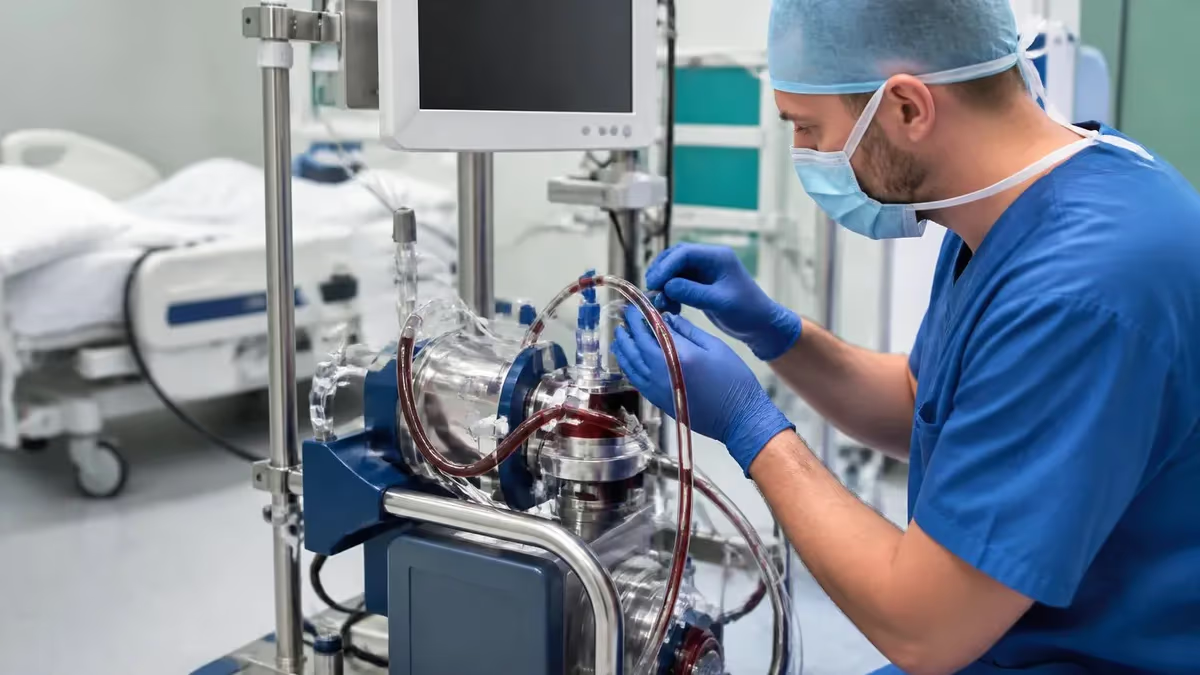
ECMO cannulation is the surgical or percutaneous placement of large-bore cannulas to provide vascular access for extracorporeal membrane oxygenation. Successful cannulation is the foundation of every ECMO run — get it right, and the patient has a fighting chance. Get it wrong, and complications can be catastrophic.
The basics. ECMO drains deoxygenated blood from the patient, pumps it through an oxygenator (membrane lung), and returns oxygenated blood. Cannulation establishes the inflow (drainage) and outflow (return) connections. Cannula size, position, and configuration determine flow capacity, oxygenation efficiency, and complication risk.
Two main configurations. Veno-venous (VV) ECMO: drains and returns to the venous system. Used for respiratory failure when cardiac function is preserved. Veno-arterial (VA) ECMO: drains venous, returns arterial. Used for combined cardiac and respiratory failure or cardiogenic shock.
Configurations within configurations. Single-lumen, dual-cannula VV (e.g., femoral drainage + internal jugular return). Dual-lumen single cannula VV (e.g., Avalon Elite catheter in the internal jugular). Central VA (open chest, RA drainage + aorta return). Peripheral VA (femoral artery and vein).
Why cannulation expertise matters. ECMO is a rescue therapy. Patients are often critically ill, hemodynamically unstable, and may have anatomical challenges. The cannulating team must work fast, accurately, and adapt to unexpected findings. Cannulation training is now a core requirement for ECMO programs.
This guide covers cannulation techniques, sites, configuration selection, complications, and best practices for both adult and pediatric ECMO. It's for intensivists, surgeons, perfusionists, and ICU nurses caring for ECMO patients.
Key Points
- VV ECMO: Respiratory failure with preserved cardiac function
- VA ECMO: Cardiogenic shock or combined heart/lung failure
- Cannula sizes: Drainage 17-25Fr, Return 17-23Fr (adult)
- Site selection: Patient anatomy, surgeon preference, urgency
- Approach: Percutaneous (Seldinger) most common; surgical cutdown for difficult cases
- Imaging: Ultrasound + fluoroscopy or echo for guidance
- Flow target: 60-80 mL/kg/min adult; up to 150 mL/kg/min pediatric
- Team: Cannulating physician + ICU + perfusionist + nursing
- Time pressure: Often minutes from decision to flow initiation
- Complications: 10-30% — bleeding, malposition, ischemia, infection
Cannulation configurations in detail.
Veno-venous (VV) ECMO. Drains venous blood, oxygenates it, returns it to the venous system. The patient's heart pumps the now-oxygenated blood through the lungs and systemic circulation. Used for severe respiratory failure (ARDS, pneumonia, pulmonary embolism, drowning, drug overdose, smoke inhalation).
Most common VV configurations. Femoral-femoral (Fem-Fem): drainage cannula in femoral vein advanced to IVC/RA junction, return cannula in opposite femoral vein at IVC/RA junction. Simple to place; lots of recirculation risk. Femoral-jugular (Fem-IJ): drainage cannula in femoral vein at IVC, return cannula in internal jugular at SVC/RA. Reduces recirculation. Most common adult VV configuration. Avalon Elite (dual-lumen single cannula): one cannula in IJ with drainage holes in SVC and IVC, return port in RA toward tricuspid. Allows single-site cannulation, less recirculation, easier patient mobility but more challenging placement.
Veno-arterial (VA) ECMO. Drains venous, returns arterial. Bypasses heart and lungs. Used for cardiogenic shock, post-cardiotomy heart failure, fulminant myocarditis, massive pulmonary embolism with hemodynamic collapse, refractory cardiac arrest (ECPR).
VA configurations. Central VA: surgically placed in chest, RA drainage + ascending aorta return. Highest flows, best oxygenation; requires open chest. Peripheral VA (femoral): femoral vein drainage to RA + femoral artery return. Less invasive, faster. Risk of differential hypoxia ('North-South Syndrome') where upper body gets less oxygenated blood from native circulation. Axillary VA: less common; uses axillary artery return. Better upper-body oxygenation than femoral.
Hybrid configurations. VV-A (V-VA): adds arterial return to VV setup for cardiac support. VA-V: adds venous return to VA for upper-body oxygenation. Veno-pulmonary artery (V-PA): right heart support with PA return. These are advanced configurations for specific clinical scenarios.
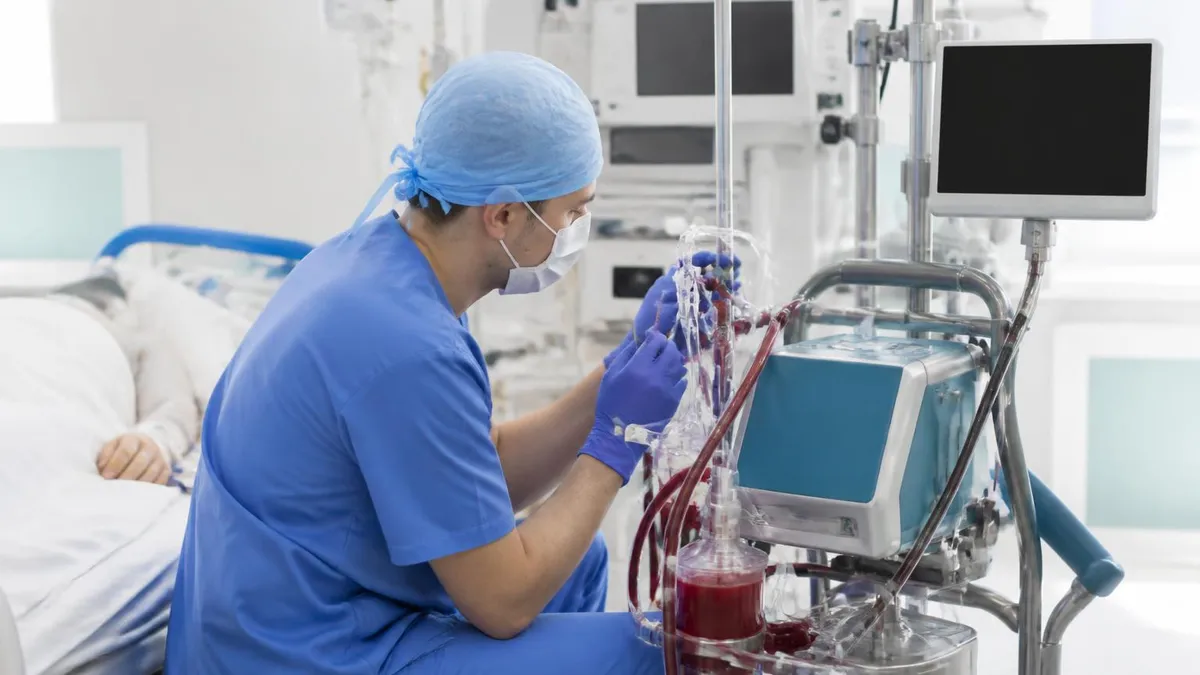
Configuration Decision
Respiratory failure, heart function preserved. Drains vein, returns to vein.
Most common adult VV. Femoral drainage, IJ return. Less recirculation.
Single IJ access. Easier mobility, harder placement. Adult and pediatric.
Cardiogenic shock, fast deployment. Femoral artery return risks N-S syndrome.
Open chest, highest flows. Post-cardiotomy or extreme support need.
Specialized scenarios. Mixed cardiac and respiratory support.
Cannulation sites and access techniques.
Femoral vein (drainage in VV, drainage in VA). Most common access site. Anatomy: vein medial to artery at groin crease. Cannulate using Seldinger technique under ultrasound guidance. Advance cannula 40-45 cm (adult) to position tip at IVC-RA junction. Common challenges: tortuous IVC, IVC thrombus, body habitus making access difficult.
Femoral artery (return in VA). Anatomy: lateral to vein. Cannulate with ultrasound + arterial pressure waveform confirmation. Distal perfusion catheter (DPC) often placed simultaneously to prevent leg ischemia (typically 5-7Fr cannula in superficial femoral artery distal to ECMO cannulation site, perfusing the leg distal to occlusion).
Internal jugular vein (return in VV, drainage option). Right IJ preferred over left (more direct path to SVC/RA). Cannulation with ultrasound guidance, head turned, neck extended. Advance cannula 13-16 cm to SVC-RA junction. Confirm position with TEE or chest X-ray.
Subclavian/axillary artery (return in some VA configurations). Used when femoral artery is contraindicated (severe PAD, prior groin surgery). Surgical exposure typical. Better upper-body oxygenation than femoral return.
Aortic cannulation (central VA return). Surgical placement directly into ascending aorta. Used during cardiac surgery, post-cardiotomy ECMO, or when peripheral access is impossible.
Right atrial cannulation (central VA drainage, central VV options). Surgical placement directly into RA. Used in central configurations.
Imaging guidance. Ultrasound for vascular access (visualizes vessel, guides needle entry). Fluoroscopy or transesophageal echo (TEE) for cannula positioning (confirms tip location). Plain chest X-ray for post-cannulation confirmation (especially for jugular cannulas).
Seldinger technique. Standard percutaneous approach. Insert needle into vessel under ultrasound. Pass wire through needle. Remove needle. Make small skin incision. Pass dilator(s) over wire to expand tract. Pass cannula over wire. Remove wire. Confirm position. Secure cannula with sutures.
Cannulation Sites
Most common ECMO access. Drainage cannula (17-25Fr) inserted via Seldinger technique. Tip target: IVC-RA junction (~40-45 cm depth in adults). Ultrasound essential. Risks: bleeding, hematoma, AV fistula, DVT, IVC injury.
Step-by-step cannulation procedure (femoral VV for example).
Pre-procedure. Confirm indication and patient candidacy with multidisciplinary team. Consent (informed if possible, emergency in true emergencies). Crossmatch blood products (PRBCs, FFP, platelets). Heparin loading dose (typically 50-100 units/kg IV bolus before guidewire placement). Have surgical backup available if percutaneous fails.
Position patient. Supine, slight Trendelenburg for venous access (increases venous filling). Sterile prep both groins (one as backup) and neck (for IJ if needed). Drape widely. Use a fluoroscopy table if available for procedural imaging.
Vascular access. Ultrasound-guided femoral vein puncture (medial to artery). 18G needle, get good venous return. Pass 0.038 J-tipped wire through needle into IVC under fluoroscopy or echo. Verify wire position before proceeding.
Track preparation. Remove needle. Make ~1 cm skin incision adjacent to wire. Dilate tract with serial dilators (8Fr, 12Fr, 16Fr, 20Fr+). Each dilator stays in briefly. Watch for bleeding around the wire — apply pressure if needed between dilations.
Cannula insertion. Mount the ECMO drainage cannula over wire. Advance smoothly along wire to approximately 40-45 cm depth (adult). Hold wire securely as cannula advances. Remove wire and inner obturator/dilator from cannula. Confirm pulsatile (venous) or non-pulsatile depending on site.
Position confirmation. Echocardiography (preferred): visualize cannula tip in IVC-RA junction, no positioning in RA. Fluoroscopy if available. Chest X-ray within 2 hours post-cannulation.
Repeat for second cannula. If Fem-IJ configuration, place IJ return cannula after femoral drainage. Tip target: SVC-RA junction. Verify position.
Connect to circuit. De-air cannulas thoroughly. Perfusionist connects to circuit. Carefully unclamp lines under flow direction. Visualize for air. Initiate flow slowly (1 L/min initially, ramp up over 5-10 minutes to target flow).
Post-cannulation. Secure all cannulas with multiple sutures. Sterile dressings. Document depth at skin (mark with marker). Verify flow targets met. Check for hemolysis. Adjust heparin to target ACT 180-220 seconds typically.
The entire process can take 15-30 minutes for an experienced team. Emergency ECPR cannulation may be performed in 8-15 minutes with practiced teams.
ECMO Cannulation Numbers
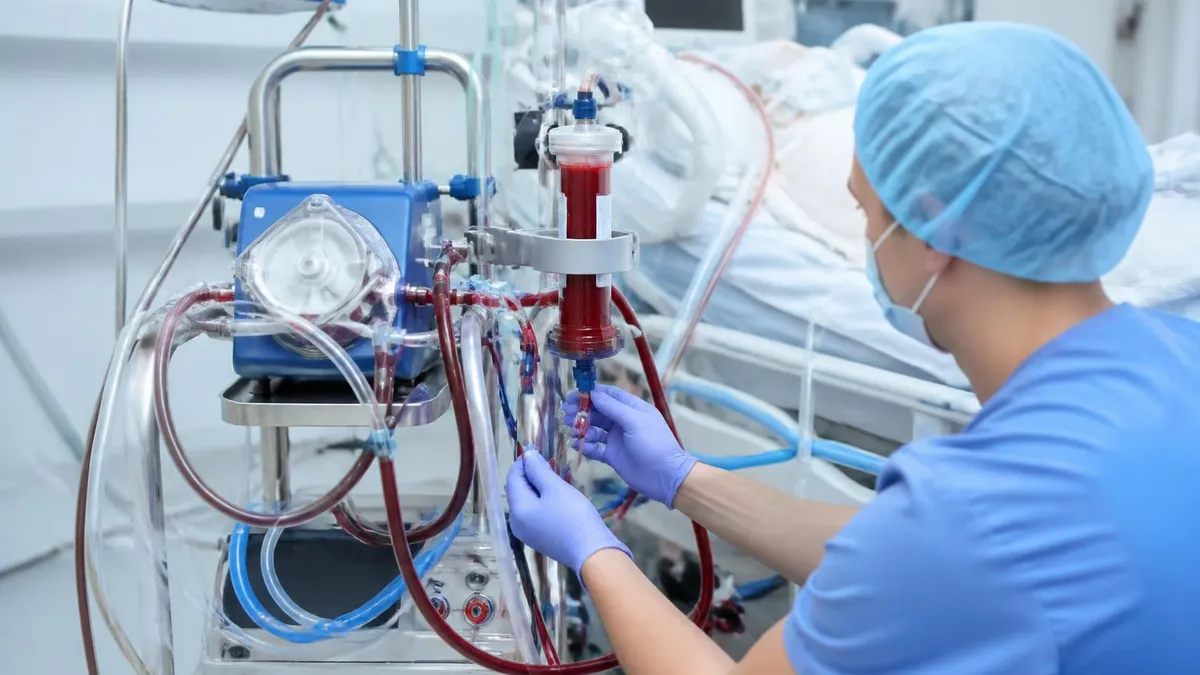
Cannula size selection. Critical for flow capacity and patient outcomes.
For drainage cannulas. Larger = better drainage. Aim for 23-25Fr in adults if anatomy allows. Smaller cannulas (17-19Fr) for smaller patients, difficult anatomy, or as a temporary measure. Drainage limited by chatter and negative pressure if too small.
For return cannulas. Smaller required than drainage. 17-21Fr typical for adult VV. 17-23Fr for VA. Return is pump-driven (positive pressure), so size matters less than drainage.
Pediatric sizing. Roughly: 8-12Fr for neonates, 12-15Fr for infants, 15-19Fr for children. Specific manufacturer charts based on patient weight.
Flow calculation. Drainage cannula flow capacity: roughly (size in Fr)² ÷ 10 = liters/min. So 25Fr = 6.25 L/min max. Return cannula similar. Actual achieved flow depends on cannula condition, length, patient anatomy.
Mismatch problems. Drainage too small → 'chatter' (pressure swings, hemolysis, insufficient flow). Return too small → resistance, hemolysis. Different sized drainage and return cannulas can cause flow imbalance.
Cannula brands. Maquet (Cardiohelp, HLS) cannulas. Medtronic Bio-Medicus. Avalon Elite (dual-lumen). Edwards Lifesciences. Each has slightly different specifications and design features. Familiarity with your institution's preferred brand essential.
Special situations. Patient on long-term ECMO: consider re-cannulation with optimal size after stabilization. Difficult anatomy: smaller cannulas or surgical cutdown. Pediatric or small adult: dual-lumen single cannula may be preferred for mobility and reduced recirculation.
Cannulation Equipment
Drainage (large) and return (smaller). Verify size and length pre-procedure.
0.038 J-tip wire. Dilator kit appropriate to cannula size.
Linear probe for vascular access. Essential for safe percutaneous approach.
Position confirmation. C-arm fluoroscopy or TEE for tip placement.
Loading dose before wire placement. Subsequent dosing via circuit.
Crossmatched PRBCs, FFP, platelets available immediately.
Complications of ECMO cannulation. Recognition and management.
Bleeding. Most common complication (5-30%). Sources: arterial puncture during attempted venous access, vessel injury, retroperitoneal bleed, post-removal site. Management: direct pressure, sutures if percutaneous, surgical exploration if life-threatening, reversal of heparin (cautiously — risk of clotting circuit), transfusion. Prevention: ultrasound guidance, gentle technique, watch ACT.
Malposition. Cannula tip misplaced (RA-too-far, AV junction, hepatic vein, contralateral femoral). Causes: poor imaging, technical error, anatomic anomalies. Management: reposition under imaging guidance, may require re-cannulation. Prevention: routine TEE or fluoroscopy verification.
Limb ischemia (peripheral VA). Femoral artery cannulation can occlude or restrict distal flow. Without distal perfusion catheter, can lead to compartment syndrome, ischemia, amputation. Management: confirm DPC patency, consider re-cannulation higher, fasciotomy if compartment syndrome. Prevention: always place DPC in peripheral VA.
North-South Syndrome (peripheral VA). Retrograde ECMO flow meets antegrade native cardiac output. Upper body perfused by native circulation (potentially hypoxic if lungs failing); lower body perfused by ECMO (well-oxygenated). Brain, heart, upper extremities receive less oxygenated blood. Management: VA-V hybrid configuration adding venous return to improve upper-body oxygenation, or increase ECMO flow rate.
Recirculation (VV). Oxygenated blood from return cannula recirculates back into drainage cannula instead of being delivered systemically. Effective oxygenation drops. Causes: cannula tips too close, high flow, hypovolemia, tricuspid regurgitation. Management: reposition cannulas (separate tips more), lower flow if appropriate, use Avalon single-cannula design.
Air embolism. Air enters circuit during cannulation or circuit manipulation. Causes: imperfect de-airing, broken circuit, drainage cannula above heart with hypovolemia. Management: clamp circuit, head-down position, aspirate air, replace circuit if severe. Prevention: careful de-airing, vigilant connection checks.
Hemolysis. Cannula too small for flow, occluded tubing, mechanical compression. RBC fragmentation, free plasma hemoglobin elevated, hyperbilirubinemia. Management: identify and resolve cause, increase cannula size, lower flow if possible. Prevention: appropriate cannula sizing, gentle handling.
Infection. Cannulation site infections, mediastinitis with central cannulation, bloodstream infections from prolonged ECMO. Management: antibiotics, source control (drainage, cannula change if persistent), strict aseptic technique throughout. Prevention: maximal sterile barriers, careful site care.
Cardiac perforation/tamponade. Rare but catastrophic. From dilator or cannula traversing thin wall. Management: emergency thoracotomy/sternotomy, pericardiocentesis if possible. Prevention: confirm wire and dilator position before advancing.
1. Confirm indication and consent. Multidisciplinary team agreement. Informed consent (if possible). Document clearly.
2. Anticoagulation. Heparin loading dose ready. Anti-Xa or ACT baseline drawn. Heparin allergy or HIT considered.
3. Blood products. 2-4 units PRBCs, FFP, platelets immediately available. Group and crossmatch verified.
4. Imaging. Ultrasound on standby with vascular probe. TEE probe and operator available. Fluoroscopy if needed.
5. Equipment. Cannula sizes verified (1 size larger backup), wires, dilators, sutures, prime circuit, perfusionist ready.
6. Team huddle. Roles defined: cannulating physician, assistant, ICU MD, perfusionist, nursing, RT. Communication clear.
7. Backup plan. Surgical backup available. Plan B if percutaneous fails (e.g., surgical cutdown).
8. Patient prep. NG tube, foley, central access, A-line, large-bore IVs. Positioning verified.
Special situations in ECMO cannulation.
ECPR (extracorporeal CPR). Cannulation during ongoing cardiac arrest. Goal: flow within 60 minutes of arrest onset. Femoral approach typical. Bilateral femoral access for VA. Imaging may be limited; use anatomic landmarks if necessary. Time is brain — speed matters, but accuracy still essential. Outcomes: survival 20-40% for in-hospital ECPR, lower for out-of-hospital.
Obese patients. Body habitus complicates groin access. Use longer needles. Ultrasound essential. May need surgical cutdown for vascular access. Cannula depth must be re-calculated for body habitus.
Pediatric ECMO. Smaller vessels, different cannula sizes, weight-based flows. Neonatal: carotid-jugular VA still common. Pediatric VV: dual-lumen Avalon when possible. Anesthesia and team coordination different than adult.
Post-cardiotomy ECMO. Patient already in OR with chest open. Central cannulation typical (RA + aorta). Easier in this scenario than peripheral, but requires conversion to peripheral if support continued post-OR.
Recannulation. Patient on ECMO needs cannula change (size, position, infection). Plan for backup access in case primary fails. Cross-match blood. Have surgeon on standby.
Anticoagulated patients with major hemorrhage. Difficult balance. Cannulate with minimal heparin loading. Use percutaneous closure devices for arterial. Careful monitoring of coags.
Difficult vascular anatomy. Prior arterial surgery, tortuous vessels, calcified arteries. Plan: ultrasound and CT pre-cannulation if time. Consider alternative sites. Surgical cutdown for complex cases. Have vascular surgeon available.
Special Scenarios
Cannulate during active CPR. Bilateral femoral approach. Speed essential — goal flow within 60 min of arrest. Survival 20-40% in-hospital. Team must train for this specifically. Coordination with ongoing resuscitation critical.
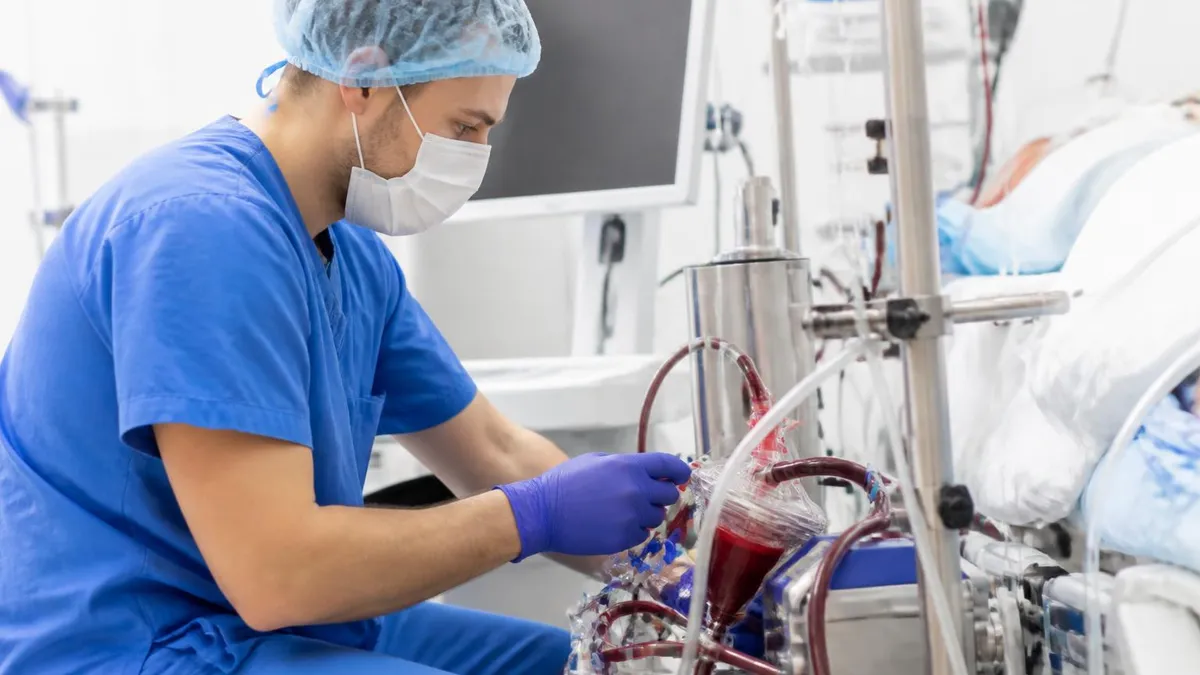
Cannulation team training and quality improvement.
Training requirements. ECMO cannulation should be performed by trained surgeons or interventional intensivists. Initial training: didactic + simulation + supervised cases (typically 10-20 supervised before independent practice). Ongoing competency: at least 6-12 cannulations per year recommended.
Simulation. High-fidelity simulators (e.g., ECMO simulators with hemodynamic feedback). Allows safe practice of rare complications. Required by many institutional credentialing programs.
Team training. Mock cannulations with full team (surgeons, perfusionists, nurses, RTs). Practices coordination, role clarity, communication. Disasters scenarios (air, cardiac arrest during cannulation, equipment failure).
Quality metrics. Track: time to flow initiation, complication rates by type, conversion to surgical cutdown rate, cannulation-related mortality. Review at multidisciplinary M&M conferences.
Documentation. Pre-procedure indication, team members, anatomy notes. Procedural events. Cannula type/size/depth. Imaging verification. Anticoagulation status. Initial circuit parameters. Post-procedure plan.
Credentialing. Most ECMO programs require formal credentialing. Maintain logs. Document continuing education. Recertify periodically. ELSO (Extracorporeal Life Support Organization) provides framework.
Continuous improvement. Review every case. Identify near-misses. Update protocols based on lessons learned. Annual review of equipment and consumables.
Quality Markers
Target: under 30 min from decision. Track average and outliers.
Aim under 15% (significant complications). Higher rates trigger review.
Track team and individual cannulation volumes. Maintain competency.
100% ultrasound for vascular access. Position confirmation rate.
Multidisciplinary always. Track who's present, communication.
Survival, complications, long-term function. Reported to ELSO registry.
Post-cannulation management. Cannulation is just the start.
Immediate post-cannulation (first hour). Confirm flow targets met. Check cannula positions with imaging. Monitor for bleeding at sites. Check distal perfusion (especially femoral artery). Evaluate hemoglobin trend. Confirm anticoagulation (ACT or anti-Xa target).
First 24 hours. Reposition patient cautiously. Avoid hip flexion >90° with femoral cannulas. Monitor cannula position daily with X-ray or echo. Manage sedation, paralytics minimally. Consider tracheostomy by day 7-10 for long-term cases. Daily multidisciplinary rounds.
Daily care. Cannula site care: aseptic technique, monitor for bleeding/infection. Anticoagulation monitoring 4-6 hourly. Check distal perfusion (DPC patency for VA, leg color/pulses). Limb assessment (compartment syndrome screening). Lung-protective ventilation continues.
Anticoagulation. Heparin typically (target ACT 180-220 sec or anti-Xa 0.3-0.7). Alternatives: argatroban or bivalirudin for HIT. Balance: too much = bleeding; too little = circuit clotting. Bedside testing every 4-6 hours.
Recirculation monitoring (VV). SvO2 sampling at drainage cannula vs return. Higher SvO2 at drainage = more recirculation. ECMO oxygenator efficiency assessment.
Weaning preparation. Daily assessment of native function. Reduction trials. Plan extubation, decannulation timing.
Decannulation. Surgical for percutaneous cannulas (cutdown and closure) or use of closure devices. Limb assessment post-decannulation. Wound care. Mobilization as appropriate.
ECMO Pros and Cons
- +ECMO has a publicly available content blueprint — you know exactly what to prepare for
- +Multiple preparation pathways accommodate different schedules and budgets
- +Clear score reporting shows specific strengths and weaknesses
- +Study communities share current insights from recent test-takers
- +Retake policies allow recovery from a difficult first attempt
- −Tested content scope requires substantial preparation time
- −No single resource covers everything optimally
- −Exam-day performance can differ from practice test performance
- −Registration, prep, and retake costs accumulate significantly
- −Content changes between versions can make older materials less reliable
Pros and Cons at a Glance
| Pros | Cons |
|---|---|
| ECMO has a publicly available content blueprint — you know exactly what to prepare for | Tested content scope requires substantial preparation time |
| Multiple preparation pathways accommodate different schedules and budgets | No single resource covers everything optimally |
| Clear score reporting shows specific strengths and weaknesses | Exam-day performance can differ from practice test performance |
| Study communities share current insights from recent test-takers | Registration, prep, and retake costs accumulate significantly |
| Retake policies allow recovery from a difficult first attempt | Content changes between versions can make older materials less reliable |
Sample ECMO - Extracorporeal Membrane Oxygenation Practice Questions
Try these questions from our free ECMO - Extracorporeal Membrane Oxygenation practice tests. The correct answer and an explanation follow each question.
A patient on peripheral VA-ECMO via femoral artery cannulation develops ipsilateral limb ischemia. The best intervention is to:
- A. Remove the arterial cannula immediately
- B. Place an antegrade perfusion cannula distal to the ECMO cannula
- C. Increase ECMO flow to improve perfusion
- D. Administer systemic vasodilators
Answer: B. Place an antegrade perfusion cannula distal to the ECMO cannula
A distal perfusion cannula placed in the superficial femoral artery restores antegrade limb perfusion while maintaining ECMO support.
During ECMO weaning trials, which clinical parameter best confirms readiness to separate from VV-ECMO support?
- A. SpO2 > 88% at ECMO flows of 1 L/min with FiO2 0.5 and moderate vent settings
- B. SpO2 > 95% with ECMO at full flows
- C. PaO2 > 200 mmHg on ECMO
- D. Normal chest X-ray with ECMO at maximum flow
Answer: A. SpO2 > 88% at ECMO flows of 1 L/min with FiO2 0.5 and moderate vent settings
Maintaining acceptable oxygenation at minimal ECMO flows (1 L/min) with reduced FiO2 and moderate ventilation confirms sufficient native lung recovery for safe decannulation.
Which patient population may benefit most from axillary artery VA ECMO cannulation over femoral arterial cannulation?
- A. Patients with severe peripheral vascular disease or aortic insufficiency
- B. Patients with septic cardiomyopathy
- C. Pediatric patients under 10 kg
- D. Patients with active gastrointestinal bleeding
Answer: A. Patients with severe peripheral vascular disease or aortic insufficiency
Axillary artery cannulation is preferred in patients with severe femoral/iliac vascular disease or significant aortic insufficiency, and it also provides antegrade upper body perfusion.
What physiological parameter best guides ECMO flow titration to ensure adequate oxygen delivery (DO2) in VA-ECMO?
- A. Mean arterial pressure alone
- B. Mixed venous oxygen saturation (SvO2) reflecting the balance between DO2 and VO2
- C. Arterial lactate concentration as a static threshold
- D. Urine output as a surrogate for cardiac output
Answer: B. Mixed venous oxygen saturation (SvO2) reflecting the balance between DO2 and VO2
SvO2 integrates oxygen delivery and consumption; a falling SvO2 indicates tissues are extracting more oxygen to compensate for inadequate delivery, signaling the need to increase ECMO flow or hemoglobin.
Take the full ECMO - Extracorporeal Membrane Oxygenation practice test
ECMO Questions and Answers
Final thoughts. ECMO cannulation is one of the most demanding procedures in critical care — high-stakes, technically complex, and often performed under time pressure with critically ill patients.
Excellence in cannulation comes from training, simulation, repetition, and team coordination. Individual surgeons or intensivists with strong cannulation skills are essential, but the team around them — perfusionists, ICU nurses, RTs, anesthesiology — determines whether the cannulation translates into a successful ECMO run.
The field continues to evolve. Better imaging technology (point-of-care ultrasound, intra-procedural CT), improved cannula designs (dual-lumen, fewer complications), refined techniques (closure devices for arterial cannulas), and growing experience are all driving improvements in safety and outcomes.
If you're caring for ECMO patients, invest in continuous learning. ELSO publishes guidelines and runs educational programs. Major centers offer cannulation courses. Simulation training is increasingly available. Cannulation skill develops over hundreds of cases — start with supervised practice, build steadily, and never stop refining technique.
The work matters. ECMO can be the difference between life and death for the sickest patients. Skilled cannulation is the gateway to that life-saving therapy. Done well, it gives critically ill patients a chance at recovery they would never have otherwise.
About the Author

Educational Psychologist & Academic Test Preparation Expert
Columbia University Teachers CollegeDr. Lisa Patel holds a Doctorate in Education from Columbia University Teachers College and has spent 17 years researching standardized test design and academic assessment. She has developed preparation programs for SAT, ACT, GRE, LSAT, UCAT, and numerous professional licensing exams, helping students of all backgrounds achieve their target scores.
Join the Discussion
Connect with other students preparing for this exam. Share tips, ask questions, and get advice from people who have been there.
View discussion (9 replies)