
Newborn ECMO: Neonatal Indications, Outcomes, & Family Guide 2026 October
Newborn ECMO explained for families and clinicians: 📚 PPHN, CDH, meconium, criteria, VV vs VA, ELSO survival data, and what recovery really looks like.
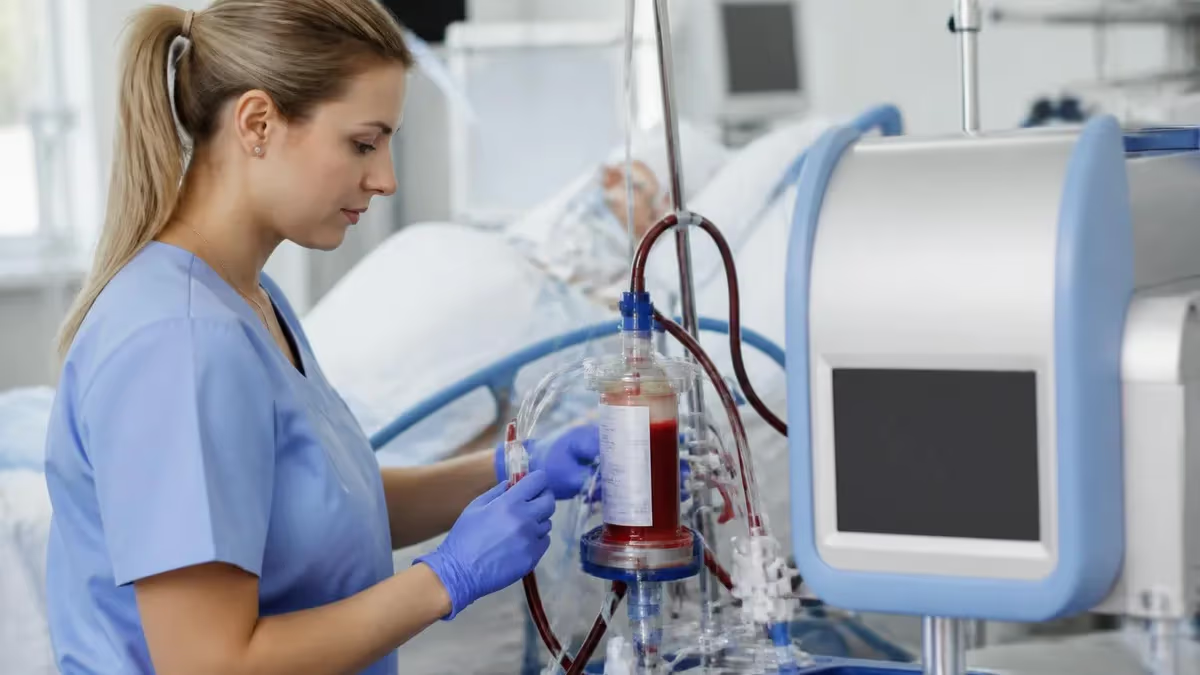
Newborn ECMO is one of the most intense forms of life support a tiny human can be placed on. Doctors reach for it when a baby's heart or lungs cannot keep up with the body's needs, even after maximum ventilator and drug therapy. The machine pulls blood out of the baby, pushes it through an artificial lung that adds oxygen and removes carbon dioxide, then sends the warmed, oxygenated blood back. The baby's own organs get a chance to rest. They get a chance to heal.
You may have walked into a NICU and seen a baby surrounded by a tangle of tubing the color of dark wine. That is the ECMO circuit. It looks scary. It is scary. It also works. For some of the sickest newborns alive today, ECMO is the reason they are still here.
This guide is for families, students, and clinicians who want to understand how extracorporeal membrane oxygenation applies specifically to newborns — the indications, the criteria, what the tubing looks like in a neck the size of a lemon, what happens day to day, and what the long-term outlook really looks like once the machine comes off. Test your knowledge with the Neonatal and Pediatric ECMO practice test after you finish reading.
Neonatal ECMO began in 1975 when Dr. Robert Bartlett saved a baby named Esperanza in California. Fifty years later, more than 50,000 newborns have been treated with ECMO worldwide. The Extracorporeal Life Support Organization (ELSO) registry now contains data on every one of them, and the picture it paints is hopeful. About 73% of newborns placed on ECMO survive to hospital discharge. That number is staggering when you remember the alternative: babies who go on ECMO have already failed everything else.
Newborn ECMO by the numbers
Key Facts at a Glance
| Item | Value | Details |
|---|---|---|
| Minimum gestational age in most centers | ≥34 wks | |
| Minimum birth weight criterion | ≥2 kg | |
| Typical newborn ECMO run length | 5–10 days |
The five reasons a newborn ends up on ECMO
Newborn ECMO is not a routine intervention. It is reserved for babies whose lungs or heart have failed in a way that doctors believe is reversible. If the underlying cause is not reversible, ECMO becomes a bridge to nowhere — and most centers will not start it. The five classic neonatal indications are persistent pulmonary hypertension of the newborn, congenital diaphragmatic hernia, meconium aspiration syndrome, severe sepsis, and respiratory failure of other causes such as RDS, pneumonia, or air leak syndromes.
Persistent Pulmonary Hypertension of the Newborn (PPHN)
In the womb, blood bypasses the lungs through two shortcuts — the ductus arteriosus and the foramen ovale. After birth, the lungs are supposed to open, the pulmonary arteries are supposed to relax, and the shortcuts are supposed to close. In PPHN, they don't. The lungs stay clamped down. Blood keeps shunting away from them. The baby turns a dusky blue color no matter how much oxygen you give. PPHN is the single most common reason a full-term newborn ends up on ECMO. It accounts for roughly 25% of all neonatal runs.
Congenital Diaphragmatic Hernia (CDH)
CDH is a hole in the diaphragm that lets the intestines push up into the chest before birth. The lung on that side never grows properly. The lung on the other side is also small. After delivery, even with the best ventilator, the baby cannot oxygenate. ECMO buys time. The baby is supported on the circuit until the surgical team repairs the hernia and the lungs have a chance to stretch out. CDH babies tend to run longer on ECMO than other newborns — sometimes two to three weeks — and survival is lower, around 50%.
Meconium Aspiration Syndrome (MAS)
Meconium is the dark, tarry first stool. Babies are not supposed to pass it before they are born. When they do — usually because they are stressed in labor — they can breathe it into their lungs. The meconium is thick, irritating, and full of bile salts. It plugs airways, inactivates surfactant, and triggers pneumonitis. MAS used to be a leading cause of newborn ECMO. Better delivery-room suctioning has cut the numbers, but severe cases still happen and ECMO remains the rescue. Outcomes are excellent — MAS babies have the best survival of any neonatal ECMO group, often above 90%.
Sepsis and pneumonia
Group B Strep, E. coli, and other organisms can crash a newborn within hours. The combination of septic shock and respiratory failure is what tips them toward ECMO. These babies often need veno-arterial ECMO rather than VV, because their hearts are also failing. Survival is lower here, around 50–60%, because the underlying illness is so severe.
Other respiratory failure
This catch-all includes severe RDS in late-preterm babies, viral pneumonia, pulmonary hemorrhage, and air-leak syndromes that have not responded to high-frequency ventilation and inhaled nitric oxide. ECMO is the last stop before death.

Oxygenation index (OI) trigger thresholds
Oxygenation index (OI) above 40 on two arterial gases 30–60 minutes apart, or OI above 25 with rapid deterioration. OI is calculated as (mean airway pressure × FiO2 × 100) ÷ PaO2. An OI above 40 means the baby is dying on the ventilator. Other triggers include alveolar-arterial oxygen gradient (AaDO2) above 600 for 8 hours, intractable hypotension despite maximal pressors, or acute deterioration with PaO2 below 40 mm Hg.
Who qualifies, and who does not
Not every sick newborn is a candidate. The selection criteria are strict because ECMO is invasive, expensive, and carries real risks. The classic neonatal ECMO criteria, published by ELSO and used by virtually every center in the world, are these:
- Gestational age ≥34 weeks. Smaller, more premature babies have fragile brain blood vessels that bleed catastrophically when you start full anticoagulation. Centers occasionally accept 32–34 week babies in extraordinary circumstances, but most will not.
- Birth weight ≥2 kg. Below this weight the cannulas physically do not fit, and circuit flow rates become unreliable. A few centers in the world cannulate down to 1.6 kg using miniaturized circuits, but this is the exception.
- Reversible cause. The disease must be expected to resolve within 2–3 weeks. CDH and PPHN qualify. Lethal lung hypoplasia and trisomy 13 generally do not.
- Mechanical ventilation under 10–14 days. Babies who have already been ventilated longer than two weeks have likely developed chronic lung injury that ECMO cannot reverse.
- No major intracranial hemorrhage. A head ultrasound is performed before cannulation. A grade III or IV intraventricular hemorrhage is a near-absolute contraindication because anticoagulation will make it worse.
- No lethal congenital anomaly. Trisomy 13 and 18, anencephaly, and similar conditions where survival is impossible are exclusions.
Centers also consider family wishes, the team's experience, and the resources available at that hospital. A community NICU without an ECMO program will transport the baby to a Level IV referral center, often by specialized neonatal transport ECMO team if the baby is too unstable to move conventionally.
The four reversible-cause groups
PPHN, MAS, severe RDS, pneumonia. Heart is working. Best handled by VV ECMO if cannulas fit.
Congenital heart disease pre/post-op, myocarditis. Needs VA ECMO. Cardiac surgery program required.
Septic shock with pulmonary hypertension. Default to VA ECMO for circulatory support plus oxygenation.
CDH stabilization before repair, pulmonary venous obstruction awaiting catheter intervention.
VV vs VA in newborns — the neonatal twist
Adults and older children frequently get veno-venous ECMO when their heart is fine and only the lungs are failing. The story is different in newborns. The smallest size of dual-lumen VV cannula on the market is 13 French. It fits a baby of about 3 kg. For babies under 3 kg, VV is not technically possible, and they go on VA whether their heart needs it or not. Even when VV is feasible, many neonatal centers prefer VA because it supports the circulation simultaneously, and sick newborns often have at least some myocardial dysfunction from hypoxia.
VA ECMO in a newborn means cannulating the right common carotid artery and the right internal jugular vein. Yes — the carotid artery in the neck. This is the part that makes families gasp. The cannula goes in through a small neck incision; the surgeon ties off the artery and threads the cannula into the aortic arch. Blood is returned to the body through this arterial cannula at high pressure. Drainage comes through the venous cannula in the IJ, which sits in the right atrium.
Carotid ligation sounds catastrophic but the brain has a backup blood supply through the circle of Willis. When the cannula comes out, surgeons can either tie the artery off permanently or reconstruct it. Long-term studies show the difference in neurologic outcomes is small, but most modern centers attempt repair. The rate of left-sided strokes is slightly higher in babies who had right carotid ligation, though large registry data show overall neurodevelopmental outcomes are similar.
VV cannulation in a newborn uses a single dual-lumen Avalon-style cannula placed in the right IJ, with the tip in the right atrium. Drainage holes are in the SVC and IVC; the return jet aims at the tricuspid valve. The advantage: no carotid sacrifice, blood mixes physiologically, and the heart pumps normally. The disadvantage: recirculation is higher, and the cannula simply does not fit a 2 kg baby.
Inside a neonatal ECMO run, stage by stage
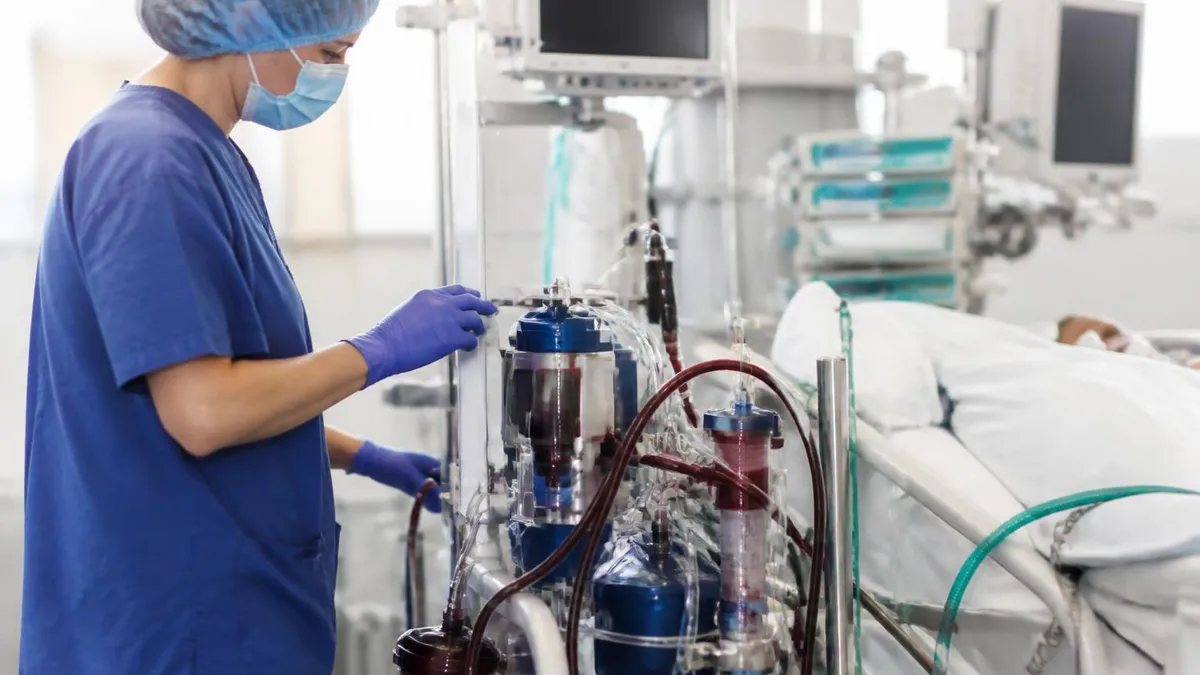
Neonatal cannulation is a surgical procedure done at the bedside in the NICU or in the operating room. The baby is paralyzed, sedated, and the neck is prepped sterile. A horizontal incision is made above the right clavicle. The carotid artery and internal jugular vein are dissected out and looped. Heparin is given (50–100 units/kg). The vessels are clamped and opened, and the cannulas are inserted.
Cannula sizes: 8–10 Fr arterial, 10–14 Fr venous, depending on baby's weight. The cannulas are designed by companies like Medtronic, Maquet, and historically Bernheim, with thin walls and side holes to maximize flow at small diameters. The cannulas are secured to the skin with thick silk sutures and a clear occlusive dressing. The whole procedure takes 45–90 minutes.
NICU or PICU — where does a newborn on ECMO live?
Different hospitals do this differently. Some Level IV NICUs run their own neonatal ECMO program with NICU nurses, neonatologists, and perfusionists managing the baby in the same room where they were born. Others transfer babies to the pediatric cardiac ICU because that is where the cardiac surgeons and ECMO specialists work. Both models work. The data from ELSO show no clear survival advantage of one over the other.
NICU advantages: continuity of nursing, familiar environment for parents, developmentally appropriate care, breastmilk feeding pathways already in place. PICU advantages: deeper ECMO experience, immediate access to cardiac surgery, more nurses cross-trained on the circuit.
What matters most is volume. Centers running fewer than 6 neonatal ECMO cases per year tend to have worse outcomes than centers running 20 or more, regardless of which ICU the baby lives in. If your baby qualifies for ECMO at a low-volume center, it is reasonable to ask whether transfer to a high-volume center is feasible.
Bleeding is the most common complication. Cannula sites, surgical wounds, GI tract, and lungs can all bleed because the baby is anticoagulated. Intracranial hemorrhage occurs in roughly 8% of neonatal cases and is the leading cause of death on ECMO. Infection rates are higher than off-circuit babies. Hemolysis from the pump can cause kidney injury. Cannula displacement is an emergency that can kill within minutes if drainage stops.
What families can expect, hour by hour and day by day
If your newborn is being considered for ECMO, the conversation will move fast. The team will explain the risks, the survival statistics for your baby's specific diagnosis, and the alternatives. You will be asked to sign consent. You may not have time to read the form line by line. That is okay — the team will summarize it. Ask whatever you need to ask. There are no stupid questions when you are signing a form to let a machine breathe for your baby.
Within an hour of consent, your baby will be in surgery for cannulation. You will not be in the room. Most centers have a waiting area nearby, with a social worker or chaplain available. Cannulation takes about an hour. You will be able to see your baby again 60–90 minutes after they wheel them out of the room, by which point the circuit is running and the baby is usually a much better color than when they went in.
The first 48 hours are the riskiest. Bleeding can happen, the circuit can fail, and the baby can have a stroke or seizure. The team will be at the bedside almost continuously. You may feel useless, in the way, like you should be doing something. You are doing something — you are present, and presence matters for tiny brains.
Days 3–7 are usually the most stable. By now the bleeding risk is lower, the baby is alert, and you can hold their hand, read to them, even do skin-to-skin in some units. Mom can pump breastmilk; some units will give it via NG tube even on ECMO, which has been shown to reduce gut complications.
Days 7–14 are the weaning window for most babies. PPHN and MAS often come off within 5–7 days. CDH and severe sepsis can run two weeks or longer. If your baby is still on ECMO at day 21, the team will start having harder conversations with you about what comes next.

Questions to ask the ECMO team
- ✓What is your center's annual neonatal ECMO volume and survival rate for our baby's specific diagnosis?
- ✓Will my baby be on VV or VA ECMO, and why?
- ✓What is the plan for the carotid artery at decannulation — ligation or reconstruction?
- ✓How often will head ultrasounds be done, and what would change the plan?
- ✓Can I do skin-to-skin contact, and when?
- ✓Will breastmilk feeding be possible during the run?
- ✓What is the expected duration of the ECMO run for this diagnosis?
- ✓Which neurodevelopmental follow-up program will track our baby after discharge?
Neurodevelopmental outcomes — the real long-term story
Survival numbers are reassuring but they only tell half the story. The other half is what happens to the brain. Every newborn placed on ECMO has already survived a profound period of low oxygen, low blood pressure, or both. Add the carotid ligation, the heparin, the inflammatory response from the circuit, and you have a population at real risk for neurodevelopmental problems.
Large multicenter follow-up studies show roughly 25–35% of ECMO survivors have some form of neurodevelopmental impairment at 2–5 years of age. Most impairments are mild — language delay, mild motor delay, attention issues. Severe disability (cerebral palsy, severe cognitive impairment, deafness) occurs in roughly 10–15%. About two-thirds of children come through with neurodevelopmental scores in the normal range.
Risk factors for worse outcomes include CDH diagnosis, longer ECMO runs (over 14 days), bleeding complications during the run, and abnormal neuroimaging before decannulation. Risk factors for better outcomes include MAS or PPHN as the indication, run length under 7 days, and a clean head ultrasound throughout.
Every ECMO survivor should be enrolled in a structured neurodevelopmental follow-up program. These programs do formal assessments at 6 months, 1 year, 2 years, 3–5 years, and school age. Early intervention services — physical therapy, speech therapy, occupational therapy — are often started even before any deficit is detected, because we know the at-risk profile of this group.
Weighing newborn ECMO: benefits and burdens
- +Survival to discharge of 70–90% in PPHN and MAS — vastly better than ventilator alone
- +Lungs and heart can rest and heal while the machine does the work
- +Bridge to surgery for CDH and complex cardiac defects
- +Most survivors have normal or near-normal long-term development
- +Ability to feed breastmilk and do skin-to-skin contact in many programs
- −Roughly 8% risk of intracranial hemorrhage
- −Right carotid ligation may slightly raise stroke risk later in life
- −25–35% of survivors have some neurodevelopmental impairment at follow-up
- −Constant transfusion exposure with associated infectious and immune risks
- −Family separation, emotional toll, average 4–6 week NICU stay after run ends
What the ELSO registry tells us
The Extracorporeal Life Support Organization registry is the single best source of neonatal ECMO data in the world. It now contains more than 50,000 neonatal cases dating back to the 1980s. The data are updated quarterly and reported transparently by ELSO. Here are the headline numbers from the most recent published summary.
By diagnosis (survival to discharge): Meconium aspiration 93%. PPHN 78%. Air leak syndrome 73%. Sepsis 62%. CDH 50%. Other respiratory 70%.
By mode: VV ECMO 80% survival, VA ECMO 71%. VV looks better, but selection bias is huge — VV babies tend to have milder heart involvement to begin with.
By run length: 1–4 days 78%, 5–10 days 72%, 11–14 days 64%, 15–21 days 51%, over 21 days 34%. Longer runs are worse, mostly because longer runs reflect more severe disease.
By era: Survival has improved modestly over time as circuits became safer and selection improved, but the overall numbers have plateaued in the last decade. The remaining gains will come from better neuroprotection, not better hardware.
Centers report their own data to ELSO and receive annual benchmarking reports. Families considering an ECMO center can sometimes request site-specific data, which is more meaningful than national averages.
Recovery timeline — from decannulation to going home
Coming off ECMO is not the end of the NICU stay. Most babies need another 2–4 weeks in the NICU after decannulation, sometimes longer if there were complications or if the underlying diagnosis was CDH. Here is what a typical timeline looks like.
Day of decannulation: Baby is back in the ICU bed, still ventilated, still sedated. Heparin is stopped. The neck wound has a fresh dressing. Vital signs are monitored hourly.
Days 1–3 post-decannulation: Sedation is weaned. The baby starts waking up. Ventilator settings continue to come down. Feeds via NG tube usually restart on day 1 or 2.
Days 4–10: Extubation is attempted as soon as the baby can support their own breathing. Many CDH babies need a longer trial on the ventilator. PPHN and MAS babies usually extubate within a week.
Weeks 2–4: Once extubated, the baby moves to nasal cannula or CPAP, then to room air. Oral feeds are introduced — bottle or breast, depending on the baby's strength. A formal swallow study is sometimes needed before oral feeds start, especially after long intubations.
Weeks 4–6: Discharge planning begins. Home oxygen may be needed for some CDH babies. Cardiology, pulmonology, neurology, and neurodevelopmental follow-up are arranged. Car seat tolerance test is done. Hearing screen is repeated — newborns on ECMO have a higher rate of sensorineural hearing loss and should have BAER testing before discharge.
Going home: Most families leave the NICU 4–8 weeks after ECMO. Some, especially CDH families, leave with feeding tubes, oxygen, or medications. Follow-up appointments are stacked tight in the first six months. By 1 year of age most ECMO graduates are doing well and the appointments thin out.
Sample ECMO - Extracorporeal Membrane Oxygenation Practice Questions
Try these questions from our free ECMO - Extracorporeal Membrane Oxygenation practice tests. The correct answer and an explanation follow each question.
A child on neonatal ECMO develops seizures. In addition to anticonvulsant therapy, the priority ECMO-related concern is:
- A. Increasing ECMO flow to improve cerebral perfusion
- B. Evaluating for intracranial hemorrhage and adjusting anticoagulation
- C. Changing to a higher-capacity oxygenator
- D. Switching from VV to VA configuration
Answer: B. Evaluating for intracranial hemorrhage and adjusting anticoagulation
Seizures in neonatal ECMO patients frequently indicate intracranial hemorrhage, which requires urgent neuroimaging and anticoagulation reassessment.
In neonatal ECMO for persistent pulmonary hypertension of the newborn (PPHN), what is the primary pathophysiological target?
- A. Correcting metabolic acidosis to normalize pH
- B. Reducing pulmonary vascular resistance to enable transition from fetal to neonatal circulation
- C. Increasing systemic vascular resistance to maintain coronary perfusion
- D. Eliminating intracardiac shunting through the foramen ovale
Answer: B. Reducing pulmonary vascular resistance to enable transition from fetal to neonatal circulation
PPHN results from failure of the pulmonary vasculature to dilate at birth, maintaining high PVR that drives right-to-left shunting; ECMO buys time while strategies to reduce PVR (inhaled NO, alkalosis, oxygen) take effect.
Which finding on echocardiography is most indicative of a properly functioning ECMO circuit with adequate unloading of the right ventricle in VV-ECMO?
- A. Hyperdynamic LV function
- B. Reduced RV dilation and improved septal position
- C. Mitral regurgitation
- D. Pericardial effusion
Answer: B. Reduced RV dilation and improved septal position
In VV-ECMO, improving RV dilation and restoration of normal interventricular septal position indicate reduced RV afterload from improved oxygenation and CO2 removal.
On VV ECMO, a patient's SaO2 is 88% with ECMO flow at 5 L/min. The native cardiac output is estimated at 8 L/min. What is the approximate recirculation fraction?
- A. 10%
- B. 25%
- C. 37%
- D. 50%
Answer: C. 37%
Recirculation fraction = (ECMO flow – effective flow) / ECMO flow; with total venous return mixed with ECMO flow, approximately 37% recirculation yields this oxygen delivery.
Take the full ECMO - Extracorporeal Membrane Oxygenation practice test
ECMO Questions and Answers
About the Author

Educational Psychologist & Academic Test Preparation Expert
Columbia University Teachers CollegeDr. Lisa Patel holds a Doctorate in Education from Columbia University Teachers College and has spent 17 years researching standardized test design and academic assessment. She has developed preparation programs for SAT, ACT, GRE, LSAT, UCAT, and numerous professional licensing exams, helping students of all backgrounds achieve their target scores.
Join the Discussion
Connect with other students preparing for this exam. Share tips, ask questions, and get advice from people who have been there.
View discussion (9 replies)